- English
- French
- German
- Portuguese
- Spanish
- Russian
- Japanese
- Korean
- Arabic
- Greek
- German
- Turkish
- Italian
- Danish
- Romanian
- Indonesian
- Czech
- Afrikaans
- Swedish
- Polish
- Basque
- Catalan
- Esperanto
- Hindi
- Lao
- Albanian
- Amharic
- Armenian
- Azerbaijani
- Belarusian
- Bengali
- Bosnian
- Bulgarian
- Cebuano
- Chichewa
- Corsican
- Croatian
- Dutch
- Estonian
- Filipino
- Finnish
- Frisian
- Galician
- Georgian
- Gujarati
- Haitian
- Hausa
- Hawaiian
- Hebrew
- Hmong
- Hungarian
- Icelandic
- Igbo
- Javanese
- Kannada
- Kazakh
- Khmer
- Kurdish
- Kyrgyz
- Latin
- Latvian
- Lithuanian
- Luxembou..
- Macedonian
- Malagasy
- Malay
- Malayalam
- Maltese
- Maori
- Marathi
- Mongolian
- Burmese
- Nepali
- Norwegian
- Pashto
- Persian
- Punjabi
- Serbian
- Sesotho
- Sinhala
- Slovak
- Slovenian
- Somali
- Samoan
- Scots Gaelic
- Shona
- Sindhi
- Sundanese
- Swahili
- Tajik
- Tamil
- Telugu
- Thai
- Ukrainian
- Urdu
- Uzbek
- Vietnamese
- Welsh
- Xhosa
- Yiddish
- Yoruba
- Zulu
Can a YRT 150 High Precision Rotary table bearing Boost Accuracy?
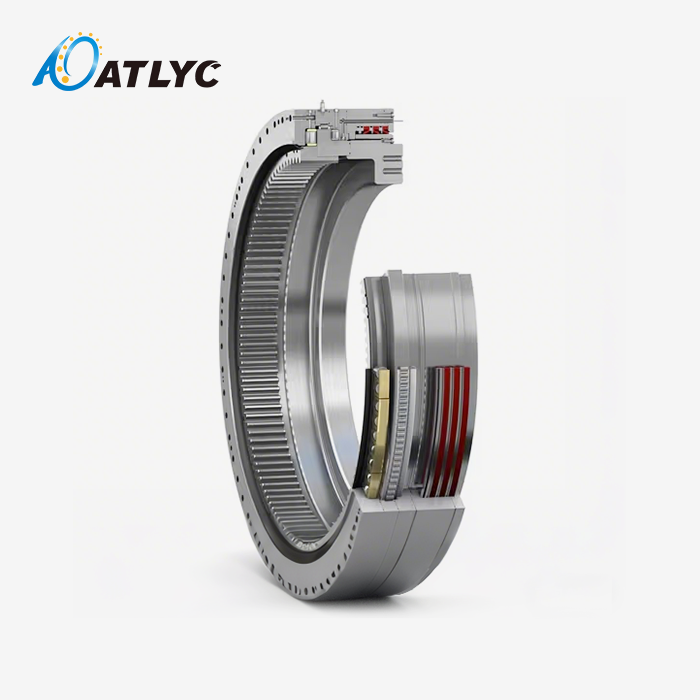
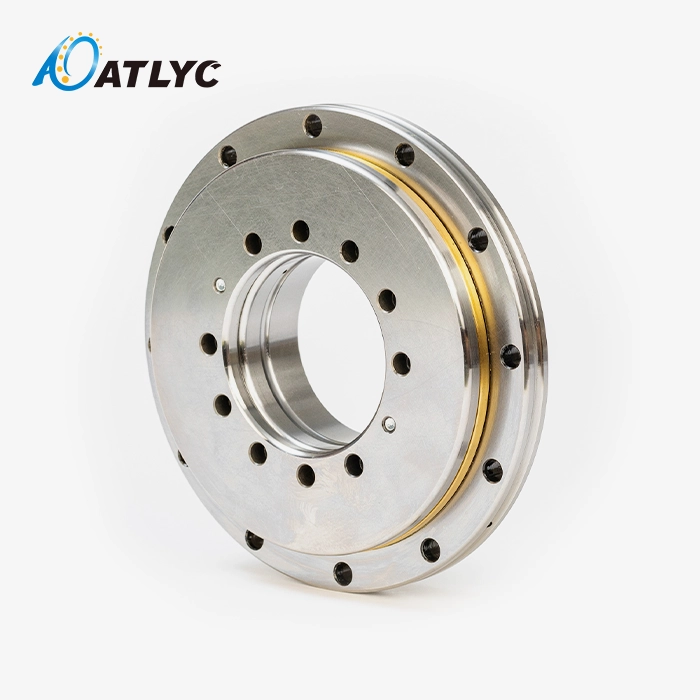
Yes – and the answer is supported by technical evidence, not marketing promises. YRT 150 High Precision Rotary table bearing is a particular axial-radial bearing unit with an inner diameter of 150mm, an exterior diameter of 240 mm, and a breadth of 40mm. Built from GCr15 bearing steel heat-treated to 58–62 HRC, it merges thrust and radial functions into one compact unit. Its P4/P2 accuracy class limits axial runout within 3–5 micrometers, offering the positional stability that CNC machining centers, indexing heads, and metrology equipment need.

Understanding the YRT 150 High Precision Rotary Table Bearing
When engineers ask whether a single bearing component can genuinely raise system accuracy, the YRT 150 rotary table bearing answers through its structure. Unlike conventional solutions that stack separate thrust and radial bearings, this unit consolidates everything into one ready-to-mount assembly.
Integrated Three-in-One Configuration
The bearing integrates a thrust bearing, radial bearing, and indexing mechanism into a single body. The complete unit comprises an outer ring (fixed ring), inner ring (rotating ring), precision steel balls and a cage assembly. This design eliminates the problem of multi-component assembly and considerably reduces the overall mechanical envelope – a tangible benefit for machine tool designs with limited space.
Double-Row Angular Contact Ball Arrangement
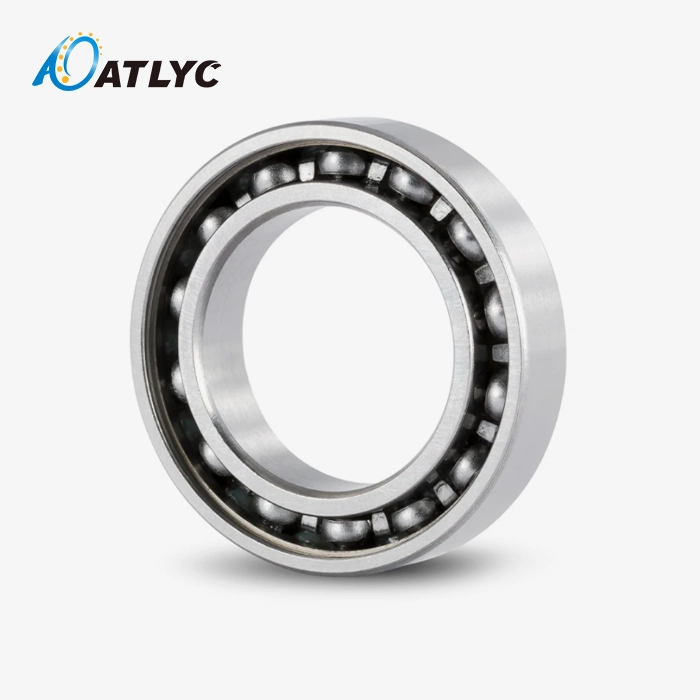
The two rows of steel balls are placed at an angle of contact of 45° or 60°, respectively, so that the bearing is able to take axial loads, radial loads, and composite tilting moments all at the same time. Axial static load capacity is usually approximately 400-500 kN. Radial static load capacity is around 150-200 kN. The YRT 150 High Precision Rotary table bearing is the best option for multi-directional load capability when cutting forces are applied on different axes in unpredictable ways.
Precision-Ground Raceway System
Inner and outer raceways undergo precision grinding and super-finishing to achieve surface roughness values that sustain lubricant film retention and suppress micro-pitting. The result is consistent rotational accuracy throughout the bearing's service life — not just at commissioning. Limiting speeds are typically capped at 200–250 RPM to preserve the high preload responsible for stiffness.
Comparing YRT 150 with Other Rotary Table Bearings
Procurement engineers routinely evaluate the YRT 150 against cross roller bearings and tapered roller combinations. The comparison below highlights where each type fits best.
| Feature | YRT 150 Rotary Table Bearing | Cross Roller Bearing | Tapered Roller Combo |
|---|---|---|---|
| Load type supported | Axial + Radial + Tilting moment | Axial + Radial | Axial or Radial (separate units) |
| Precision class | P4 / P2 (ISO) | P5 / P4 | P6 / P5 |
| Axial runout | 3–5 μm | 5–8 μm | 10+ μm |
| Installation complexity | Low (integrated unit) | Medium | High (multiple components) |
| Ideal application | CNC rotary tables, indexing heads | Robotic joints | Heavy-load spindles |
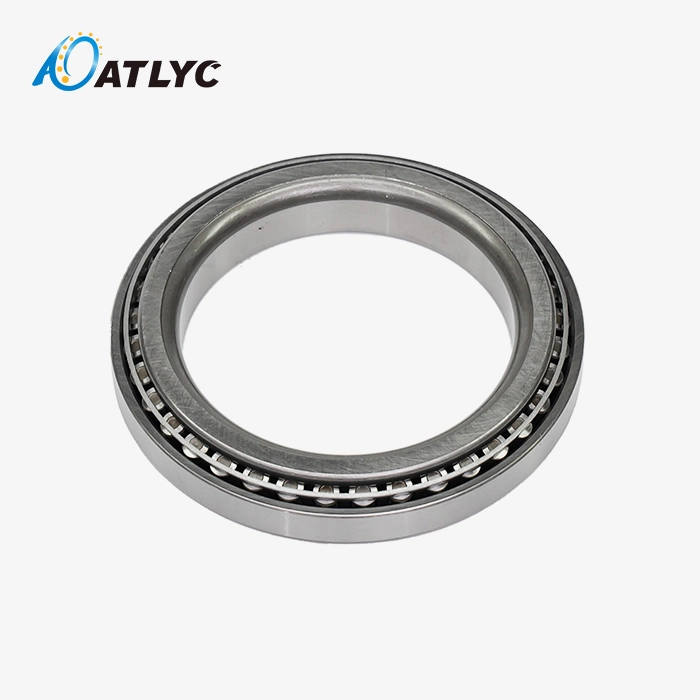
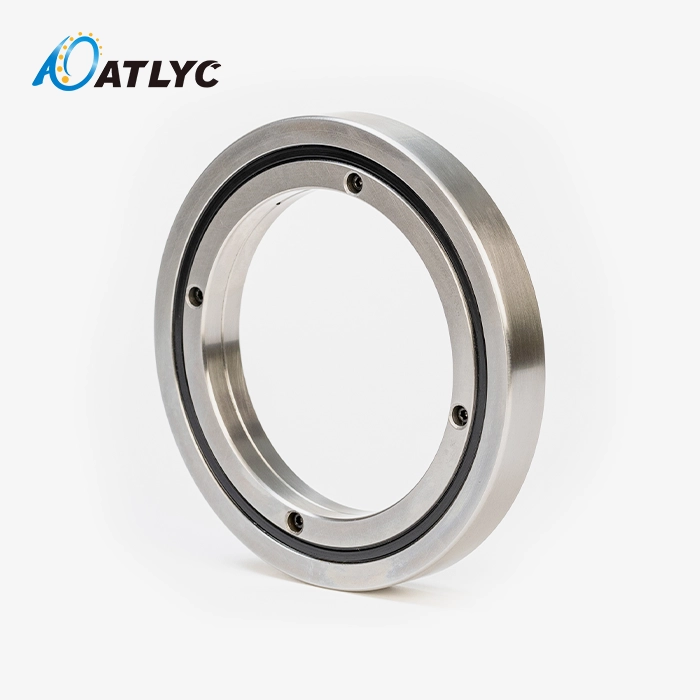
Cross roller bearings are perfect for robotic joints when space is limited. However, their tilt stiffness is not a match for the YRT 150 during severe milling operations. Tapered roller combinations may withstand larger radial stresses but need tight tolerances in the housing and many assembly processes, which increase downtime.
Add in decreased installation time, fewer replacement cycles, and the productivity improvements that tighter positional precision delivers throughout the life of a machine, and the total cost of ownership calculation tips strongly in favor of the YRT 150 High Precision Rotary table bearing.
Applications and Practical Benefits of YRT 150 Bearings in B2B Procurement
The YRT 150's relevance stretches across industries where micron-level runout is non-negotiable. Here are the primary sectors where this axial-radial bearing unit drives measurable operational gains:
- CNC Machining Centers (4th & 5th Axis): The bearing serves as the core joint of the rotary table in vertical and horizontal machining centers. It withstands aggressive cutting forces and tilting moments generated during heavy-duty milling while maintaining the positioning accuracy needed for complex geometries. Manufacturers report measurable reductions in scrapped parts after upgrading to P4-class rotary table bearings.
- High-Precision Indexing Heads: Gear and turbine component manufacturers rely on this bearing's zero-backlash positioning to achieve exact angular increments. Factory preload eliminates internal clearance, ensuring that each indexed position repeats without drift — a critical requirement in aerospace component fabrication.
- Medical Imaging and Metrology Equipment: Large-scale coordinate measuring machines and CT scanners demand stick-slip-free rotation. Uniform running accuracy at this level prevents measurement errors and imaging artifacts that would otherwise compromise diagnostic or quality-control outcomes.
It takes disciplined lubricating practice to get this kind of performance. Most working temperatures are compatible with a lithium-based grease that has an NLGI Grade 2 consistency. Re-lubrication periods will vary on load and speed, but are usually between 500 and 1,000 operating hours. Proper mounting torque on the integrated bolt-hole pattern is similarly critical — undertorqued fasteners cause micro-movement that erodes positional repeatability over time.
Buying Guide for YRT 150 High Precision Rotary Table Bearings
Sourcing a precision axial-radial bearing unit involves more than comparing listed prices. The following table summarizes the key procurement criteria buyers should verify before committing to a supplier.
| Procurement Factor | What to Verify |
|---|---|
| Certification | ISO 9001, IATF 16949 compliance |
| Precision class documentation | CMM reports confirming P4 or P2 tolerances |
| Material traceability | GCr15 / 100Cr6 steel with hardness certificates (58–62 HRC) |
| Lead time | Standard stock vs. custom production timelines |
| Customization capability | OEM bore sizes, preload levels, or cage materials |
| Counterfeit risk mitigation | Authorized distributor or direct factory supply |
Counterfeit bearings of the YRT-series are found on different marketplaces. Poor heat treatment causes the raceway surfaces to spall in weeks under tilting loads, resulting in catastrophic crashes of the table, not a steady decrease in performance. One good technique to weed out non-conforming items is to ask the supplier for metallographic analysis and starting torque verification reports.
Buyers looking for OEM programs or replacement aftermarket channels and who buy in volume can negotiate blanket purchase orders that lock in price but permit staggered delivery – a technique that safeguards against material cost volatility without tying up working capital in excess inventory.
Ensuring Accuracy: Design Benefits and Optimization Strategies
Rotary table system accuracy is a function of two things: bearing geometry and system integration. The YRT 150 High Precision Rotary table bearing solves geometry problems with precision-ground raceways and regulated preload. Real-time geometry on a live machine necessitates paying attention to alignment and calibration.
Mounting surfaces should be flat to the runout specification of the bearing. Even a 5 μm taper on the mounting face will generate a systematic tilt inaccuracy that will accumulate with each rotation. A dial test indication check throughout the mounting register before final torquing takes minutes, but saves hours of problems later.
The machine's rotational axis has to be calibrated once the bearings are mounted. Modern CNC controllers could include compensation tables to correct residual periodic error, the little sinusoidal variation remaining even in P4-class bearings owing to modest defects of geometry. A well-specified rotary table bearing in combination with active axis adjustment typically achieves effective positional precision below 2 µm in production situations.
In the accuracy chain, transmission error is eliminated completely by the use of direct-drive torque motors, rather than worm gear drives. The zero-backlash construction of the YRT 150 is a natural fit for direct-drive applications where the servo loop can hold position without battling gear lash.

Conclusion
The YRT 150 High Precision Rotary table bearing demonstrably boosts accuracy by combining integrated structural design, controlled preload, and P4/P2 precision-class manufacturing into a single, field-proven unit. Its ability to handle axial, radial, and tilting loads simultaneously removes the compromises that stacked bearing arrangements impose. When paired with proper mounting practice, lubrication discipline, and axis calibration, this axial-radial bearing delivers sub-5-micrometer runout performance that directly translates into tighter machining tolerances and fewer rejected parts.
FAQ
1. What load capacity does the YRT 150 support?
The YRT 150 carries axial static loads in the 400–500 kN range and radial static loads around 150–200 kN. Its double-row angular contact ball arrangement handles composite tilting moments simultaneously, which distinguishes it from single-function bearings.
2. How often should I re-lubricate this rotary bearing?
Re-lubrication intervals typically fall between 500 and 1,000 operating hours, depending on speed, load, and ambient temperature. Use NLGI Grade 2 lithium-based grease and avoid over-greasing, which raises operating temperature and accelerates wear.
3. How does the YRT 150 compare to cross roller bearings in precision?
The YRT 150 achieves axial runout of 3–5 μm at P4/P2 class, versus 5–8 μm for typical cross roller bearings at P5/P4 class. For high-demand CNC and indexing applications, that gap is meaningful.
4. Can this bearing be customized for OEM applications?
Yes. Manufacturers with engineering capability offer custom preload levels, alternate cage materials, and modified mounting patterns. Confirm OEM customization capacity with your supplier before placing production volumes.
5. What certifications should a reliable YRT 150 supplier hold?
ISO 9001 and IATF 16949 are the baseline certifications that validate quality management systems relevant to precision bearing manufacturing. Request dimensional inspection reports and hardness certificates alongside shipment documentation.
Partner with ATLYC for Your YRT 150 High Precision Rotary Table Bearing Supply
ATLYC, operating under Luoyang Auto Bearing Co., Ltd. — ISO 9001 and IATF 16949 certified since 2010 — supplies the YRT 150 High Precision Rotary Table Bearing to OEMs and distributors across the US, Germany, South Korea, and beyond. As a direct YRT 150 High Precision Rotary table bearing manufacturer with six production workshops and 15 years of export experience, we offer competitive pricing, documented quality traceability, and responsive technical support. Contact our procurement team at auto@lyautobearing.com to request a quote today.
References
1. Schaeffler Group. (2023). Axial-Radial Cylindrical Roller Bearings YRT and YRTS: Product Catalogue. Schaeffler Technologies AG & Co. KG.
2. NSK Ltd. (2022). Precision Machine Components — Rotary Table Bearings Technical Guide. NSK Global.
3. Modern Machine Shop. (2023). How Bearing Precision Class Affects CNC Rotary Table Performance. Gardner Business Media.
4. Renishaw plc. (2022). Rotary Axis Calibration and Error Compensation in Multi-Axis Machine Tools. Renishaw.
5. ISO. (2020). ISO 492:2014/Amd 1:2021 — Rolling Bearings: Radial Bearings — Tolerances. International Organization for Standardization.
6. Löf, R., & Archenti, A. (2021). Accuracy and Repeatability of Rotary Axes in Five-Axis Machine Tools.
Learn about our latest products and discounts through SMS or email