- English
- French
- German
- Portuguese
- Spanish
- Russian
- Japanese
- Korean
- Arabic
- Greek
- German
- Turkish
- Italian
- Danish
- Romanian
- Indonesian
- Czech
- Afrikaans
- Swedish
- Polish
- Basque
- Catalan
- Esperanto
- Hindi
- Lao
- Albanian
- Amharic
- Armenian
- Azerbaijani
- Belarusian
- Bengali
- Bosnian
- Bulgarian
- Cebuano
- Chichewa
- Corsican
- Croatian
- Dutch
- Estonian
- Filipino
- Finnish
- Frisian
- Galician
- Georgian
- Gujarati
- Haitian
- Hausa
- Hawaiian
- Hebrew
- Hmong
- Hungarian
- Icelandic
- Igbo
- Javanese
- Kannada
- Kazakh
- Khmer
- Kurdish
- Kyrgyz
- Latin
- Latvian
- Lithuanian
- Luxembou..
- Macedonian
- Malagasy
- Malay
- Malayalam
- Maltese
- Maori
- Marathi
- Mongolian
- Burmese
- Nepali
- Norwegian
- Pashto
- Persian
- Punjabi
- Serbian
- Sesotho
- Sinhala
- Slovak
- Slovenian
- Somali
- Samoan
- Scots Gaelic
- Shona
- Sindhi
- Sundanese
- Swahili
- Tajik
- Tamil
- Telugu
- Thai
- Ukrainian
- Urdu
- Uzbek
- Vietnamese
- Welsh
- Xhosa
- Yiddish
- Yoruba
- Zulu
SX011824 Precision Cross Roller Bearing vs Ball Bearings
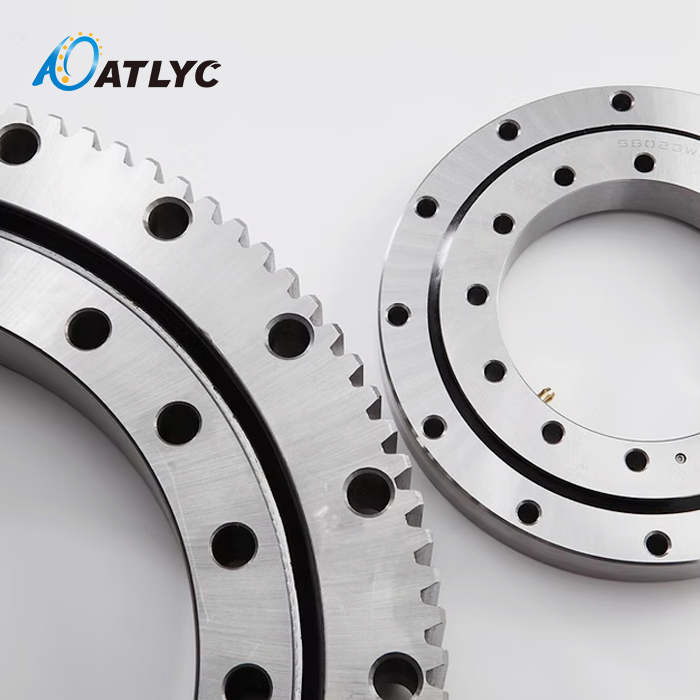
The SX011824 Precision Cross Roller Bearing is the answer when engineers have to deal with radial, axial, and moment loads in a limited area and when traditional ball bearings are not the solution. This ultra-thin crossed roller bearing measures 120mm × 150mm × 16mm and offers multi-directional load capability in one unit, eliminating the need for double-bearing systems. Ball bearings use point contact and are mostly radial load bearings. The performance difference between these two bearing types is large and operationally important for precision-driven sectors including robotics, CNC machining, and medical imaging.

Understanding the SX011824 Precision Cross Roller Bearing
What Sets This Bearing Apart Structurally
Ultra-thin cross roller bearing SX011824 without mounting holes in the inner ring and outer ring. Flanges and bearing seats are the only means of fixation. The inner ring is integrated; the outer ring is divided and attached by 3 fastening rings. The design is specifically for inner ring rotating situations. V-groove raceways have cylindrical rollers at 90° angles interleaved to provide line contact instead of point contact. This shape gives far greater stiffness and load dispersion than conventional rolling element bearings.
SX011824 is made of GCr15 or GCr15SiMn bearing steel, hardened to HRC 58-64, with surface roughness regulated to Ra 0.2µm. Available accuracy ratings include P6, P0, P5, P4 and P2 with ISO 492 tolerance classes. Plastic spacers are used to separate the individual rollers, so there is no contact between rollers and the rotation is smooth and low-friction across the whole range of operation.
Where This Bearing Performs Best
The SX011824 serves demanding applications where rotational accuracy is non-negotiable. Typical deployment includes:
- Industrial robot joints and rotating arms — where compact dimensions and moment rigidity directly affect positioning repeatability
- Machining center rotary tables — where runout accuracy under cutting loads determines part tolerances
- Medical imaging and measuring instruments — where smooth, low-noise rotation impacts diagnostic reliability
- IC manufacturing devices — where micron-level precision governs yield rates
These applications share a common requirement: a single bearing that handles complex combined loads without adding axial length to the assembly. The SX011824's 16mm width accomplishes exactly that.
Comparing SX011824 Cross Roller Bearings and Ball Bearings
Choosing between a crossed roller SX011824 Precision Cross Roller Bearing and a ball bearing is not simply a cost decision—it is an engineering decision with downstream consequences on machine life, maintenance intervals, and output quality. The table below presents a direct structural and performance comparison.
| Parameter | SX011824 Cross Roller Bearing | Standard Ball Bearing |
|---|---|---|
| Contact Type | Line contact | Point contact |
| Load Directions | Radial + axial + moment (combined) | Primarily radial |
| Rigidity | High (superior moment stiffness) | Moderate |
| Rotational Accuracy | P2 to P6 (ISO 492) | P0 to P6 |
| Width / Axial Space | Ultra-thin (16mm for 120mm bore) | Varies, typically wider for equivalent load |
| Preload Adjustability | Yes (via split outer ring clamping) | Limited |
| Typical Application | Robotics, CNC tables, medical devices | General industrial, motors, pumps |
Ball bearings excel in high-speed, light-load applications where cost per unit matters most. They are widely available, easy to replace, and carry lower initial pricing. However, when a machine design requires tilting moment resistance, zero-clearance operation, or sub-micron runout accuracy, a standard ball bearing arrangement requires either a back-to-back angular contact pair or a dedicated thrust bearing—adding weight, length, and assembly complexity.
The SX011824 eliminates that complexity entirely. Its separable outer ring allows preload adjustment during installation by controlling the clamping torque on the flange bolts. This zero-clearance capability is simply unavailable in a single-row ball bearing.
Total Cost of Ownership Perspective
The initial unit price of a crossed roller bearing exceeds that of a comparable ball bearing. However, procurement teams focused on total cost of ownership recognize that the SX011824 Precision Cross Roller Bearing replaces two or more bearings in the same assembly, reduces housing volume, and extends service intervals. In robot joint applications running three-shift operations, the reduction in unplanned downtime alone justifies the premium.
Making the Right Choice: SX011824 vs Other Precision Bearings
How It Compares Against Premium Brands
NSK and THK produce well-regarded crossed roller bearings in the SX series equivalent. These brands carry strong reputations in Japanese OEM markets. The functional geometry is nearly identical across manufacturers, but price differentials can reach 40–60% between Japanese-origin and ISO-certified Chinese-manufactured equivalents. Procurement managers sourcing for global platforms increasingly evaluate Chinese manufacturers that hold IATF 16949 certification alongside ISO 9001—credentials that indicate automotive-grade process discipline, not merely product inspection.
The practical selection criteria come down to three factors: required accuracy grade, annual volume, and after-sales support capability. For P4 and P2 applications in semiconductor equipment, the tightest tolerance grades demand verified dimensional integrity via CMM inspection and magnetic particle testing. For P5 and P6 applications in general automation, a qualified Chinese manufacturer with documented process controls delivers equivalent performance at materially lower cost.
Maintenance and Longevity of SX011824 Cross Roller Bearings
Lubrication and Inspection Protocols
The longevity of the service is directly related to the correct lubrication. For SX011824 devices operating in oscillating circumstances such as robot joints where fretting corrosion is a severe problem, the standard recommendation is high-quality lithium soap grease with EP (Extreme Pressure) additives. Relubrication durations are dependent on operating temperature, load cycle, and contaminant exposure – but a reasonable rule of thumb is inspection every 2,000 hours of operation in typical industrial environments.
The quality of installation also matters. The split outer ring requires a mating housing flange that is sufficiently strong and correctly machined. Any modification in the clamping operation will distort the raceway geometry and impair the rotational accuracy. CMM measurement of inner diameter, outer diameter, and width against tolerance limits to maintain dimensional integrity during installation. Check the radial and axial runout of the inner ring before commissioning to meet the specified accuracy grade.
The general SX011824 models work throughout a temperature range of –20 °C to +80 °C. Outside of this temperature range, stabilization heat treatment and Viton (FKM) seal materials must be used to maintain dimensional stability during thermal cycling.
Procurement Guide: Buying SX011824 Precision Cross Roller Bearings
The table below outlines the key quality verification steps that protect procurement teams from receiving substandard components—a critical safeguard when sourcing high-precision bearings internationally.
| Inspection Step | Method | Standard |
|---|---|---|
| Dimensional check | CMM measurement of ID/OD/Width | Per manufacturer tolerance |
| Runout accuracy | Radial and axial runout measurement | P5/P4 per ISO 492 |
| Clearance/Preload | Radial clearance measurement | Application-specific (often negative) |
| Hardness | Rockwell HRC test | HRC 58–64 |
| Surface finish | Raceway inspection for grinding burns | Ra ≤ 0.2µm |
When placing bulk orders, negotiate documentation packages that include material certificates, CMM reports, and hardness test records. Confirm that the supplier holds both ISO 9001 and IATF 16949 certifications—these are auditable, third-party verified credentials, not self-declarations. Verify country-of-origin documentation for customs compliance in target markets, including the US, Germany, and South Korea.
Authorized distributors reduce counterfeiting risk and provide access to technical support during installation and commissioning. For international orders, clarify lead times, packaging standards, and freight terms upfront to prevent supply chain disruption.

Conclusion
The SX011824 Precision Cross Roller Bearing delivers a technically superior solution for applications where combined load capacity, ultra-thin profile, and high rotational accuracy converge as simultaneous requirements. Ball bearings serve general purposes well, but they cannot replicate the moment rigidity, zero-clearance adjustability, or compact cross-section that the SX011824 provides. For procurement teams sourcing precision components for robotics, CNC equipment, or medical instrumentation, the engineering case is clear. Selecting a manufacturer with verified certifications, documented quality controls, and scalable production capacity protects both product performance and supply continuity.
FAQ
1. Why does the SX011824 outperform ball bearings in machine tool applications?
The crossed roller configuration creates line contact between rollers and raceways, producing substantially higher rigidity than the point contact of ball bearings. Machine tools require resistance to tilting moments under cutting forces—a single SX011824 unit handles this without additional bearings or extended housings.
2. What is the recommended lubrication for SX011824 bearings?
Lithium soap grease with EP additives is standard. In oscillating applications such as robot joints, EP properties reduce fretting corrosion risk. Relubrication intervals are typically every 2,000 operating hours under normal conditions.
3. Can the SX011824 replace two angular contact ball bearings?
Yes. The crossed arrangement handles combined radial, axial, and moment loads in all directions with greater rigidity than a back-to-back ball bearing pair, while saving significant axial space and reducing assembly weight.
4. How is preload adjusted during installation?
The split outer ring is clamped using a precision flange. Torque applied to the flange bolts determines the preload state, allowing zero-clearance adjustment that a standard ball bearing cannot replicate.
5. What accuracy grades are available?
The SX011824 is available in P6, P0, P5, P4, and P2 accuracy grades per ISO 492. P4 and P2 grades suit semiconductor and medical equipment; P5 and P6 serve general automation.
Partner With ATLYC for Reliable SX011824 Precision Cross Roller Bearing Supply
ATLYC — Luoyang Auto Bearing Co., Ltd. — has manufactured high-precision bearings since 2010, holding ISO 9001 and IATF 16949 certifications across six dedicated production workshops. As a trusted SX011824 Precision Cross Roller Bearing supplier, we serve OEMs and distributors in the US, Germany, South Korea, and beyond. Contact our engineering team at auto@lyautobearing.com to request product catalogs, bulk pricing, and CMM inspection reports tailored to your application requirements.
References
1. Hamrock, B. J., Schmid, S. R., & Jacobson, B. O. (2004). Fundamentals of Machine Elements. McGraw-Hill.
2. SKF Group. (2023). Rolling Bearings: Technical Handbook.
3. NSK Ltd. (2022). Precision Machine Components: Cross Roller Bearings Technical Catalogue.
4. ISO 492:2014. Rolling Bearings — Radial Bearings — Dimensional and Geometrical Tolerances.
5. THK Co., Ltd. (2023). Cross Roller Ring Technical Reference Guide.
6. IATF. (2016). IATF 16949:2016 — Quality Management System Requirements for Automotive Production and Relevant Service Parts Organizations. IATF.
Learn about our latest products and discounts through SMS or email
_1772782093670.webp)