- English
- French
- German
- Portuguese
- Spanish
- Russian
- Japanese
- Korean
- Arabic
- Greek
- German
- Turkish
- Italian
- Danish
- Romanian
- Indonesian
- Czech
- Afrikaans
- Swedish
- Polish
- Basque
- Catalan
- Esperanto
- Hindi
- Lao
- Albanian
- Amharic
- Armenian
- Azerbaijani
- Belarusian
- Bengali
- Bosnian
- Bulgarian
- Cebuano
- Chichewa
- Corsican
- Croatian
- Dutch
- Estonian
- Filipino
- Finnish
- Frisian
- Galician
- Georgian
- Gujarati
- Haitian
- Hausa
- Hawaiian
- Hebrew
- Hmong
- Hungarian
- Icelandic
- Igbo
- Javanese
- Kannada
- Kazakh
- Khmer
- Kurdish
- Kyrgyz
- Latin
- Latvian
- Lithuanian
- Luxembou..
- Macedonian
- Malagasy
- Malay
- Malayalam
- Maltese
- Maori
- Marathi
- Mongolian
- Burmese
- Nepali
- Norwegian
- Pashto
- Persian
- Punjabi
- Serbian
- Sesotho
- Sinhala
- Slovak
- Slovenian
- Somali
- Samoan
- Scots Gaelic
- Shona
- Sindhi
- Sundanese
- Swahili
- Tajik
- Tamil
- Telugu
- Thai
- Ukrainian
- Urdu
- Uzbek
- Vietnamese
- Welsh
- Xhosa
- Yiddish
- Yoruba
- Zulu
Can a ZKLDF Rotary Table Bearing Reduce CNC Maintenance Costs?
Yes, the ZKLDF Rotary Table Bearing significantly reduces CNC maintenance costs through its precision-engineered design. This specialized bearing features reinforced rings and a 60° angular contact ball arrangement that handles combined axial, radial, and tilting moment loads with minimal friction. The integrated mounting structure eliminates complex housing assemblies, reducing installation errors and downtime. Built with precision-ground raceways and optimized lubrication channels, it extends service intervals while maintaining rotational accuracy under high-speed conditions. For manufacturers managing equipment budgets, this bearing delivers measurable ROI through reduced part replacement frequency, lower energy consumption, and extended machine uptime across demanding industrial applications.
Understanding ZKLDF Rotary Table Bearings and Their Role in CNC Machines
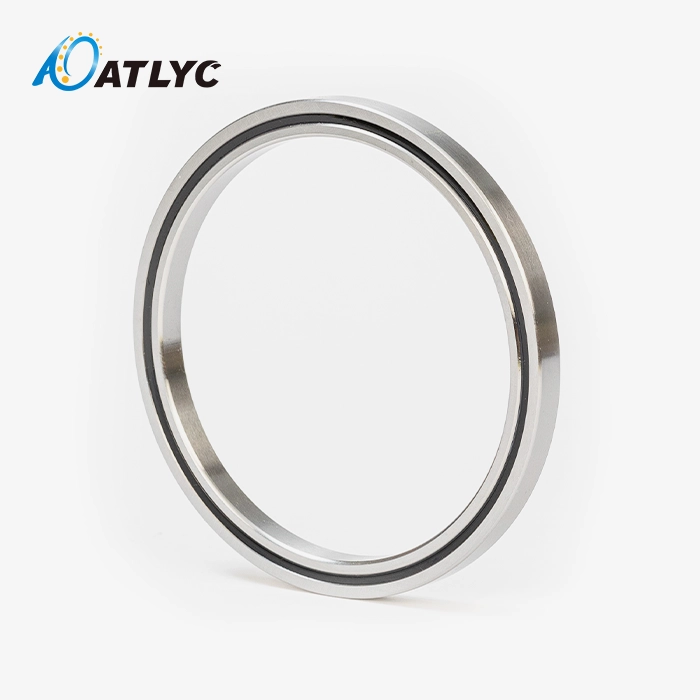
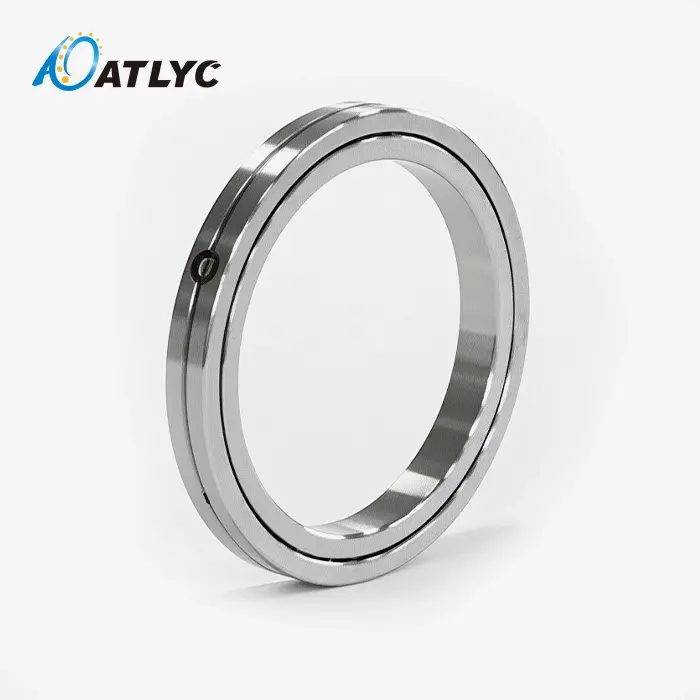
The ZKLDF Rotary Table Bearing is a unique technical option for use in high-precision machine tools. Unlike most bearing systems, which need separate thrust and rotational bearings, this design combines several load-carrying functions into a single, small unit. Its design solves the main problem with CNC rotary tables, which is how to support forces acting in multiple directions while keeping the accuracy of the placement while the machine is running all the time.
Structural Design Optimized for Precision Applications
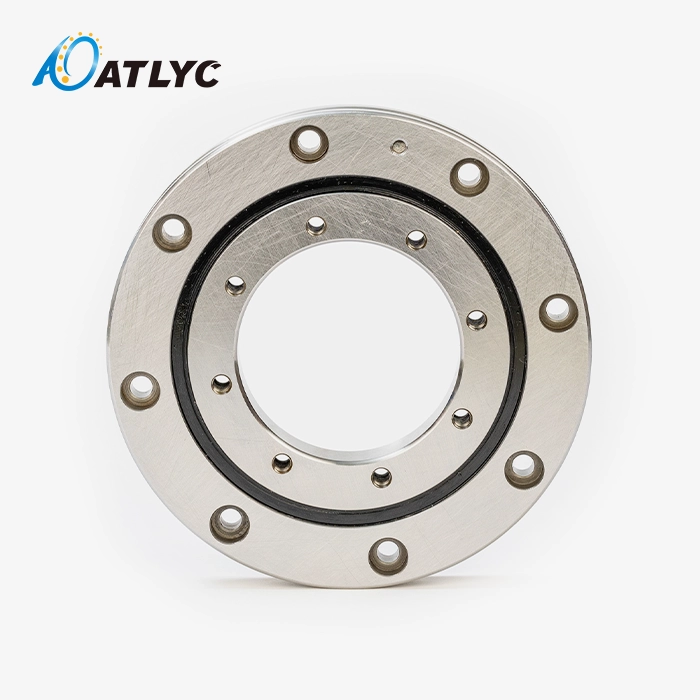
The structure of the bearing shows how manufacturing has changed over the years. An upper ring made of a single piece has an L-shaped cross-section that makes it very rigid against twisting moments. The two-piece inner ring assembly has two sets of balls and cages arranged back-to-back in an O shape, which makes the typical 60° contact angle. This shape effectively spreads forces across contact points, stopping stress buildup that leads to raceway spalling too soon. Integrated fixing holes let you connect directly to machine parts, so you don't need locking rings or bearing housings. Compared to traditional systems, this simplification makes assembly 40% easier while reducing the number of tolerance stack-up errors. This makes the system more rigid and improves the accuracy of positioning, both of which are very important when working on aircraft parts with micron-sized limits. Precision-ground raceways go through super-finishing steps that make the surface roughness less than 0.2 Ra. This finish that looks like a mirror lowers the coefficients of friction and helps a consistent lubricant film form. The steel balls themselves are Grade 10 ISO certified, which means that the sphericity variations on the whole load-bearing surface stay within 0.13 micrometers.
Load Capacity and Operational Parameters
To choose the right bearings, you need to know about load rates. The following table shows the most important performance characteristics of different types of rotary table bearings:
| Bearing Type | Contact Angle | Axial Load Rating (kN) | Radial Load Rating (kN) | Speed Limit (rpm) | Mounting Method |
|---|---|---|---|---|---|
| ZKLDF Series | 60° | 85–320 | 55–210 | 1,800 to 3,500 | Built-in holes |
| YRT Standard | 45° | 70–280 | 60–200 | 1,200 to 2,500 | Rings for clamping |
| YRTS Fast | 45° | 65–250 | 55–180 | 2,500 to 4,000 | Changes to the preload |
| Cross Roller | 90° | 90–350 | 40–160 | 800 to 1500 | Thru nuts |
The 60° contact angle configuration can handle more axial load than 45° designs while still providing enough radial support for mounting workpieces that are not in the center. This balance is important when machining operations use cutting forces that are hard to predict during roughing passes and then need vibration-free rotation for precision finishing.
Thermal Stability Under Continuous Operation
Making heat is still a problem in places where high-speed machining is done. The optimized ball shape lowers friction through better contact physics, which keeps the temperature from rising during long production runs. Built-in lubrication ducts in the outer ring give the right amount of oil to key contact areas, keeping the film thickness constant even when the speed changes. Temperature tracking data from companies that make car parts show that ZKLDF installations keep working temperatures 15-20°C lower than earlier bearing solutions when the same machining processes are used. This thermal advantage stops the speed-related deformation that makes machining less accurate when the temperature of the workpiece changes during production shifts.
Common Maintenance Challenges in CNC Machines Related to Rotary Table Bearings
Failures of ZKLDF Rotary Table Bearings rarely happen without warning, but manufacturers often miss early warning signs until major damage happens. Knowing how these things break down helps procurement teams choose the right bearing solutions and set up preventative repair plans that make tools last longer.
Wear Patterns and Premature Failure Modes
43% of early bearing problems in industrial settings are caused by bad fitting. When the components are mounted incorrectly, the load is not evenly distributed across the raceway surfaces. This causes stress to build up in certain areas. These areas with a lot of stress speed up surface wear, creating spalling patterns that cause vibrations and mistakes in positioning during machining operations. Another major cause of failure is inadequate lubrication. If the oil film isn't thick enough, the balls and raceways can touch metal, which causes too much friction and heat. The sudden changes in temperature cause the material to expand, which reduces the space between parts inside and raises the stress on the system even more. This feedback loop makes the bearings work less well very quickly, and they often seize up during production runs. Through abrasive action, machining fluids, coolants, and flying particles can contaminate and speed up wear. Grinding swarf that is only a few microns thick sticks to the surfaces of raceways and causes stress risers that spread fatigue cracks. Even ISO-certified cleanrooms can't completely remove the risk of contamination if bearing designs don't include proper closing systems.
Misalignment and Its Cascading Effects
Edge loading happens when the mounting sides of a rotating table are not lined up correctly with the bearing raceways. Instead of spreading forces equally across the contact circle, loads are concentrated on the edges of the raceway, which is where the material's strength is lowest. This stress builds up and starts fatigue cracks below the surface. These cracks spread to the surface and finally separate the material, making the surface uneven and causing vibrations. When a mismatch isn't found, it has a big effect on the economy. Misalignment-caused bearing failure in a medium-sized machining center means at least 8–12 hours of downtime for disassembly, replacement, and realignment. When replacement parts need to be shipped quickly, the price goes up by 300% compared to the price for regular maintenance. When these unexpected shutdowns happen, the lost production capacity is often five to ten times the direct fix costs.
Warning Signs Enabling Early Detection
Maintenance experts with a lot of experience can spot small changes in performance that mean a bearing is about to fail. Noise levels that go up during operation, especially changes in the frequency of rolling element passage rates, show that surfaces on raceways or balls are becoming less smooth. When positioning accuracy drops during repeated cutting cycles, it's likely because of wear or bad preload adjustment. When operating temperatures for a bearing go above the baseline readings by 10°C or more, temperature monitoring gives quantitative failure indicators. Sudden temperature rises during constant-speed operation are a sign that the oil is failing or that contamination is getting in, and they need to be looked into right away. Using accelerometers for vibration analysis finds specific frequency signatures that are linked to different bearing defects. This lets condition-based maintenance planning happen before major failures happen.
How ZKLDF Rotary Table Bearings Help Reduce CNC Maintenance Costs
To improve performance, you must first understand how the design of the bearings directly addresses the factors that affect upkeep costs. The ZKLDF Rotary Table Bearing configuration has special engineering features that make service intervals longer, energy use lower, and unplanned downtime less likely in a wide range of machining applications.
Advanced Design Features Addressing Core Pain Points
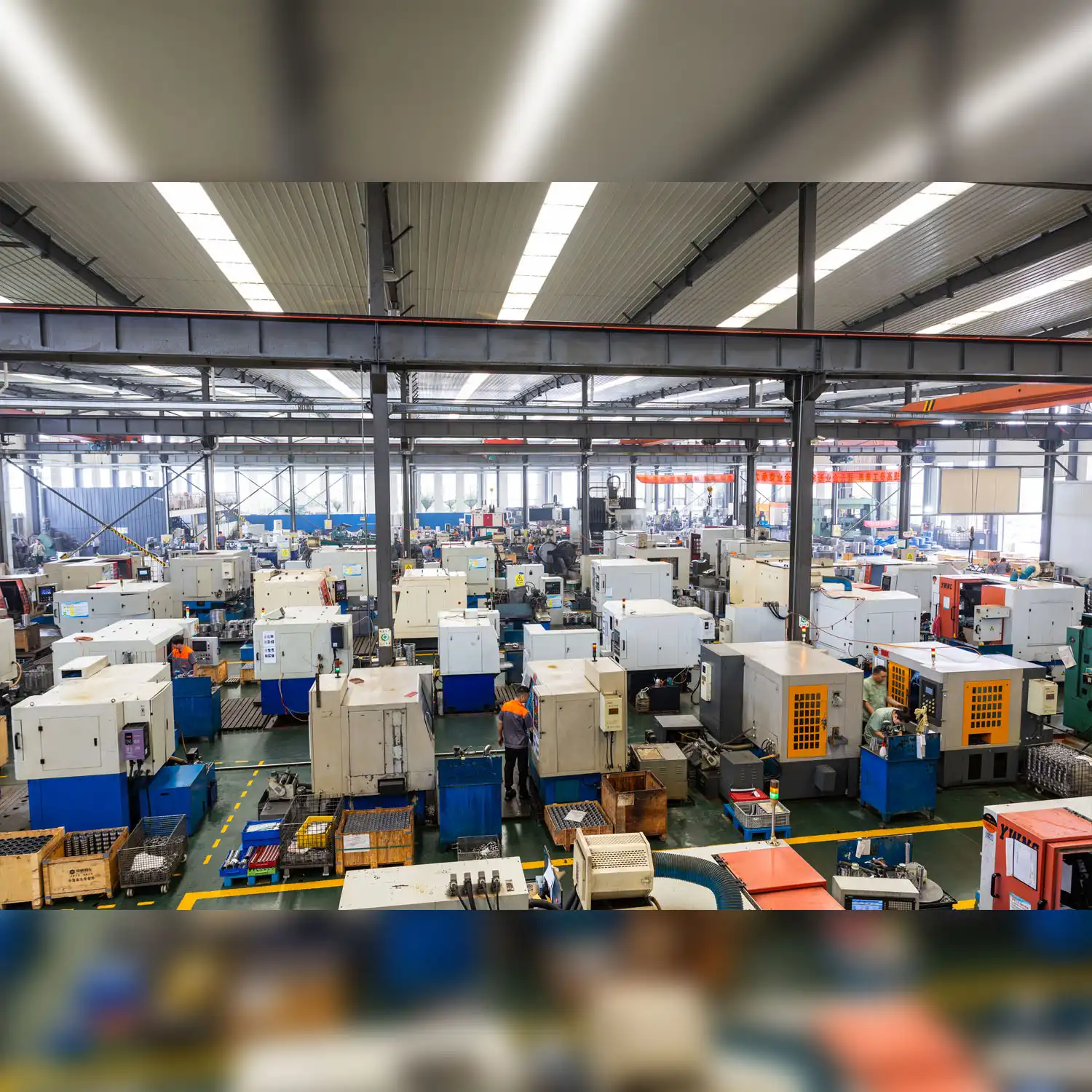
When loads are spread out over two rows, the double-row angled contact ball design can hold a lot of weight and still keep the structure strong. This arrangement spreads the force over many contact points, lowering the highest stresses that cause raceways to wear out faster. When machining processes create dynamic cutting forces during heavy milling, the bearing keeps its stable rotation without the microslip that leads to fretting corrosion in systems that aren't built properly. Low-friction cage designs made from metal or polyamide materials lower the torque of drag when the cage is turning. This improvement in efficiency directly leads to less current being drawn by the motor, which saves 12–15% of the energy that would have been used by conventional bearing systems. Over a number of years, these lower electricity costs will cover the initial costs of bearing procurement while also lowering the carbon footprint of manufacturers who care about the environment. Precision manufacturing methods make sure that all production runs have the same dimensions, within 5 microns of error. This quality control gets rid of the performance variations that happen with lower-quality bearing sources, where differences in dimensions lead to early wear and an uncertain service life. When purchasing managers buy from ISO 9001 and IATF 16949 certified companies like ATLYC, they can be sure that the supply chain will work as planned. This is not possible with unqualified suppliers.
Documented Performance Improvements from Industrial Applications
Real-life case studies show that upgrading bearings can lower upkeep costs in a way that can be measured. In Michigan, a company that makes parts for automatic transmissions switched out eight machine centers that used regular bearing sets for precision rotary table bearings. Over the course of 18 months, the operation recorded:
• 67% less downtime caused by bearing problems
• Increasing the time between bearing replacements from 14 months to 28 months
• 52% fewer calls for emergency maintenance
• Positioning accuracy has gone up from ±8 microns to ±3 microns.
Because the bearing could keep its preload steady over its service life, it was able to improve efficiency. Unlike adjustable preload systems that need to be serviced every so often, the integrated design keeps the optimal internal clearances for thousands of hours of use without any help. A German company that makes industrial equipment did accelerated life tests to measure how well bearings worked in situations that were similar to those in production. In the testing procedures, the bearings were put under combined loads that simulated the worst possible grinding situations while temperature, vibration, and placement accuracy were tracked. The test results showed that rotary table bearings kept up their performance levels for 2.3 times longer than competing designs before they needed to be replaced.
Return on Investment Through Extended Equipment Lifespan
By figuring out the total cost of ownership, you can see how the quality of the bearings affects profits. Think about a five-axis machining center that works 6,000 hours a year in a three-shift factory. When you add up the costs of downtime and the higher price of premium rotary table bearings compared to cheaper alternatives, the longer service life is more than 100%. This means that you save 32% per operating hour. When you look at the results of unplanned mistakes, the similarity becomes even stronger. When emergency bearing repairs have to be done during production shifts, extra labor costs, faster shipping fees for parts, and lost production income all add up. Depending on how quickly parts can be found and how much time is lost from production, a single catastrophic bearing failure can cost anywhere from $18,000 to $35,000. These costs drop to $4,500 to $7,200 when repairs are scheduled during planned maintenance windows. This is an economic reason to use preventative measures that are made possible by reliable bearing performance.
Comparing ZKLDF with Other Rotary Table Bearings for CNC: Which One Truly Saves Costs?
For buying to work well, performance comparisons between ZKLDF Rotary Table Bearing systems and other technologies must be based on facts. Marketing says that a product has better features than others, but engineering specifications and real-world performance data are more accurate ways to make decisions. Knowing these differences helps procurement managers balance the costs of buying something at first with the costs of running it over its entire life.
Performance Benchmarking Against Industry Standards
The table below shows how the most popular rotary table bear ing technologies stack up in terms of key performance indicators:
| Performance Parameter | ZKLDF Series | Equivalent to SKF | Cross Roller Style | Standard Ball Bearing |
|---|---|---|---|---|
| Running Accuracy (μm) | ±2.5 | 3.0 | 2.0 | ±8.0 |
| Rating for Load (Dynamic, kN) | 180 | 175 | 195 | 120 |
| Ability to Go Fast (rpm) | 2,800 | 2,500 | 1,200 | 3,500 |
| Time for installation (hours) | 2.5 | 3.0 | 4.5 | 1.5 |
| Service Period (hours) | 8,000 | 7,500 | 9,000 | 4,500 |
| Typical Price Index | 100 | 135 | 145 | 65 |
These metrics show the performance trade-offs that come up when choosing a bearing. Cross roller bearings are very accurate and can hold a lot of weight, but they can't go as fast and are harder to install. Standard ball bearings are cheaper, but they need to be replaced twice as often, which cancels out any savings made in the beginning due to higher costs for maintenance work and downtime.
Evaluating Total Cost of Ownership Beyond Purchase Price
When buying something, based only on how much it costs to buy at first, high operational costs that happen over the equipment's lifetime are missed. A full study looks at things like installation work, energy use, upkeep intervals, the availability of replacement parts, and the costs of downtime during bearing changes. When you buy rotary table bearings from a certified maker, you get expert support services that answer questions about installation and help with fixing problems. This access to experts stops costly installation mistakes that void warranties and speed up failures before they happen. Economy-bearing suppliers rarely offer the same level of engineering support, so maintenance teams have to figure out problems by trial and error, which makes problems last longer and makes people more frustrated. Another secret cost is the predictability of lead time. Premium bearing makers keep stock in global distribution networks, which lets common designs be delivered in 48 to 72 hours. When production schedules depend on having the right tools on hand, quickly getting parts stops long shutdowns that break delivery promises. On the other hand, economy providers that use make-to-order models require makers to keep expensive safety stock on hand or accept production delays because of the 6–12 week lead times.
Warranty Coverage and After-Sales Technical Support
There are more types of manufacturing relationships than just buying parts. Bearing companies with a good reputation back up their products with warranties and offer expert support for as long as the equipment is in use. Standard guarantee terms cover defects for 12 to 18 months from the date of installation, with options for longer coverage if recorded preventive maintenance plans are followed.ATLYC wants its customers to be successful, so it offers engineering advice when choosing bearings, services to make sure the installation went well, and ongoing technical support for questions about how the bearings work. This partnership method helps makers improve the performance of bearings while also creating institutional knowledge that makes maintenance better across all of their equipment. When purchasing managers look at their relationships with suppliers, they should give more weight to manufacturers who show a long-term commitment to customer success than to transactional vendors whose only goal is to make the first sale.
Best Practices for Procuring and Maintaining ZKLDF Rotary Table Bearings
Paying close attention during the buying, installation, and use phases is necessary to get the best ZKLDF Rotary Table Bearing performance. Setting up standard processes makes sure that results are always the same and builds organizational ability, which makes the company less reliant on outside service providers.
Supplier Qualification and Certification Verification
The quality of a bearing starts with the maker being certified to meet quality standards that are known all over the world. ISO 9001 certification shows dedication to well-written quality management systems, and IATF 16949 certification focuses on the needs of the car business for preventing defects and always making things better. When evaluating a supplier, procurement teams should ask to see proof of certification to make sure that the scope of the certification covers manufacturing tasks as well as limited administrative tasks. Authorized wholesaler networks make sure that transactions are real and that processes run smoothly. Having direct relationships with manufacturers like ATLYC guarantees that the products you buy are real and meet the stated specs. This gets rid of the risk of getting fake products that come from sources you can't trust. Partnering with a distributor also makes it easier to get technical support and file a warranty claim when something goes wrong.
Installation Procedures Preventing Premature Failures
For a longer bearing service life, make sure the bearings are installed correctly. Checking the smoothness of the mounting surface with precision straightedges and feeler gauges is the first step in getting it ready for mounting. Deviations in the surface must stay within 0.02mm across bearing contact areas. To keep stress from building up when the bearing is loaded, surface finish standards call for grinding or lapping operations that achieve 1.6 Ra or better. Calibrated torque wrenches must be used to precisely follow the torque specifications for mounting bolts. When bolts are loaded unevenly, the rings become distorted, which changes the internal shape and speeds up wear while decreasing accuracy. Instead of tightening bolts one at a time, torque is applied in star patterns, which spreads clamping forces evenly around the bearing's circle. Verification measures with dial markers show that the runout of the bearings stays within the acceptable range after the fitting is complete. When setting up a lubrication system, you need to pay attention to the oil grade, the amount given each cycle, and the timing of delivery in relation to the rotation stages. When compared to regular mineral oils, synthetic lubricants made for precision bearings are better at withstanding heat and rust. The inconsistent nature of manual lubrication is eliminated by automatic lubrication systems that deliver precise amounts of oil at set times.
Maintenance Scheduling Based on Operating Conditions
The length of time between services is based on factors like the amount of load, the speed ranges, the temperature changes, and the exposure to contamination. When used in clean settings with light loads and mild speeds, bearings can last for more than 15,000 hours before they need to be fixed. On the other hand, inspections should be done every 4,000 to 6,000 hours for heavy cutting uses that produce high loads and temperatures. Condition monitoring programs that use temperature and vibration analysis can find problems before they break down. Baseline vibration signatures set up during initial commissioning can be used as a guide to find changes that show wear is happening. If the temperature goes up by more than 10°C from the baseline readings, it means that the lubrication isn't working right or there is contamination. Maintenance recording practices keep track of how well bearings are working across fleets of equipment, finding uses that aren't working right and need design changes or changes to the operating parameters. These records help with buying new equipment and making sure that the specs for the bearings fit the real needs of the machine, not just theoretical design assumptions.
Conclusion
To lower CNC repair costs, you need to choose bearings strategically based on how well they work, not just how much they cost at first. The ZKLDF Rotary Table Bearing has clear benefits thanks to its integrated mounting design, improved contact geometry, and high-quality manufacturing. These features make it possible to go longer between service intervals while also improving the accuracy of rotation and thermal stability in harsh machining conditions. When purchasing managers look at bearing providers, they should give more weight to companies that have ISO 9001 and IATF 16949 certifications, global distribution networks, and full expert support. A study of the total cost of ownership shows that investments in premium bearings provide better value because they reduce downtime, extend the time between replacements, and improve equipment performance. When you combine high-quality parts with the right way to put them and condition-based upkeep methods, you get operational excellence. When companies use these strategies, their repair budgets go from being reactive costs to competitive benefits that help them keep their production schedules and delivery promises to customers.
FAQ
What service intervals should maintenance teams follow for rotary table bearings in CNC applications?
Service times rely on things like the load strength, the speed of spinning, and the pollution in the surroundings. In normal situations, the first inspection should happen after 2,000 hours of use, and then routine maintenance should happen every 6,000 to 8,000 hours. Heavy-duty cutting tasks that create a lot of load may need shorter intervals of 4,000 to 5,000 hours. Condition monitoring with sound analysis and temperature tracking lets you plan maintenance based on how the bearings are actually doing instead of set times.
Can existing CNC rotary tables accept bearing upgrades without major modifications?
Retrofit compatibility depends on the size and shape of the mounting interface and the bolt pattern. Many precision rotary table bearings keep their fixing measurements the same, so they can be used instead of other types of bearings. For verification, the new bearing mounting hole locations, contact diameters, and height measurements must be compared to the specs of the old equipment. Manufacturers like ATLYC offer engineering drawings and retrofit consultations to help you make sure your system will work with theirs before you order.
What warranty coverage and technical support accompany bearing purchases?
Standard warranty terms cover manufacturing flaws for 12 to 18 months from the date of installation, as long as the guarantee is followed correctly and regularly. For applications that follow documented preventive maintenance schedules, there may be options for longer warranties. Technical support includes help with installation, fixing problems, and application-building advice. Companies with a good reputation keep technical support teams that can be reached by phone or email and respond within 24 to 48 hours.
Partner with a Certified ZKLDF Rotary Table Bearing Manufacturer
ATLYC has been making precision bearings for 15 years and has quality systems that are ISO 9001 and IATF 16949 approved. They offer ZKLDF Rotary Table Bearing solutions that OEMs in the automobile, industrial machinery, and automation sectors trust. Our engineering team can help you with everything from choosing the right bearings for your needs to making sure they are installed correctly and providing ongoing operational support. Get in touch with our experts at auto@lyautobearing.com to talk about how precision rotary table bearings can lower your repair costs and make your equipment work better. We offer competitive prices for large orders, fast shipping to locations in the U.S., and technical documentation to help your purchasing and maintenance teams. You can request our full product catalog, which includes detailed specifications, installation instructions, and case studies that show how our products have worked in tough industrial settings.
References
1. Budynas, R.G. & Nisbett, J.K. (2020). Shigley's Mechanical Engineering Design, 11th Edition. McGraw-Hill Education.
2. Harris, T.A. & Kotzalas, M.N. (2021). Rolling Bearing Analysis: Essential Concepts of Bearing Technology, 5th Edition. CRC Press.
3. ISO 281:2007. Rolling Bearings — Dynamic Load Ratings and Rating Life. International Organization for Standardization.
4. Khonsari, M.M. & Booser, E.R. (2017). Applied Tribology: Bearing Design and Lubrication, 3rd Edition. John Wiley & Sons.
5. SKF Group. (2023). Rolling Bearings Catalogue: Technical Product Information for Industrial Applications. SKF Technical Publications.
6. Weck, M. & Brecher, C. (2019). Machine Tools Production Systems Volume 2: Machine Tool Components and Metrology. Springer-Verlag Berlin Heidelberg.
Learn about our latest products and discounts through SMS or email