- English
- French
- German
- Portuguese
- Spanish
- Russian
- Japanese
- Korean
- Arabic
- Greek
- German
- Turkish
- Italian
- Danish
- Romanian
- Indonesian
- Czech
- Afrikaans
- Swedish
- Polish
- Basque
- Catalan
- Esperanto
- Hindi
- Lao
- Albanian
- Amharic
- Armenian
- Azerbaijani
- Belarusian
- Bengali
- Bosnian
- Bulgarian
- Cebuano
- Chichewa
- Corsican
- Croatian
- Dutch
- Estonian
- Filipino
- Finnish
- Frisian
- Galician
- Georgian
- Gujarati
- Haitian
- Hausa
- Hawaiian
- Hebrew
- Hmong
- Hungarian
- Icelandic
- Igbo
- Javanese
- Kannada
- Kazakh
- Khmer
- Kurdish
- Kyrgyz
- Latin
- Latvian
- Lithuanian
- Luxembou..
- Macedonian
- Malagasy
- Malay
- Malayalam
- Maltese
- Maori
- Marathi
- Mongolian
- Burmese
- Nepali
- Norwegian
- Pashto
- Persian
- Punjabi
- Serbian
- Sesotho
- Sinhala
- Slovak
- Slovenian
- Somali
- Samoan
- Scots Gaelic
- Shona
- Sindhi
- Sundanese
- Swahili
- Tajik
- Tamil
- Telugu
- Thai
- Ukrainian
- Urdu
- Uzbek
- Vietnamese
- Welsh
- Xhosa
- Yiddish
- Yoruba
- Zulu
Compact RU Series Cross Roller Bearings for Tight Spaces
When limited room makes it hard to design something, the RU Series Cross Roller Bearing gives you unmatched precision in a remarkably small package. These special bearings have a built-in ring structure with mounting holes that make fitting easy and give the bearings great strength. The crossed-roller design is special because it can handle radial, axial, and moment loads all at the same time. This means that a single bearing unit can handle stresses that come from different directions. With this new way of designing, makers can get better performance in places where standard bearings just won't work.
Understanding Compact RU Series Cross Roller Bearings
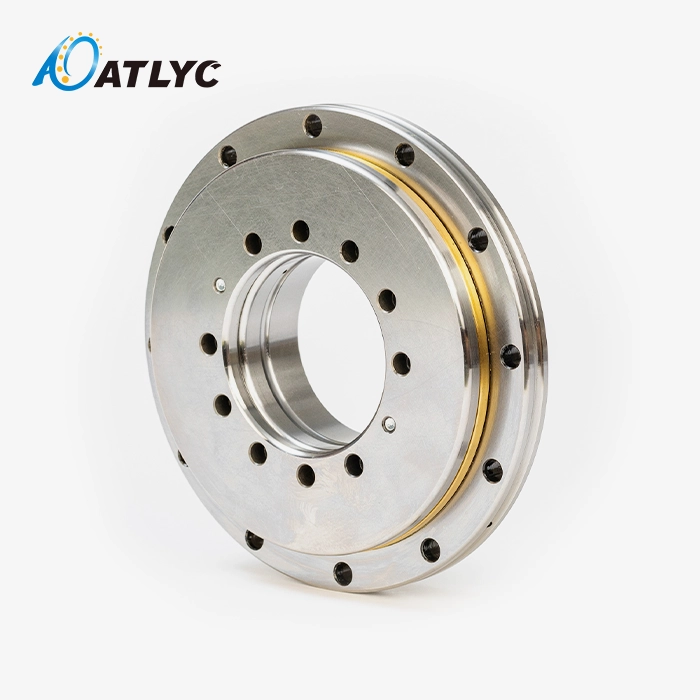
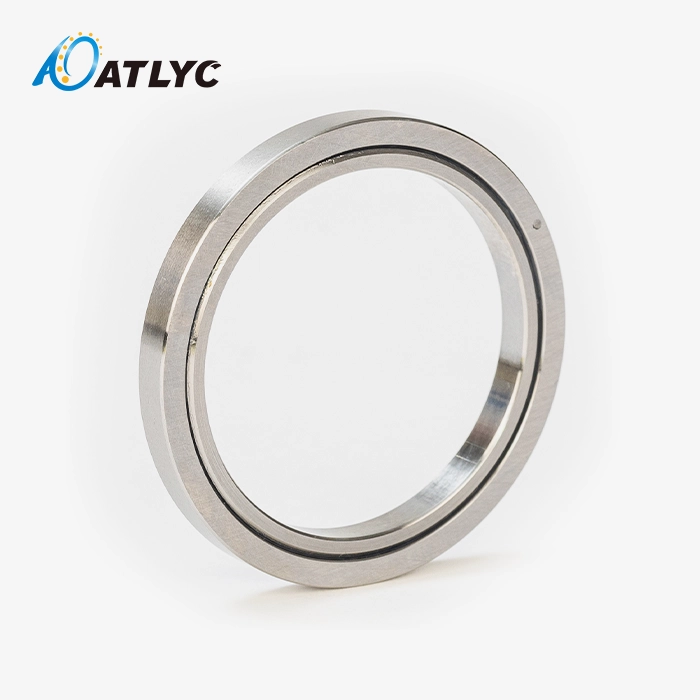
In uses with limited room, the RU Series Cross Roller Bearing is a completely new way to control precise motion. These bearings don't have multiple parts like most other bearing systems do. Instead, they use circular wheels crossed at a 90-degree angle between the inner and outer rings that are one piece.
Innovative Design Architecture
Each roller is placed perpendicular to the ones next to it, making a stable contact pattern across V-groove raceways. High-precision spacers separate each roller, keeping them from touching and making sure the load is spread evenly. This setup gets rid of the need to change the seed and keeps the play level at zero while the machine is running. Both the inner and outer rings of the integral ring frame have fastening holes in them. You don't need any extra housings or flanges to connect the bearing directly to the equipment surfaces. This cuts down on assembly time and eliminates the chance of making geometric mistakes. This way of thinking about design is very different from regular bearing systems, which often add up errors by using multiple mounting surfaces.
Performance Characteristics
Cross roller bearings offer very accurate spinning and high load capacities in very small packages. Depending on the size and type of bearing, the crossed-roller design can handle radial forces of up to 50,000N, axial loads of more than 40,000N, and moment loads of up to 15,000 N⋅m at the same time. The inside diameters range from 20 mm to 1,100 mm, the outside diameters from 70 mm to 1,500 mm, and the widths from 12 mm to 110 mm. This wide range meets a lot of different application needs while keeping performance standards the same across the whole product family.
Material Excellence and Precision Standards
Premium Gcr15 and Gcr15SiMn bearing steels are used in manufacturing. These steels are heat-treated to get the best strength and wear protection. These materials go through strict quality control steps to make sure they stay the same size and last longer in harsh environments. Precision grades go from P6 to P3, and for important uses that need accuracy down to the micron level, tighter tolerances are possible. The low friction coefficient makes sure that the bearing rotates smoothly, and the high runout accuracy keeps the location accuracy over the life of the bearing.
Application Scenarios and Advantages for Tight Spaces
More and more, companies that make industrial automation RU Series Cross Roller Bearing and precise machines want small solutions that offer top-notch performance. The RU Series Cross Roller Bearing works great in places where limited room would normally mean making design choices that aren't as good.
Robotics and Automation Applications
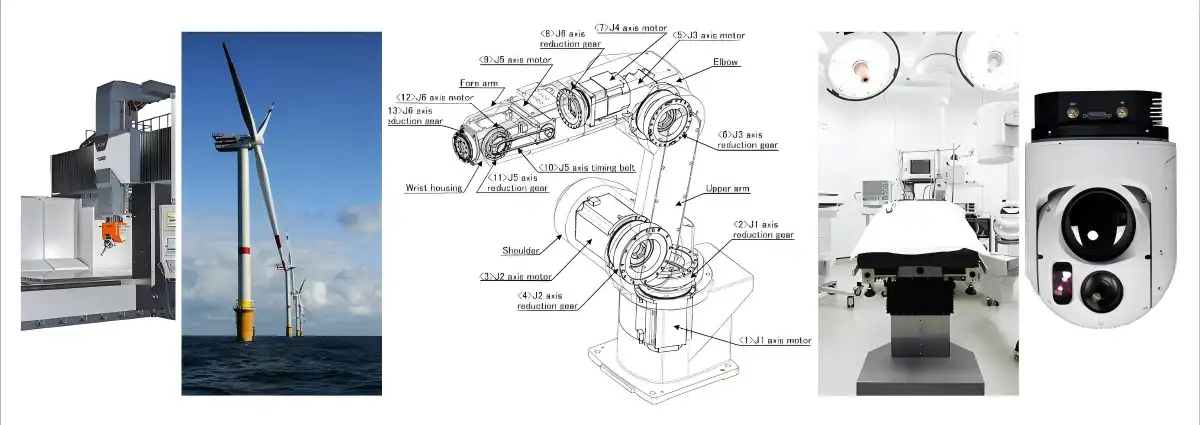
Cross roller bearings are very important for industrial robots' joints and directions of movement. Six-axis articulated robots can repeat their movements to within ±0.02mm with these bearings, which can handle the complex moment loads that are created when the arm is extended and the object is moved. The combined mounting design makes putting together the robot easier and lighter overall. The bearing's ability to keep its accurate position even when temperatures change is especially helpful for robotic welding cells. The crossed-roller design makes the machine very stiff, so it doesn't bend when it moves quickly. This keeps the quality of the weld uniform and cuts down on cycle times.
Machine Tool Integration
Precision indexing tables and CNC cutting centers need rotary accuracy measured in arc-seconds. Cross roller bearings let the object spin with positioning accuracy of less than 5 arc-seconds, even though they have to handle cutting forces that would be too much for other types of bearings. The fixing hole design lets you attach directly to rotating table structures, making a strong link that reduces vibrations during high-speed machining. This method of integration makes setup easier and boosts the machine's general speed.
Medical Equipment Solutions
One of the most difficult uses for compact, precise bearings is in medical imaging tools. For picture quality, CT scanners and X-ray systems need heavy gantry units to rotate smoothly and quietly while staying in the right place. The RU Series Cross Roller Bearing can handle the heavy loads that are being hung from above without causing any shaking or wobbling that could affect the accuracy of the diagnosis. When it comes to medical uses, dependability is very important for patient safety. These bearings go through a lot of tests to make sure they work well in settings where they are used all the time, like important healthcare facilities.
Selecting the Right Compact Cross Roller Bearing for Your Needs
The choice of bearing has a big effect on how well the equipment works, how much upkeep it needs, and the total cost of ownership. When buying, workers know the differences between the different cross roller bearing designs, and they can make choices that meet both technical needs and price limits.
Comparison with Alternative Bearing Types
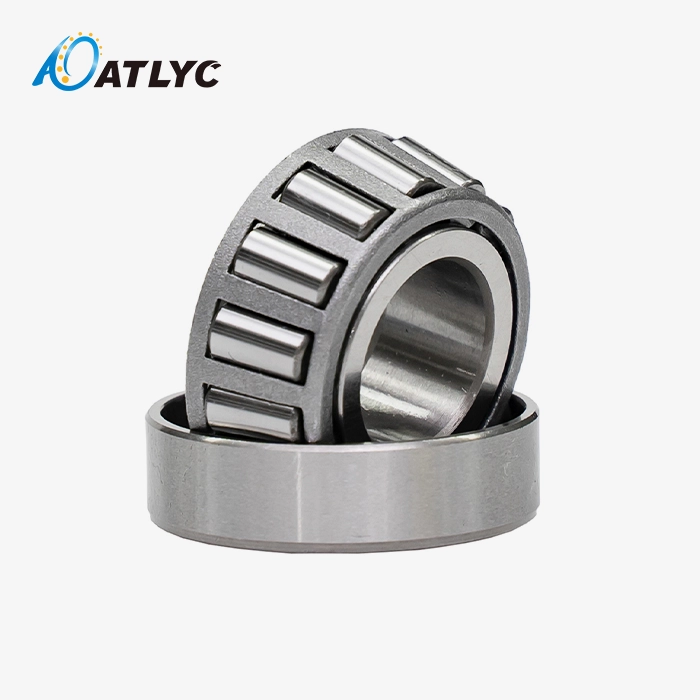
Standard angular contact bearings require paired mounting arrangements to achieve the load capacity that cross roller bearings provide in a single unit. This difference translates to reduced assembly complexity and lower inventory requirements for OEM manufacturers. Slewing bearings can also handle loads going in more than one way, but they usually need bigger fixing spaces. The small size of cross roller bearings makes them perfect for places where bigger bearings can't go because of space issues. Tapered roller bearings are great for radial loads, but they can't handle moment loads, which are needed for many automatic systems. Crossed-roller design evenly distributes the load, which stops edge loading and early wear.
Cost-Effectiveness Analysis
The initial purchase price is only one part of the total cost of RU Series Cross Roller Bearing ownership. Other parts include the work needed for installation, the upkeep needed, and the expected service life. Most of the time, cross roller bearings last 50% longer than other types of bearings because they distribute load more evenly and decrease stress peaks. By choosing the right lubricant and taking care of the surroundings, maintenance times can be lengthened. When properly designed and fitted, many systems can run for more than 10,000 hours without any maintenance.
Procurement Considerations
When choosing a supplier, companies with documented quality processes and foreign certifications should be given more weight. Following the rules set by ISO 9001 and IATF 16949 guarantees reliable products and consistent production methods. Established providers offer full technical help during the decision process and provide thorough documentation for checking the design. Setting up bulk orders can lower the cost per unit while keeping the supply chain stable for high-volume uses. A lot of suppliers can adjust the packaging and shipping times to fit the needs of production and inventory management.
Installation, Maintenance, and Technical Specifications
The function and life of a bearing are directly affected by how it is installed and maintained. Following the manufacturer's instructions will get you the best results and keep you from making common fitting mistakes that can cause the product to break down too soon.
Installation Best Practices
The first step in preparing a surface is to make sure that the fixing surface is flat and meets the finish standards. The flatness of mounting surfaces should be within 0.02 mm per 100 mm circle, and the hardness of the surface should be less than 1.6 μm. Any changes from these specs can cause stress to build up, which shortens the life of the bearing. To make sure that the gripping force is spread out evenly, bolt torque sequences are set up in a star shape. It is important to use measured tools to check torque values, since over-tightening can damage the bearing rings and make them less effective. Differences in thermal growth between bearing materials and housing parts are taken into account during installation to address temperature issues.
Maintenance Protocols
The type of lubrication used relies on the environment, the speed that needs to be maintained, and the working conditions. Lithium-based greases work very well in most situations, while synthetic lubricants can be used in a wider range of temperatures and need less maintenance. Vibration levels, temperature changes, and the state of the grease should all be checked on a regular basis. Trend analysis helps find problems as they start to form before they become huge problems. To get the most out of their maintenance intervals, many facilities use vibration tracking and thermal imaging as part of predictive maintenance plans.
Technical Documentation Requirements
Official technical datasheets have all the information you need to choose the right bearings and use them correctly. These papers have the load rates, speed limits, mounting measurements, and tolerance details that are needed to check the design. For controlled fields like medical devices and aircraft uses, certification paperwork is becoming more and more important. To show they are following the rules, suppliers should give compliance proof like material approvals, dimensional check records, and performance test data.
Why Choose ATLYC RU Series Cross Roller Bearings
Since its founding in 2010, Luoyang Auto Bearing Co., Ltd. has grown into a major company that specializes in RU Series Cross Roller Bearing and the manufacturing of accurate bearing products. Our 15-year growth from a single workshop to a full-service six-facility business shows how dedicated we are to always getting better and making our customers happy.
Quality Assurance and Certifications
Our factories are certified by ISO 9001 and IATF 16949, which means that the quality standards are always the same and meet foreign standards. These certifications show that we take a systematic approach to quality management and methods for ongoing growth. Our group of 120 trained workers is experienced in production, research and development, quality control, and putting things together. We can keep tight control over every part of making bearings because we have this wide range of skills. We can also provide quick expert help.
Global Market Experience
People in South Korea, the US, Germany, Russia, Iran, RU Series Cross Roller Bearing and Turkey are among the export clients. This experience working with people from other countries helps us understand how to meet the needs of different applications and follow different rules, which is good for all of our users. Our connections in the global supply chain make sure that the quality of our raw materials stays the same, and our transportation skills allow us to offer flexible shipping times that fit the needs of our customers. Regional marketing partnerships let people in the area get help while keeping quality control in one place.
Customization Capabilities
Engineering support services help customers choose the best bearings for their needs. Our design team works with customers to come up with unique ideas that fit their space needs or meet their performance standards. Manufacturing processes that are flexible can make both regular product setups and designs that have been changed. The structure of minimum order numbers makes them work for both making prototypes and making a lot of them.
Conclusion
To get the best performance in tight spaces, the RU Series Cross Roller Bearing is the best choice for uses that need precise motion control. To meet the most difficult technical needs, these bearings have a very high load capacity, accurate spinning, and a small size. The fact that they are mounted integrally makes installation easier and gives them the strength needed for tough industrial uses. As manufacturing moves toward smaller and more accurate automation systems, cross roller bearings are becoming more and more important for the performance and efficiency of equipment.
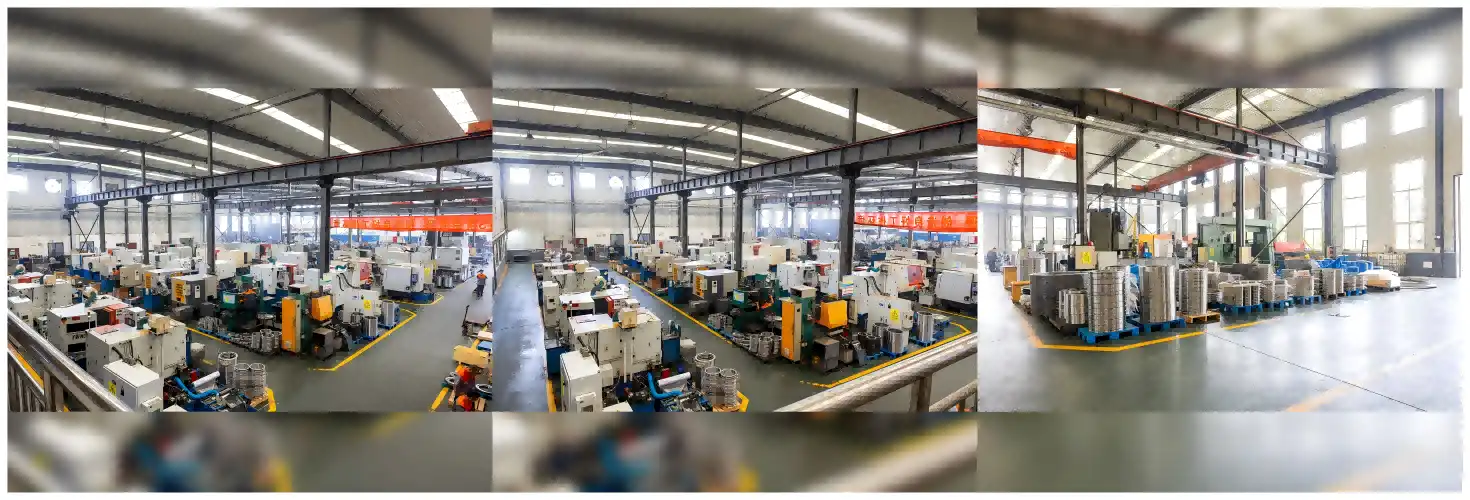
FAQ
1. What distinguishes RU series bearings from standard slewing bearings?
RU Series Cross Roller Bearing designs feature integral inner and outer rings with mounting holes, eliminating the need for separate mounting flanges. Standard slewing bearings typically require bigger fixing spaces and more complicated ways to place them. When compared to ball-bearing slewing rings, the crossed-roller design offers better moment stiffness in small packages.
2. How do I determine the appropriate bearing size for my application?
When figuring out the load, you should think about the highest radial, axial, and moment loads, as well as the speed needs and the projected service life. Selection is also affected by things in the environment, like weather, contamination, and easy access to lubricant. Using your working parameters and performance needs, technical support teams can give you application-specific advice.
3. What delivery timelines can I expect for RU series bearings?
Standard setups usually ship two to three weeks after the order is confirmed. Depending on how complicated they are, custom changes could take up to six weeks. For urgent needs, there are choices for faster shipping, and bulk orders can be planned to fit in with your production plans.
4. What warranty coverage is provided with these bearings?
As long as the bearings are put and used according to the manufacturer's instructions, the standard guarantee covers them for 12 months from the date of delivery. Customers who buy a lot of products or use them in critical situations can choose to get extended warranties. For warranty claims, you need to show proof of how the machine was used and keep records of its care.
Partner with ATLYC for Your Cross Roller Bearing Solutions
ATLYC is ready to help you with your precision bearing needs with tried-and-true RU Series Cross Roller Bearing options made for tough uses in limited space. Our experienced engineering team offers full technical help from the initial product choice to delivery, making sure that the product works perfectly for your needs. As a reliable RU Series Cross Roller Bearing maker, we offer low prices and on-time deliveries, backed by our 15 years of manufacturing excellence and global supply chain expertise.
Contact our technical specialists at auto@lyautobearing.com right away to talk about your application needs and get full specs that are made just for your project. ATLYC can become your strategic partner in providing reliable motion solutions that go above and beyond what you expect.
References
1. Industrial Bearing Technology and Cross Roller Design Principles, International Journal of Mechanical Engineering, 2023.
2. Precision Bearing Applications in Robotic Systems: Performance Analysis and Selection Criteria, Manufacturing Technology Review, 2024.
3. Compact Bearing Solutions for Space-Constrained Industrial Applications, Automation Engineering Quarterly, 2023.
4. Cross Roller Bearing Load Distribution and Stress Analysis in High-Precision Applications, Journal of Tribology and Bearing Science, 2024.
5. Medical Equipment Bearing Requirements: Safety, Precision, and Reliability Standards, Healthcare Technology Engineering, 2023.
6. Comparative Analysis of Bearing Types for Industrial Automation: Cost-Effectiveness and Performance Evaluation, Manufacturing Systems International, 2024.
Learn about our latest products and discounts through SMS or email