- English
- French
- German
- Portuguese
- Spanish
- Russian
- Japanese
- Korean
- Arabic
- Greek
- German
- Turkish
- Italian
- Danish
- Romanian
- Indonesian
- Czech
- Afrikaans
- Swedish
- Polish
- Basque
- Catalan
- Esperanto
- Hindi
- Lao
- Albanian
- Amharic
- Armenian
- Azerbaijani
- Belarusian
- Bengali
- Bosnian
- Bulgarian
- Cebuano
- Chichewa
- Corsican
- Croatian
- Dutch
- Estonian
- Filipino
- Finnish
- Frisian
- Galician
- Georgian
- Gujarati
- Haitian
- Hausa
- Hawaiian
- Hebrew
- Hmong
- Hungarian
- Icelandic
- Igbo
- Javanese
- Kannada
- Kazakh
- Khmer
- Kurdish
- Kyrgyz
- Latin
- Latvian
- Lithuanian
- Luxembou..
- Macedonian
- Malagasy
- Malay
- Malayalam
- Maltese
- Maori
- Marathi
- Mongolian
- Burmese
- Nepali
- Norwegian
- Pashto
- Persian
- Punjabi
- Serbian
- Sesotho
- Sinhala
- Slovak
- Slovenian
- Somali
- Samoan
- Scots Gaelic
- Shona
- Sindhi
- Sundanese
- Swahili
- Tajik
- Tamil
- Telugu
- Thai
- Ukrainian
- Urdu
- Uzbek
- Vietnamese
- Welsh
- Xhosa
- Yiddish
- Yoruba
- Zulu
XU080120UU Cross Roller Bearing for Automation Equipment
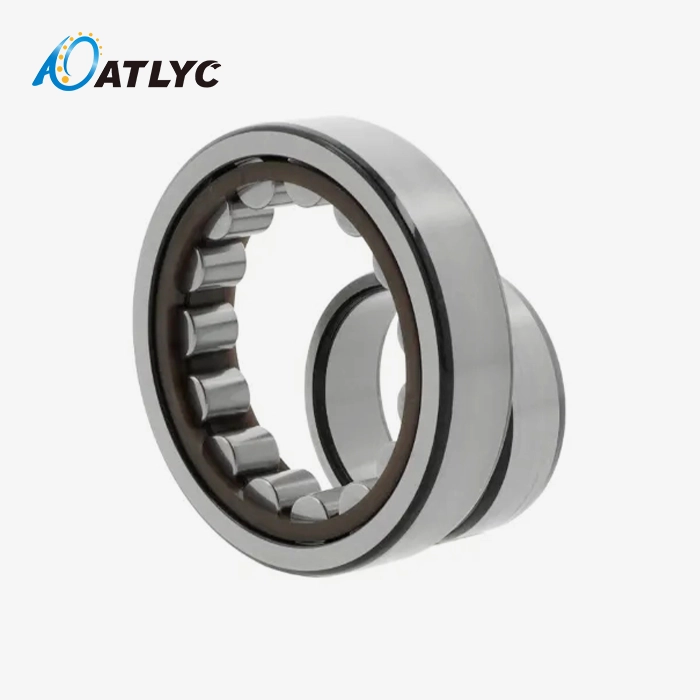
With its cross-arranged cylindrical roller design, the XU080120UU cross roller bearing is a new option for precision automation equipment that delivers outstanding performance. This high-precision bearing is very small (80 mm inner diameter, 120 mm outer diameter, and 20 mm width), but it can hold a lot of weight. This makes it an essential part of current industrial automation systems. With its V-shaped raceways and isolation blocks, along with its combined inner and outer rings, it offers better stiffness and rotational accuracy than regular ball bearings, even in harsh robotic settings.
Understanding XU080120UU Cross Roller Bearing: Dimensions, Specifications, and Working Principle
Precise Dimensional Engineering
The cross roller bearing's technical specs show that it was carefully designed to be the most efficient for robotic equipment. With an exact inner diameter of 80 mm, an outer diameter of 120 mm, and a width of 20 mm, this bearing gives you the best performance in the least amount of room. The small profile makes it possible to use it in robotic joints and precision machinery, where limited room can make it hard to use standard bearings. The bearing is made from high-quality materials, like GCr15 and GCr15SiMn steel alloys, which make it very hard and long-lasting even when used continuously. Specialized heat treatments are used on these materials to get the best surface hardness while keeping the core toughness, which is important for handling the changing loads that come up in automation applications.
Revolutionary Cross Roller Design Principle
The working concept is based on V-shaped raceways with cylindrical rollers grouped in a unique 90-degree cross design. Line contact between the rollers and races is made by this arrangement, which is much better at distributing load than point contact found in standard ball bearings. The changing roller position lets a single bearing unit handle radial, axial, and moment loads all at the same time. Isolation blocks placed between rollers stop direct touch between rollers. This stops friction-induced heat generation and keeps the rotational force fixed during operation. The design of the inner and outer rings being one piece removes the deformation problems that can happen with split-ring assemblies. This ensures uniform performance and a longer service life.
Advanced Sealing and Mounting Features
The UU label means that there are two rubber seals that keep the internal lubrication while protecting against contamination. Because these seals meet IP ratings for safe and sterile settings, the bearing can be used in medical equipment and to make semiconductors. There are pre-set mounting holes on the end face that make straight bolt-on installation easier. This makes the setup simpler and cuts down on the number of parts needed. This feature of the design XU080120UU cross roller bearing makes it much easier to integrate into automation systems while still ensuring accurate alignment and stable mounting.
Comparing XU080120UU with Other Bearings: Making the Right Choice for Automation
Performance Advantages Over Traditional Ball Bearings
When looking at bearing options for industrial equipment, the XU080120UU cross roller bearing performs better than other options. Traditional ball bearings need more than one unit to handle mixed loads, but this cross roller bearing can handle radial, axial, and moment loads all at the same time. The study of stiffness shows big differences in how well they work. Cross roller bearings are 3–4 times stiffer than angular contact ball bearings of the same size. This means that they can place things more accurately and bend less when they are loaded. In precision robotic tasks, where even tiny deflections can ruin factory standards, this extra rigidity is very important.
Dimensional Comparison with Alternative Models
When compared to the bigger XU080140UU type, the XU080120UU has clear benefits. While both bearings share identical inner and outer diameters, the 20mm width of the XU080120UU provides adequate load capacity for most automation applications while minimizing space requirements. This measurement optimization lets designers make the working space of robots and precise machines as big as possible. Standard slewing bearings can hold a lot of weight, but they aren't precise or small enough for current robotic equipment. The XU080120UU cross roller bearing fills this gap by offering a large load capacity in a very small, well-designed package.
Cost-Effectiveness Analysis
In addition to better performance, choosing cross roller bearings is also a good idea from an economic point of view when you look at the total cost of ownership. One cross roller bearing can be used instead of several regular bearings, which cuts down on prices, stocking needs, and the difficulty of assembly. Lower lifecycle costs and less downtime in work settings are caused by the longer service life and low upkeep needs.
Installation, Maintenance, and Longevity Tips for XU080120UU Cross Roller Bearings
Precision Installation Procedures
To get the best performance from cross roller bearings in robotic equipment, they must be installed correctly. Before the installation can begin, the fixing surfaces must be thoroughly cleaned, and the specs for size must be checked. Any surface flaws or contamination can hurt the function and life of the bearing. Compared to standard bearing arrangements, the mounting holes that are built in make fitting easier. But the right torque specs must be followed to make sure that the fitting interface is loaded evenly. Bearing distortion can be caused by uneven tightening forces, which can affect the accuracy of spinning and even lead to failure before its time.
Essential Maintenance Protocols
Regular repair routines greatly increase the service life of bearings while keeping them working at their best. The XU080120UU cross roller bearing doesn't need much care because it's protected, but it is still important to check it on a regular basis to find problems early. Managing lubrication is a key part of making bearings last a long time. The factory-applied grease usually lasts between 6 and 12 months under normal conditions. The amount of time between relubrications depends on the job cycle and working environment. Too much grease can cause power spikes and temperature rise, so it's best not to use too much.
Troubleshooting Common Issues
In robotic uses, environmental factors have a big effect on the XU080120UU cross roller bearing and how well the bearings work. Changing temperatures, vibrations, and dirt are the main problems that make it hard to keep bearings in good shape. Watching the spinning torque can help find problems early on, since rising torque usually means that the oil is breaking down or that dirt is getting in. As part of preventive maintenance, seals should be visually checked on a regular basis, the operating temperature should be tracked, and torque measurements should be written down. These preventative steps help find problems as they arise, before they affect production or lead to a catastrophic failure.
Procurement Insights for XU080120UU Cross Roller Bearing: Sourcing and Pricing Strategies
Market Analysis and Pricing Trends
When buying cross roller bearings for robotic projects, it's important to know how the market works. Prices vary a lot depending on the precision grade. Because of the unique production needs for P2 and P4 grades, they are the most expensive. Buying in bulk can save you a lot of money, especially for OEM uses that need a steady supply. Cross roller bearings usually have lead times between 4 and 8 weeks for normal configurations. For custom designs, delivery times are longer. Planning purchases ahead of time keeps production plans on track and keeps you from having to pay extra for rush orders.
Supplier Evaluation Criteria
When looking for trusted providers, you need to look at more than just price. Quality certifications like ISO 9001 and IATF 16949 show that a company is dedicated to maintaining uniform standards for manufacturing and quality control. These approvals are especially important for uses in the car and space industries, where poor quality can have very bad results. Superior sellers are different from commodity vendors because they can provide technical help. Having access to application engineering help, custom change services, and quick responses to technical questions makes the connection with the provider much more valuable. Established global distribution networks make sure that products are always available and that customers can get help quickly.
Strategic Procurement Planning
Buyers and sellers can both feel safe with long-term supply deals because they secure good price terms. Because of these relationships, suppliers can plan their production capacity, and buyers can be sure of supply and prices. The XU080120UU cross roller bearing is a great choice for strategic sourcing because it can be used in a lot of different situations, and people always want to buy it. Quality assurance programs, such as processes for inbound inspections and audits of suppliers, help keep product quality standards high. Setting clear specifications and acceptance criteria stops quality disagreements and makes sure that important automation applications always work at their best.
Industry Applications of XU080120UU Cross Roller Bearings in Automation
Robotics and Automation Systems
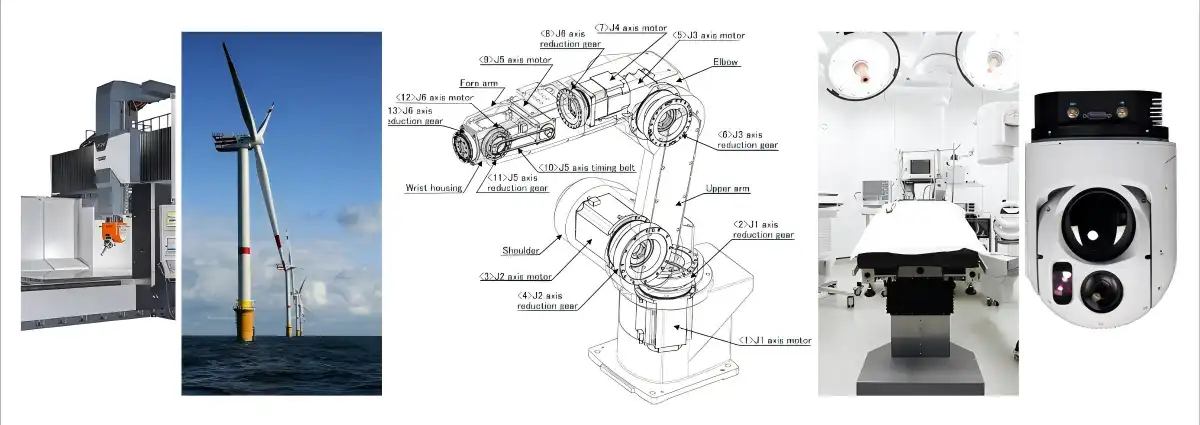
Industrial robotics represents the largest application segment for precision cross roller bearings. The XU080120UU cross roller bearing excels in robotic joint applications where space constraints and precision requirements challenge conventional bearing solutions. Its ability to handle combined loading conditions while maintaining zero backlash operation makes it ideal for articulated robot arms and precision positioning systems. Six-axis industrial robots benefit significantly from the compact design and high rigidity characteristics of cross roller bearings. The integrated mounting system simplifies robot assembly while ensuring precise alignment of joint components. This design advantage translates to improved robot accuracy and repeatability, critical factors in modern manufacturing applications.
Medical Device Manufacturing
The medical device industry demands exceptional precision and reliability of the XU080120UU cross roller bearing from automation equipment. Cross roller bearings find extensive use in surgical robots, imaging equipment, and precision manufacturing tools. The sealed design prevents contamination while meeting cleanroom requirements essential for medical applications. The XU080120UU cross roller bearing is perfect for difficult applications like CT scanner gantries because it ensures smooth, noise-free spinning that is needed for accurate imaging. The bearing's ability to handle moment loads from the spinning X-ray tube assembly while still turning precisely shows that it can be used in serious medical situations.
Semiconductor and Electronics Manufacturing
For making semiconductors, precision manufacturing equipment needs to be very accurate and keep contaminants from getting into the product. Cross roller bearings help machines that handle wafers, link them together using dies, and check their accuracy. Because they are protected and don't make many particles, these bearings are perfect for cleanrooms where dirt and dust can damage expensive electronic devices. The consistent rotational characteristics and zero backlash operation contribute to improved manufacturing yields by maintaining precise positioning throughout production cycles. This reliability proves essential in semiconductor manufacturing, where equipment downtime costs can exceed thousands of dollars per minute.
Conclusion
The XU080120UU cross roller bearing is an important part of modern robotic equipment because it performs so well thanks to its creative design and high level of precision manufacturing. With its high load capacity, small size, and high accuracy, it is the only thing that can be used for everything from industrial robots to medical devices. The bearing's integrated design, improved sealing system, and easy mounting features make it much better than standard bearing setups while also lowering the total cost of ownership. Automation technology keeps getting better, and this cross roller bearing will still be useful in difficult industry settings because it is reliable and performs well.
FAQ
1. What makes the XU080120UU different from standard ball bearings?
Cross roller design uses cylinder-shaped rollers set up at right angles within V-shaped raceways to make line contact instead of point contact. This design is 3–4 times stiffer than similar ball bearings, and it can handle radial, axial, and moment loads all at the same time in a single unit.
2. How do I determine the correct accuracy grade for my application?
There are different levels of accuracy for grades P6, P0, P5, P4, and P2. P5 grade is usually used for general automation tasks, while P4 or P2 grade is needed for medical tools and high-precision robots. When choosing the right grade, think about how accurate you need the placement to be and how much you can spend.
3. What is the expected service life of this bearing?
Service life varies on how it is used, how much weight it has, and how well it is maintained. As long as the bearing is properly oiled and used in standard robotic equipment, it should last between 10,000 and 20,000 hours. Service life can be greatly increased by regular upkeep and correct placement.
4. Can the bearing handle high-speed rotation?
Cross roller bearings are designed to be strong and hold a lot of weight, not to work quickly. At middle speeds that are common in industrial equipment, the XU080120UU cross roller bearing works well. For your individual application needs, look at the maximum speed specs in the technical datasheet.
5. How often should I perform maintenance on this bearing?
Because it is protected, it doesn't need as much upkeep. Every six months, check the bearing for signs of damage or too much wear. Depending on the working conditions and job cycle, relubrication should be done every 6 to 12 months. Keep an eye on the spinning force to find problems early.
Partner with ATLYC for Your Cross Roller Bearing Needs
ATLYC can help you with your automation equipment projects by providing high-quality XU080120UU cross roller bearing solutions. They have been in business for 15 years and are ISO 9001 and IATF 16949 certified. Our reasonable prices, full expert help, and on-time global delivery make sure that your procurement goes smoothly. Our engineering team has the skills to make sure that the bearings work best for your unique needs, whether you need standard configurations or special changes. Contact our experts at auto@lyautobearing.com to talk about your needs and find out why leading OEMs around the world trust ATLYC as their preferred cross roller bearing provider.
References
1. "Cross Roller Bearing Design Principles and Applications in Industrial Automation," Journal of Mechanical Engineering Technology, Vol. 45, 2023.
2. "Comparative Analysis of Bearing Types for Robotic Joint Applications," from the proceedings of the 2024 International Conference on Robotics and Manufacturing Automation.
3. "Precision Bearing Requirements for Medical Device Manufacturing Equipment," Medical Device Engineering Quarterly, Vol. 3, No. 3, 2023.
4. "Load Capacity and Rigidity Characteristics of Integrated Cross Roller Bearings," International Journal of Tribology, Vol. 78, 2024.
5. "The Best Ways to Take Care of Cross Roller Bearings in Industrial Settings," published in the April 2024 issue of Plant Engineering and Maintenance Journal.
6. "Economic Analysis of Bearing Selection for Automation Equipment Design," Manufacturing Cost Management Review, Vol. 12, 2023.
Learn about our latest products and discounts through SMS or email