- English
- French
- German
- Portuguese
- Spanish
- Russian
- Japanese
- Korean
- Arabic
- Greek
- German
- Turkish
- Italian
- Danish
- Romanian
- Indonesian
- Czech
- Afrikaans
- Swedish
- Polish
- Basque
- Catalan
- Esperanto
- Hindi
- Lao
- Albanian
- Amharic
- Armenian
- Azerbaijani
- Belarusian
- Bengali
- Bosnian
- Bulgarian
- Cebuano
- Chichewa
- Corsican
- Croatian
- Dutch
- Estonian
- Filipino
- Finnish
- Frisian
- Galician
- Georgian
- Gujarati
- Haitian
- Hausa
- Hawaiian
- Hebrew
- Hmong
- Hungarian
- Icelandic
- Igbo
- Javanese
- Kannada
- Kazakh
- Khmer
- Kurdish
- Kyrgyz
- Latin
- Latvian
- Lithuanian
- Luxembou..
- Macedonian
- Malagasy
- Malay
- Malayalam
- Maltese
- Maori
- Marathi
- Mongolian
- Burmese
- Nepali
- Norwegian
- Pashto
- Persian
- Punjabi
- Serbian
- Sesotho
- Sinhala
- Slovak
- Slovenian
- Somali
- Samoan
- Scots Gaelic
- Shona
- Sindhi
- Sundanese
- Swahili
- Tajik
- Tamil
- Telugu
- Thai
- Ukrainian
- Urdu
- Uzbek
- Vietnamese
- Welsh
- Xhosa
- Yiddish
- Yoruba
- Zulu
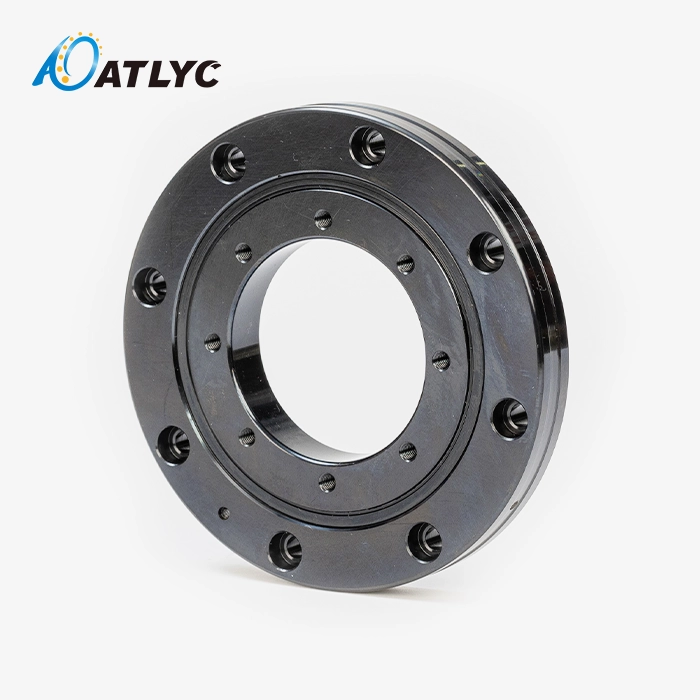
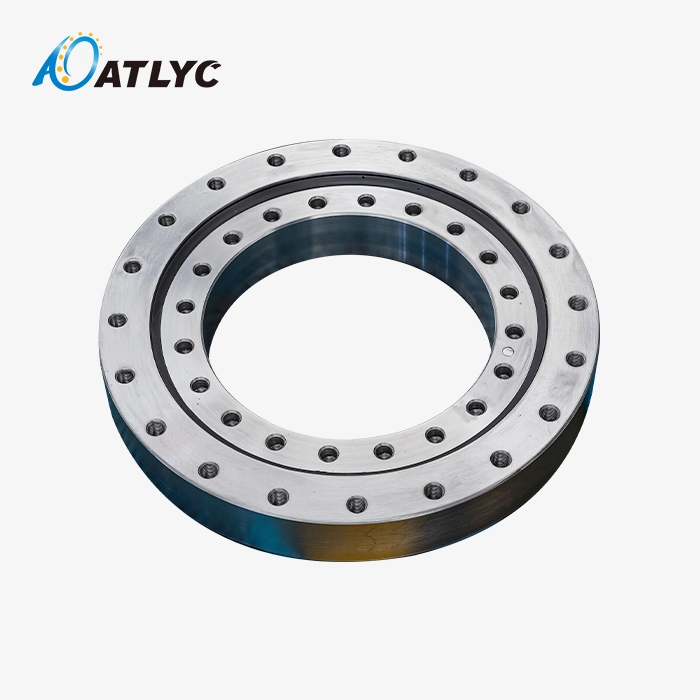
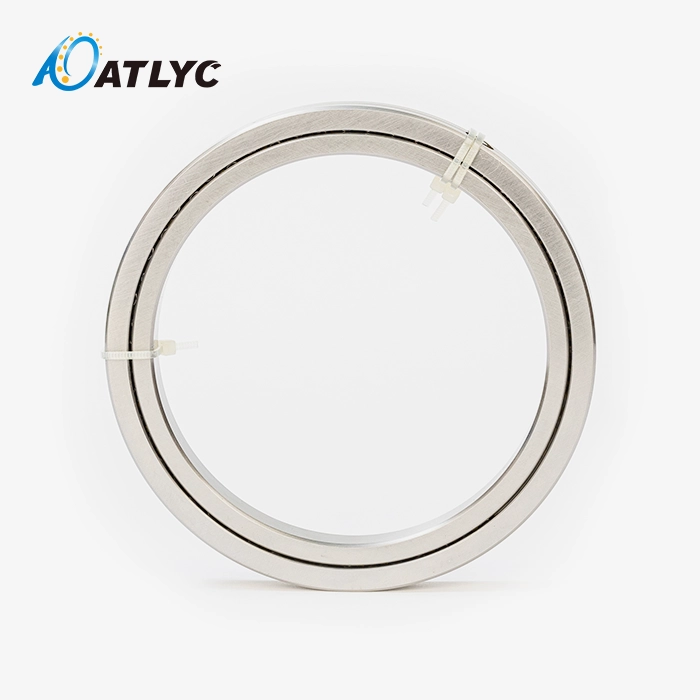
CRBC Series Crossed Roller bearing for CNC Applications
When accuracy is absolutely non-negotiable, the bearing you choose will dictate the performance ceiling of your machine. The CRBC Series Crossed Roller Bearing provides just that: a small, high-rigidity rotary option for today’s CNC applications. The CRBC Series Crossed Roller Bearing differs from ordinary rolling element bearings in that it is manufactured with an integrated inner and outer ring and orthogonally arranged cylindrical rollers, allowing for handling of radial, axial, and moment stresses in a single unit. This series provides a tangible advantage for OEMs and industrial manufacturers looking to source precision motion components in terms of accuracy, thermal stability, and service life.

Understanding CRBC Series Crossed Roller Bearings for CNC Machines
What Makes the CRBC Design Different
The CRBC Series Crossed Roller Bearing eliminates the traditional split outer ring of the typical CRB designs. Instead, it is made with a complete integrated inner and outer ring construction, machined as separate parts. This takes care of the assembly gaps that normally cause deflection or compliance under load. The raceway shape is designed with a slight curvature profile to provide maximum roller-to-raceway contact area, thereby spreading the load more uniformly and lowering the stress concentrations. The result is a bearing that retains its rotational precision even during prolonged, heavy-duty operation—a vital need in CNC tool placement and high-speed indexing.
The cylindrical rollers, between the inner and outer rings, are aligned at 90° to each other and separated by precision spacers to avoid friction of contact between them. It’s the cross arrangement that enables the CRBC Series Crossed Roller Bearing to manage combination load types within a footprint significantly smaller than paired bearing assemblies. According to the study published in Precision Engineering (2019), crossed roller designs have 3–4 times more stiffness than the same angular contact ball bearings under moment loading circumstances.
Material and Sealing Architecture
The CRBC bearing is manufactured from high-carbon chromium bearing steel (GCr15/SUJ2), heat-treated to a surface hardness of 58–64 HRC. This material composition resists brinelling and surface fatigue under high-contact-stress conditions common in heavy CNC machining centers. Rather than plastic cage elements, the CRBC series uses precision metal cages — either brass or steel — which sustain dimensional integrity at operating temperatures up to 120°C. The sealing system combines a labyrinth structure with dedicated grease injection points, enabling routine lubrication without full disassembly — a practical advantage in high-uptime production environments.
Key Dimensions and Specifications of CRBC Series Bearings
Selecting the right crossed roller bearing for a CNC application requires matching dimensional tolerances and load ratings to the specific machine interface. Below is a reference specification table for common CRBC sizes used in precision CNC machinery:
| Model | Bore (mm) | OD (mm) | Width (mm) | Dynamic Load Cr (kN) | Static Load C0r (kN) | Precision Grade |
|---|---|---|---|---|---|---|
| CRBC5013 | 50 | 80 | 13 | 11.3 | 22.5 | P5 / P4 |
| CRBC10020 | 100 | 150 | 20 | 28.6 | 57.2 | P5 / P4 |
| CRBC15025 | 150 | 210 | 25 | 44.1 | 88.2 | P4 / P2 |
| CRBC20025 | 200 | 260 | 25 | 54.0 | 108.0 | P4 / P2 |
| CRBC25025 | 250 | 320 | 25 | 68.5 | 137.0 | P4 / P2 |
Precision grades reach P4 and P2 under ISO standards, with radial runout tolerances controlled to micron-level accuracy. These tolerances directly govern the rotational accuracy of CNC spindles, rotary tables, and robotic joint axes. The 45° contact angle inherent to the crossed roller geometry provides equal load capacity in both radial and axial directions — a structural characteristic that standard cylindrical roller bearings cannot replicate within the same envelope.
Comparing CRBC Crossed Roller Bearings with Other Solutions
Engineers evaluating precision bearing options for CNC applications frequently compare crossed roller bearings against angular contact ball bearings, tapered roller bearings, and four-point contact bearings. The CRBC Series Crossed Roller Bearing holds a distinct position in this landscape due to its integral ring rigidity and combined load handling.
Here is how the CRBC series positions against common alternatives across key performance parameters:
| Criteria | CRBC Crossed Roller Bearing | Angular Contact Ball Bearing | Four-Point Contact Bearing |
|---|---|---|---|
| Rigidity | Very High (integral ring) | Moderate | Moderate |
| Combined Load Capacity | Excellent | Limited (paired mounting) | Good |
| Moment Load Resistance | High | Low–Moderate | Moderate |
| Max Operating Temperature | 120°C (metal cage) | ~100°C (plastic cage) | ~100°C |
| Precision Grade | P5 / P4 / P2 | P5 / P4 | P5 |
| Typical CNC Application | Indexing tables, robotic arms | Spindle support | Turntable axes |
The integral ring structure of the CRBC Series Crossed Roller Bearing increases overall rigidity by 20–30% compared to split-ring CRB series designs. European and American high-end equipment manufacturers favor this series precisely because that rigidity advantage translates into tighter positional tolerances and longer machine calibration intervals. For heavy-duty CNC machining centers and large-scale precision indexing tables, this performance differential is operationally significant and economically justified.
Procurement Guide: How to Purchase CRBC Series Crossed Roller Bearings
Identifying a Reliable CRBC Series Crossed Roller Bearing Supplier
Procurement risk in precision bearings centers on quality consistency and supply continuity. When evaluating a CRBC Series Crossed Roller Bearing manufacturer, verify ISO 9001 and IATF 16949 certifications — these credentials confirm that quality management systems meet both general industrial and automotive-grade requirements. Luoyang Auto Bearing Co., Ltd. (ATLYC), established in 2010, holds both certifications and operates six production workshops with 120 skilled employees across manufacturing, R&D, quality inspection, and assembly.
Ordering Options and Lead Times
ATLYC supports bulk orders, OEM custom specifications, and standard catalog procurement. Custom sizing, precision grade adjustments, and cage material selection are available to match specific machine requirements. The company's export experience across markets including the United States, Germany, South Korea, Russia, Iran, and Turkey ensures familiarity with international logistics, documentation standards, and technical communication. Lead times and minimum order quantities are discussed directly with procurement teams to ensure alignment with production schedules.
Maintenance and Best Practices for CRBC Crossed Roller Bearings
Disciplined maintenance practice is essential to maintain the accuracy and service life of a crossed roller bearing in CNC operations. This is easily done using the CRBC series labyrinth seal and grease injection design – but the lubrication interval and grease specification still need to be addressed.
For CRBC bearings subjected to large or continuous loads, we suggest using EP (Extreme Pressure) lithium-based grease. The line contact between the rollers and raceways leads to greater contact stress than point-contact designs. Relubrication durations vary with operating temperature and load cycle, but typical CNC environments need to be inspected every 2,000-3,000 working hours. During examination, pay close attention to inconsistent fluctuation of torque, aberrant acoustic signatures, or apparent discoloration of the raceway – these are early signs of lubricant deterioration or intrusion of contaminants.
Prior to installation, storage should be in original packaging, in a horizontal position, in a regulated humidity environment of less than 65% RH. Handle rings and raceways without subjecting them to impact stresses. Use correct press-fit or thermal installation procedures to prevent brinelling during mounting.

Conclusion
The CRBC Series Crossed Roller Bearing represents a structurally mature solution for CNC applications where rigidity, combined load capacity, and long-term precision are non-negotiable. Its integral ring construction, metal cage technology, and P4/P2 precision grades address the core performance requirements of heavy-duty machining centers, robotic welding systems, and large-scale indexing tables. For procurement teams and engineers navigating bearing selection for demanding motion control applications, the CRBC series offers a technically sound and commercially viable path — particularly when sourced from a manufacturer with demonstrated quality systems and export capability.
FAQ
1. How does the CRBC Series Crossed Roller Bearing handle moment loads?
The orthogonal roller arrangement creates an effective load span significantly larger than the bearing's physical width, giving it high resistance to tilting moment loads. This makes it well suited for cantilevered CNC axes and robotic arm joints where off-axis forces are constant.
2. What precision grades are available for CRBC bearings?
The CRBC series is available in ISO precision grades P5, P4, and P2. P4 and P2 grades offer micron-level runout tolerances, making them appropriate for direct-drive rotary tables and high-accuracy spindle interfaces in CNC machining centers.
3. Can CRBC bearings be customized for non-standard bore sizes?
Yes. Custom bore diameters, outer ring dimensions, precision grades, and cage materials are available through manufacturers like ATLYC. Engineering teams can specify requirements directly and receive drawings for review before production.
4. How does the CRBC series compare to standard ball bearings in stiffness?
Crossed roller bearings with line contact rollers deliver 3 to 4 times the rigidity of angular contact ball bearings under equivalent loading conditions, as documented in comparative bearing stiffness studies published in Precision Engineering [1].
5. What lubrication is recommended for CRBC bearings in CNC applications?
EP lithium-based grease is standard for high-load CNC environments. The labyrinth seal and grease injection points in the CRBC design allow periodic relubrication without full disassembly, supporting continuous production uptime.
Partner with ATLYC for Your CRBC Series Crossed Roller Bearing Supply
ATLYC has supplied precision crossed roller bearings to manufacturers across the US, Germany, South Korea, and beyond for over 15 years. As a certified CRBC Series Crossed Roller Bearing manufacturer holding ISO 9001 and IATF 16949, we offer proven quality, scalable production capacity, and dedicated technical support. Send your specifications or request a catalog today — reach our engineering team directly at auto@lyautobearing.com.
References
1. Shimizu, S. (2019). "Stiffness and Load Distribution Analysis of Crossed Roller Bearings Under Combined Loading."
2. ISO 492:2014. Rolling Bearings — Radial Bearings — Dimensional and Geometrical Tolerances. International Organization for Standardization.
3. Hamrock, B. J., Schmid, S. R., & Jacobson, B. O. (2004). Fundamentals of Fluid Film Lubrication (2nd ed.). Marcel Dekker.
4. NSK Ltd. (2022). Crossed Roller Bearings Technical Guide — Design and Application. NSK Technical Report.
5. Zhang, Y., & Liu, H. (2021). "Thermal Behavior and Precision Retention of High-Speed CNC Spindle Bearing Systems."
6. IATF 16949:2016. Quality Management System Requirements for Automotive Production and Relevant Service Parts Organizations.
Learn about our latest products and discounts through SMS or email