- English
- French
- German
- Portuguese
- Spanish
- Russian
- Japanese
- Korean
- Arabic
- Greek
- German
- Turkish
- Italian
- Danish
- Romanian
- Indonesian
- Czech
- Afrikaans
- Swedish
- Polish
- Basque
- Catalan
- Esperanto
- Hindi
- Lao
- Albanian
- Amharic
- Armenian
- Azerbaijani
- Belarusian
- Bengali
- Bosnian
- Bulgarian
- Cebuano
- Chichewa
- Corsican
- Croatian
- Dutch
- Estonian
- Filipino
- Finnish
- Frisian
- Galician
- Georgian
- Gujarati
- Haitian
- Hausa
- Hawaiian
- Hebrew
- Hmong
- Hungarian
- Icelandic
- Igbo
- Javanese
- Kannada
- Kazakh
- Khmer
- Kurdish
- Kyrgyz
- Latin
- Latvian
- Lithuanian
- Luxembou..
- Macedonian
- Malagasy
- Malay
- Malayalam
- Maltese
- Maori
- Marathi
- Mongolian
- Burmese
- Nepali
- Norwegian
- Pashto
- Persian
- Punjabi
- Serbian
- Sesotho
- Sinhala
- Slovak
- Slovenian
- Somali
- Samoan
- Scots Gaelic
- Shona
- Sindhi
- Sundanese
- Swahili
- Tajik
- Tamil
- Telugu
- Thai
- Ukrainian
- Urdu
- Uzbek
- Vietnamese
- Welsh
- Xhosa
- Yiddish
- Yoruba
- Zulu
Deep Groove Ball Bearing 60 series for Pumps and Gearboxes
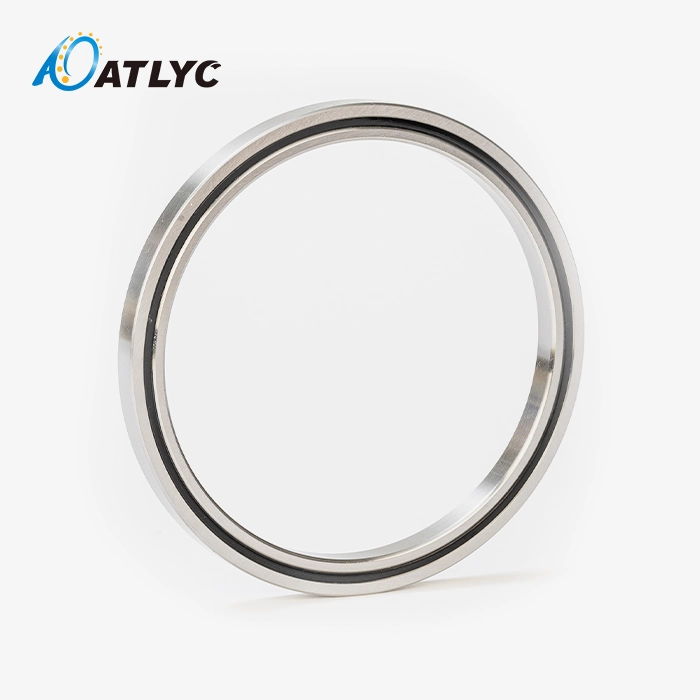
The 60 Deep Groove Ball Bearing 60 series is part of the ISO Dimension Series 10, an "Extra Light" metric bearing series. With a cross-section smaller than the bore diameter, it offers high-speed rotation, low friction torque, and moderate radial-axial load capacity, making it a logical choice for pumps and gearboxes where space constraints prevent adequate housing size but rotational accuracy is non-negotiable. The 60 series is a dependable, scalable system that fulfills ISO and IATF 16949 requirements in a variety of industrial applications, from centrifugal pump shafts to helical gearbox input stages and small servo-driven assemblies.

Understanding the Deep Groove Ball Bearing 60 Series
Structural Design and Core Dimensions
The 60 series single-row radial ball bearing has a smaller outer diameter and narrower breadth than the 62 (medium) and 63 (heavy) series for any bore size. The deep groove shape is designed to accommodate radial loads and mild axial loads in either direction, generally 25 to 50% of radial capacity depending on internal clearance. The narrow cross-section also immediately decreases the rotational mass, which minimizes centrifugal force at high RPM, allowing cooler and quieter operation within pump housings and gearbox shafts.
The table below summarizes representative dimensions for common 60 series designations:
| Bearing No. | Bore (mm) | OD (mm) | Width (mm) | Dynamic Load Cr (kN) |
|---|---|---|---|---|
| 6000 | 10 | 26 | 8 | 4.55 |
| 6004 | 20 | 42 | 12 | 9.36 |
| 6008 | 40 | 68 | 15 | 16.8 |
| 6012 | 60 | 95 | 18 | 29.5 |
| 6016 | 80 | 125 | 22 | 47.5 |
Material Choices and Sealing Configurations
Directly affecting the corrosion resistance and fatigue life is the material selection. Most 60 series bearings are made of vacuum-degassed high-carbon chrome steel GCr15 (SAE 52100). After heat treatment, the surface hardness is HRC 60-64. AISI 440C stainless steel variations are used in corrosive pump media situations such as chemical process lines or food-grade equipment.
There are two major variants for sealing choices. 2RS rubber contact seals are conventional for wet pump applications, locking out moisture and particles. ZZ metal shields have reduced friction drag and greater limiting speeds. These are used for gearbox input shafts where it is more important to keep the lubricant in than dust out. Pre-lubricated sealed components are filled with lithium-based NLGI Grade 2 grease at 30–40% cavity fill, enabling “fill-for-life” maintenance solutions to minimize gearbox repair intervals.
Comparing the 60 Series to Other Bearing Series and Types
Not every application suits the same Deep Groove Ball Bearing 60 Series family. Understanding dimensional and load trade-offs helps procurement teams avoid costly over-specification or under-specification.
| Feature | 60 Series (Light) | 62 Series (Medium) | 63 Series (Heavy) |
|---|---|---|---|
| Cross-section | Smallest | Moderate | Largest |
| Speed capability | Highest | Moderate | Lower |
| Radial load capacity | Lower | Higher | Highest |
| Weight | Lightest | Moderate | Heaviest |
| Typical use | High-speed pumps, motors | Gearboxes, conveyors | Heavy gearboxes, crushers |
Angular contact bearings are more effective under pure axial or mixed loading with steep contact angles (15°–40°) but need paired mounting configurations and more careful preload control. The 60 series deep groove shape is designed to accommodate bidirectional axial thrust without the need for paired installation, simplifying assembly and saving costs – a definite plus for common industrial pump cartridges and single-stage gearbox designs.
The C3 internal clearance type is designed to compensate for thermal expansion during high-speed or elevated-temperature operation. For engineers working on gearbox input stages operating over 3,000 RPM, C3 should be specified as normal practice.
Procurement Guide: How to Source the Best 60 Series Deep Groove Ball Bearings
Sourcing precision bearings for OEM production lines or replacement aftermarket channels involves more than comparing unit prices. Here are the core evaluation criteria procurement managers should apply:
- Certification compliance: Suppliers must hold ISO 9001 and IATF 16949 certifications to qualify for automotive and industrial OEM supply chains. These certifications indicate documented process controls, statistical process control (SPC) monitoring, and traceable inspection records covering dimensional accuracy, surface roughness, and noise grading (Z3/V3 minimum for motor applications).
- Precision grade availability: Confirm that the supplier manufactures to ISO P0 through P4 precision classes. P5 (ABEC-5) and P4 (ABEC-7) grades are increasingly requested for servo pump drives and precision gearboxes where runout tolerances below 4 µm are mandatory.
- Customization and OEM capability: Global OEMs frequently require non-standard bore tolerances, special cage materials (brass or polyamide), or modified grease fills. Verify that the supplier's engineering team can process custom drawings and provide first-article inspection (FAI) reports within a defined lead time.
- Supply chain transparency: Request documented MOQ policies, blanket order scheduling, and backup stock programs. Reliable lead times of 15–30 days for standard 60 series variants are achievable from established Chinese manufacturers with six or more production workshops.
These criteria collectively reduce counterfeit risk, protect production continuity, and justify long-term supplier relationships.
Maximizing Performance and Longevity of 60 Series Bearings in Operation
Material faults are not a normal cause of life failure in bearings used in pumps and gearboxes. Most premature failures are caused by mounting mistakes, contamination, or poor lubrication. Proper handling begins at installation. To enlarge the inner ring, use induction heaters or thermal plates before installing; brinell the raceway using a cold-press fitting.
Lubrication intervals are very dependent on the operating temperature and speed. 60 series bearings in oil-bath gearboxes are opened with ISO VG 100–150 mineral oil, changed as per gearbox OEM schedule. In pump brackets, grease-lubricated sealed devices are normally maintenance-free to L10 life. However, high ambient temperatures over 80°C destroy ordinary lithium grease quickly, and a switch to polyurea or synthetic base stock is needed.
The first indication of growing raceway damage is vibration signature monitoring (ISO 10816-3). A change in Deep Groove Ball Bearing 60 series vibration velocity from Zone A to Zone C requires a quick shutdown examination to avoid catastrophic seizure. Shaft alignment should also be checked quarterly by operators. Even 0.05 mm of misalignment will impart abnormal axial loading that will accelerate cage wear in 60 series configurations.
Why Choose the Deep Groove Ball Bearing 60 Series for Your Industrial Needs?
The 60 series deep groove ball bearing combines compact geometry, broad speed range, and bidirectional thrust tolerance in a single affordable component. These qualities make it disproportionately valuable across pump and gearbox applications compared to other rolling element families. Here are the core advantages that distinguish this series in high-demand environments:
- High-speed operation: The reduced ball assembly mass permits 15–20% higher limiting speeds than equivalent bore 62 or 63 series bearings—directly translating to lower heat generation in centrifugal pump drive ends and auxiliary gearbox stages.
- Dual-direction axial handling: Without requiring angular contact paired sets, a single 60 series unit manages bidirectional thrust arising from gear helix forces or pump impeller hydraulic imbalance, cutting BOM complexity.
- Noise and vibration control: Raceway superfinishing achieves Z3/V3 or Z4/V4 quality grades, critical for electric motor-driven pump assemblies subject to noise regulations in commercial HVAC and automotive coolant circuits.
These advantages directly address the reliability and total cost-of-ownership requirements that mid-to-large OEMs and distributors prioritize when building long-term supply agreements. As renewable energy and industrial automation sectors expand globally, the demand for compact, efficient bearings in servo pumps, robot-integrated gearboxes, and EV thermal management systems positions the 60 series as a growth-critical component through the next decade.

Conclusion
The Deep Groove Ball Bearing 60 series provides an extremely unique combination of compactness, speed capability, and load diversity that no other metric bearing family can duplicate at the same weight penalty. Compared to heavier alternatives for pumps with high-RPM impellers and gearboxes with complicated combined loads, this series consistently offers lower operating temperatures, longer projected L10 life, and easier installation. Manufacturers and distributors who focus on quality-certified 60 series versions and work with suppliers providing traceable inspection records and timely technical assistance may enjoy quantifiable improvements in production uptime and warranty performance.
FAQ
1. What is the difference between the 60 series and the 62 series?
The 60 series carries a smaller outer diameter and narrower width for the same bore size, enabling higher speed and lower weight. The 62 series offers greater radial load capacity due to its larger ball complement and wider raceway. Choose the 60 series when housing space is constrained and speed is prioritized; choose the 62 series when radial load governs the design.
2. Are 60 series and 62 series bearings interchangeable?
They share the same bore diameter but differ in outer diameter and width. Direct interchangeability is not possible without housing modification. Confirm OD and width tolerances before substituting one series for another in an existing assembly.
3. When should I specify C3 clearance?
Specify C3 internal clearance for applications running above 3,000 RPM or operating above 70°C ambient. The larger radial play accommodates steel ring thermal expansion and prevents bearing lock-up under sustained high-speed conditions.
4. What does 2RS mean on a 60 series bearing?
2RS indicates rubber contact seals on both sides. These seals exclude moisture and contamination effectively, making them standard for wet pump environments. They carry slightly higher friction than ZZ metal shield variants, so they are less suited to applications requiring absolute maximum speed.
5. Can I use a 60 series bearing under heavy shock loads?
Moderate shock is acceptable, but sustained heavy shock exceeds the 60 series design envelope. Heavy shock loads require the 63 series or cylindrical roller bearings with higher dynamic capacity and cage robustness.
Partner with ATLYC for Reliable Deep Groove Ball Bearing 60 Series Supply
ATLYC — Luoyang Auto Bearing Co., Ltd. — has operated six precision workshops since 2010, holding both ISO 9001 and IATF 16949 certifications and serving OEM customers across the US, Germany, South Korea, and beyond. As a trusted Deep Groove Ball Bearing 60 series manufacturer, we deliver certified precision bearings with competitive pricing, flexible MOQs, and responsive engineering support. Contact us today at auto@lyautobearing.com to request a quote.
References
1. SKF Group. (2018). SKF Rolling Bearings Catalogue. SKF.
2. NSK Ltd. (2020). Rolling Bearing CAT. No. E1102g. NSK.
3. IATF. (2016). IATF 16949:2016 — Quality Management System Requirements for Automotive Production.
4. The Timken Company. (2019). Bearing Installation and Maintenance Guide.
5. ISO. (2009). ISO 10816-3: Mechanical Vibration — Evaluation of Machine Vibration by Measurements on Non-Rotating Parts.
6. FAG / Schaeffler Group. (2022). Rolling Bearings — Technical Principles and Design Guidelines. Schaeffler.
Learn about our latest products and discounts through SMS or email