- English
- French
- German
- Portuguese
- Spanish
- Russian
- Japanese
- Korean
- Arabic
- Greek
- German
- Turkish
- Italian
- Danish
- Romanian
- Indonesian
- Czech
- Afrikaans
- Swedish
- Polish
- Basque
- Catalan
- Esperanto
- Hindi
- Lao
- Albanian
- Amharic
- Armenian
- Azerbaijani
- Belarusian
- Bengali
- Bosnian
- Bulgarian
- Cebuano
- Chichewa
- Corsican
- Croatian
- Dutch
- Estonian
- Filipino
- Finnish
- Frisian
- Galician
- Georgian
- Gujarati
- Haitian
- Hausa
- Hawaiian
- Hebrew
- Hmong
- Hungarian
- Icelandic
- Igbo
- Javanese
- Kannada
- Kazakh
- Khmer
- Kurdish
- Kyrgyz
- Latin
- Latvian
- Lithuanian
- Luxembou..
- Macedonian
- Malagasy
- Malay
- Malayalam
- Maltese
- Maori
- Marathi
- Mongolian
- Burmese
- Nepali
- Norwegian
- Pashto
- Persian
- Punjabi
- Serbian
- Sesotho
- Sinhala
- Slovak
- Slovenian
- Somali
- Samoan
- Scots Gaelic
- Shona
- Sindhi
- Sundanese
- Swahili
- Tajik
- Tamil
- Telugu
- Thai
- Ukrainian
- Urdu
- Uzbek
- Vietnamese
- Welsh
- Xhosa
- Yiddish
- Yoruba
- Zulu
Can CRBS Crossed Roller Bearings Handle Combined Loads?
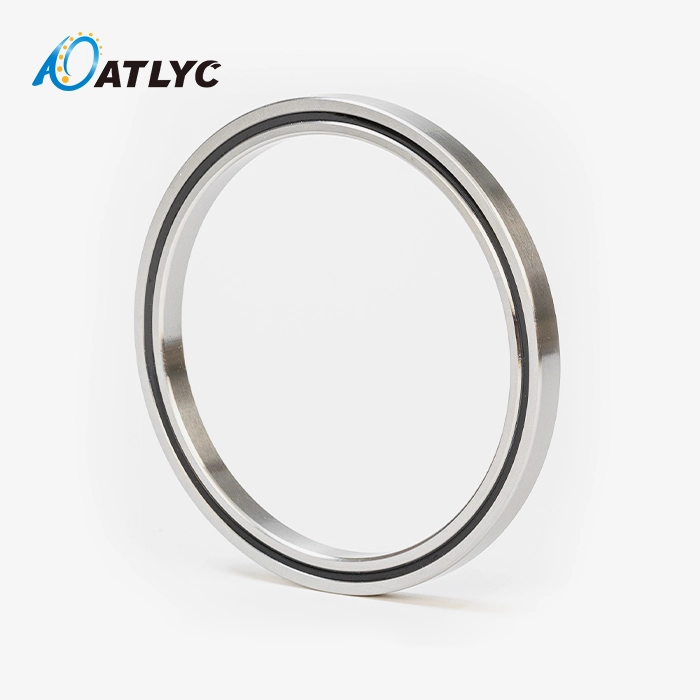
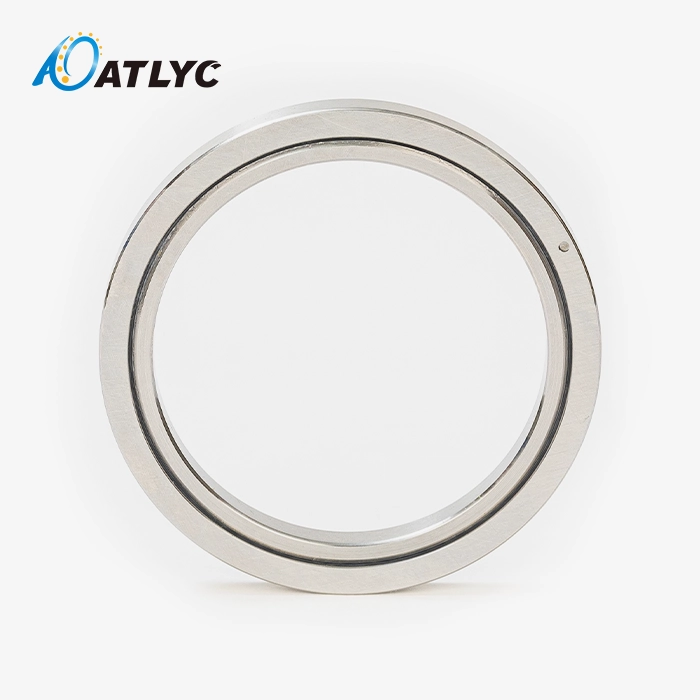
CRBS crossed roller bearings excel at handling combined loads through their innovative 90-degree roller arrangement within V-groove raceways. Unlike conventional bearings requiring multiple units, these sealed crossed roller bearings simultaneously manage radial, axial, and moment forces within a single compact assembly. The alternating cylindrical roller configuration distributes multi-directional stresses evenly across contact surfaces, preventing premature wear and maintaining precision under simultaneous loading conditions. This design makes them particularly effective in harsh industrial environments where equipment faces complex force combinations alongside contamination challenges.

Understanding Combined Loads and CRBS Crossed Roller Bearings
Industrial machinery rarely experiences isolated force vectors. Combined loads represent the reality of modern manufacturing—simultaneous radial forces pushing perpendicular to the shaft, axial loads acting parallel to rotation axes, and moment loads creating tilting forces. Each force type stresses bearing components differently, and their combination accelerates wear patterns in standard bearing designs.
Traditional solutions required stacking multiple bearing types—angular contact ball bearings paired with cylindrical units or complex thrust bearing assemblies. This approach increased installation space, added weight, and multiplied potential failure points. Maintenance teams faced challenges aligning separate units and managing differential thermal expansion.
CRBS crossed roller bearings address these limitations through structural innovation. Cylindrical rollers alternate at precise 90-degree orientations between inner and outer ring V-groove raceways. This orthogonal arrangement creates load paths capable of absorbing forces from multiple directions simultaneously. When radial loads compress one roller set, the perpendicular rollers resist axial displacement and moment-induced tilting.
Sealed Design for Environmental Protection
The CRBS series integrates a double-layer sealing system engineered specifically for contaminated working environments. An inner nitrile rubber (NBR) lip seal prevents lubricant escape while blocking fine particulate ingress. The outer stainless steel dust cover shields against larger debris, coolant spray, and corrosive chemical exposure.
This composite sealing achieves IP65 protection ratings—verified resistance against water jets and complete dust exclusion. Automotive painting workshops expose bearings to solvent vapours and overspray. Food processing equipment subjects components to frequent washdowns with caustic cleaning agents. Marine applications introduce salt fog and continuous moisture. Standard open or single-sealed bearings deteriorate rapidly under such conditions, but the CRBS series maintains internal integrity.
Raceway surfaces undergo nitriding heat treatment, diffusing nitrogen into steel substrates to create hardened surface layers. This process increases Vickers hardness values while improving corrosion resistance compared to conventional through-hardening methods. Pre-filled with high-temperature-resistant grease formulated for water resistance, these bearings extend maintenance intervals to 12,000 operating hours—reducing downtime and servicing costs substantially.
Load Capacity Benefits
Procurement managers evaluating bearing specifications focus on dynamic and static load ratings. The crossed roller configuration increases effective contact area compared to point-contact ball bearings. Line contact between cylindrical rollers and raceways distributes stress across greater surface zones, raising load capacity per unit volume.
A 100mm bore diameter CRBS bearing can replace bearing arrangements requiring 150mm or larger envelope dimensions when using separate angular contact sets. This space efficiency proves critical in compact robotic joint designs and machine tool rotary table assemblies where installation volume directly impacts equipment size and cost.
How Do CRBS Crossed Roller Bearings Work Under Combined Loads?
The mechanical principle behind combined load handling centres on the 90-degree roller alternation pattern. Imagine a bearing cross-section: cylindrical rollers positioned vertically contact raceway surfaces to resist radial loads. Adjacent rollers, orientated horizontally, create contact points that absorb axial thrust and counter moment-induced forces trying to tilt the bearing rings.
When external loads apply, each roller type activates based on force direction. Radial forces compress the vertical roller set against outer ring raceways while the horizontal set remains lightly loaded, maintaining rotational guidance. Simultaneous axial loads engage horizontal rollers, which transfer thrust through their line contact zones. Moment loads—attempting to create angular misalignment—distribute across both roller sets, with contact geometry preventing excessive deformation.
Load Distribution Mechanics
Traditional ball bearings contact raceways at elliptical zones measuring mere square millimetres. Crossed roller bearings establish line contacts extending along the roller length, typically 8-12 mm depending on bearing size. This geometry reduces contact stress (force per area) by factors of three to five compared to equivalent ball bearing arrangements.
Material selection influences performance characteristics. CRBS units utilise GCr15 bearing steel (SAE 52100 equivalent) with carbon content optimised for through-hardness and dimensional stability. Rockwell hardness ratings typically reach HRC 58-62 after heat treatment, providing wear resistance essential for extended service life under cyclic loading.
Cage design determines roller spacing and retention during operation. Machined brass cages offer excellent dimensional stability and natural lubricity. Polyamide composite cages reduce weight and dampen vibration in high-speed applications. The cage prevents roller-to-roller contact, eliminating friction-induced skewing that would degrade rotational precision.
Technical Specifications That Matter
Dynamic load ratings (C) indicate the load magnitude a bearing can withstand for one million revolutions with 90% reliability. Static load ratings (C₀) define permissible loads during non-rotating or slow oscillating conditions without permanent raceway deformation. For CRBS bearings, crossed roller geometry typically yields C₀/C ratios around 5-7, indicating superior static capacity—a critical specification for positioning applications with intermittent rotation.
A preload application eliminates internal clearance, increasing rigidity and precision. CRBS units allow preload adjustment during installation through controlled axial interference between split ring components. Proper preload selection balances stiffness gains against friction increases and thermal considerations.
Rotational accuracy specifications include radial runout (eccentric wobble during rotation) and axial runout (face surface perpendicularity variation). Quality CRBS bearings achieve radial runout under 5 microns for precision class P5 units, meeting requirements for CNC machine tool indexing tables and semiconductor wafer handling equipment.
Advantages of CRBS Crossed Roller Bearings in Combined Load Scenarios
Enhanced load capacity represents the most quantifiable advantage. The crossed roller configuration enables a single bearing unit to replace what previously required multiple bearing types arranged in complex combinations. This simplification reduces assembly time, eliminates alignment challenges between separate bearings, and decreases total component weight—particularly valuable in robotic arm designs where minimising moving mass improves acceleration performance and energy efficiency.
Rigidity improvements directly impact machine performance. When cutting tools engage workpieces in CNC machining centres, cutting forces generate moment loads attempting to tilt the tool spindle. Bearing stiffness—resistance to deflection under load—determines how much unwanted movement occurs. Higher stiffness maintains tool position accuracy, improving surface finish quality and dimensional tolerances of machined parts.
Testing data from automotive component manufacturers demonstrates these benefits. A tier-one supplier producing transmission housings switched from paired angular contact bearings to CRBS units in their machining centre's rotary tables. Measured deflection under 5000N moment loads decreased from 8.2 to 2.7 microns—a 67% improvement. Resulting workpiece dimensional variation tightened from ±0.015 mm to ±0.006 mm, reducing scrap rates and enabling tighter specification guarantees to OEM customers.
Extended Service Life
Sealed crossed roller bearings extend operational life through multiple mechanisms. The integrated sealing system prevents abrasive contamination that causes three-body wear—particles trapped between rolling elements and raceways acting as grinding compounds. Raceway nitriding creates hardened surface layers resistant to corrosion pitting that otherwise initiates fatigue crack formation.
Field data from Middle Eastern petrochemical facilities operating outdoor rotating equipment shows maintenance interval extensions. Standard open bearings required replacement every 4,200-4,800 operating hours due to dust ingress and corrosion. CRBS sealed units in identical applications now achieve 11,000-12,500 hours before scheduled replacement—a 150% life increase that reduces maintenance labour costs and unplanned downtime.
Pre-filled grease formulated for high-temperature and water-resistant properties maintains lubrication integrity throughout extended service intervals. Standard lithium-based greases degrade when exposed to moisture, separating into oil and soap components that lose lubricating effectiveness. Specialised formulations in CRBS bearings resist water washout and maintain consistency at operating temperatures reaching 120°C.
Cost-Effectiveness Analysis
Procurement decisions weigh the initial purchase price against the total cost of ownership. CRBS units typically cost 30-40% more than standard crossed roller bearings without sealing. However, lifecycle cost analysis reveals compelling economics when factoring in maintenance frequency, downtime costs, and replacement labour.
A food packaging equipment manufacturer calculated costs for conveyor pivot assemblies operating in washdown environments. Standard bearings at $85 per unit required quarterly replacement—$340 annually plus four hours of maintenance labour at $120/hour, totalling $820 per location. CRBS sealed bearings at $115 per unit lasted 18 months with no intermediate maintenance—$92 annualised cost. Across 47 pivot points, annual savings exceeded $34,000 while improving production uptime.
Comparison: CRBS Crossed Roller Bearings vs Other Bearing Types
Understanding performance distinctions helps procurement teams select optimal solutions for specific applications. Each bearing type evolved to address particular engineering challenges, creating trade-offs between capabilities, size, precision, and cost.
Traditional Roller Bearings
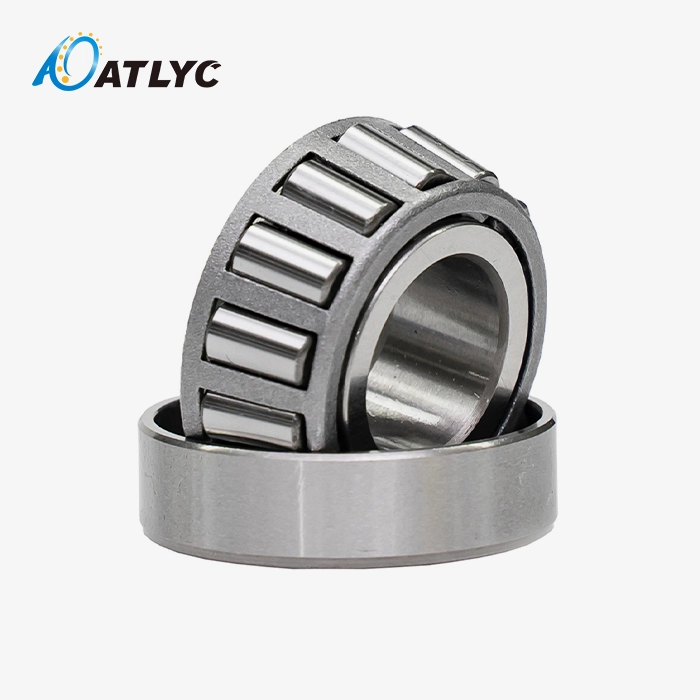
Cylindrical roller bearings and tapered roller bearings excel at single-direction load capacity. Cylindrical types handle high radial loads with minimal friction but offer no axial load capacity. Tapered rollers manage combined radial and axial loads in one direction but require opposed mounting configurations for bidirectional capability.
Mounting two tapered roller bearings in opposition creates axial load capacity comparable to crossed roller units. However, the assembly occupies 2.5-3 times the axial space of an equivalent CRBS bearing. Installation complexity increases as each bearing requires individual adjustment to achieve proper preload and clearance. Thermal expansion differences between housing and shaft materials necessitate accommodation in mounting design.
CRBS crossed roller bearings consolidate this functionality into a single unit with integrated sealing. Space savings enable more compact machine designs or allow installation in retrofit applications where envelope dimensions constrain options.
Crossed Roller Slewing Bearings
Large-diameter slewing bearings utilise crossed roller technology for applications like crane turntables and excavator platforms. These bearings typically range from 400 mm to several metres in diameter, featuring integral gear teeth for rotation drive systems.
While sharing the crossed roller principle, slewing bearings target different application parameters. They operate at low rotational speeds (typically under 20 rpm) with emphasis on massive moment load capacity. CRBS units serve precision positioning and continuous rotation applications requiring higher speed capability and tighter tolerances.
Manufacturing approaches differ substantially. Slewing bearings use bolted ring construction for transportation and installation feasibility at large diameters. CRBS bearings employ precision-ground, hardened through components, achieving accuracy classes suitable for machine tool and robotics applications.
Ball Bearing Arrangements
Angular contact ball bearings in duplex or triplex configurations create multi-directional load capacity. Point contact between balls and raceways enables high-speed operation with low friction. Precision grades achieve excellent rotational accuracy for spindle applications.
Ball bearing advantages include speed capability—DN values (bearing bore diameter × RPM) reaching 2-3 million compared to 500,000-800,000 typical for crossed roller bearings. Applications requiring rotational speeds above 1000 RPM at 100 mm bore diameter often favour ball bearing technology.
Load capacity comparisons favour crossed roller designs. A 100 mm bore CRBS bearing typically offers 40-50% higher dynamic load ratings than equivalent duplex angular contact ball bearing sets. Static load capacity advantages reach 100-150% due to line contact geometry distributing stress more effectively than point contacts.
Application guidance depends on operating parameters. High-speed machine tool spindles typically employ ceramic hybrid ball bearings. Rotary indexing tables and robotic joints requiring high stiffness under combined loads at moderate speeds benefit from CRBS crossed roller technology. The sealed CRBS variant suits applications facing environmental contamination where standard ball bearings would require frequent replacement.
Procurement Considerations for CRBS Crossed Roller Bearings
Strategic sourcing begins with identifying manufacturers demonstrating production scale, quality certifications, and engineering support capabilities. ISO 9001 certification verifies established quality management systems. IATF 16949 certification indicates automotive industry quality standards adherence—relevant even for non-automotive applications due to stringent process control requirements.
Manufacturing capacity assessment examines production volume capability and technological depth. Facilities operating six specialised bearing workshops with 120 skilled personnel demonstrate commitment to the bearing sector rather than diversified manufacturing with limited bearing expertise. Established manufacturers typically maintain in-house heat treatment, grinding, and assembly capabilities rather than outsourcing critical processes.
Supplier Evaluation Criteria
Technical support capabilities separate commodity suppliers from strategic partners. Engineering teams should provide load calculation assistance, mounting recommendation drawings, and application-specific customisation options. Suppliers offering dimensional modifications, special sealing configurations, or material alternatives for unique operating conditions add value beyond catalogue product supply.
Lead time consistency impacts production planning. Reliable suppliers maintain raw material inventory and establish production scheduling systems delivering quoted lead times accurately. Our 15-year operational history at ATLYC demonstrates supply chain maturity—we've maintained delivery performance through market fluctuations while serving customers across South Korea, the United States, Germany, Russia, Iran, and Turkey.
Quality consistency becomes evident through defect rate tracking. Reputable bearing manufacturers for OEM applications target defect rates below 100 PPM (parts per million). Incoming inspection data from your receiving department over multiple order cycles reveals actual quality performance beyond supplier claims.
Customisation and Volume Pricing
OEM applications often require dimensional modifications or special features. Cage material selection might shift from standard brass to polyamide composite for weight reduction in robotic applications. Seal configurations may need adjustment for extreme temperature ranges or specific chemical exposures. Mounting hole patterns, flange configurations, and raceway modifications enable integration into existing equipment designs.
Volume pricing negotiations should consider total annual requirements across product lines rather than individual purchase orders. Establishing blanket orders with scheduled releases provides suppliers with demand visibility, enabling production optimisation and cost reduction. Typical volume discounts begin at 100-unit quantities, with additional price breaks at 500 and 1000+ units depending on bearing size and complexity.
Payment terms and currency considerations affect total landed cost. Standard terms range from a 30% deposit with 70% due before shipment to net 30-60 days for established customers. Currency fluctuations impact pricing when sourcing internationally—some suppliers offer USD pricing stability for annual contracts, while others adjust quarterly based on exchange rates and raw material costs.
Quality Assurance and After-Sales Support
Warranty frameworks demonstrate manufacturer confidence in product durability. Standard warranties cover manufacturing defects for 12-18 months from delivery or 2,000 operating hours, whichever occurs first. Premature failures within warranty periods should trigger root cause analysis with documented findings and corrective actions.
Technical support availability prevents costly downtime when installation questions or operational issues arise. Manufacturers maintaining responsive engineering teams—answering enquiries within 24 hours and providing detailed technical documentation—enable faster problem resolution compared to suppliers offering limited after-sales engagement.
Replacement part availability ensures long-term serviceability. Equipment operating for 10-15 years may require bearing replacement as consumable maintenance items. Suppliers maintaining production of standard series bearings provide security that replacement components remain available throughout equipment service life.

Conclusion
CRBS crossed-roller bearings deliver proven combined load handling through crossed-roller geometry while adding environmental protection essential for harsh industrial conditions. The double-layer sealing system, nitrided raceways, and high-performance lubrication extend service intervals to 12,000 operating hours—dramatically reducing maintenance costs and unplanned downtime. Procurement teams gain advantages through space efficiency, load capacity improvements, and single-unit simplicity, replacing complex multi-bearing arrangements. Strategic sourcing from manufacturers with ISO 9001 and IATF 16949 certifications ensures quality consistency critical for OEM applications. Our 15 years of manufacturing expertise at ATLYC position us as a dependable CRBS crossed roller bearing supplier, combining precision production, international standards compliance, and responsive technical support for demanding applications worldwide.
FAQ
What distinguishes CRBS sealed bearings from standard crossed roller bearings?
CRBS units integrate double-layer sealing systems—inner NBR lip seals and outer stainless steel dust covers—achieving IP65 environmental protection. Standard crossed roller bearings lack integrated seals, requiring external shielding in contaminated environments. Nitrided raceway surfaces and pre-filled water-resistant grease in CRBS designs extend maintenance intervals from typical 3,000-5,000 hours to 12,000 hours in harsh conditions.
Can these bearings operate in high-temperature applications?
CRBS bearings function reliably at continuous operating temperatures up to 120°C with specialised high-temperature grease formulations. NBR seals maintain effectiveness within this range. Applications exceeding 120°C require consultation regarding seal material alternatives such as fluoroelastomer compounds and synthetic lubricants suitable for elevated temperature ranges.
How do I calculate the required bearing size for my application?
Load calculation requires axial force magnitude, radial force magnitude, moment load values, and rotational speed. Bearing selection software or engineering consultation applies these parameters against dynamic and static load ratings, considering safety factors appropriate for your application criticality. ATLYC engineering support assists with calculations and mounting configuration recommendations.
What maintenance intervals apply to CRBS sealed bearings?
Sealed design with pre-filled grease enables maintenance-free operation for 12,000 hours under normal conditions. Applications exceeding this interval or operating in extreme environments benefit from vibration monitoring and periodic inspection. Relubrication typically remains unnecessary due to effective sealing preventing lubricant loss and contamination ingress that would otherwise necessitate grease replenishment.
Partner With ATLYC for Reliable CRBS Crossed Roller Bearings Supply
ATLYC has specialised in precision bearing manufacturing since 2010, evolving from a single workshop to a comprehensive six-facility operation that serves global OEMs across the automotive, industrial automation, and marine equipment sectors. Our ISO 9001 and IATF 16949-certified production systems ensure consistent quality meeting international standards. We maintain stable lead times and competitive pricing through established supply chains built over 15 years serving customers in South Korea, the United States, Germany, Russia, Iran, and Turkey. Our engineering team provides technical support for application assessment, customisation requirements, and installation guidance. Contact ATLYC today at auto@lyautobearing.com to discuss your CRBS crossed roller bearing requirements and receive detailed specifications, pricing, and delivery schedules tailored to your production needs.
References
1. Harris, T.A. & Kotzalas, M.N. (2006). Advanced Concepts of Bearing Technology: Rolling Bearing Analysis, Fifth Edition. CRC Press, Boca Raton, Florida.
2. Schaeffler Technologies AG & Co. KG (2019). Crossed Roller Bearings: Design Characteristics and Application Guidelines. Technical Publication TPI 201, Herzogenaurach, Germany.
3. ISO 281:2007. Rolling Bearings — Dynamic Load Ratings and Rating Life. International Organization for Standardisation, Geneva, Switzerland.
4. Witte, D.C. (2012). "Operating Torque Characteristics of Crossed Roller Bearings Under Combined Loading Conditions," Tribology Transactions, Volume 55, Issue 4, pp. 482-491.
5. SKF Group (2018). Rolling Bearings in Industrial Applications: Selection and Application Guide. SKF Publication 17000 EN, Gothenburg, Sweden.
6. Guo, Y. & Parker, R.G. (2014). "Stiffness Matrix Calculation of Rolling Element Bearings Using a Finite Element/Contact Mechanics Model," Mechanism and Machine Theory, Volume 51, pp. 32-45.
Learn about our latest products and discounts through SMS or email