- English
- French
- German
- Portuguese
- Spanish
- Russian
- Japanese
- Korean
- Arabic
- Greek
- German
- Turkish
- Italian
- Danish
- Romanian
- Indonesian
- Czech
- Afrikaans
- Swedish
- Polish
- Basque
- Catalan
- Esperanto
- Hindi
- Lao
- Albanian
- Amharic
- Armenian
- Azerbaijani
- Belarusian
- Bengali
- Bosnian
- Bulgarian
- Cebuano
- Chichewa
- Corsican
- Croatian
- Dutch
- Estonian
- Filipino
- Finnish
- Frisian
- Galician
- Georgian
- Gujarati
- Haitian
- Hausa
- Hawaiian
- Hebrew
- Hmong
- Hungarian
- Icelandic
- Igbo
- Javanese
- Kannada
- Kazakh
- Khmer
- Kurdish
- Kyrgyz
- Latin
- Latvian
- Lithuanian
- Luxembou..
- Macedonian
- Malagasy
- Malay
- Malayalam
- Maltese
- Maori
- Marathi
- Mongolian
- Burmese
- Nepali
- Norwegian
- Pashto
- Persian
- Punjabi
- Serbian
- Sesotho
- Sinhala
- Slovak
- Slovenian
- Somali
- Samoan
- Scots Gaelic
- Shona
- Sindhi
- Sundanese
- Swahili
- Tajik
- Tamil
- Telugu
- Thai
- Ukrainian
- Urdu
- Uzbek
- Vietnamese
- Welsh
- Xhosa
- Yiddish
- Yoruba
- Zulu
CRBT Series Crossed Roller Bearing: A Buyer's Guide
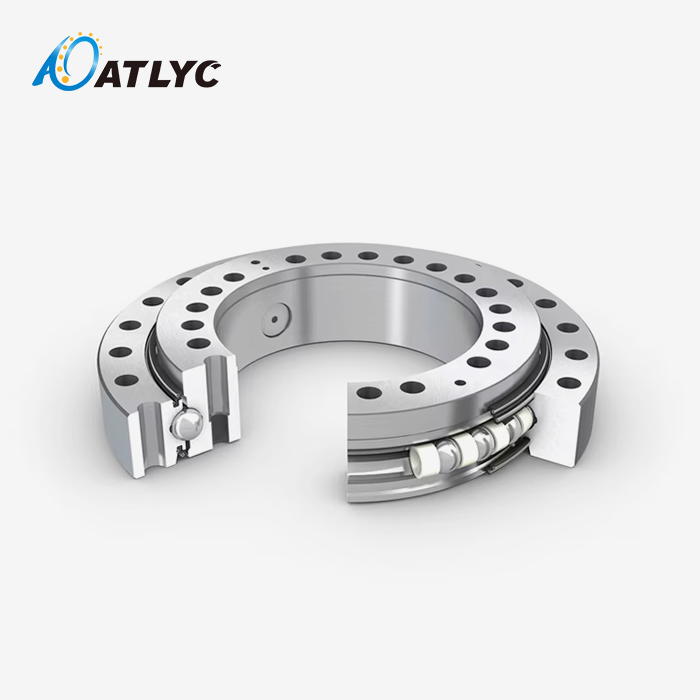
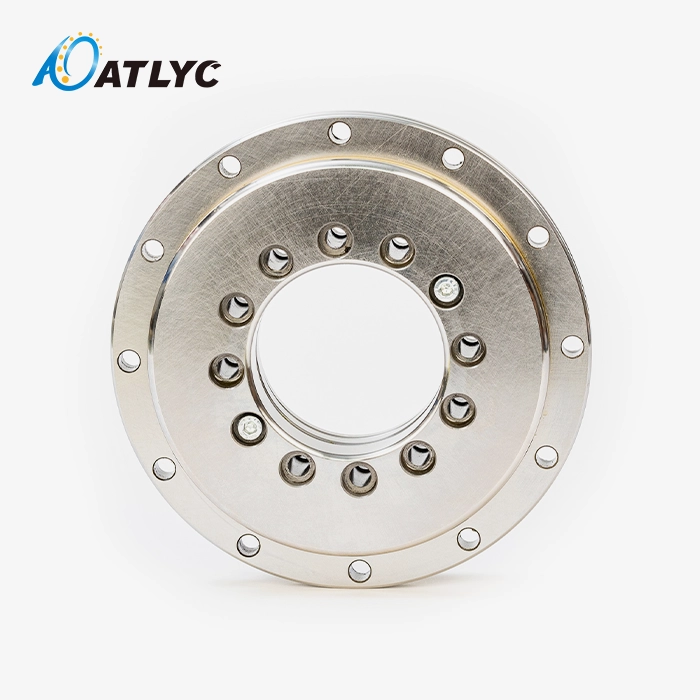
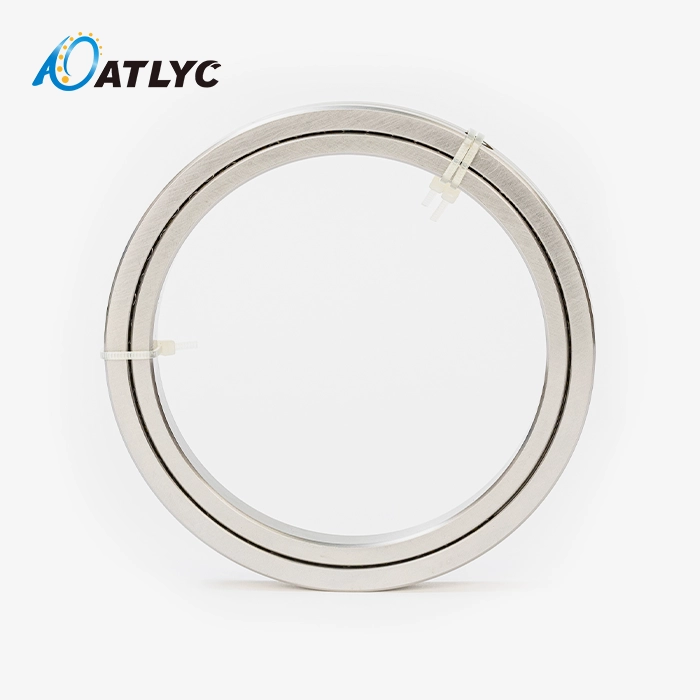
The CRBT Series Crossed Roller bearing is a precision bearing with a 1:12 or 1:30 tapered inner bore and a built-in outer ring, with a split inner ring kept together by locking nuts. The nuts may be tightened to modify the internal preload. This means that you are able to configure the tightness and the angular precision as per the work. The bearing is fitted directly to a conical shaft, thereby simplifying the connection between shaft and hub. Before making an order, customers should check the supplier’s taper ratio, load data, accuracy, and quality systems. This tutorial describes each of those issues in layman’s terms. It is intended for engineers, purchasing teams, original equipment manufacturers (OEMs), and distributors. This is Luoyang Auto Bearing Co., Ltd. (ATLYC), We have been manufacturing bearings since 2010. We are accredited by ISO 9001 and IATF 16949. This guide to the selection of CRBT Series Crossed Roller bearings has been developed from a production standpoint so you may feel comfortable about your selections before you submit an inquiry.

What Is a CRBT Series Crossed Roller Bearing?
Tapered Bore and Split Inner Ring Design
The CRBT Series Crossed Roller bearing is distinctive due to its tapered inner bore. It is not a typical cylindrical bore but has a taper ratio of 1:12 or 1:30. The outer ring is integrated; that is, it is constructed of one piece. There are locking nuts connecting various pieces of the inner ring. By tightening such nuts, the preload may be adjusted. Once installed, a cylindrical bore bearing does not allow you to make these sorts of adjustments. The cage construction and roller arrangement are identical to those of the CRB series. This implies that the bearing can maintain the fundamental precision and load-carrying capability that purchasers expect from a crossed roller design. What's special about this series is that it has familiar internals but a changeable bore.
Roller Arrangement and Combined Load Handling
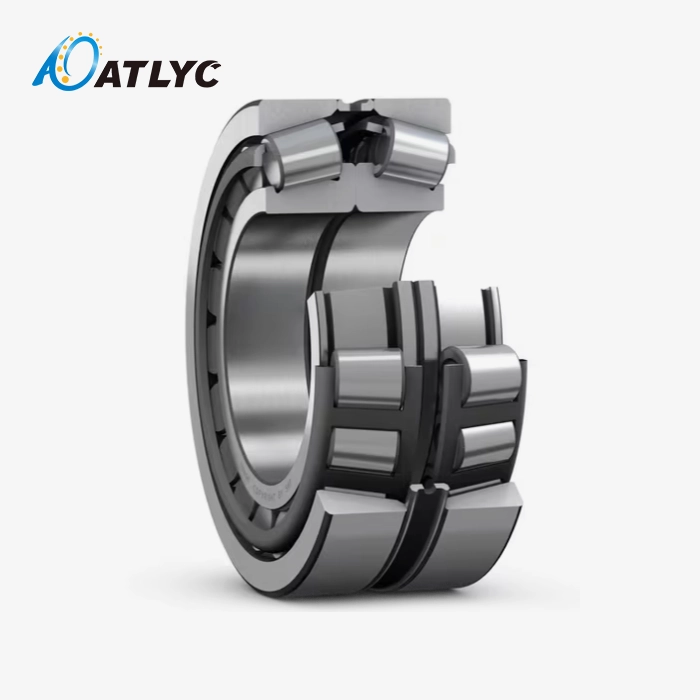
Cylindrical rollers lie within the bearing at 90 degrees to each other between V-groove raceways. With each roller changing direction with the roller next to it, the set may take weight from more than one direction. Separators protect the rollers from skewing and enable them to turn smoothly. Due to the arrangement of the CRBT Series Crossed Roller bearing, one bearing can take radial loads, axial loads from both sides, and tilting moments all in one tiny unit. It may be used in place of a pair of bearings in tight equipment designs to reduce part count. It is usually wise to read the design from the manufacturer that is adjacent to the catalogue since it will teach you more about how the product will operate in real life.
How Preload Adjustment Works
A small internal load called preload takes away the space between the rollers and raceways. More preload makes things more rigid and improves the accuracy of rotation, but too much adds friction, heat, and wear. You set the preload for the CRBT Series Crossed Roller bearing by tightening the nuts that hold it in place. For higher-speed work, a lighter setting is best, and for work that needs the most rigidity, a heavier setting is best. When the preload is applied, the tapered bore also helps spread the load evenly across the roller contact points. You can use the same type of bearing in machines that are under different loads because you can fine-tune the setting after the first assembly. I think the final setting should be written down so that maintenance teams can do it again.
CRBT Series Crossed Roller Bearing Specifications and Performance
Dimensions and Taper Details to Verify
Draw the first thing. Make sure that your CRBT Series Crossed Roller bearing has the right bore diameter, outside diameter, width, and taper ratio (1:12 or 1:30) for your shaft. A mismatched taper stops assembly, and a wrong size can mean that the whole thing has to be redone. Next, look at the thread on the locking nut and the accuracy values on the drawing. Here is a list of things I ask buyers to make sure of before they place an order.
| Item | What to confirm | Why it matters |
|---|---|---|
| Taper ratio | 1:12 or 1:30 matches the shaft | Correct seating and alignment |
| Main dimensions | Bore, outside diameter, width | Fit with shaft and housing |
| Locking nuts | Thread size, tightening method | Control of preload |
| Accuracy | Runout and tolerances on the drawing | Rotation accuracy |
| Load data | Static and rated-life values | Service-life calculation |
If you want to be sure that the catalog values cover everything, ask your supplier for the official drawing.
Load Capacity, Rigidity, and Service Life
The catalog ratings are just a starting point. They are not a verdict. Find out what kind of radial force, axial force, tilting moment, shock loads, speed, and duty cycle your application makes. ISO 281 tells us how to figure out the basic rated life of rolling bearings, and a lot of engineers use it to get a rough idea. How rigid something is depends on the shape of the rollers, the preload, and how stiff the shaft and housing are around the bearing. It's not possible for a stiff bearing inside a flexible housing to produce stiff results. Tell your supplier everything they need to know about how the machine works, such as whether the motion is continuous, indexing, or oscillating. That information lets the manufacturer check the combined loads and deformation of a model before you choose it.
Direct Shaft Mounting and Installation Efficiency
If you have a tapered shaft, the CRBT Series Crossed Roller bearing can fit right on it without the need for extra adapter sleeves or complicated mounting hardware. The tapered interface centers itself, which makes it easier to align correctly during installation. The design also cuts down on the need for precise machining of the housing shoulders and tricky shimming. Putting it together is easy: just put the bearing on the tapered shaft and use the locking nuts to change the preload. Fewer parts and adjustments mean less time and less chance of making a mistake when putting it together. This is why the series is popular with equipment builders who want an easier way to connect the shaft to the hub without giving up the accuracy of a crossed roller layout.
CRBT Series Crossed Roller Bearing Compared with Other Options
CRBT vs. Standard Ball Bearings
Ball bearings are good for general-purpose and high-speed work, and they usually cost less per unit. Because its rollers make line contact with the raceway instead of point contact like ball bearings do, the CRBT Series Crossed Roller bearing is more rigid and can handle moment loads better in a smaller space. A crossed roller layout is usually the better choice if your spindle or platform has to deal with loads that tilt it and needs low runout. If speed is the most important thing, a ball bearing might work better. Don't just look at the unit price; compare the whole application, such as space, preload, environment, and lead time.
CRBT vs. Cylindrical-Bore Crossed Roller Bearings
The CRB series has the same roller arrangement and cage structure, which means that the basic accuracy and load-bearing capacity are the same. The bore and the adjustment are what make them different. When you put a cylindrical-bore bearing on a straight shaft, it usually has a fixed preload. Because it is tapered, you can use the locking nuts to change the preload. If you need a straight shaft and a fixed setting, choose the cylindrical bore. Select the CRBT Series Crossed Roller bearing when the load being used changes or when you need to fine-tune the rigidity after the part has been put together. Don't get these two types of roller guides mixed up with linear cross roller guides, which move things in a straight line.
Typical Applications: Grinding, Optics, and Textiles
The CRBT Series Crossed Roller bearing is most useful for three things. Adjustable preload on precision grinding machine spindles lets the builder set how rigid the machine needs to be for the cut being made. Fine preload control helps optical instrument rotating platforms turn smoothly and accurately. Tapered-shaft mounting makes it easier to connect the shaft to the hub in textile machinery rollers. Because its performance can be changed, the series has also caught the attention of markets in Europe for textile machinery and precision grinding equipment. The same selection checks can be used by people who make other precise rotary equipment. They start with load data, the taper ratio, and the preload range the machine needs.
How to Choose and Install the Right CRBT Series Crossed Roller Bearing
A Step-by-Step Selection Process
By following a set order, you can choose a CRBT Series Crossed Roller bearing more quickly. First, say what kind of motion it is: oscillation, indexing, or continuous rotation. Second, figure out the radial, axial, and moment loads and use the right safety factors. Third, check the shaft's taper, bore, outside diameter, and space that is available. Fourth, choose the preload range and the level of accuracy you need. 5. Check the temperature, the level of contamination, and the need for lubrication. Lastly, look at the documentation, traceability, quality systems, and lead time of each supplier and compare them. When procurement teams follow the same order as engineers, they don't have to re-quote because of a missed detail, and the final choice fits the machine, not just the budget.
Installation and Preload Setting
Keep the bearing safe with clean, precise mating parts. Check the tapered shaft for length, roundness, and surface cleanliness before assembling parts. Care should be taken during installation of a CRBT Series Crossed Roller bearing so as not to impact or contaminate the raceways and cause damage. Put it on the shaft and snug up the lock nuts, being cautious to check that it still rotates. You need calibrated tools to acquire the right rigidity and to stop adding preload when you get there. Choose the correct oil for the speed, load, and temperature, and do not overfill since this might increase the torque. After installation, a controlled low-speed test should be made to check starting torque, runout, noise, vibration, and temperature rise. The exact directions are given on the manufacturer’s design.
Common Mistakes to Avoid
The difficulties of a CRBT Series Crossed Roller bearing are mostly due to faulty installation or not following instructions, and not because of the bearing itself. Sometimes people make mistakes by picking based on price or only bore size without considering moment loads and without correctly matching the shaft taper. If preload is too great, friction, heat, and wear will be excessive. If the nuts are not enough or are not appropriately tightened, or not aligned correctly, or if the wrong lubricant is used or if it is dirty, the raceways may be damaged, or the running torque increased. Eccentric loads increase the deformation and shorten the lifespan of the system. Check taper. Record preload setting. Clean each item and test at low speed before full operation. Most of these mistakes will be cleared. If the loads or accuracy requirements are complicated, have the supplier assess your application.
Buying a CRBT Series Crossed Roller Bearing from a Dependable Supplier
What to Include in Your RFQ
Both sides can save time by making a full request. As soon as you send an RFQ for a CRBT Series Crossed Roller Bearing, the information below will help a manufacturer make sure it will fit and suggest a model.
| RFQ item | Details to provide |
|---|---|
| Model or drawing | Dimensions and taper ratio (1:12 or 1:30) |
| Application | Machine type, motion, speed |
| Loads | Radial, axial, moment, shock |
| Precision and preload | Accuracy target, preload range |
| Quantity | Trial order and forecast |
| Delivery | Destination, target date, packaging |
| Documents | Certificates your company requires |
Requests that aren't complete often lead to more questions, so I recommend that you fill out every row before you send.
Supplier Checks That Reduce Risk
Even though price is important, the total cost also takes into account setup time, downtime, logistics, and paperwork. Check the factory's ability, experience with exporting, inspection systems, traceability, warranty terms, and steps for sample approval. When it comes to quality, ISO 9001 sets the standards for a quality management system, and IATF 16949 adds standards for the automotive supply chain. Find out what the current certificates cover by asking to see them. As a buyer from the US, you should also get written confirmation of the packaging, shipping documents, and delivery times. To make sure you have a steady supply over the long term, ask your supplier how they handle repeat orders and what they do when a drawing changes.
About ATLYC and What We Offer
This is Luoyang Auto Bearing Co., Ltd. ATLYC was created in 2010. We grew from one automated deep groove ball bearing factory to six workshops producing six different kinds of core bearings now. There are 120 professional people here doing everything from manufacturing to quality control to research and development to assembly. Our clientele are from South Korea, the USA, Germany, Russia, Iran, and Turkey. We are ISO 9001 and IATF 16949 certified. Send us the drawings and application data for the CRBT Series Crossed Roller bearing. Our engineers will look over them and will propose a model. That evaluation helps procurement teams and OEMs prevent costly errors before manufacturing begins.

Conclusion
The CRBT Series Crossed Roller bearing differs from other crossed roller bearings in that it features an integrated outer ring and a divided inner ring with locking nuts. The bore is tapered (1:12 or 1:30). Its characteristics allow you to modify the preload and put it directly on tapered shafts. The roller configuration can still take radial, axial, and moment loads. It gives higher stiffness in tiny places than ball bearings. It can be altered after it has been put together, unlike cylindrical-bore varieties. To achieve excellent results, you have to examine the taper and dimensions, look at genuine load data, adjust the preload properly, and install on clean and accurate parts. It is widely used for grinding spindles, optical platforms, and textile rollers. Having full inquiry data and supplier quality systems also reduces the risk in procurement.
FAQ
How does the CRBT series differ from the CRB series?
The CRBT series has a tapered bore (1:12 or 1:30) and a split inner ring that is held together by locking nuts. This lets you change the preload. It has the same arrangement of rollers and cage structure as the CRB series.
Which applications suit this bearing?
Spindles for precision grinding machines, rotating platforms for optical instruments, and rollers for textile machinery are all common examples of this. It works with designs that need a direct tapered-shaft mount or rigidity that can be changed.
How do I set preload?
Slowly tighten the locking nuts. As you test at a low speed, check the temperature and rotation. For more speed, use a lighter setting. For more rigidity, use a heavier setting.
What should I send for a quotation?
Send the drawing or measurements, taper ratio, loads, accuracy and preload needs, quantity, where the bearing is going, and when it needs to be delivered to auto@lyautobearing.com.
Request a CRBT Series Crossed Roller Bearing Quotation from ATLYC
Looking for a company that makes CRBT Series Crossed Roller bearings and knows about tapered-bore preload? ATL has been in business since 2010 and has six workshops where they serve customers. They are certified by ISO 9001 and IATF 16949. Send your drawing, loads, quantity, and where the bearing is going to auto@lyautobearing.com, and one of our engineers will look it over. Find out more about the product at https://aotezhoucheng.aixdb.cn/.
References
1. Harris, T. A., and Kotzalas, M. N., Rolling Bearing Analysis: Essential Concepts of Bearing Technology, 5th Edition, 2006
2. ISO 281, Rolling bearings: Dynamic load ratings and rating life, 2007
3. ISO 492, Rolling bearings: Radial bearings, Geometrical product specifications and tolerance values, 2014
4. IATF 16949, Quality management system requirements for automotive production and relevant service parts organizations, 2016
5. ISO 9001, Quality management systems: Requirements, 2015
6. Machinery's Handbook, 31st Edition, Industrial Press, 2020
Learn about our latest products and discounts through SMS or email