- English
- French
- German
- Portuguese
- Spanish
- Russian
- Japanese
- Korean
- Arabic
- Greek
- German
- Turkish
- Italian
- Danish
- Romanian
- Indonesian
- Czech
- Afrikaans
- Swedish
- Polish
- Basque
- Catalan
- Esperanto
- Hindi
- Lao
- Albanian
- Amharic
- Armenian
- Azerbaijani
- Belarusian
- Bengali
- Bosnian
- Bulgarian
- Cebuano
- Chichewa
- Corsican
- Croatian
- Dutch
- Estonian
- Filipino
- Finnish
- Frisian
- Galician
- Georgian
- Gujarati
- Haitian
- Hausa
- Hawaiian
- Hebrew
- Hmong
- Hungarian
- Icelandic
- Igbo
- Javanese
- Kannada
- Kazakh
- Khmer
- Kurdish
- Kyrgyz
- Latin
- Latvian
- Lithuanian
- Luxembou..
- Macedonian
- Malagasy
- Malay
- Malayalam
- Maltese
- Maori
- Marathi
- Mongolian
- Burmese
- Nepali
- Norwegian
- Pashto
- Persian
- Punjabi
- Serbian
- Sesotho
- Sinhala
- Slovak
- Slovenian
- Somali
- Samoan
- Scots Gaelic
- Shona
- Sindhi
- Sundanese
- Swahili
- Tajik
- Tamil
- Telugu
- Thai
- Ukrainian
- Urdu
- Uzbek
- Vietnamese
- Welsh
- Xhosa
- Yiddish
- Yoruba
- Zulu
How to Choose a Wind Turbine Spindle Bearing?
Wind turbine spindle bearing selection begins with the shaft's location and continues with the bearing type based on the loads, speed, and environment. Make sure the radial, axial, and tilting-moment loads are correct and that the shaft and housing sizes are correct. The rated life and the service-life goal should also be compared. The inspection records, the steel and heat treatment plan, and the lubrication and sealing plan are some other things you should look at. The last thing you should do is make sure the supplier can deliver on time and well. If I make the wrong choice, it could cause early wear, unplanned downtime, and expensive crane work. That's why I do things this way. The steps are written out below in language that is simple to understand.

Understand the Function and Define the Application of a Wind Turbine Spindle Bearing
How a Wind Turbine Spindle Bearing Carries Rotor Loads
Between the main shaft and the nacelle, there is a wind turbine spindle bearing. The radial and axial loads on the rotor, as well as the moment of inversion, are supported by this part. The shaft can also turn easily. Since the wind is always shifting, the bearing is always being shaken and vibrated, and its shaft bends at slow speeds. These things change the roller contact and the space inside the rollers. According to ISO 281, basic rating life (L10) is the amount of time that 90% of bearings that are exactly the same last in certain situations. That number is just a place to begin for me. If there is electrical damage, bad lubrication, dirt, or mounting that isn't lined up right, the service life will be much shorter than what was planned.
Confirm the Shaft Position and Operating Data
"Spindle bearing" can mean different things in different types of turbines, so I always check what it means before I start. Once the machine is in place, tell the supplier what they need to know about it: the speed, the amount of vibration, the expected misalignment, the lubricant, the bearing reference or drawing, and how long you want it to last. 3MW to 8MW land turbines are medium to large and use double-row tapered roller bearings. Bearings that are round and flat are used in offshore wind turbines that are 10MW or bigger. A full data sheet that stops engineers from making mistakes is the best way for them to do life calculations and get quotes for every Wind turbine spindle bearing.
Separate Normal Loads From Extreme Events
A wind turbine spindle bearing's normal operation does not reveal all the facts. If there are wind gusts, emergency stops, start-stop cycles, or problems with the grid, daily values might not match up with peak loads. IEC 61400-1 has load cases for wind turbines that you can use. This is part of the rules for designing things. What is the normal load range, and what are the peak values? You should ask the person who built or runs the turbine. After this, it tells us if the raceways can keep their shape after an electric charge hits them. If the loads you share are average, you may be given a bearing that works well on paper but not so well in real life. These tips are still useful because there is clear information on peak load.
Evaluate Technical Criteria and Compare Wind Turbine Spindle Bearing Types
Load Ratings, Fatigue Life, and Static Safety
Wind turbine spindle bearing rating life, equivalent load, and basic rated load should be the first steps. Check them against the static rating before you buy them. Dings in raceways can be caused by heavy shocks and slow rotation. Then read the words that are written next to the numbers: heating, friction, space inside, shaft deflection, housing distortion, and shaft deflection. The bearing can fail quickly even if it is very strong if the housing bends or the space between the balls gets too small while the machine is running. There are more things I consider than just the size and weight of the part. I also consider how well the bearings fit together and where they are in the bearing arrangement as a whole.
Compare Double-Row Tapered and Spherical Roller Designs
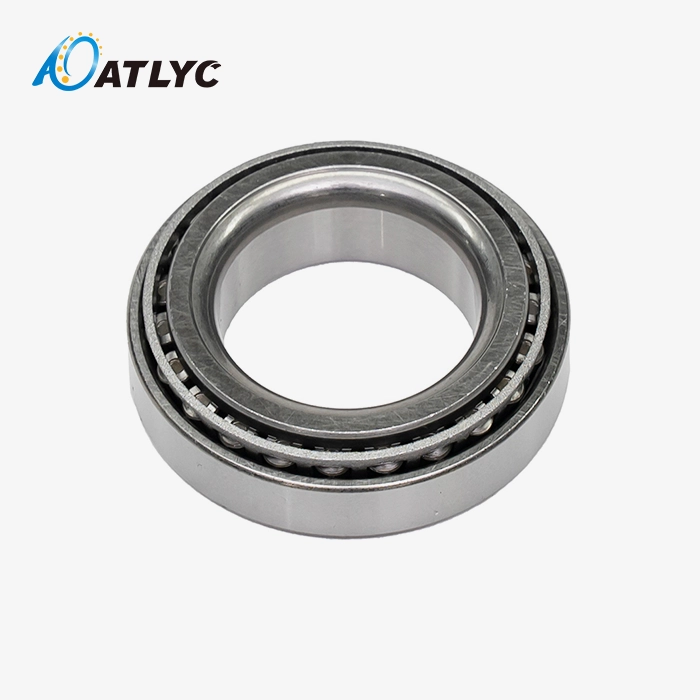
Wind turbine spindle bearing positions can be broken down into two main groups. Table 1 shows how they are different based on what we know about them. Table 1 shows how various types of main shaft bearings stack up against each other.
| Feature | Double-row tapered roller | Spherical roller (self-aligning) |
|---|---|---|
| Structure | Separable cone-and-cup | Double-row spherical rollers |
| Load handling | Combined radial and axial loads | Shaft deflection and shock |
| Misalignment | Adjust with care | Up to ±1.5° |
| Typical use | Onshore, 3MW–8MW | Offshore, 10MW and above |
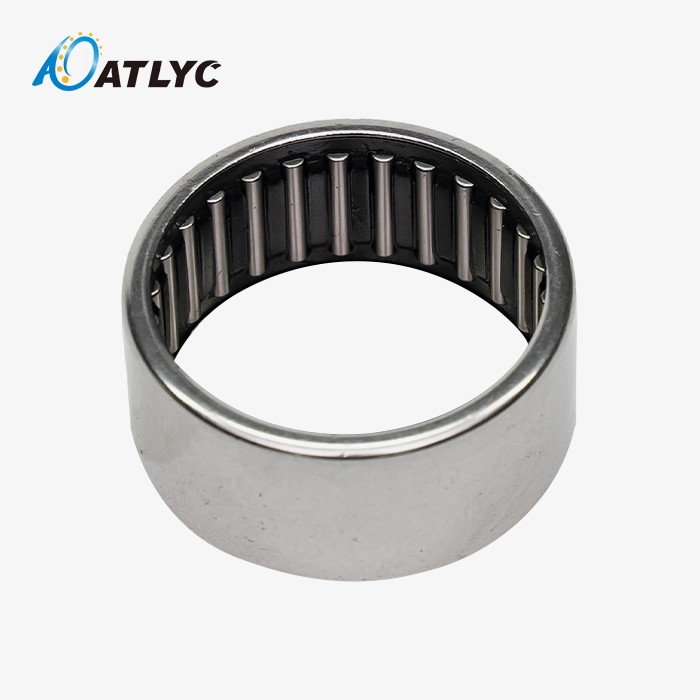
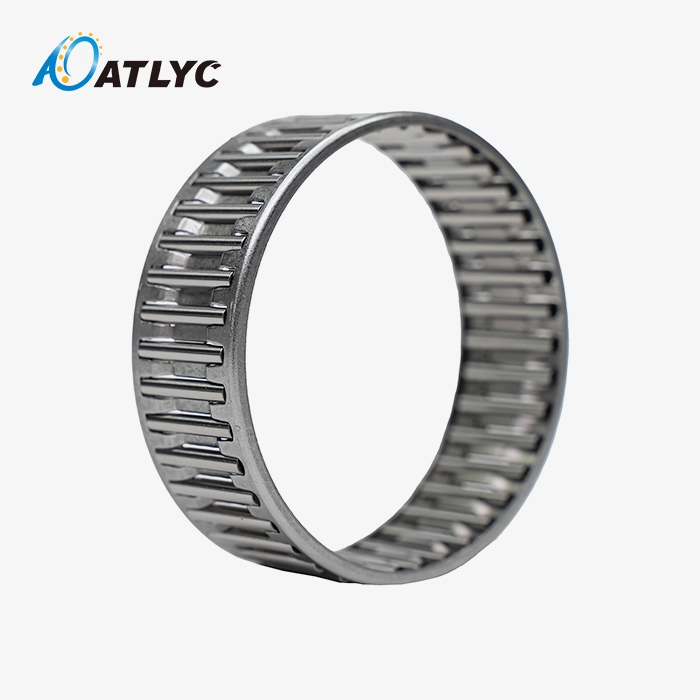
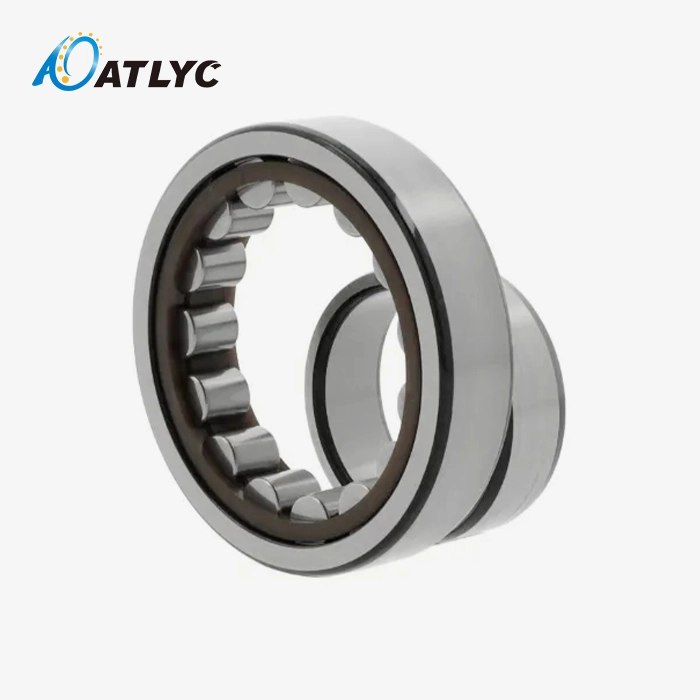
This type of tapered design lets parts be changed without having to take the whole bearing apart. Breaks can be cut down with this. While installing or moving the shaft, spherical rollers make up for it. When I think of other types of bearings, cylindrical roller bearings come to mind. These are stiff and can handle a lot of rotation.
Lubrication, Sealing, and Cage Selection
Forms can be sealed or left open, and each has its own best times. It is better to re-grease things that are open, but they need to be in a clean place. Designs with a labyrinth around them keep out dirt, water, and salt spray. In this case, IP65 or IP66 refers to double-lip contact seals or labyrinth seals. Friction is reduced on models that end in W33 because they have lubrication channels that let oil or grease flow all the time. Strong brass or polyamide (with the endings CA or CC) should be used to make the cage. Even if the load is heavy and the speed is slow, this will keep the rollers lined up. So there is no more wear or vibration. Do not put in too much grease. The right amount will depend on the type of seal and the temperature range.
Check Materials, Manufacturing Quality, and Size Range for a Wind Turbine Spindle Bearing
Steel Grades and Heat Treatment
If the material is good, the bearing can handle repeated contact stress for a long time. In order to temper steels like GCr15SiMn and 18CrNiMo7-6, we first heat them up and let them cool down. The surface now has an HRC of 60–64, and the core is stronger and can take wear and dents. Ask about the cleanliness of the steel, the consistency of the hardness, the amount of austenite that has been retained, the surface finish, and the accuracy of the dimensions when you are reviewing a quote for a Wind turbine spindle bearing. Find out if the rings are forged or if they are made in a normal way. What makes them work well in strong winds is how the grains are arranged. The ones that look the same but do very different things in the field stand out because of things like these.
Size Range by Turbine Class
Before the size of the bearing, you have to know how much power the turbine has. Inside diameters range from 400 mm to 1800 mm, and outside diameters range from 800 mm to 3000 mm. Widths range from 200 mm to 800 mm. A lot of land-based 1.5MW to 8MW units have outside diameters between 800 mm and 1800 mm. Deeper than 10MW units, between 1800 mm and 3000 mm. Made-to-order sizes can help wind farms that are high up or in very cold places stay within certain limits of load and space. When I give the order to make something, I always make sure that the final measurements match the drawing. This is because replacement projects have to fit into homes that are already there.
Quality Inspection and Documentation
Don't just ask for words; ask for proof. The things I look for in a Wind turbine spindle bearing order are coordinate measuring checks of runout and bore diameter, case-depth and hardness confirmation, noise and vibration tests on a rig, and ultrasonic and magnetic particle tests for flaws on the surface and below. Things that meet EN 10204 Type 3.1 must have certificates. A third party or someone who works for the buyer needs to check Type 3.2 certificates. Hart and his colleagues wrote a paper in 2020 called Wind Energy Science. In it, they looked at how main bearings are made, how they work, and how they break. Their work is based on good technical knowledge, which helps when writing inspection needs.
Build a Selection Matrix and Verify Your Wind Turbine Spindle Bearing Supplier
Build a Weighted Selection Matrix
It's easy to see how different notes compare when you use a matrix. You can give each candidate a score based on a lot of factors, such as fatigue life, static safety, temperature, sealing, dimensional fit, supplier quality, delivery time, and total cost. In Table 2, common scenarios are connected to a starting direction for your Wind turbine spindle bearing. The math should be used to check each one. Starting with steps that are based on what's going on.
| Scenario | Starting direction |
|---|---|
| Shaft deflection or misalignment | Spherical roller |
| Combined radial and axial load | Double-row tapered roller |
| Heavy radial load, controlled alignment | Cylindrical roller |
| Salt spray or humidity | Sealed design, IP65/IP66 |
| Limited maintenance access | Sealed design with lubrication channels |
A low unit price doesn't always mean a low risk. You should also think about the costs of breakdowns and cranes.
Check Supplier Capability and Certifications
Watch out for the supplier just like you watch out for the bearing itself. Find out how stable the production is, how well the heat treatment is controlled, how accurate the grinding is, how well the inspection systems work, how well you can keep track of the batches, and how well the technical support is. Ask for pictures, proof that the parts have been properly heated, inspection reports, instructions on how to grease the parts, and the terms of the warranty. It's called ISO 9001, and it covers a lot of different QA systems. Thanks to IATF 16949, ISO 9001 now has rules for the auto industry. Both are held by ASTYC, which is run by Luoyang Auto Bearing Co., Ltd. In 2010, there was only one workshop. Now there are six. There are now more than 120 skilled workers who make things, do research and development, check quality, and put things together. People from the US, Germany, South Korea, Russia, Iran, and Turkey buy from us.
Verify China-Based Manufacturers Before You Order
Check the company's name, business license, manufacturing status, and export history twice before purchasing a Wind Turbine Spindle Bearing from China. What kind of business is it? Are they a manufacturer or a salesperson? Someone who makes things is the only one who can really talk about process control and customization. A site visit or video audit can be used to help make sure that the work and inspection rooms are correct. Make sure the quality certificates you look at match the item you want to buy and have the factory's name on them. After that, write down the lead times you said you would give. Next, compare them. The first order should be just the right size for a test run, not too big or too small. Buy teams in the US can trust these steps to build a relationship that will last.
Plan Procurement, Avoid Mistakes, and Validate the Wind Turbine Spindle Bearing
Prepare a Complete Quotation Request
A detailed request makes the quote process go faster and be more accurate for your Wind turbine spindle bearing. For the bearing, please send the model number or drawing, information about the load, the lubricant, the operating temperature, the amount, where the delivery will happen, and any other paperwork that was asked for. Prices vary based on the quantity bought, the design, the accuracy, the space between pieces, the seals, the coatings, the testing, the packaging, and the quality of the steel. There are prices that include freight, duties, installation, downtime, warranty, and technical support that you can compare. This is the last time you should look over the technical data, the supplier proof, and the terms of the purchase before you send the request. Talk about your stock plan and the minimum amount of important spares you need to order as soon as possible.
Avoid Common Selection Mistakes
Even if they are the same price, bore, or outside diameter, that doesn't mean they can be used together. You could get new problems if you change the type of bearing without checking the axial location, preload, clearance, fits, and design of the housing. Bad installation, contamination, false brinelling when the machine is not in use, electrical damage, putting things away the wrong way, and using the wrong grease are some of the other things that people often get wrong. You should also compare the markings, packaging, batch numbers, and documents to what the supplier has on file to be sure that what you're buying is real. Do not make any of these mistakes. Instead, write down the steps and make the installation process clear. One missed step can ruin a good design as a whole.
Validate and Monitor Before Full Deployment
Tech approval should keep going after a candidate is chosen. Go over the math, the fits, the clearances, the load distribution, the seals, the installation tools, the acceptance criteria, and the way the parts should be put together before you start making them. A pilot test can check the temperature rise, vibration, noise, and torque to see how the lubricant works. After setting it up, keep an eye on the temperature, vibration, sound signals, lubricant condition, and what you can see. Change the next specification, the maintenance schedule, and the plans for spare parts based on what you learn on the job. Giving your team more details with every order will help them pick the right things in the future.

Conclusion
The exact shaft position and a full load profile that includes both normal operation and peak events are the first steps in choosing a wind turbine spindle bearing. The fixed safety factor and the ISO 281 rate of life are the first things that are checked. But how long that number works depends on how much space there is, how stiff the housing is, how well it is oiled, and how well it seals. Bearings with two rows of rollers can handle loads that move in both directions. Spiral roller bearings that can self-align can handle vibrations and changes in the shape of the shaft. To make sure a bearing is what it says it is, you can look at the inspection records, the EN 10204 certificates, the quality of the steel, and the heat treatment. There is less risk and overall cost over the life of the turbine because of a weighted matrix, supplier verification, full quotation data, and pilot validation.
FAQ
What is a wind turbine spindle bearing?
The main shaft bearing is put in place between the shaft and the frame of the nacelle. Even when the wind speed changes, it doesn't stop the blades from spinning slowly. It also supports the loads that the blades put on it from all sides.
Which design handles combined loads best?
It is possible for double-row tapered roller bearings to deal with both types of loads. Roller bearings in the shape of spheres can self-align up to 1.5° and can handle shocks and shaft deflection. Make sure it works with your speed, alignment, and mounting before you decide.
Should I choose an open or sealed design?
With IP65/IP66 ratings, you can see that our products are sealed to keep out dust, water, and salt spray. Grease can also stay in place in designs that are sealed. Plans with holes make it easier to grease after the area is cleaned. It should depend on the area, the weather, and how simple it is to keep up.
What data do I send for a quotation?
Let us know what kind of bearing you need, how many you need, when you want it delivered, how fast it needs to be, how much weight it has to hold, what temperature it is, how it will be oiled, and how long you want it to last. An engineer can compare all the options and choose the best one once they have all the information they need.
Request a Wind Turbine Spindle Bearing Quote from ATLYC
With ISO 9001 and IATF 16949 certifications, six workshops, and 120 skilled workers, Luoyang Auto Bearing Co., Ltd. is a wind turbine spindle bearing manufacturer. Send your drawing, loads, speed, temperature, and quantity to auto@lyautobearing.com. They should know what you need and be able to help you make the best choice. You can find out more at https://aotezhoucheng.aixdb.cn/. We can assist you with your next task.
References
1. Hart, E., Clarke, B., Nicholas, G., et al. "A review of wind turbine main-bearings: design, operation, modelling, damage mechanisms and fault detection." Wind Energy Science, 2020.
2. ISO 281, Rolling bearings — Dynamic load ratings and rating life, International Organization for Standardization, 2007.
3. IEC 61400-1, Wind energy generation systems — Part 1: Design requirements, International Electrotechnical Commission, 2019.
4. EN 10204, Metallic products — Types of inspection documents, European Committee for Standardization, 2004.
5. ISO 9001, Quality management systems — Requirements, International Organization for Standardization, 2015.
6. IATF 16949, Automotive quality management system standard, International Automotive Task Force, 2016.
Learn about our latest products and discounts through SMS or email