- English
- French
- German
- Portuguese
- Spanish
- Russian
- Japanese
- Korean
- Arabic
- Greek
- German
- Turkish
- Italian
- Danish
- Romanian
- Indonesian
- Czech
- Afrikaans
- Swedish
- Polish
- Basque
- Catalan
- Esperanto
- Hindi
- Lao
- Albanian
- Amharic
- Armenian
- Azerbaijani
- Belarusian
- Bengali
- Bosnian
- Bulgarian
- Cebuano
- Chichewa
- Corsican
- Croatian
- Dutch
- Estonian
- Filipino
- Finnish
- Frisian
- Galician
- Georgian
- Gujarati
- Haitian
- Hausa
- Hawaiian
- Hebrew
- Hmong
- Hungarian
- Icelandic
- Igbo
- Javanese
- Kannada
- Kazakh
- Khmer
- Kurdish
- Kyrgyz
- Latin
- Latvian
- Lithuanian
- Luxembou..
- Macedonian
- Malagasy
- Malay
- Malayalam
- Maltese
- Maori
- Marathi
- Mongolian
- Burmese
- Nepali
- Norwegian
- Pashto
- Persian
- Punjabi
- Serbian
- Sesotho
- Sinhala
- Slovak
- Slovenian
- Somali
- Samoan
- Scots Gaelic
- Shona
- Sindhi
- Sundanese
- Swahili
- Tajik
- Tamil
- Telugu
- Thai
- Ukrainian
- Urdu
- Uzbek
- Vietnamese
- Welsh
- Xhosa
- Yiddish
- Yoruba
- Zulu
How Does RE9016UUCC0 Cross Roller Bearing Improve Precision?
The RE9016UUCC0 Cross Roller Bearing is more accurate because it has special orthogonal rollers spaced at 90-degree intervals within V-shaped raceways. This makes it possible to handle radial, axial, and moment loads at the same time with little elastic movement. This design of a merged outer ring and a split inner ring gives micrometer-level rotary accuracy and gets rid of backlash with its CC0 negative clearance setting. This cross roller bearing is the best choice for challenging uses that need precise positioning and no deflection under complex load conditions because it has a line-contact design that makes it much more rigid than point-contact ball bearings.
Understanding the Design and Working Principle of RE9016UUCC0 Cross Roller Bearing
Structural Configuration and Core Specifications
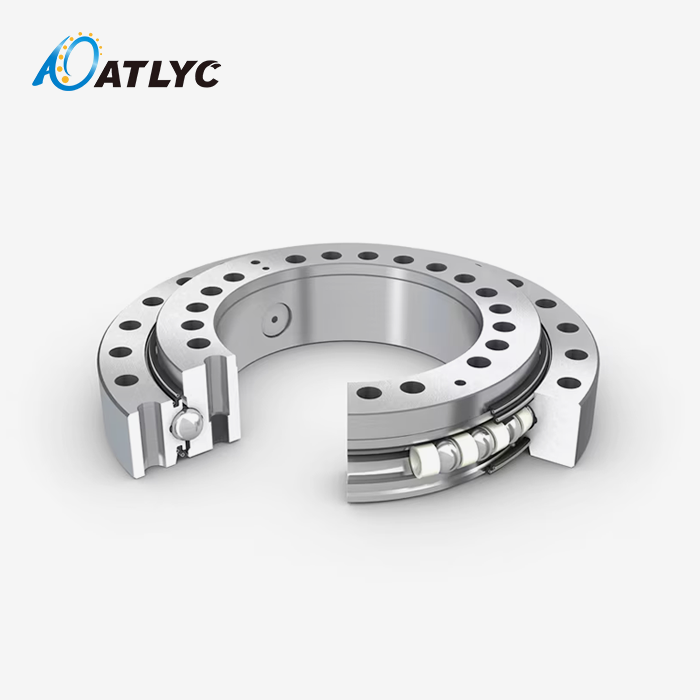
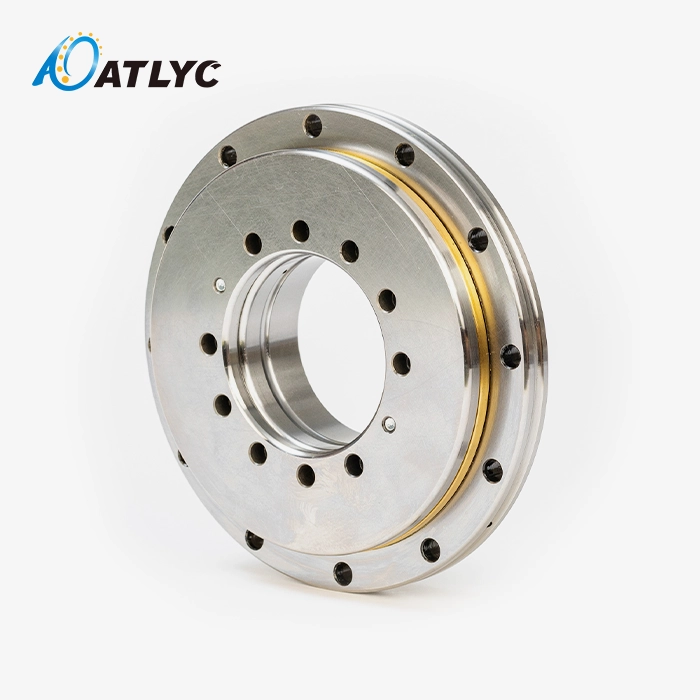
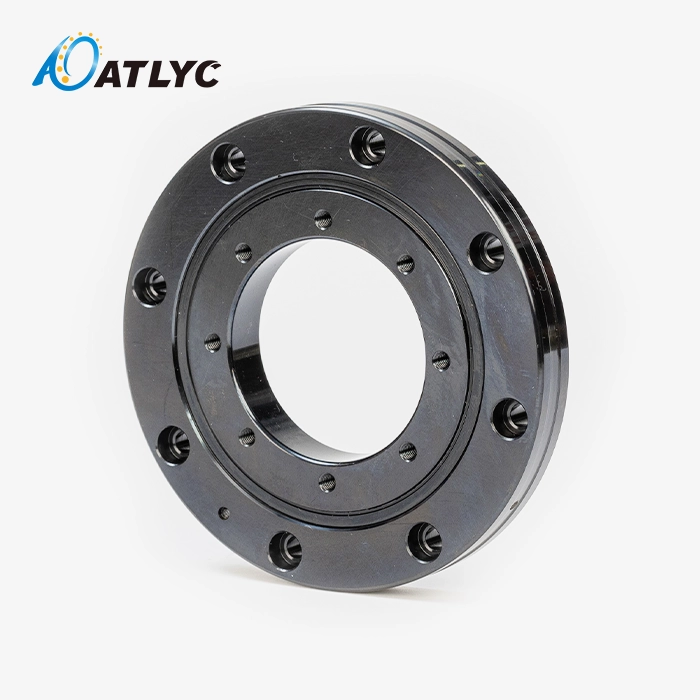
The RE9016UUCC0 Cross Roller Bearing has an outer ring that is built in and a different inner ring that is designed to work best in situations where the outer ring needs to rotate precisely around a stable shaft. This design has an inner diameter of 90mm, an outer diameter of 130mm, and a width of 16mm. It can hold a lot of weight in a small space. The bearing is made of high-quality GCr15 and GCr15SiMn bearing steel that has been heat-treated to a hardness of 58 to 64 HRC. This gives it great resistance to wear and long duty life.
Orthogonal Roller Arrangement Mechanics
Precision-ground V-shaped raceways hold cylindrical rollers that are placed crosswise at exact 90-degree angles. Spacers between the rollers keep the design uniform. Line contact between the rollers and raceways is made by this design. Compared to point-contact ball bearings, this spreads loads over a much bigger surface area. When dealing with moment loads, the orthogonal design prevents deflection much better than other types of bearings. This is where the mechanical advantage becomes clear. The split inner ring design makes fitting easier and keeps the factory-calibrated preload even with tight production tolerances. When the inner ring parts are put together, they work as a single unit. They stay together during handling and installation thanks to special mechanisms.
CC0 Clearance and Preload Advantages
The number CC0 means that there is negative clearance, which creates a managed setup that stops internal play. This preload setting is very important in places where there is a lot of shaking because even a little pushback would make positioning less accurate. The preload makes the contact stiffer, which means the bearing won't bend under different loads. It also keeps the bearing in good shape for longer by stopping pitting, rust, and impact damage between the raceways and rolling elements. This managed preload gives you micrometer-level spinning accuracy. It comes in different precision grades, such as P6, P0, P5, P4, and P2, so you can choose the accuracy class that fits your application needs and budget.
How RE9016UUCC0 Improves Precision in Industrial Applications
Superior Stiffness Compared to Ball Bearings
When comparing bearing systems, stiffness—the ability to resist stretching when under load—becomes one of the most important performance factors. When the same load is put on both the RE9016UUCC0 Cross Roller Bearing and the ball bearing, the cross roller bearing has much smaller elastic movement. Because of this, your equipment can handle heavy moment loads without bending, keeping its shape even when machining forces or the physics of a robotic arm make loading situations more complicated. Even though ball bearings are very common, their point-contact shape makes them more bendable when moment loads are applied. Angular contact bearings can help with this problem in some ways, but they usually need to be paired up to handle two-way axial loads, which makes the setup more complicated and raises the installation height. The unit combines these tasks into a single bearing unit, which makes the design of your machine easier and makes it stiffer overall.
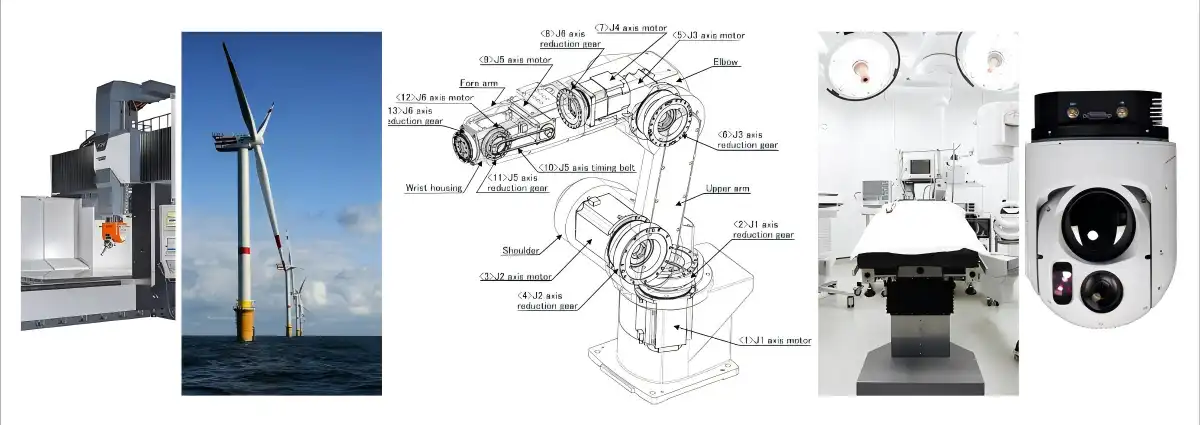
Precision Enhancement in CNC Machining Centers
In machining centers, the accuracy of the placement of the item on rotary tables depends on how well the bearings work. The bearing can handle both the direct weight of the workpieces and the dynamic forces that are created when cutting and turning at high speeds. The built-in outer ring structure stops the housing from deforming during tightening, so the running accuracy stays the same no matter how much stress is put on the fixing. When these cross roller bearings are put in spinning tables in factories that make things, part-to-part accuracy gets better, scrap rates go down, and it's possible to make tolerances smaller. The low friction coefficient of the bearing helps keep it stable at high temperatures. This keeps the dimensions from changing because of heat, which could affect accuracy during long grinding processes.
Robotics and Automation Accuracy Improvements
When an industrial robot's arm moves back and forth while carrying payloads, the joints at the waist and elbow axes create large moment loads. For accurate placement, the bearing's ability to handle these offset loads with no backlash is very important. Robotic systems that can repeat their actions with an accuracy of ±0.02mm depend on parts like these cross roller bearings to get rid of positional mistakes caused by mechanical play. The ability of the outer ring to spin is perfect for robotic joint design, where the arm casing turns around a center column that stays still. Compared to inner ring rotation designs, this setup makes it easier to set up seals and route cables. This leads to longer repair intervals and less downtime.
Medical Equipment Imaging Quality
For high-resolution imaging, CT machines and X-ray systems need rotation that doesn't shake. Any mechanical instability leads straight to picture artifacts. The bearing gives spinning gantry mechanisms the stiffness they need and makes no noise while working. It can handle big imaging detector arrays and keep moving smoothly even when it starts and stops many times a second. Manufacturers of medical equipment need these precise bearings to meet strict quality standards that have a direct effect on the accuracy of diagnoses and the safety of patients.
Comparing RE9016UUCC0 with Other Cross Roller Bearings
RE9016UUCC0 versus RE9016UUCC1 Performance Differences
Different clearance options are available in the RE series. For example, CC0 means negative clearance (preload), while CC1 means a lighter preload state. The heavy preload on the RE9016UUCC0 Cross Roller Bearing makes it stiffer and better at eliminating backlash, so it's better for uses that value precise placement over minimizing friction torque. The CC1 version is good for situations where a little less friction is helpful, but it comes at the cost of a little less final stiffness. The dimensions and load capacities of both versions are the same, which lets designers be flexible without having to change the housing. Your choice should depend on whether the most important thing for your application is maximum stability or minimum starting power, taking into account motor size and energy use.
Cost-Benefit Analysis for Long-Term Value
Precision cross roller bearings cost more to buy at first than normal ball bearings, so business-to-business buyers look at the total cost of ownership instead of just the purchase price. Because it distributes load better and resists wear better, the bearing has a longer service life. This means that it doesn't need to be replaced as often, which saves money on downtime costs. Manufacturers who use these bearings in mission-critical applications say that they need to be serviced 40–60% less often than similar ball bearing setups. Lower maintenance needs directly lead to lower worker costs and better machine availability. The sealed design of the bearing with built-in UU seals keeps dirt and other impurities from getting into the precision raceways and rolling elements, which would happen more quickly in open bearings.
Market Positioning for High-Precision Sectors
Cross roller bearings are becoming more and more common in robots and chip manufacturing because they are so accurate and reliable. The higher prices of the parts used in these businesses are justified by the better performance that lets their equipment meet strict requirements. The unit is a tried-and-true option backed by years of experience in the field for when your production equipment needs to stay accurate over long periods of time.
Installation and Maintenance Tips to Maximize Bearing Precision and Lifespan
Step-by-Step Installation Procedure
The first step in a proper fitting is to clean all of the mating surfaces very well to get rid of any dirt or other debris that could cause high spots that affect the accuracy of the runs. For interference or clearance fits, the housing hole and shaft must meet certain standards, usually H6 or h7 for shafts and H7 for housings. To keep preload changes from happening, mounting surfaces need to be square within 0.02 mm per 100 mm circle. If you want to install the split inner ring piece, you should do it as a whole, without trying to separate the parts. The accurate preload calibration is kept by the factory-assembled setup. Make sure you use the right press-fitting tools that put equal force on all sides of the rings. Do not use impact loading, as this could damage the precisely ground raceways. Check the seating is correct by measuring the depth of the placement several times around the circle.
Critical Maintenance Practices
When you buy the UU sealed version, it already has high-quality lithium soap-based grease that is good for normal use. Standard uses that work in certain temperature ranges (-20°C to +80°C) don't need much upkeep. The number of inspections needed depends on the working hours and the weather. For high-speed or high-temperature uses, lubrication holes can be used to add more grease on a regular basis. Monitoring vibrations on a regular basis finds early signs of wear or contamination before they cause a catastrophic failure. Set up standard vibration patterns when the system is being put into service, and then keep an eye on changes during regular repair checks. Changes in the frequency range or sudden increases in the sound amplitude are signs of problems that need to be looked into. Temperature tracking also gives early warning of deteriorating lubrication or unusual pressure conditions.
Storage and Environmental Considerations
Proper storage keeps the quality of the bearings before they are installed. Keep the original box until the work is done to keep moisture and germs out. Dry, steady temperatures should be maintained in storage areas that stay out of direct sunlight and away from chemicals that break down things. If you store bearings for more than six months, they need to be rotated several times to spread the lubricant before they are installed. This keeps them from fake brinelling during long periods of inactivity. Environmental factors have a big effect on the service life of bearings. In places where dust is common, you might need more than just the integral UU plugs to keep the outside out. Corrosive environments require careful choice of materials and maybe even better seal designs. Talk to your bearing provider about the weather challenges that are unique to your application to find the best ways to protect them.
Procurement Guide: How to Source and Purchase RE9016UUCC0 Cross Roller Bearings
Identifying Qualified Manufacturers and Suppliers
To find precision bearings, you need to carefully look at the qualifications and quality control systems of the manufacturers. Verified ISO 9001 and IATF 16949 certifications show a dedication to consistent quality control and methods for ongoing growth. Ask for proof of licensing and details about the company's manufacturing capacity, production tools, and quality control methods such as vibration testing and dimensional verification routines. Well-known companies usually keep a lot of technical information, like load capacity estimates, installation directions, and advice that is unique to each application. Suppliers who can work with others on complicated projects are different from those who only sell standard goods because they offer responsive technical help. Check to see if possible suppliers can offer engineering advice during the planning part to help with choosing the best bearings and putting them together.
Certification Verification and Quality Assurance
In addition to looking at the certification papers, you should also ask what quality control measures are used during the production process. Quality control is strong, with three-level inspection methods that check the raw materials, the measurements of the work in progress, and the performance of the finished product. Find out how often defects happen, what the guarantee covers, and how to report problems with the quality if they happen. Through strict quality control, reputable makers usually get ex-factory pass rates of more than 99.5%. Material tracking lets you connect specific production lots to records of how the material was heated, which helps you figure out what went wrong if there are quality problems. When manufacturers put in place full tracking systems, it shows that they are serious about quality control and taking responsibility for how well their products work.
Ordering Process and Lead Time Optimization
For purchase planning to work, you need to know about minimum order amounts, production wait times, and transportation options. Precision bearings like the RE9016UUCC0 Cross Roller Bearing usually have a production wait time of 4 to 8 weeks, but this depends on how many are ordered and how busy the maker is. Setting up forecast information with your seller lets you plan production, which cuts down on lead times for orders that you place again and again.
When you buy in bulk, you can often get better prices and make sure you have enough supplies to meet production plans. Carrying costs should be weighed against the chance of big savings and the need for supply continuity. If your suppliers offer vendor-managed inventory programs, you may not need as much working capital while still getting just-in-time parts that meet output needs.
Terms of payment, shipping options, and paperwork needs change by supplier and market location. Make sure you understand Incoterms, the paperwork needed for customs, and the rules for packing early on in the buying process to avoid mistakes when the order is delivered. Export paperwork is usually handled quickly by experienced cross roller bearing companies that serve foreign markets, but making sure of these details ahead of time avoids delays.
Conclusion
The clever design of the RE9016UUCC0 Cross Roller Bearing includes controlled preload, orthogonal roller geometry, and a combined outer ring construction that makes the precision better. This unique part solves one of the most important problems that B2B makers face when they need high stiffness, the ability to handle loads in multiple directions, and micrometer-level accuracy in small spaces.
Understanding the bearing's technical benefits, the right way to put it in, and preventative care methods that keep it working well for a long time are all important parts of a successful implementation. When making purchases, people should look at providers' manufacturing skills, quality certifications, and expert help, not just the price. This is because the total cost of ownership includes more than just the initial purchase price.
Established bearing makers are able to make precise parts that help equipment designers meet performance standards that give them a competitive edge in tough industrial settings.
FAQ
1. What makes cross roller bearings different from regular ball bearings?
Cross roller bearings have cylindrical rollers that are placed orthogonally at 90-degree intervals. This makes line contact, which spreads loads over a bigger surface area than point-contact ball bearings. The stiffness and load capacity of this design are much higher within the same envelope measurements, especially for moment loads.
2. Can the RE9016UUCC0 Cross Roller Bearing be used for robotic joint uses that need to move quickly?
The bearing works well for robotic joint uses that need to rotate at middling speeds and need to be accurate in positioning and able to handle moment loads in addition to speed. The CC0 preload makes a little more friction torque than clearance-type bearings, which is why it's better for precise setting than ultra-high-speed continuous spinning.
3. How often should you take care of sealed cross roller bearings?
When used normally, the UU sealed setup with factory-applied lubrication usually works for a long time without any upkeep. Applications with high speeds, high temperatures, or dirty surroundings should be inspected regularly and may need new grease every 6 to 12 months, depending on the conditions of use.
4. Why choose the RE9016UUCC0 instead of an easier bearing setup?
The combined design gets rid of complicated dual angular contact bearing arrangements and makes the unit shorter and lighter. Single-bearing options make installation easier, get rid of the chance of making mistakes when setting the preload, and make the whole system stiffer compared to setups with separated bearings.
Partner with ATLYC for Reliable RE9016UUCC0 Cross Roller Bearing Supply
ATLYC, which does business as Luoyang Car Bearing Co., Ltd., has been making specialized bearings for 15 years and works with medium to big car and industrial equipment makers around the world. Our production plants are ISO 9001 and IATF 16949 certified, and they make RE9016UUCC0 Cross Roller Bearings to very high standards. These bearings will support your precision machinery uses with constant quality and a steady supply of them. We keep a large inventory so that we can quickly send them to customers in the US and around the world. We also offer expert consultation services to help you choose the best bearings for your needs. You can email our engineering team at auto@lyautobearing.com to talk about your application needs, get full specs, or get pricing for large orders. As a reliable cross roller bearing maker, we want to help you succeed in the long run by giving you good products and quick service.
References
1. Harris, T.A. and Kotzalas, M.N. "Advanced Concepts of Bearing Technology: Rolling Bearing Analysis, Fifth Edition." CRC Press, 2006.
2. Schaeffler Technologies AG & Co. KG. "Rolling Bearings: Catalogue HR 1—Principles of rolling bearing selection and application." Schaeffler Technologies, 2018.
3. ISO 199:2014. "Rolling bearings—Thrust bearings—Geometrical product specifications (GPS) and tolerance values." International Organization for Standardization, 2014.
4. Weck, M. and Brecher, C. "Machine Tools 4: Automation and Control Systems." Springer-Verlag Berlin Heidelberg, 2019.
5. Tsutsumi, M. and Saito, A. "Identification of angular and positional deviations inherent to 5-axis machining centers with a tilting-rotary table by simultaneous four-axis control movements." International Journal of Machine Tools and Manufacture, Vol. 44, 2004.
6. Takabi, J. and Khonsari, M.M. "Experimental testing and thermal analysis of ball bearings." Tribology International, Vol. 60, 2013.
Learn about our latest products and discounts through SMS or email