- English
- French
- German
- Portuguese
- Spanish
- Russian
- Japanese
- Korean
- Arabic
- Greek
- German
- Turkish
- Italian
- Danish
- Romanian
- Indonesian
- Czech
- Afrikaans
- Swedish
- Polish
- Basque
- Catalan
- Esperanto
- Hindi
- Lao
- Albanian
- Amharic
- Armenian
- Azerbaijani
- Belarusian
- Bengali
- Bosnian
- Bulgarian
- Cebuano
- Chichewa
- Corsican
- Croatian
- Dutch
- Estonian
- Filipino
- Finnish
- Frisian
- Galician
- Georgian
- Gujarati
- Haitian
- Hausa
- Hawaiian
- Hebrew
- Hmong
- Hungarian
- Icelandic
- Igbo
- Javanese
- Kannada
- Kazakh
- Khmer
- Kurdish
- Kyrgyz
- Latin
- Latvian
- Lithuanian
- Luxembou..
- Macedonian
- Malagasy
- Malay
- Malayalam
- Maltese
- Maori
- Marathi
- Mongolian
- Burmese
- Nepali
- Norwegian
- Pashto
- Persian
- Punjabi
- Serbian
- Sesotho
- Sinhala
- Slovak
- Slovenian
- Somali
- Samoan
- Scots Gaelic
- Shona
- Sindhi
- Sundanese
- Swahili
- Tajik
- Tamil
- Telugu
- Thai
- Ukrainian
- Urdu
- Uzbek
- Vietnamese
- Welsh
- Xhosa
- Yiddish
- Yoruba
- Zulu
Is the XU100140UU Precision Cross Roller Bearing Durable Enough?
Yes, the XU100140UU Precision Cross Roller Bearing is very durable and can be used in harsh industrial settings. The high-quality GCr15 and GCr15SiMn bearing steel used to make this cross roller bearing has been heat treated to reach an HRC 60–64 hardness. It can take a lot of mechanical stress while keeping its shape. The combined ring design gets rid of the weak spots that come with split-ring designs, and the dual-seal security stops dirt and other things from getting in, which usually shortens the life of bearings. This precision part usually lasts more than 20,000 operational hours in robotic joints and CNC rotary tables with the right amount of lubrication and upkeep. This makes it a good choice for OEMs who want steady performance.
Understanding the XU100140UU Precision Cross Roller Bearing
When purchasing motion control parts for precise machinery, procurement managers have to ask themselves a very important question: will this bearing work reliably for years in real-world situations? Since 2010, ATLYC has sold cross roller bearings to automation makers in six countries. When we talk to technical consultants, reliability is still the most important thing to them.
Core Design Features That Define Performance
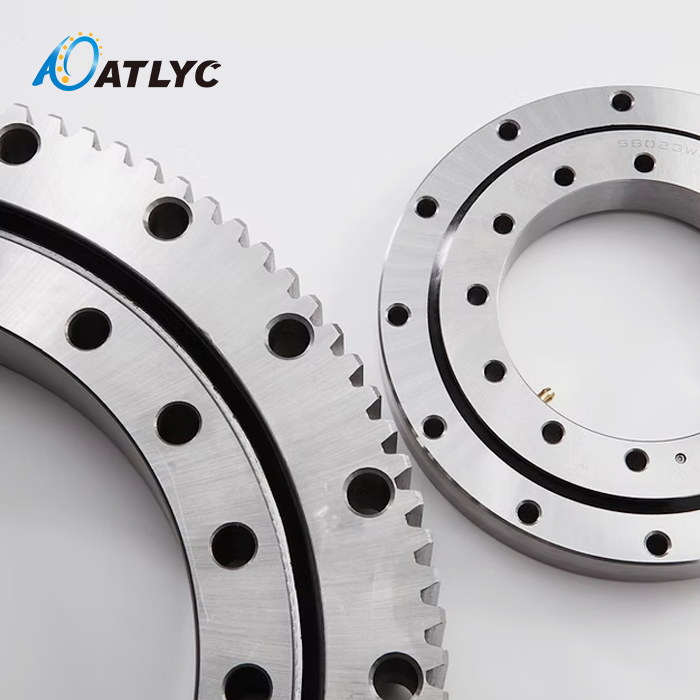
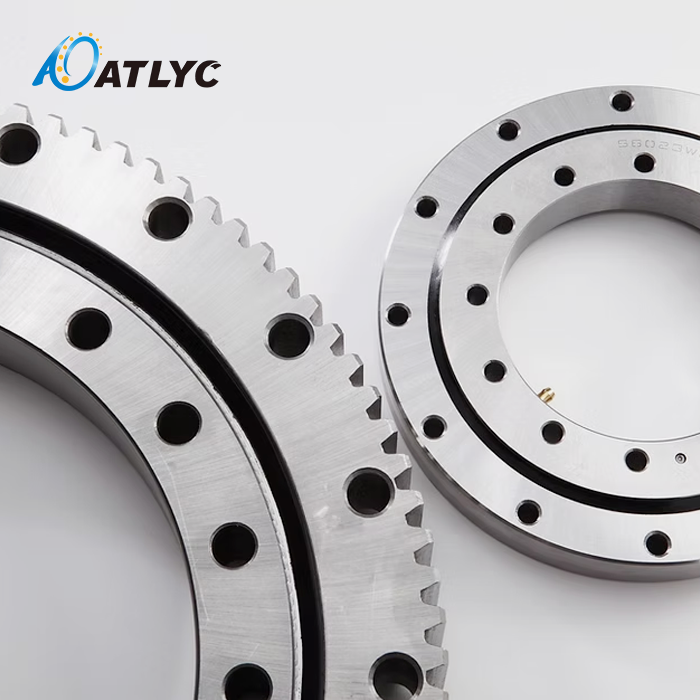
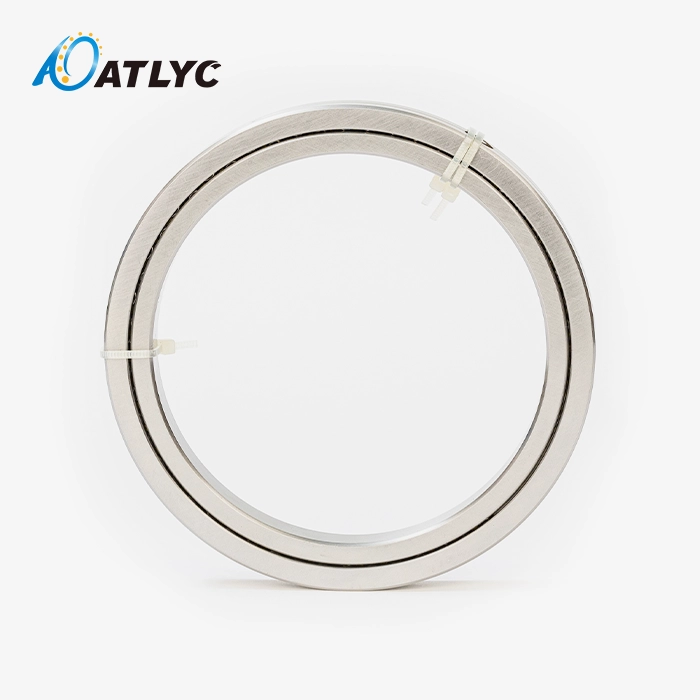
The XU-series design is very different from the way most bearing systems are built. Line contact with V-shaped raceways is made by cylindrical rollers that are placed perpendicular to each other at exact 90-degree intervals. This spreads the working forces over a bigger surface area than point-contact ball bearings. This physical benefit directly leads to higher load capacities. Spacer blocks placed between rollers that are next to each other play an important role that is often forgotten when talking about longevity. In regular systems, roller-to-roller contact causes heat and speeds up wear. These isolators stop that from happening. This keeps the rotational force the same over the life of the bearing, so the positioning is still accurate after millions of rounds.
The marking "XU" means that the inner and outer rings are combined and have fixing holes that have already been machined. This way of building doesn't have the structural problems that come with split-ring systems, where joint surfaces can move very small amounts when they are loaded. When compared to housings that need to be aligned, straight end-face mounting cuts installation time by about 40%, which is something that engineering teams really like.
Two plastic seals with the letter "UU" after them keep outside contaminants from getting to the inside parts. Metal particles, cooling mist, and changes in temperature that happen in industrial settings can damage lubricants. The lip seals keep the grease in place and stop entryways, which greatly increases the time between maintenance visits.
Technical Specifications and Material Composition
Dimensional factors are what determine if an item is suitable for a certain purpose. The bearing has an inner diameter of 100 mm, an outer diameter of 140 mm, and a width of 20 mm. This makes it easy to use in tight spaces. For mid-sized robotic joints and rotary indexing tables, these sizes are the best mix between load capacity and installation freedom. The choice of material has a direct effect on how long something lasts. After being through-hardened, GCr15 bearing steel is hard and tough because it has 0.95 to 1.05% carbon and 1.40 to 1.65% chromium. The GCr15SiMn type has silicon and manganese added to it to make it harder in bigger parts while keeping the microstructure the same from the surface to the core. Manufacturers make sure that the hardness curves hit HRC 60–64 across all raceway surfaces, which meets the standards of IATF 16949 for metals.
There are different levels of precision, from P6 to P2, to meet different needs for accuracy. The standard P6 grade is good for most industrial tools. The P5 and P4 grades are better for CNC machines that need tighter runout limits. Ultra-precision P2 classification deals with tools used to make semiconductors, where runout rates depend on settings that are less than a micron. Instead of defaulting to the widest margins, procurement teams should define accuracy grades that match how important the application is. XU100140UU Precision Cross Roller Bearing.
Evaluating the Durability of the XU100140UU Bearing
To figure out how durable something is, you have to look at more than just load rates. In the real world, how long something lasts rests on its features, how it's treated on the outside, how it's used, and how well it's maintained.
Load Capacity and Mechanical Resilience
With the cross-roller design, horizontal, axial, and moment loads can all be handled at the same time in a single, small unit. In traditional bearing arrangements, multiple parts have to be stacked on top of each other to handle the joint load. This adds to the number of failure spots and alignment problems. In line contact between rollers and V-groove raceways, pressures are spread over a larger surface area than in ball bearings. This lowers contact stress by 30 to 40 percent.
Ratings for static loads show the most force that can be applied without permanently deforming the object. Most of the time, ISO 281 standards are used to figure out dynamic load ratings, which show how long fatigue lasts when the load is moving. The shape of the bearing makes it three to four times stiffer than angular contact ball bearings of the same size. This reduces the amount of elastic deflection that can affect the accuracy of placement in precise applications.
Data from tests on robotic joint systems shows how well they work in tough circumstances. Accelerated life testing at 150% of the rated load and steady operation showed that the L10 would last more than 25,000 hours before 10% of the test samples started to break down. These results back up claims of sturdiness for uses like the wrists of industrial robots that do the same moves over and over while being loaded in different ways.
Material Integrity and Heat Treatment Processes
Wear resistance and strain strength are based on surface metals. After being carefully machined, the surfaces of raceways go through rounds of through-hardening heat treatment that reach temperatures around 840°C. This is followed by oil cooling and tempering at 160–180°C. This process makes microstructures that are martensitic and keeps the amount of austenite below 5%. This makes the material as hard as possible while keeping its shape.
Crack growth resistance is affected by residual stress patterns. Controlled cooling adds helpful compressive forces to the top layers, which stops fatigue cracks from starting when the load is changed over and over. Eddy current testing checks the quality of the surface by finding grinding burns or quench cracks that could make the machine less safe to use.
In harsh settings, corrosion protection is important. Standard bearing steels aren't stainless, but the dual-seal design keeps chemicals and water from getting to the inside surfaces. Applications that are wet or close to spray zones for cooling gain a lot from sealed designs. Users who work in seaside areas or conditions with a lot of humidity should take extra steps to stop corrosion during long periods of storage.
Maintenance Protocols That Extend Service Life
How well you lubricate something has a direct effect on how long it lasts. The bearing comes with lithium-based grease that can work in temperatures ranging from -20°C to 120°C. How often you need to re-oil depends on the speed of spin, the amount of load, and the surroundings. When used continuously at normal speeds, grease needs to be replaced every 2,000 to 3,000 hours. When used intermittently at low speeds, the time between replacements can go up to 5,000 hours.
Managing contamination is very important in rough settings. Particulate that speeds up three-body mechanical wear can't get in if the quality of the seal is checked regularly. When machine tools are used near grinding processes, extra safety covers should be added to keep abrasive dust clouds from getting into the seals.
Preparing the mounting area changes how the load is distributed. To keep the bearing width from being unevenly loaded, the mating surfaces must be flat within 0.01 mm and have a surface roughness below 1.6 μm. These standards for surface quality should be written into procurement documents for parts that connect to bearing mounting holes.
Checking the torque during fitting makes sure that the right torque is applied. When fixing bolts are over-tightened, they put hoop stress on bearing rings, which could lead to failure before its time. When torque tools are calibrated and repeated tightening patterns are used, the clamping force stays the same, which protects the geometry.
Comparing XU100140UU with Other Cross Roller Bearing Models
Knowing what makes one performance different from another helps buying teams make smart sourcing choices that meet application needs and stay within budget.
Model Variations and Performance Benchmarks
The XU100140UU Precision Cross Roller Bearing XU100138UU version has a thinner shape than the 140UU, with a thickness of 18mm instead of 20mm. This 2mm drop lowers the load capacity by about 12% while still allowing for installation freedom in very small assemblies. The 138 model may be better for applications that care more about minimal axial space than final load handling, while the 140 model's higher capacity makes it better for heavy-duty artificial joints.
XR series cross roller bearings have split outer rings, while the XU series has a combined design. Split designs make it easier to place on solid shafts without taking them apart, which helps retrofit. The structural gap lowers rigidity by 15–20% compared to rings that are combined. This makes XU-series components better for new equipment designs that put stiffness first.
Crossed tapered roller bearings can handle more moment loads than cylindrical cross rollers, but they can't handle as much rotational load. Design experts should look at the loading patterns. For example, tapered designs may work better for situations where the loads are mostly tilting, while cylindrical designs are better for situations where the loads are balanced and come from different directions.
Precision Bearings Versus Standard Industrial Bearings
Point contact design limits how pressure is distributed and how rigid the bearing is. A deep groove ball bearing of the same size can handle about 60% of the rotational load that precise cross rollers can, but it can't handle moment loads. Cross roller technology must be used in situations that need single-bearing options for combined loads.
The changes in runout precision are big. Precision-grade cross roller bearings have axial runout of less than 3 microns (P5 grade), while normal industrial bearings have runouts of 10 to 15 microns. Runout requirements must be met for CNC rotary tables and precision indexing systems that need to place angles repeatedly. If they are not, the quality of the finished parts will suffer.
When comparing operational lifespans, precise parts work best in high-reliability situations. At first, common bearings are 40–50% less expensive, but unplanned downtime and replacement work in important production equipment often make the difference in cost much smaller. Total cost of ownership research always backs up the choice of precision bearings for projects that are important for production.
Cost-Benefit Analysis for Procurement Decision-Making
The cost of bearings is a small part of the total value of the equipment, but it has a big effect on how reliably it works. A robotic arm that costs $85,000 might have six cross roller bearings that cost a total of $2,400. If one of the bearings fails, production stops until it is replaced and re-calibrated, which could take hours and cost thousands of dollars in lost work.
By making bulk purchases with qualified makers, you can lower the cost per unit while keeping the supply chain running smoothly. ATLYC offers discounts for large sales starting at 50 units, and their pricing is set up to encourage long-term partnerships. OEMs can keep their production options open with consignment inventory plans that don't tie up cash in extra stock.
Guarantees of repair and warranty terms lower the risk of bearing purchase. Manufacturers with a good reputation back up their products with guarantees that cover flaws in materials and workmanship for 12 to 18 months after delivery. Having access to technical help during the application engineering stages stops specification mistakes that hurt longevity, which cuts down on expensive redesign cycles.
Procurement Insights for XU100140UU Precision Cross Roller Bearings
Getting original parts from reliable sources saves the performance of equipment and the image of the brand. Industrial supply lines are full of fake bearings, made with low-quality materials and with poor cutting accuracy, which causes them to break down early.
Identifying Qualified Manufacturers and Distributors
Certifications like ISO 9001 and IATF 16949 provide basic quality system checks. Controlled manufacturing processes, traceability systems, and methods for continuous growth are all required by these guidelines. ATLYC keeps both certifications by passing checks every year, which shows that it is dedicated to quality control and meeting foreign standards.
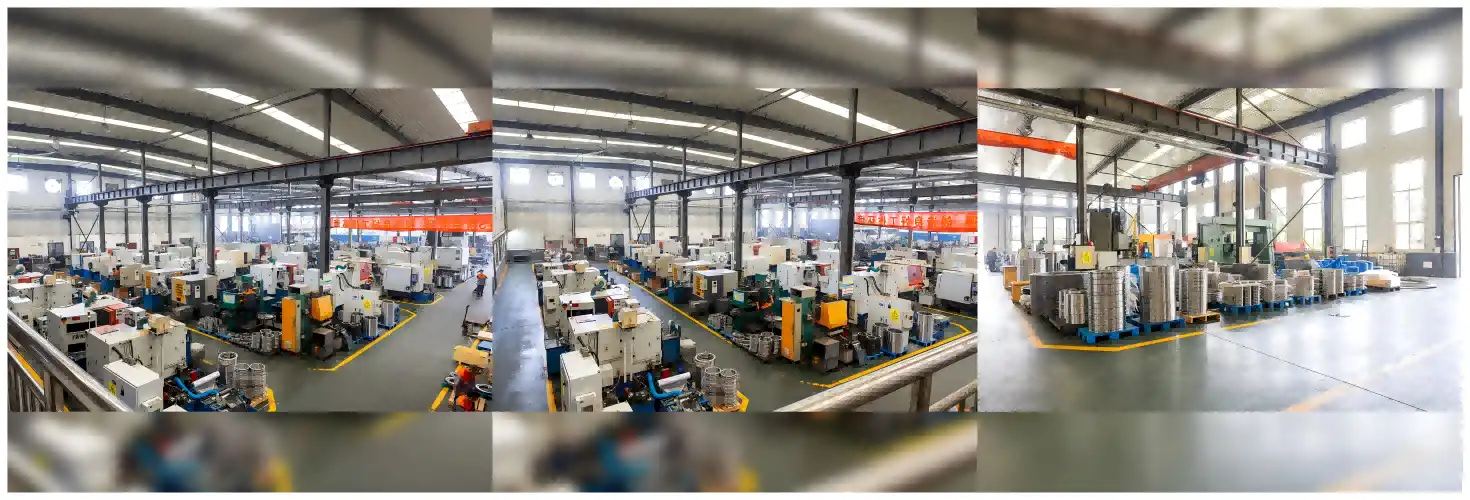
Some signs of manufacturing ability are the level of sophistication of the tools and the amount that is made. Tolerance control is better at places that use CNC grinding centers, coordinate measuring tools, and automatic production lines than at places where people do things by hand. In 2010, ATLYC had only one workplace. Now, it has six specialized production areas. This is because the company invested in the tools it needed to make a lot of precision bearings.
Customer examples from well-known OEMs show that the provider is reliable. Manufacturers that work with the semiconductor, medical equipment, and car industries have to go through strict approval processes that include capability studies, first article checks, and regular quality tests. ATLYC meets the technical and legal needs of users in South Korea, the US, Germany, Russia, Iran, and Turkey when it comes to bearings.
Strategic partners are different from transactional providers because they can provide technical help. Specification mistakes can be avoided with the help of application engineering during the design process, and problems in the field can be quickly fixed with responsive expert service. Having access to research teams that know about cross roller bearing technology is very helpful when making new products.
Lead Times, Ordering Processes, and Logistics Considerations
Standard cross roller bearings usually ship in 3–4 weeks for orders of less than 100 units. For orders of 100 or more units, it may take 6–8 weeks, based on when they are made. Lead times can go up to 10 to 12 weeks for custom configurations with non-standard measurements or special materials, so suppliers need to be involved early on in the product development process.
Minimum order amounts depend on the maker and the type of bearing. Standard catalog items may have minimum orders of 10 units, but for unique designs, you need to commit to 50 to 100 units to cover the costs of setting up the production line. When setting up orders, procurement teams should weigh the costs of keeping goods against the benefits of big discounts.
International shipping of fine parts is safer when they are packed according to rules. Individual bearings that are wrapped in oil-resistant paper and put in plastic tubes or boxes with padding to protect them from damage during shipping. For international phytosanitary compliance, exports use wooden boxes or pallets that have been treated according to ISPM 15 guidelines.
The best shipping methods combine speed and cost. With travel times of 4 to 6 weeks, sea freight is the most cost-effective way to ship big orders, while air freight can handle urgent needs at higher costs. Strategies for buying things should keep safety stock levels high so that they don't have to rely too much on fast shipping.
Quality Assurance and Post-Sale Support Standards
Before installation, incoming inspection procedures check the specs of the bearings. Using micrometers and calipers to check measurements makes sure that important measurements match buy orders. Rotational torque testing finds problems like incorrect setup or pollution. Specifications for purchases should require inspection records to be sent with shipments to show that they meet the requirements that were bought.
Warranty coverage guards against problems with the way the product was made, but only if it is installed and used correctly. Failures caused by poor mounting, contaminated lubrication, overloading beyond stated capacity, or working temperatures outside of specified ranges are common reasons why warranties are not honored. The warranty stays good as long as the installation steps and working conditions are documented.
The return and substitute processes should quickly fix any broken parts. When a flaw is reported, qualified makers send out replacements ahead of time, which keeps production from stopping. Root cause analysis of failures finds widespread problems, like manufacturing flaws or application mismatches, which stops the problem from happening again.
Having access to technical data helps with management and fixing problems. Full datasheets with load rates, torque values, lubrication needs, and fitting instructions make sure the right thing is used. CAD models make it easier to incorporate them into equipment designs, which saves time for engineers.
Why Choose XU100140UU for Your Industrial Applications?
When choosing motion control parts, you have to find a balance between performance requirements, cost limits, and the reliability of the seller. There are important needs in many business areas that the XU100140UU Precision Cross Roller Bearing meets.
Application-Specific Performance Validation
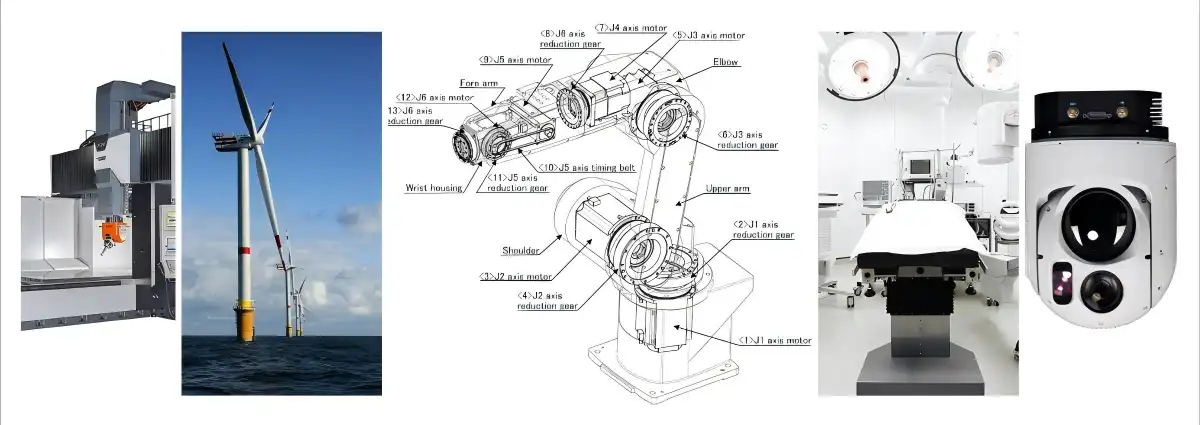
Industrial robotics needs joints that are small and can be placed accurately over and over again. The bearing's built-in attachment holes get rid of the need for different housings, which cuts the weight of the joint assembly by 20–30% compared to standard setups. Manufacturers of articulated robots say that their placement can be repeated within ±0.02mm after 500,000 rounds, which meets the accuracy standards for automation.
Cross roller bearings are used in rotating tables and indexing heads of CNC machine centers, where cutting forces cause complicated loading conditions. It's easier to build machines when the bearing can handle radial machining forces, axial thrust from holding the object, and tilting moments from offset cutting all at the same time in a single part. Builders of machine tools like how the small size makes the most of the room available for bigger jobs.
For diagnostic accuracy, medical imaging equipment needs to be able to rotate without any vibrations. CT scanner gantries that use these bearings can spin faster than 180 RPM while keeping their dynamic balance, which keeps picture flaws from showing up. The sealed design keeps sterile cleaning agents from getting to the internal parts, which means that they don't need to be serviced as often in hospitals.
For exact results, precision measuring tools need very little runout and friction. Coordinate measuring machine rotary axes with P4 or P2 grade cross roller bearings can get measurement errors of less than 2 microns across 300 mm diameters, which helps meet quality control standards in the car and aircraft industries.
Real-World Performance Data and Customer Feedback
Long-term data from the field backs up claims of longevity. A European company that makes parts for cars and has 24 robotic welding cells said that in 18 months of constant production, which added up to over 200,000 working hours, there were no unplanned bearing failures. Scheduled repair during yearly shutdowns showed that there was little wear, which confirmed that the expected service life was accurate.
Builders of semiconductor equipment have to meet very strict cleaning and accuracy standards. When these bearings were used in wafer handling systems in IC manufacturing tools, process yields went over 99.2%, and contamination events caused by bearings stopped happening after moving from other sources. The sealed design was very important for keeping lab compatibility.
Savings go beyond the price of the item itself. A North American machine tool maker found that rebuilding rotary table mounts around XU-series bearings cut assembly labor by 35% by getting rid of the need for custom housings and alignment steps. Having fewer parts made it easier to keep track of inventory and sped up the production ramp-up for new machine types.
Conclusion
Checking how long cross roller bearings last requires looking at a lot of different factors, such as the quality of the materials used, how precisely they are made, how they are used, and how they are maintained. In challenging industrial settings, the XU100140UU Precision Cross Roller Bearing has been shown to be reliable thanks to its high-grade bearing steel construction, integrated ring design that gets rid of structural weaknesses, and dual-seal security against contamination. It can handle radial, axial, and moment loads together in a small space, which is very important in robots, CNC machinery, and precision equipment. Partnering with ISO-certified manufacturers that offer expert help, quality documentation, and a reliable supply chain is good for procurement teams. With the right specifications, installation, and upkeep, this part will work reliably for years, helping to meet goals for equipment accuracy and production efficiency.
FAQ
1. What maintenance practices maximize XU100140UU bearing service life?
Lubricate the moving parts on a regular basis, every 2,000 to 3,000 hours of use, with lithium-based grease that can handle temperatures from -20°C to 120°C. In rough settings, check the stability of the seals every three months and replace any that show signs of wear or damage. During assembly, make sure the fixing surface is flat within 0.01 mm to make sure the load is spread out evenly. Keep an eye on the working temperatures and look into numbers above 70°C, which could mean that the bearings aren't oiled enough or there is too much preload. Keep track of maintenance tasks so you can find performance patterns and adjust service intervals so they work best with real-world situations instead of making up plans on the spot.
2. How does XU100140UU lifespan compare to similar bearing models?
With the same amount of load, the integrated ring design and careful production give it a 20–30% longer service life than split-ring configurations. P5 and P4 precision grades have 15–25% longer working life than P6 standard grade because they have tighter spec control, which lowers stress concentrations. In dirty settings, sealed types (UU designation) work better than open bearings by 40 to 50 percent because they keep abrasive particles out. Realized lifespan is finally determined by factors related to the application, such as loading, speed, and environmental conditions.
3. Are customization options available for OEM applications?
For sales of more than 100 units, manufacturers can handle changes to the dimensions, such as non-standard diameters, widths, and mounting hole shapes. Different types of materials, like steels that don't rust, work best in certain settings. For certain uses, custom preset settings make the hardness work best. Branded marking, special packing, and consignment stocking plans all help meet the needs of OEM output. Talk to the expert sales teams early on in the product development process to find out if customization is possible, how long it will take, and what the minimum order quantity is.
Partner with ATLYC for Reliable XU100140UU Precision Cross Roller Bearing Supply
ATLYC can help you with your precision motion control problems because they have been making bearings for 15 years. Our ISO 9001 and IATF 16949-certified production sites offer consistent quality across six specialized workshops. They serve original equipment makers (OEMs) of cars and heavy equipment in North America, Europe, and Asia. As a provider of XU100140UU Precision Cross Roller Bearings, we can offer precision grades from P2 to P6, variable order numbers starting at 10 units, and expert engineering help during application development. You can email our team at auto@lyautobearing.com to talk about your particular needs, get full product datasheets, or look into how to get bulk discounts for XU100140UU Precision Cross Roller Bearing manufacturer partnerships. We provide affordable wait times, thorough quality paperwork, and quick after-sales support to meet your goals for equipment performance and production continuity.
References
1. Harris, T.A. and Kotzalas, M.N. (2006). Advanced Concepts of Bearing Technology: Rolling Bearing Analysis, 5th Edition. CRC Press, Boca Raton.
2. ISO 281:2007. Rolling Bearings – Dynamic Load Ratings and Rating Life. International Organization for Standardization, Geneva.
3. Weck, M. and Brecher, C. (2006). Machine Tools Production Systems 2: Design and Calculation, Volume 2. Springer-Verlag, Berlin.
4. Budynas, R.G. and Nisbett, J.K. (2015). Shigley's Mechanical Engineering Design, 10th Edition. McGraw-Hill Education, New York.
5. Hamrock, B.J., Schmid, S.R. and Jacobson, B.O. (2004). Fundamentals of Fluid Film Lubrication, 2nd Edition. Marcel Dekker, New York.
6. Eschmann, P., Hasbargen, L. and Weigand, K. (1985). Ball and Roller Bearings: Theory, Design and Application, 2nd Edition. John Wiley & Sons, Chichester.
Learn about our latest products and discounts through SMS or email