- English
- French
- German
- Portuguese
- Spanish
- Russian
- Japanese
- Korean
- Arabic
- Greek
- German
- Turkish
- Italian
- Danish
- Romanian
- Indonesian
- Czech
- Afrikaans
- Swedish
- Polish
- Basque
- Catalan
- Esperanto
- Hindi
- Lao
- Albanian
- Amharic
- Armenian
- Azerbaijani
- Belarusian
- Bengali
- Bosnian
- Bulgarian
- Cebuano
- Chichewa
- Corsican
- Croatian
- Dutch
- Estonian
- Filipino
- Finnish
- Frisian
- Galician
- Georgian
- Gujarati
- Haitian
- Hausa
- Hawaiian
- Hebrew
- Hmong
- Hungarian
- Icelandic
- Igbo
- Javanese
- Kannada
- Kazakh
- Khmer
- Kurdish
- Kyrgyz
- Latin
- Latvian
- Lithuanian
- Luxembou..
- Macedonian
- Malagasy
- Malay
- Malayalam
- Maltese
- Maori
- Marathi
- Mongolian
- Burmese
- Nepali
- Norwegian
- Pashto
- Persian
- Punjabi
- Serbian
- Sesotho
- Sinhala
- Slovak
- Slovenian
- Somali
- Samoan
- Scots Gaelic
- Shona
- Sindhi
- Sundanese
- Swahili
- Tajik
- Tamil
- Telugu
- Thai
- Ukrainian
- Urdu
- Uzbek
- Vietnamese
- Welsh
- Xhosa
- Yiddish
- Yoruba
- Zulu
How Much Does RA15008UUCC0 Precision Cross Roller Bearing Cost?
The pricing for cross roller bearings designed for high-precision machinery depends on several technical and market variables. For the model in question—featuring an inner diameter of 150mm, outer diameter of 166mm, and ultra-thin 8mm width—typical market pricing ranges between $180 and $450 per unit. RA15008UUCC0 Precision Cross Roller Bearing: this variation reflects differences in order volume, precision grade (P6 to P2), supplier certification, and delivery terms. OEM partnerships and bulk orders negotiated directly with ISO-certified manufacturers often secure cost advantages of 20-35% compared to spot market purchases. Understanding these pricing dynamics helps procurement teams balance budgetary constraints with the performance demands of robotics, medical equipment, and precision automation applications.
Introduction
Precision cross roller bearings are very important in industrial settings where space savings and heavy load standards must be met. This article talks about a special model that solves a problem that has been around for a long time: getting radial, axial, and moment load capacities all at the same time in a very small space. When purchasing managers look at this part, they have concerns about fair price, dependable lines of supply, and the overall cost of ownership. Since we've been working with medium- to large automakers and industrial equipment OEMs for fifteen years, we know that cost considerations go beyond unit price. Reliability of lead times, accessibility of technical support, and adherence to IATF 16949 standards have a big effect on project timelines and the continuity of operations. This detailed guide looks at price factors, technical specs, and buying strategies to help global B2B clients make smart choices.
Understanding RA15008UUCC0 Precision Cross Roller Bearing
Core Design Architecture
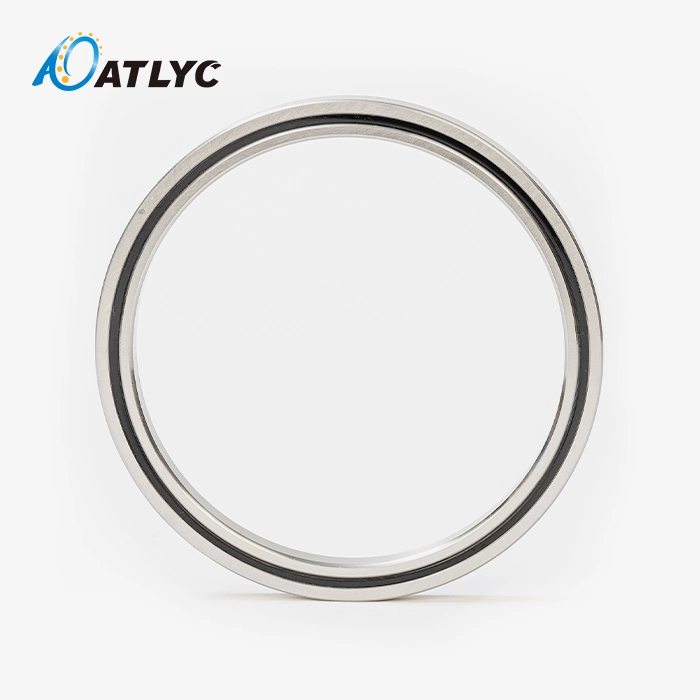
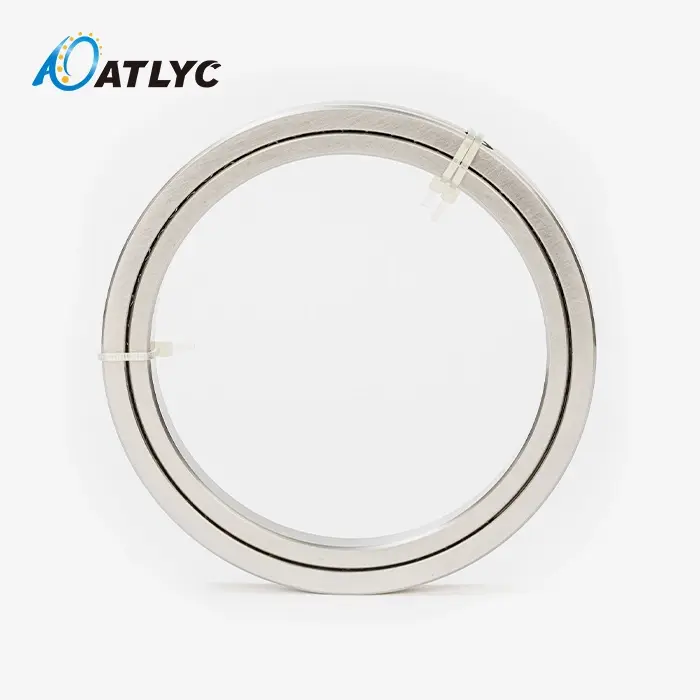
This thin-section bearing is made up of an outer ring that can be separated and an inner ring that is built in. This choice in design makes it easier to install in tight spaces while still keeping the structure strong under heavy moment loads. During assembly, the outer ring splits, which lets workers place parts exactly without interference from other machine parts. The base for moving loads in more than one direction is made up of cylindrical rollers spaced at 90° intervals between V-grooved raceways. This crossed design creates line contact across the roller surfaces, which makes them three to four times more rigid than point-contact options like angular contact ball bearings. The configuration gets rid of the need for paired mounting arrangements, which makes the assembly simpler and lighter.
Technical Specifications and Material Composition
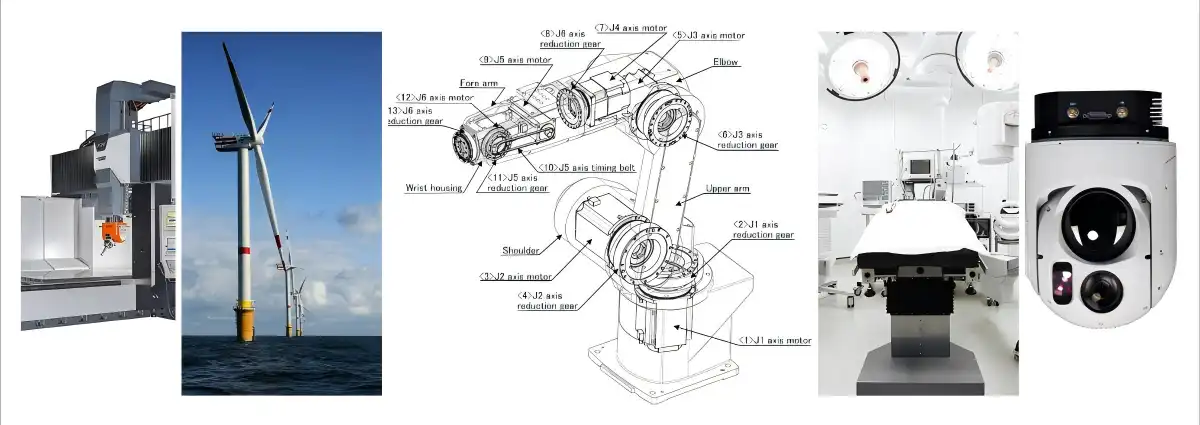
The bearing's size is defined by its 150 mm bore diameter, 166 mm outer diameter, and 8 mm cross-section height. Based on these measurements, it seems like an ultra-thin solution for places where vertical space is very limited, like collaborative robot joints and semiconductor wafer positioning stages. The choice of material has a direct effect on the load capacity and operating life. The base for raceway surfaces is GCr15 bearing steel that has been heated to an HRC 60–64 hardness. Some versions use GCr15SiMn alloy steel, which is stronger and better at handling shock loads. Both of the rubber seals (UU suffix) keep out dirt and keep the oil in during the repair cycle. The number CC0 means that there is negative internal clearance. This is a preload condition that gets rid of backlash and improves rotating accuracy to limits of a few microns.
Operating Principles Enabling Precision Performance
The design of the orthogonal rollers spreads forces over several contact lines at the same time. When axial thrust and radial loading come together, the crossed geometry makes sure that the stress is spread out evenly without the need for extra support bearings. This trait is especially useful in rotating tables for machine tools, where cutting forces create complicated load vectors.When you apply preload through the CC0 configuration, the rolling elements and raceways interact in a controlled way. This mechanical tension stops the stretchy deformation that happens when it's loaded, which is important for medical imaging gantries and measuring instrument platforms that need to be able to repeat their positions. However, the preload slightly raises the friction torque, which limits spinning speeds to between 500 and 800 RPM, based on how the bearings are oiled.
Key Factors Affecting RA15008UUCC0 Bearing Cost
Material Quality and Manufacturing Precision
About 25 to 30 percent of all manufacturing costs go toward the cost of base materials. Vacuum-degassed bearing steel costs more because it is more resistant to wear and has more uniform microstructures. For V-groove raceways to be ground to tolerances of less than 3 micrometres, special CNC equipment and skilled operators are needed. This adds a lot to the costs of labour and technology. When compared to open-type versions, the protected and preloaded design makes production more difficult. Precise tools are needed to install rubber seals without reducing the volume of the grease chamber. Using controlled negative clearance by selective assembly—matching specific roller sets to raceway dimensions—takes more time but makes sure that all production batches work the same way.
Certification Standards and Quality Assurance
There are extra costs for quality paperwork, process tracking, and traceability systems that go along with making bearings that are certified by ISO 9001 and IATF 16949. OEMs of cars and medical devices can be sure that the parts they use meet strict reliability standards thanks to these certifications. RA15008UUCC0 Precision Cross Roller Bearing: the extra cost of certification usually adds 8–12% to the base cost of production, but it lowers the risk of buying things for buyers who are in charge of safety-critical applications by a large amount. Precision bearings are tested by looking at vibrations, measuring runout, and making sure the force is always the same. Modern producers use automatic inspection systems that check all of the finished goods and find any problems with the size or finish that a person inspection might miss. This investment in quality control keeps buyers safe from failures in the field, but it makes the price per unit go up.
Market Dynamics and Supply Chain Considerations
The demand for bearings around the world changes with the investment cycles of industrial capital. When a lot of mechanical equipment is ordered at once, lead times get longer, and prices go up because of limited capacity. On the other hand, when the economy slows down, things are better for buyers. Knowing about these trends helps buying teams plan when to make purchases.Logistics of shipping have a big effect on landed costs, especially for orders coming from other countries. When replacing things quickly, air freight can double the cost of sending compared to ocean shipping. Buyers should weigh the risk of longer wait times against the cost of storing extra goods. This trade-off can be made better by building relationships with manufacturers that offer consignment stock programs.
| Cost Factor | Impact on Unit Price | Mitigation Strategy |
|---|---|---|
| Material grade (GCr15 vs. GCr15SiMn) | 5–10% difference | Material should be chosen based on application loads, not default settings. |
| Precision class (P6 to P2) | 15–40% more for higher grades | Match the tolerance class to what the machine needs. |
| Order amount | 20–35% off for orders of 100 or more | Combine purchases from different lines of products |
| Needs for certification | 8 to 12% more | Check the need for certain uses |
| Lead time urgency | 30 to 50 percent faster charges | Keep a strategic stock of important spare parts. |
These factors change over time, which makes it hard to compare prices directly without carefully aligning specifications. To find ways to save money, buyers should ask for itemised quotes that break down prices by component characteristic.
Volume Discounts and Partnership Agreements
Manufacturers usually have tiered price systems that reward customers who make bigger promises. Costs per unit often drop by 18–25% when you switch from buying one at a time to ordering 50 at a time. If you buy 200 pieces or more, you might get an extra 10 to 15 percent off. To get to these levels, strategic buyers combine requirements from different projects. Long-term supply deals are good for both parties. Buyers get price stability and priority allocation during tight market conditions, and makers get more information about how to plan their production. From working with OEMs in Germany and the US, we know that three-year framework contracts with volume promises usually get 12–18% better prices than spot buying while ensuring that capacity is reserved.
Comparing RA15008UUCC0 With Other Precision Bearings
Dimensional Alternatives Within the RA Series
The RA15007UUCC0 version has the same hole and outer diameter measures, but the cross-sectional height is lowered from 8mm to 7mm. This 12.5% reduction in thickness gives up about 15% of its load capacity but makes space even more limited. Applications with small load gaps should avoid this tradeoff, but designs with very little room may benefit even though performance will be lower. On the other hand, upgrading to RA15010UUCC0 raises the section height to 10mm, which increases load ratings by about 25% while keeping the same mounting interfaces. If machine designers have enough space, they should think about this choice when the first load figures show that the safety factors aren't very good.
Performance Comparison With Angular Contact Ball Bearings
To handle combined loads, precision angular contact ball bearings with similar hole sizes need to be paired either back-to-back or face-to-face. This doubles the number of bearings and makes the envelope bigger. Ball bearings can usually handle higher rotational speeds (2000 RPM or more), but their point-contact geometry makes them less rigid and limits the amount of moment load they can hold. When there are a lot of applications, the difference in cost becomes very important. Between 40 and 60% less than a single crossed roller unit, two pairs of angular contact bearings may be bought. But the extra work needed to put the house together and the extra room needed along the axes often cancel out this initial cost savings.
Alternative Brands and Their Market Positioning
Japanese companies make most of the high-end precision bearings and can charge 25–40% more because of their well-known brands and track records of quality. German names have similar prices and focus on tech support and integrating the European supply chain. Over the past ten years, Chinese makers, especially those with IATF 16949 approval, have made big steps forward in quality. RA15008UUCC0 Precision Cross Roller Bearing Prices are usually 30 to 50 percent less than Japanese versions, but they meet the same size and performance requirements for many industry uses. To check if promises of capability are true, buyers should ask for material certifications, precision grade test reports, and audit documents from the production site.
| Bearing Type | Load Capacity | Rigidity | Speed Limit | Typical Cost Range |
|---|---|---|---|---|
| RA15008UUCC0 (crossed roller) | High and in many directions | Very High | 500 to 800 RPM | $180 to $450 |
| Angular contact paired (150 mm hole) | Moderate altogether | Moderate | 2000 RPM or more | $90-$180 (pair) |
| Deep groove ball bearing (150 mm hole) | Mostly circular | Low for loads that change quickly | 3000 RPM or more | $45 to $90 |
| Tapered roller bearing (150 mm bore) | High power and radial | It's high for axial loads | 1500 RPM | $120-$280 |
This comparison illustrates that crossed roller bearings occupy a specialized niche. They excel where space constraints, multi-directional loads, and high rigidity converge—a requirement set common in robotics and precision positioning equipment.
How to Purchase RA15008UUCC0 Precision Cross Roller Bearing
Pricing Expectations and Market Rates
Standard precision grades (P5/P4) cost between $180 and $280 per unit from Chinese manufacturers with ISO 9001 certification right now, based on the current state of the market. Ultra-precision P2 grades cost 40–60% more than other grades because they need to be ground and assembled more carefully. European and Japanese sources usually give prices between $320 and $450 for similar specs. This is because of how the brand is positioned, how much labour costs in the area, and how well established the distribution networks are. Buyers should check to see if their application really needs premium sourcing or if approved Chinese options meet their technical needs at better cost-performance ratios.
Authorized Distribution Channels
When you buy directly from manufacturers, you skip the middlemen and save 15 to 25 percent on costs while getting access to engineering support and the ability to make changes. But this method works best for buyers who can meet the minimum order quantities, which are usually between 20 and 50 units for custom bearing configurations. Industrial wholesalers offer more product access but less order freedom. They also charge a markup of 20% to 50%, based on how the competition is doing. They offer value by combining shipping, offering payment terms, and buying from multiple brands for buyers who need to meet a variety of bearing needs across a range of equipment.
Lead Time Management
Standard catalogue items from well-known brands usually ship between 15 and 25 business days after an order is confirmed. Due to the need for selective assembly, custom precision grades or changed seal configurations add 35 to 50 days to the lead time. Buyers who need replacements right away should look into options like distributor stock or expedited manufacturing, keeping in mind that rush charges have a big effect on unit economics. By setting up blanket purchase orders with planned releases, buyers can lock in prices while still having some inventory freedom. Manufacturers like that they can see what their plans are ahead of time, and they often offer 5-8% savings compared to individual purchase orders while ensuring delivery times during times of high demand.
Verification and Authentication
Because fake bearings are so common in global markets, testing procedures are needed. To make sure something is real, asking for material certification documents, precision test reports, and manufacturing traceability codes is a good idea. Suppliers with a good reputation always provide full paperwork. When you receive something, you should use calibrated measuring tools to make sure the dimensions are correct. You should compare the bore diameter, outer diameter, and width to the specs. Rotational torque testing finds problems with improper preload or contamination before installation. The small cost of getting inspection keeps machines from breaking down because of broken parts, which costs a lot of money.
Maintenance Tips to Maximize ROI on RA15008UUCC0 Bearings
Inspection and Monitoring Protocols
Regular sound analysis finds early signs of wear and tear before a major failure happens. By setting baseline vibration signatures during commissioning, maintenance teams can find changes that could mean that rollers are wearing out or getting dirty. Most workplace settings work best with checks every 500 to 1000 hours of operation, but continuous-duty uses need to be checked more often. RA15008UUCC0 Precision Cross Roller Bearing visual inspection of the quality of the seal stops contamination that speeds up wear. When synthetic rubber seals are exposed to lubricants that don't work well with them or to temperatures above 80°C, they break down. Finding cracks or hardening in seals early on lets you change them before particles get to the moving elements.
Proper Handling and Installation Techniques
The very thin 8mm cross-section makes it easy for it to bend if the mounting surfaces aren't flat. Making sure that the case is machined so that the bearing seat is flat within 10 micrometres stops distortion that would change the internal shape. Bearing circularity is kept by using torque patterns that fairly spread clamping forces by tightening opposite bolts one after the other to certain values. Controlling contamination during installation makes service life much longer. By putting bearings together in clean areas, using lint-free gloves on parts that need to be handled, and keeping open assemblies safe from flying particles, sharp contaminants that quickly damage precision surfaces are kept out. When compared to self-aligning bearings, crossed roller designs are more sensitive to misalignment. Making sure that the shaft and housing are perpendicular to each other within 0.02mm per 100mm of length stops edge loading, which concentrates stress and speeds up wear and tear. Precision adjustment tools are worth the money because they make parts last longer.
Recognizing Degradation Indicators
Problems are starting to show up when the rotational torque goes up. This could be because of contamination that makes friction worse or changes in the preload caused by wear. Setting baseline torque measurements during commissioning gives you a way to keep an eye on the condition. A 30–40% increase in torque usually means that the part needs to be inspected more closely or replaced. When temperatures rise above their usual ranges, it means that friction is getting worse because of poor lubrication or too much loading. Monitoring temperature with infrared inspection or built-in sensors lets repair teams know when problems start to happen. If you fix oil problems quickly, they won't get worse and damage the roller surfaces and raceways. Noises that don't make sense, like clicking or grinding sounds that happen over and over, can mean that there is advanced wear or contamination damage. In normal situations, crossed roller bearings are quieter than ball bearings, but any change that can be heard should be looked into right away. If you keep running the machine after noise starts to appear, it could damage nearby parts.
Conclusion
To figure out how much precision crossed roller bearings cost, you have to look at more than just the unit price. You also have to look at the total ownership numbers. With its 150mm bore, 166mm outer diameter, and very thin profile, this special model is used in situations where regular bearing arrangements don't work well. RA15008UUCC0 Precision Cross Roller Bearing Prices range from $180 to $450 depending on the quality grade, the number of orders, and where the seller stands. A good procurement process balances immediate cost constraints with the need for reliability, stable lead times, and easy access to technical support. When manufacturers show that they are in line with ISO 9001 and IATF 16949, you can be sure that their quality systems support consistent output standards. By combining orders and working together with key suppliers, you can save money and keep the supply going. Service life is greatly increased by following good repair procedures, such as keeping an eye on vibrations, preventing contamination, and installing parts precisely. With these operational standards, buying bearings goes from being a one-time thing to becoming an investment in the reliability of tools and the uptime of production.
FAQ
What distinguishes CC0 clearance from standard bearing clearances?
The number CC0 means that there is negative internal clearance, which means that the rollers are already pressed against the raceways even when there is no external loading. This completely gets rid of backlash, giving the rigid, zero-play performance needed for precise positioning tasks. Standard clearances (C0) allow a little internal play, which makes speed possible but limits how often the position can be repeated. CC0 setup is good for applications that value accuracy over speed.
How does bearing cost correlate with precision grade selection?
A precision grade from P6 (normal) to P2 (ultra-precision) means that the manufacturing tolerances for measurements and runout are getting tighter. Due to the need for more grinding and selective assembly, each grade improvement usually adds 15 to 25 percent to the unit cost. Instead of defaulting to the best available grade, buyers should choose exact grades that meet their specific application needs. This way, buyers can avoid paying extra for grades that aren't needed.
Can sealed bearings operate in vacuum environments?
Standard UU rubber seals are made to work in places with normal air pressure. When used in vacuum, seals let out gas, and lubricant evaporates. To use this type of bearing in a vacuum, you have to take off the seal and replace it with a vacuum-compatible fluorinated grease like Krytox or Fomblin. Before starting vacuum applications, you should talk to the manufacturers about how to change the seals and what kind of lubrication is best for your specific environment.
Partner With ATLYC for Your Precision Bearing Requirements
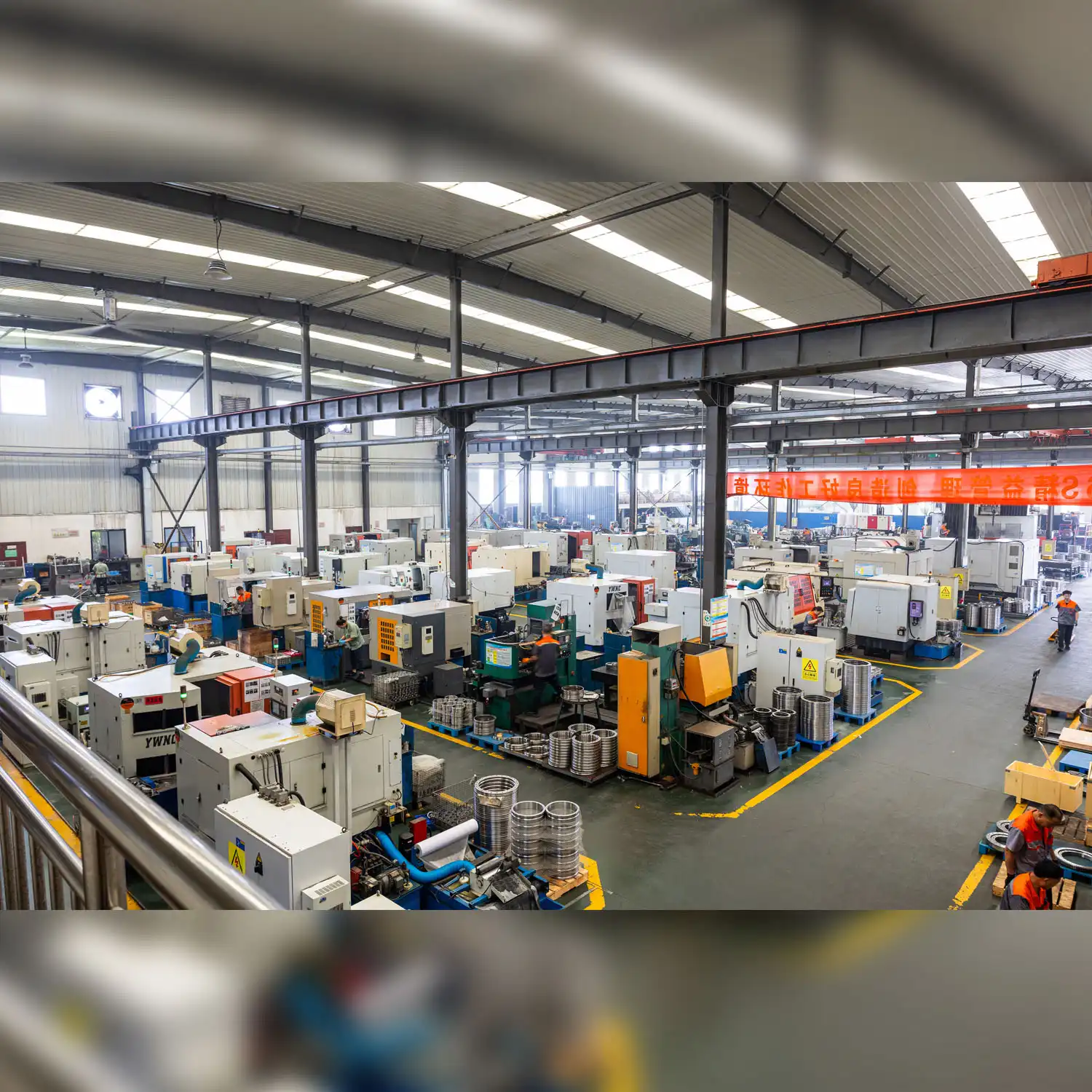
ATLYC has been making high-quality precision bearings for fifteen years and serves automakers, leaders in industrial robotics, and companies that make medical equipment in six countries. Our production facilities in Luoyang are ISO 9001 and IATF 16949 certified, and they have 120 specialised workers whose job it is to provide consistent quality that meets international standards. When you buy directly from our factory, you skip the middleman and get access to our engineers' knowledge for customising products for your specific needs. Volume pricing systems reward strategic partnerships; customers who order 100 or more units a year get better prices and are given priority when production schedules are made. Our expert team helps you choose the right bearings, install them correctly, and get the most out of your care so that your equipment is always reliable. Get specific quotes for precision cross roller bearing needs by emailing our export team at auto@lyautobearing.com. We have been a supplier to markets in South Korea, the US, Germany, Russia, Iran, and Turkey for a long time, so we know what paperwork, certifications, and logistics are needed for global buying. ATLYC has the quality, dependability, and cost-performance balance that your users need, whether you need ten bearings for a prototype or a thousand units for a production line.
References
1. Harris, T.A., & Kotzalas, M.N. (2006). Advanced Concepts of Bearing Technology: Rolling Bearing Analysis (5th ed.). CRC Press.
2. ISO 492:2014. Rolling bearings — Radial bearings — Geometrical product specifications (GPS) and tolerance values. International Organization for Standardization.
3. Wensing, J.A. (1998). On the Dynamics of Ball Bearings. University of Twente Press.
4. American Bearing Manufacturers Association. (2021). Load Ratings and Fatigue Life for Roller Bearings. ABMA Standard 11-1990 (R2021).
5. Eschmann, P., Hasbargen, L., & Weigand, K. (1985). Ball and Roller Bearings: Theory, Design and Application (2nd ed.). John Wiley & Sons.
6. SKF Group. (2018). Rolling Bearings Catalogue: Technical Product Information and Engineering Data. SKF Motion Technologies AB.
Learn about our latest products and discounts through SMS or email