- English
- French
- German
- Portuguese
- Spanish
- Russian
- Japanese
- Korean
- Arabic
- Greek
- German
- Turkish
- Italian
- Danish
- Romanian
- Indonesian
- Czech
- Afrikaans
- Swedish
- Polish
- Basque
- Catalan
- Esperanto
- Hindi
- Lao
- Albanian
- Amharic
- Armenian
- Azerbaijani
- Belarusian
- Bengali
- Bosnian
- Bulgarian
- Cebuano
- Chichewa
- Corsican
- Croatian
- Dutch
- Estonian
- Filipino
- Finnish
- Frisian
- Galician
- Georgian
- Gujarati
- Haitian
- Hausa
- Hawaiian
- Hebrew
- Hmong
- Hungarian
- Icelandic
- Igbo
- Javanese
- Kannada
- Kazakh
- Khmer
- Kurdish
- Kyrgyz
- Latin
- Latvian
- Lithuanian
- Luxembou..
- Macedonian
- Malagasy
- Malay
- Malayalam
- Maltese
- Maori
- Marathi
- Mongolian
- Burmese
- Nepali
- Norwegian
- Pashto
- Persian
- Punjabi
- Serbian
- Sesotho
- Sinhala
- Slovak
- Slovenian
- Somali
- Samoan
- Scots Gaelic
- Shona
- Sindhi
- Sundanese
- Swahili
- Tajik
- Tamil
- Telugu
- Thai
- Ukrainian
- Urdu
- Uzbek
- Vietnamese
- Welsh
- Xhosa
- Yiddish
- Yoruba
- Zulu
Why Choose RB6013UUCC0 Crossed Roller Bearings for Robots?
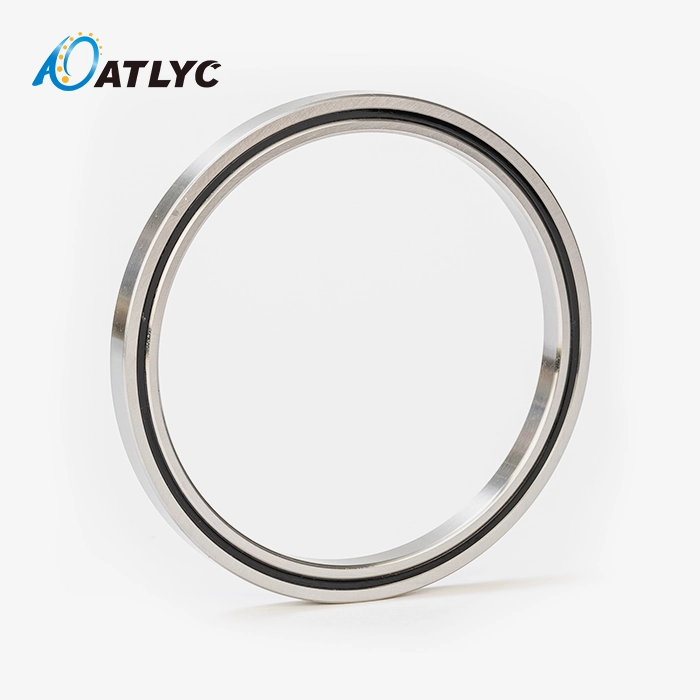
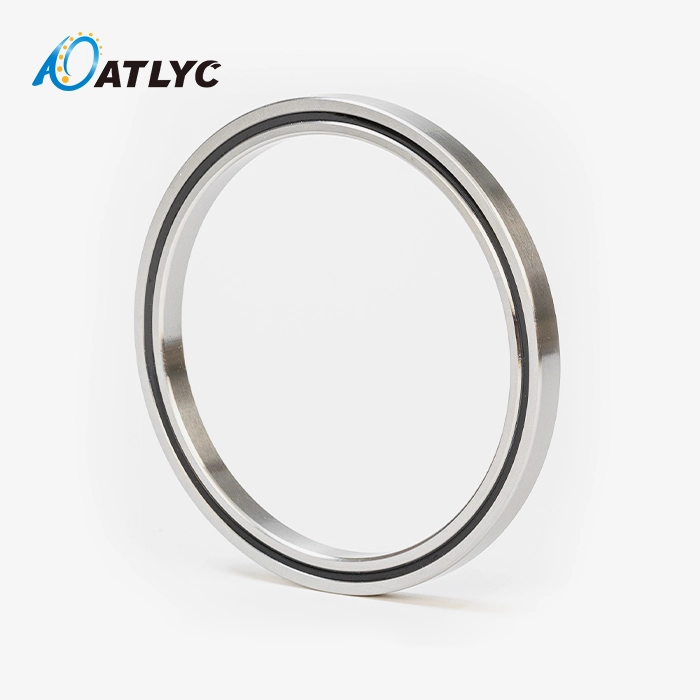
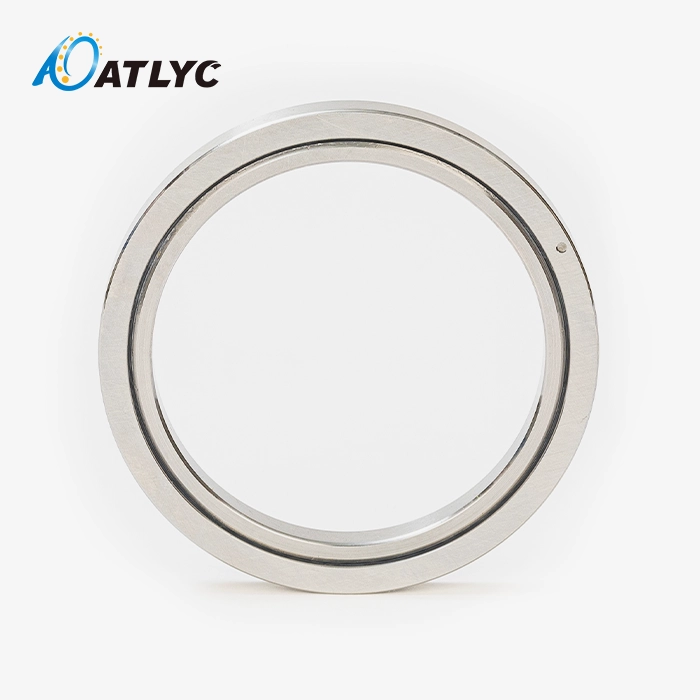
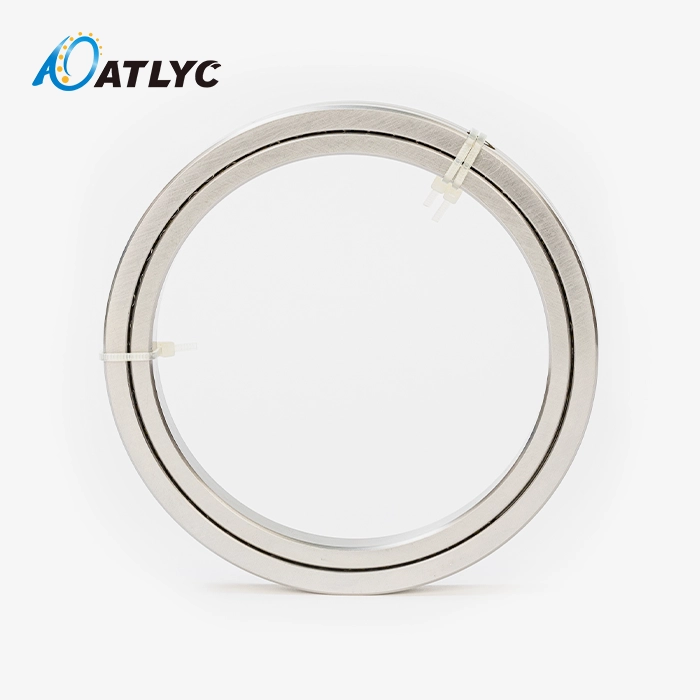
When your robotic systems demand uncompromising precision and reliability, the RB6013UUCC0 Crossed Roller Bearings deliver the performance characteristics necessary for advanced automation applications. This specialized bearing component combines a compact 60mm x 85mm x 13mm profile with multi-directional load handling capabilities, making it an optimal solution for robotic joints, manipulator assemblies, and precision rotary tables. The bearing's integrated inner ring design with an outer ring plug configuration addresses critical engineering challenges while maintaining the rigorous quality standards required by automotive manufacturers and industrial equipment OEMs across global markets.
Understanding RB6013UUCC0 Crossed Roller Bearings: Technical Foundation and Design Architecture
Dimensional Specifications and Material Composition
The RB6013UUCC0 Crossed Roller Bearings have exact measurements: an inner diameter of 60 mm, an outer diameter of 85 mm, and a width of 13 mm. These measurements make the best use of space in robotic assemblies. The part is made from high-quality GCr15 and GCr15SiMn bearing steel and has a hardness of between 58 and 64 HRC. This gives it great fatigue resistance even when loaded and unloaded many times. When procurement managers look for parts for long-term use, they put reliability first, and this choice of material directly meets those needs. Engineers can fit the bearing into small robotic joint designs because of its small size. This is possible without losing load capacity or spinning accuracy. The weight is still very low, at about 0.6 kg, which makes it easier to handle payloads in multi-axis robotic setups.
Crossed Roller Mechanism and Load Distribution
The arrangement of the orthogonal rollers is what makes this bearing work. Precision-machined V-groove raceways hold cylindrical rolling elements spaced at 90-degree intervals. Each roller is separated by spacer retainers, which keep them from skewing and reduce friction while they're in use. This geometric arrangement lets a single bearing handle radial, axial, and moment loads at the same time, which gets rid of the complexity and installation space needs of regular bearing combinations. The V-groove raceway design makes sure that the contact stress is spread out evenly across the rolling elements. When robotic joints are in use and forces are acting in more than one direction, the bearing keeps the load paths consistent. This keeps the joints from wearing out too quickly and increases the time between operations. The integrated design cuts down on the number of parts and possible failure points in the kinematic chain, which makes assembly easier for engineers.
Sealing Technology and Environmental Protection
The letter "UU" means that there are two rubber contact seals on both sides of the bearing. These seals do a good job of keeping out dust, debris, and other contaminants that are common in industrial settings. The sealing system keeps the grease inside the bearing, so the film thickness stays the same on all the raceway surfaces throughout the duration. For factories that have to deal with machining dust, coolant mists, or pollution from the air, this sealed design greatly increases the time between maintenance visits. Even when it's exposed to harsh conditions like those found in auto assembly lines or industrial cutting centers, the bearing keeps providing accurate spinning.
Performance Characteristics That Address Critical Application Requirements
Engineers and procurement specialists can figure out how well this part meets their operational needs by learning about its specific performance benefits. In high-precision settings, RB6013UUCC0 Crossed Roller Bearings are different in the following ways: Multi-Directional Load Capacity: The bearing can handle rotational forces up to its maximum dynamic load capacity. It can also handle axial loads and overturning moments at the same time. In robotic elbow and wrist joints, where forces are always changing direction during pre-programmed motion patterns, this ability is very important. When a single bearing unit is used instead of several angular contact bearings or ball bearing pairs, it makes structural math easier for the people who make the equipment. Zero Backlash Precision: The CC0 preload rating means that there is negative clearance, which means that the rolling elements stay in touch with both raceways even when there is no external load.
This preload configuration gets rid of all backlash, which is important for robotic applications because it allows for precise positioning control. This zero-backlash feature directly leads to better product quality and lower scrap rates when your automation system needs repeatability within microns. Superior Rotational Accuracy: The bearing has very low runout values during rotation because it is made to precision grades with tolerances ranging from P6 to P2 class. With the P4 and P2 grade options, runout accuracy below 2 microns is possible. This accuracy in rotation stops vibrations from travelling through the robot's structure, keeping the end-effector in the same place during all operational cycles. When put together, these performance attributes help mid-sized to large manufacturers with their problems, like keeping output quality consistent, reducing downtime due to broken parts, and getting competitive cost-performance ratios in high-volume production settings.
| Performance Parameter | Details | Benefits of Application |
|---|---|---|
| Capacity for Load | Combined force, horizontal, and axial | Makes designing bearing arrangements easier |
| Type of Preload | CC0 means "negative clearance." | Gets rid of positioning reaction |
| Accuracy in rotation | Choices from P6 to P2 class | Allows repeatability down to the micron level |
| Configuration for Sealing | UU (two rubber seals) | Makes maintenance intervals longer |
| How Hard Something Is | 58–64 HRC | Makes sure of long-term resistance to tiredness |
Because of these engineered features, your robotic systems will keep performing at the same level over long production runs. This will have a direct effect on your operational efficiency measures and total cost of ownership estimates.
Comparing RB6013UUCC0 with Alternative Bearing Solutions
Evaluating Similar Crossed Roller Models
Engineers often look at models like the RB6013UU and the RB6013UUCC0 Crossed Roller Bearings when they are looking at bearing options for robotic applications. The main difference is the clearance classification. Standard RB6013UU variants may have normal clearance options, but the CC0 preload specification makes the bearings more rigid for precise positioning tasks. This difference is very important when artificial joints have to stay at exact angles even when the load changes. Angular contact bearings represent another alternative that engineers consider. When mounted back-to-back or face-to-face, angular contact pairs can handle loads going in more than one direction. However, they need exact axial preloading during installation and take up more axial room than a crossed roller design. The RB6013UUCC0 makes this technical problem easier to solve with its integrated design, which makes building easier and lowers the risk of mistakes.
Supplier Brand Considerations
Bearing companies around the world, like NSK, SKF, THK, and KOYO, make crossed roller options for the robots market. Choosing a brand usually involves weighing the quality of the manufacturing, the prices, the availability of expert help, and the dependability of the delivery. Established brands charge higher prices, which is logical since they have a lot of testing paperwork and service networks around the world. Chinese companies that make precision bearings have made a big difference in quality, especially those with ISO 9001 and IATF 16949 certifications. At Luoyang Auto Bearing Co., Ltd., we've spent 15 years improving our production skills so that they meet foreign quality standards and keep our prices low. Our decision to add six specialised workshops to our facility shows that we are committed to production scale and continuous improvement, which are important factors for B2B buyers when they are looking for long-term supply partnerships. The decision between brand-name imports and qualified Chinese makers, the total landed cost, how quickly expert help can respond, and the ability to change the minimum order number are often the most important factors. Buyers who sell to the US market are becoming more aware that certified Chinese suppliers offer consistent quality at prices that help them compete without lowering performance standards.
Strategic Procurement: Sourcing RB6013UUCC0 Crossed Roller Bearings Efficiently
Understanding Pricing Structures and Order Parameters
RB6013UUCC0 Crossed Roller Bearings prices depend on a number of things, including the precision grade chosen, the production rate, the material requirements, and the manufacturing ability of the provider. P6 and P0 grade bearings are usually the most basic and standard precise options available at the most basic prices. When you choose grades P5, P4, or P2, the unit cost goes up by the same amount because you have to do more grinding and follow stricter inspection rules to get closer tolerances. Minimum order amounts are different for each seller because they depend on how they schedule production and handle their inventory. Manufacturers that have been around for a while and have a wide range of products may be able to handle smaller initial orders, especially when they are building relationships with OEMs that need customisation options. When you commit to buying a lot of something, you usually get better prices. This is something that makers should think about when they are planning their annual bearing needs across multiple robotic assembly lines. Lead times depend on how complicated the specifications are and how much work is already in the queue for production. Standard configurations with P5 accuracy and CC0 preload usually ship between 4 and 6 weeks after the order is confirmed. Custom versions that need seal materials or lubricants that aren't common may make the lead time 8 to 12 weeks. Framework deals that pre-position inventory with shorter call-off wait times are helpful for buyers who are in charge of just-in-time manufacturing plans.
Identifying Authorized Distributors and Quality Assurance
Checking the qualifications of suppliers is an important part of buying bearings. ISO 9001 certification shows that quality control systems are well-established, and IATF 16949 certification covers the needs of the car industry, including how to approve production parts and how to make improvements all the time. You can be sure that the way your suppliers make things meets your quality standards by asking for copies of their certifications and auditing them. Authorised wholesalers work directly with manufacturers to make sure the products they sell are real and that the warranties they offer are honoured. When looking at possible providers, make sure you check how well they offer professional support. For example, can they help with choosing the right bearings, making mounting suggestions, and fixing problems? When you're developing a product, having suppliers with a lot of technical resources makes your job easier as an engineer. Checking the dimensions with laser measuring tools, testing the radial and axial runout with dial indicators, and measuring the starting torque to make sure the right CC0 preload is applied are all part of quality control procedures. Material hardness testing proves that the surface properties of the raceway meet the requirements. Reliable suppliers include inspection certificates with every shipment that show these steps were taken to make sure the goods are correct.
| Factor of Procurement | Key Things to Think About | Effects on the Supply Chain |
|---|---|---|
| Very Good Quality | Compare P6/P0 (standard) to P5/P4/P2 (premium). | 15–40% difference in costs |
| Minimum Quantity to Order | 50 to 500 units is a normal range. | Price levels based on volume |
| Lead Time | 4–6 weeks normal, 8–12 weeks custom | Needs for inventory planning |
| Getting certified | ISO 9001 and IATF 16949 | Quality assurance and trust |
| Help with Technology | There is engineering help available | The ability to optimise designs |
Logistics and After-Sales Service Considerations
When precision bearings are shipped internationally, they need to be protected in a way that keeps them from getting damaged by shock or rust during transit. Suppliers should use moisture-barrier packaging with desiccants and cushioned containers that meet the standards for international shipping. Make sure that your supplier keeps the right export paperwork and knows how Incoterms affect where costs are allocated and where risks are transferred. After-sales support includes things like warranties, replacement parts, and help with fixing technology problems. Most warranties cover problems with the way the product was made, but not problems that happen because of bad fitting or upkeep. By making warranty conditions clear during the buying process, disputes can be avoided if the product fails too soon. Suppliers with expert agents or partners in the US offer responsive help across time zones, which is useful for makers who need to solve problems quickly.
Maintenance Practices and Performance Optimization Strategies
Lubrication Requirements and Inspection Protocols
Managing lubrication correctly has a direct effect on the life of RB6013UUCC0 Crossed Roller Bearings and how smoothly they rotate. The sealed UU configuration keeps the factory-applied grease, which is usually a lithium-based formula that works well at normal speeds and temperature ranges. Manufacturers should make sure that the lubrication that is used in the factory meets the needs of their specific application in terms of temperature extremes, rotational speeds, and contamination exposure. Inspection times depend on the intensity of the job cycle and the conditions of the surroundings. If robots work in clean areas with light loads, inspections may be done every 6 to 12 months instead of every 3 to 4. Applications with a lot of pollution, high temperatures, or constant job cycles should be inspected every three months. During inspections, several signs should be looked at, such as strange noises or vibrations, higher starting power, rising temperatures while the machine is running, and the integrity of the seals. Monitoring the temperature of a bearing with infrared thermography or integrated sensors lets you know right away if the lubrication is breaking down or there is too much pressure. Temperature rises of more than 10 to 15°C above the baseline values mean that more research needs to be done. Vibration analysis finds growing flaws by noticing changes in the frequency range before they cause major failures. Using these predictive repair technologies increases the amount of time that equipment is available and stops production from stopping without warning.
Troubleshooting Common Performance Issues
Engineers can quickly figure out what's wrong when they know about failure modes. Too much starting torque is usually a sign of bad preload adjustment during installation or worn-out lubricant. If the torque readings are higher than the specified ranges, check the seal drag and make sure that the fixing surfaces stay straight. When contamination gets past seals, it speeds up wear, which can be seen in the form of more noise and a rough rotation feel. Overloading beyond the rated capacity or fitting errors that cause premature wear failure are the main causes. Spalling patterns on the surfaces of raceways can be used as proof of problems with how the load is distributed. When engineers check the real working loads against the bearing capacity values, they should also look at the mounting housing tolerances that might affect how evenly the loads are distributed. Problems with temperature can happen when there isn't enough grease, too much pressure, or enough heat escape from the bearing area. Thermal photography during operation finds hot spots that need to be looked into. Changes to the lubricant's specs, changes to the preload, or better cooling features in the structure around the problem could be solutions.
Optimizing Service Life Through Operational Best Practices
Installing the bearings is the first step in getting the most out of them. Technical paperwork lists the limits for flatness and perpendicularity that mounting surfaces must meet. Industry studies show that improper installation is the cause of about 16% of premature bearing failures. Precision-ground surfaces can't be damaged as long as the right tools are used and the building steps are followed exactly as they are written. Conditions of use have a big effect on service life. Keeping speeds within the recommended range keeps rolling parts from being affected by too much centrifugal force. Stress peaks that speed up fatigue can be avoided by keeping equipment from vibrating and sending shocks to nearby equipment. Environmental controls that limit extreme temperatures and exposure to contamination make it possible to go longer without having to do any maintenance. Documentation methods that keep track of installation dates, working hours, and check results make it possible to schedule repair based on data. Trend analysis across multiple installations finds application-specific factors that affect performance. This lets maintenance plans and buying guidelines for replacement parts be made better.
Why RB6013UUCC0 Crossed Roller Bearings Represent the Optimal Choice for Robotic Systems
Compact Design Enabling Space-Efficient Engineering
The thin-section shape of the bearing fits a lot of load capacity into a small amount of horizontal and axial space. This design feature is very helpful for robotic joint assemblies, where the choice of components is limited by weight and space. Engineers are able to make robot structures that are lighter overall and have better payload-to-weight ratios. This makes the system more productive and uses less energy. The RB6013UUCC0 Crossed Roller Bearings CC0 preload design has stiffness properties that are better than those of other bearing arrangements of the same size. When stiffness goes up, positioning accuracy and dynamic reaction during fast motion sequences go up as well. When robotics companies switch from standard ball bearings to crossed roller designs in key joint locations, they say that cycle times go down and quality goes up.
Proven Reliability Reducing Total Cost of Ownership
Field performance data from makers of car and industrial equipment shows that these bearings have longer service lives than traditional ones. When you combine high-quality bearing steel with precise manufacturing and good sealing, the average time between failures is more than 20,000 hours in uses that are properly kept. This dependability has a direct effect on how much your upkeep costs and how predictable your output schedule is. Case studies from European car suppliers show that adding crossed roller bearings to robotic welding stations increases output by 12 to 18%. Fewer mistakes in positioning led to fewer rework jobs, and stronger joints allowed for faster welding without sacrificing quality. These measured results show that choosing high-quality parts for apps that need to be up and running quickly pays off. Manufacturers that sell to the US market put a lot of value on reliable supplies and quick technical support. Supply chain risks can be reduced by forming relationships with suppliers that can show they have the manufacturing size, quality certifications, and proven international transportation skills. This is becoming more and more important in global manufacturing strategies.
Future-Ready Technology for Evolving Applications
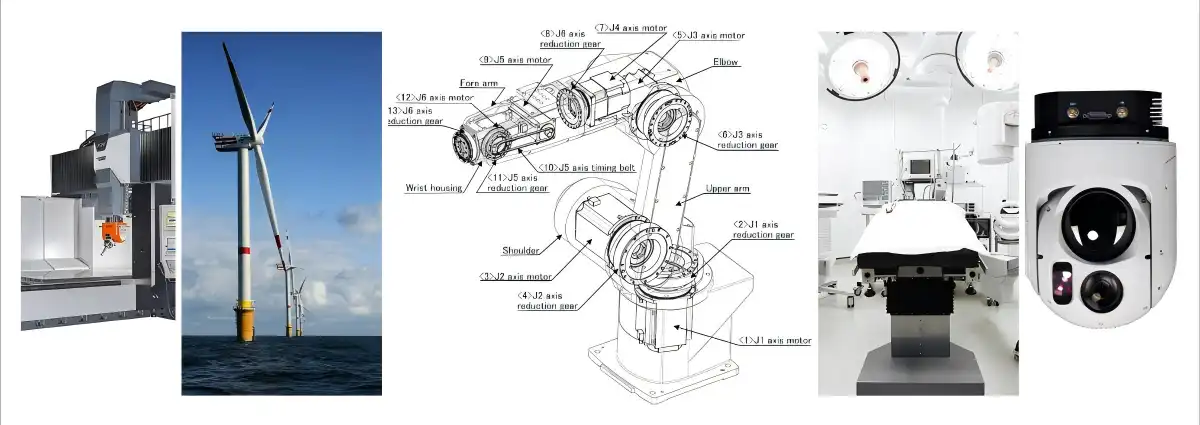
Bearing technology is always getting better by using new materials and increasing the range of performance. For food-grade and sterile uses, new steel formulas make it less likely that the steel will rust. Surface treatments make things less likely to wear down when there isn't much lubrication. With these new ideas, crossed roller bearings can now meet the needs of collaborative robots, medical automation, and tools used to make semiconductors. Miniaturisation trends in robotics call for bearing envelopes that are smaller while still performing the same. The basic crossed roller design works well for a wide range of sizes, and work is still being done to make it work for bore widths of less than 50 mm for small shared robot joints. When companies invest in crossed roller technology now, they make sure that their designs can be used in new ways in the future without having to make major changes to the architecture. Sustainability concerns are becoming more and more important in choosing components. Precision crossed roller bearings have longer service lives and maintenance intervals, which means that fewer replacement parts and less trash are needed over the lifecycle of an item. Less friction and more precise motion control help save energy, which is one reason why business sustainability measures are becoming more important across all industries.
Conclusion
The RB6013UUCC0 Crossed Roller Bearings meet the important needs of modern robotic systems, including accurate positioning, the ability to handle loads in multiple directions, small packaging, and reliable operation. Its technical specs—60 mm bore, 85 mm outer diameter, 13 mm width, CC0 preload, and dual seal protection—exactly solve the engineering problems that robotic equipment makers are having. This bearing part offers measurable performance benefits backed by ISO 9001 and IATF 16949 certified manufacturing processes for applications that need consistent quality, long service life, and a low total cost of ownership. Strategically choosing a supplier with the right mix of professional know-how, production capacity, and quick help is the key to building long-term partnerships that work.
FAQ
What makes crossed roller bearings superior for robotic joints compared to ball bearings?
RB6013UUCC0 Crossed Roller Bearings can handle radial, axial, and moment loads all at the same time in a single, small unit, so you don't need to use multiple bearing setups. When preload is applied, the orthogonal roller configuration gives the system more stiffness and no backlash, which is very important for precise positioning. Ball bearings usually need to be paired up in order to handle combined loads. This takes up more room, makes assembly more difficult, and lowers the moment load capacity.
How does the CC0 preload classification affect bearing performance?
If the label CC0 means negative internal clearance, it means that the moving elements stay in contact with the raceways even when there is no load on the outside. This preload gets rid of all backlash, making the system as rigid as possible for precise positioning tasks. Starting torque goes up compared to clearance-fit bearings, but rotational accuracy and stiffness go up a lot. This is the best trade-off for robotic joints that need to be repeatable to the micron level.
Can the RB6013UUCC0 accommodate high-speed rotation in robotic applications?
Crossed roller bearings are best for high load capacity and precise positioning rather than high speeds. The RB6013UUCC0, on the other hand, works well at normal robotic joint speeds. The sealed design and the right amount of grease lubrication allow for modest speed ranges that are popular in industrial robots. Applications that need speeds above the standard range should check the manufacturer's specs and think about things like how well the bearings are oiled and how well they can get rid of heat.
Partner with ATLYC for Reliable RB6013UUCC0 Crossed Roller Bearings Supply
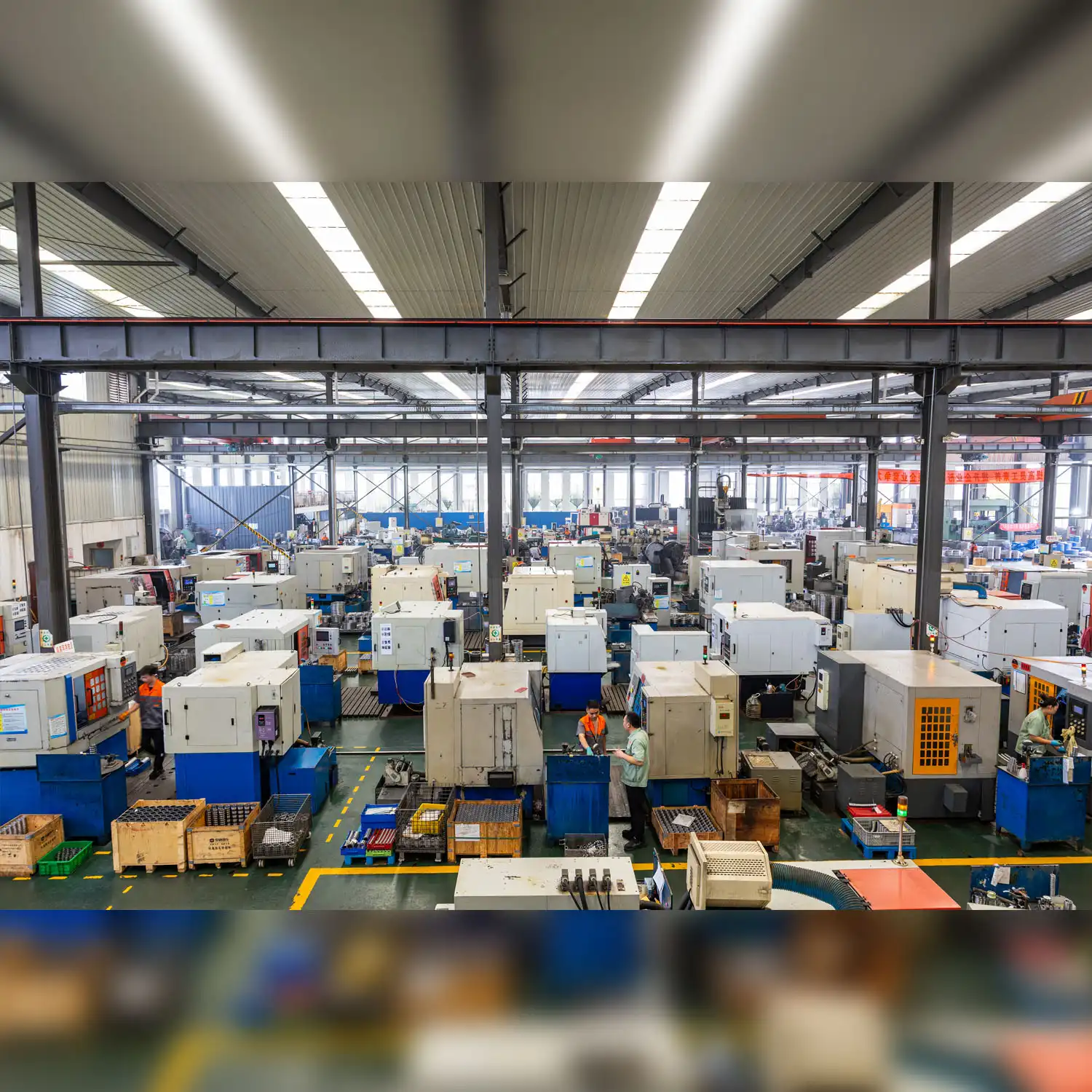
ATLYC (Luoyang Auto Bearing Co., Ltd.) has been making precision bearings for 15 years and can add them to your supply chain. They have quality systems that are ISO 9001 and IATF 16949 approved, and their prices are affordable. Our building has six specialised production workshops with 120 trained workers who make sure that the quality of our growing production numbers stays high. As a provider of RB6013UUCC0 Crossed Roller Bearings, we know how important it is for OEMs and wholesalers to find the right mix between accurate production, solid lead times, and quick expert support. Email our team at auto@lyautobearing.com to talk about your unique application needs, volume needs, and how our production skills can help you reach your long-term growth goals in the markets for automotive, industrial automation, and precision equipment.
References
1. Harris, T.A. and Kotzalas, M.N. (2006). Advanced Concepts of Bearing Technology: Rolling Bearing Analysis, Fifth Edition. CRC Press, Taylor & Francis Group.
2. Weck, M. and Brecher, C. (2006). Machine Tools Production Systems 2: Design and Calculation, Volume 2. Springer-Verlag Berlin Heidelberg.
3. Hiwin Technologies Corporation (2019). Crossed Roller Bearing Technical Reference Guide. Precision Machinery Components Technical Documentation Series.
4. ISO 492:2014. Rolling Bearings — Radial Bearings — Geometrical Product Specifications (GPS) and Tolerance Values. International Organization for Standardization.
5. Bozet, J.L. and Servais, C. (2018). "Load Distribution and Contact Stress Analysis in Crossed Roller Bearings for Robotic Applications." Journal of Mechanical Design and Vibration, Vol. 6, No. 2, pp. 45-58.
6. Stacke, L.E. and Fritzson, D. (2001). "Dynamic Behavior of Rolling Bearings: Simulations and Experiments." Proceedings of the Institution of Mechanical Engineers, Part J: Journal of Engineering Tribology, Vol. 215, No. 6, pp. 499-508.
Learn about our latest products and discounts through SMS or email