- English
- French
- German
- Portuguese
- Spanish
- Russian
- Japanese
- Korean
- Arabic
- Greek
- German
- Turkish
- Italian
- Danish
- Romanian
- Indonesian
- Czech
- Afrikaans
- Swedish
- Polish
- Basque
- Catalan
- Esperanto
- Hindi
- Lao
- Albanian
- Amharic
- Armenian
- Azerbaijani
- Belarusian
- Bengali
- Bosnian
- Bulgarian
- Cebuano
- Chichewa
- Corsican
- Croatian
- Dutch
- Estonian
- Filipino
- Finnish
- Frisian
- Galician
- Georgian
- Gujarati
- Haitian
- Hausa
- Hawaiian
- Hebrew
- Hmong
- Hungarian
- Icelandic
- Igbo
- Javanese
- Kannada
- Kazakh
- Khmer
- Kurdish
- Kyrgyz
- Latin
- Latvian
- Lithuanian
- Luxembou..
- Macedonian
- Malagasy
- Malay
- Malayalam
- Maltese
- Maori
- Marathi
- Mongolian
- Burmese
- Nepali
- Norwegian
- Pashto
- Persian
- Punjabi
- Serbian
- Sesotho
- Sinhala
- Slovak
- Slovenian
- Somali
- Samoan
- Scots Gaelic
- Shona
- Sindhi
- Sundanese
- Swahili
- Tajik
- Tamil
- Telugu
- Thai
- Ukrainian
- Urdu
- Uzbek
- Vietnamese
- Welsh
- Xhosa
- Yiddish
- Yoruba
- Zulu
How to Select a YRT 150 High Precision Rotary table bearing?
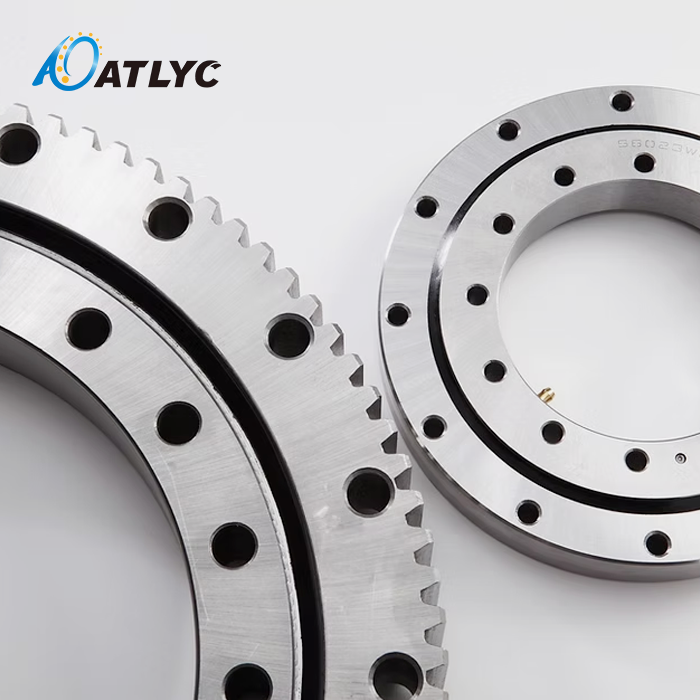
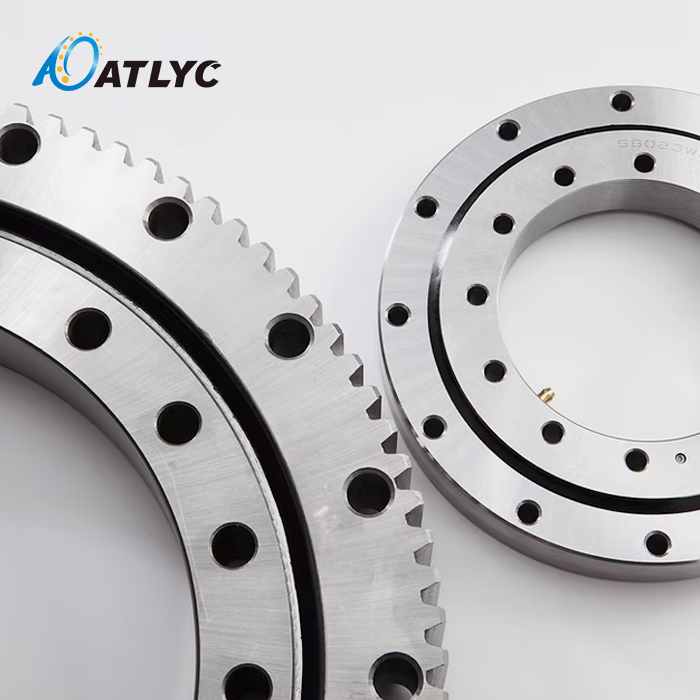
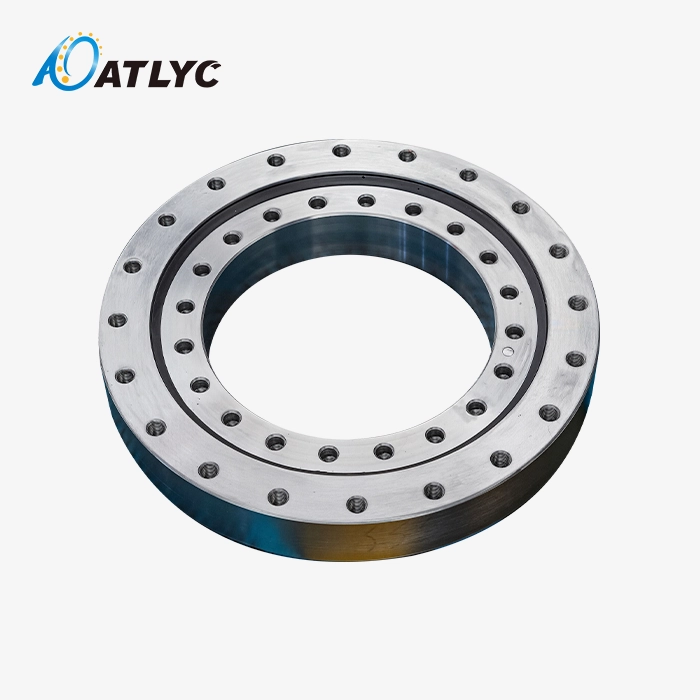
Choosing the appropriate YRT 150 High Precision Rotary table bearing involves evaluating your machine’s load profile, the accuracy class needed, and its working environment. This bearing is 150mm (ID) x 240mm (OD) x 40mm wide and combines axial, radial, and tilting moment capability into one compact unit. Check P4 or P2 precision grades, check that the supplier is ISO 9001 or IATF 16949 certified, and determine whether the manufacturer provides technical assistance and customization. Matching these specifications to your CNC or industrial rotary table application provides extended service life and repeatable position precision.

Understanding YRT 150 High Precision Rotary Table Bearings
The rotary table bearing market has grown considerably as CNC machining centers demand tighter positional tolerances. The YRT 150 High Precision Rotary Table Bearing sits at the intersection of structural compactness and multi-directional load resilience, making it a strong candidate for 4th- and 5th-axis applications.
Core Structural Architecture
The bearing is incorporated in a three-in-one arrangement, which includes a thrust bearing, a radial bearing, and an indexing mechanism. The assembly consists of an outer ring (fixed ring), an inner ring (rotating ring), precise steel balls, and a cage. This combination decreases the mechanical volume and makes the installation easier in comparison with traditional integrated bearing systems, which involve multi-component assemblies.
Double-Row Angular Contact Ball Arrangement
Steel balls are arranged in two rows at contact angles of typically 45° or 60°. This geometry allows the YRT 150 High Precision Rotary table bearing to simultaneously carry axial loads, radial loads, and composite tilting moments. The arrangement reinforces structural rigidity under complex, shifting load conditions common in heavy-duty milling operations.
Precision-Ground Raceway and Material Properties
Inner and outer raceways undergo precision grinding and super-finishing to achieve surface roughness levels that minimize friction and retard micro-pitting. The bearing steel — typically GCr15 or 100Cr6 — is heat-treated to 58–62 HRC, delivering wear resistance suitable for oscillating and continuous rotational environments alike.
| Parameter | Specification |
|---|---|
| Inner Diameter | 150 mm |
| Outer Diameter | 240 mm |
| Width | 40 mm |
| Axial Static Load Capacity | 400–500 kN |
| Radial Static Load Capacity | 150–200 kN |
| Precision Class | P4 / P2 (ISO) |
| Limiting Speed | 200–250 RPM |
| Raceway Hardness | 58–62 HRC |
| Axial Runout | ≤ 3–5 μm |
These specifications make the YRT 150 rotary table a benchmark product in high-precision machining environments where micron-level runout is non-negotiable.
Comparing YRT 150 with Other Rotary Table Bearings
Procurement engineers regularly compare the YRT 150 high-precision rotary table bearing with neighboring bearings. Understanding the distinctions lets you allocate funds without losing performance.
The YRT 130 has a similar design principle, but with a smaller inner diameter of 130 mm, which restricts its tilting moment capability. It is ideal for light-duty indexing heads when the space envelope is limited. The load values of the YRT 150 are much greater and should be preferred when the cutting forces are quite aggressive or the rotary table carries heavy workpieces.
Cross roller bearings may also support combined loads and provide comparable precision when compared to runout. The single row of rollers, however, means that the tilting stiffness is limited by design when compared to the double row of balls in the YRT series. Cross roller bearings may be more sensitive to heat expansion in high-speed finishing passes. The YRT 150 High Precision Rotary table bearing is more dimensionally stable in thermally changing situations.
| Feature | YRT 150 | YRT 130 | Cross Roller Bearing |
|---|---|---|---|
| Inner Diameter | 150 mm | 130 mm | Varies |
| Tilting Rigidity | High | Moderate | Moderate |
| Combined Load Capacity | Excellent | Good | Good |
| Installation Complexity | Low (integrated) | Low | Moderate |
| Precision Class | P4 / P2 | P4 | P4 / P5 |
| Best Application | Heavy CNC 4th/5th axis | Light indexing | High-speed finishing |
When cost-per-performance ratio matters in B2B procurement, the YRT 150 consistently delivers a lower total ownership cost because its integrated design reduces ancillary components and associated labor during machine assembly.
Practical Selection Criteria for YRT 150 Bearings
Choosing a rotary table bearing is not purely a dimensional exercise. Your selection process should account for several interdependent technical and commercial variables.
Here are the core criteria you need to evaluate before committing to a purchase:
- Precision Class Verification: Confirm P4 or P2 grading per ISO standards. CMM inspection reports and Taylor Hobson roundness testing data should accompany any credible quotation. Inner/outer ring runout should fall within 3 μm for P4 class applications.
- Load Profile Compatibility: Map your application's axial static load, radial static load, and expected tilting moments against the bearing's rated capacities. The YRT 150 High Precision Rotary table bearing handles axial static loads in the 400–500 kN range — confirm your machine does not exceed this under peak cutting conditions.
- Starting Torque Consistency: Request starting torque test data. Inconsistent frictional moment readings indicate improper roller sizing or raceway surface defects, both of which shorten service life and degrade positional repeatability.
- Material and Hardness Certification: Ask for metallographic analysis and HRC test results confirming 58–62 HRC. Underhardened raceways suffer premature plastic deformation under sustained tilting moments, a failure mode common in cost-cut alternatives.
- Supplier Certification and After-Sales Support: Prioritize manufacturers holding ISO 9001 and IATF 16949 certifications. These credentials signal process discipline and traceability throughout the production chain.
These criteria collectively protect your investment and prevent costly unplanned downtime. A bearing that passes all five checks will deliver reliable, repeatable performance across its rated service life.
Purchasing Guide: Where and How to Buy YRT 150 High Precision Bearings
OEM and industrial equipment manufacturing procurement managers can’t afford the danger of sourcing a high-precision axial radial bearing from unverified sources. Spot vendors cannot be matched by verified manufacturers and authorized distributors for documentation trails, batch traceability, and warranty terms.
If you are looking for a source of YRT 150 High Precision Rotary table bearings, ask for documents on manufacturing capacity and quality certifications. This size is reflected in manufacturers with specialized precision grinding operations, in-house CMM inspection expertise, and export experience to markets such as the US, Germany, and South Korea that can support long-term supply agreements.
YRT 150 rotary table bearings' price varies according to the accuracy grade, quantity, and customisation. With bulk buying, tiered discounts are the norm. A realistic lever for cost reduction is negotiating blanket purchase orders against proven quarterly quantities. Lead times are typically 2-6 weeks, depending on stock availability and bespoke demands.
Manufacturers with dedicated engineering teams may even provide alternatives for customization, like changed mounting hole designs, custom lubrication channels, or non-traditional preload settings. Always check if a supply can be customized before you establish a partnership.
Common Issues and Troubleshooting for YRT 150 Bearings
Operational problems even with precisely specified bearings. The earlier you recognize the warning indicators, the sooner you can respond before a small decline becomes a costly failure.
Misalignment during installation is the main cause of premature wear in precision rotary bearings. The YRT 150 High Precision Rotary table bearing has integrated mounting holes in both the inner and outer rings to ease alignment. However, the surface flatness of the mating components should still satisfy the specification – generally within 5 μm across the seating face.
The deterioration of lubrication promotes the wear of the raceway, particularly in high-duty-cycle applications. Grease replacement periods are dependent on operating speed and ambient temperature; in continuous CNC machining operations, quarterly lubrication checks provide a feasible baseline. An abnormal rise in starting torque, audible anomalies during rotation, or noticeable runout growth are diagnostic symptoms that need quick attention.
If the tilting moment loading is close to the rated limit on a regular basis, consider stepping up to a bigger diameter YRT series bearing or redistributing structural load via fixture redesign. Replacement should utilize a bearing of the same precise grade so that the machine remains calibrated.

Conclusion
A systematic approach is needed to choose a rotary table bearing that satisfies your machine’s load, precision, and supply chain requirements. The YRT 150 High Precision Rotary table bearing is a complete precision solution that has proved itself in machining centers, indexing heads, and metrology equipment. You examine precise grades, load ratings, material certificates, and supplier credentials to establish your operation for consistent output quality and minimized maintenance costs. Ultimately, the only way to ensure long-term procurement success is to work with a qualified manufacturer that has the scale of manufacturing and the technical depth.
FAQ
1. What is the maximum load capacity of the YRT 150 rotary table bearing?
The bearing supports axial static loads of 400–500 kN and radial static loads of 150–200 kN. Tilting moment capacity depends on preload grade and raceway geometry. Always cross-reference your application's peak load conditions against the manufacturer's certified load data before finalizing your specification.
2. How often should I lubricate a YRT 150 bearing in a CNC application?
In continuous machining environments, quarterly grease replenishment is a practical maintenance interval. High-speed or thermally demanding applications may require more frequent service. Consult your bearing manufacturer's lubrication guidelines and monitor starting torque as a condition indicator.
3. Can the YRT 150 High Precision Rotary table bearing be customized?
Manufacturers with dedicated engineering teams offer customization options including modified mounting configurations, preload adjustments, and specialized surface treatments. Confirm customization capability and lead time impact during supplier qualification.
4. What precision grades are available?
P4 and P2 precision classes per ISO standards are standard offerings. P4 provides axial runout within 3–5 μm, suitable for most CNC rotary table applications. P2 is reserved for ultra-precision metrology and medical equipment requiring sub-micron consistency.
5. Which certifications should my supplier hold?
ISO 9001 and IATF 16949 certifications are the minimum benchmark for suppliers serving automotive OEMs and precision industrial equipment manufacturers. These credentials confirm process traceability and quality system discipline.
Source Your YRT 150 High Precision Rotary Table Bearing from ATLYC
ATLYC — operating under Luoyang Auto Bearing Co., Ltd. — has manufactured precision bearings since 2010, earning ISO 9001 and IATF 16949 certifications across six production workshops. As a trusted YRT 150 High Precision Rotary table bearing supplier, we deliver P4/P2 precision grades, full CMM inspection documentation, and engineering support for custom applications. Contact our team directly at auto@lyautobearing.com for a tailored quotation, volume pricing, and verified lead times.
References
1. Schaeffler Group. (2023). INA/FAG Axial-Radial Cylindrical Roller Bearings YRT: Product Catalogue. Schaeffler Technologies AG & Co. KG. https://www.schaeffler.com/en/products-and-solutions/industrial/lineartech/rotary-tables/yrt-bearings/
2. SKF Group. (2022). Bearing Selection Process: Load Capacity and Service Life. SKF Technical Documentation. https://www.skf.com/us/products/rolling-bearings/principles-of-bearing-selection-and-application/bearing-selection-process
3. NSK Ltd. (2021). Precision Machine Tool Bearings: Technical Reference Guide. NSK Americas. https://www.nskamericas.com/en/products/precision-machine-components/machine-tool-bearings/
4. ISO. (2020). ISO 492:2014 — Rolling Bearings: Radial Bearings — Tolerances. International Organization for Standardization. https://www.iso.org/standard/60552.html
5. American Bearing Manufacturers Association (ABMA). (2022). ABMA Standard 20: Radial Bearings of Ball, Cylindrical Roller, and Spherical Roller Types. ABMA. https://www.americanbearings.org/standards/
6. Machine Design. (2023). How to Choose the Right Rotary Table Bearing for CNC Machining Centers. Endeavor Business Media. https://www.machinedesign.com/mechanical-motion-systems/bearings/article/21835014/how-to-choose-bearings-for-cnc-rotary-tables
Learn about our latest products and discounts through SMS or email