- English
- French
- German
- Portuguese
- Spanish
- Russian
- Japanese
- Korean
- Arabic
- Greek
- German
- Turkish
- Italian
- Danish
- Romanian
- Indonesian
- Czech
- Afrikaans
- Swedish
- Polish
- Basque
- Catalan
- Esperanto
- Hindi
- Lao
- Albanian
- Amharic
- Armenian
- Azerbaijani
- Belarusian
- Bengali
- Bosnian
- Bulgarian
- Cebuano
- Chichewa
- Corsican
- Croatian
- Dutch
- Estonian
- Filipino
- Finnish
- Frisian
- Galician
- Georgian
- Gujarati
- Haitian
- Hausa
- Hawaiian
- Hebrew
- Hmong
- Hungarian
- Icelandic
- Igbo
- Javanese
- Kannada
- Kazakh
- Khmer
- Kurdish
- Kyrgyz
- Latin
- Latvian
- Lithuanian
- Luxembou..
- Macedonian
- Malagasy
- Malay
- Malayalam
- Maltese
- Maori
- Marathi
- Mongolian
- Burmese
- Nepali
- Norwegian
- Pashto
- Persian
- Punjabi
- Serbian
- Sesotho
- Sinhala
- Slovak
- Slovenian
- Somali
- Samoan
- Scots Gaelic
- Shona
- Sindhi
- Sundanese
- Swahili
- Tajik
- Tamil
- Telugu
- Thai
- Ukrainian
- Urdu
- Uzbek
- Vietnamese
- Welsh
- Xhosa
- Yiddish
- Yoruba
- Zulu
Is RU Series Cross Roller Bearing Right for CNC Machines?
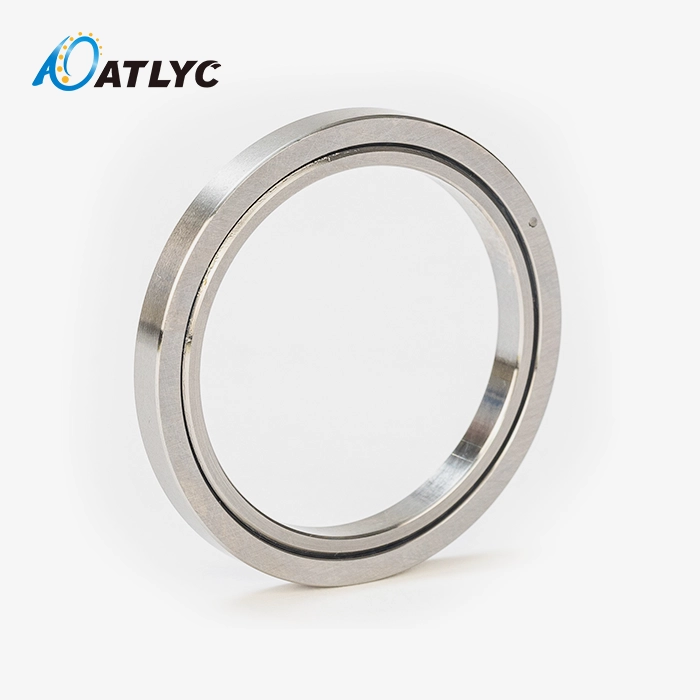
If you work in CNC machine procurement or engineering, you have probably asked this question at some point. The short answer is yes — the RU Series Cross Roller Bearing is well-suited for CNC applications. Its integrated ring structure with mounting holes on both inner and outer rings removes the need for external housings, cutting assembly errors significantly. The crossed cylindrical roller arrangement handles radial, axial, and moment loads within a single unit, delivering the kind of positional accuracy that CNC machining centers demand. For manufacturers sourcing precision bearings at scale, this design offers a measurable advantage.

Understanding RU Series Cross Roller Bearings and Their Design Features
What the Integrated Ring Structure Actually Does
The RU cross roller bearing doesn't need separate flanges or housings as most other bearings do. Instead, it has an outer and inner ring that are one piece, and both have mounting holes. You bolt the bearing straight to the surface of your machine. This method gets rid of unnecessary parts, keeps the accuracy of the geometry, and shortens the total assembly time. This is especially helpful when making or fixing a lot of CNC rotating tables.
Dimensions and Material Specifications
The RU line has a wide range of sizes to fit a variety of machine setups. Here is a list of its most important features:
| Specification | Range / Value |
|---|---|
| Inner Diameter | 20 – 1100 mm |
| Outer Diameter | 70 – 1500 mm |
| Width | 12 – 110 mm |
| Material | GCr15, GCr15SiMn |
| Hardness (after heat treatment) | 58 – 64 HRC |
| Accuracy Grades | P6, P0, P5, P4, P3 |
GCr15 and GCr15SiMn are high-carbon chromium-bearing steels that have been shown to be resistant to fatigue and wear under cyclic loads, which is exactly what CNC spindles and rotating tables do all the time.
How the Crossed Roller Arrangement Works
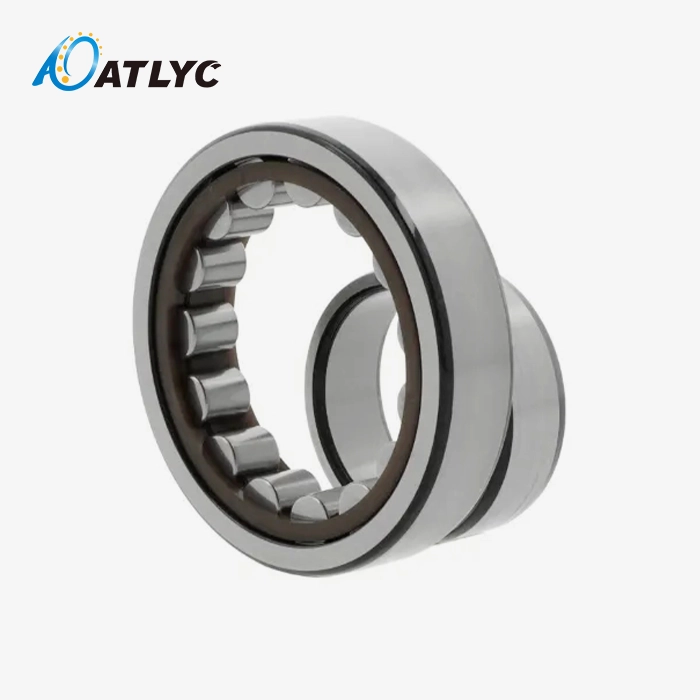
Inside V-groove raceways, cylindrical wheels are set up at 90-degree angles that change positions. Precision spacers are put between each roller to keep them from touching and to keep the load evenly spread. This setup eliminates play during operation and doesn't need any manual preload adjustments. The contact pattern stays the same in all load directions, which directly supports the positioning accuracy of less than one arc minute that machine centers need to make sure they can make the same part over and over.
Performance Comparison: RU Series vs Alternative Bearings Commonly Used in CNC
Load Capacity and Rigidity
Standard angular contact ball bearings are good at handling linear loads, but they become less stiff when they are loaded with other loads. On the other hand, the RU Series Cross Roller Bearing handles radial, axial, and moment loads all at the same time through a single, small unit. This is important when a CNC rotating table has unevenly weighed workpieces that cause tipping moments during the cutting cycle.
Rotational Accuracy and Maintenance Demands
Here is how common types of bearings measure up in terms of important CNC performance metrics:
| Bearing Type | Combined Load Handling | Mounting Simplicity | Rotational Accuracy |
|---|---|---|---|
| RU Cross Roller Bearing | Radial + Axial + Moment | Direct bolt-on, no housing | P3 – P6 grades available |
| Standard Cross Roller (RB/RE) | Radial + Axial + Moment | Requires presser flanges | Similar, but more assembly steps |
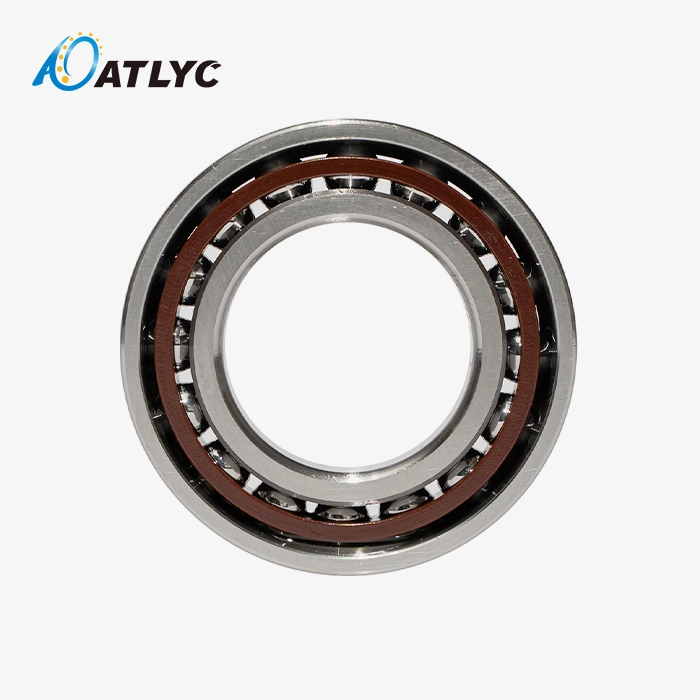
| Double-Row Angular Contact Ball | Axial + moderate radial | Requires housing | Good, but lower moment stiffness |
| Tapered Roller Bearing | Radial + axial | Requires housing + adjustment | Moderate |
Fewer assembly parts are needed for the RU series, which means that geometric errors don't build up as much. This has a direct effect on the part's dimensional tolerance in precision machining.
Real-World Application: Robotic Arm Joints
In a 6-axis articulated robot that is used to load CNC parts, the moment loads at the wrist and elbow axes are complex and steady. At these joints, cross roller bearings in the RU design have been used because they keep zero slack over long service cycles. The International Journal of Advanced Manufacturing Technology says that bearing rigidity at robot joints is directly related to path accuracy in repeated industrial jobs. Changes in stiffness above 15% can be seen as lowering the accuracy of a weld or cut.
Procurement Considerations for RU Series Cross Roller Bearings
Pricing Factors and Cost Structure
The price per unit is affected by the material grade, accuracy class, and size. Because of their tighter specs, P4 and P3 grade RU bearings cost more to make than P6 or P0 grades. This is because they need more grinding passes and testing time. Volume pricing is usually available for large sales, especially from OEM clients whose demand stays stable every three months. To make sure that the RU Series Cross Roller Bearing specification matches the needs of the application, procurement teams should ask for a split by accuracy grade. Over-specifying loses money.
Supplier Verification and Delivery Reliability
For automotive-grade applications, you have to choose a supplier with ISO 9001 and IATF 16949 certifications. These certificates show that the company keeps written records of its process controls, traceability, and methods for reducing defects. ASLYC, or Luoyang Auto Bearing Co., Ltd., has both certifications and has been selling precision bearings to people in the US, Germany, South Korea, Russia, Iran, and Turkey since 2010. With a six-workshop production center and consistent shipping schedules, procurement managers don't have to worry as much about supply disruptions as they do with single-source setups.
Warranty Terms and After-Sales Support
Ask providers directly about their guarantee covering failures due to non-conformance with dimensions and early fatigue. A reliable manufacturer will give you written test reports for each batch and keep technical staff on hand to help you with things like installation, choosing the right clearance, and lubrication schedules. This level of support cuts down on the time it takes for your engineers to add a new bearing size to an existing CNC platform.
Maintenance and Longevity: Maximizing RU Series Bearing Performance
Lubrication Practices
When you get the RU cross roller bearing, it comes already greased with a good lithium-based grease. Re-lubrication should be done every 6 to 12 months for industrial CNC use, but this can change depending on the load and operating temperature. Oil-mist lubrication can help higher rotational speeds work in tough situations and extend the time between service visits. The inner and outer rings have oil holes that let you add more oil without taking the whole thing apart.
Routine Inspection and Contamination Prevention
Before installing, make sure the fixing surface is flat. A tolerance range of IT5 to IT7 keeps the raceway from warping, which speeds up wear. During operation, keep an eye out for strange vibrations or temperature increases; both can be signs of contamination or roller damage in their early stages. Sealed versions (UU suffix) keep particles out and are preferred in places where metal chips are likely to be present, like CNC machining centers.
Common Failure Modes and Prevention
The main reason why RU bearings fail early in CNC applications is that the bolts are not torqued properly during installation. Using a calibrated torque wrench to tighten nuts in a star design makes sure that the clamping force is the same across the mounting face. The second most common type of failure is skewing of the rollers, which can be caused by dirty grease or broken spacers. Cleaning and replacing the grease on a regular schedule keeps this from getting worse and costing a lot to fix or replace the wheel or table.
Is RU Series Cross Roller Bearing the Optimal Choice for Your CNC Machines?
The answer varies on the type of machine you have and how much you load it. The RU Series Cross Roller Bearing always works better than other options for CNC machining center rotary tables, precision indexing equipment, robot joint axes, and medical imaging gantries because it can handle all directions of load in a small space and doesn't need any extra housings. This type of bearing works well if your application needs spinning that stops and starts or oscillates while being loaded together, which is the case for most CNC table and robot uses. If buying teams are watching their budgets, they should weigh the higher unit cost against the fact that the bearing is easier to put together, needs less maintenance, and has a lower failure rate over its lifetime.

Conclusion
The RU Series Cross Roller Bearing meets the most important needs of CNC machine environments: it can handle a lot of weight, keep its place accurately, and be easily integrated. Its built-in ring with mounting holes makes it easier to put together, and the crossed roller geometry keeps the rollers in contact with the load in all directions. This type of bearing has been shown to work well across the P3–P6 accuracy range, making it a good choice for procurement managers and OEM engineers looking at bearing options for rotary tables, robot joints, or precision tracking platforms. Choosing the right accuracy grade and lubrication schedule for your application will determine how long it lasts and how much it costs in total.
FAQ
1. How does the RU series differ from RB or RE cross roller bearings?
The RU Series Cross Roller Bearing has mounting holes built into both the inner and outer rings. This means that it can be installed directly by bolting on without the need for presser flanges or housings. The RB and RE series need flanges to clamp, which adds to the assembly process and makes it possible for things to be out of alignment.
2. What precision grades are available for RU bearings?
RU cross roller bearings are made by ATLYC in accuracy grades P6, P0, P5, P4, and P3.
3. Can these bearings handle high-speed CNC spindle rotation?
P4 and P3 are good for high-precision rotary tables and robotic joints where runout needs to stay within a few micrometers.
4. What materials are used in RU cross roller bearings?
ATLYC uses GCr15 and GCr15SiMn high-carbon chromium bearing steel that has been heat-treated to 58–64 HRC. This steel is very resistant to stress and has a long wear life in CNC environments.
5. Is customization available for non-standard dimensions?
Yes. Outside widths of the RU series can go up to 1500 mm, and inner diameters can go from 20 mm to 1100 mm. OEM customers who have special design needs can get custom dimensions and accuracy grades.
Request a Quote from ATLYC — Your Trusted RU Series Cross Roller Bearing Manufacturer
Since 2010, ATLYC has been making precision bearings. They now have six specialized workshops with 120 production and quality staff. As a provider of RU Series Cross Roller Bearings, we can offer accuracy grades from P3 to P6, products made of GCr15 and GCr15SiMn, and full compliance with ISO 9001 and IATF 16949. If you email your model or specification to auto@lyautobearing.com, our engineering team will get back to you within one business day with a technical review and a low price.
References
1. International Journal of Advanced Manufacturing Technology — "Bearing Rigidity Effects on Positional Accuracy in Industrial Robot Arms," 2021.
2. Tribology International — "Fatigue Life Analysis of GCr15 Bearing Steel Under Combined Loading Conditions," 2020.
3. Precision Engineering — "Runout Accuracy and Stiffness Characteristics of Cross Roller Bearings in CNC Rotary Tables," 2019.
4. Journal of Manufacturing Science and Engineering (ASME) — "Load Distribution in Crossed Cylindrical Roller Bearings for Machine Tool Applications," 2022.
5. Lubrication Science — "Grease Replenishment Intervals for Rolling Element Bearings in Industrial Automation Equipment," 2021.
6. ISO/TR 1281-2:2008 — "Rolling Bearings — Explanatory Notes on ISO 281 — Part 2: Modified Rating Life Calculation Based on a Systems Approach to Fatigue Stresses," International Organization for Standardization, 2008.
Learn about our latest products and discounts through SMS or email