- English
- French
- German
- Portuguese
- Spanish
- Russian
- Japanese
- Korean
- Arabic
- Greek
- German
- Turkish
- Italian
- Danish
- Romanian
- Indonesian
- Czech
- Afrikaans
- Swedish
- Polish
- Basque
- Catalan
- Esperanto
- Hindi
- Lao
- Albanian
- Amharic
- Armenian
- Azerbaijani
- Belarusian
- Bengali
- Bosnian
- Bulgarian
- Cebuano
- Chichewa
- Corsican
- Croatian
- Dutch
- Estonian
- Filipino
- Finnish
- Frisian
- Galician
- Georgian
- Gujarati
- Haitian
- Hausa
- Hawaiian
- Hebrew
- Hmong
- Hungarian
- Icelandic
- Igbo
- Javanese
- Kannada
- Kazakh
- Khmer
- Kurdish
- Kyrgyz
- Latin
- Latvian
- Lithuanian
- Luxembou..
- Macedonian
- Malagasy
- Malay
- Malayalam
- Maltese
- Maori
- Marathi
- Mongolian
- Burmese
- Nepali
- Norwegian
- Pashto
- Persian
- Punjabi
- Serbian
- Sesotho
- Sinhala
- Slovak
- Slovenian
- Somali
- Samoan
- Scots Gaelic
- Shona
- Sindhi
- Sundanese
- Swahili
- Tajik
- Tamil
- Telugu
- Thai
- Ukrainian
- Urdu
- Uzbek
- Vietnamese
- Welsh
- Xhosa
- Yiddish
- Yoruba
- Zulu
How to Select the Right Cross Roller Bearing RE Series?
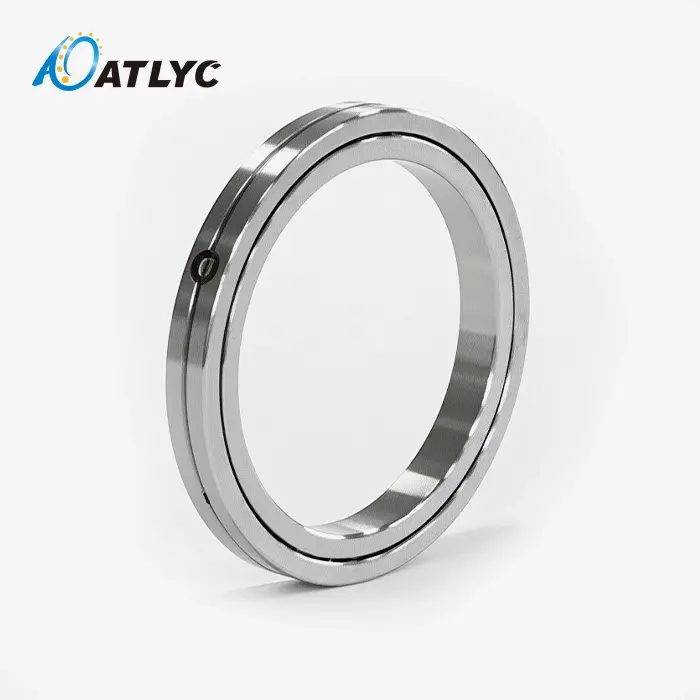
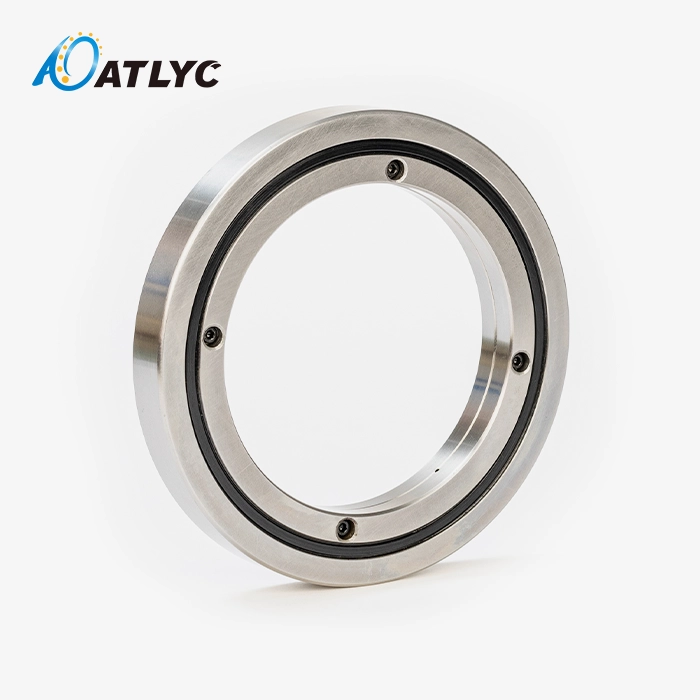
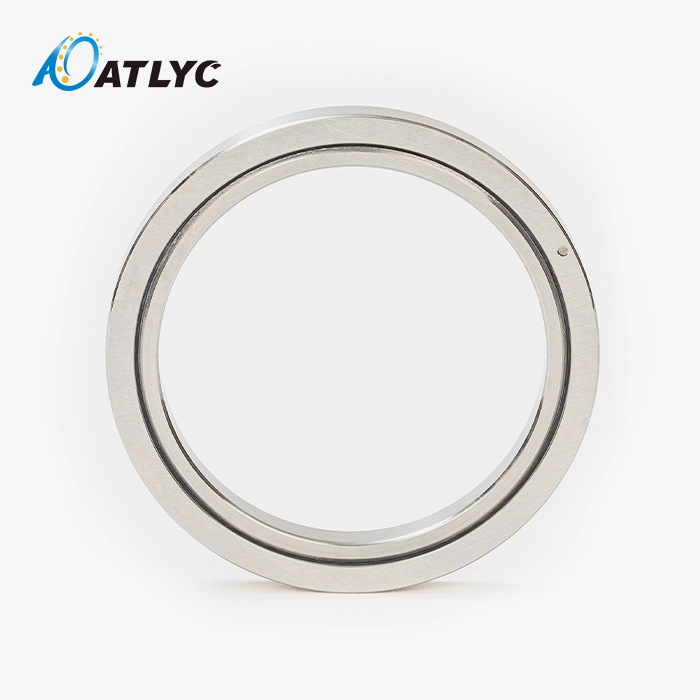
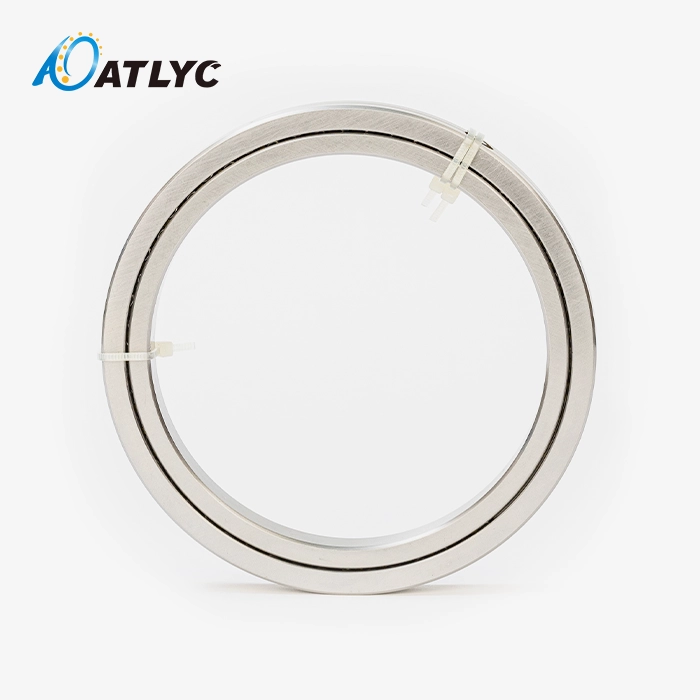
Before you can choose the right cross roller bearing RE series, you need to Cross roller bearing RE series know what kind of load and precision your application needs. The outer ring of these bearings is integral, and the inner ring is split. This gives the outer ring the accuracy in spinning that is needed for precision machinery. The RE series gets rid of the complexity of multi-bearing assemblies while keeping superior dimensional stability and operational reliability. This is useful when your equipment needs to handle radial, axial, and moment loads all at the same time within a small space.
Understanding the Cross Roller Bearing RE Series
The cross roller bearing RE series employs engineering principles that separate it from conventional bearing configurations. This specialized design positions cylindrical rollers orthogonally at precise 90-degree intervals, enabling the bearing to sustain multi-directional loads with exceptional precision while occupying minimal installation space.
Structural Design and Configuration
The RE series has an outer ring that is built in completely, which gives it maximum strength and rotational stability. This solid outer ring design gives better running accuracy when the outer housing needs to rotate, getting rid of common precision problems that come with split outer ring designs. The inner ring is made up of two different parts, which makes it easier to put together and easier for maintenance workers to get to when the equipment is being serviced. These parts are made from high-quality Gcr15 and Gcr15SiMn bearing steels and go through strict heat treatment processes to get the right amount of hardness and wear resistance. The choice of material ensures consistent performance under tough operating conditions while keeping the same cross roller bearing RE series size over a long period of time.
Working Principle and Load Distribution
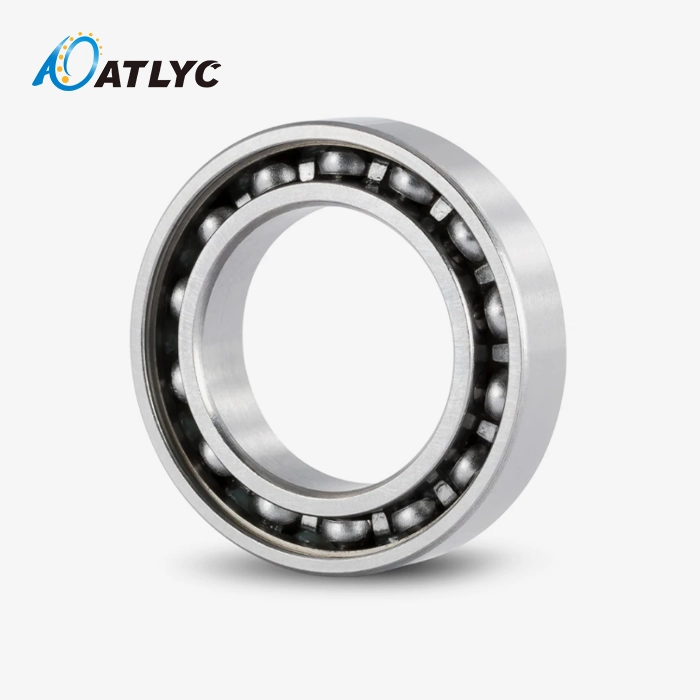
Inside the carefully machined V-groove raceways, cylinder-shaped rollers are arranged in crossed patterns. Roller spacers keep the neighbouring elements from touching each other directly. This setup lowers internal friction and allows for precise, smooth spinning. One set of rollers can handle the load when radial forces act on the bearing. The perpendicular roller set is affected by axial forces, and moment loads are spread out across both roller sets so that they work together. This ability to handle loads in multiple directions within a single compact unit makes assembly much easier and requires a lot less room. With inner diameters from 20mm to 1100mm, outer diameters from 70mm to 1500mm, and widths from 12mm to 110mm, the RE series can fit a wide range of sizes. This wide range of sizes makes it possible to incorporate into a wide range of machinery designs in many different industries.
Core Selection Criteria for RE Series Bearings
Selecting the appropriate bearing requires systematic evaluation of operational parameters, dimensional constraints, and environmental factors. This assessment ensures optimal performance without unnecessary overengineering that increases procurement costs.
Load Capacity Assessment
The first step in choosing a bearing is to understand the load characteristics of your application. The RE series has a very high radial, axial, and moment load capacity in a single bearing unit. However, to get the right size, you need to know how much static and dynamic loads the equipment is under when it is not moving. Find the highest horizontal force that your application can produce when it is working normally and when it is at its strongest. From thrust forces, gravity effects, and process forces, you can figure out the axial loads. Check the moment loads that come from cantilever arrangements or uses that use offset loads. Crossed roller design offers better load distribution than regular ball bearings, so one RE series bearing can be used in place of several regular bearings in many situations. This consolidation cuts down on the number of bearings needed, makes assembly easier, and lowers the number of places where your equipment could fail.
Dimensional Integration Requirements
Critical dimensions, including inner diameter, outer diameter, and bearing width, must align precisely with your machinery housing and shaft specifications to ensure seamless integration. The integral outer ring design of the RE series provides exceptional rigidity, but requires accurate housing bore tolerances to maintain optimal performance characteristics. Evaluate mounting height restrictions within your equipment envelope. The thin-wall construction of the RE series minimizes installation space requirements, delivering weight reduction benefits without compromising structural integrity or load capacity. This compact design proves particularly valuable in applications where space constraints limit bearing selection options or where equipment weight directly impacts operational costs. Confirm shaft and housing shoulder dimensions provide adequate support for bearing mounting and proper load distribution. Verify that surrounding components allow sufficient clearance for bearing installation and removal during maintenance procedures.
Comparing the RE Series with Other Cross Roller Bearings
Understanding how the RE series compares to alternative bearing configurations enables procurement decision-makers to optimize selection based on application-specific performance requirements and cost considerations.
RE Series Versus RA Series Bearings
The RA series features a split outer ring and integral inner ring configuration, representing the cross roller bearing RE series structural inverse of the RE series design. This fundamental difference creates distinct performance characteristics suited to different application contexts. When your application requires outer ring rotation with superior precision, the RE series integral outer ring delivers enhanced rotational accuracy. Conversely, the RA series benefits applications demanding inner ring rotation accuracy or requiring easier installation into housings with limited access. Cost efficiency varies between these configurations based on your specific installation requirements. The RE series typically offers simpler housing machining since the integral outer ring requires only a standard bore, while the RA series split outer ring may necessitate additional retaining features. Evaluate assembly procedures, maintenance accessibility, and replacement complexity when comparing the total cost of ownership between these bearing types.
RE Series Versus KR Series Bearings
The KR series incorporates thicker cross-section profiles compared to the RE series, providing higher load capacity within similar envelope dimensions. Applications involving exceptionally heavy loads or extreme moment forces may benefit from the KR series enhanced structural rigidity. However, this increased capacity comes with correspondingly larger installation space requirements and higher procurement costs. Precision characteristics differ between these series based on their target application profiles. The RE series emphasizes rotational accuracy and compact design for precision equipment, while the KR series prioritizes load capacity for heavy-duty industrial applications. Match your selection to your application's primary performance driver—precision or load capacity—to optimize the cost-performance ratio.
Procurement Considerations for the RE Series
B2B purchasers navigating bearing procurement must evaluate supplier credibility, pricing structures, and delivery capabilities to optimize supply chain reliability and total cost of ownership.
Supplier Qualification and Authenticity
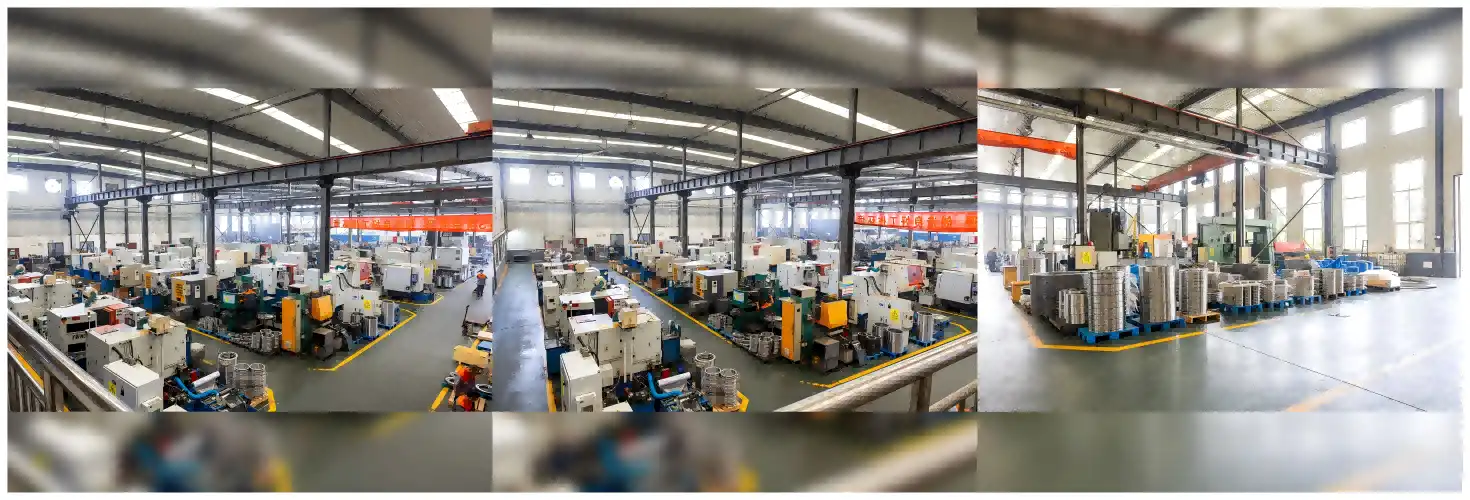
Identifying qualified manufacturers ensures product quality, performance consistency, and reliable after-sales support throughout the bearing's service life. Established manufacturers maintain ISO 9001 and IATF 16949 certifications, demonstrating commitment to quality management systems and continuous improvement processes. These certifications assure that manufacturing procedures, quality inspections, and traceability systems meet international standards essential for automotive and industrial applications. Luoyang Auto Bearing Co., Ltd. exemplifies qualified bearing manufacturers with 15 years of specialized production experience since its establishment in 2010. The company's evolution from a single workshop to six specialized manufacturing facilities demonstrates production scale and technical capability. With 120 skilled employees dedicated to production, research and development, quality inspection, and assembly, the operation ensures professional oversight across all manufacturing stages. Evaluate the manufacturer's export experience and international customer base as indicators of product reliability and service capability. Suppliers serving customers in South Korea, the United States, Germany, Russia, Iran, and Turkey demonstrate the ability to meet diverse quality standards and navigate international logistics complexities.
Pricing Models and Lead Times
Pricing structures for cross roller bearing RE series vary based on order quantities, customization requirements, and delivery urgency. Volume discounts typically apply to larger procurement quantities, reducing per-unit costs for OEM clients establishing long-term supply relationships. Request detailed quotations specifying unit prices across different order volumes to identify optimal procurement quantities, balancing inventory costs against volume savings. Standard RE series sizes generally offer shorter lead times compared to custom configurations requiring specialized manufacturing. Typical delivery timelines range from three to eight weeks, depending on product availability, order complexity, and shipping destination. International logistics add transit time and require coordination of customs procedures, documentation requirements, and freight arrangements. Discuss expedited production options for urgent requirements, recognizing that accelerated delivery typically incurs premium charges. Establish framework agreements for recurring requirements to stabilize pricing and secure priority production scheduling during capacity constraints.
Maintenance and Long-Term Care for RE Series Bearings
Proper maintenance practices sustain the high performance and extended service life that cross roller bearing RE series designs deliver under optimal operating conditions.
Lubrication Best Practices
Adequate lubrication remains essential for minimizing friction, dissipating heat, and preventing premature wear. The low friction coefficient inherent in the crossed roller arrangement with precision spacing reduces lubrication demands compared to conventional bearing configurations, but proper lubricant selection and replenishment intervals remain critical for maximizing service life. Select lubricants appropriate for your operating temperature range, speed conditions, and contamination exposure. Grease lubrication suits most industrial applications, offering simplicity and adequate performance for moderate speed ranges. Oil circulation systems benefit high-speed applications or equipment generating significant heat, requiring enhanced cooling capacity. Establish relubrication intervals based on manufacturer recommendations, operating conditions, and observed bearing performance. Excessive lubrication can generate unnecessary heat and attract contaminants, while insufficient lubrication accelerates wear and reduces precision. Monitor lubricant condition during maintenance inspections, watching for discoloration, contamination, or consistency changes indicating replacement necessity.
Preventive Inspection Schedules
Routine inspections identify emerging issues before they progress to bearing failure and unplanned downtime. Schedule regular visual inspections, checking for lubricant leakage, contamination accumulation, and mounting stability. Listen for unusual noise during operation, indicating potential roller damage, contamination, or inadequate lubrication. Measure bearing temperature during normal operation to establish baseline conditions. Temperature increases above established baselines may indicate lubrication issues, excessive loads, or developing damage requiring investigation. Implement vibration monitoring for critical applications where bearing failure carries significant production or safety consequences. Document inspection findings, maintenance actions, and bearing performance trends to identify patterns and optimize maintenance intervals. This data-driven approach maximizes equipment uptime while minimizing unnecessary maintenance costs.
Conclusion
Selecting the right cross roller bearing RE series requires a systematic evaluation of load requirements, dimensional constraints, precision needs, and operational environment. The integral outer ring design delivers superior rotational accuracy for applications demanding outer housing precision, while the crossed roller configuration provides exceptional multi-directional load capacity within compact installations. Material quality, manufacturing precision, and supplier reliability directly influence bearing performance and service life. By partnering with qualified manufacturers holding ISO 9001 and IATF 16949 certifications, procurement teams secure consistent quality, technical support, and long-term supply reliability essential for demanding industrial applications across automotive, automation, and precision equipment sectors.
FAQ
1. What distinguishes the RE series from other cross roller bearing types?
The RE series features an integral outer ring with a split inner ring configuration, optimizing outer ring rotation accuracy. This structural design differs from RA series bearings with split outer rings and integral inner rings. The RE configuration suits applications requiring superior outer housing rotational precision, while offering simplified housing machining and assembly procedures compared to split outer ring alternatives.
2. How do I determine the appropriate bearing size for my application?
Calculate the maximum radial, axial, and moment loads your equipment generates during operation. Match these load values against bearing capacity ratings provided in manufacturer technical datasheets. Verify dimensional compatibility, including inner diameter, outer diameter, and width, with your shaft and housing specifications. Consider installation space constraints and mounting accessibility when selecting from the comprehensive size range spanning 20mm to 1100mm inner diameters.
3. What delivery timelines should I expect when ordering RE series bearings?
Standard sizes typically ship within three to eight weeks, depending on the manufacturer's inventory and production scheduling. Custom configurations require additional manufacturing time for specialized features or dimensional modifications. International orders add shipping transit time and customs processing. Discuss expedited options for urgent requirements and establish framework agreements for recurring needs to secure priority scheduling and stable delivery performance.
Partner with ATLYC for Your Cross Roller Bearing RE Series Requirements
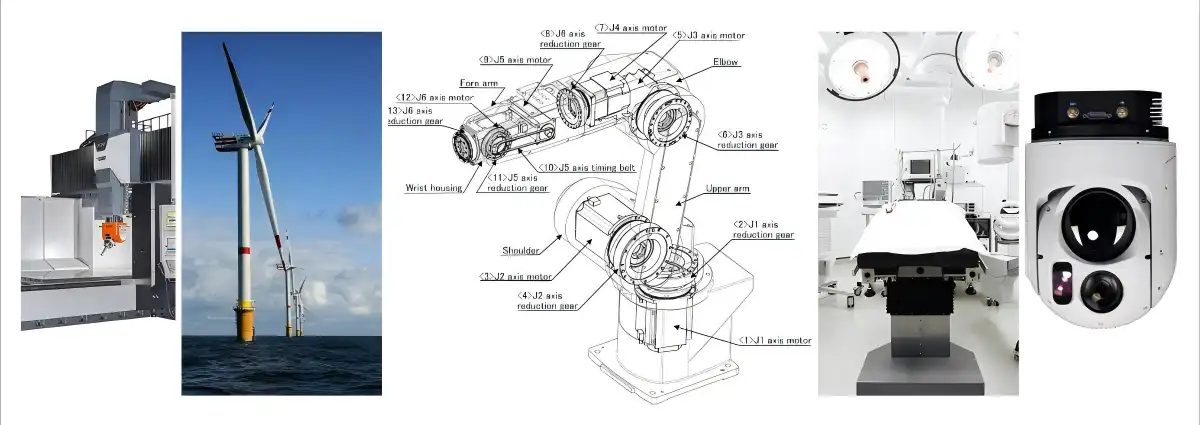
ATLYC brings 15 years of specialized bearing manufacturing expertise to your precision equipment, Cross roller bearing RE series challenges, evolving from a single automated workshop in 2010 to a comprehensive six-facility operation serving global markets. Our 120 skilled professionals ensure rigorous quality control across production, research and development, and assembly operations, backed by ISO 9001 and IATF 16949 certifications, guaranteeing consistent performance meeting international standards. We manufacture cross roller bearing RE series spanning complete dimensional ranges from 20mm to 1100mm inner diameters with precision grades from P6 to P2, supporting applications across industrial robotics, machining centers, medical equipment, and semiconductor manufacturing. Contact our technical team at auto@lyautobearing.com to discuss your specific requirements with a trusted cross roller bearing RE series manufacturer delivering reliable supply, competitive pricing, and comprehensive technical support for your global operations.
References
1. Harris, T.A. and Kotzalas, M.N. (2006). Rolling Bearing Analysis: Essential Concepts of Bearing Technology. CRC Press, Boca Raton.
2. Hamrock, B.J., Schmid, S.R., and Jacobson, B.O. (2004). Fundamentals of Fluid Film Lubrication. Marcel Dekker, New York.
3. ISO 199:2014. Rolling Bearings - Thrust Bearings - Geometrical Product Specifications and Tolerance Values. International Organization for Standardization, Geneva.
4. Budynas, R.G. and Nisbett, J.K. (2015). Shigley's Mechanical Engineering Design. McGraw-Hill Education, New York.
5. Schaeffler Technologies AG & Co. (2019). Rolling Bearings: Catalogue HR 1. Schweinfurt, Germany.
6. Weck, M. and Brecher, C. (2006). Machine Tools Production Systems: Design and Operation Volume 2. Springer-Verlag, Berlin.
Learn about our latest products and discounts through SMS or email