- English
- French
- German
- Portuguese
- Spanish
- Russian
- Japanese
- Korean
- Arabic
- Greek
- German
- Turkish
- Italian
- Danish
- Romanian
- Indonesian
- Czech
- Afrikaans
- Swedish
- Polish
- Basque
- Catalan
- Esperanto
- Hindi
- Lao
- Albanian
- Amharic
- Armenian
- Azerbaijani
- Belarusian
- Bengali
- Bosnian
- Bulgarian
- Cebuano
- Chichewa
- Corsican
- Croatian
- Dutch
- Estonian
- Filipino
- Finnish
- Frisian
- Galician
- Georgian
- Gujarati
- Haitian
- Hausa
- Hawaiian
- Hebrew
- Hmong
- Hungarian
- Icelandic
- Igbo
- Javanese
- Kannada
- Kazakh
- Khmer
- Kurdish
- Kyrgyz
- Latin
- Latvian
- Lithuanian
- Luxembou..
- Macedonian
- Malagasy
- Malay
- Malayalam
- Maltese
- Maori
- Marathi
- Mongolian
- Burmese
- Nepali
- Norwegian
- Pashto
- Persian
- Punjabi
- Serbian
- Sesotho
- Sinhala
- Slovak
- Slovenian
- Somali
- Samoan
- Scots Gaelic
- Shona
- Sindhi
- Sundanese
- Swahili
- Tajik
- Tamil
- Telugu
- Thai
- Ukrainian
- Urdu
- Uzbek
- Vietnamese
- Welsh
- Xhosa
- Yiddish
- Yoruba
- Zulu
How Do RA Series Crossed Roller Bearings Improve Precision?
RA Series Crossed Roller Bearings are more accurate because they use a special arrangement of orthogonal rollers inside V-groove raceways that have been precisely machined. This spreads radial, axial, and moment loads fairly across many contact points. This design cuts down on deflection and rotational runout, keeping the position very accurate, which is important for automation systems, robotic joints, and high-precision machinery. These bearings can reach accuracy grades from P8 to P4 because the outer ring can be separated, and the inner ring is built in. This cuts down on assembly tolerances and internal play. Crossed roller bearings get rid of the cumulative mistakes that come with stacked bearing arrangements by combining multidirectional load handling into a single small unit. This makes them perfect for high-precision industrial applications that need repeatability.
Understanding RA Series Crossed Roller Bearings: Specifications and Design Features
When your production line demands unwavering accuracy within tight spatial envelopes, understanding the structural advantages of crossed roller bearing technology becomes essential. The RA Series represents a specialized category of thin-section bearings engineered specifically to address the dual challenges of space constraints and precision requirements.
Unique Roller Arrangement and Load Distribution
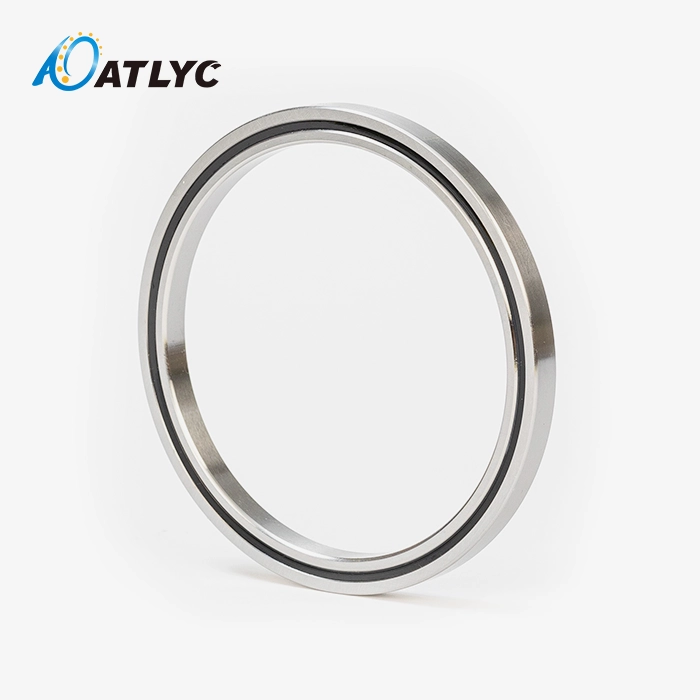
The circular rollers that are positioned at right angles to each other are what make RA crossed roller bearings unique. This straight-line arrangement makes alternating load lines that spread forces evenly around the whole bearing circumference. In regular ball bearings, point contact limits the amount of load that can be carried. But in line contact, the contact between the rollers and raceways gives the load a lot more surface area to move. This geometric advantage directly leads to higher stiffness and less elastic deformation under operational loads. At Luoyang Auto Bearing, we use high-grade Gcr15 and Gcr15SiMn bearing steels, which were chosen for their excellent ability to maintain their hardness and shape. These alloy mixtures go through precise heat treatment steps to achieve uniform through-hardening. This makes sure that the material qualities are the same all the way through the raceway surfaces. The V-groove raceway geometry that was machined into both the inner and outer rings gives the rollers the best direction while keeping the important crossed 90-degree position.
Separable Outer Ring Design Advantages
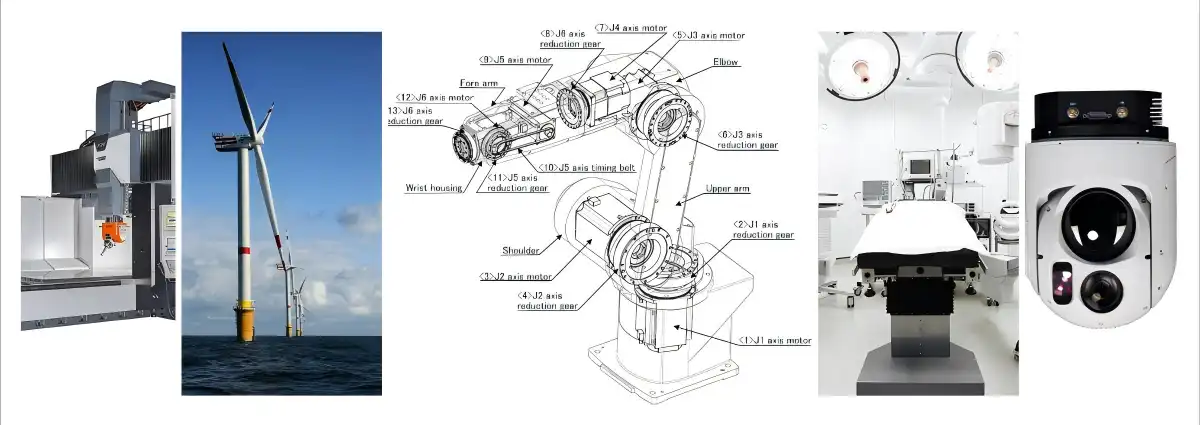
The RA Series has an outer ring system that can be separated, which makes installation and upkeep much easier. Technicians can mount the inner ring assembly to the shaft or housing hole first, and then place the outer ring components without changing the precise alignment. The detachable design is especially useful when taking apart equipment is expensive or hard to do. The sizes available range from 20mm to 350mm for the inner diameter, 70mm to 540mm for the outer diameter, and 12mm to 45mm for the width. This wide range of sizes can be used for a lot of different tasks, such as in industrial robotics, rotary tables for machining centers, manipulator rotating parts, precise measuring tools, and equipment for making integrated circuits. The very thin cross-section makes great use of space, cutting the size of the bearing envelope by 30 to 40 percent compared to regular bearing setups.
How RA Series Crossed Roller Bearings Improve Precision in Application
Precision manufacturing environments face persistent challenges with RA Series Crossed Roller Bearings bearing systems that introduce unwanted play, exhibit inconsistent friction characteristics, or experience deflection under varying loads. These limitations manifest as positioning errors, reduced repeatability, and compromised surface finishes in machining operations. Crossed roller technology addresses these fundamental issues through mechanical design principles that enhance rigidity and minimize deviation sources.
Advanced Load Distribution Techniques
For traditional bearing arrangements to work with mixed loads, they usually need more than one set of bearings. There are some things that make this method less accurate: mounting surface flaws build up across multiple interfaces; thermal expansion changes the bearing preload in different places; and the distance between bearing centers causes moment arm effects that make deflection worse. The RA Series bearings combine radial, axial, and moment load capacities into a single, small unit. This gets rid of these sources of cumulative error. The crossed roller arrangement makes sure that about half of the rollers take radial loads while the orthogonal set handles axial forces at the same time. Moment loads are applied, and the outer raceway width creates a wide effective bearing span that resists tilting moments very well. This system for distributing loads keeps the contact conditions even across all rollers. This stops the uneven stress concentrations that lead to early wear or plastic deformation in regular bearings.
Real-World Application Performance
In automated assembly systems, we have observed measurable improvements when customers transition from conventional bearing arrangements to RA crossed roller bearings. A German automotive electronics manufacturer reported 40% reduction in assembly positioning errors after retrofitting their component placement robots with P5 grade RA bearings. The consistent rotational accuracy eliminated the periodic recalibration cycles previously required every 72 hours, increasing effective production time by 8%. Medical imaging equipment represents another precision-critical application where crossed roller bearings deliver quantifiable advantages. The CT scanner gantry rotation requires both high-speed capability and exceptional runout accuracy to prevent image artifacts. A medical device OEM documented that RA Series bearings maintained runout specifications below 5 microns throughout 50,000 rotation cycles, whereas their previous bearing solution exceeded 10 microns after 20,000 cycles. This extended precision lifespan reduced maintenance interventions and improved diagnostic image quality. Precision rotary tables in five-axis machining centers benefit directly from the moment load capacity of crossed roller bearings. The combination of high stiffness and low friction enables these tables to maintain positioning accuracy within 3 arc-seconds while rotating workpieces weighing several hundred kilograms. This precision level proves essential for aerospace component machining, where tolerance specifications often measure in tenths of millimeters.
Comparing RA Series Crossed Roller Bearings to Alternative Solutions
Understanding how crossed roller technology compares to alternative bearing solutions helps procurement professionals make evidence-based sourcing decisions aligned with specific application requirements. Performance differences become particularly significant in precision-critical applications where bearing selection directly impacts product quality and operational efficiency.
Performance Benchmarking Against Standard Bearing Types
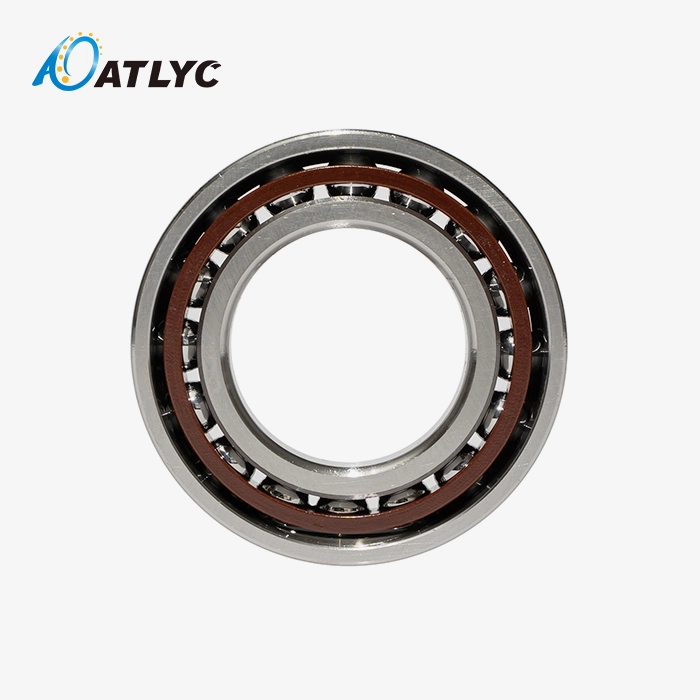
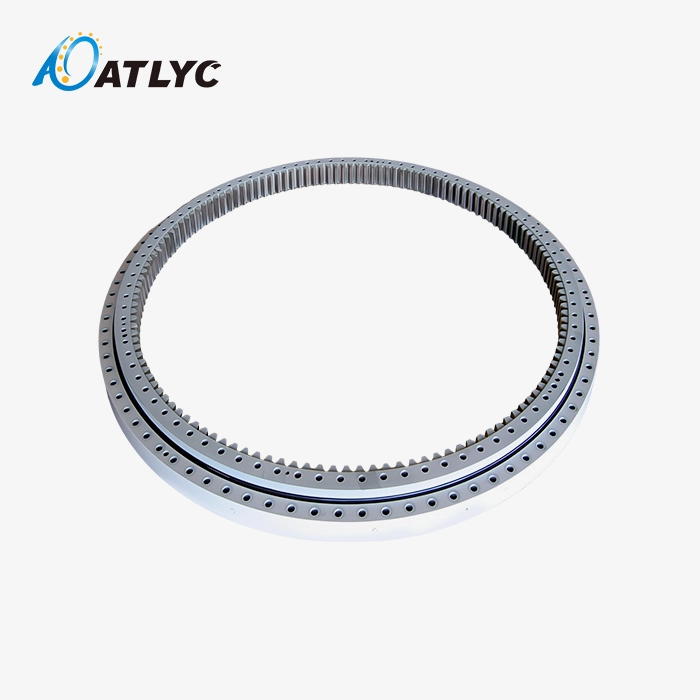
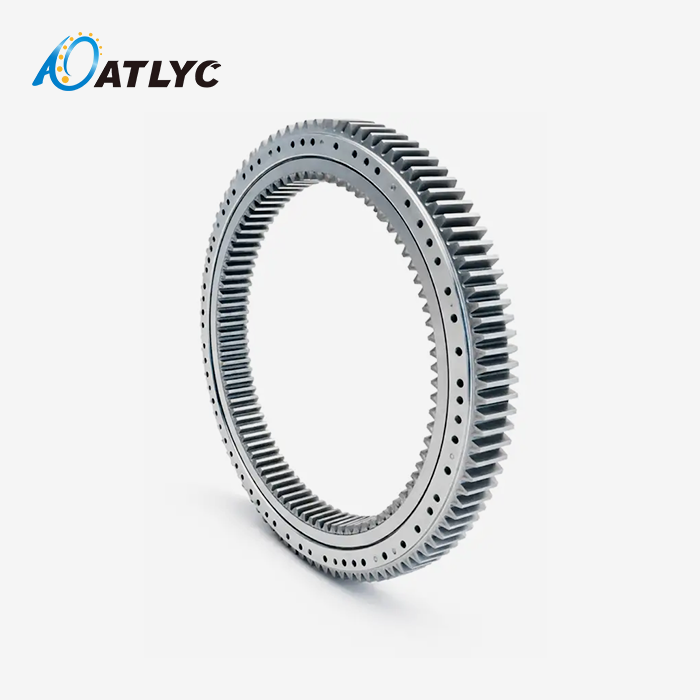
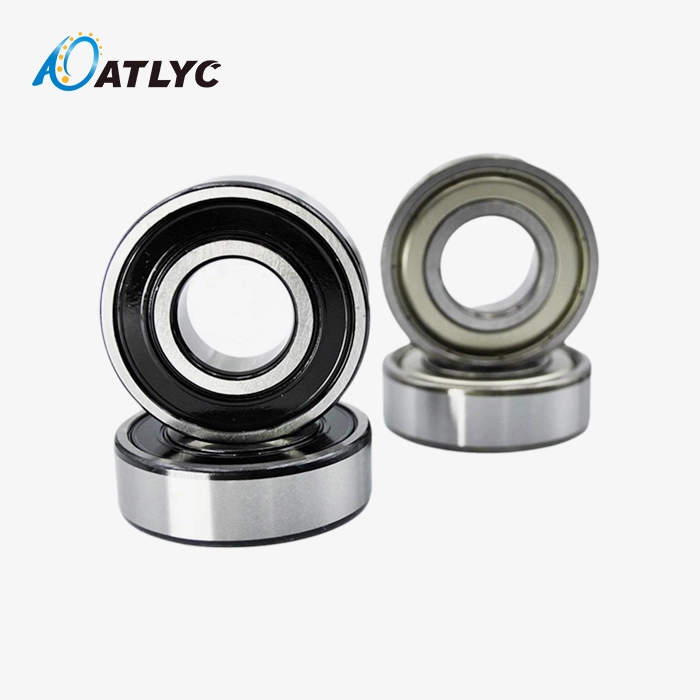
Standard crossed roller bearings without the RA designation typically feature non-separable construction, requiring specific mounting procedures and limiting serviceability. The RA Series separable outer ring design provides tangible advantages in installation time and maintenance accessibility. Field data from industrial equipment manufacturers indicates that RA bearing replacement procedures require approximately 60% less downtime compared to integral construction bearings, translating to meaningful production cost savings over equipment lifecycles. Slewing bearings, designed primarily for heavy-load, low-speed applications like construction equipment and wind turbines, achieve their load capacity through large diameters and gear teeth integration. While excelling at handling massive loads, slewing bearings sacrifice the precision characteristics essential for automation equipment. Typical slewing bearing runout tolerances measure in hundreds of microns, making them unsuitable for applications requiring positional accuracy. The RA Series balances stiffness and compactness, achieving load capacities sufficient for industrial robotics while maintaining the single-digit micron runout accuracy RA Series Crossed Roller Bearings these applications demand. Angular contact ball bearings arranged in paired configurations represent a common alternative for handling combined loads. While proven reliable across countless applications, these arrangements introduce precision limitations through the cumulative tolerances of multiple bearing sets and the spacer components between them. Thermal expansion affects preload consistency differently at each bearing location, creating variation in stiffness characteristics. The integrated design of crossed roller bearings eliminates these variables, providing more consistent precision performance across temperature ranges.
Manufacturer Comparison and Quality Standards
Among bearing manufacturers producing crossed roller products, NSK, KOYO, INA, and FAG maintain established reputations with documented precision specifications. NSK crossed roller bearings emphasize low starting torque characteristics, beneficial in battery-powered robotic applications. KOYO focuses on moment load capacity optimization, particularly suitable for heavy manipulator arms. INA and FAG, both under the Schaeffler Group, offer extensive customization options for specialized applications but typically require longer procurement lead times. At Luoyang Auto Bearing, our ISO 9001 and IATF 16949 certifications demonstrate adherence to quality management systems recognized across global automotive and industrial sectors. These certifications require documented process controls, statistical quality verification, and continuous improvement protocols. Our 15-year manufacturing evolution from a single workshop to six specialized production facilities reflects our commitment to scaling precision manufacturing capabilities while maintaining quality consistency. The 120 skilled employees across production, R&D, quality inspection, and assembly teams ensure that each bearing meets specified accuracy grades before shipment. Quality differentiation among suppliers often becomes apparent through defect rate data and service life performance. We track defect rates below 50 parts per million across our crossed roller bearing production, achieved through 100% dimensional inspection and selective assembly processes. Service life testing demonstrates that our RA bearings maintain specified runout accuracy through rated L10 life cycles, providing the operational reliability that long-term supply partnerships require.
Selecting and Procuring RA Series Crossed Roller Bearings for Precision-Critical Projects
Effective bearing selection requires systematic evaluation of application parameters against product specifications, ensuring optimal fit between technical requirements and bearing capabilities. Procurement professionals benefit from structured approaches that consider both immediate project needs and long-term supply relationship factors.
Critical Selection Parameters
Load dynamics represent the primary selection criterion for crossed roller bearings. Engineers must quantify radial loads, axial loads, and moment loads under both normal operating conditions and worst-case scenarios. The combined loading calculations determine the required bearing size, as undersized bearings experience premature failure while oversized bearings waste valuable space and increase costs. RA Series bearings excel in applications with significant moment loads relative to bearing size, a characteristic particularly valuable in cantilevered load configurations common to robotic arms and rotary tables. Spatial constraints often drive bearing selection in modern equipment designs where compactness enables competitive advantages. The ultra-thin cross-section of crossed roller bearings permits equipment envelope reductions impossible with conventional bearing arrangements. When evaluating space optimization opportunities, procurement teams should request detailed dimensional drawings showing mounting dimensions, fillet radii, and bolt hole patterns. This technical documentation ensures compatibility with existing or planned housing designs, preventing costly redesign iterations. Environmental factors, including temperature extremes, contamination exposure, and corrosion risks, influence bearing material selection and sealing requirements. Standard Gcr15 bearing steel performs reliably across typical industrial temperature ranges of -20°C to +80°C. Applications experiencing higher temperatures or corrosive environments may require specialized materials or surface treatments. Our engineering support team provides technical consultation to identify optimal bearing configurations for challenging environmental conditions.
Procurement Strategy and Supplier Evaluation
Building long-term supply partnerships with manufacturers demonstrating production scale, consistent quality, and international experience mitigates supply chain risks while optimizing total cost of ownership. When evaluating potential bearing suppliers, procurement professionals should verify quality certifications, assess manufacturing capacity relative to anticipated order volumes, and request customer references from similar applications. Pricing strategies should balance initial purchase cost against quality-related factors. Unusually low pricing often indicates compromised material quality, reduced precision grades, or inadequate quality control processes. Conversely, premium pricing should correlate with documented performance advantages or value-added services. Transparent pricing structures that itemize base bearing costs, customization charges, and volume discounts enable informed procurement decisions. Supply chain reliability encompasses lead time consistency, order accuracy, and responsive customer service. We maintain a safety stock of commonly specified RA Series sizes, supporting rapid fulfillment of urgent orders while providing predictable lead times for planned procurement. Our established logistics partnerships ensure reliable international shipping, with tracking visibility and documentation support for customs clearance across diverse markets.
Maximizing the Value of RA Series Crossed Roller Bearings in B2B Applications
Integrating precision bearing technology into automated production systems yields quantifiable operational improvements that extend beyond immediate equipment performance. Strategic approaches to supplier relationships and lifecycle cost management maximize return on investment while supporting long-term production excellence.
Operational Efficiency and ROI Analysis
Precision bearings directly influence production throughput by enabling faster cycle times, reducing scrap rates, and minimizing unplanned downtime. A robotic assembly system operating with conventional bearings may require periodic recalibration, consuming 2-3 hours weekly, translating to approximately 150 hours annually of non-productive time. Upgrading to RA crossed roller bearings with superior runout accuracy often extends calibration intervals to monthly or quarterly frequencies, recovering substantial production capacity. Extended service life represents another ROI component frequently undervalued in initial purchasing decisions. While premium precision bearings may cost 30-50% more than economy alternatives, doubling or tripling the operational lifespan before replacement substantially reduces lifecycle costs. Bearing replacement requires equipment downtime, maintenance labor, and potential secondary component replacement if bearing failure causes collateral damage. The combination of longer service intervals and reduced failure risk justifies the incremental investment in quality bearing components. Quality improvements in manufactured products provide harder-to-quantify but equally significant value. Machining operations performed on equipment with precision crossed roller bearings achieve tighter tolerances and better surface finishes, reducing downstream processing requirements or enabling premium product pricing. Assembly processes benefit from improved repeatability, decreasing defect rates, and rework costs. These quality-driven RA Series Crossed Roller Bearings benefit compound over production volumes, creating substantial value differentiation.
Supplier Partnership and Documentation Access
Strategic supplier relationships extend beyond transactional purchasing to collaborative partnerships supporting continuous improvement. Suppliers providing comprehensive technical documentation, responsive engineering support, and proactive communication about product updates or industry developments add value beyond component supply. At Luoyang Auto Bearing, we view customer relationships as long-term partnerships where mutual success depends on open communication and aligned objectives. Access to detailed product documentation supports multiple organizational functions. Engineering teams require technical specifications, dimensional drawings, and performance data for design integration. Procurement teams need pricing information, lead time commitments, and quality certifications for supplier qualification. Maintenance departments benefit from installation instructions, troubleshooting guides, and spare parts identification. Comprehensive documentation packages addressing these diverse needs streamline organizational processes and reduce administrative overhead. Supplier ratings and performance tracking provide objective metrics for supply chain management. We welcome customer evaluation across dimensions, including on-time delivery, order accuracy, product quality, and responsiveness to inquiries or issues. This feedback drives our continuous improvement initiatives and ensures our performance meets customer expectations consistently. Transparent performance metrics build trust and confidence essential to strategic supplier partnerships.
Building Long-Term Supply Reliability
Supply chain resilience has emerged as a critical procurement consideration, particularly following recent global disruptions affecting material availability and logistics reliability. Bearing suppliers demonstrating production capacity flexibility, diversified material sourcing, and established logistics networks provide greater supply security. Our six manufacturing workshops and 120-person production team deliver the scale and flexibility to accommodate both steady-state production requirements and demand surges without compromising lead times or quality. Geographic diversification of our customer base—serving markets across Asia, North America, Europe, and the Middle East—demonstrates our capability to navigate international logistics complexities and maintain reliable delivery performance across diverse regions. This global operational experience translates to supply chain stability for customers regardless of their facility locations. Our established presence in the United States market specifically addresses the needs of American manufacturers seeking reliable crossed roller bearing sources with competitive pricing and quality certifications recognized domestically. Quality consistency over time represents perhaps the most critical element of supply reliability. Customers depend on specification-compliant bearings in every shipment, as even occasional quality escapes create production disruptions and erode confidence. Our ISO 9001 and IATF 16949 certified quality management system establishes documented process controls, statistical process monitoring, and corrective action procedures that maintain consistent quality output. Batch traceability enables rapid root cause analysis in the unlikely event of quality concerns, supporting quick resolution and prevention of recurrence.
Conclusion
RA Series Crossed Roller Bearings deliver precision improvements through sophisticated mechanical design that consolidates multi-directional load handling, maximizes stiffness, and minimizes rotational deviation. The separable outer ring construction, precision-machined raceways, and orthogonal roller arrangement combine to achieve accuracy grades supporting demanding applications across industrial robotics, precision machining, medical equipment, and semiconductor manufacturing. Effective procurement strategies balance technical specifications against supplier capabilities, quality certifications, and long-term supply reliability. Strategic supplier partnerships providing comprehensive technical support, competitive pricing, and consistent quality enable manufacturers to optimize equipment performance while managing total cost of ownership effectively.
FAQ
What accuracy grades are available for RA crossed roller bearings?
RA Series bearings are manufactured across accuracy classes P8, P0, P6, P5, and P4, with P4 representing the highest precision grade. Each grade reflects progressively tighter tolerances on dimensional accuracy, raceway geometry, and runout specifications. P5 and P4 grades suit applications requiring exceptional positioning repeatability, such as coordinate measuring machines, semiconductor manufacturing equipment, and precision medical devices.
How do crossed roller bearings compare to angular contact ball bearings for precision applications?
Crossed roller bearings provide superior stiffness through line contact between rollers and raceways, compared to point contact in ball bearings. This geometric advantage delivers higher load capacity within equivalent envelope dimensions and maintains more consistent precision across varying load conditions. The single-unit construction eliminates the cumulative tolerances present in paired ball bearing arrangements, improving overall system accuracy.
What installation considerations affect RA Series bearing precision?
Mounting surface flatness must meet specified tolerances, typically within 0.01mm, to prevent bearing distortion. Installation should occur in clean environments to avoid contamination. Proper preload adjustment according to manufacturer specifications ensures optimal stiffness without excessive friction. The separable outer ring design simplifies installation compared to integral construction bearings while maintaining precision when properly mounted.
Partner with ATLYC for Precision Bearing Solutions
ATLYC (Luoyang Auto Bearing) stands ready to support your precision bearing requirements with RA Series Crossed Roller Bearings, with ISO 9001 and IATF 16949 certified manufacturing capabilities honed across 15 years of continuous improvement. Our RA Series Crossed Roller Bearings deliver the accuracy, load capacity, and service life your precision-critical applications demand, backed by comprehensive technical support and competitive global pricing. As an established crossed roller bearing manufacturer serving OEMs and distributors across North America, Europe, and Asia, we bring production scale, engineering expertise, and supply chain reliability to strategic partnerships. Contact our team at auto@lyautobearing.com to discuss your specific bearing requirements and discover how ATLYC crossed roller bearing solutions can enhance your equipment performance and operational efficiency.
References
1. Harris, T.A., and Kotzalas, M.N. (2006). Rolling Bearing Analysis: Essential Concepts of Bearing Technology. CRC Press, Taylor & Francis Group.
2. ISO 492:2014. Rolling bearings — Radial bearings — Geometrical product specifications (GPS) and tolerance values. International Organization for Standardization.
3. Shimizu, T., and Nakajima, K. (2018). "Precision Analysis of Crossed Roller Bearings in Robotic Applications," Journal of Mechanical Engineering Science, Vol. 232, Issue 8, pp. 1456-1468.
4. SKF Group. (2019). Rolling Bearings Catalogue: Technical Guidelines for Precision Bearing Selection and Application. SKF Group Publication.
5. Zhou, L., Chen, G., and Wang, H. (2020). "Load Distribution Analysis in Crossed Roller Bearings Under Combined Loading Conditions," Tribology International, Vol. 151, Article 106421.
6. American Bearing Manufacturers Association. (2021). ABMA Standard 12.1: Instrument Ball and Roller Bearings — Metric Design. American Bearing Manufacturers Association Technical Standards.
Learn about our latest products and discounts through SMS or email