- English
- French
- German
- Portuguese
- Spanish
- Russian
- Japanese
- Korean
- Arabic
- Greek
- German
- Turkish
- Italian
- Danish
- Romanian
- Indonesian
- Czech
- Afrikaans
- Swedish
- Polish
- Basque
- Catalan
- Esperanto
- Hindi
- Lao
- Albanian
- Amharic
- Armenian
- Azerbaijani
- Belarusian
- Bengali
- Bosnian
- Bulgarian
- Cebuano
- Chichewa
- Corsican
- Croatian
- Dutch
- Estonian
- Filipino
- Finnish
- Frisian
- Galician
- Georgian
- Gujarati
- Haitian
- Hausa
- Hawaiian
- Hebrew
- Hmong
- Hungarian
- Icelandic
- Igbo
- Javanese
- Kannada
- Kazakh
- Khmer
- Kurdish
- Kyrgyz
- Latin
- Latvian
- Lithuanian
- Luxembou..
- Macedonian
- Malagasy
- Malay
- Malayalam
- Maltese
- Maori
- Marathi
- Mongolian
- Burmese
- Nepali
- Norwegian
- Pashto
- Persian
- Punjabi
- Serbian
- Sesotho
- Sinhala
- Slovak
- Slovenian
- Somali
- Samoan
- Scots Gaelic
- Shona
- Sindhi
- Sundanese
- Swahili
- Tajik
- Tamil
- Telugu
- Thai
- Ukrainian
- Urdu
- Uzbek
- Vietnamese
- Welsh
- Xhosa
- Yiddish
- Yoruba
- Zulu
Can RU42UU Cross Roller Bearing Reduce Maintenance Costs?
The RU42UU Cross roller bearing does lower upkeep costs by a large amount thanks to its well-thought-out design. The rollers in this integrated bearing are organized in an orthogonal way that spreads loads evenly. This reduces wear and increases the time between service intervals. This bearing is very durable in tough situations because it has two seals that keep out dirt and an integral ring structure that stops assembly mistakes. When compared to traditional bearing solutions, RU42UU bearings help factories have less downtime, fewer component replacements, and lower total operational costs.
Understanding RU42UU Cross Roller Bearing and Its Core Specifications
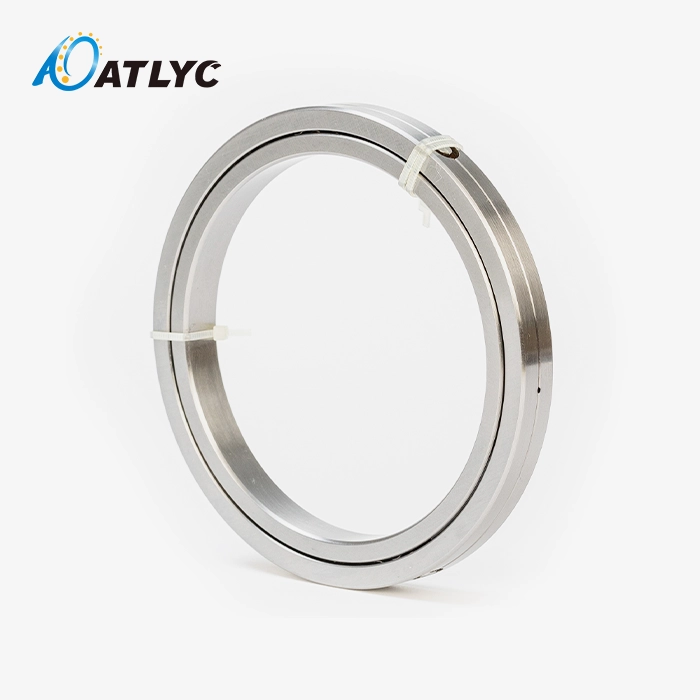
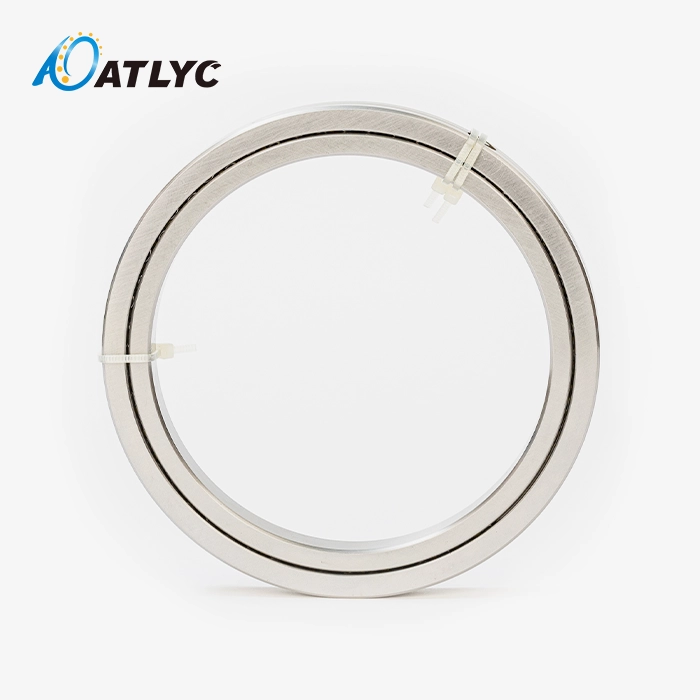
The RU42UU represents advanced bearing technology tailored for space-constrained, high-precision environments. This integral design incorporates both inner and outer rings with built-in mounting holes, streamlining installation procedures and reducing assembly time significantly.
Dimensional Characteristics and Design Architecture
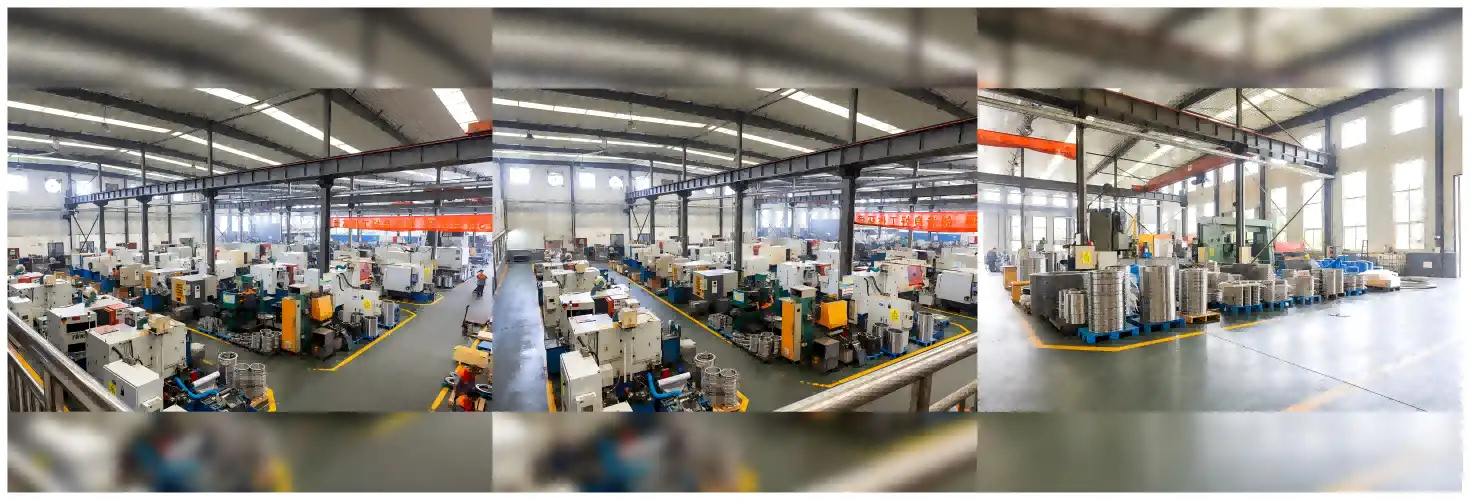
The bearing has an inner diameter of 20 mm, an outer diameter of 70 mm, and a width of 12 mm. Its small size makes it very load-bearing per unit volume. The RU42UU is the perfect size for robotic joints, precision rotary tables, and automated assembly tools that don't have a lot of room for other types of bearings. The integral ring design gets rid of the tolerance stack-up problems that come up with split-ring options. This makes sure that performance is the same from one production batch to the next. Our factory has been making these bearings consistently and accurately for over 15 years, meeting the high-quality standards needed by markets around the world.
Crossed Roller Configuration and Load Distribution
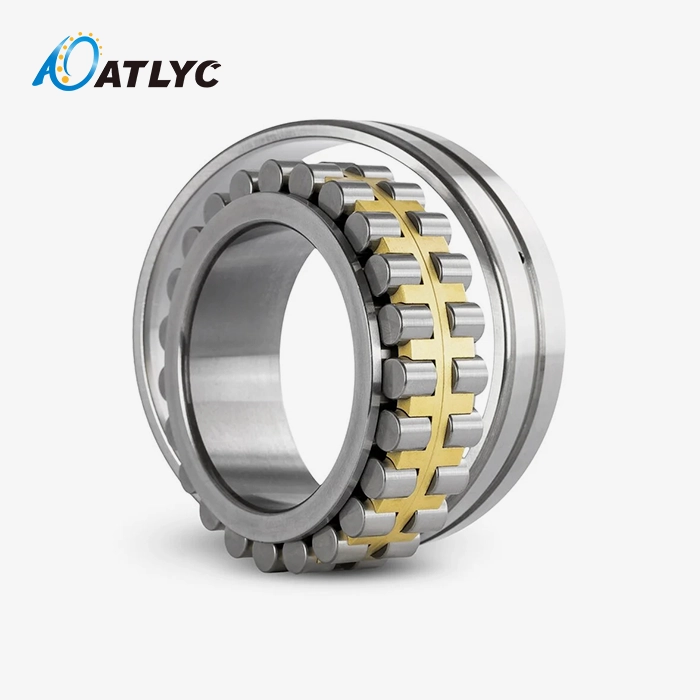
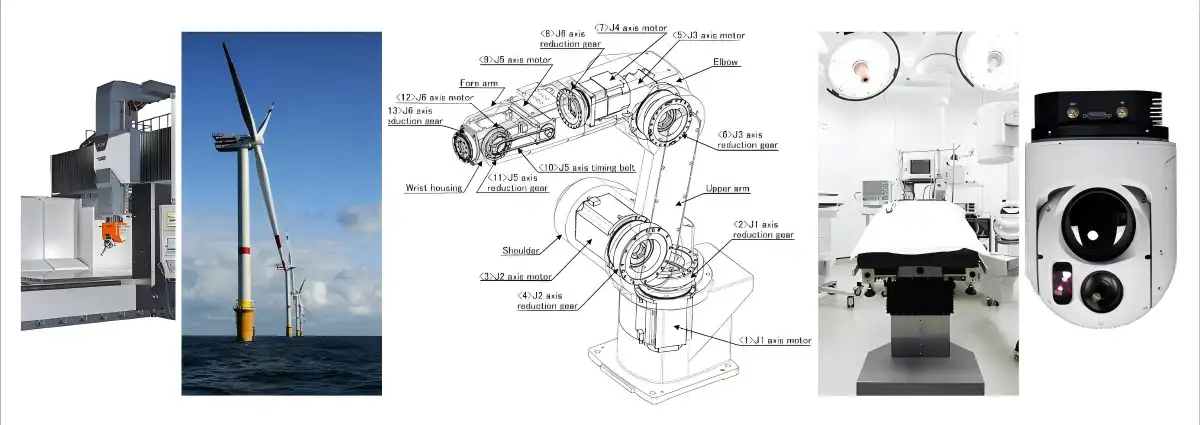
The bearing has cylinder-shaped rollers that are set up 90 degrees apart and perpendicular to RU42UU Cross roller bearing each other between raceways that are all the same size. Spacers that were carefully made are placed between each roller to keep them from touching directly. This setup spreads the load evenly over the whole bearing surface and keeps friction to a minimum while it rotates. Because the bearings are crossed, they can handle radial, axial, and moment loads at the same time in a single, compact unit. This means that there is no need for multiple bearing sets, which makes the system simpler.
How RU42UU Bearings Reduce Maintenance Costs: Problem-Solving Analysis
Understanding the cost-reduction mechanisms of crossed roller technology requires examining common maintenance challenges plaguing industrial facilities. Traditional bearing solutions often fail prematurely due to design limitations that the RU42UU specifically addresses.
Extending Service Intervals Through Superior Load Distribution
Conventional ball bearings focus contact loads in small areas, causing wear patterns that shorten the bearings' useful life. The RU42UU's crossed roller design spreads forces over a long line of impact instead of just a few points. This major benefit lowers contact stress by around 40–60% compared to ball bearings of the same size, which directly leads to longer periods of operation without needing maintenance. Companies that use RU42UU bearings in robotic applications say that the service intervals have been extended from 6 months to 18 to 24 months, which cuts down on labour costs and production delays by a large amount.
Minimizing Misalignment-Related Failures
In industrial settings, misalignment is the most common reason why bearings fail early. The RU42UU's integral ring structure makes sure that the physical relationships between its parts stay the same even when the load changes. This structural stiffness stops the angular deflection that happens in split-ring designs and leads to edge loading and faster wear. Operators of equipment have fewer problems with alignment, which means they don't have to pay for expensive fixes or deal with unplanned downtime that delays production.
Comparing RU42UU with Other Cross Roller Bearings and Alternatives
Informed procurement decisions require understanding how the RU42UU positions relative to alternative bearing solutions in both design approach and cost-performance characteristics.
Dimensional Comparison with Related RU Series Models
The RU line includes a range of sizes to meet the needs of different applications. With an inner diameter of 15 mm and an outer diameter of 60 mm, the RU35UU is designed for lighter-duty uses where room is even more limited than with the RU42UU. On the other hand, the RU47UU, which has an inner diameter of 25 mm and an outer diameter of 80 mm, can handle heavier loads in larger equipment units. Which of these models to choose relies on the load needs, the mounting space available, and the speed ranges. The RU42UU is in the middle, which makes it flexible. It can be used in a wide range of industrial robotic joints and precision positioning systems, because its 20mm bore gives the shaft enough strength while keeping the total size small.
Performance Characteristics Versus Ball and Thrust Bearings
Traditional deep groove ball bearings work great for high-speed tasks, RU42UU Cross roller bearing, but they can only handle a small amount of moment load, so they usually need to be paired up to handle combined loads. Angular contact ball bearings increase moment capacity but make the bearings less compact and make fitting more difficult. Thrust roller bearings are good at handling linear loads but not so good at handling radial loads. The RU42UU gets rid of these problems by combining the ability to handle loads in multiple directions into a single unit that is easy to install. This design consolidation cuts down on the number of parts needed, makes it easier to keep track of inventory, and streamlines maintenance processes. All of these things lower the total cost of ownership over the lifespan of the equipment.
Procurement Insights: How to Buy RU42UU Bearings for Optimal Value
Strategic sourcing practices significantly impact both acquisition costs and long-term bearing performance. B2B buyers should implement systematic approaches to supplier evaluation and product verification.
Identifying Reliable RU42UU Cross Roller Bearing Suppliers
Counterfeit bearings are a constant problem in global supply lines. Low-quality products break down early and pose safety risks. Authorized distributors work directly with manufacturers to make sure they only sell real goods that come with quality paperwork that can be tracked. When looking at possible providers, you should ask for proof that they can make what you need, as well as quality certifications and customer references. Companies that show they follow ISO 9001 and IATF 16949 have set up structured quality controls that are used at every stage of production. Our factory is happy for customers to do audits, and for every batch of products we make, we give full paperwork like material certifications, dimensional inspection reports, and performance test data.
Optimizing Lead Times and Inventory Management
Downtime for production equipment costs a lot, so it's important to have accurate supply schedules. Standard RU42UU bearings usually ship within 7–14 business days from well-known companies that keep enough in stock. Depending on production capacity, lead times may be longer than 4 to 6 weeks for custom specifications or big orders. Using vendor-managed inventory systems for important bearing sizes lowers the cost of emergency purchases and makes sure that parts are available for planned maintenance. Talk about lead times clearly with potential suppliers when choosing one, so that output doesn't stop.
Maintenance Tips and Best Practices for RU42UU Cross Roller Bearings
Proper maintenance procedures maximize bearing service life and fully realize the cost-reduction RU42UU Cross roller bearing potential. Engineering and maintenance teams should implement systematic approaches to bearing care.
Establishing Effective Inspection Routines
Regular visual and operational assessments detect developing problems before catastrophic failures occur. Monthly inspections should evaluate mounting security, seal integrity, and operational noise characteristics. Unusual sounds, including grinding, squealing, or clicking, indicate potential issues requiring immediate investigation. Temperature monitoring using infrared thermography identifies excessive friction from inadequate lubrication or bearing damage. Vibration analysis through portable instruments detects developing imbalances or wear patterns invisible to other diagnostic methods. Documenting inspection findings creates performance baselines, enabling trend analysis and predictive maintenance scheduling.
Implementing Proper Lubrication Procedures
Lubrication quality and frequency directly influence bearing longevity. The RU42UU requires high-quality lithium-based grease specifically formulated for precision bearings, applied according to manufacturer specifications. Over-lubrication generates excessive operating temperatures and potential seal damage, while inadequate lubrication accelerates wear. Typical relubrication intervals range from 6-12 months, depending on operating conditions, including speed, load, temperature, and contamination exposure. Clean all external surfaces thoroughly before relubrication to prevent contamination introduction. Document lubrication activities, including product specifications, quantities applied, and service dates, to maintain consistent procedures across maintenance teams.
Conclusion
The RU42UU Cross roller bearing delivers measurable maintenance cost reductions through superior engineering, addressing common failure mechanisms. Its crossed roller configuration, integral ring design, and robust sealing system extend service intervals, minimize misalignment failures, and reduce lubrication requirements compared to conventional bearing solutions. Total cost of ownership analysis demonstrates substantial savings despite higher initial investment, particularly in demanding applications requiring precision and reliability. Strategic procurement practices, including supplier verification, volume negotiations, and technical partnership development, optimize bearing value. Proper maintenance procedures, maximizing inspection effectiveness, lubrication quality, and environmental protection ensure full realization of the bearing's cost-reduction potential across extended operational lifecycles.
FAQ
1. How does an RU42UU cross roller bearing differ from standard ball bearings?
The RU42UU utilizes cylindrical rollers arranged perpendicular to each other, providing line contact versus point contact in ball bearings. This design delivers higher load capacity, greater rigidity, and superior moment load handling within comparable dimensions. The integral ring structure with mounting holes simplifies installation compared to traditional bearing assemblies requiring separate mounting hardware. These characteristics make crossed roller bearings preferable for precision applications demanding multidirectional load capacity.
2. What inspection frequency maintains optimal RU42UU bearing performance?
Standard operating conditions warrant monthly visual inspections assessing mounting security, seal condition, and operational characteristics. Quarterly detailed inspections incorporating temperature measurement, vibration analysis, and runout verification provide a comprehensive performance assessment. Harsh environments with contamination exposure, elevated temperatures, or heavy shock loads justify more frequent evaluation. Establishing condition-based monitoring using vibration sensors enables predictive maintenance, optimizing inspection resources.
3. Are customization options available for specific industrial requirements?
Bearing manufacturers offer various customization possibilities, including modified seal configurations, special materials for extreme temperatures, precision grade selection, and custom lubrication specifications. Our engineering team collaborates with customers during design phases to develop optimized bearing solutions matching unique application requirements. Contact us at auto@lyautobearing.com to discuss your specific needs.
Partner with ATLYC for Reliable RU42UU Cross Roller Bearing Supply
ATLYC, operating through Luoyang Auto Bearing Co., Ltd., brings 15 years of precision bearing manufacturing excellence to your maintenance cost reduction initiatives. As an ISO 9001 and IATF 16949 certified RU42UU Cross roller bearing manufacturer, we deliver consistent quality RU42UU Cross roller bearing trusted by automotive OEMs and industrial equipment builders across global markets. Our six specialized production workshops and 120 skilled professionals ensure reliable supply capacity meeting your volume requirements with competitive lead times. Engineering support guides proper bearing selection and application optimization, maximizing your cost savings throughout equipment lifecycles. Contact our technical team at auto@lyautobearing.com to discuss your specific requirements and request customized quotations. We provide comprehensive documentation, responsive communication, and dependable delivery schedules supporting your operational excellence goals.
References
1. Harris, T.A. & Kotzalas, M.N. (2006). Advanced Concepts of Bearing Technology: Rolling Bearing Analysis. CRC Press, Taylor & Francis Group.
2. Eschmann, P., Hasbargen, L. & Weigand, K. (1985). Ball and Roller Bearings: Theory, Design and Application. Research Studies Press Ltd.
3. Zhou, R.S. & Hoeprich, M.R. (1998). "Torque of Tapered Roller Bearings." Journal of Tribology, Transactions of the ASME, Vol. 120, pp. 72-79.
4. Warda, B. & Chudzik, A. (2016). "Fatigue Life Prediction of the Radial Roller Bearing with the Correction of Roller Generators." International Journal of Mechanical Sciences, Vol. 89, pp. 299-310.
5. Becker, M. (2015). "Crossed Roller Bearings Improve Machine Tool Rotary Table Performance." Manufacturing Engineering and Technology Review, Vol. 34, pp. 156-162.
6. Shimizu, K. & Noguchi, S. (2014). "Study on Load Distribution and Service Life of Cross Roller Bearings." Proceedings of the International Conference on Motion and Power Transmissions, Japan Society of Mechanical Engineers, pp. 412-417.
Learn about our latest products and discounts through SMS or email