- English
- French
- German
- Portuguese
- Spanish
- Russian
- Japanese
- Korean
- Arabic
- Greek
- German
- Turkish
- Italian
- Danish
- Romanian
- Indonesian
- Czech
- Afrikaans
- Swedish
- Polish
- Basque
- Catalan
- Esperanto
- Hindi
- Lao
- Albanian
- Amharic
- Armenian
- Azerbaijani
- Belarusian
- Bengali
- Bosnian
- Bulgarian
- Cebuano
- Chichewa
- Corsican
- Croatian
- Dutch
- Estonian
- Filipino
- Finnish
- Frisian
- Galician
- Georgian
- Gujarati
- Haitian
- Hausa
- Hawaiian
- Hebrew
- Hmong
- Hungarian
- Icelandic
- Igbo
- Javanese
- Kannada
- Kazakh
- Khmer
- Kurdish
- Kyrgyz
- Latin
- Latvian
- Lithuanian
- Luxembou..
- Macedonian
- Malagasy
- Malay
- Malayalam
- Maltese
- Maori
- Marathi
- Mongolian
- Burmese
- Nepali
- Norwegian
- Pashto
- Persian
- Punjabi
- Serbian
- Sesotho
- Sinhala
- Slovak
- Slovenian
- Somali
- Samoan
- Scots Gaelic
- Shona
- Sindhi
- Sundanese
- Swahili
- Tajik
- Tamil
- Telugu
- Thai
- Ukrainian
- Urdu
- Uzbek
- Vietnamese
- Welsh
- Xhosa
- Yiddish
- Yoruba
- Zulu
How to Select the Right RB4010UUCC0 Cross Roller Bearing?
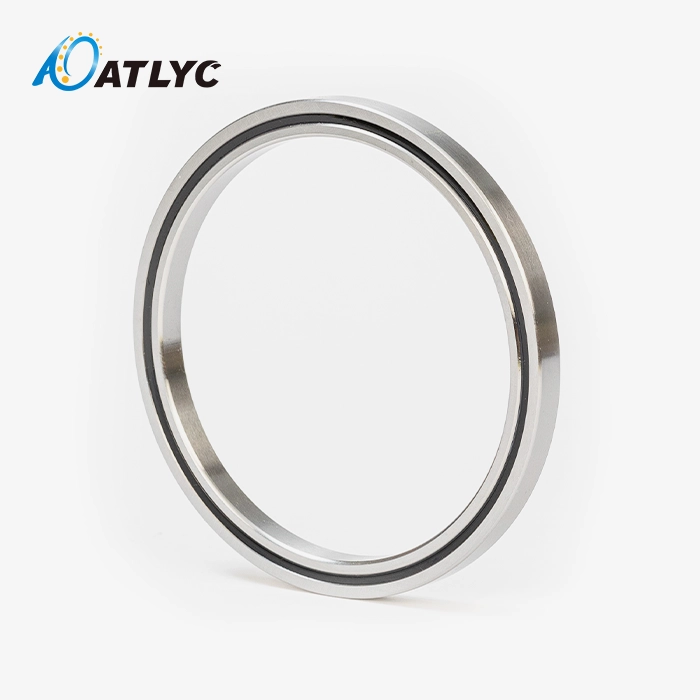
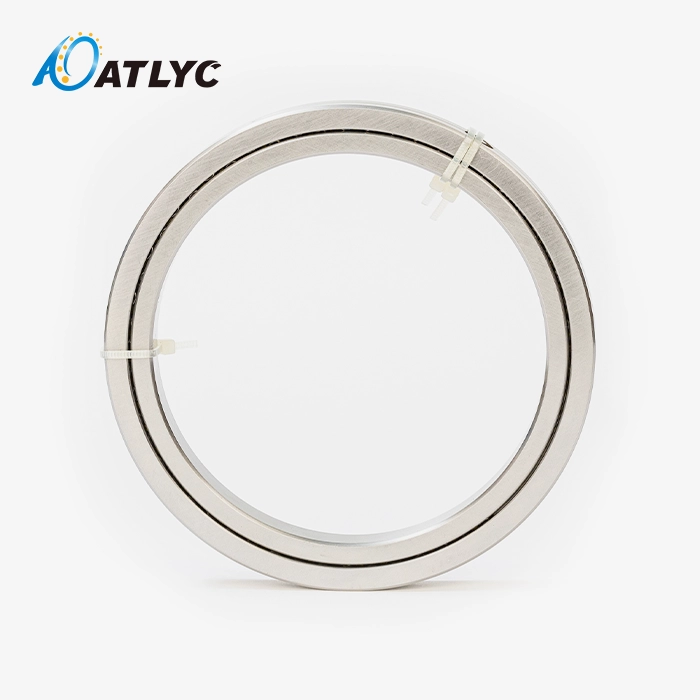
Selecting the right RB4010UUCC0 cross roller bearing requires careful evaluation of technical specifications, application requirements, and supplier reliability. This precision component features an integrated inner ring and split outer ring configuration with dimensions of 45mm inner diameter, 65mm outer diameter, and 10mm width. The crossed-roller architecture enables simultaneous handling of radial, axial, and moment loads within a compact envelope, making it ideal for robotic joints, rotary tables, and precision instrumentation. Proper selection depends on understanding load capacities, accuracy grades (P2 through P6), material composition (Gcr15 or Gcr15SiMn), and operational environment conditions. Matching these technical parameters to your application ensures optimal performance, extended service life, and cost-effective operation.

Understanding the RB4010UUCC0 Cross Roller Bearing Specifications
Procurement professionals seeking high-precision bearings must grasp the technical foundation that distinguishes cross roller designs from conventional bearing types. The engineering behind these components addresses critical performance demands in modern automation and industrial equipment.
Core Dimensional Parameters
The RB4010UUCC0 cross roller bearing maintains accurate dimensional tolerances, which are necessary for tight integration with complicated machinery. Compact robotic arms and indexing tables often use standard shaft sizes, and the 45mm bore diameter can accommodate them. The 65 mm outside diameter ensures a raceway area large enough to distribute loads evenly while keeping the profile compact. This bearing, with its 10mm width, offers an impressive load capacity in relation to its footprint, which finally puts an end to the long-standing problem of attaining high stiffness in tight assembly areas.
Material Composition and Heat Treatment
Manufacturing standards require Gcr15 or Gcr15SiMn bearing steel, which are globally recognised as being comparable to AISI 52100 and SUJ2. These high-carbon chromium alloys undergo through-hardening operations that increase their Rockwell hardness levels to between 58 and 64. The core remains tough to withstand shock loads, while the surface becomes hard enough to resist deformation during cyclic loading, all thanks to this metallurgical treatment. In applications subjected to vibration or fluctuating loads, material selection has a direct impact on bearing lifespan.
Accuracy Class Options and Implications
The geometric tolerances of the bearing are defined by its accuracy grade, which ranges from P2 (ultra-precision) to P6 (standard). When positioning precision impacts product quality in industrial automation applications, P5 and P4 grades are suitable. In semiconductor manufacturing equipment and measuring tools, P2 classification is useful when submicron positioning mistakes impact results. To avoid quality problems caused by under-specification and unnecessary increases in procurement costs caused by over-specification, it is important to understand your machinery's accuracy needs. Taken as a whole, these technological parameters improve the selection process. New equipment designs by engineers must strike a compromise between cost, accuracy, load needs, and dimensions. To keep the system running well during retrofitting, the original equipment criteria must be met or exceeded.
Load Capacity Characteristics
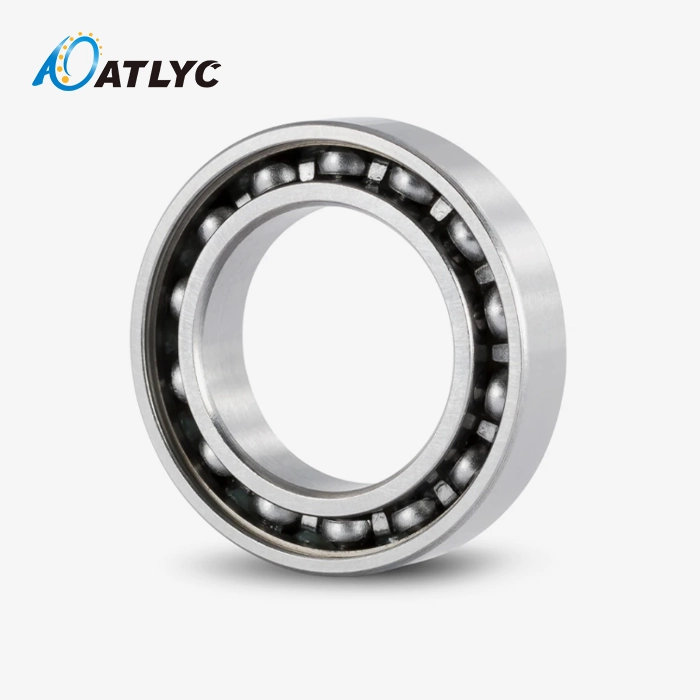
For bearing loads acting in more than one direction at once, cross roller bearings are the way to go. Unlike ball bearings, which distribute loads across smaller surface areas, this design uses perpendicular rollers to make line contact with V-groove raceways. Because of the geometry, a single bearing unit can take the place of two angular contact ball bearing configurations, which lowers the assembly height and simplifies the design of the housing. Manufacturers provide two types of load ratings for bearings: dynamic and static. Dynamic ratings show how much a bearing can handle when rotating continuously, while static ratings show how much it can handle when stationary or slowly oscillating.
Sealed Protection System
The UU designation signals integrated double rubber seals protecting internal components from environmental contaminants. Factory-applied lithium-based grease remains contained within the bearing cavity, maintaining consistent lubrication throughout the service interval. This sealed configuration proves particularly valuable in manufacturing environments where metal chips, coolant mist, and airborne particulates threaten bearing integrity. The sealing effectiveness directly correlates with maintenance intervals and overall equipment reliability.
Comparing RB4010UUCC0 with Other Bearings for Optimal Selection
Making informed bearing selections requires understanding performance differences between available options. Comparative analysis reveals when cross roller designs provide superior value and when alternative bearing types offer better solutions.
Dimensional Alternatives Within the RB Series
The RB series includes various sizes accommodating different shaft diameters and load requirements. Models like the RB4012UUCC0 share similar construction principles but differ in dimensional specifications and load capacities. Comparing adjacent sizes helps engineers optimise component selection when design flexibility exists. Smaller bore diameters reduce shaft sizes and overall assembly weight, while larger bearings handle increased loads at the expense of space and mass.
Cross Roller Bearings Versus Angular Contact Ball Bearings
For combined load applications, the conventional solution is angular contact ball bearings. For proper moment load management, these bearings must be mounted in pairs in predetermined arrangements. Arranging components back-to-back or face-to-face increases rigidity, but it requires careful measurement of spacers and adjustment of preload during installation. Because cross roller designs include multi-directional load handling in a single device, this complication is eliminated. In addition to providing better moment rigidity, the simplified installation reduces assembly time and eliminates possible misalignment problems.
Standard Roller Bearings Comparison
Conventional cylindrical or tapered roller bearings handle high radial loads effectively but require supplementary thrust bearings for axial forces. This necessitates additional housing space and increases part count. The crossed-roller architecture consolidates load management, reducing inventory requirements and simplifying maintenance procedures. However, standard roller bearings may offer cost advantages in pure radial load applications where moment rigidity provides no functional benefit.
Brand Considerations and Quality Assurance
Reliability and high-quality bearings are hallmarks of products made by industry leaders like NSK, NTN, and SKF. These companies put a lot of money into quality assurance systems, precision grinding technologies, and metallurgical research. Consistent performance and extensive technical support allow their goods to command premium pricing. Chinese manufacturers such as ATLYC have honed their competitive capacities by ensuring quality and providing favourable cost-performance ratios through compliance with ISO 9001 and IATF 16949 certifications. Procurement decisions should consider the certification qualifications, production size, and proven performance history instead of only looking at price or brand awareness. To choose the best bearings for your needs, you should consider these comparisons in the context of your unique application. Cross roller bearings are essential for robotics applications that require a high level of precision due to their rigidity and accuracy. Simplified and more cost-effective bearing systems may be sufficient for less demanding applications.
Installation and Maintenance Best Practices for RB4010UUCC0
Proper installation and maintenance procedures protect bearing investment and ensure reliable equipment operation. Technical buyers and maintenance teams benefit from understanding critical procedures that prevent premature failures.
Preparation and Handling Protocols
Before installation begins, verify housing and shaft dimensions against bearing specifications. Bore and shaft tolerances typically follow h7/H7 standards to achieve proper interference fits without excessive stress. Clean all mating surfaces thoroughly, removing protective coatings, debris, and contamination that compromise fit integrity. Handle bearings with lint-free gloves to prevent corrosion from skin oils and moisture. Store components in controlled environments maintaining stable temperature and humidity until installation proceeds.
Installation Procedure and Alignment
Mounting in tight quarters is easy with the split outer ring design, but be careful not to damage it in the process. Distributed pressure on the outer ring face will help position the bearing assembly into the housing bore. Specialised press plates distribute installation forces evenly, avoiding damage to raceways caused by localised stress concentrations. When you press on the outer ring, never exert installation force through the rolling elements or the inner ring. Interference fits on bigger installations are made easier with the use of heating techniques or hydraulic tools during shaft mounting, which otherwise follows the same procedure. Operational problems that hasten wear can be avoided via alignment checking. To prevent edge loading on the raceways, it is necessary to keep the shaft and housing bores within certain tolerances for their concentricity. To identify alignment issues before full assembly starts, dial indicators detect runout during trial rotation. Catching errors early saves money over time by avoiding expensive rework after equipment commissioning.
Lubrication Strategy and Reapplication
The sealed bearing configuration arrives pre-lubricated with lithium-based grease suitable for typical operating conditions. Service life depends on maintaining adequate lubrication under actual operating temperatures and contamination exposure. Heavy-duty applications may require supplemental lubrication via ports machined into the outer ring. Recommended relubrication intervals range from six to twelve months depending on duty cycle severity, operating temperatures, and environmental conditions. Grease selection should match manufacturer specifications regarding consistency, base oil type, and extreme pressure additives.
Performance Monitoring and Troubleshooting
Proactive monitoring detects developing problems before catastrophic failures occur. Vibration analysis identifies increasing signature frequencies indicating wear progression or lubrication degradation. Temperature monitoring reveals abnormal friction levels suggesting insufficient lubrication or excessive preload. Periodic inspection during scheduled maintenance intervals allows visual assessment of seal condition and grease appearance. Discoloured or contaminated lubricant signals the need for immediate attention. These maintenance practices extend bearing service life and prevent unplanned downtime that disrupts production schedules. Documentation of inspection findings and maintenance activities supports predictive maintenance programmes and guides replacement planning.
Applications and Industry Use Cases of RB4010UUCC0 Bearings
The versatility of crossed-roller bearing designs serves diverse industrial sectors where precision and reliability determine competitive success. Understanding typical applications helps procurement professionals to recognise opportunities for performance improvement.
Industrial Robotics and Automation
Robotic manipulators depend on cross roller bearings in joint assemblies throughout their kinematic chains. Elbow and wrist joints experience complex loading from payload mass, inertial forces during rapid acceleration, and gravitational moments varying with arm position. The bearing's ability to manage these combined loads within compact joint housings enables lighter, more efficient robot designs. Zero backlash performance from the CC0 preload configuration ensures positional repeatability critical for precision assembly operations and welding applications. Manufacturers implementing automated production lines report measurable productivity improvements after retrofitting equipment with precision cross roller bearings. Cycle time reductions stem from faster acceleration rates enabled by increased joint stiffness. Defect rates decline when positioning accuracy improves, reducing scrap and rework costs.
Machine Tool Rotary Tables
Machining centres utilise rotary indexing tables positioning workpieces at precise angular orientations. The table must support workpiece mass while resisting cutting forces that generate substantial moments about the table axis. Cross roller bearing selection directly affects the accuracy of machined parts by minimising table deflection during cutting operations. The bearing's stiffness maintains positional accuracy as cutting loads vary, preventing dimensional errors in finished components.
Medical Imaging Equipment
CT scanners rotate heavy X-ray sources and detector arrays around patients during diagnostic procedures. Smooth, vibration-free rotation prevents image artefacts that compromise diagnostic quality. The low-friction characteristics of properly lubricated cross roller bearings enable consistent rotation speeds while minimising motor power requirements. Quiet operation improves patient comfort during lengthy scanning procedures.
Semiconductor Manufacturing Systems
Wafer handling robots and positioning stages in cleanroom environments require exceptional precision without contamination risk. The sealed bearing configuration prevents lubricant migration that would contaminate silicon wafers. Submicron positioning accuracy enables the lithography processes creating integrated circuit patterns. Bearing reliability directly impacts manufacturing yield, as unplanned equipment failures halt expensive production lines.
These application examples demonstrate how proper bearing selection supports diverse performance objectives across multiple industries. Procurement professionals should evaluate their specific operational requirements against these use case scenarios to identify opportunities for equipment optimisation.
Procurement Guide: How to Buy the Right RB4010UUCC0 Bearing for Your Business?
Strategic sourcing of precision bearings requires evaluating supplier capabilities beyond price quotations. Long-term supply reliability and technical support determine total cost of ownership.
Supplier Qualification and Verification
Identifying legitimate suppliers mitigates counterfeit risks that plague global bearing markets. Verified manufacturers maintain quality certifications, including ISO 9001 for quality management systems and IATF 16949 specifically addressing automotive sector requirements. Request certification documentation and verify authenticity through issuing body databases. Established manufacturers demonstrate production scale through facility capacity, employee count, and capital equipment investment.
Site visits or virtual factory tours reveal manufacturing capabilities and quality control processes. Observing grinding equipment, heat treatment facilities, and dimensional inspection systems provides confidence in consistent product quality. Companies operating multiple production workshops with specialised capabilities typically offer greater supply stability than smaller operations.
Pricing Analysis and Cost Factors
Bearing prices reflect material costs, manufacturing precision, certification compliance, and supplier positioning. Unusually low quotations often indicate substandard materials, inadequate quality control, or counterfeit products. Evaluate pricing relative to certified manufacturers' published lists rather than accepting the lowest bids without quality verification. Volume purchase agreements typically yield favourable pricing while ensuring supply continuity for ongoing production requirements.
Lead time considerations affect inventory planning and project scheduling. Standard catalogue items ship within days, while custom specifications require extended manufacturing cycles. Establishing relationships with suppliers and maintaining inventory positions near major markets reduces emergency procurement costs.
Technical Support and Engineering Collaboration
Suppliers offering application engineering assistance provide value beyond product delivery. Technical teams help specify appropriate bearing configurations, troubleshoot installation challenges, and optimise maintenance procedures. This support proves particularly valuable when adapting bearing solutions to new applications or resolving field performance issues.
Warranty and After-Sales Service
Comprehensive warranty coverage protecting against manufacturing defects demonstrates supplier confidence in product quality. Understand warranty terms, claim procedures, and response timeframes before purchase commitments. After-sales support, including replacement part availability and technical consultation, maintains equipment operation throughout bearing service life.
ATLYC exemplifies the supplier qualities supporting successful long-term partnerships. Over fifteen years of manufacturing experience across six specialised workshops demonstrate production scale and technical capabilities. ISO 9001 and IATF 16949 certifications verify compliance with the quality management system and meet international standards. Serving customers across South Korea, the United States, Germany, Russia, Iran, and Turkey confirms capability to support global operations with consistent quality and reliable logistics.
Procurement professionals seeking RB4010UUCC0 cross roller bearing suppliers should evaluate these comprehensive capability factors. The relationship between buyer and supplier extends beyond individual transactions to strategic partnerships supporting equipment reliability and business success.

Conclusion
Selecting the appropriate cross roller bearing requires balancing technical specifications against application demands and supplier capabilities. The RB4010UUCC0 Cross roller bearing delivers exceptional performance in compact spaces through its integrated design, handling multi-directional loads simultaneously. Understanding dimensional parameters, accuracy grades, and load capacities enables the proper specification matching of equipment requirements. Comparative analysis against alternative bearing types reveals when cross roller designs provide superior value. Installation and maintenance best practices protect bearing investment and prevent premature failures. Diverse industry applications demonstrate the component's versatility across robotics, machine tools, medical equipment, and semiconductor manufacturing. Strategic procurement emphasises supplier certification, technical support, and long-term reliability over purchase price alone. These comprehensive selection criteria guide purchasing decisions supporting operational excellence and competitive advantage.
FAQ
What advantages does the RB4010UUCC0 offer over traditional ball bearings?
Cross roller configurations provide significantly higher rigidity and load capacity within comparable envelope dimensions. The cylindrical rollers create line contact with raceways versus point contact in ball bearings, distributing forces across larger surface areas. This geometry enables single bearings to replace dual ball bearing arrangements, reducing assembly complexity and space requirements while improving moment load resistance.
How can buyers verify authentic RB4010UUCC0 bearings from reliable sources?
Request quality certification documents, including ISO 9001 and IATF 16949 credentials from potential suppliers. Verify manufacturing facility capabilities through site visits or detailed virtual tours. Examine product samples for proper markings, consistent dimensional accuracy, and appropriate surface finishes. Establish relationships with manufacturers maintainimanufacturers,t production processes and comprehensive technical documentation.
What maintenance intervals apply to sealed cross roller bearings?
Pre-lubricated sealed bearings typically operate six to twelve months before relubrication becomes necessary. Actual intervals depend on operating temperatures, duty cycle severity, and environmental contamination exposure. Monitor bearing temperature and vibration signatures to detect developing lubrication issues. Heavy-duty applications may require more frequent grease supplementation through designated lubrication ports.
Partner with ATLYC for Reliable Cross Roller Bearing Solutions
ATLYC brings fifteen years of specialised bearing manufacturing experience to support your precision component requirements. Our ISO 9001 and IATF 16949 certified facilities produce high-quality cross roller bearings meeting international standards for dimensional accuracy and material integrity. With 120 dedicated employees operating six specialised production workshops, we maintain a consistent supply capacity that supports ongoing equipment demands. Our engineering team provides technical consultation, helping you select optimal bearing configurations for specific applications. Contact our procurement specialists at auto@lyautobearing.com to discuss your RB4010UUCC0 cross roller bearing needs. Whether you require standard catalogue items or custom specifications, ATLYC delivers dependable solutions as your trusted bearing manufacturer.
References
1. Harris, T.A. and Kotzalas, M.N. (2006). "Advanced Concepts of Bearing Technology: Rolling Bearing Analysis, Fifth Edition." CRC Press, Taylor & Francis Group.
2. Hamrock, B.J., Schmid, S.R., and Jacobson, B.O. (2004). "Fundamentals of Fluid Film Lubrication, Second Edition." Marcel Dekker, Inc.
3. ISO 492:2014. "Rolling bearings – Radial bearings – Geometrical product specifications (GPS) and tolerance values." International Organisation for Standardisation.
4. Eschmann, P., Hasbargen, L., and Weigand, K. (1985). "Ball and Roller Bearings: Theory, Design and Application, Second Edition." John Wiley & Sons.
5. Neurouth, A. and Meyruey, G. (2012). "Crossed Roller Bearings in Industrial Robotics: Performance Analysis and Application Guidelines." Journal of Mechanical Engineering Science, Vol. 226, Issue 8.
6. IATF 16949:2016. "Quality management system requirements for automotive production and relevant service parts organizations." International Automotive Task Force.
Learn about our latest products and discounts through SMS or email
_1772782093670.webp)