- English
- French
- German
- Portuguese
- Spanish
- Russian
- Japanese
- Korean
- Arabic
- Greek
- German
- Turkish
- Italian
- Danish
- Romanian
- Indonesian
- Czech
- Afrikaans
- Swedish
- Polish
- Basque
- Catalan
- Esperanto
- Hindi
- Lao
- Albanian
- Amharic
- Armenian
- Azerbaijani
- Belarusian
- Bengali
- Bosnian
- Bulgarian
- Cebuano
- Chichewa
- Corsican
- Croatian
- Dutch
- Estonian
- Filipino
- Finnish
- Frisian
- Galician
- Georgian
- Gujarati
- Haitian
- Hausa
- Hawaiian
- Hebrew
- Hmong
- Hungarian
- Icelandic
- Igbo
- Javanese
- Kannada
- Kazakh
- Khmer
- Kurdish
- Kyrgyz
- Latin
- Latvian
- Lithuanian
- Luxembou..
- Macedonian
- Malagasy
- Malay
- Malayalam
- Maltese
- Maori
- Marathi
- Mongolian
- Burmese
- Nepali
- Norwegian
- Pashto
- Persian
- Punjabi
- Serbian
- Sesotho
- Sinhala
- Slovak
- Slovenian
- Somali
- Samoan
- Scots Gaelic
- Shona
- Sindhi
- Sundanese
- Swahili
- Tajik
- Tamil
- Telugu
- Thai
- Ukrainian
- Urdu
- Uzbek
- Vietnamese
- Welsh
- Xhosa
- Yiddish
- Yoruba
- Zulu
How to Select the Right Tapered Roller Bearing 30 Series Model?
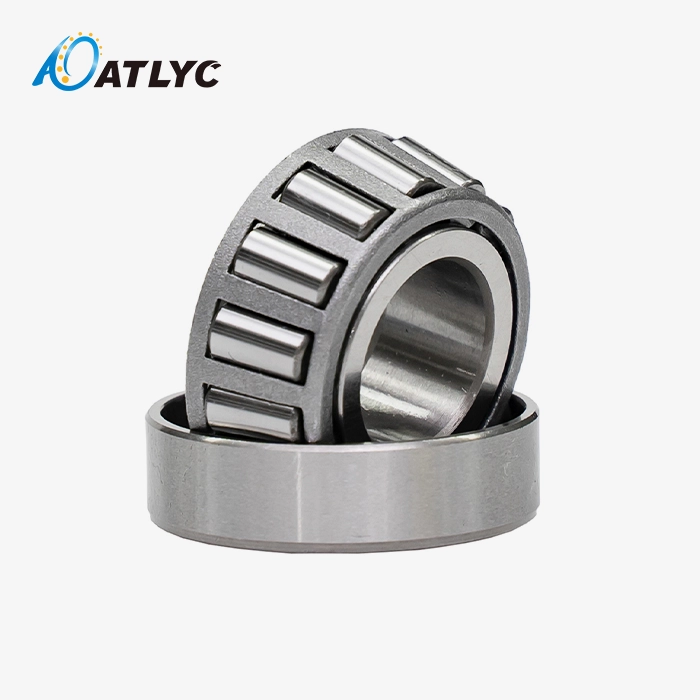
To choose the correct Tapered Roller Bearing 30 series, you need to carefully consider the load needs, the fit of the dimensions, and the working conditions. These metric single-row bearings can handle radial and axial loads going in one direction through contact angles of 10° to 30°. This makes them perfect for medium to light-load uses in car hubs, reducers, and machine tool spindles. It's important to make sure that your operational parameters, like bore size, load capacity, and precision grade, meet the standards set by ISO 355 and DIN 720. Knowing the types of materials used, how the cages are set up, and how the bearings will be mounted will help you choose bearings that will work well and last a long time in harsh industrial settings.

Understanding the Key Dimensions and Specifications of Tapered Roller Bearing 30 Series
Accurate bearing selection begins with dimensional analysis. The 30 series offers extensive sizing flexibility, accommodating applications from compact automotive components to robust industrial gearboxes.
Critical Dimensional Parameters
When looking through technical catalogues, three main measures show if two bearings are compatible. Bore diameters range from 10mm to 500mm, which covers a wide range of shaft sizes for different types of tools. The outer diameters range from 26 mm to 1000 mm, which lets them fit into a variety of housing designs. Widths between 8 mm and 200 mm make up for limited space while still keeping the strength of the structure. We make these bearings with very close specs so that they can be put together without any problems. Each dimension has a direct effect on how the load is distributed and how stable the process is. To avoid premature wear, engineers should use ISO tolerance standards to make sure that the shaft and case fit together correctly. We keep precision-ground raceways at our Luoyang facility that meet P0, P6, and P5 accuracy classes. This makes sure that all output batches are the same size.
Material Composition and Heat Treatment
The strength of tapered roller bearings relies on the material used and how it is heated. Both the inner and outer rings are made of GCr15 bearing steel, which is known for being very hard and resistant to wear. Roller parts are made of GCr15SiMn or 20Cr2Ni4A alloys, which can hold more weight thanks to special heat treatment methods. Our heat treatment method makes sure that the hardness is the same on all contact surfaces, which increases the product's useful life when it is loaded and unloaded many times. The tapered raceway shape makes sure that all contact points line up on the same axis, which gets rid of stress concentrations at the edges. This engineering method works better than cylindrical roller options in situations where both radial and thrust loads need to be managed at the same time.
Comparing Tapered Roller Bearing 30 Series With Alternative Bearing Types and Models
Understanding performance differences between bearing types helps procurement Tapered Roller Bearing 30 series professionals make informed decisions. The 30 series occupies a specific niche within the broader tapered roller bearing family, offering distinct advantages over competing designs.
30 Series Versus 32000 and 30K Series
The 30 series stands out because it has the best contact angle shape for medium-load situations. The 32000 series can handle heavier loads because its cross-sections are bigger, but the 30 series is smaller and better for installations with limited room. The 30K line has metric tapered designs, but the internal clearance requirements and cage reinforcement are different. Which of these variants to use varies depending on the size of the load and the speed needs. The 30 series is usually better for automotive wheel bearings because it can handle both horizontal and axial loads equally well. Agricultural machinery gearboxes that are subject to shock loads may need the stronger frame of 32000 models. We walk customers through a comparative load rating study to help them find the best series for their duty cycles.
Performance Benchmarks Against Ball and Cylindrical Roller Bearings
When deep groove ball bearings aren't strong enough to handle the load, tapered roller bearings are the best choice. The conical shape spreads loads over longer contact lines, which makes the load ratings 30–40% higher than with ball bearings that have the same envelope measurements. When the right cleaning methods are used, noise levels stay about the same as with high-quality ball bearings. Cylindrical roller bearings can handle higher radial loads, but they need extra thrust bearings to handle axial forces. The 30 series combines both tasks into a single unit, which cuts down on the number of parts needed and the difficulty of installation. The type of bearing doesn't affect how resistant it is to heat; instead, the type of lubrication does. The separable design makes it easier to examine and re-lubricate during maintenance periods. With regular greases, operating temperatures are usually between -40°C and 120°C. With synthetic lubricants, they can go up to 150°C.
Practical Guide on Selecting the Right 30 Series Bearing Based on Application Needs
Effective bearing selection matches operational demands with product specifications. A systematic evaluation process minimises downtime risks and optimises the total cost of ownership.
Load Calculation and Speed Limitations
First, figure out the real horizontal and axial loads that are acting on the bearing position. The 30 series can handle mixed loads thanks to its contact angle, which is usually between 10° and 30°. Larger contact angles allow for bigger thrust components, but they slow down the fastest rotating speeds. For each model number, engineers should look at load rating charts that show the dynamic load capacity (C) and steady load capacity (C0). Limits on speed depend on the size of the bearings, how they are oiled, and the temperature at which they are used. Higher rotational speeds are possible with smaller bore sizes, but grease-lubricated assemblies are usually limited to 60–70% of oil-lubricated speed rates. We offer technical help to check that the calculations for bearing life are correct using ISO 281 methods. This is done to make sure that the models you choose meet or exceed the minimum L10 life requirements for your application duty cycle.
Environmental Condition Assessment
The operating setting has a big effect on how long bearings last. Extreme temperatures change the density of lubricants and the rate at which materials expand. If you don't use the right sealing methods, contamination from dust, water, or chemicals will speed up wear. When figuring out a load number, you need to add more safety factors for shock loads caused by impacts or vibrations. The 30 series comes with an open-type standard design that lets dust covers or seals be added during assembly. Contact seals or non-contact labyrinth designs that keep lubricant in while keeping out contaminants are useful in harsh settings. Our engineering team helps choose the right seals based on speed factors and the amount of exposure to the environment. Keeping Tapered Roller Bearing 30 series an eye on the temperature during testing helps find problems with thermal management before they damage the bearings.
Procurement Considerations for Bulk Buyers and OEMs
Strategic procurement extends beyond unit price negotiations. Long-term supply relationships depend on manufacturer capability, logistical reliability, and technical support infrastructure.
Supplier Certification and Quality Assurance
Verify potential suppliers maintain current ISO 9001 quality management certification and IATF 16949 automotive quality systems registration. These frameworks ensure documented process controls, traceability systems, and continuous improvement methodologies. Request certification documents and audit reports demonstrating compliance with international standards. Our dual certification demonstrates a commitment to quality across both industrial and automotive markets. We implement statistical process control at critical manufacturing stages, monitoring dimensional tolerances and material hardness in real-time. Each production batch undergoes noise testing, rotational torque measurement, and visual inspection before packaging. This multi-layer quality assurance delivers the low defect rates essential for automated assembly lines and high-volume production environments.
Pricing Structures and Volume Discounts
Tapered roller bearing pricing reflects material costs, manufacturing complexity, and precision grades. P0 standard precision bearings suit general industrial applications at competitive price points. P6 and P5 high-precision classes command premiums justified by tighter tolerances and enhanced performance characteristics. Volume commitments enable manufacturers to optimise production scheduling, translating into cost savings passed to customers through tiered pricing structures. We work with bulk buyers and bearing distributors to develop customised pricing agreements aligned with forecasted consumption patterns. Minimum order quantities vary by model designation, with standard configurations available in smaller lot sizes than specialised variants. Payment terms accommodate letters of credit, telegraphic transfers, and established credit lines for qualified customers. Transparent pricing eliminates hidden costs, supporting accurate total cost analysis during supplier selection.
Logistics and Delivery Reliability
Consistent supply chain performance prevents production disruptions. Lead times depend on order quantities, precision requirements, and customisation specifications. Standard catalogue items ship within two weeks of order confirmation, while engineered-to-order products require extended manufacturing schedules. We maintain safety stock for high-volume models, enabling rapid response to urgent replacement needs. Packaging standards protect bearing surfaces during international shipping. Individual bearings receive corrosion-preventive coatings and moisture-barrier wrapping. Outer cartons feature impact-resistant construction with orientation markings to ensure proper handling. Consolidated shipments utilise wooden crates or steel-banded pallets meeting ISPM 15 international phytosanitary standards. Our logistics team coordinates ocean freight, air express, and truck transport options to balance cost considerations against delivery urgency.
Maintenance Tips and Long-Term Optimisation of Tapered Roller Bearing 30 Series
Proactive maintenance maximises bearing life and prevents unexpected equipment failures. Systematic inspection routines identify degradation before catastrophic damage occurs.
Lubrication Best Practices
Proper lubrication forms the foundation of bearing longevity. Grease-lubricated assemblies, Tapered Roller Bearing 30 series, require periodic replenishment based on operating speed, temperature, and contamination exposure. Over-greasing causes excessive churning and temperature rise, while insufficient lubricant leads to metal-to-metal contact. Fill housings to 30-50% of free volume, avoiding complete packing that restricts roller movement. Oil lubrication systems enable continuous filtration and cooling but require sealed housings and circulation pumps. Synthetic oils extend relubrication intervals and operate across wider temperature ranges compared to mineral-based products. Monitor lubricant condition through periodic sampling, checking for metallic particles, viscosity degradation, and water contamination. Contaminated lubricant accelerates wear exponentially compared to clean lubricant, making filtration investments cost-effective over equipment lifecycles.
Failure Mode Recognition and Prevention
Common failure modes include fatigue spalling, corrosion pitting, and false brinelling from fretting wear. Fatigue failures manifest as subsurface cracks progressing to surface flaking after bearing life is exhausted. Corrosion results from moisture ingress or acidic contamination breaking down protective lubricant films. False brinelling appears as wear depressions at roller positions during stationary periods with vibration exposure. Preventative measures address root causes rather than symptoms. Shaft and housing fits must comply with tolerance recommendations to avoid excessive preload or inadequate clamping. Misalignment beyond 0.001 radians (approximately 0.06 degrees) concentrates loads on raceway edges, drastically reducing service life. We recommend dial indicator verification during installation to confirm perpendicularity between the shaft and housing axes. Vibration isolation reduces false brinelling in equipment subject to external vibration sources during shutdown periods.
Condition Monitoring Technologies
Advanced monitoring systems detect bearing degradation through vibration signature analysis. Accelerometers mounted near bearing locations track frequency spectra, identifying characteristic defect patterns associated with raceway spalling, roller damage, or cage wear. Temperature sensors provide early warning of lubrication breakdown or preload deviation. Trending these parameters over time reveals gradual deterioration, enabling planned maintenance before functional failure. Portable vibration analysers enable periodic surveys across multiple bearing locations without permanent instrumentation investments. Critical equipment justifies continuous monitoring with automated alarm notification. Integration with computerised maintenance management systems documents bearing performance history, supporting data-driven replacement decisions. We assist customers in establishing baseline vibration signatures for newly installed bearings, providing reference standards for comparative analysis during subsequent inspections.
Conclusion
Selecting the optimal Tapered Roller Bearing 30 series model requires a systematic evaluation of dimensional requirements, load conditions, environmental factors, and supplier capabilities. These versatile bearings deliver reliable performance across automotive, industrial machinery, and agricultural equipment applications when properly specified and maintained. Understanding material properties, precision grades, and cage configurations enables engineers to match product specifications with operational demands. Procurement professionals benefit from supplier partnerships demonstrating quality certifications, manufacturing scale, and technical support infrastructure. Proactive maintenance practices—including proper lubrication, condition monitoring, and timely replacement—maximise service life and minimise downtime costs.

FAQ
1. What distinguishes the 30 series from other tapered roller bearing designs?
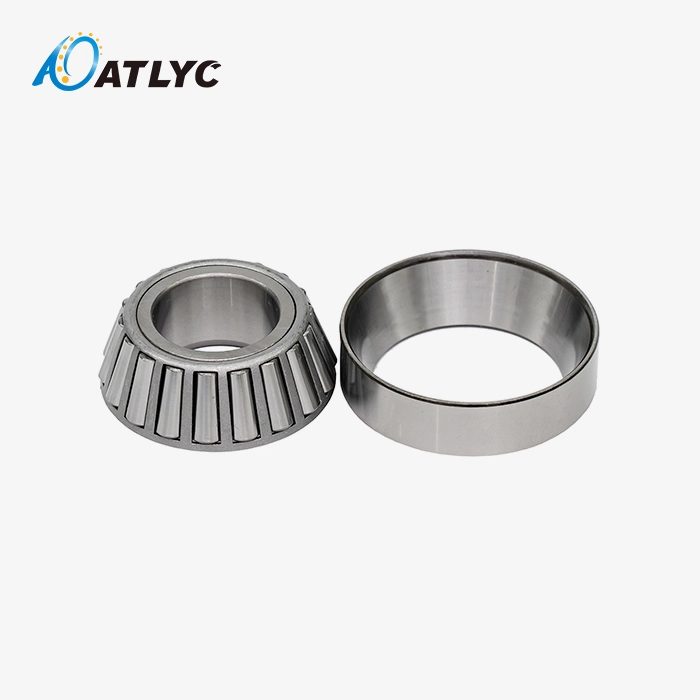
The 30 series features contact angles between 10° and 30°, optimised for medium to light combined loads in compact installations. The separable cup and cone design simplifies mounting and enables precise clearance adjustment. Bore sizes from 10mm to 500mm accommodate diverse shaft dimensions across automotive and industrial applications. Standard precision grades (P0, P6, P5) meet varied accuracy requirements without custom manufacturing. This combination of dimensional flexibility, load capacity, and assembly convenience makes the series suitable for high-volume OEM production and aftermarket replacement scenarios.
2. How do I calculate the required bearing size for my application?
Calculate actual radial and axial loads at the bearing location, accounting for weight, operational forces, and shock factors. Consult the manufacturer's load rating tables listing dynamic capacity (C) and static capacity (C0) for each model. Compute required bearing life using ISO 281 equations incorporating load, speed, and reliability factors. Select a model with adequate capacity and verify dimensional compatibility with the shaft and housing. Our technical team provides calculation support and reviews customer specifications to confirm appropriate bearing selection before order placement.
3. What maintenance intervals maximise bearing service life?
Maintenance frequency depends on operating conditions rather than fixed time schedules. Inspect bearings quarterly in clean, moderate-temperature environments. Increase inspection frequency to monthly intervals in harsh conditions with contamination exposure or temperature extremes. Relubricate grease-packed bearings when analysis indicates degradation or at intervals recommended by lubricant manufacturers. Monitor vibration and temperature trends to detect degradation between scheduled inspections. Replace bearings approaching calculated L10 life or exhibiting abnormal noise, temperature, or vibration characteristics. Preventative replacement avoids collateral damage to shafts and housings caused by bearing failures.
Partner With ATLYC for Reliable Tapered Roller Bearing 30 Series Supply
Luoyang Auto Bearing Co., Ltd. (ATLYC) delivers precision-engineered metric Tapered Roller Bearing 30 series tapered roller bearings backed by 15 years of manufacturing excellence. Our ISO 9001 and IATF 16949 certified facilities produce the 30 series with qualification rates exceeding 99.9%, ensuring consistent quality for automotive OEMs, industrial equipment manufacturers, and global distributors. We maintain competitive pricing structures for bulk orders while meeting demanding delivery schedules that keep your production lines running. Contact our team at auto@lyautobearing.com to discuss your Tapered Roller Bearing 30 series requirements. Whether you need standard catalogue models or customised solutions, we provide technical support, quality documentation, and logistics coordination that simplify international procurement for customers across the United States and beyond.
References
1. Harris, T.A. & Kotzalas, M.N. (2006). "Rolling Bearing Analysis: Essential Concepts of Bearing Technology." CRC Press, Fifth Edition.
2. ISO 355:2007. "Rolling bearings - Tapered roller bearings - Boundary dimensions and series designations." International Organisation for Standardisation.
3. Eschmann, P., Hasbargen, L., & Weigand, K. (1985). "Ball and Roller Bearings: Theory, Design and Application." John Wiley & Sons, Second Edition.
4. SKF Group. (2018). "Rolling Bearings Catalogue: Technical Reference Manual for Engineers and Procurement Professionals." SKF Motion Technologies AB.
5. Tallian, T.E. (1992). "Simplified Contact Fatigue Life Prediction Model - Part I: Review of Published Models." Journal of Tribology, Transactions of the ASME, Volume 114.
6. Timken Company. (2020). "Tapered Roller Bearing Catalogue: Engineering and Mounting Guide for Industrial Applications." The Timken Corporation Technical Services.
Learn about our latest products and discounts through SMS or email