- English
- French
- German
- Portuguese
- Spanish
- Russian
- Japanese
- Korean
- Arabic
- Greek
- German
- Turkish
- Italian
- Danish
- Romanian
- Indonesian
- Czech
- Afrikaans
- Swedish
- Polish
- Basque
- Catalan
- Esperanto
- Hindi
- Lao
- Albanian
- Amharic
- Armenian
- Azerbaijani
- Belarusian
- Bengali
- Bosnian
- Bulgarian
- Cebuano
- Chichewa
- Corsican
- Croatian
- Dutch
- Estonian
- Filipino
- Finnish
- Frisian
- Galician
- Georgian
- Gujarati
- Haitian
- Hausa
- Hawaiian
- Hebrew
- Hmong
- Hungarian
- Icelandic
- Igbo
- Javanese
- Kannada
- Kazakh
- Khmer
- Kurdish
- Kyrgyz
- Latin
- Latvian
- Lithuanian
- Luxembou..
- Macedonian
- Malagasy
- Malay
- Malayalam
- Maltese
- Maori
- Marathi
- Mongolian
- Burmese
- Nepali
- Norwegian
- Pashto
- Persian
- Punjabi
- Serbian
- Sesotho
- Sinhala
- Slovak
- Slovenian
- Somali
- Samoan
- Scots Gaelic
- Shona
- Sindhi
- Sundanese
- Swahili
- Tajik
- Tamil
- Telugu
- Thai
- Ukrainian
- Urdu
- Uzbek
- Vietnamese
- Welsh
- Xhosa
- Yiddish
- Yoruba
- Zulu
Is RA5008UUCC0 Cross Roller Bearing Suitable for CNC Machines?
The RA5008UUCC0 cross roller bearing works great with CNC machines because it is very precise and can handle loads going in multiple directions. This very thin bearing supports radial, axial, and moment loads at the same time within an 8mm shape. This makes it perfect for use in precision machining centers and rotary tables. Its form of an outer ring that can be separated, making installation easier while still meeting the rigidity needs of CNC operations. When you meet the CC0 clearance standard, there is no internal play. This makes sure that the rotation is accurate enough for micron-level machining tolerances. Along with the right installation and upkeep steps, this bearing makes CNC machines work much better.

Understanding RA5008UUCC0 Cross Roller Bearing Specifications and Structure
The engineering behind precision bearings determines their effectiveness in demanding industrial environments. CNC machines require components that can maintain accuracy under continuous operation while handling complex load scenarios. Understanding the technical foundation of bearing selection helps procurement teams make decisions that impact long-term operational efficiency.
Dimensional Specifications and Design Architecture
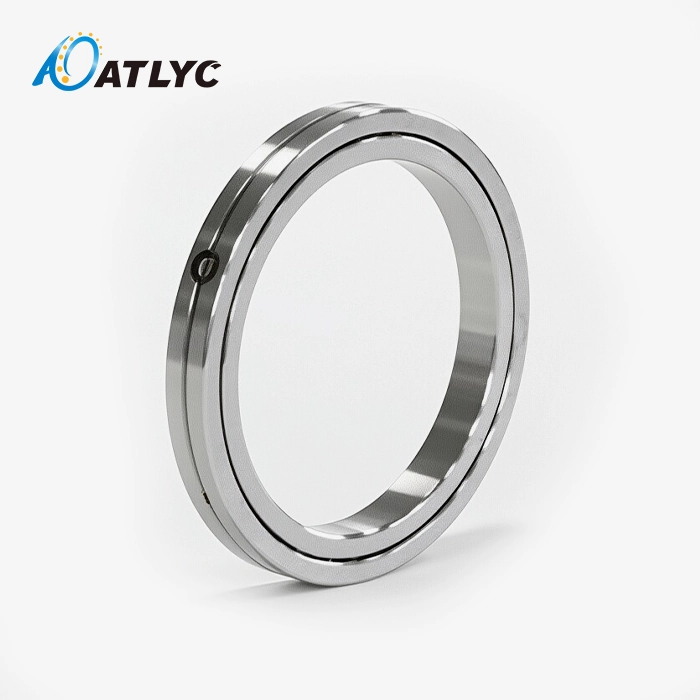
The RA5008UUCC0 has an inner diameter of 50 mm, an outer diameter of 66 mm, and an incredibly small width of 8 mm. This very thin profile is an example of advanced engineering used in limited room situations. The design with a separate outer ring and an integrally rotating inner ring makes the part very sturdy while also reducing the amount of space needed. This arrangement lets machine designers lower the overall size of the equipment without affecting its structural integrity. The bearing's cylinder-shaped rollers are spaced out 90° apart and placed orthogonally on precise V-groove raceways. This makes a 45° contact angle that spreads loads evenly in all directions.
Material Composition and Manufacturing Quality
The RA5008UUCC0 is made from Gcr15 and Gcr15SiMn bearing steel, which gives it the hardness and wear resistance needed for a long working life. Specialised heat treatments are used on these materials to make the surfaces harder than 58–62 HRC while keeping the cores tough. The choice of material has a direct effect on how long the bearing will last under the repeated loading conditions that are common in CNC machining. Over the past 15 years of production at Luoyang Auto Bearing, we've improved our heat treatment methods. This makes sure that the dimensions stay stable even when the temperature changes.
Comparing RA5008UUCC0 with Alternative Bearing Types for CNC Machines
Selecting optimal bearing solutions requires understanding the performance differences between available technologies. Each bearing type offers distinct advantages depending on load characteristics, speed requirements, and environmental conditions. Engineering teams benefit from comprehensive comparisons that clarify these distinctions.
RA5008UUCC0 Versus RA5007UUCC0: Dimensional Analysis
The RA5007UUCC0 shares the same 7mm width limitation but features different RA5008UUCC0 cross roller bearing diameter specifications. While both bearings utilize identical cross roller technology, the dimensional variations affect load capacity and mounting flexibility. The RA5008UUCC0's larger diameter provides approximately 15-20% greater moment load capacity, making it preferable for rotary tables handling heavier workpieces. Procurement teams should evaluate actual load requirements rather than defaulting to smaller models for cost savings. Under-specifying bearing capacity leads to premature failure and unplanned downtime that far exceeds initial component cost differences.
Cross Roller Bearings Versus Conventional Ball Bearings
Traditional deep groove ball bearings excel in high-speed applications but struggle with moment loads. A single cross roller bearing replaces angular contact bearing pairs that would otherwise be required for comparable load handling. This consolidation reduces assembly complexity, eliminates preload adjustment requirements, and minimizes axial space consumption. Ball bearings generate lower friction at high speeds, yet CNC rotary tables prioritize positioning accuracy over rotational velocity. The contact mechanics of cross roller bearings distribute loads across line contact rather than point contact, dramatically increasing system rigidity.
Procurement Considerations for RA5008UUCC0 Cross Roller Bearings
Strategic sourcing of precision components requires understanding market dynamics and supplier capabilities. CNC machine manufacturers and OEMs face increasing pressure to balance quality requirements against competitive pricing pressures. Effective procurement strategies address these competing demands through comprehensive supplier evaluation.
Pricing Dynamics and Order Quantity Strategies
Cross roller bearing pricing varies significantly based on order volumes, delivery schedules, and customization requirements. Bulk purchases typically yield 15-30% cost reductions compared to small lot orders. Our facility maintains production capacity across six workshops, enabling flexible volume commitments that align with customer demand patterns. Establishing strategic partnerships with manufacturers who demonstrate scalable production capabilities ensures supply security during market fluctuations. We've served clients in South Korea, the United States, Germany, Russia, Iran, and Turkey, maintaining consistent delivery performance regardless of order size.
Supplier Authentication and Quality Verification
Sourcing genuine precision bearings requires verification of manufacturing credentials and quality management systems. Authorized manufacturers maintain traceability documentation linking each bearing to specific production batches and inspection records. ISO 9001 and IATF 16949 certifications provide independent validation of process control capabilities. Procurement managers should request material certificates, dimensional inspection reports, and performance test data before committing to new suppliers. Our quality management system tracks every production stage from raw material receiving through final assembly, ensuring complete documentation for customer audits.
Installation, Maintenance, and Troubleshooting for RA5008UUCC0 Bearings in CNC Machines
Maximizing bearing performance requires proper installation procedures and preventive maintenance protocols. Even the highest-quality precision bearings underperform when improperly mounted or inadequately lubricated. Engineering teams benefit from structured guidance addressing common installation challenges.
Precision Installation Procedures
The separable outer ring design simplifies bearing installation compared to integrated assemblies. Clean all mounting surfaces thoroughly to remove contaminants that could compromise fitment accuracy. Apply the outer ring first, ensuring uniform seating against mounting shoulders. Position the inner ring with integrated roller assembly, verifying proper alignment before torque application. Tightening bolts to specified torque values ensures a consistent clamping force around the outer ring circumference. Uneven clamping induces distortion that manifests as vibration in the RA5008UUCC0 cross roller bearing and accelerated wear during operation.
Lubrication Requirements and Maintenance Intervals
The dual rubber seals of the RA5008UUCC0 retain factory-applied lubrication throughout extended service intervals. Sealed bearings simplify maintenance compared to open designs requiring periodic relubrication. Monitor seal condition during routine machine inspections, watching for lubricant weepage indicating seal degradation. Operating temperatures should remain below 80°C to preserve seal elastomer properties and lubricant viscosity. Our bearings utilize lithium-based greases formulated for precision bearing applications, providing stable lubrication across typical CNC operating temperature ranges.
Diagnostic Approaches for Common Issues
Unusual vibration patterns often indicate bearing wear or mounting problems requiring investigation. Gradual vibration increases suggest progressive wear, while sudden changes point to acute failures like seal damage or roller fracture. Temperature monitoring provides early warning of lubrication breakdown or excessive preload conditions. Noise characteristics help differentiate between different failure modes—grinding sounds indicate contamination, while clicking suggests roller damage. Address any performance anomalies immediately, as continued operation accelerates secondary damage to adjacent components. These diagnostic capabilities become particularly valuable for maintenance teams managing multiple CNC machines across production facilities. Establishing baseline performance measurements during commissioning enables meaningful comparison as equipment accumulates operating hours. We provide technical support, helping customers develop preventive maintenance schedules tailored to specific application conditions and production demands.
Real-World Applications and Case Studies of RA5008UUCC0 in CNC Machines
Theoretical performance specifications gain meaning through documented field applications. Understanding how precision bearings perform within actual production environments helps procurement teams evaluate claimed benefits against operational realities. Our customer partnerships across multiple industries provide extensive application data.
CNC Machining Center Rotary Table Applications
A German automotive component manufacturer integrated the RA5008UUCC0 into rotary RA5008UUCC0 cross roller bearing indexing tables for transmission housing machining. The bearing's moment load capacity enabled downsizing the table diameter by 30mm while maintaining the required positioning accuracy. Machine cycle times improved by 8% due to the bearing's low friction characteristics, enabling faster indexing. After 18 months of production operation, dimensional inspections confirmed the bearing maintained its original accuracy specifications despite accumulating over 2 million positioning cycles.
Industrial Robotic Joint Applications
Precision joints in industrial robots demand ultra-thin bearings that don't compromise payload capacity. A Korean robotics manufacturer selected the RA5008UUCC0 for shoulder joint applications in collaborative robots used for precision assembly operations. The bearing's 8mm profile enabled compact joint design while its moment load rating accommodated extended reach configurations. Field data spanning 24 months showed zero bearing-related failures across a population of 450 deployed robots. This reliability directly contributed to achieving the manufacturer's 99.8% uptime targets.
Precision Rotary Table Performance Metrics
A Turkish machine tool builder incorporated these bearings into precision rotary tables for five-axis machining centers. The CC0 clearance specification delivered the zero-backlash performance required for simultaneous five-axis interpolation. Surface finish improvements on machined aerospace components averaged 20% compared to previous bearing solutions. The manufacturing partnership reduced the builder's total bearing procurement costs by 25% through consolidated ordering and technical collaboration on installation procedures. These documented applications demonstrate how the RA5008UUCC0 delivers measurable performance improvements across diverse CNC machine architectures. Engineering teams gain confidence through evidence-based selection criteria rather than relying solely on catalog specifications. Our technical team collaborates with customers during application engineering phases, ensuring optimal bearing selection for specific operating conditions.

Conclusion
The RA5008UUCC0 cross roller bearing is perfect for CNC machine uses that need accuracy, rigidity, and the ability to handle loads in multiple directions while working in a limited space. Its very thin (8 mm) profile, design of an outer ring that can be separated, and layout of rollers that are not parallel to each other all improve performance, which directly leads to better machine accuracy and reliability. A thorough analysis of the dimensions, properties, and accuracy levels of a material allows for smart purchasing choices that are in line with the needs of manufacturing. Strategic sourcing from certified makers guarantees the authenticity of the product, easy access to technical support, and the security of the supply chain, all of which are necessary to keep production going.
FAQ
1. What service life can be expected from RA5008UUCC0 bearings in CNC applications?
Service life depends on operating conditions, including load levels, rotational speeds, lubrication quality, and environmental contamination. Under normal CNC machining center conditions with proper maintenance, these bearings typically exceed 20,000 operating hours before requiring replacement. Applications maintaining loads below 70% of rated capacity and operating temperatures under 60°C often achieve significantly extended service intervals.
2. How can purchasers verify the RA5008UUCC0 bearing's authenticity?
Authentic bearings include manufacturer markings, material certificates, and dimensional inspection reports traceable to specific production batches. Request documentation confirming ISO 9001 and IATF 16949 certification from the manufacturing facility. Reputable suppliers provide complete traceability linking delivered bearings to quality inspection records. Physical inspection should confirm precision surface finishes, uniform seal installation, and proper roller arrangement without visible defects.
3. Does the RA5008UUCC0 suit high-speed CNC machining operations?
Cross roller bearings prioritize load capacity and rigidity over maximum speed capability. The RA5008UUCC0 performs optimally in applications where positioning accuracy and moment load handling outweigh pure rotational velocity requirements. CNC rotary tables and indexing mechanisms represent ideal applications, while ultra-high-speed spindle applications benefit more from angular contact ball bearing configurations designed specifically for speed performance.
Partner with ATLYC for Your RA5008UUCC0 Cross Roller Bearing Requirements
ATLYC's 15-year manufacturing heritage positions us as your reliable RA5008UUCC0 cross roller bearing supplier, combining precision engineering with scalable production capabilities. Our ISO 9001 and IATF 16949 certified facility operates six specialized workshops staffed by 120 skilled professionals dedicated to delivering consistent quality meeting international standards. We understand the critical importance of supply stability for your CNC machine production schedules and offer competitive bulk pricing without compromising the precision your applications demand. Contact our technical team at auto@lyautobearing.com for customized quotations reflecting your specific volume requirements, delivery timelines, and technical specifications. We provide comprehensive application support, helping you optimize bearing selection for enhanced machine performance and operational reliability across your product portfolio.
References
1. Harris, T.A. & Kotzalas, M.N. (2006). "Advanced Concepts of Bearing Technology: Rolling Bearing Analysis, Fifth Edition." CRC Press.
2. ISO 5593:1997. "Rolling Bearings - Vocabulary." International Organization for Standardization.
3. Weck, M. & Brecher, C. (2006). "Machine Tools Production Systems 2: Design and Calculation." Springer Verlag.
4. SKF Group. (2018). "Rolling Bearings Catalogue: Technical Product Information and Application Guidelines." SKF Industries.
5. Yoshida, K. (2015). "Precision Cross Roller Bearings for Robotics and Machine Tool Applications." Journal of Precision Engineering and Manufacturing Technology.
6. IATF 16949:2016. "Quality Management System Requirements for Automotive Production and Relevant Service Parts Organizations." International Automotive Task Force.
Learn about our latest products and discounts through SMS or email