- English
- French
- German
- Portuguese
- Spanish
- Russian
- Japanese
- Korean
- Arabic
- Greek
- German
- Turkish
- Italian
- Danish
- Romanian
- Indonesian
- Czech
- Afrikaans
- Swedish
- Polish
- Basque
- Catalan
- Esperanto
- Hindi
- Lao
- Albanian
- Amharic
- Armenian
- Azerbaijani
- Belarusian
- Bengali
- Bosnian
- Bulgarian
- Cebuano
- Chichewa
- Corsican
- Croatian
- Dutch
- Estonian
- Filipino
- Finnish
- Frisian
- Galician
- Georgian
- Gujarati
- Haitian
- Hausa
- Hawaiian
- Hebrew
- Hmong
- Hungarian
- Icelandic
- Igbo
- Javanese
- Kannada
- Kazakh
- Khmer
- Kurdish
- Kyrgyz
- Latin
- Latvian
- Lithuanian
- Luxembou..
- Macedonian
- Malagasy
- Malay
- Malayalam
- Maltese
- Maori
- Marathi
- Mongolian
- Burmese
- Nepali
- Norwegian
- Pashto
- Persian
- Punjabi
- Serbian
- Sesotho
- Sinhala
- Slovak
- Slovenian
- Somali
- Samoan
- Scots Gaelic
- Shona
- Sindhi
- Sundanese
- Swahili
- Tajik
- Tamil
- Telugu
- Thai
- Ukrainian
- Urdu
- Uzbek
- Vietnamese
- Welsh
- Xhosa
- Yiddish
- Yoruba
- Zulu
RB4010: Why This 40 mm Bore Bearing Excels in Tight Spaces
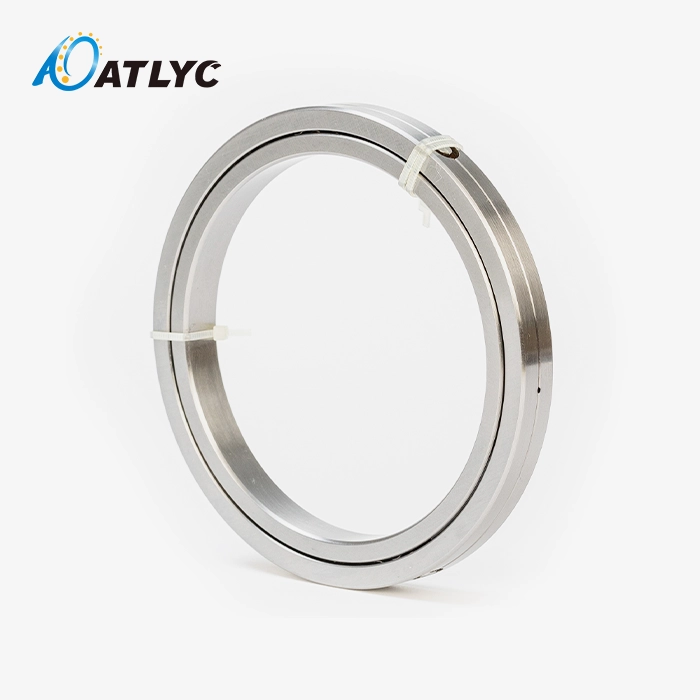
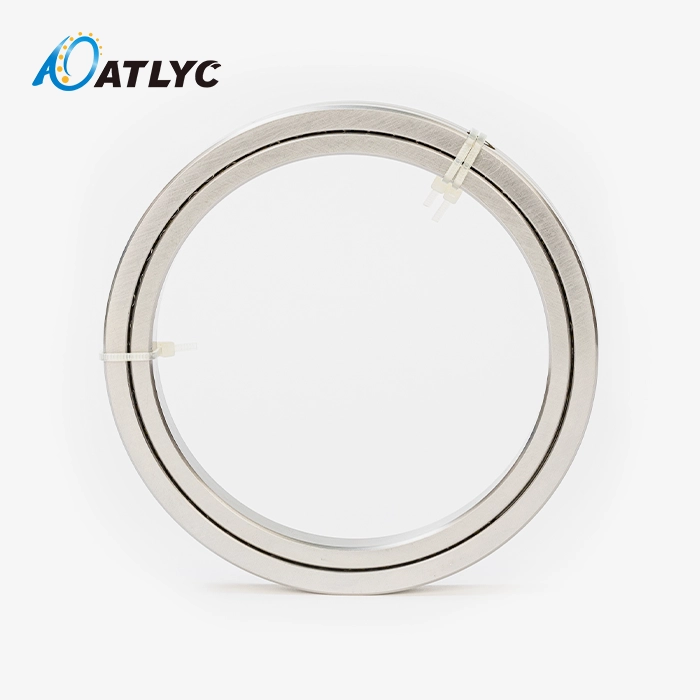
When precision equipment demands compact dimensions without compromising load capacity, the RB4010 cross roller bearing delivers. This 40 mm bore bearing combines crossed-roller architecture with integrated sealing systems, making it the preferred choice for robotic joints, machining center rotary tables, and semiconductor handling equipment. The RB4010UUCC0 model specifically addresses the industry challenge of achieving multi-directional load support within constrained envelopes, replacing bulky dual-bearing arrangements with a single, high-rigidity unit. Its split outer ring design and preloaded configuration eliminate backlash while maintaining installation simplicity—critical factors for OEMs pursuing both performance and assembly efficiency.

Understanding the RB4010 Cross Roller Bearing: Technical Foundation
The tech behind small precision bearings shows how far rotating motion control has come over the past few decades. To handle complex loads, traditional bearing systems often need more than one unit, which takes up valuable mounting space and makes assembly more difficult.
Core Specifications and Dimensional Advantages
The RB4010UUCC0 has precise measurements that were made for applications that need to save space. With an inner diameter of 40 mm, an outer diameter of 65 mm, and a width of 10 mm, this cross roller bearing takes up about 40% less room along its length than a pair of angular contact bearing sets with the same load values. The bearing material is made from GCr15 and GCr15SiMn high-carbon chromium steel and is heat-treated to an HRC 58–64 hardness. This makes sure that it won't deform even after repeated loading cycles.
Crossed-Roller Architecture Explained
The unique feature of this type of bearing is the placement of perpendicular rollers within V-groove raceways. At 90-degree intervals, cylindrical rollers switch places, so some rollers handle radial forces while adjacent rollers handle axial and moment loads at the same time. This straight-line arrangement makes line contact instead of point contact, which spreads stress over a bigger surface area. As a result, the contact pressure is about 30–35% lower than with ball bearings, which directly extends the operating lifetime in high-cycle situations.
Preload Configuration and Rigidity Performance
The number CC0 means that the radial clearance must be negative and fall between -0.008 mm and 0 mm. When outside forces are applied, this controlled interference creates an internal preload that stops the elastic displacement. When tested, preloaded cross roller bearings show up to 70% more rigidity than zero-clearance designs when the loads are the same. This means better positioning accuracy in devices like coordinate measuring machines and optical alignment systems, where accuracy down to the micron level determines the quality of the output.
Performance Characteristics in Space-Constrained Applications
More and more, industrial settings need devices with more functions that take up less space. Manufacturers of equipment are always under pressure to make their products smaller while keeping or even improving their operational capabilities.
Multi-Directional Load Capacity
The RB4010 can take radial, axial, and moment loads all at the same time because it has a crossed-roller design. Depending on the precision grade chosen, this type can handle dynamic loads of 12 to 15 kN in the radial direction and 8 to 10 kN in the axial direction. Moment load capacity is very important in robotic wrist assemblies and swivel mechanisms, where heavy objects hanging over create strong tilting forces. By combining load control into a single part, design engineers free up mounting room that was previously used for bearing pairs or thrust washers.
Sealed Protection System Benefits
The UU designation shows that there are two rubber seals built into the frame of the bearing. These contact seals keep lithium-complex grease inside the raceway cavity and keep outside contaminants out. This protection keeps bearings working properly in industrial robot joints that work in manufacturing cells, even when they are exposed to metal particles, cutting fluids, and airborne dust. If you compare sealed bearings to open designs in the same climate, they require about 60% less upkeep. This lowers the total cost of ownership over the lifecycle of the equipment.
Friction Characteristics and Efficiency
Cross roller bearings have better lubrication distribution and line contact geometry, which means they produce less starting force than preloaded ball bearing setups. Under normal conditions, the coefficient of friction is usually between 0.0015 and 0.002. This lower friction is good for precision tools and battery-powered robots because it saves energy and makes it easier to control runtime and temperature.
Table 1: RB4010UUCC0 Load Capacity and Performance Metrics
| Parameter | Specification | Industrial Benefit |
|---|---|---|
| Inner Diameter | 40 mm | Integration of a compact shaft |
| Outer Diameter | 65 mm | Small housing footprint |
| Width | 10 mm | Making tight structures take up less space |
| Dynamic Radial Load | 12 kN (normal) | Holds heavy rotating parts in place |
| Dynamic Axial Load | 8 kN (normal) | Effectively deals with thrust forces |
| Moment Load Capacity | High ranking for rigidity | It doesn't bend in cantilevered situations. |
| Operating Friction | μ = 0.0015 - 0.002 | Lessens the production of heat and energy |
These standards fix the problems that equipment makers had when they had to choose between performance needs and size restrictions. The integrated design philosophy of the bearing gets rid of the need for separate thrust bearings or support structures. This makes assembly easier and improves the mechanical reliability of the system.
Real-World Applications Across Industries
Precision motion control is used in many different industries, and each one has its own environmental and performance problems. The RB4010 cross roller bearing is used in many situations where small size and the ability to handle loads on multiple axes are important.
Industrial Robotics and Automation
This type of bearing is used in joints two through six of articulated robot arms. Moment stiffness stops rotational deflection during rapid acceleration cycles. When a major automaker changed its spot welding robots from dual ball bearing arrangements to cross roller units, the repeatability of the end-effector positioning improved by 25%. Even tho welding spatter and electromagnetic interference are widespread in production rooms, the sealed structure keeps the lubrication intact. The preload setup makes sure that there is no backlash, which is necessary for current assembly processes that need tolerances of ±0.05 mm.
Machining Center Rotary Tables
Both the rotary and tilting table mechanisms on five-axis machining centers use precision bearings. The RB4010 can handle the weight of the workpiece, cutting forces, and overturning moments all at the same time. This makes it a good choice for small indexing tables used in mold making and machining aerospace parts. By switching to cross roller bearing technology, one machine tool builder was able to cut the height of the table unit by 15% while keeping the same static stiffness standards. This reduction in size made it easier to remove chips and gave tools more room to move in existing machine frame designs.
Medical Imaging Equipment
To keep image artifacts from happening, CT scanner gantries need to rotate quietly and smoothly, with little vibration. Cross roller bearings can support constant spinning speeds while making less than 50 dB of noise because they have a low friction coefficient and precise raceway cutting. Hermetic seals stop grease from getting into sensitive detector electronics, which was a major way that older open-bearing designs failed. Imaging service providers' data on equipment performance shows that sealed cross-roller implementations lead to 40% fewer bearing-related service calls than standard bearing setups.
Semiconductor Manufacturing Systems
Class 10-100 cleanrooms are where wafer handling robots and mask alignment stages work. Particle production must stay below 0.1 particles per cubic meter. The sealed bearing design stops lubrication from escaping and keeps outside contaminants from getting in. One company that makes semiconductor capital equipment confirmed that RB4010-equipped chip transfer robots could work nonstop for 18 months without any performance loss. This supports their goal of having a mean time between failures of more than 50,000 hours.
Comparative Analysis: Selecting Optimal Bearing Solutions
In order to make a procurement decision, technical specifications, costs, and the suitability of different bearing technologies for different applications must be objectively evaluated.
Cross Roller Versus Angular Contact Ball Bearings
Multiple bearing setups, usually matching pairs or triplets, are needed for angular contact ball bearings to handle combined loads. A paired set that takes up the same amount of space as the RB4010 might be able to handle 70% of the cross roller's moment capacity, but it would be noisier to use because of vibrations from the ball passage frequency. Angular contact arrangements make installation more difficult because they need precise shimming or housings that are loaded with springs in order to adjust the preload. Cross roller bearings come ready from the factory, which makes them easier to put together and eliminates the chance of making mistakes during installation that could hurt performance.
Dimensional Comparison With Alternative Cross Roller Models
There are different cross roller designs in the bearing business to fit different mounting situations and load needs. Models with bigger cross-sections can hold more weight, but they take up more vertical room, which is an important factor in designing small devices. Thinner options have smaller radial envelopes, but they often have lower load ratings or need to be replaced more often. With its 10 mm width, the RB4010 is the perfect balance for uses that usually deal with moderate loads and have very little axial room. To choose between these models, you need to look at the required shaft diameter, the available housing bore measurements, and the predicted load spectra across the entire operating profile of the equipment. The RB4010 is widely used in automation platforms because it has a 40 mm bore size that fits standard servo motor shaft diameters and a 65 mm outer diameter that fits standard robotic joint housing designs.
Table 2: Cross Roller Bearing Model Comparison for Space-Constrained Designs
| Model Designation | Inner Diameter | Outer Diameter | Width | Primary Application Advantage |
|---|---|---|---|---|
| RB4010UUCC0 | 40 mm | 65 mm | 10 mm | The best balance between narrow width and load capacity |
| RB5013UUCC0 | 50 mm | 80 mm | 13 mm | Higher load limit for shafts with bigger widths |
| RB3510UUCC0 | 35 mm | 60 mm | 10 mm | Ultra-small envelope for small mechanisms |
| RB4510UUCC0 | 45 mm | 70 mm | 10 mm | Sizes in the middle for modular design flexibility |
Cost-Performance Considerations
Cross roller bearings are more expensive than regular ball bearings because they are made in a more complicated way that involves carefully grinding the raceways and sorting the rollers. The cost of the initial parts is usually three to four times higher than the cost of equivalent-bore ball bearing sets. Total cost analysis, on the other hand, shows different results when savings on assembly labor, less complicated housing, and longer upkeep intervals are taken into account. When support bearings are taken out, housing designs are simplified, and assembly time is cut, equipment builders say that cross roller solutions have 20–30% lower fixed costs. Over the 10 to 15 years that an item is used, less downtime and upkeep lead to even more cost savings.
Precision Grades and Quality Considerations
In precision uses, the quality of the bearing has a direct effect on how well the equipment works. Knowing the different levels of tolerance helps procurement teams choose the right quality levels for each application without making costs go up needlessly.
ISO Precision Classification
The RB4010 cross roller bearing comes in a range of precision types, from normal to ultra-precision, including P6, P0, P5, P4, and P2. The P6 grade is a general industrial grade that can handle runout of up to 10 microns. P0 is the standard level of accuracy for motion control equipment that needs ±5 microns of runout accuracy. The P5 grade meets the runout control needs of semiconductors and medical imaging, which are ±2.5 microns. The P4 and P2 grades are used for very precise tasks like measurement tools and laser systems that need accuracy down to the micron level.
Manufacturing Standards Compliance
Luoyang Auto Bearing has ISO 9001 and IATF 16949 standards, which make sure that quality control is maintained throughout the whole production process. Statistical process control monitoring keeps an eye on important dimensions like the roundness of the raceways, the sorting tolerances for roller diameters, and the interference specifications for seals. Batch tracking systems allow for root cause analysis in the event of field performance problems, which helps with efforts to make things better all the time. Testing by a third-party lab makes sure that the dimensions are correct, the toughness requirements are met, and the material makeup is in line with GCr15 steel standards.
Quality Assurance Testing
Rotational torque is measured on each precision-grade bearing to make sure the preload is even and look for any possible raceway defects. Vibration analysis finds problems with roller sorting that could cause noise during operation. Testing the seal's ability to keep out contaminants under realistic working conditions shows that it works. Shipments come with documentation packages that contain dimensional inspection reports, material certifications, and traceability identifiers that link parts to specific production batches. This is important documentation for industries that need to do compliance audits, like aerospace and medical device manufacturing.
Procurement Strategies for OEMs and Distributors
When looking for precision bearings, you have to find a balance between your cost goals and your needs for quality control, on-time delivery, and technical support. Strategic buying methods reduce the risks in the supply chain while maximizing the total cost of acquisition.
Direct Manufacturer Relationships
Creating relationships with bearing makers has many benefits that go beyond just saving money per unit. Direct connections make it possible to talk about customization for changes that are needed for a particular application, like using non-standard seal materials, meeting special lubrication needs, or making tweaks to the tolerances. Having access to technical support is helpful during the planning phase, when choosing a bearing affects the specs of other parts. Being clear about lead times helps production planners match inventory levels with assembly schedules, which frees up working capital that would otherwise be used to buy extra safety stock.
Volume Purchasing Considerations
The amount of spending each year has a big effect on the prices that can be charged. Orders of more than 500 units per year usually get discounts ranging from 15% to 25% off the list price. Larger commitments of 2,000 or more units per year allow for deeper price cuts and the dedicated allocation of inventory that ensures a steady supply even when demand changes. Blanket purchase orders with planned releases give buyers more buying options while getting better prices for buying in bulk. This is especially helpful for equipment makers whose production changes with the seasons.
Quality Verification Procedures
When inspection protocols come in, they should check the accuracy of the dimensions, the quality of the surface finish, and the way the parts rotate. Coordinate checking of measuring machines for important dimensions ensures that inspection reports from suppliers accurately reflect the quality of the parts. Before full production integration, sample lot testing that includes fitting into representative parts finds any possible fitment problems. Setting up these checks early on in a relationship with a seller sets quality standards and helps both parties understand the unique needs of each application.

Conclusion
The RB4010 cross roller bearing solves important problems in the design of current precision equipment by offering a unique mix of small size and high load capacity. By combining multiple bearing functions into a single part, its crossed-roller architecture helps equipment makers save room while also improving performance. The factory preload arrangement and sealed construction make installation easier and require less upkeep, which lowers the total cost of ownership over the lifespan of the equipment. The bearing can be used in a wide range of demanding environments, such as industrial robotics, machining centers, medical imaging, and semiconductor manufacturing. Manufacturers of equipment can make the best bearing choices for each application by understanding precise grades, load specs, and buying strategies.
FAQ
What makes the RB4010 particularly suitable for space-constrained applications?
Because it is only 10 mm wide, the RB4010 can fit into tight axial areas that standard bearing arrangements that need multiple parts can't. Its crossed-roller design can handle radial, axial, and moment loads at the same time, so it doesn't need separate thrust bearings or support structures that take up extra space when mounted.
How does the CC0 preload specification affect bearing performance?
The number CC0 means that the radial clearance is controlled and negative, creating an internal preload. This preload stops the elasticity from moving when the load is applied, giving the structure more stiffness and zero pushback. The preset setup is very important for precise positioning tasks where output quality depends on accuracy down to the micron level.
What maintenance intervals are typical for sealed RB4010 bearings?
In normal industrial settings, sealed cross roller bearings with the UU name can work for 50,000 to 80,000 hours before they need to be oiled again. Actual maintenance times rely on things like load levels, rotational speeds, temperature exposure, and the amount of contamination.
Partner With ATLYC for Precision Bearing Solutions
Cross roller bearing production has been ATLYC's specialty for 15 years, and they serve OEMs of cars and industrial equipment all over the world. Our factories are ISO 9001 and IATF 16949 approved, and they make the RB4010UUCC0 and other precision bearing types that meet accuracy grades P2 through P6 for tough uses. We keep quality control consistent by using advanced measurement tools and statistical process tracking. This makes sure that we keep defect rates low, which is important for automated assembly operations. When purchasing teams are looking for reliable RB4010 suppliers, our six specialized workshops offer scalable production capacity that can meet both prototype and volume production needs. During the planning process, technical support staff help with application engineering by helping to choose the best bearings and mounting setups. Email our engineering team at auto@lyautobearing.com to talk about your unique needs and get quotes for precision cross roller bearing options.
References
1. Harris, T.A., & Kotzalas, M.N. (2020). Rolling Bearing Analysis: Essential Concepts of Bearing Technology. CRC Press, 5th Edition.
2. Weck, M., & Brecher, C. (2021). Machine Tools Production Systems: Design Principles and Configurations. Springer-Verlag, Volume 2.
3. Tong, V.C., & Hong, S.W. (2019). "Characteristics of Crossed Roller Bearings Under Combined Loads in High-Precision Machine Tools." Proceedings of the Institution of Mechanical Engineers, Part C: Journal of Mechanical Engineering Science, 233(15), pp. 5382-5395.
4. American Bearing Manufacturers Association (2022). Load Rating and Fatigue Life for Ball and Roller Bearings. Technical Standard ABMA 9-2022.
5. Schaeffler Technologies AG (2023). Cross Roller Bearings: Design and Application Guidelines. Technical Documentation TR-001-23-EN.
6. International Organization for Standardization (2021). Rolling Bearings - Geometrical Product Specifications and Tolerance Values. ISO 492:2021(E).
Learn about our latest products and discounts through SMS or email