- English
- French
- German
- Portuguese
- Spanish
- Russian
- Japanese
- Korean
- Arabic
- Greek
- German
- Turkish
- Italian
- Danish
- Romanian
- Indonesian
- Czech
- Afrikaans
- Swedish
- Polish
- Basque
- Catalan
- Esperanto
- Hindi
- Lao
- Albanian
- Amharic
- Armenian
- Azerbaijani
- Belarusian
- Bengali
- Bosnian
- Bulgarian
- Cebuano
- Chichewa
- Corsican
- Croatian
- Dutch
- Estonian
- Filipino
- Finnish
- Frisian
- Galician
- Georgian
- Gujarati
- Haitian
- Hausa
- Hawaiian
- Hebrew
- Hmong
- Hungarian
- Icelandic
- Igbo
- Javanese
- Kannada
- Kazakh
- Khmer
- Kurdish
- Kyrgyz
- Latin
- Latvian
- Lithuanian
- Luxembou..
- Macedonian
- Malagasy
- Malay
- Malayalam
- Maltese
- Maori
- Marathi
- Mongolian
- Burmese
- Nepali
- Norwegian
- Pashto
- Persian
- Punjabi
- Serbian
- Sesotho
- Sinhala
- Slovak
- Slovenian
- Somali
- Samoan
- Scots Gaelic
- Shona
- Sindhi
- Sundanese
- Swahili
- Tajik
- Tamil
- Telugu
- Thai
- Ukrainian
- Urdu
- Uzbek
- Vietnamese
- Welsh
- Xhosa
- Yiddish
- Yoruba
- Zulu
Is RA15008UUCC0 Suitable for High-Load Precision Systems?
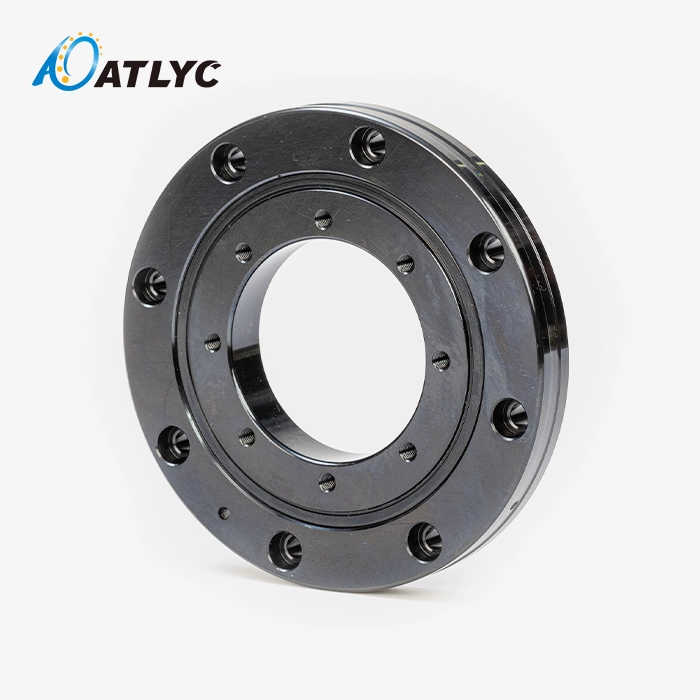
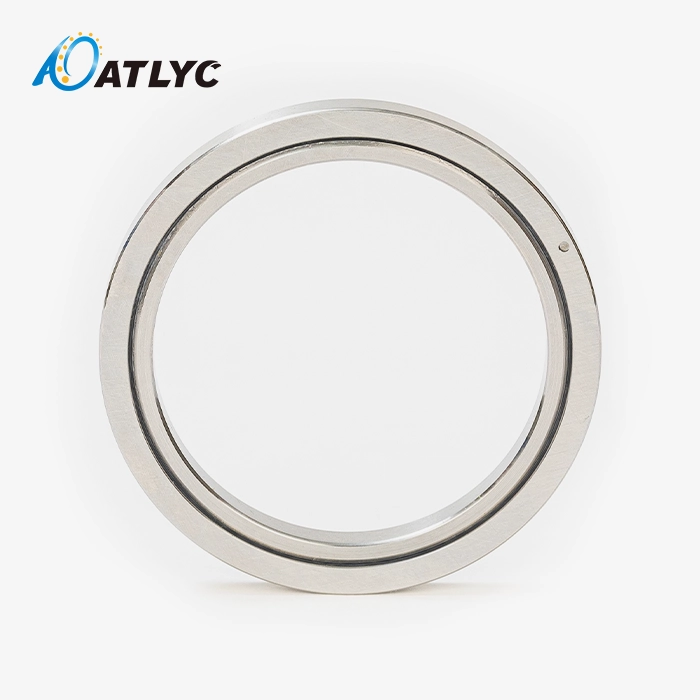
When evaluating bearing solutions for demanding industrial applications, the RA15008UUCC0 Precision Cross Roller Bearing stands out as an exceptionally capable component for high-load precision systems. This ultra-thin bearing, measuring 150mm inner diameter, 166mm outer diameter, and just 8mm width, combines advanced tribological engineering with multi-directional load handling. Its crossed roller design, separable outer ring configuration, and CC0 preload classification make it ideally suited for environments requiring simultaneous radial, axial, and moment load capacity without compromising rotational accuracy or spatial efficiency.

Understanding the RA15008UUCC0 Precision Cross Roller Bearing
At Luoyang Auto Bearing Co., Ltd., we've observed how precision cross roller bearings have transformed modern manufacturing since we began operations in 2010. The RA15008UUCC0 Precision Cross Roller Bearing represents a significant advancement in bearing technology, specifically engineered to address the constraints industrial engineers face daily.
Core Specifications and Design Architecture
With an incredibly small 8mm cross-section, this bearing boasts an inner diameter of 150mm and an exterior diameter of 166mm. Where conventional bearing configurations would be difficult due to space constraints, this dimensional profile allows for integration. To ensure outstanding fatigue resistance across extended operational cycles, the design utilises GCr15 or GCr15SiMn bearing steel that has been vacuum-degassed and heat-treated to HRC 60-64 hardness levels. One feature that sets this bearing apart from others is its removable outer ring design. This method preserves the structural integrity required for stability at the micron level and simplifies installation. In confined mechanical spaces where access is limited, replacing bearings or setting up the system initially can be a challenge; however, the outer ring can be attached independently during assembly, simplifying the installation process.
Working Principles Behind Cross Roller Technology
Cylindrical rollers positioned orthogonally at 90° intervals on V-grooved rolling surfaces form the operational foundation of this bearing. This alternating arrangement creates line contact rather than point contact, distributing loads across a significantly larger surface area. The geometry provides three to four times greater rigidity compared to point-contact ball bearings, directly addressing elastic displacement phenomena that compromise positioning accuracy in robotic joints and precision rotary tables. The UU designation indicates dual synthetic rubber seals protecting both sides, preventing dust intrusion and grease leakage throughout the bearing's service life. These seals maintain lubrication integrity in industrial environments where contamination poses constant threats to bearing longevity. The CC0 clearance classification represents negative internal clearance—a preloaded state that eliminates backlash, maximizing rotational stiffness critical for applications demanding near-zero positional deviation.
Material Composition and Precision Classes
Manufacturing these bearings from GCr15 bearing steel provides the material properties necessary for sustained high-load operation. The alloy's chromium content enhances wear resistance, while careful heat treatment processes optimise hardness and toughness balance. Some applications benefit from GCr15SiMn variants, where silicon and manganese additions further improve hardenability and impact resistance for particularly demanding operational profiles. Precision classifications ranging from P6 through P2 accommodate diverse application requirements. Standard industrial machinery typically operates successfully with P6 or P5 grades, while semiconductor manufacturing equipment and medical imaging devices demand P4 or P2 precision levels. This precision hierarchy ensures procurement teams can match bearing specifications precisely to application tolerances without overpaying for unnecessary precision margins.
Performance and Application Suitability for High-Load Systems
Over our 15 years of manufacturing experience serving clients across South Korea, the United States, Germany, Russia, Iran, and Turkey, we've witnessed how proper bearing selection directly impacts system reliability and operational costs.
Load Capacity Analysis Under Demanding Conditions
The crossed roller arrangement enables simultaneous handling of radial, axial, and moment loads within a single compact unit. Traditional angular contact ball bearings require paired mounting configurations to achieve similar multi-directional load capacity, increasing assembly complexity and spatial requirements. The RA15008UUCC0 eliminates this constraint, reducing component counts and potential failure points.
Dynamic load ratings for this bearing substantially exceed conventional alternatives of comparable dimensions. The line-contact geometry between cylindrical rollers and V-grooved raceways distributes forces across larger contact patches, reducing contact stress levels and extending bearing fatigue life. Static load capacity similarly benefits from this geometry, allowing the bearing to support substantial loads during stationary or slow-rotation conditions without permanent deformation.
Moment load capacity represents a particularly valuable characteristic for robotic applications. When robotic arms extend horizontally, significant moment loads develop at joint positions. The RA15008UUCC0's design inherently resists these rotational moments without requiring supplementary bearing arrangements, simplifying actuator housing designs and reducing overall system mass.
Industrial Application Domains
These bearings find widespread use in industrial collaborative robotics. To keep their actuator housings small, the waist and elbow joints of a cobot must be able to handle the complicated moment loads produced by the arm's extension and retraction cycles. Lightweight design is made possible by the 8mm width, which reduces inertial loads and improves positioning speed and accuracy.
Processing semiconductor wafers in a vacuum or cleanroom is an exacting procedure that requires meticulous attention to detail to avoid contamination. Particulate production during photolithography procedures is prevented by the dual rubber seals, which could affect the quality of the wafer. Because even small positioning errors during exposure sequences can cause pattern flaws, the CC0 preload is essential for accurately aligning wafer stages.
As imaging sensors orbit patients, medical CT scanner gantries must rotate smoothly and without vibration while experiencing substantial offset stresses. There is no mechanical jitter that could lower picture quality because of the bearing's stiffness and load distribution properties. The ultra-thin profile is very useful in medical device housings due to space constraints; it allows designers to increase sensor apertures without increasing overall equipment footprints.
The rotary tables used in machine tools are enhanced by the virtually zero backlash that this bearing provides. Accurate angular alignment is essential for cutting cycles in precision grinding and milling processes. When tools engage with workpieces, any amount of backlash or elastic movement reduces the precision of the final dimensions. No matter how varied the cutting pressures are, the positional integrity is preserved by the crossed roller design.
Temperature Resilience and Environmental Durability
Industrial environments subject bearings to substantial temperature variations and harsh conditions. The GCr15 steel composition maintains dimensional stability across typical industrial temperature ranges, preventing thermal expansion from compromising bearing clearances. The sealed design protects internal components from moisture, coolants, and airborne contaminants prevalent in manufacturing facilities.
The negative clearance preload requires careful thermal management consideration. As operating temperatures increase, thermal expansion can intensify preload levels, potentially accelerating wear rates or increasing friction coefficients. Proper installation practices and lubrication selection help manage these thermal effects, ensuring stable performance throughout operational temperature ranges.
RA15008UUCC0 vs. Other Precision Cross Roller Bearings
Understanding performance differences between bearing models helps procurement teams optimise component selection for specific applications.
Dimensional and Load Capacity Comparisons
The RA15008UUCC0 Precision Cross Roller Bearing is a cross roller bearing that falls somewhere in the centre of the RA series. With an extra millimetre of width, the RA15007UUCC0 achieves a load capacity and stiffness that is almost 15% higher than the 7mm version. Applications that necessitate increased stiffness or involve larger moment loads can benefit from this small increase in dimensions.
On the other hand, the RA15010UUCC0, with its 10mm width, improves load capacity even further, although it also increases system mass and space requirements. Designers need to consider application constraints when balancing these tradeoffs. The 8mm width is usually preferred for robotic joints that aim to reduce weight, whereas the 10mm form may be justified for machine tool applications that emphasise maximum rigidity.
Structural Differences Affecting Performance
Cross roller bearings with cages introduce separator elements between rollers, maintaining consistent roller spacing and preventing skewing during rotation. The RA15008UUCC0 employs a full-complement design without cages, maximising the number of load-bearing elements within the available envelope. This approach increases load capacity but limits rotational speeds compared to caged alternatives.
Angular contact ball bearings utilise point contact between balls and raceways, resulting in lower friction coefficients and higher speed capabilities. However, their reduced contact area compromises rigidity and load capacity relative to crossed roller designs. Applications prioritising positioning accuracy and load capacity over rotational speed find crossed roller bearings more suitable.
Application Scenario Optimisation
In robotics, the RA15008UUCC0 shines in tasks that need constant rotation at modest speeds, say 500 to 800 RPM. Load capacity is maximised without speed limits becoming troublesome by means of the full-complement roller system. The same holds for the speed ranges where this bearing really shines: precision rotary tables used in machine tools.
Bearings with an angular contact or a caged cross design are preferable for high-speed spindle applications that call for rotational speeds higher than 1000 RPM. When travelling at high speeds, the friction between the whole complement of rollers can cause thermal runaway due to the buildup of heat.
Procurement Considerations for RA15008UUCC0 Bearings
Strategic sourcing decisions significantly impact operational reliability and total cost of ownership throughout bearing lifecycles.
Identifying Reliable Suppliers and Distributors
At ATLYC, we've built our reputation over 15 years by maintaining ISO 9001 and IATF 16949 certifications, demonstrating consistent quality and adherence to international standards. Our manufacturing capacity has expanded from a single workshop in 2010 to six specialised production facilities, enabling us to serve global markets with reliable lead times and technical support.
When evaluating bearing suppliers, certification verification proves essential. ISO 9001 certification indicates established quality management systems, while IATF 16949 specifically addresses automotive industry requirements many bearing applications must satisfy. These certifications assure that manufacturing processes incorporate quality controls, preventing defect rates from compromising operational reliability.
Manufacturing capacity directly influences supply stability. Suppliers operating multiple production lines can maintain inventory buffers and accommodate demand fluctuations without extended lead times. Our 120 skilled employees dedicated to production, research and development, quality inspection, and assembly ensure efficient operations across all manufacturing stages.
Critical Procurement Factors
Stock availability and lead times significantly impact production scheduling and inventory carrying costs. Suppliers maintaining adequate inventory levels enable just-in-time delivery strategies, reducing warehousing expenses and capital tied up in spare parts inventories. Understanding supplier production cycles helps procurement teams anticipate potential delays during capacity constraints.
Shipping logistics require careful consideration, particularly for international procurement. Proper packaging prevents transportation damage that could compromise bearing precision. Suppliers experienced in export operations understand documentation requirements and can navigate customs procedures efficiently, avoiding shipment delays that disrupt production schedules.
After-sales support distinguishes superior suppliers from basic component vendors. Technical assistance with installation procedures, troubleshooting guidance, and application engineering support add substantial value beyond the physical bearing itself. This support proves particularly valuable when integrating bearings into new equipment designs or optimising existing systems.
Pricing Structure and Value Assessment
It is not enough to know the purchase price when comparing OEM and aftermarket alternatives; you must also know the total cost of ownership. Consistent quality, extensive warranties, and technical support available usually justify the price premium of original equipment manufacturer bearings from established companies.
While aftermarket options may have lower prices up front, they also pose the danger of quality unpredictability. The upfront savings from downtime and replacement labour would be more than wiped out by premature failures caused by subpar materials, improper heat treatment methods, or a lack of quality controls, all of which could be the product of an uncertified manufacturer.
The warranty coverage reflects the supplier's trust in the product's quality. Having a warranty that covers manufacturing faults and premature wear can help mitigate risk, especially in essential applications where bearing failures might delay production significantly. Avoid disagreements during investigations into possible failures by familiarising yourself with warranty conditions and claims processes before procurement.
Maintenance, Longevity, and Optimising RA15008UUCC0 Performance
Proper lifecycle management practices directly influence bearing service life and system reliability.
Lubrication Best Practices
The sealed design incorporates initial grease lubrication suitable for extended operational periods. Selecting appropriate lubricants for specific operating conditions optimises performance and longevity. Standard industrial applications typically perform well with lithium-based greases offering good temperature stability and mechanical stability.
Vacuum applications require specialised considerations. Standard greases outgas under vacuum conditions, contaminating sensitive processes. Removing or venting the rubber seals and applying vacuum-compatible fluorinated greases like Krytox or Fomblin prevents outgassing while maintaining necessary lubrication. This modification requires careful evaluation of environmental contamination risks without seal protection.
Maintenance intervals depend on operating conditions, including load levels, rotational speeds, and environmental contamination. Standard industrial environments typically allow maintenance intervals extending several thousand operating hours. Harsh environments with significant contamination, temperature extremes, or continuous operation may necessitate more frequent lubrication verification and potential regreasing.
Early Warning Signs and Preventive Measures
Monitoring the condition of bearings enables predictive maintenance strategies, which help prevent unexpected failures. Increased friction levels manifested through higher operating temperatures or motor current draw indicate potential lubrication degradation or contamination intrusion. Addressing these symptoms before failure prevents secondary damage to adjacent components.
Abnormal noise or vibration signatures suggest wear progression or contamination issues. Precision equipment often incorporates vibration monitoring systems detecting characteristic frequency patterns associated with bearing defects. Implementing condition monitoring programmes enables scheduled replacements during planned maintenance windows rather than emergency repairs during production shifts.
Installation Accuracy and Alignment Optimisation
The separable outer ring design simplifies installation but requires careful attention to mounting surface flatness and clamping uniformity. Uneven clamping forces can distort the thin 8mm cross-section, compromising roundness and introducing operational stresses that accelerate wear. Implementing star-pattern torque sequences when securing mounting flanges ensures uniform clamping pressure distribution.
Shaft and housing tolerances significantly influence bearing performance. Excessive clearances allow misalignment, which introduces edge loading on rollers, concentrating stresses and reducing fatigue life. Conversely, excessive interference fits generate residual stresses, potentially causing raceway cracking. Following the manufacturer's tolerance recommendations optimises bearing integration.
Environmental controls that prevent contamination exposure maximise bearing longevity. Maintaining clean assembly environments during installation prevents particulate intrusion that would compromise lubrication and cause abrasive wear. Protecting mounted bearings from process contaminants through appropriate sealing strategies extends service intervals and prevents premature failures.

Conclusion
The RA15008UUCC0 Precision Cross Roller Bearing demonstrates clear suitability for high-load precision systems requiring compact form factors and multi-directional load capacity. Its crossed roller design, separable outer ring configuration, and precision preload provide performance characteristics that meet the specific challenges faced by industrial engineers in robotics, semiconductor equipment, medical devices, and precision machine tools. Proper supplier selection, installation practices, and maintenance protocols ensure these bearings deliver exceptional reliability and longevity, justifying their integration into critical motion control systems where positioning accuracy and operational uptime directly impact productivity and product quality.
FAQ
What distinguishes CC0 clearance from standard bearing clearances?
CC0 represents negative internal clearance, essentially a preloaded state eliminating all internal play between rollers and raceways. Standard C0 clearance maintains slight operational clearance, allowing therclearance,sion without binding. The CC0 configuration maximises rigidity and eliminates backlash, which is essential for precision positioning applications. However, this preload generates slightly higher friction and requires careful thermal management to prevent excessive preload intensification as operating temperatures increase during operation cycles.
How does the RA15008UUCC0 compare to traditional ball bearings for moment loads?
The crossed roller design provides substantially superior moment load capacity compared to ball bearings of similar dimensions. The line contact between cylindrical rollers and V-grooved raceways creates larger effective contact areas, distributing moment loads more effectively. Ball bearings rely on point contact geometry, concentrating stresses and limiting moment capacity. Applications involving significant offset loads or cantilever configurations benefit dramatically from the crossed roller arrangement's inherent moment resistance.
Can this bearing operate in vacuum or cleanroom environments?
The standard UU sealed configuration suits atmospheric pressure applications. Vacuum environments require modifications including seal removal or venting to prevent seal material outgassing. Lubrication must transition to vacuum-compatible fluorinated greases, avoiding contamination from conventional lubricant evaporation. Cleanroom applications benefit from the sealed design preventing particle generation, though proper installation procedures preventing contamination during assembly remain critical for maintaining cleanroom classification levels throughout equipment service life.
Partner with ATLYC for Your Precision Bearing Solutions
ATLYC has evolved from a single workshop in 2010 to a comprehensive manufacturing enterprise with six specialised production facilities serving global markets. Our ISO 9001 and IATF 16949 certifications demonstrate unwavering commitment to quality standards your operations demand. As an experienced RA15008UUCC0 Precision Cross Roller Bearing manufacturer, we combine precision manufacturing, scalable production capacity, and technical expertise supporting your most demanding applications. Our 120 dedicated team members ensure consistent quality, competitive pricing, and reliable delivery to customers across South Korea, the United States, Germany, Russia, Iran, and Turkey. Contact auto@lyautobearing.com today to discuss how our precision cross roller bearing solutions can optimise your high-load systems and establish a long-term strategic partnership built on quality, reliability, and engineering excellence.
References
1. Harris, T.A. & Kotzalas, M.N. (2006). Advanced Concepts of Bearing Technology: Rolling Bearing Analysis, Fifth Edition. CRC Press, Boca Raton.
2. Witte, D.C. (1973). Operating Torque of Tapered Roller Bearings. ASLE Transactions, 16(1), 61-67.
3. ISO 5593:1984. Rolling bearings — Vocabulary. International Organisation for Standardisation, Geneva.
4 Palmgren, A. (1959). Ball and Roller Bearing Engineering, Third Edition. SKF Industries Inc., Philadelphia.
5. Gupta, P.K. (1984). Advanced Dynamics of Rolling Elements. Springer-Verlag, New York.
6. Eschmann, P., Hasbargen, L. & Weigand, K. (1985). Ball and Roller Bearings: Theory, Design and Application, Second Edition. John Wiley & Sons, Chichester.
Learn about our latest products and discounts through SMS or email