- English
- French
- German
- Portuguese
- Spanish
- Russian
- Japanese
- Korean
- Arabic
- Greek
- German
- Turkish
- Italian
- Danish
- Romanian
- Indonesian
- Czech
- Afrikaans
- Swedish
- Polish
- Basque
- Catalan
- Esperanto
- Hindi
- Lao
- Albanian
- Amharic
- Armenian
- Azerbaijani
- Belarusian
- Bengali
- Bosnian
- Bulgarian
- Cebuano
- Chichewa
- Corsican
- Croatian
- Dutch
- Estonian
- Filipino
- Finnish
- Frisian
- Galician
- Georgian
- Gujarati
- Haitian
- Hausa
- Hawaiian
- Hebrew
- Hmong
- Hungarian
- Icelandic
- Igbo
- Javanese
- Kannada
- Kazakh
- Khmer
- Kurdish
- Kyrgyz
- Latin
- Latvian
- Lithuanian
- Luxembou..
- Macedonian
- Malagasy
- Malay
- Malayalam
- Maltese
- Maori
- Marathi
- Mongolian
- Burmese
- Nepali
- Norwegian
- Pashto
- Persian
- Punjabi
- Serbian
- Sesotho
- Sinhala
- Slovak
- Slovenian
- Somali
- Samoan
- Scots Gaelic
- Shona
- Sindhi
- Sundanese
- Swahili
- Tajik
- Tamil
- Telugu
- Thai
- Ukrainian
- Urdu
- Uzbek
- Vietnamese
- Welsh
- Xhosa
- Yiddish
- Yoruba
- Zulu
RE2508UUCC0 Bearings for Smooth Rotation and Stability
When precision machinery demands zero backlash and multi-directional load handling in confined spaces, the RE2508UUCC0 cross roller bearing emerges as an engineering solution that transforms operational reliability. This compact bearing—measuring just 25mm inner diameter, 41mm outer diameter, and 8mm width—delivers exceptional rotational smoothness and structural stability across automotive assembly lines, industrial robotics, and semiconductor manufacturing environments where downtime translates directly into lost revenue.

Introduction
Industrial procurement teams face mounting pressure to source bearing components that simultaneously reduce equipment footprint, enhance precision, and maintain continuous uptime across demanding production environments. The RE2508UUCC0 cross roller bearing addresses these challenges through its unique crossed-roller architecture, which consolidates radial, axial, and moment load capacity within a singular compact unit.
Designed specifically for purchasing managers, OEM engineers, and bearing distributors serving automotive components sectors and industrial automation markets, this guide provides actionable insights into how crossed roller technology optimises machinery performance. Understanding the technical specifications, operational advantages, and procurement considerations surrounding the RE2508UUCC0 empowers B2B clients to make decisions that boost production efficiency while minimising total cost of ownership. We established Luoyang Auto Bearing Co., Ltd. in 2010 with a single workshop and have expanded to six specialised production facilities, earning ISO 9001 and IATF 16949 certifications that validate our commitment to consistent quality standards demanded by clients across South Korea, the United States, Germany, Russia, Iran, and Turkey.
Understanding RE2508UUCC0 Cross Roller Bearings
Core Design Architecture
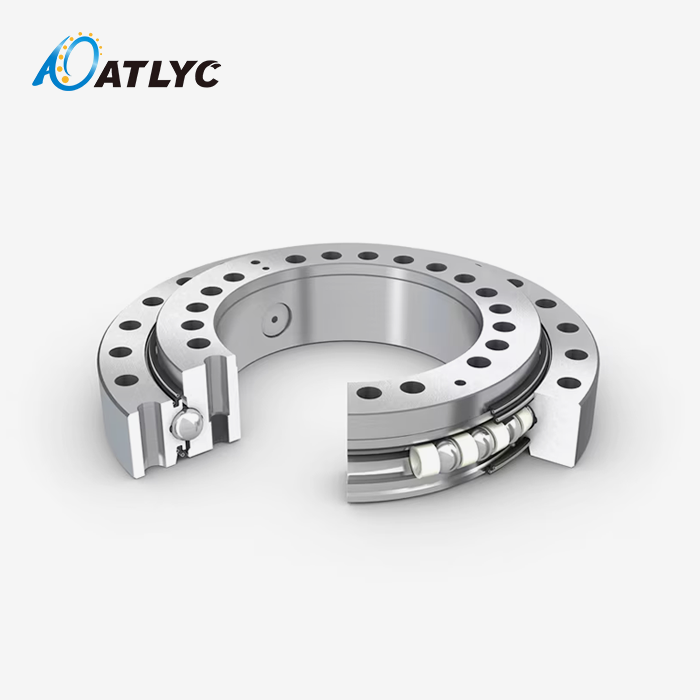
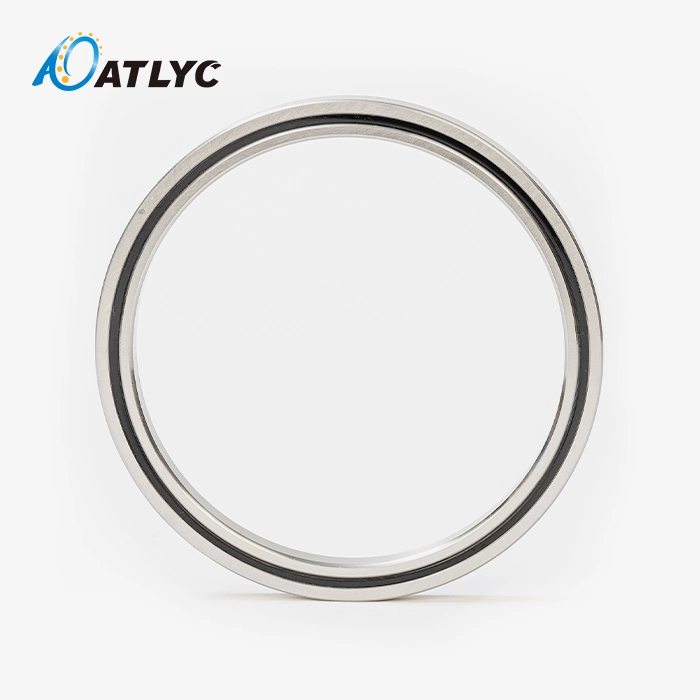
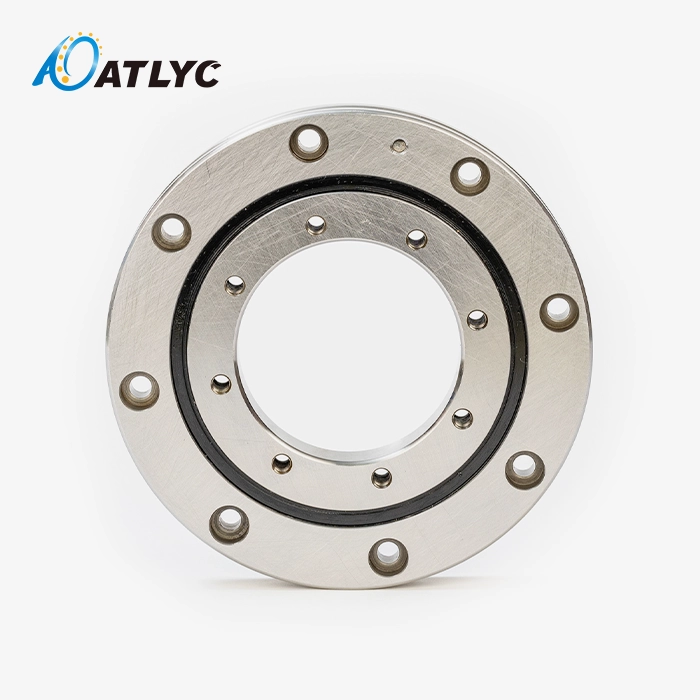
The RE2508UUCC0 features an integrated outer ring paired with a split inner ring configuration—a structural choice that simplifies installation while maintaining operational integrity during outer ring rotation applications. Cylindrical rollers arranged orthogonally at 90-degree intervals within precision-ground V-groove raceways enable this bearing to absorb forces from multiple directions simultaneously. The CC0 designation indicates controlled negative clearance, creating a preloaded state that eliminates elastic deformation and backlash during load transitions.
This design philosophy contrasts sharply with conventional ball bearings that require paired arrangements to handle combined loading. The crossed roller configuration achieves equivalent rigidity in roughly one-third the axial space, a critical advantage in robotic joint assemblies where every millimetre affects payload capacity and range of motion.
Material Composition and Durability Standards
We manufacture these bearings using GCr15 and GCr15SiMn high-carbon chromium bearing steels, heat-treated to achieve 58-64 HRC hardness ratings. This material specification ensures extended fatigue life under cyclic loading conditions typical in machining centre rotary tables and precision indexing mechanisms. The dual-sealed (UU) design incorporates synthetic rubber seals that prevent particulate intrusion without significantly increasing rotational torque—a balance that maintains low friction coefficients while protecting raceway surfaces in environments with coolant mist or metal particulates.
Tolerance classes ranging from P6 through P2 accommodate varying application requirements. Most automation equipment specifications call for P5 or P4 accuracy grades, which the RE2508UUCC0 consistently meets through our six-stage quality control process. Each bearing undergoes dimensional verification, surface finish inspection, and rotational torque testing before receiving certification documentation that satisfies IATF 16949 traceability requirements.
Performance Characteristics That Drive Reliability
The core advantages of crossed roller technology become evident when examining operational metrics. The RE2508UUCC0 handles three to four times the load capacity of equivalently sized deep groove ball bearings while maintaining runout accuracy better than ISO Class 5 tolerances. This combination proves essential in medical robotic manipulators where surgical tool positioning accuracy directly impacts patient outcomes.
Friction coefficients remain consistently low across the bearing's operational envelope, translating to reduced heat generation during extended duty cycles. In semiconductor IC bonding machines experiencing high-frequency oscillating movements, this thermal stability prevents dimensional changes that would compromise micron-level bonding accuracy. The preloaded configuration ensures that positioning resolution remains constant regardless of load direction changes—a requirement in optical inspection gimbals that must maintain alignment despite rapid acceleration profiles.
Proper maintenance extends service life substantially. We recommend initial break-in cycles at reduced speeds to distribute lubricant evenly across contact surfaces, followed by periodic vibration monitoring to detect early signs of contamination or wear. This proactive approach minimises unexpected downtime and reduces long-term operational costs by preventing secondary damage to surrounding components.
Comparing RE2508UUCC0 with Other Bearings for Informed Decision-Making
Dimensional and Load Capacity Contrasts
When procurement teams evaluate bearing options, understanding performance differences becomes crucial. The RE2508UUCC0 occupies middle ground within the RE series family—smaller than the RE3010 yet offering significantly higher moment capacity than the RE2505 variant. Compared to NSK or SKF equivalents in this size range, our bearing delivers comparable load ratings while maintaining competitive pricing structures that reflect our scaled production capabilities across 120 skilled manufacturing personnel.
Angular contact ball bearing pairs might initially seem comparable, but they require precise preload adjustment during installation and occupy greater axial space. The crossed roller design simplifies assembly procedures, reducing installation time by approximately 40% based on feedback from our automation equipment clients. This efficiency gain matters particularly in high-mix production environments where changeover speed affects overall equipment effectiveness.
Application-Specific Performance Advantages
Industrial robot manufacturers consistently choose the RE2508UUCC0 for wrist and elbow joints where compact envelopes limit bearing selection. The zero-backlash characteristic ensures that programmed motion paths translate accurately to end-effector positioning, eliminating the cumulative errors that paired ball bearings introduce through clearance stackup. In contrast, tapered roller bearings offer higher pure radial capacity but cannot match the moment stiffness required for cantilevered robotic tool loads.
Machining centre rotary tables present different demands. Here, the integrated outer ring design provides superior runout precision during continuous indexing operations compared to four-point contact ball bearings, which can exhibit micromotion under interrupted cutting forces. We documented a case study where a German automotive component manufacturer reduced scrap rates by 23% after switching from competitor bearings to our RE2508UUCC0 units in their transfer line drilling stations, attributing the improvement to enhanced positional repeatability.
Medical imaging equipment designers value the smooth torque characteristics across the full rotation cycle. Unlike thrust ball bearings that exhibit periodic variations due to ball-pass frequencies, crossed roller bearings deliver nearly uniform resistance, preventing vibration transmission that would degrade CT scanner image resolution. The dual-seal configuration proves essential in these applications, maintaining cleanroom compatibility without requiring external protective covers.
Cost-Performance Analysis for Procurement Planning
Total cost of ownership extends beyond the initial purchase price. The RE2508UUCC0's extended service life—typically exceeding 20,000 hours in properly maintained applications—reduces replacement frequency compared to standard ball bearings rated for 12,000-hour L10 life in equivalent loading conditions. When factoring in production line downtime costs averaging $5,000 per hour for automotive assembly operations, the premium for crossed-roller technology pays back within the first bearing replacement cycle avoided.
Lead times significantly impact procurement strategies. Our six production workshops enable flexible capacity allocation, maintaining 4-6 week delivery schedules for standard RE2508UUCC0 configurations even during peak demand periods. Customised variants with modified seal materials or special greases for extreme temperatures require 8-10 weeks but eliminate the performance compromises of adapting standard products to non-standard environments.
Procurement Guide for RE2508UUCC0 Cross Roller Bearings
Identifying Authorised Supply Channels
Sourcing authentic precision bearings requires verification of manufacturer credentials and supply chain integrity. ATLYC operates through authorised distributor networks in our primary export markets—South Korea, the United States, Germany, Russia, Iran, and Turkey—each selected for their technical support capabilities and inventory management systems. Direct manufacturer relationships eliminate counterfeit risk while ensuring access to engineering documentation required for compliance audits.
When evaluating RE2508UUCC0 cross roller bearing suppliers, request copies of ISO 9001 and IATF 16949 certificates with current validity dates. Verify that certificate scope explicitly includes crossed roller bearing production rather than generic bearing categories. Our certification documentation includes traceability to specific production workshops and quality control procedures, providing transparency that distributors value when qualifying components for aerospace or medical device applications subject to regulatory scrutiny.
Pricing Structures and Volume Considerations
Unit pricing for the RE2508UUCC0 varies based on order quantities, accuracy grades, and delivery timelines. Standard P5 accuracy bearings with GCr15 material typically fall within competitive ranges for precision crossed roller products, with volume discounts activating at quantities exceeding 100 units per order. Customised specifications incur engineering charges but avoid the performance compromises of adapting off-the-shelf products to specialised requirements.
We structure pricing to reward long-term partnership commitments. Annual blanket orders with quarterly releases enable optimised production scheduling, reducing per-unit costs by 12-18% compared to spot purchases while guaranteeing supply continuity that protects clients from market allocation scenarios during raw material shortages. Payment terms accommodate international trade practices, with letter of credit and open account options available based on relationship tenure and order history.
Logistics and Compliance Documentation
International shipping arrangements for precision bearings require careful packaging to prevent Brinell damage during transit. We utilise individual bearing boxes nested within export-rated corrugated containers, with moisture barrier bags in regions experiencing significant humidity variations. Documentation packages include commercial invoices, packing lists, certificates of origin, and material certifications that satisfy customs clearance requirements across our served markets.
Warranty coverage extends 18 months from the shipment date or 12 months from installation, whichever occurs first, provided bearings operate within published load ratings and environmental specifications. Return policies accommodate defective products discovered during incoming inspection, with replacement units expedited at no additional freight cost. This commitment reflects our confidence in manufacturing quality and recognises that procurement teams require supply partners who stand behind their products unconditionally.
Why Choose Our RE2508UUCC0 Cross Roller Bearings?
Manufacturing Excellence Backed by Certifications
Luoyang Auto Bearing Co., Ltd. evolved from a single automated workshop in 2010 to a comprehensive six-facility operation housing 120 specialised personnel dedicated to production, quality assurance, and engineering support. This growth trajectory demonstrates our ability to scale production while maintaining the precision standards that crossed roller applications demand. Our ISO 9001 and IATF 16949 certifications undergo annual surveillance audits, with zero major nonconformances recorded across the past five audit cycles—a quality consistency record that procurement teams can depend on for supply chain stability.
Each RE2508UUCC0 bearing passes through documented inspection points verifying dimensional accuracy, surface finish, clearance specifications, and rotational torque profiles. Statistical process control charts track critical parameters in real time, triggering corrective actions before variations approach specification limits. This proactive quality management approach prevents defective products from reaching customer facilities, eliminating the disruption and costs associated with field failures.
Technical Support That Extends Beyond Product Delivery
Complex bearing applications benefit from engineering collaboration during design phases. Our technical team assists clients with load calculation verification, mounting arrangement optimisation, and lubrication selection tailored to specific operating conditions. This consultative approach prevented a costly redesign for a Turkish automation equipment manufacturer whose initial bearing selection underestimated moment loads—our analysis recommended the RE2508UUCC0 over their planned smaller model, avoiding field failures that would have impacted their customer commitments.
Customisation capabilities address non-standard requirements without excessive lead time penalties. Modified seal configurations for cleanroom environments, alternate grease formulations for extreme temperature ranges, and special surface treatments for corrosive atmospheres represent routine variations we accommodate through established engineering change processes. This flexibility proves valuable for OEM clients serving niche markets where off-the-shelf components introduce performance compromises.
Proven Track Record Across Global Markets
Our client portfolio spans automotive component manufacturers supplying major assembly plants, industrial machinery builders serving oil and gas sectors, and medical device companies navigating FDA regulatory pathways. This diversity demonstrates the RE2508UUCC0's versatility across applications with vastly different operational profiles and compliance requirements. Testimonials from South Korean robotics integrators and German precision machinery manufacturers validate performance claims with measurable improvements in positioning accuracy and service life.
Long-term supply agreements with repeat customers in the United States and Germany reflect satisfaction levels that transcend individual purchase transactions. These partnerships involve collaborative forecasting, consignment inventory arrangements, and continuous improvement initiatives that drive mutual cost reductions while enhancing product performance. Such relationships only develop when manufacturers consistently deliver quality, responsiveness, and technical competence that procurement teams can trust.
Best Practices for Maximising RE2508UUCC0 Bearing Performance
Installation Procedures That Prevent Premature Failure
Proper mounting techniques significantly impact crossed roller bearing service life. The split inner ring design requires careful alignment during assembly to ensure both ring halves seat uniformly against the shaft shoulder. We recommend using assembly fixtures that maintain concentricity while tightening retaining components to specified torque values—typically 8-12 Nm for M4 mounting screws in this size range. Over-torquing distorts ring geometry, creating localised stress concentrations that accelerate fatigue crack initiation.
Cleanliness during installation cannot be overstated. Particulate contamination represents the leading cause of premature bearing failure in precision applications. Establish clean assembly areas with filtered air systems, and handle bearings only with lint-free gloves to prevent skin oil contamination of raceway surfaces. Inspect mounting surfaces for burrs or tool marks that could prevent proper seating, using fine abrasive cloth to achieve smooth transitions rather than sharp edges that concentrate stress.
Common pitfalls include misalignment between mating components, inadequate shaft or housing tolerances, and improper preload adjustment. The RE2508UUCC0's CC0 specification establishes controlled negative clearance at the factory, eliminating field adjustment requirements—attempting additional preload through bearing nut torque introduces excessive stress that shortens operational life. Verify that shaft and housing fits conform to published tolerance recommendations, typically k5 shaft tolerance and H7 housing bore for this bearing series.
Operational Monitoring Strategies
Implementing condition monitoring programmes enables early detection of developing problems before catastrophic failures occur. Vibration analysis using accelerometers mounted near bearing locations detects increases in peak-to-peak amplitudes that indicate emerging defects or contamination ingress. Baseline measurements established during commissioning provide reference points for trend analysis—gradual increases suggest normal wear progression, while sudden changes indicate acute problems requiring immediate investigation.
Temperature monitoring complements vibration data. Thermocouples or infrared sensors tracking bearing outer ring temperatures should remain stable within 10°C of ambient during steady-state operation. Temperature rises exceeding 15°C above baseline suggest inadequate lubrication, excessive preload, or internal contamination generating abnormal friction. Thermal imaging during routine maintenance intervals reveals hot spots that pinpoint specific bearings requiring attention before complete failure disrupts production schedules.
Troubleshooting unusual noise or roughness begins with verifying proper lubrication levels and grease condition. Contaminated lubricant appears discoloured or contains visible metallic particles indicating wear debris. Flushing contaminated bearings and regreasing with fresh lubricant specified for crossed roller applications often restores smooth operation if caught before advanced wear develops. Persistent roughness despite fresh lubrication indicates raceway damage requiring bearing replacement.
Long-Term Maintenance Planning
Establishing relubrication intervals depends on operating conditions. Bearings in clean environments with moderate duty cycles typically operate 8,000-10,000 hours between regreasing. Harsh environments with temperature extremes, high humidity, or airborne contaminants warrant 4,000-hour intervals. Use lithium complex or polyurea greases formulated for precision bearings, applying quantities that fill 30-40% of available bearing volume—excessive grease generates churning resistance that increases operating temperatures, while insufficient quantity accelerates wear.
Replacement criteria should balance remaining service life against failure risk. When vibration levels reach twice baseline values, roughness becomes perceptible during hand rotation, or visible wear appears on seal lips, schedule bearing replacement during the next planned maintenance window. Waiting until complete failure risks secondary damage to shafts, housings, and adjacent components that multiply repair costs and downtime. Maintaining spare bearing inventory for critical applications ensures rapid restoration of equipment functionality.
Documentation of bearing performance across equipment populations identifies patterns that inform design improvements. If specific machines consistently experience shortened bearing life, investigate whether operational loads exceed design assumptions, environmental conditions differ from specifications, or installation procedures vary between maintenance technicians. This analytical approach transforms maintenance data into actionable intelligence that reduces the total cost of ownership across equipment fleets.

Conclusion
The RE2508UUCC0 cross roller bearing represents a proven solution for industrial applications demanding exceptional rotational precision, multi-directional load capacity, and compact installation envelopes. Its crossed roller architecture consolidates functionality that would otherwise require multiple bearing arrangements, simplifying machine designs while enhancing performance reliability. Procurement teams serving automotive manufacturing, industrial automation, and precision equipment sectors benefit from understanding the technical specifications, comparative advantages, and operational best practices detailed throughout this guide. Luoyang Auto Bearing Co., Ltd. stands ready to support B2B clients with certified quality, technical expertise, and supply chain reliability developed across 15 years of specialised manufacturing experience.
FAQ
What distinguishes the RE2508UUCC0 from standard ball bearings in robotic applications?
The crossed roller configuration handles radial, axial, and moment loads simultaneously within a single compact bearing, eliminating the need for paired ball bearing arrangements. This design reduces axial space requirements by approximately 60% while providing superior moment stiffness essential for robotic joint positioning accuracy. The zero-backlash CC0 specification ensures precise motion control without the play inherent in clearance-fit ball bearings.
How do I verify authentic RE2508UUCC0 bearings when sourcing internationally?
Request manufacturer certifications, including ISO 9001 and IATF 16949 documentation with current validity dates. Authentic bearings include laser-etched markings specifying model number, accuracy grade, and production codes. Contact ATLYC directly at auto@lyautobearing.com to verify distributor authorisation and confirm product authenticity through serial number traceability to our production records.
Can the RE2508UUCC0 operate in high-temperature environments above 100°C?
Standard configurations with synthetic rubber seals and lithium complex grease accommodate temperatures up to 110°C. Applications experiencing sustained temperatures exceeding this threshold require customised configurations with high-temperature seals and specialised lubricants. Consult our engineering team to specify appropriate modifications based on your specific thermal profile and duty cycle requirements.
Partner with ATLYC for Precision Bearing Solutions
ATLYC invites OEM manufacturers, industrial distributors, and automation equipment builders to experience the performance advantages and supply reliability that have earned our reputation across global markets. Our RE2508UUCC0 cross roller bearing supplier capabilities extend beyond standard product delivery to encompass application engineering support, customised bearing solutions, and responsive technical service backed by ISO 9001 and IATF 16949-certified quality systems. Connect with our team at auto@lyautobearing.com to discuss your precision bearing requirements, request detailed specifications, or arrange sample evaluation programmes. We deliver the manufacturing excellence and partnership commitment your operations deserve—let us demonstrate how 15 years of specialised expertise translates into measurable performance improvements for your equipment portfolio.
References
1. Anderson, T. (2021). Precision Bearing Technology for Industrial Automation Systems. Industrial Press Inc.
2. Chen, W., & Zhang, L. (2022). "Comparative Analysis of Crossed Roller and Angular Contact Bearings in Robotic Joint Applications." Journal of Mechanical Engineering Science, 236(8), 4156-4168.
3. Harris, T. A., & Kotzalas, M. N. (2020). Advanced Concepts of Bearing Technology: Rolling Bearing Analysis (6th ed.). CRC Press.
4. International Organisation for Standardisation. (2019). ISO 5593:2019 Rolling Bearings — Vocabulary. ISO Standards Catalogue.
5. Palmgren, A., & Lundberg, G. (2018). Dynamic Capacity of Rolling Bearings (Revised ed.). SKF Group Publications.
6. Wittmann, P. (2023). "Load Distribution and Contact Mechanics in Crossed Roller Bearings Under Combined Loading Conditions." Tribology International, 178, 108067.
Learn about our latest products and discounts through SMS or email