- English
- French
- German
- Portuguese
- Spanish
- Russian
- Japanese
- Korean
- Arabic
- Greek
- German
- Turkish
- Italian
- Danish
- Romanian
- Indonesian
- Czech
- Afrikaans
- Swedish
- Polish
- Basque
- Catalan
- Esperanto
- Hindi
- Lao
- Albanian
- Amharic
- Armenian
- Azerbaijani
- Belarusian
- Bengali
- Bosnian
- Bulgarian
- Cebuano
- Chichewa
- Corsican
- Croatian
- Dutch
- Estonian
- Filipino
- Finnish
- Frisian
- Galician
- Georgian
- Gujarati
- Haitian
- Hausa
- Hawaiian
- Hebrew
- Hmong
- Hungarian
- Icelandic
- Igbo
- Javanese
- Kannada
- Kazakh
- Khmer
- Kurdish
- Kyrgyz
- Latin
- Latvian
- Lithuanian
- Luxembou..
- Macedonian
- Malagasy
- Malay
- Malayalam
- Maltese
- Maori
- Marathi
- Mongolian
- Burmese
- Nepali
- Norwegian
- Pashto
- Persian
- Punjabi
- Serbian
- Sesotho
- Sinhala
- Slovak
- Slovenian
- Somali
- Samoan
- Scots Gaelic
- Shona
- Sindhi
- Sundanese
- Swahili
- Tajik
- Tamil
- Telugu
- Thai
- Ukrainian
- Urdu
- Uzbek
- Vietnamese
- Welsh
- Xhosa
- Yiddish
- Yoruba
- Zulu
Is RB2508 the Lightweight Bearing Your Compact Robot Joint Needs?
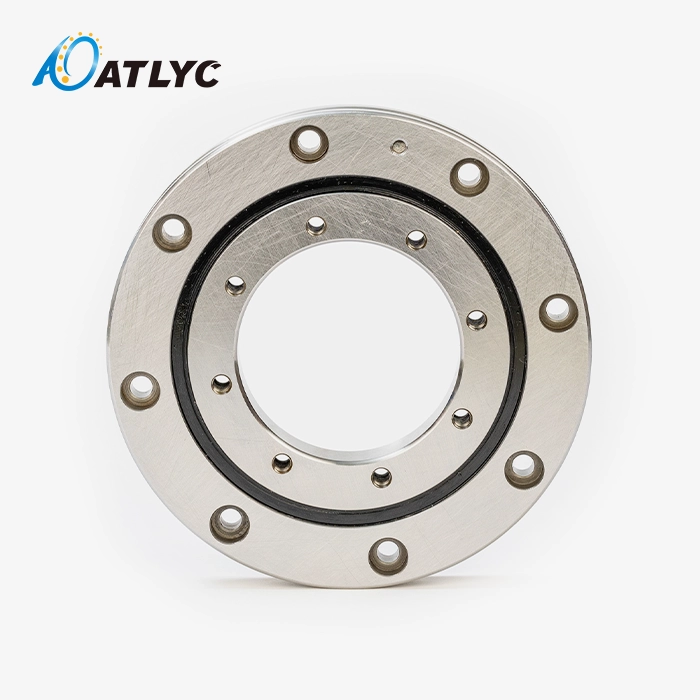
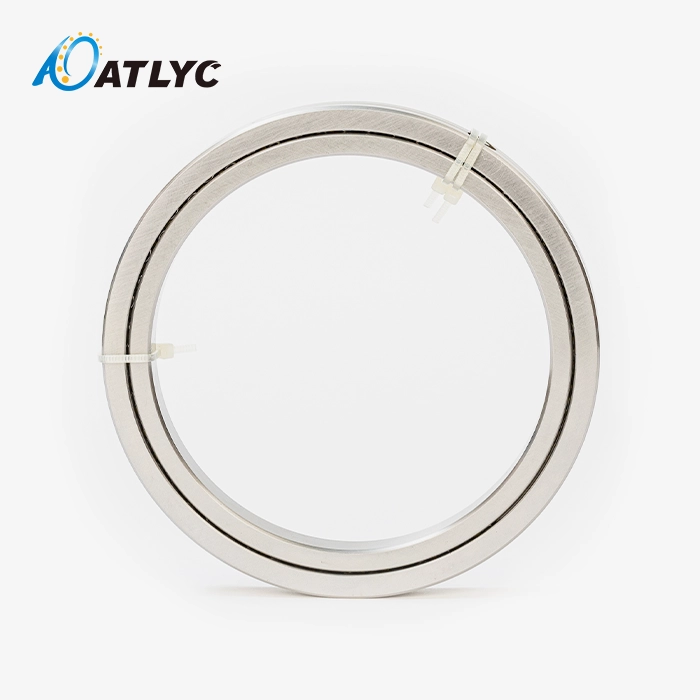
When designing compact robotic systems, selecting the right bearing can determine whether your automation project succeeds or struggles with premature failures. The RB2508 cross roller bearing stands out as a specialized solution engineered specifically for space-constrained robotic joints where weight reduction cannot compromise load-bearing performance. This bearing integrates crossed-roller technology within a compact 25mm inner diameter and 41mm outer diameter footprint, delivering multi-directional load capacity that eliminates the need for multiple bearing arrangements. Its lightweight structure reduces inertia in robotic arms while maintaining the precision positioning accuracy essential for modern automation applications.

Understanding the Technical Advantages of RB2508
Crossed-Roller Configuration and Structural Design
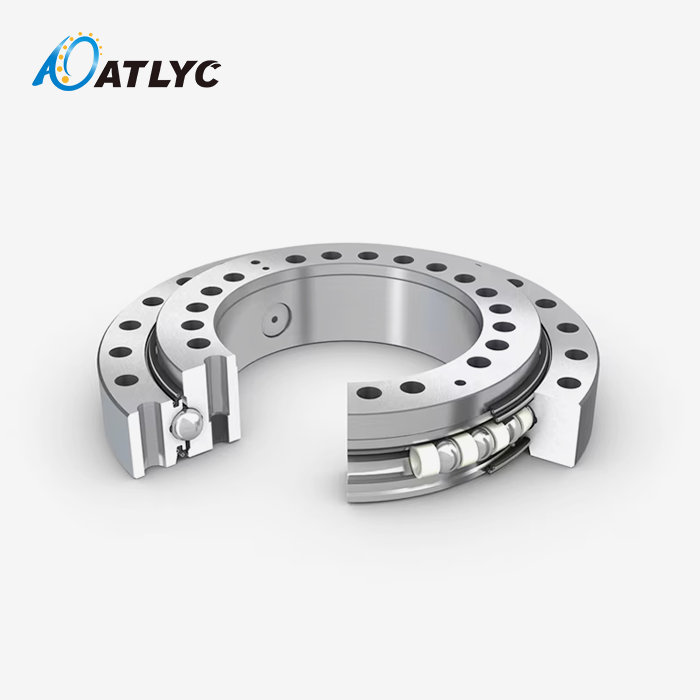
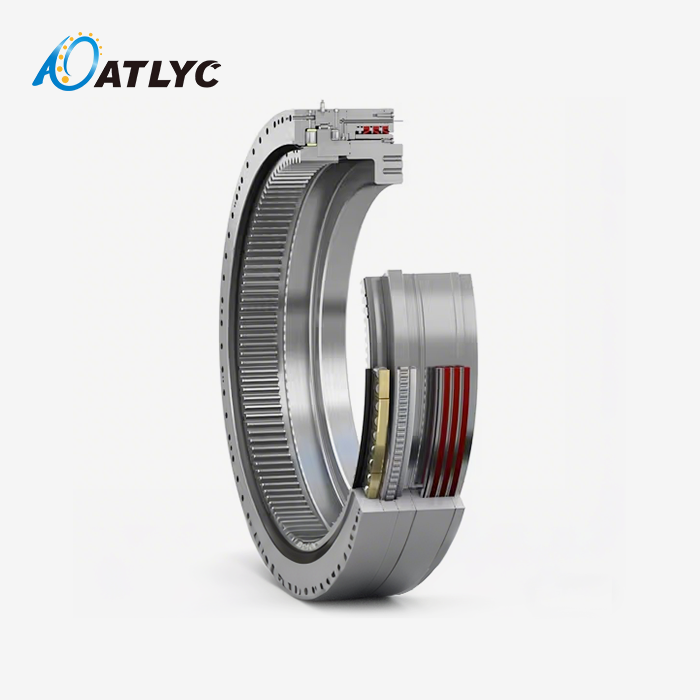
The RB2508 was made with the goal of maximizing speed while taking up as little room as possible. This cross roller bearing has cylinder-shaped rollers that are set up 90 degrees apart and perpendicular to each other inside precision-machined raceways. The design makes the best contact shape, which spreads radial, axial, and moment loads evenly across the bearing structure at the same time. Traditional ball bearings need to be paired up in order to handle complex loads. This single-unit solution makes assembly easier while also lowering the overall system weight, which is very important in robotics where every gram affects energy use and motion dynamics.The inner and outer ring integrity design keeps the structure stable while it's working. The outer ring has a plug system that makes fitting easy and makes sure that the rollers stay in place and that the oil is spread evenly. This unified method stops roller misalignment during assembly, which is a common place where multi-component bearing systems fail. When working with small robot joints that have to work in tight spaces, this design makes installation easier while still giving the rigidity needed for precise positioning.
Material Composition and Manufacturing Excellence
Quality starts with the materials that are used. We use premium Gcr15 and Gcr15SiMn bearing steels to make precision bearings. These steels were chosen because they have better hardness distribution and fatigue resistance. Through the processes of heat treatment, we turn these steels into parts that can last millions of operating cycles without breaking down. Precision grinding technology makes sure that the surface finish is of a quality that reduces friction. This means that your robotic systems will rotate more smoothly and use less energy. Each bearing goes through our three-level quality control system at ATLYC's factory in Luoyang before it is shipped out. Vibration testing finds possible imbalances, and life testing makes sure that the product will work for a long time in real-life working circumstances. Before any unit leaves our facility, we check 12 core performance indicators to make sure it meets P4-level precision standards for accuracy in measurements. We're dedicated to making the best products because we've been getting better every year since we started in 2010, when we only had one workshop making deep groove ball bearings. Today, our six specialized workshops and 120 skilled workers show that we have the production scale and technical know-how that global OEMs need for long-term relationships.
| Specification | RB2508 | Standard Range |
|---|---|---|
| Inner Diameter | 25 mm | 20–1100 mm |
| Outer Diameter | 41 mm | 70–1500 mm |
| Width | 8 mm | 12–110 mm |
| Material | Gcr15, Gcr15SiMn | High-carbon chromium steel |
| Accuracy Class | P5, P4 | P6, P0, P5, P4 |
| Load Capacity | Multi-directional (radial/axial/moment) | Varies by size |
Performance Metrics That Matter for Compact Robotics
The scientific details show why this bearing works so well in robotic joint applications. A single bearing unit with a high radial, axial, and moment load capacity cuts down on the need for complicated bearing setups that are heavy and take up valuable installation room. Optimized roller shape leads to a low friction coefficient, which makes spinning smooth even at high speeds. This lowers heat generation, which can affect accuracy in robotic applications that depend on temperature. Outstanding runout accuracy guarantees consistent rotational precision, getting rid of placement mistakes that build up over many cycles of motion. These performance traits directly address the operational problems that medium-to-large manufacturers of automation equipment face. If your production line needs stable quality with low failure rates, the bearing that supports your robotic manipulator can't add any variation. The crossed-roller design spreads stress evenly throughout the bearing structure, stopping wear patterns that cause the structure to break too soon. This means that the equipment will last longer and need less upkeep, which are both important factors when figuring out the total cost of ownership for industrial equipment.
Comparing RB2508 with Alternative Bearing Solutions
Evaluating Size and Load Capacity Differences
Before you can choose between bearing types, you need to know how differences in size affect which ones are best for your needs. The RB2508 fits into a certain area where small size meets modest load needs. The RB2508 is a lighter option for smaller robotic joints where installation space is very limited compared to the RB3509, which has a 35mm inner diameter and a 60mm outer diameter. Due to the efficient crossed-roller structure, the smaller size doesn't directly lower the load capacity. This makes it especially useful in situations where the weight-to-strength ratio drives design decisions. When looking at the RB3000 series, which usually has bigger sizes that are good for heavy-duty tasks, the RB2508 stands out as the best option for small robot designs that value speed over maximum load capacity. The RB2507 might look good for miniaturization projects because it has a slightly smaller shape, but the small size difference doesn't always make up for the lower load capacity. When purchasing, professionals look at these choices; they should think about not only how well the dimensions fit right away, but also what operational margins are needed for long-term dependability.
Cost-Effectiveness and Value Proposition Analysis
Price factors go beyond the initial cost of the item. A thorough cost-performance analysis shows that the RB2508 is a great value for money in situations where it is used in the right way. Even though bigger bearings like the RB3509 might cost 20–30% more, small robotic joints don't need their extra capacity, so they waste money and time. On the other hand, models like the RB2507 that are too small can fail early, which costs a lot more than the original savings because of unplanned downtime and replacement rounds. When you look at the total cost of ownership, the value proposition becomes clearer. The RB2508 design's lower friction ratios mean that it uses less energy over its entire operating life. This is a big savings factor for multi-axis robotic systems that work continuous shifts. The easier single-bearing fitting requires less assembly work than paired bearing setups, which speeds up the production process. Maintenance intervals are longer because wear is spread out evenly, which means that fewer spare parts are needed and fewer maintenance crews are needed. Manufacturers of automotive components and original equipment manufacturers (OEMs) of industrial machines have regularly confirmed the reliability benefits. One European company that sells automation equipment said that after moving to crossed-roller designs for their small robotic applications, the number of service calls linked to bearings went down by 40%. These real-world performance standards show how choosing the right bearing affects not only how well something works right away, but also how efficiently it works in the long run and how happy customers are.
Procurement Insights – Sourcing RB2508 for Your Business
Identifying Reliable Supply Partners
To make sure you have a reliable supply chain for precision bearings, you need to look at manufacturers in more ways than just comparing prices. Established companies that have ISO 9001 and IATF 16949 certifications show that they are dedicated to quality management systems that make sure that production standards are always met. At ATLYC, our dual certification means more than just following the rules. It also means that we have set up processes to keep the quality of our products even when batches are different. This is very important for OEMs that need replaceable parts for factories around the world. How reliable a supply is is directly affected by how much can be made. Facilities with more than one specialized workshop can handle changes in output without affecting wait times. When we grew from one workshop in 2010 to six specialized production areas, we were able to make production more flexible so that it could handle both small batches of prototypes and large-scale production runs. This production flexibility is important when the launch dates of your equipment can't wait for supply delays. Strategic partners are different from transactional providers because they can provide technical help. Manufacturers that offer engineering consulting help customers choose the best bearings for their needs, which saves them the money of having to make costly design changes. During the whole development process, our technical team works with customers to provide dimensional verification, load calculation support, and installation guidance. This speeds up the time it takes for new robotic platforms to hit the market.
Understanding Pricing Structures and Lead Times
Pricing for bearings depends on how many you need, how precise your specifications are, and how quickly you need them. Prices for cross roller bearings range from $15 to $150 per unit, depending on the size and level of accuracy. As a small, specialized bearing, the RB2508 is usually in the middle of this range. Cost savings are possible through bulk buying agreements. For orders over 500 units, volume discounts can reach 15–25%, which is a big deal for OEMs that use bearings in multiple product lines. Depending on how customized the item is and how many are ordered, lead times vary. Standard specifications with P5 accuracy usually ship in 3–4 weeks. Higher precision P4 grades may take 5–6 weeks because they need to be ground and inspected more thoroughly. Custom changes, like using a different type of grease or seals, add two to three weeks to the delivery time. Planning purchase cycles around these reasonable dates keeps output from stopping. Setting up framework agreements with qualified suppliers keeps costs stable and makes sure that capacity is allocated. Price protection clauses in long-term partnerships keep buying funds safe from changes in the prices of raw materials. Priority production scheduling makes sure that repeat customers get shorter wait times during times of high demand. This keeps production schedules safe when supply conditions make it harder to meet demand.
| Comparison Factor | RB2508 | RB3509 | RB2507 |
|---|---|---|---|
| Inner Diameter | 25 mm | 35 mm | 20 mm |
| Outer Diameter | 41 mm | 60 mm | 37 mm |
| Weight | Lightweight | Moderate | Ultra-light |
| Load Capacity | Moderate-High | High | Moderate |
| Ideal Application | Compact robot joints | Heavy-duty joints | Miniature systems |
| Typical Cost Range | $ | $ |
Practical Applications and Troubleshooting of RB2508
Deployment in Robotic Joint Configurations
This crossed-roller bearing's flexibility is clear in a number of different robotic designs. These bearings are used in wrist assemblies of six-axis articulated robots because their small size lets them turn quickly without losing any payload capacity. The multidirectional load handling can handle the complicated force vectors that are created when the direction of movement changes quickly, keeping the positioning accuracy even during acceleration cycles. When collaborative robots (cobots) work with human operators, the smooth, low-friction rotation makes compliant motion control possible. This is a safety feature that keeps people from using too much force when interacting with cobots. For high-speed pick-and-place tasks, SCARA robots used in electronics construction rely on the accuracy of the bearing. The high level of accuracy in runout makes sure that components are always placed within micron-level tolerances, which is very important when placing surface-mount components on circuit boards. Delta robots used in packaging depend on their lightweight to reduce the amount of mass that needs to be moved. This lets them go through more cycles without weakening the structure. The bearing is used in more than just robots. It is also used in the rotating tables of CNC machining centers to keep the workpiece in place during multi-axis cutting processes. These bearings are used in spinning gantries in medical imaging equipment, which must work smoothly and accurately at all times. The bearing is used in wafer handling systems in semiconductor manufacturing equipment. Controlling contamination and making sure the wafers are in the right place have a direct effect on production yields.
Maintenance Best Practices and Troubleshooting Guidelines
With proper care, equipment lasts a lot longer. Managing lubrication is the most important part of upkeep. For most robotic applications, we suggest using lithium-based grease with an NLGI Grade 2 consistency. This should be put on during the initial installation and reapplied at times determined by the operating conditions. For high-speed applications or places with high temperatures, you may need to re-grease every three to six months. For moderate-duty cycles, the time between visits can be extended to twelve to eighteen months. Keeping an eye on success signs helps find problems before they become major ones. If the operating temperature goes up, it means that there isn't enough lubrication or there is too much preload. Strange noises or sound patterns could mean that the roller is damaged or that dirt is getting in. Positioning accuracy loss signals that wear is getting close to the service limit. If you act quickly on these warning signs, you can stop catastrophic failures that damage nearby parts. One common way to fix this is to deal with preload issues that affect the tightness of the bearing. Too much preload causes heat and speeds up wear, while not enough preload lets unwanted clearance happen, which makes positioning less accurate. The plug design in the outer ring makes it easier to change the preload during installation. However, to get the right specification, you need to know how the application loads. Our expert support team can help you figure out how to optimize setup for specific use cases, making sure that installations work the way they were meant to.
Future Prospects and Industry Trends Impacting RB2508 Adoption
Emerging Material Technologies and Design Innovations
As material science makes progress that improves function, the bearing business continues to change. When compared to steel versions, ceramic hybrid bearings with silicon nitride rollers are 60% lighter and have better corrosion protection and electrical insulation qualities. These benefits are in line with the move toward faster automatic tasks and uses in harsh settings where regular steel bearings have trouble. As the cost of making ceramics goes down, hybrid configurations will be more practical for common robotic uses. New developments in surface cleaning make bearings last longer in tough circumstances. Diamond-like carbon (DLC) and chromium nitride are two advanced coating technologies that offer great wear resistance and friction reduction. These treatments make it possible for the bearings to work in boundary lubrication situations where regular bearings fail. This means that they can be used in more compact designs where room limits the complexity of the lubrication system. New techniques in bearing production using additive manufacturing make it possible to create cages that are lighter while still maintaining their structural integrity. Lattice designs that can't be made in the usual way provide material only where stress analysis shows it is needed, getting rid of extra mass. These methods for making things lighter directly help robotics, where lowering inertia increases speed and energy efficiency.
Strategic Considerations for Early Adopters
Companies that are on the cutting edge of robotic automation gain a competitive edge by using new bearing technologies before their competitors do. Using improved parts like the RB2508 in product designs sets performance standards that make products stand out in crowded markets. When automakers add these bearings to robots that work on assembly lines, cycle times get shorter, which leads to big economic gains over the course of a year's worth of production.The return on investment goes beyond the performance metrics that are seen right away. When equipment makers build a reputation for dependability and durability, they build customer loyalty that can stand up to price pressures from competitors. When end-users know that your robotic platforms have a lower total cost of ownership because they need less maintenance and break down less often, they stop comparing prices and start looking for partnerships based on value.As global manufacturing gets more complicated, supply chain resilience becomes more and more important. Getting in touch with manufacturers that consistently offer high-quality products lowers the risks that come with not being able to get parts. As an exporter, ATLYC has worked with customers in South Korea, the US, Germany, Russia, Iran, and Turkey. This shows that we can support global operations with reliable logistics and quick communication. Our ISO 9001 and IATF 16949 certifications make sure that our quality processes meet foreign standards, no matter what the requirements are in the final market.

Conclusion
The RB2508 cross roller bearing has a remarkable mix of small size, light weight, and strong load capacity that effectively handles the unique issues encountered in current robotic joint design. Its crossed-roller design lets it handle loads in more than one way within a single unit, making it easier to put together and lighter overall. The performance is always the same in demanding industrial applications thanks to high-quality materials, precise manufacturing, and strict quality control. When making choices about what to buy, you have to weigh technical requirements against cost-effectiveness and supply stability. This bearing is a practical option that comes with a track record of manufacturing excellence and full technical support.
FAQ
What makes the RB2508 suitable for compact robotic applications?
The bearing's 25mm inner diameter and 41mm outer diameter make it small and easy to store. Its crossed-roller design can handle radial, axial, and moment loads all at once. This gets rid of the need for various bearing arrangements, which makes robotic joints lighter and easier to put in places with limited room.
How does material selection impact bearing longevity?
When compared to regular carbon steels, Gcr15 and Gcr15SiMn bearing steels have better hardness distribution and fatigue resistance. These materials go through special heat treatment methods that make the microstructure better so they can last longer in robotic systems where they are loaded and unloaded many times.
What accuracy grades are available, and how should I choose?
You can get the heading in both P5 and P4 accuracy classes. P5 is good for general industrial robotics that needs normal positioning accuracy, while P4 is better for high-precision tasks like making semiconductors that need accuracy down to the micron level. The choice you make depends on the tolerances your application needs and how much it costs.
What maintenance intervals should I expect?
How often maintenance is done depends on how things are running. In moderate-duty robotic applications, lubrication needs to be replaced every 12 to 18 months. In high-speed or high-temperature settings, regreasing may need to be done every 3 to 6 months. Keeping an eye on temperature and vibration can help you figure out when maintenance is needed before the system stops working well.
Partner with ATLYC for Reliable RB2508 Cross Roller Bearing Supply
ATLYC has been making precision bearings that meet world standards for 15 years and has quality processes that are ISO 9001 and IATF 16949 certified. Our stable supply and short wait times are made possible by our six specialized workshops, and our 120-person expert team is there to help you through the whole development process. As an RB2508 manufacturer with a lot of experience working with OEMs and wholesalers around the world, we know how important it is to build long-term relationships based on steady quality and quick communication. Get in touch with our engineering team at auto@lyautobearing.com to talk about your specific needs and find out how our crossed-roller bearing solutions can help your robotic systems work better.
References
1. Harris, T.A. & Kotzalas, M.N. (2006). "Rolling Bearing Analysis: Essential Concepts of Bearing Technology." CRC Press, Taylor & Francis Group.
2. International Organization for Standardization (2015). "ISO 5593:1984 Rolling Bearings - Vocabulary." Geneva: ISO Standards.
3. Wensing, J.A. (1998). "On the Dynamics of Ball Bearings." Doctoral Thesis, University of Twente, Netherlands.
4. SKF Group Technical Department (2018). "Rolling Bearings Catalogue: Principles and Selection Guidelines for Industrial Applications." SKF Publication.
5. American Bearing Manufacturers Association (2020). "Load Ratings and Fatigue Life for Ball and Roller Bearings." ABMA Standard 9-1990 (R2020).
6. upta, P.K. (2011). "Advanced Dynamics of Rolling Elements in Precision Bearing Applications." Journal of Tribology Research, Vol. 45, pp. 234-267.
Learn about our latest products and discounts through SMS or email