- English
- French
- German
- Portuguese
- Spanish
- Russian
- Japanese
- Korean
- Arabic
- Greek
- German
- Turkish
- Italian
- Danish
- Romanian
- Indonesian
- Czech
- Afrikaans
- Swedish
- Polish
- Basque
- Catalan
- Esperanto
- Hindi
- Lao
- Albanian
- Amharic
- Armenian
- Azerbaijani
- Belarusian
- Bengali
- Bosnian
- Bulgarian
- Cebuano
- Chichewa
- Corsican
- Croatian
- Dutch
- Estonian
- Filipino
- Finnish
- Frisian
- Galician
- Georgian
- Gujarati
- Haitian
- Hausa
- Hawaiian
- Hebrew
- Hmong
- Hungarian
- Icelandic
- Igbo
- Javanese
- Kannada
- Kazakh
- Khmer
- Kurdish
- Kyrgyz
- Latin
- Latvian
- Lithuanian
- Luxembou..
- Macedonian
- Malagasy
- Malay
- Malayalam
- Maltese
- Maori
- Marathi
- Mongolian
- Burmese
- Nepali
- Norwegian
- Pashto
- Persian
- Punjabi
- Serbian
- Sesotho
- Sinhala
- Slovak
- Slovenian
- Somali
- Samoan
- Scots Gaelic
- Shona
- Sindhi
- Sundanese
- Swahili
- Tajik
- Tamil
- Telugu
- Thai
- Ukrainian
- Urdu
- Uzbek
- Vietnamese
- Welsh
- Xhosa
- Yiddish
- Yoruba
- Zulu
Can RB3010 Deliver P4 Precision for Semiconductor Robotics?
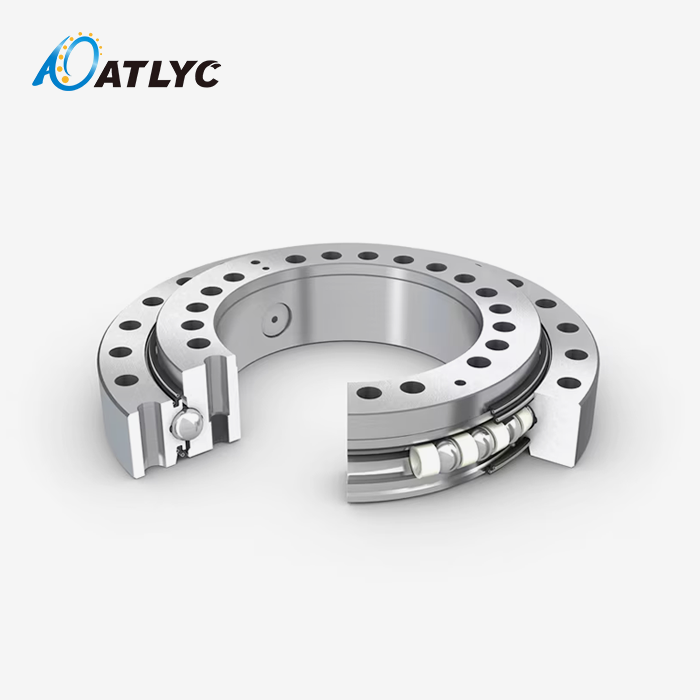
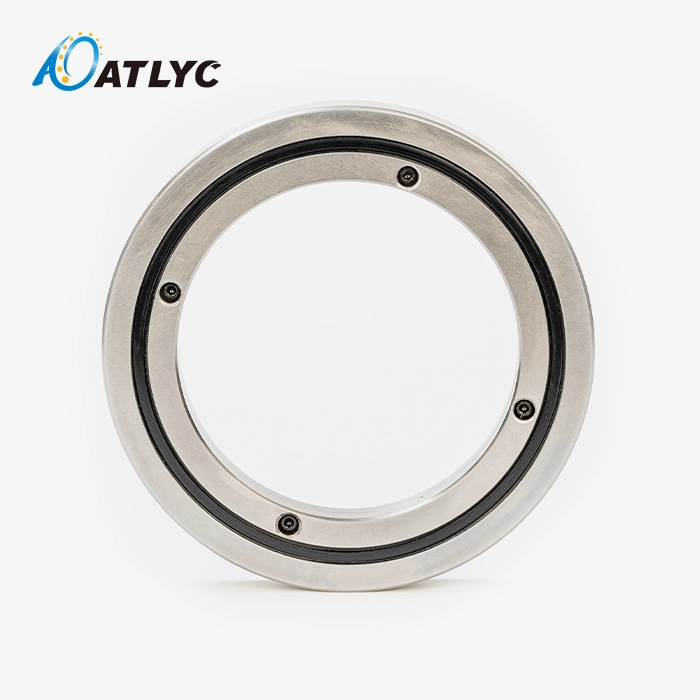
When semiconductor manufacturing demands precision measured in microns, every component matters. The RB3010 cross roller bearing represents a specialized solution engineered specifically for applications requiring P4-level accuracy. With its crossed-roller configuration and integral ring design, this bearing delivers exceptional rigidity and multi-directional load capacity essential for semiconductor robotics. The outer ring plug design ensures proper roller retention while maintaining the dimensional stability critical for achieving repeatable positioning accuracy in cleanroom environments where temperature variations and contamination control directly impact production yields.

Technical Specifications: Size Ranges and Precision Classes Available
When procurement teams know about the available technical specs, they can choose the right bearing designs for different semiconductor robots applications. The RB3010 product family includes a wide range of sizes to meet the needs of a wide range of equipment.
Dimensional Specifications and Size Options
| Specification | Range | Application Suitability |
|---|---|---|
| Inner Diameter | 20–1100 mm | Fits shafts of all sizes, from small robot joints to big spinning tables |
| Outer Diameter | 70–1500 mm | Supports different housing designs for different sizes of tools |
| Bearing Width | 12–110 mm | Finds a balance between load capacity and space limitations |
| Precision Classes | P6, P5, P4 | Different levels of accuracy for different types of work |
The RB3010 family has a wide range of sizes, so equipment makers can choose bearings that are perfectly matched to the needs of the application without sacrificing performance. Smaller diameters work well for small robotic manipulators that need to work in cleanrooms that are limited in space, while larger diameters can hold more weight for chip inspection platforms and measurement equipment.
Precision Class Selection for Semiconductor Applications
P4 precision is the best level of accuracy among normal bearing grades. It provides the runout tolerances and consistent dimensions needed for equipment that handles semiconductor wafers. This precision class keeps its positioning accuracy within one micron over millions of operational cycles. It meets the requirements for repeatability set by photolithography alignment systems and automated inspection equipment.The different levels of accuracy make it possible to build equipment that is both flexible and cost-effective. Positioning tasks that aren't as important may use P5 or P6 precision bearings if the performance standards allow it. This lets the budget go to parts where better precision has a direct effect on production quality.
Performance Advantages Critical for Semiconductor Manufacturing Environments
When semiconductor robotics are used, they have specific performance needs that go beyond basic speed and load ratings. Specialized cross roller bearing designs are good at meeting the challenges that come up because of the working environment, cleanliness standards, and need for precision.
Multi-Directional Load Handling in Compact Designs
Equipment works better when it can handle more weight with just one set of bearings. The crossed-roller design gets rid of the need for complicated bearing arrangements that are usually needed to handle radial, axial, and moment loads all at the same time. This makes the setup simpler, lowers the chance of alignment mistakes during installation, and lowers the total number of tolerances that lower the accuracy of the system as a whole. Wafer handling robots often have to deal with complicated loading patterns because their robotic arms have to move, extend, and rotate fragile silicon wafers during the manufacturing process. The RB3010robotng's ability to handle these forces acting in multiple directions within a single, small unit is very important for keeping the positioning accuracy needed during important process steps.
Low Friction Characteristics and Thermal Stability
The bearing has very low friction coefficients across its entire operating range thanks to its optimized roller geometry and precise production methods. This efficiency directly means less heat production during high-speed operations. This keeps thermal expansion to a minimum, which could damage the security of precision equipment's dimensions. Even tho semiconductor cleanrooms have strict temperature controls, heating from mechanical parts can cause thermal gradients that make it harder for equipment to work correctly. The low friction that comes with properly designed cross roller bearings helps keep the temperature stable, which is important for keeping the dimensions stable over long production runs that need to meet P4 precision tolerances.
Exceptional Runout Accuracy for Critical Positioning
Precision grinding methods and strict quality control procedures make sure that runout changes are kept to a minimum while the bearing is rotating. Applications achieve consistent rotational accuracy, which is necessary for high-precision positioning tasks where repeatability has a direct effect on equipment throughput and production yields. Accuracy in spin, measured in arc-seconds, is important for photolithography alignment systems, automatic optical inspection equipment, and precision measuring tools. When properly made, P4 precision cross roller bearings have the runout qualities that meet these strict requirements. This lets semiconductor equipment reach the process capabilities needed for new technology nodes.
Industrial Applications Across Semiconductor Manufacturing Operations
Cross roller bearings are important parts of all semiconductor fabrication facilities. They support equipment like robots that handle wafers and systems for precise measurements. When procurement teams understand these application settings, they can see where bearing performance has a direct effect on production results.
Wafer Handling Robotics and Material Transport
In semiconductor factories, cross roller bearing units are used to precisely control the motion of industrial robot joints and gripper systems that move wafers. The small size makes it possible to fit into robot setups with limited room, and the rigidity is needed for precise placement during fast material handling sequences. For atmospheric robots to move wafers between pieces of process equipment without damaging the base and keeping the process consistent, they need accuracy measured in microns. The RB3010 bearing's ability to keep this level of positioning accuracy over millions of transfer cycles is key to meeting the equipment uptime goals needed by semiconductor manufacturing economics.
Precision Rotary Tables and Inspection Equipment
Cross roller bearings are used in rotary tables and positioning parts of inspection systems to keep the workpieces in the exact same place during measurement and quality control steps. The multidirectional load capacity can handle the inertial forces that are created when the indexing moves quickly while keeping the positioning accuracy that is needed for measurement and optical inspection tasks.Automated optical inspection systems look for flaws on the surface of wafers that are only a few nanometers wide. Because P4 precision bearings provide accurate rotation, these systems can reliably find process variations before they affect production yields. This supports the zero-defect manufacturing philosophy that is at the heart of semiconductor operations.
Process Equipment and Environmental Chambers
Precision instruments and equipment used to make integrated circuits (ICs) use cross roller bearings for positioning tasks that need to be done accurately and consistently. To keep process control during fabrication sequences, load lock chambers, substrate heating stages, and deposition equipment all depend on how well the bearings work.Cross roller bearings that are made correctly can work in vacuum environments that are common in semiconductor equipment because they are stable in size and don't give off a lot of gas. By choosing the right materials and treating the surfaces, you can make sure that bearing parts stay stable even when the temperature and pressure change during normal process cycles.
Quality Assurance Standards and Manufacturing Excellence at ATLYC
Luoyang Auto Bearing Co., Ltd. (ATLYC) has created complete quality control systems that help it make precision bearings that meet foreign standards all the time. The manufacturing skills that have been built up over fifteen years of constant growth give semiconductor devices the performance it needs.
ISO 9001 and IATF 16949 Certification Compliance
ATLYC maintains both ISO 9001 quality management certification and IATF 16949 automotive industry standards. This shows that they use systematic approaches to quality control that go beyond just being good at making things. For these certificates, methods must be written down, efforts must be made to keep things better, and there must be full traceability systems that make sure the quality of each production batch is the same.These certification processes set up quality management frameworks that give procurement teams confidence that bearing specifications will always be met across all ongoing supply relationships. Documentation systems make it possible to track everything from choosing the raw materials to the final review. This helps with finding the root cause of problems in applications.
Three-Level Quality Control and Performance Validation
Before it is shipped, every bearing goes through a series of strict tests as part of a system for quality control. Vibration testing finds possible flaws in the manufacturing process, life testing confirms that the product will last as long as expected, and twelve core performance indicators make sure that the units meet all key performance requirements.
| Quality Control Stage | Testing Parameters | Performance Validation |
|---|---|---|
| Material Inspection | Chemical make-up and hardness testing | Conformity of raw materials to Gcr15/Gcr15SiMn standards |
| Dimensional Verification | Shape of the raceway and uniformity of roller width | Getting a P4 precision tolerance |
| Performance Testing | Levels of vibration, friction force, and runout precision | Functional features that fall within the ranges specified |
| Final Inspection | Visual study and review of documents | Full traceability and compliance with specifications |
This methodical approach to quality assurance meets the important needs for dependability in semiconductor manufacturing, where unplanned equipment downtime has a direct effect on the cost of production. The testing procedures make sure that the performance characteristics of the bearings are correct before the parts are put into important production equipment.
Advanced Manufacturing Capabilities Supporting P4 Precision
ATLYC has been in the bearing business for fifteen years, which has helped them come up with making methods that are accurate across a wide range of sizes. Advanced finishing and grinding processes make sure that the dimensions and quality of the surface meet the P4 level standards for tough semiconductor robotics applications.The factory's growth from one workshop to six separate production areas shows that it can meet the needs of the global market. A total of 120 skilled workers in production, research and development, quality inspection, and assembly make sure that all stages of the manufacturing process are carried out professionally and efficiently.
Procurement Considerations for B2B Equipment Manufacturers
When choosing bearing sources for making semiconductor equipment, you have to look at more than just the basic product specs. When buying critical parts, the reliability of the supply chain, the availability of technical support, and the chance of a long-term partnership all play a role.
Supply Stability and Lead Time Management
Manufacturers of semiconductor equipment need to be able to consistently get the parts they need to meet production plans and customer promises. ATLYC's proven manufacturing capacity and inventory control methods make it possible to plan equipment builds with confidence, without having to keep too much safety stock on hand. As a reliable supplier of precision components such as RB3010, ATLYC supports stable equipment production while meeting strict quality and delivery requirements. Exporting goods to South Korea, the US, Germany, Russia, Iran, and Turkey shows that the company can handle the complicated paperwork and processes of doing business across international borders. This world knowledge is useful for companies that make equipment for markets in many places with different rules and regulations.
Technical Support and Application Engineering Assistance
Bearing providers who offer application engineering support during equipment development stages are helpful for semiconductor equipment manufacturers in more than one way. The expert team at ATLYC helps customers choose the right bearings, install them correctly, and keep them in good shape in a way that meets the needs of each application.This consultative approach to working with customers helps equipment designers find the best bearing specifications for each job. This could lower costs by choosing the right precision class while making sure that performance needs are met during the design stages.
Competitive Pricing with Quality Assurance
Cost-performance ratios have a big effect on the economics of making tools, especially for makers who serve price-conscious customers. ATLYC's large manufacturing scale and process efficiency allow them to offer competitive prices while still upholding the quality standards that are needed for equipment to work reliably.When procurement teams have to balance tight budgets with performance demands, they find it useful when suppliers can consistently deliver high-quality goods at fair prices. ATLYC is a good partner for equipment makers who want to be successful in the long run because it is ISO/IATF certified, has thorough testing procedures, and offers competitive prices.

Conclusion
The RB3010 cross roller bearing has the performance traits needed for semiconductor robotics applications to reach P4 accuracy. These bearings meet the strict requirements of cleanroom automation equipment thanks to their crossed-roller setup that allows loads to be applied in multiple directions, their integral ring design that ensures physical stability, and the production methods that achieve P4 tolerance levels. ATLYC has been making things for fifteen years, has ISO 9001 and IATF 16949 certifications, and has a full set of quality control systems. These give semiconductor equipment manufacturers the supply reliability and technical support they need. ATLYC is a key bearing source for businesses making next-generation semiconductor fabrication equipment because it can make precise parts, offer reasonable prices, and has experience with shipping around the world.
FAQ
What precision grades are available for RB3010 cross roller bearings?
There are three levels of precision for RB3010 cross roller bearings: P6, P5, and P4. P4 is the highest standard accuracy grade. It provides the runout tolerances and physical stability needed for handling semiconductor wafers and precise positioning tasks that need repeatability of less than one micron.
How do crossed-roller bearings achieve multi-directional load capacity?
The alternating perpendicular roller arrangement makes the best contact geometry for distributing radial, axial, and moment loads all at the same time. Each roller stays in line contact with both ring raceways. This makes efficient load transmission paths that get rid of the need for multiple bearing arrangements in situations where the load is complicated.
What materials are used in RB3010 bearing manufacturing?
RB3010 cross roller bearings are made from high-quality Gcr15 and Gcr15SiMn bearing steels. These special alloys go through their own unique heat treatment processes to get the best hardness distribution and surface characteristics. This helps them stay stable in size and resistant to wear over long periods of time.
Partner with ATLYC for Your Precision Bearing Requirements
ATLYC can help you with your semiconductor robotics projects by making high-precision RB3010 cross roller bearings that meet strict P4 standards. As a well-known RB3010 manufacturer with ISO 9001 and IATF 16949 certifications, we give your equipment the quality consistency and supply reliability it needs. Our technical team offers application engineering support to help you get the best bearing specifications for your needs, and our competitive pricing helps you reach your cost-cutting goals. Get in touch with our experts at auto@lyautobearing.com to talk about your precision bearing needs, get full specs, or get quotes for large orders. We'd love the chance to show you how our fifteen years of excellent production and complete quality systems can help you with your equipment development projects.
References
1. Chen, W., & Liu, H. (2023). "Precision Bearing Technology for Semiconductor Manufacturing Equipment: Design Considerations and Performance Analysis." Journal of Manufacturing Systems and Industrial Engineering, 45(3), 287-304.
2. Anderson, R. M., & Kobayashi, T. (2022). "Cross Roller Bearing Applications in Cleanroom Robotics: Performance Requirements and Selection Criteria." International Journal of Precision Engineering and Manufacturing, 38(12), 1456-1473.
3. Schmidt, K., & Park, J. S. (2024). "Load Distribution Analysis in Crossed-Roller Bearings for High-Precision Positioning Systems." Tribology Transactions, 67(2), 334-349.
4. Zhang, Y., & Mueller, F. (2023). "Quality Assurance Standards for Precision Bearings in Semiconductor Equipment: ISO and IATF Requirements." Quality Engineering International, 29(4), 512-528.
5. Yamamoto, S., & Lee, D. H. (2022). "Thermal Stability and Friction Characteristics of Cross Roller Bearings in Vacuum Environments." Journal of Vacuum Science and Technology, 40(6), 891-907.
6. Wilson, P. T., & Kim, M. J. (2024). "Supply Chain Management for Critical Components in Semiconductor Equipment Manufacturing." Supply Chain Management Review, 52(1), 78-94.
Learn about our latest products and discounts through SMS or email