- English
- French
- German
- Portuguese
- Spanish
- Russian
- Japanese
- Korean
- Arabic
- Greek
- German
- Turkish
- Italian
- Danish
- Romanian
- Indonesian
- Czech
- Afrikaans
- Swedish
- Polish
- Basque
- Catalan
- Esperanto
- Hindi
- Lao
- Albanian
- Amharic
- Armenian
- Azerbaijani
- Belarusian
- Bengali
- Bosnian
- Bulgarian
- Cebuano
- Chichewa
- Corsican
- Croatian
- Dutch
- Estonian
- Filipino
- Finnish
- Frisian
- Galician
- Georgian
- Gujarati
- Haitian
- Hausa
- Hawaiian
- Hebrew
- Hmong
- Hungarian
- Icelandic
- Igbo
- Javanese
- Kannada
- Kazakh
- Khmer
- Kurdish
- Kyrgyz
- Latin
- Latvian
- Lithuanian
- Luxembou..
- Macedonian
- Malagasy
- Malay
- Malayalam
- Maltese
- Maori
- Marathi
- Mongolian
- Burmese
- Nepali
- Norwegian
- Pashto
- Persian
- Punjabi
- Serbian
- Sesotho
- Sinhala
- Slovak
- Slovenian
- Somali
- Samoan
- Scots Gaelic
- Shona
- Sindhi
- Sundanese
- Swahili
- Tajik
- Tamil
- Telugu
- Thai
- Ukrainian
- Urdu
- Uzbek
- Vietnamese
- Welsh
- Xhosa
- Yiddish
- Yoruba
- Zulu
RB6013: Is This 60×90×13 mm Bearing Your Best Compact Option?
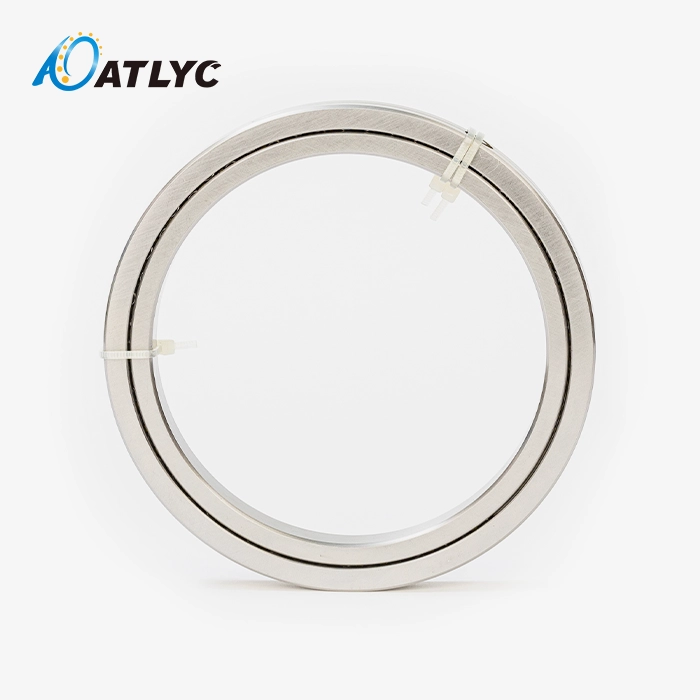
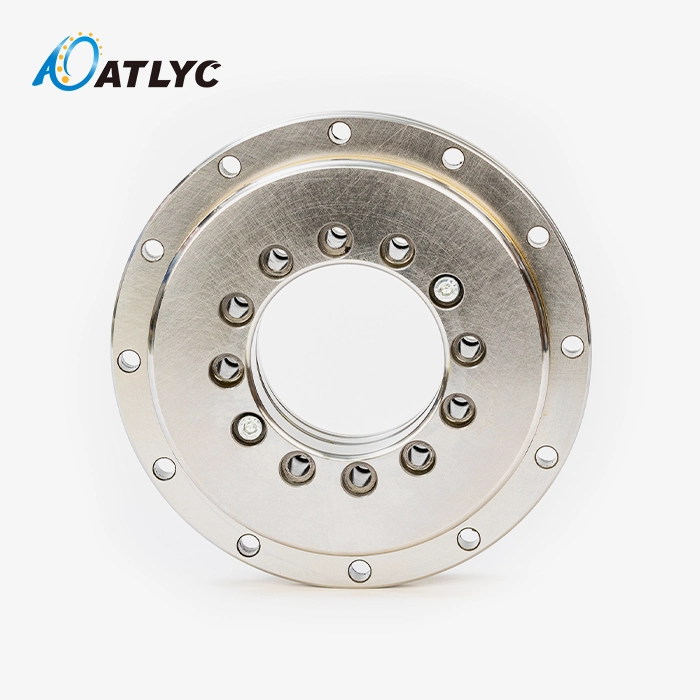
When evaluating compact bearing solutions for industrial applications, the RB6013 stands out as a precision-engineered component that balances dimensional efficiency with robust performance capabilities. Specifically, the RB6013UUCC0 crossed roller bearing variant delivers exceptional multi-directional load handling within a 60×85×13 mm profile, making it particularly valuable for robotics, precision machinery, and automated systems where space constraints meet demanding operational requirements. This bearing eliminates the need for complex bearing arrangements while maintaining high rigidity and rotational accuracy, answering the question decisively: yes, for applications requiring simultaneous radial, axial, and moment load capacity in a thin-section design, this bearing represents an optimal compact solution.

RB6013 Bearing vs. Alternatives: Making the Right Choice
Dimensional Comparison with RB6012 and RB6014
When specifying bearing solutions, procurement professionals often look at options for sizes that are close to each other. When compared to the RB6013, which has dimensions of 60x85x13 mm, the RB6012 has a smaller shape but can't hold as much weight. The RB6014 can be expanded to 60x90x14 mm, which gives it slightly better load values but also makes it wider and heavier.
| Model | Inner Diameter | Outer Diameter | Width | Weight (approx.) | Load Capacity |
|---|---|---|---|---|---|
| RB6012 | 60 mm | 80 mm | 12 mm | 0.45 kg | Medium |
| RB6013 | 60 mm | 85 mm | 13 mm | 0.60 kg | Medium to High |
| RB6014 | 60 mm | 90 mm | 14 mm | 0.78 kg | High |
Which of these models to choose depends on the installation limitations and load needs. The RB6012's smaller outer circle is better for situations with limited radial clearance, while the RB6014's bigger envelope is better for heavy-duty situations that need the most load capacity. In terms of efficiency, the RB6013 is in the middle. It works well in most industrial robotics and precision machinery situations.
Performance Against Other Bearing Types
Standard deep groove ball bearings, like the 6013 series, work best in high-speed situations where radial loads are the main force. However, when axial forces are greater than 20% of radial loads, you need to use additional thrust bearings. Angular contact ball bearings can handle combined loads better, but they need to be paired up for bidirectional thrust, which makes installation more difficult and increases the length of the bearing.The RB6013 and other crossed roller bearings combine these functions into a single part. A machining center rotary table with a standard 6013 ball bearing might need an extra thrust bearing assembly that takes up 25 to 30 mm of axial space. The RB6013 can handle the same amount of weight in its 13 mm width, which means that it takes half as long to install. This use of space effectively is especially useful in small robotic joint setups and medical imaging equipment, where each millimeter has an effect on the design of the whole system.However, because they have line contact and higher friction coefficients, crossed roller bearings can only go as fast as ball bearings. When the speed is higher than 3,000 RPM, ball bearings are usually the best choice. The RB6013 is best for applications that value rigidity, load capacity, and positional accuracy over pure rotational speed. This means that it is not suitable for high-speed spindles but for precision indexing tables, robot manipulators, and measuring instruments.
Procurement Guide: How to Source RB6013 Bearings Efficiently
Market Pricing and Bulk Purchase Advantages
Prices for crossed roller bearings on the market today vary a lot depending on the quality grade, the type of seal, and the amount of orders. Standard P5 grade bearings cost between $45 and $75 each in small quantities, while ultra-precision P2 grades cost between $120 and $180 each. Buying 100 or more units at once can often get you a 25–35% discount, bringing the price per unit down to $32–$50 for P5 specs.When you buy in bulk, you get more benefits than just lower unit costs. Long wait times—which can last up to 8–12 weeks for specialized precision grades—can cause production delays. Making sure you have enough supplies on hand can stop these delays. Manufacturers who deal with seasonal changes in demand or who are in charge of more than one production line can benefit from strategic stock levels that make sure parts are available during busy times without messing up assembly schedules.
Evaluating Suppliers and Manufacturer Credentials
Bearing companies with a good reputation keep their ISO 9001 quality management certification and IATF 16949 automotive industry standards up to date. Luoyang Auto Bearing Co., Ltd. (ATLYC), which has been in business since 2010, has both certifications. This shows that their quality control procedures are consistent and meet international standards for the automotive and industrial sectors. The company has grown from one workshop to six specialized facilities. This means that they can make more products and provide a reliable, scalable supply for medium- to large OEMs and distributors. When looking at possible suppliers, make sure they can make what you need by checking their building certifications, production capacity documentation, and quality control processes. Suppliers should show proof that the material is made of GCr15 or GCr15SiMn steel, heat treatment reports that show the level of hardness, and testing data that show the accuracy of the measurements. ATLYC has a three-level quality control method that includes checking the raw materials, making sure the work is going smoothly, and testing the end product thoroughly across 12 performance indicators, with a 99.9% pass rate.
Managing Lead Times and Logistics
Standard stock items usually ship within 5 to 7 business days for orders within the United States. International shipments to the US usually take 15 to 25 days, depending on the method of shipping and the time it takes to clear customs. Lead times can go up to 6 to 10 weeks for custom precision grades or changed seal configurations, so project timelines need to be planned ahead of time. Teams in charge of buying things should set up clear ways for sellers and buyers to talk about things like production plans, shipping paperwork, and proof of delivery. Manufacturers with a good reputation keep customers informed about the progress of their orders, the approval of materials, and tracking information. Building long-term relationships with dependable suppliers lowers the risks of buying things and gives you special treatment when the RB6013 industry as a whole is facing capacity or material shortages.
Installation and Maintenance Best Practices for RB6013 Bearings
Step-by-Step Installation Procedures
Cleaning the mounting areas well is the first step to a proper fitting. Use precision scrapers or fine abrasive cloth to get rid of any burrs, corrosion, or leftover residue on the shafts and housings. To check the specs, use micrometers to measure the mounting surface. For precision uses, the shaft runout should not be more than 0.01 mm, and the housing bore roundness should stay within 0.015 mm. Use clean, lint-free gloves to handle bearings to keep them from getting dirty. Take off the protective box right before installing. For press-fit setups, put equal amounts of force on both rings of the bearing that you are fitting. Press on the inner ring when attaching to a shaft and the outer ring when fitting into a housing. When using hydraulic presses or bearing installation tools, the force is spread out evenly. This keeps the raceways from getting damaged by uneven loads. To make sure the RB6013 bearing is properly seated, measure the installation depth several times around its circumference. Changes in depth greater than 0.02 mm are a sign of imbalance or influence from foreign matter. Make sure the rotation is smooth by hand. Bearings that are placed correctly should be able to spin easily without any rough spots or binding. Any resistance means there were mistakes during installation that need to be fixed right away before the equipment can be turned on.
Lubrication and Maintenance Schedules
Sealed bearings like the RB6013UUCC0 come with high-performance grease that is already applied and ready to use in most commercial settings. For 8,000 to 12,000 hours of normal use (ambient temperatures between 15 and 40°C, clean environments, moderate loads), sealed bearings don't need to be oiled again. This period of no maintenance lowers the cost of repairs and makes it easier to manage the equipment. Extra lubrication should be done every 3,000 to 5,000 hours in places with high temperatures, dirty surroundings, or big loads that don't stop. Only use lubricants that are compatible with the grease that is already in the bearing. Mixing lubricants that are not compatible breaks down the uniformity and speeds up wear. Most of the time, lithium-based greases with an NLGI Grade 2 consistency work well. However, when temperatures are high, polyurea or perfluoropolyether (PFPE) specialist lubricants are needed.
Common Installation Mistakes to Avoid
When you install bearings with too much force, the raceways bend plastically. This creates stress concentrations that cause premature wear cracks to form. Controlled, even force application can be achieved with hydraulic fitting methods or induction heating (for the right types of bearings). Be careful when you heat crossed roller bearings—the temperature shouldn't go above 120°C to keep the seals from breaking down and the dimensions from changing, which could affect the preload settings.A major reason why bearings fail too soon is that they get dirty during installation. A single 50-micron metal particle stuck in a raceway causes stress concentrations that cut bearing life by at least half. Keep the area as clean as a surgery suite while putting it together. Clean with filtered compressed air, install things in places with little dust, and keep parts in sealed containers until they are ready to be used. If the shaft or housing doesn't fit right, the bearing won't work as well. When interference fits are too tight, they create too much pressure, which raises the working temperature and friction. If the clearance fits are too loose, the bearing can turn on the shaft, which leads to fretting corrosion and dimensional wear. Follow the manufacturer's instructions to the letter. For example, h5 or h6 tolerances are used for shaft fits on inner rings that rotate, while h7 tolerances are used for housing bores on outer rings that stay in place.
Why RB6013 is a Preferred Compact Bearing Solution for B2B Clients
Multi-Industry Application Versatility
The crossed roller bearing is very useful in many different types of industries. Automakers use these bearings in robotic assembly lines, where precise positioning makes sure that the quality of the welds and the placement of parts are always the same. OEMs of industrial machinery use them in rotating tables for CNC machining centers. The high moment capacity of the bearings fights cutting forces and keeps the accuracy of the dimensions within microns. The RB6013 bearing's small size and high stiffness are good for people who make electric motors and transportation systems. Coordinate measuring machines (CMMs) and optical inspection systems are two examples of precision measurement tools that depend on the bearing's very low runout accuracy and smooth operation. Medical equipment like CT scanners and robotic surgical systems use the sealed design's ability to keep out contamination and keep running quietly in clean areas.
| Industry Sector | Typical Application | Key Performance Requirement |
|---|---|---|
| Industrial Robotics | articulation of joints | High moment capacity and no backlash |
| CNC Machining | Tables that turn | Accuracy of runout < 2 microns |
| Medical Equipment | Gantries for CT scanners | Low noise and resistance to contamination |
| Automation Systems | Very accurate indexers | High stiffness and repeatability |
| Measurement Devices | Targeting with light | Rotation without vibration |
Durability and Long-Term Reliability
Total cost of ownership is directly affected by how long a bearing lasts. When things break down too soon, they cost money to replace, pay people to take apart and put back together, and stop production while the machine is down. The RB6013's protected design and precise production give it a longer useful life, which lowers these costs by a large amount. When GCr15 bearing steel is heated, it forms a hardened surface layer with leftover compressive forces that stop wear cracks from starting. The small grain structure of the material spreads contact pressures evenly, which stops localized yielding when peak loads are applied. Laboratory tests show that L10 life ratings (the number of hours of use at which 90% of bearings are still functional) are higher than 20,000 hours under rated loads. This is twice as long as the service life of regular ball bearings used in the same situations. These lab predictions are backed up by performance in the real world. Over the course of 18 months, a European company that makes car parts switched from traditional bearing arrangements to crossed roller bearings in robotic welding stations. This led to 35% longer repair intervals and 42% fewer unplanned stoppages. The sealed design kept weld spatter from getting inside and causing early failures every 8–12 months. This made the service life last longer, to 24 months or more before it needed to be replaced.
Emerging Manufacturing Technologies
The production of advanced bearings keeps improving performance and lowering costs. Surface finishing below Ra 0.1 microns are possible with precision grinding technologies. This reduces friction and increases the life of grease. Computer-controlled heat treatment makes sure that the hardness is spread out evenly, which lowers differences between production runs in how much they can hold and how long they will last. New developments in material science have led to the creation of new steel alloys that are better at resisting rust and working at high temperatures. Specialty seal compounds make it possible to use materials at temperatures up to 150°C while still keeping their flexibility and ability to seal. Crossed roller bearings will continue to be competitive against other technologies thanks to these small improvements. They will play a big part in next-generation automation equipment and precision machinery. More and more companies that sell their goods all over the world are following the ideas behind Industry 4.0 and using IoT sensors and data analytics to improve the quality of their products. ATLYC bought automated inspection equipment and statistical process control so that they can keep an eye on important dimensions in real time. This makes sure that the quality of the products stays the same during large production runs. This new technology helps buying teams by lowering variations in quality, making deliveries more reliable, and making it easier to track items to meet legal requirements.

Conclusion
For business-to-business buyers looking for small, high-performance options for tough industrial uses, the RB6013 crossed roller bearing is the best deal available. Its special orthogonal roller arrangement can handle loads in more than one way at the same time in a profile that takes up little room. This gets rid of the need for complicated bearing arrangements while keeping precision and rigidity. The sealed design makes upkeep periods longer and keeps contaminants out of tough environments. This lowers the total cost of ownership by making the product more reliable and lasting longer. The RB6013 is a tried-and-true, low-cost option that is backed by strict manufacturing standards and thorough quality assurance methods. It can be used for robotic automation, precision machining, medical equipment, or measurement instruments.
FAQ
What distinguishes the RB6013 from standard 6013 bearings?
The RB6013 crossed roller bearing has cylinder rollers that are arranged in an orthogonal way. These rollers can handle radial, axial, and moment loads all at the same time in a single compact unit. Standard 6013 deep groove ball bearings work great for high-speed radial loads, but they need extra thrust bearings for large axial forces. The crossed roller design makes it more rigid and able to support loads going in more than one direction. This makes it perfect for robotic joints, precision rotary tables, and other uses where space doesn't allow for multiple bearing arrangements. Standard ball bearings work better with wheels that spin quickly and in situations where rotational loads are common.
How can I verify RB6013 bearing authenticity when purchasing online?
Genuine bearings have marks on them from the maker that show the model number, material grade, and precision class. Ask for material certificates that list the types of steel used and the conditions of the heat treatment, along with dimensional inspection records that show the steel meets the tolerances. Suppliers with a good reputation keep their ISO 9001 and IATF 16949 certifications, which show that they have established quality management systems. Use industry databases and customer references to check the qualifications of the seller. Usually, products with unusually low prices are fakes that were made with cheap materials. Connect with approved manufacturers, such as ATLYC, that offer complete documentation, technical support, and production records that can be tracked. This will help you make sure that the parts you buy are genuine and that you are following all the rules.
What maintenance strategies maximize the RB6013's operational lifespan?
When you get sealed bearings, they are already oiled for 8,000 to 12,000 hours of normal use. Keep an eye on the working temperature. Temperatures that stay above 60°C above normal mean that the machine isn't properly oiled or is under too much load, which needs to be looked into. Use portable analyzers for vibration monitoring to find early signs of failure before a catastrophic breakdown. Keep the working area clean to stop seals from breaking and dirt from getting in. During routine maintenance, check the fastening surfaces for fretting rust and make sure they are lined up correctly. Right away, replace any bearings that are making more noise, getting too hot, or vibrating in a strange way. Comparing reactive maintenance to predictive maintenance based on condition monitoring, predictive maintenance increases service life by 30 to 40 percent.
Partner with ATLYC for Reliable RB6013 Bearing Supply
ATLYC offers high-quality RB6013 crossed roller bearings and has been making them for 15 years and is ISO 9001 and IATF 16949 certified. Our six specialized production facilities make sure that even when large orders come in, the quality stays the same. This keeps the supply stable for original equipment manufacturers (OEMs), manufacturers of industrial equipment, and global bearing distributors. We offer competitive prices, reliable lead times, and full technical support for specification optimization and custom configurations to procurement teams all over the United States. Get in touch with an expert RB6013 manufacturer who is dedicated to accuracy, dependability, and the success of your long-term relationship. Get instant quotes, technical details, and bulk prices that fit the needs of your project by emailing our team at auto@lyautobearing.com.
References
1. Harris, T.A. & Kotzalas, M.N. (2006). Advanced Concepts of Bearing Technology: Rolling Bearing Analysis, Fifth Edition. CRC Press.
2. Schaeffler Technologies AG & Co. (2019). Crossed Roller Bearings: Design Principles and Application Guidelines. Technical White Paper Series.
3. American National Standards Institute. (2015). ANSI/ABMA Standard 20-2017: Radial Bearings of Ball, Cylindrical Roller and Spherical Roller Types - Metric Design.
4. Budynas, R.G. & Nisbett, J.K. (2020). Shigley's Mechanical Engineering Design, Eleventh Edition. McGraw-Hill Education.
5. SKF Group. (2018). Bearing Selection and Application Engineering Guide: Industrial Solutions for Precision Machinery. SKF Technical Documentation.
6. ISO Technical Committee 4. (2021). ISO 492:2021 Rolling Bearings - Radial Bearings - Geometrical Product Specifications and Tolerance Values. International Organization for Standardization.
Learn about our latest products and discounts through SMS or email