- English
- French
- German
- Portuguese
- Spanish
- Russian
- Japanese
- Korean
- Arabic
- Greek
- German
- Turkish
- Italian
- Danish
- Romanian
- Indonesian
- Czech
- Afrikaans
- Swedish
- Polish
- Basque
- Catalan
- Esperanto
- Hindi
- Lao
- Albanian
- Amharic
- Armenian
- Azerbaijani
- Belarusian
- Bengali
- Bosnian
- Bulgarian
- Cebuano
- Chichewa
- Corsican
- Croatian
- Dutch
- Estonian
- Filipino
- Finnish
- Frisian
- Galician
- Georgian
- Gujarati
- Haitian
- Hausa
- Hawaiian
- Hebrew
- Hmong
- Hungarian
- Icelandic
- Igbo
- Javanese
- Kannada
- Kazakh
- Khmer
- Kurdish
- Kyrgyz
- Latin
- Latvian
- Lithuanian
- Luxembou..
- Macedonian
- Malagasy
- Malay
- Malayalam
- Maltese
- Maori
- Marathi
- Mongolian
- Burmese
- Nepali
- Norwegian
- Pashto
- Persian
- Punjabi
- Serbian
- Sesotho
- Sinhala
- Slovak
- Slovenian
- Somali
- Samoan
- Scots Gaelic
- Shona
- Sindhi
- Sundanese
- Swahili
- Tajik
- Tamil
- Telugu
- Thai
- Ukrainian
- Urdu
- Uzbek
- Vietnamese
- Welsh
- Xhosa
- Yiddish
- Yoruba
- Zulu
Is RB3510 the Right Bearing Choice for Your Equipment?
When your fine equipment needs to work reliably, choosing the right bearing is a choice that affects the whole process. The RB3510 cross roller bearing is strong and small at the same time. It can handle a lot of load in many directions and is all built into one unit. This bearing can handle radial, axial, and moment loads and has very good runout accuracy. This makes it very useful for robots, machining centers, and precision equipment that need to be accurate and don't have a lot of room. You can tell if this bearing is the best investment for your application by seeing if it fits with the requirements of your equipment, the environment in which it will be used, and your long-term maintenance plan.

Understanding RB3510 Cross Roller Bearings – Technical Architecture and Design
Crossed-Roller Configuration Fundamentals
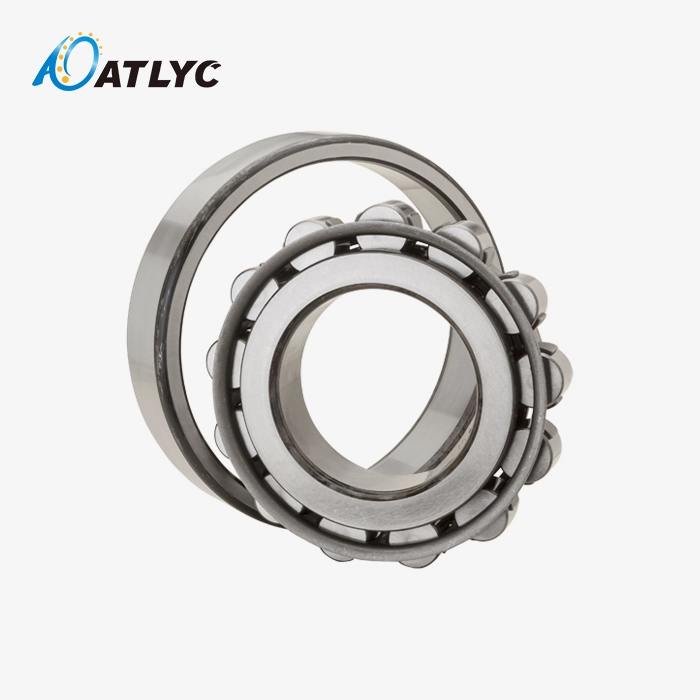
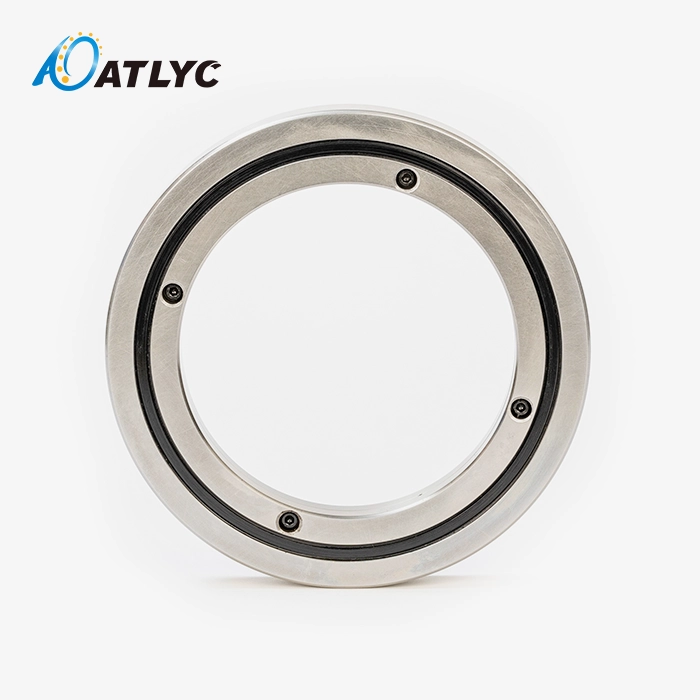
The RB3510 has a unique crossed-roller design with two cylinder-shaped rollers that are placed perpendicular to each other and at exact 90-degree angles. This arrangement makes the best contact geometry, which lets the load be spread out in multiple directions at the same time without the need for extra bearing assemblies. The design gets rid of the need for paired bearing arrangements, which makes installation easier and reduces the overall equipment footprint.
Dimensional Specifications and Size Range
The wide range of sizes available in the RB line of cross roller bearings makes them suitable for a wide range of equipment needs. The sizes that are available range from 20 mm to 1100 mm in diameter on the inside, 70 mm to 1500 mm on the outside, and 12 mm to 110 mm in width. Because of this, engineers can choose bearings that perfectly fit the available space and meet the load requirements. The continuous ring design keeps the structure of the assembly consistent throughout. The outer ring has a plug system that makes fitting easy and makes sure the roller stays in place while it's running.
Material Composition and Manufacturing Standards
We use high-quality Gcr15 and Gcr15SiMn bearing steels to make these precise parts. These steels were chosen because they have excellent hardness distribution and wear resistance. Each bearing has the best surface finish and exact dimensions, thanks to controlled heat treatment methods and precise grinding technology. Our factory has ISO 9001 and IATF 16949 certifications, which show that we are committed to quality standards that are known throughout the automotive and industrial equipment industries. Before being sent out, each unit is put through twelve core performance indicators, vibration testing, and a life cycle evaluation.
Performance Characteristics That Drive Equipment Reliability
Understanding how RB3510 technology leads to practical benefits helps buying teams decide if this type of bearing is right for their needs. In industrial settings, these bearings stand out because of the following features: Load Management in Multiple Directions: The crossed-roller design handles radial, axial, and moment loads all in one bearing unit. The design of the equipment's system is simpler, and it can handle loads that would normally require multiple standard bearings. This combination makes your system less complicated mechanically and lowers the number of places where it could fail. Better stiffness and rigidity: High contact ratios between rollers and precisely cut raceways make the stiffness qualities stand out. This stiffness keeps the positional accuracy even during demanding machining operations or fast robotic movements by minimising deflection under operating loads. The structural stability is very important in situations where a placement error has a direct effect on the quality of the product. Less Friction Coefficient: When precision manufacturing is combined with optimised roller geometry, the friction coefficients during operation are very low. The smoother rotation, lower energy use over the lifecycle of the equipment, and longer operational life before maintenance is needed are all results of this efficiency. Less friction also means less heat is generated, which is good for precision applications that worry about thermal expansion. Very Good Runout Accuracy: Our precise grinding methods and strict quality control make sure that the bearing's runout changes very little over its working life. Applications get stable circular accuracy, which is needed for high-precision placement jobs in medical imaging equipment, devices that make semiconductors, and coordinate measuring tools. These performance traits work together to support equipment that can't handle mistakes in placement or unplanned downtime. With a single component specification, the combination solves a number of engineering problems.
Comparing RB3510 with Alternative Bearing Solutions
Performance Differentiation Across Bearing Types
Figuring out how cross roller bearings stack up against other bearing types will help you choose the technology that will work best for your needs. Traditional ball bearings work great for high-speed tasks but not so well for mixed loads. Tapered roller bearings can handle thrust loads well, but they need to be mounted in pairs, which makes installation more difficult. The RB3510 is one of a kind because it can handle complex loading in small spaces. This design gets rid of the need for bearing pairs in places where radial and axial forces, as well as moment loads, act at the same time, like in spinning tables and robot joints. When compared to ball bearings, they have a slightly lower maximum speed, which means they are better for precise positioning than ultra-high-speed rotation.
Model Variations Within the RB Series
| Model Designation | Inner Diameter (mm) | Outer Diameter (mm) | Width (mm) | Primary Application Focus |
|---|---|---|---|---|
| RB3510 | 35 | 60 | 10 | Compact robot joints, small rotary tables |
| RB4010 | 40 | 65 | 10 | Medical equipment, precision instruments |
| RB5013 | 50 | 80 | 13 | Machining center tables, larger manipulators |
| RB6013 | 60 | 90 | 13 | Industrial automation, heavy-duty positioning |
Selecting among these variations depends on your specific spatial constraints and load requirements. The RB3510 particularly suits applications where compact dimensions remain critical, yet load capacity cannot be compromised. Engineering teams should evaluate actual operating loads—including shock loads and vibration—against rated capacities to ensure adequate safety margins.
Cost-Performance Analysis for Procurement Decisions
Price considerations extend beyond initial purchase costs to encompass total ownership expenses. Cross roller bearings typically command higher initial pricing than conventional bearing types, reflecting their precision manufacturing requirements and superior performance characteristics. However, the consolidated design eliminates costs associated with multiple bearing purchases, additional mounting hardware, and more complex assembly procedures. Operational savings emerge through extended service life, reduced maintenance frequency, and improved equipment uptime. We consistently observe that manufacturing facilities experience fewer unplanned stoppages when precision equipment incorporates appropriately specified cross roller bearings. The energy efficiency gains from reduced friction also accumulate significantly across multi-year operational periods, particularly in equipment running continuous or near-continuous duty cycles.
Industrial Applications Where Cross Roller Bearings Excel
Robotics and Automated Manufacturing Systems
Industrial robot joints and manipulator assemblies represent ideal applications for cross roller bearing technology. The compact design enables integration into space-constrained robot configurations where traditional bearing arrangements would prove impractical. Robotic arms executing repetitive precision movements benefit from the exceptional rigidity that maintains positioning accuracy throughout millions of operational cycles. Collaborative robots working alongside human operators particularly value the smooth, low-friction rotation the RB3510 provides. The consistent torque characteristics enable precise force control algorithms, essential for safe human-robot interaction. We've supplied bearings to automation equipment manufacturers across South Korea, Germany, and the United States, supporting applications ranging from automotive assembly to electronics manufacturing.
Machine Tool Rotary Tables and Indexing Systems
Rotary tables in machining centers demand bearings that maintain positioning accuracy while absorbing cutting forces from multiple directions. The multi-directional load capacity handles these complex force vectors while keeping workpiece positioning within tight tolerances. Multi-axis machining operations particularly benefit, as the bearing's moment load capacity resists tilting forces that would compromise machining accuracy with lesser bearing types. Indexing tables used in production equipment face similar demands. The bearing must accurately position workpieces, then rigidly maintain that position while manufacturing operations apply substantial forces. Cross roller bearing stiffness characteristics prevent micro-movements that would accumulate into dimensional variations across production runs, directly supporting consistent product quality and reduced scrap rates.
Medical Imaging and Surgical Equipment
Precision medical devices, including CT scanners, X-ray equipment, and surgical robots, incorporate cross roller bearings where smooth operation and accuracy prove non-negotiable. Medical imaging systems require consistent rotation without vibration that would degrade image quality. The low noise characteristics and reliable performance meet stringent medical equipment requirements where equipment failure could impact patient safety. Surgical robotic systems demand the same precision and reliability found in industrial applications, combined with extremely smooth motion for delicate procedures. The bearing's ability to maintain accuracy throughout its service life ensures consistent equipment performance, supporting the long equipment lifecycles typical in medical installations.
Precision Instrumentation and Measurement Systems
Measuring instruments and semiconductor manufacturing equipment incorporate cross roller bearings for critical positioning functions where accuracy and repeatability remain paramount. Coordinate measuring machines (CMMs) rely on bearing performance to achieve measurement accuracy specifications. Any bearing runout or positioning error directly translates into measurement uncertainty that compromises quality control processes.IC manufacturing devices face similar precision demands while operating in cleanroom environments. The bearing's sealed design with plug-equipped outer rings helps manage lubrication and prevents contamination—critical factors in semiconductor production where particulate contamination must be rigorously controlled. We've supported manufacturers serving these demanding markets by providing bearings with P4 and P2 precision grades that meet the most stringent accuracy requirements.
Procurement Strategies for B2B Bearing Acquisition
Evaluating Supplier Credentials and Manufacturing Capability
Successful RB3510 procurement begins with a thorough supplier evaluation. Manufacturing capability directly impacts product consistency, delivery reliability, and technical support quality. When assessing potential suppliers, examine their production scale, quality management systems, and industry certifications. ISO 9001 and IATF 16949 certifications indicate established quality processes aligned with international automotive and industrial standards. Production scale matters because it reflects the capacity to handle both immediate orders and future volume growth as your equipment production expands. A supplier operating multiple specialized workshops demonstrates investment in manufacturing capability and commitment to the bearing industry. We've evolved from a single workshop operation in 2010 to six specialized production facilities, reflecting our capacity to support growing customer requirements while maintaining quality consistency. Manufacturing experience provides valuable context for technical discussions and problem-solving. Suppliers with decades of bearing production experience have encountered diverse application challenges and developed solutions applicable to your specific requirements. This experience base supports meaningful technical consultations during the specification process and responsive support throughout product lifecycles.
Bulk Purchasing Considerations and Volume Discounts
Volume procurement offers significant cost advantages when equipment production volumes justify larger bearing orders. Manufacturers typically structure pricing to reward volume commitments, recognizing the production efficiency gained from larger production runs of specific bearing models. When negotiating volume agreements, discuss not just unit pricing but also inventory management support, consignment arrangements, and flexible delivery schedules that align with your production planning. Consider establishing framework agreements that commit to annual volumes while allowing release orders that match actual production schedules. This approach secures volume pricing while maintaining inventory flexibility. Clarify lead time expectations for both standard releases and expedited orders, ensuring your supplier can support both planned production and unexpected demand surges. Quality consistency across production batches remains critical in volume purchasing. Request documentation of statistical process control methods and batch traceability systems. Understanding how your supplier monitors production consistency and addresses any variations protects your equipment quality as bearing purchases scale upward.
Technical Support and Application Engineering Assistance
Bearing selection involves more than matching dimensional specifications to available catalog space. Application engineering considers operating conditions, load calculations, lubrication requirements, and environmental factors that influence bearing performance and longevity. Suppliers offering comprehensive technical support help optimize bearing specifications during equipment design phases, potentially identifying opportunities for cost reduction or performance enhancement. We provide application engineering assistance throughout the specification process, analyzing your loading conditions, operational parameters, and accuracy requirements to recommend appropriate bearing models and precision grades. This consultation extends to installation guidance, helping your assembly teams implement proper mounting procedures that protect bearing accuracy and ensure optimal performance. Proper installation directly impacts bearing life, making this support valuable for manufacturers implementing these precision components.
Quality Assurance Standards Supporting Long-Term Reliability
Three-Level Quality Control Framework
Our RB3510 quality management approach implements verification at multiple production stages, catching potential issues before they progress through manufacturing processes. Incoming material inspection verifies that bearing steels meet chemical composition and metallurgical property specifications. In-process inspection monitors dimensional accuracy and surface finish throughout grinding and assembly operations. Final inspection conducts comprehensive testing, including vibration analysis, clearance measurement, and rotational torque evaluation. This three-level framework creates multiple verification points that collectively ensure each bearing meets specification requirements before shipment. The statistical data collected throughout these inspections feed continuous improvement initiatives, helping us refine manufacturing processes and maintain consistent quality across production volumes.
Precision Grades and Accuracy Classifications
Cross roller bearings are manufactured to various precision grades that define dimensional tolerances and runout limits. Standard classifications include P6, P0, P5, P4, and P2, with P2 representing the highest precision level. Application requirements determine appropriate precision grades—general industrial equipment often performs adequately with P5 or P0 grades, while precision measurement instruments and semiconductor equipment typically specify P4 or P2 grades.
| Precision Grade | Dimensional Tolerance | Runout Accuracy | Typical Applications |
|---|---|---|---|
| P6 | Standard | ±15 μm | General industrial equipment |
| P0 | Standard | ±10 μm | Standard automation systems |
| P5 | High | ±5 μm | Precision machining centers |
| P4 | Very High | ±2.5 μm | Medical equipment, robotics |
| P2 | Ultra-Precise | ±1.5 μm | Semiconductor manufacturing, metrology |
Specifying appropriate precision grades balances performance requirements against cost considerations. Over-specifying precision increases costs without delivering proportional benefits, while under-specifying risks inadequate accuracy for your application. We assist customers in selecting precision grades that appropriately match their actual equipment performance requirements and operational tolerances.
Material Properties and Heat Treatment Processes
Gcr15 and Gcr15SiMn bearing steels undergo specialized heat treatment processes that develop the hardness, toughness, and dimensional stability required for precision bearing applications. Controlled quenching and tempering cycles create microstructures that resist rolling contact fatigue while maintaining adequate toughness to absorb shock loads without brittle failure. Surface hardness typically reaches 58-62 HRC, providing wear resistance for extended operational life under continuous loading. Core toughness remains sufficient to handle impact loads and vibration common in industrial environments. The material processing directly influences bearing performance and longevity, making material quality and heat treatment expertise essential manufacturing capabilities.
Supplier Partnership and After-Sales Support Infrastructure
Establishing Long-Term Manufacturing Relationships
B2B RB3510 procurement benefits significantly from stable supplier relationships that extend beyond transactional purchasing. Long-term partnerships enable suppliers to better understand your equipment applications, anticipate your requirement patterns, and provide proactive support as your product lines evolve. Consistent communication builds mutual understanding that streamlines technical discussions and accelerates problem resolution when application challenges arise. We've built lasting relationships with OEMs and equipment manufacturers across multiple continents by prioritizing responsive communication, consistent quality delivery, and collaborative technical support. These partnerships often evolve to include co-development of specialized bearing solutions for unique applications, drawing on our manufacturing expertise and your application knowledge to create optimized components. When evaluating potential long-term suppliers, assess their commitment to continuous improvement and investment in manufacturing capability. Suppliers actively upgrading equipment and processes demonstrate dedication to maintaining competitive quality and efficiency. Our progression from single-workshop operations to comprehensive multi-facility manufacturing reflects this commitment, supporting customers' growing requirements while advancing our technical capabilities.
Technical Assistance and Engineering Consultation
Effective bearing suppliers function as technical resources throughout your product development and production lifecycle. This support begins during specification phases, helping optimize bearing selection based on actual application requirements. Installation guidance ensures your assembly processes protect bearing accuracy and performance. Ongoing consultation addresses operational questions, troubleshoots unexpected performance issues, and supports equipment upgrades or modifications. We maintain an engineering staff dedicated to customer support, providing responsive assistance for technical inquiries and application challenges. This resource proves particularly valuable when equipment operates in demanding conditions or when production scale-up reveals unexpected application factors. Having accessible engineering expertise accelerates issue resolution and minimizes equipment downtime impacts.
Warranty Coverage and Quality Issue Resolution
Understanding warranty terms and quality issue resolution processes provides important risk management for bearing procurement. Comprehensive warranty coverage should address manufacturing defects while clearly defining coverage limitations and claim procedures. Transparent processes for reporting quality concerns, obtaining technical evaluation, and processing warranty claims demonstrate supplier confidence in their product quality and commitment to customer satisfaction. Our warranty framework protects customers against manufacturing defects while establishing clear procedures for quality issue reporting and resolution. When customers encounter unexpected performance issues, we conduct thorough technical analysis to identify root causes—whether related to bearing manufacturing, installation procedures, or application conditions. This diagnostic approach often reveals opportunities for application optimization beyond simple warranty replacement, delivering greater long-term value.

Conclusion
Selecting appropriate bearing technology for precision equipment requires careful evaluation of technical specifications, application requirements, and supplier capabilities. Cross roller bearings deliver exceptional multi-directional load capacity, positioning accuracy, and compact design that suit demanding applications across robotics, machine tools, medical equipment, and precision instrumentation. The RB3510 and related models provide proven solutions for equipment where conventional bearing types cannot simultaneously satisfy space constraints and performance demands. Successful procurement balances initial costs against total ownership value, considering equipment reliability, maintenance requirements, and operational efficiency throughout service life. Partnering with experienced manufacturers offering comprehensive technical support, consistent quality, and responsive customer service maximizes the value these precision components deliver to your equipment performance and competitive positioning.
FAQ
What advantages does the RB3510 offer compared to standard ball bearings?
Cross roller bearings like the RB3510 handle simultaneous radial, axial, and moment loads within a single compact unit, eliminating the need for bearing combinations required with ball bearings. The design delivers superior rigidity and positioning accuracy for precision applications, though maximum speed capabilities are somewhat lower than ball bearings optimized for high-speed rotation.
How do I ensure proper installation to maximize bearing life?
Proper installation requires clean working conditions, appropriate mounting tools, and careful attention to manufacturer specifications. Avoid impact forces during installation, verify proper fit tolerances for housing and shaft, and ensure adequate lubrication before initial operation. Our technical team provides detailed installation guidance specific to your application requirements, helping your assembly processes protect bearing accuracy and performance.
What warranty coverage and technical support can I expect?
We provide comprehensive warranty coverage against manufacturing defects, backed by responsive technical support throughout your equipment lifecycle. Our engineering team assists with application consultation, installation guidance, and troubleshooting support. Quality issue resolution follows transparent processes, including technical evaluation and root cause analysis to address concerns thoroughly and prevent recurrence.
Partner with ATLYC for Reliable Cross Roller Bearing Supply
ATLYC brings fifteen years of bearing manufacturing expertise to support your precision equipment requirements. Our ISO 9001 and IATF 16949 certified facilities produce high-precision cross roller bearings serving automotive, industrial automation, medical equipment, and precision instrumentation markets worldwide. We understand the critical role bearing performance plays in your equipment reliability and competitive success. Our engineering team collaborates with OEMs and equipment manufacturers to optimize bearing specifications for specific applications, drawing on extensive experience across diverse industries. Whether you need standard catalog items or customized solutions, our manufacturing capability and technical expertise support your requirements from initial specification through ongoing production supply. Contact our team at auto@lyautobearing.com to discuss your cross roller bearing requirements. As an experienced RB3510 manufacturer, we provide comprehensive technical consultation, competitive pricing for volume procurement, and reliable delivery to support your production schedules. Our global supply network serves customers throughout North America, Europe, and Asia with consistent quality and responsive service that builds lasting partnerships.
References
1. Harris, T.A. and Kotzalas, M.N. (2006). "Advanced Concepts of Bearing Technology: Rolling Bearing Analysis." CRC Press, Taylor & Francis Group.
2. Palmgren, A. and Lundberg, G. (1947). "Dynamic Capacity of Rolling Bearings." Acta Polytechnica Mechanical Engineering Series, Royal Swedish Academy of Engineering Sciences.
3. ISO 492:2014. "Rolling bearings - Radial bearings - Geometrical product specifications (GPS) and tolerance values." International Organization for Standardization.
4. Wensing, J.A. (1998). "On the Dynamics of Ball Bearings." University of Twente, Department of Mechanical Engineering, Doctoral Dissertation.
5. Eschmann, P., Hasbargen, L., and Weigand, K. (1985). "Ball and Roller Bearings: Theory, Design and Application." John Wiley & Sons, Research and Development Division.
6. IATF 16949:2016. "Quality management system requirements for automotive production and relevant service parts organizations." International Automotive Task Force Standards.
Learn about our latest products and discounts through SMS or email