- English
- French
- German
- Portuguese
- Spanish
- Russian
- Japanese
- Korean
- Arabic
- Greek
- German
- Turkish
- Italian
- Danish
- Romanian
- Indonesian
- Czech
- Afrikaans
- Swedish
- Polish
- Basque
- Catalan
- Esperanto
- Hindi
- Lao
- Albanian
- Amharic
- Armenian
- Azerbaijani
- Belarusian
- Bengali
- Bosnian
- Bulgarian
- Cebuano
- Chichewa
- Corsican
- Croatian
- Dutch
- Estonian
- Filipino
- Finnish
- Frisian
- Galician
- Georgian
- Gujarati
- Haitian
- Hausa
- Hawaiian
- Hebrew
- Hmong
- Hungarian
- Icelandic
- Igbo
- Javanese
- Kannada
- Kazakh
- Khmer
- Kurdish
- Kyrgyz
- Latin
- Latvian
- Lithuanian
- Luxembou..
- Macedonian
- Malagasy
- Malay
- Malayalam
- Maltese
- Maori
- Marathi
- Mongolian
- Burmese
- Nepali
- Norwegian
- Pashto
- Persian
- Punjabi
- Serbian
- Sesotho
- Sinhala
- Slovak
- Slovenian
- Somali
- Samoan
- Scots Gaelic
- Shona
- Sindhi
- Sundanese
- Swahili
- Tajik
- Tamil
- Telugu
- Thai
- Ukrainian
- Urdu
- Uzbek
- Vietnamese
- Welsh
- Xhosa
- Yiddish
- Yoruba
- Zulu
Is RE3010UUCC0 the Right Bearing for Rotary Tables?
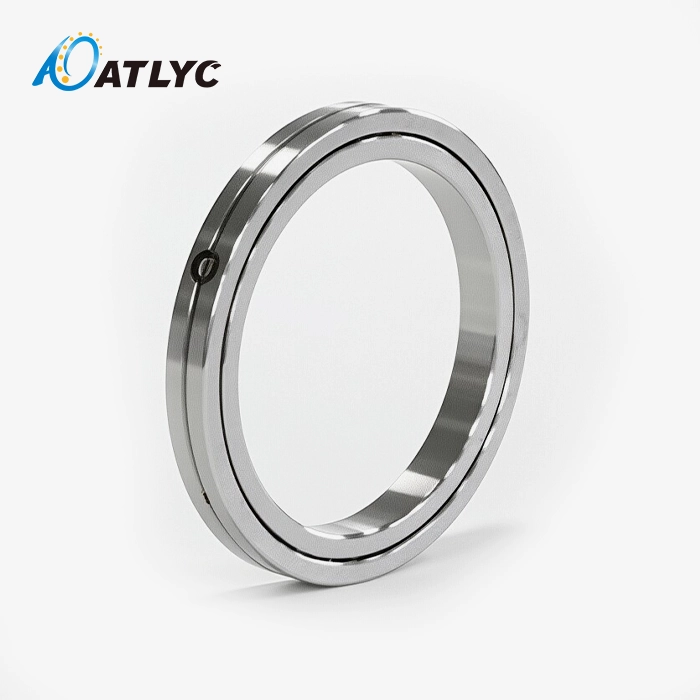
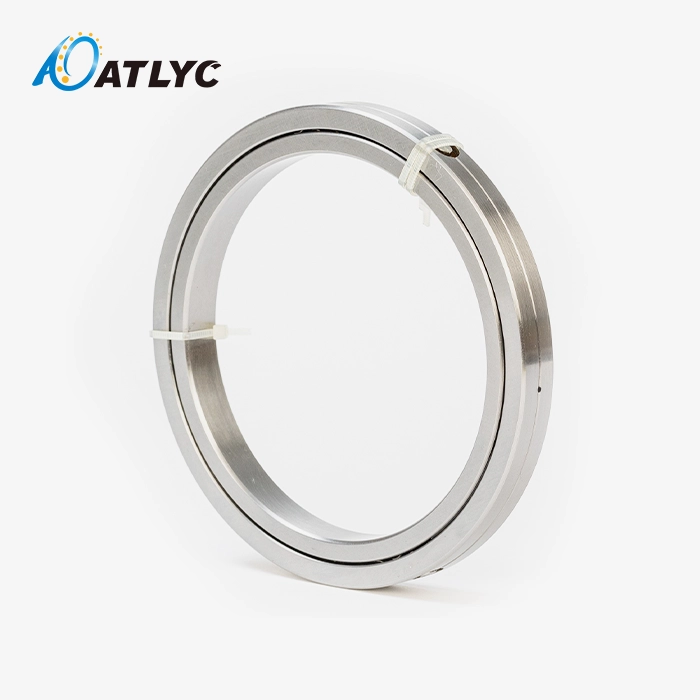
When selecting precision bearings for rotary table applications, the RE3010UUCC0 crossed roller bearing emerges as a compelling solution for manufacturers demanding exceptional accuracy and multi-directional load capacity. This compact bearing, with its 30mm inner diameter, 55mm outer diameter, and ultra-slim 10mm profile, delivers the rigidity and zero-backlash performance critical in machining centres, robotics, and automation equipment. The integrated outer ring design paired with a split inner ring construction specifically addresses the needs of applications where the outer ring rotates, offering superior runout accuracy while handling radial, axial, and moment loads simultaneously in a single compact unit.
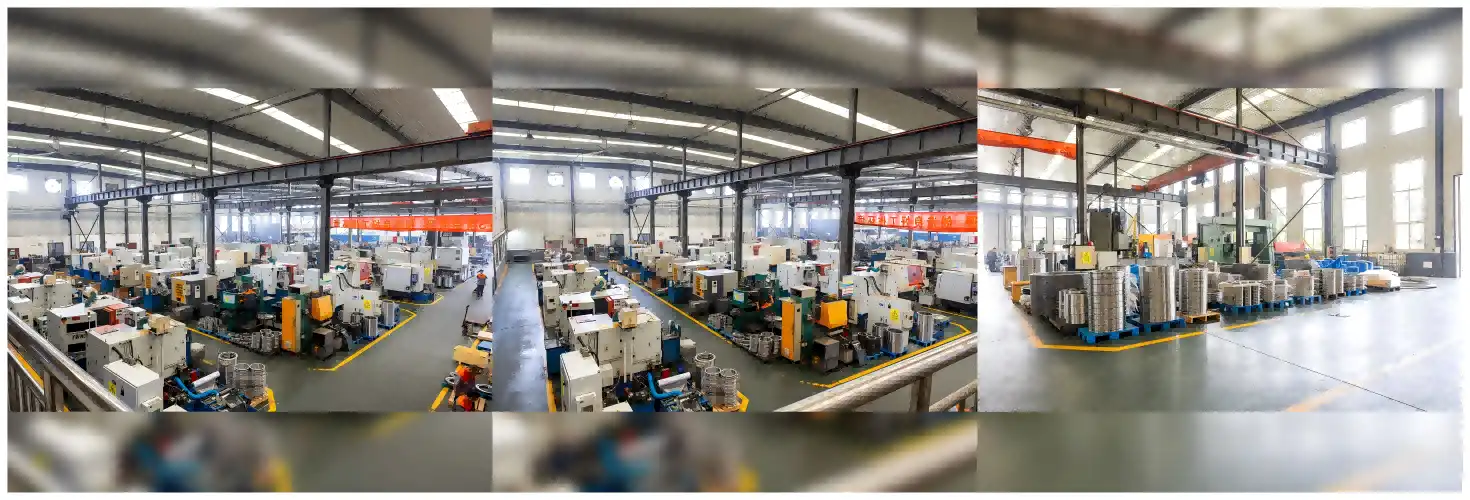
Understanding RE3010UUCC0 Crossed Roller Bearings
Technical Architecture and Design Philosophy
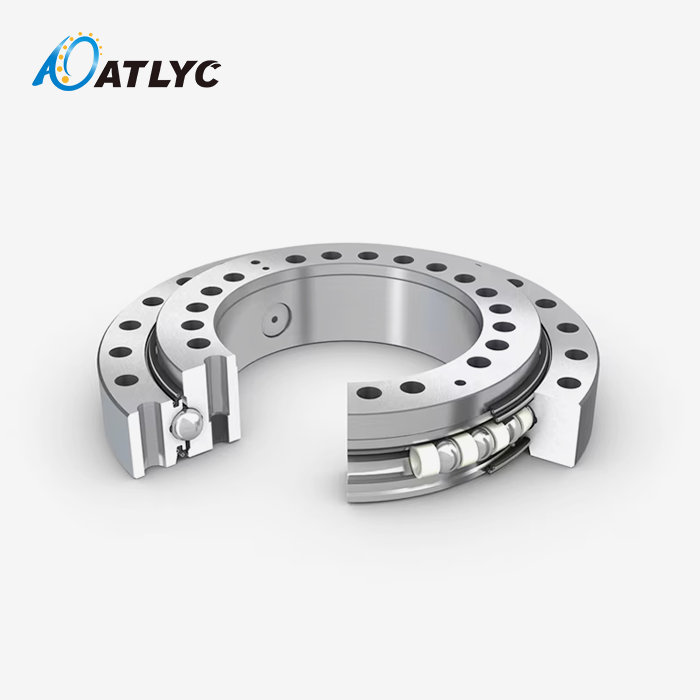
RE3010UUCC0 crossed roller bearings are a technologically advanced method of precisely controlling motion. The roller placement system of the RE3010UUCC0 is based on precision-ground V-grooves that are 90 degrees apart. By putting cylindrical rollers perpendicular to each other and alternating their orientation along the raceway, this configuration significantly differs from traditional ball bearings or cylindrical roller bearings. The contact area and load distribution efficiency are both greatly enhanced since each roller moves in a line instead of a point, contacting both rings simultaneously.
Because it is designed with a split inner ring, it is easy to install around existing shafts without having to disassemble neighbouring components. To avoid separation under operational-moment stresses, make sure that the two portions of the inner ring are held together tightly during installation using flanges or housing press-fits. The structural integrity is preserved by the integrated outer ring, which also gets rid of any alignment irregularities that can affect the precision of the rotation.
Material Composition and Manufacturing Standards
The metallurgical accuracy needed to manufacture these bearings is unparalleled. The RE3010UUCC0 is constructed using GCr15 or GCr15SiMn high-carbon chromium-bearing steel, which has been controlled-heat-treated to 58-62 HRC. The combination of core toughness and surface hardness provided by this material choice allows for the absorption of shock loads and resistance to contact stress. The "UU" dual contact seals in the model nomenclature protect against particle contamination and factory-applied lithium soap-based grease by using elastomeric materials that stay in positive contact with the inner ring surfaces.
A condition known as negative radial internal clearance, or "CC0" clearance, is equivalent to a preload. There will be no blowback while changing directions since this manufactured interference removes any internal play from the rollers and raceways. For indexing purposes, where location repeatability affects product quality, this attribute is crucial.
Precision Classes and Performance Tolerances
Available accuracy classes span from P6 (standard precision) through P0, P5, P4, and to P2 (ultra-precision). Each higher grade makes the tolerances for raceway roundness, surface finish, and roller diameter variation tighter. For rotary tables in machining centres requiring sub-micron positioning accuracy, P4 or P2 grades are necessary despite their premium cost. The exceptional runout accuracy achieved through these precision classes enables rotary tables to maintain workpiece concentricity during multi-axis operations, directly translating to improved surface finish and dimensional accuracy in manufactured components.
Comparing RE3010UUCC0 with Other Bearing Options for Rotary Tables
Performance Analysis Against Angular Contact Ball Bearings
Many rotary table designs traditionally employ duplex or quadruplex angular contact ball bearings arranged in back-to-back or face-to-face configurations. While these arrangements handle combined loads effectively, they require significantly more axial space and precise preload adjustment during assembly. A single crossed roller bearing replaces these complex arrangements, reducing assembly time and potential sources of misalignment.
Angular contact bearings generate higher friction torque due to ball-to-raceway sliding at contact ellipses, particularly under preload. The crossed roller design minimises sliding friction through pure rolling contact along the cylindrical roller length, resulting in smoother rotation and reduced heat generation during continuous operation. Testing data indicates friction coefficients approximately 30% lower than comparable angular contact arrangements, translating to improved thermal stability and reduced energy consumption in electrically driven rotary tables.
Cost-Benefit Evaluation Across Bearing Technologies
The axial load capacity is excellent with cylindrical roller thrust bearings, but the system becomes more complicated with the need for separate radial support. The adaptability of tapered roller bearings is matched by the knowledge required for preload adjustment and exact housing machining. The RE3010UUCC0 simplifies design by unifying numerous load directions into one component, which reduces the number of parts needed, inventory requirements, and assembly labour.
Although crossed roller bearings are pricier up front (usually 40-60% more than angular contact pairs), they last longer and are more cost-effective in the long run because of how well they distribute loads and how sealed they are. Unlike unsealed angular contact setups that need frequent relubrication, maintenance intervals for sealed arrangements can reach 15,000 to 20,000 working hours in normal industrial conditions. In machining settings, where coolant mist and metal particles continually endanger bearing integrity, the two seals efficiently exclude impurities.
Noise and Vibration Characteristics
Acoustic performance matters significantly in precision machinery. The RE3010UUCC0 generates minimal operational noise due to its pure rolling motion and tight internal tolerances. Vibration amplitude remains consistently low across the operational speed range, contributing to improved surface finish in machining applications. Comparative measurements show vibration levels 15-20 dB lower than standard precision ball bearings under identical load conditions, which directly benefits applications requiring ultra-smooth motion profiles such as optical inspection systems and semiconductor manufacturing equipment.
Key Application Scenarios and Suitability of RE3010UUCC0 in Rotary Tables
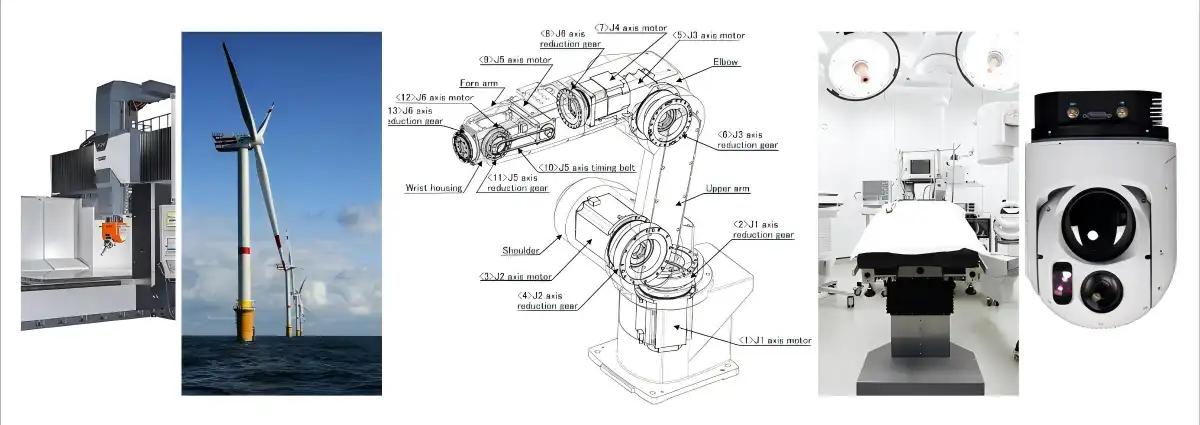
Industrial Robotics and Collaborative Automation
Because of their small profile and high load capacity, crossed roller bearings are perfect for robotic joints, especially those used in elbow and wrist assemblies, where there is little room for the bearing envelope but significant moment loads. Robots that work in tandem with humans need to be able to move with ease and predictability, which the zero-backlash design naturally offers. Robot designers may decrease limb cross-sections with the compact 10mm width, which improves dynamic responsiveness and reduces inertia.
Workpieces are positioned via several stations in automated assembly cells by means of rotary indexing tables. Typically, the repeatability standards for the RE3010UUCC0 are within ±5 arc-seconds at the P5 precision class, and positional accuracy is maintained after millions of indexing cycles. All welding fixtures, inspection stations, and pick-and-place operations will stay in the correct positions for the course of a production shift because of this uniformity.
Machine Tool Rotary Tables and Multi-Axis Machining
In order to increase their manufacturing capabilities, machining centres are increasingly using rotary tables with four and five axes. These workstations need to withstand the impact of cutters without sacrificing the precision of the three linear axes in their positioning. With its high axial stiffness and moment load capacity, the RE3010UUCC0 Crossed Roller Bearings can withstand the tilting forces that come from heavy milling operations and keep the table flat even when clamping pressures are applied.
Maintaining a constant temperature is essential for these uses. The GCr15SiMn material choice offers improved dimensional stability over temperature ranges commonly found in machine shops (15-40°C), while the low friction coefficient limits self-heating. Even when outside temperatures change during the day, this thermal performance keeps the positioning accuracy put up in the morning intact for the whole production run.
Medical Equipment and Semiconductor Manufacturing
Medical imaging devices such as CT gantries and surgical robotic systems demand absolute reliability and smooth operation. The sealed construction prevents lubricant migration that could contaminate sterile fields, while the precision rotation supports image quality in diagnostic equipment. Semiconductor wafer handling equipment needs to be very clean, have positioning accuracy measured in micrometres, and move without vibrations that could damage the wafer during high-acceleration movements.
Operational Speed Ranges and Environmental Considerations
Crossed roller bearings outperform ball bearings in terms of precision and load capacity, but they only work at low speeds. The RE3010UUCC0 is ideal for indexing applications and rotary tables' constant low-speed rotation since it operates ideally below 500 RPM. The rollers' service life may be reduced because of increased contact stress and heat generated by centrifugal forces at greater speeds.
When choosing bearings, environmental considerations play a major role. Applications involving high-pressure coolant jets or corrosive chemical exposure may necessitate auxiliary sealing, while the dual contact seals offer sufficient protection in most industrial situations. Typical operating temperature ranges encompass the majority of industrial automation settings, ranging from -20°C to +80°C. Customisation services are available from manufacturers like ATLYC for applications that go beyond these parameters, which may necessitate the use of specialised lubricants or seal materials.
Maintenance Protocols for Extended Service Life
You maximise your investment in precision bearings by properly maintaining them. The RE3010UUCC0's sealed design keeps maintenance to a minimum, but it's still a wise idea to check it every so often. At the 3,000-hour mark, visually inspect the unit to make sure the seal is intact, the housing is in the correct position, and there is no outside contamination. Gradual increases in starting or running torque, as detected by rotational torque monitoring, are indications of lubricant deterioration or contamination ingress, providing early warning of internal degradation.
Before a problem becomes functionally inoperable, it can be detected through vibration analysis using handheld accelerometers. Instead of replacing bearings at predetermined intervals, condition-based maintenance can be performed using frequency spectrum analysis to identify typical bearing problem frequencies. This method optimises the total cost of ownership by reducing unplanned downtime and preventing premature bearing replacement.
Procurement Considerations for RE3010UUCC0 Crossed Roller Bearings
Pricing Structures and Volume Purchase Benefits
How much it costs to acquire bearings depends heavily on factors including order quantity, accuracy grade, and relationships with suppliers. There is usually a 60-80% price difference between ultra-precision variations (P2, P4) and standard precision grades (P0, P6). Significant savings are possible through bulk purchases; for example, orders of 100 units or more typically qualify for reductions of 15-25% off small-quantity pricing. Achieving preferred price and assuring supply continuity for production planning are both achieved through the establishment of annual purchase agreements with manufacturers such as Luoyang Auto Bearing Co., Ltd.
The accuracy level and the level of personalisation dictate the duration of the lead time. From well-established suppliers with inventory, standard configurations usually ship within two to three weeks. Delivery could take an additional 6-8 weeks if your specifications call for uncommon materials, altered dimensions, or unusual seal configurations. This delay is because production must adapt to meet these unique needs.
Customisation Capabilities and Engineering Support
Standard catalogue bearings serve many applications effectively, yet unique machine designs sometimes require bearing modifications. Dimension adjustments within manufacturing capabilities allow for the optimisation of envelope space. Material upgrades to corrosion-resistant steels suit harsh environments. Seal material selection can address specific chemical compatibility or temperature requirements.
Manufacturers with ISO 9001 and IATF 16949 certifications show they have organised quality management and ongoing improvement processes that are essential for providing consistent components. These certifications provide procurement confidence that manufacturing processes include statistical process control, traceability systems, and corrective action protocols, which minimise defect rates and ensure long-term supply reliability.
Supplier Verification and Quality Assurance
Procurement professionals must verify supplier credentials thoroughly. Requesting certification documentation confirms compliance with international standards. Factory audits, while resource-intensive, provide firsthand assessment of manufacturing capabilities, quality systems, and technical expertise. Reviewing customer references from similar industries validates supplier performance in comparable applications.
Warranty terms vary among suppliers but typically cover manufacturing defects for 12-24 months from delivery. Comprehensive warranties should include replacement product, shipping costs, and technical support for failure analysis. Clear return policies reduce procurement risk during initial qualification trials, allowing evaluation without substantial financial commitment if components prove incompatible with specific applications.
Global Distribution Networks and Regional Support
Sourcing from manufacturers with established distribution networks ensures timely delivery and local technical support. Luoyang Auto Bearing Co., Ltd., established in 2010, has developed export partnerships serving customers across South Korea, the USA, Germany, Russia, Iran, and Turkey. This geographic reach provides regional inventory positioning, reducing emergency replacement lead times from weeks to days.
Local technical representatives offer valuable application engineering support, assisting with bearing selection, installation guidance, and troubleshooting. This expertise proves particularly valuable during new equipment commissioning when unexpected integration challenges arise. Responsive communication channels—email, phone, and video conferencing—bridge time zones and language differences, ensuring procurement and engineering teams receive timely answers to technical questions.
Why Choose RE3010UUCC0 for Your Next Rotary Table Project?
Consolidated Performance Advantages
The RE3010UUCC0 delivers a compelling combination of characteristics that directly address rotary table design challenges. Its ability to support radial, axial, and moment loads simultaneously within a 10mm width profile enables compact machine designs without sacrificing structural rigidity. The negative clearance preload eliminates positioning uncertainty inherent in bearing arrangements with internal play, directly improving workpiece accuracy and surface finish quality.
Material selection using premium GCr15 bearing steel ensures consistent performance across millions of operational cycles. The dual seal design protects internal components from harsh industrial conditions, such as metal chips, coolant spray, and airborne particulates that would quickly damage unsealed alternatives. This protection translates to extended service intervals and reduced maintenance labour, lowering the total cost of ownership despite the premium initial investment.
Emerging Applications and Technology Trends
Advanced manufacturing increasingly demands motion control precision that exceeded capabilities available even a decade ago. Additive manufacturing systems, advanced optical inspection equipment, and next-generation collaborative robots all require positioning accuracy approaching the fundamental limits of mechanical systems. Crossed roller bearing technology continues evolving to meet these demands through tighter manufacturing tolerances, advanced materials, and integrated sensing capabilities.
Some manufacturers now offer bearings with embedded sensors monitoring temperature, vibration, and load—data that feeds predictive maintenance algorithms and machine learning systems optimising operational parameters in real-time. While the RE3010UUCC0 represents current production technology, its fundamental design principles position it well for these emerging enhancements as Industry 4.0 concepts mature.
Real-World Performance Validation
Client implementations across diverse industries validate the RE3010UUCC0's capabilities in demanding applications. A European machine tool manufacturer reported a 40% reduction in rotary table assembly time after transitioning from angular contact bearing pairs to crossed roller designs. An Asian robotics producer documented mean-time-between-failures exceeding 25,000 hours in collaborative robot wrist joints, substantially above their previous bearing technology's 15,000-hour average.
These performance outcomes reflect not just component quality but also proper application engineering—matching bearing capabilities to operational requirements, implementing appropriate installation procedures, and following maintenance protocols. Success requires partnership between component suppliers and equipment manufacturers, sharing application knowledge and performance data to optimise bearing selection and implementation.
Conclusion
The RE3010UUCC0 crossed roller bearing is designed to meet the complex needs of rotary table applications that require precision, multi-directional load capacity, and compact packaging. Its integral outer ring and split inner ring construction deliver exceptional rotational accuracy while simplifying installation. The 30x55x10mm dimensions, along with negative clearance preload and dual seal protection, make this component ideal for industrial robotics, machine tools, and automation equipment in demanding environments. When procurement decisions balance initial cost against lifecycle performance, total cost of ownership analysis consistently favours crossed-roller technology for precision rotary applications. The combination of reduced maintenance requirements, extended service intervals, and superior positioning accuracy justifies premium pricing because it leads to clear operational benefits and better product quality outcomes.
FAQ
What distinguishes the RE3010UUCC0 from RB-series crossed roller bearings?
The fundamental difference lies in construction philosophy. RE-series bearings feature split inner rings with integral outer rings, optimised for applications where the outer ring rotates. RB-series bearings invert this arrangement with split outer rings and integral inner rings, suited for inner ring rotation. This structural difference impacts installation procedures, housing design, and load distribution patterns, making proper series selection critical for optimal performance.
How does the CC0 clearance specification affect operational performance?
The CC0 designation indicates negative radial clearance—essentially a controlled interference fit between rollers and raceways. This preload eliminates internal play, providing zero backlash during directional changes. Applications requiring precise positioning, such as robotic joints and indexing tables, depend on this characteristic to maintain accuracy. The preload does slightly increase starting torque and operational friction compared to clearance-fit bearings, yet the precision benefits far outweigh this modest trade-off in most applications.
What installation precautions ensure proper bearing performance?
The split inner ring requires secure clamping to prevent separation under moment loads. Avoid hammering directly on ring surfaces during installation—use appropriate press-fitting tools and mandrels distributing force evenly. Ensure mounting surfaces are clean, flat, and perpendicular to the bearing axis. Torque clamping bolts to manufacturer specifications in a cross-pattern sequence to prevent ring distortion. Verify that shaft and housing tolerances match bearing specifications to avoid excessive interference or inadequate support.
Do contact seals significantly impact rotational torque?
Dual contact seals add measurable friction compared to open bearing configurations—typically increasing starting torque by 0.2-0.5 Nm, depending on seal material and interference. In most rotary table applications, this represents less than 5% of total drive system friction, making it negligible relative to the contamination protection benefits. The trade-off clearly favours sealed designs in industrial environments where bearing longevity depends on excluding particulates and retaining lubrication.
What lubrication practices optimise service life?
The RE3010UUCC0 arrives pre-packed with high-quality lithium soap-based grease formulated for wide temperature ranges and long service intervals. The sealed design retains this lubrication effectively, typically requiring no relubrication for 15,000-20,000 hours in normal industrial conditions. Extreme temperatures, high contamination levels, or continuous operation may shorten intervals. Monitor rotational torque and temperature—increases indicate potential lubrication degradation, requiring inspection. Avoid over-greasing, which can increase friction and cause seal damage from excessive internal pressure.
Partner with ATLYC for Your Precision Bearing Requirements
ATLYC has dedicated 15 years to perfecting bearing manufacturing excellence, serving mid-to-large automotive and industrial equipment manufacturers across global markets. Our ISO 9001 and IATF 16949-certified facilities make RE3010UUCC0 crossed roller bearings that meet the strict requirements of precision rotary applications. As an experienced cross-roller bearing manufacturer, we maintain consistent quality through rigorous inspection protocols while offering competitive pricing structures for volume procurement. Our 120-member team provides comprehensive technical support—from initial application analysis through installation guidance and ongoing service. Contact our engineering specialists at auto@lyautobearing.com to discuss your rotary table project requirements and discover how our precision bearing solutions can enhance your equipment performance and reliability.
References
1. Harris, T.A. & Kotzalas, M.N. (2006). Rolling Bearing Analysis: Essential Concepts of Bearing Technology. CRC Press.
2. Bhushan, B. (2013). Principles and Applications of Tribology. John Wiley & Sons.
3. ISO 5753-1:2009. Rolling bearings — Internal clearance — Part 1: Radial internal clearance for radial bearings. International Organisation for Standardisation.
4. Eschmann, P., Hasbargen, L. & Weigand, K. (1985). Ball and Roller Bearings: Theory, Design and Application. John Wiley & Sons.
5. Hamrock, B.J., Schmid, S.R. & Jacobson, B.O. (2004). Fundamentals of Fluid Film Lubrication. Marcel Dekker.
6. Tallian, T.E. (1992). Simplified Contact Fatigue Life Prediction Model — Part II: New Model. Journal of Tribology, Transactions of the ASME.
Learn about our latest products and discounts through SMS or email