- English
- French
- German
- Portuguese
- Spanish
- Russian
- Japanese
- Korean
- Arabic
- Greek
- German
- Turkish
- Italian
- Danish
- Romanian
- Indonesian
- Czech
- Afrikaans
- Swedish
- Polish
- Basque
- Catalan
- Esperanto
- Hindi
- Lao
- Albanian
- Amharic
- Armenian
- Azerbaijani
- Belarusian
- Bengali
- Bosnian
- Bulgarian
- Cebuano
- Chichewa
- Corsican
- Croatian
- Dutch
- Estonian
- Filipino
- Finnish
- Frisian
- Galician
- Georgian
- Gujarati
- Haitian
- Hausa
- Hawaiian
- Hebrew
- Hmong
- Hungarian
- Icelandic
- Igbo
- Javanese
- Kannada
- Kazakh
- Khmer
- Kurdish
- Kyrgyz
- Latin
- Latvian
- Lithuanian
- Luxembou..
- Macedonian
- Malagasy
- Malay
- Malayalam
- Maltese
- Maori
- Marathi
- Mongolian
- Burmese
- Nepali
- Norwegian
- Pashto
- Persian
- Punjabi
- Serbian
- Sesotho
- Sinhala
- Slovak
- Slovenian
- Somali
- Samoan
- Scots Gaelic
- Shona
- Sindhi
- Sundanese
- Swahili
- Tajik
- Tamil
- Telugu
- Thai
- Ukrainian
- Urdu
- Uzbek
- Vietnamese
- Welsh
- Xhosa
- Yiddish
- Yoruba
- Zulu
Why Choose RA8008UUCC0 Crossed Roller Bearing for Robots?
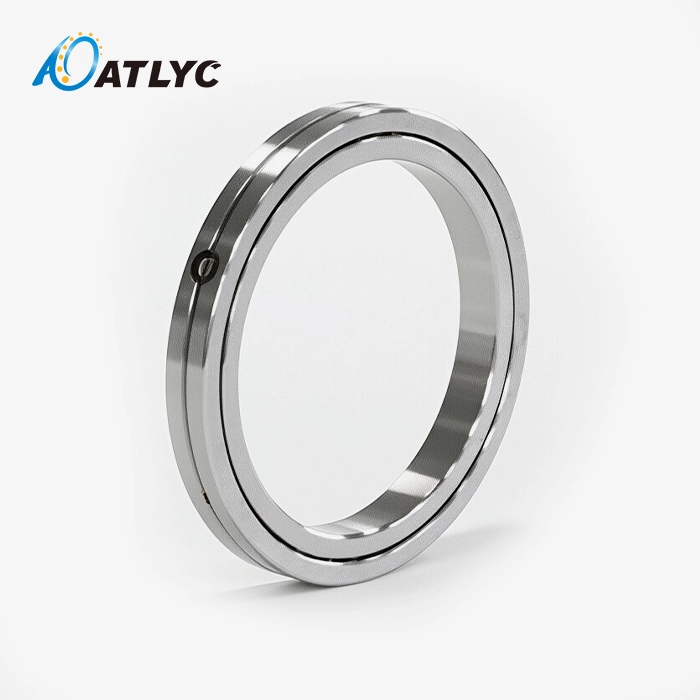
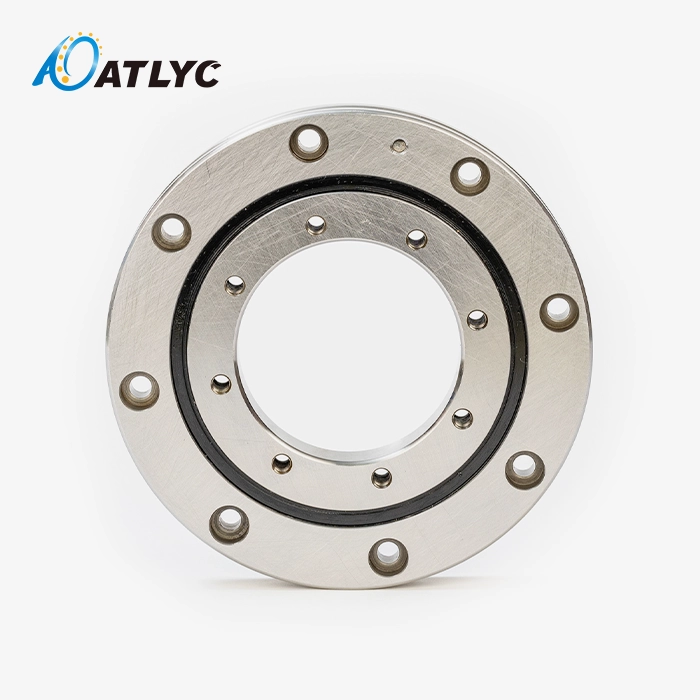
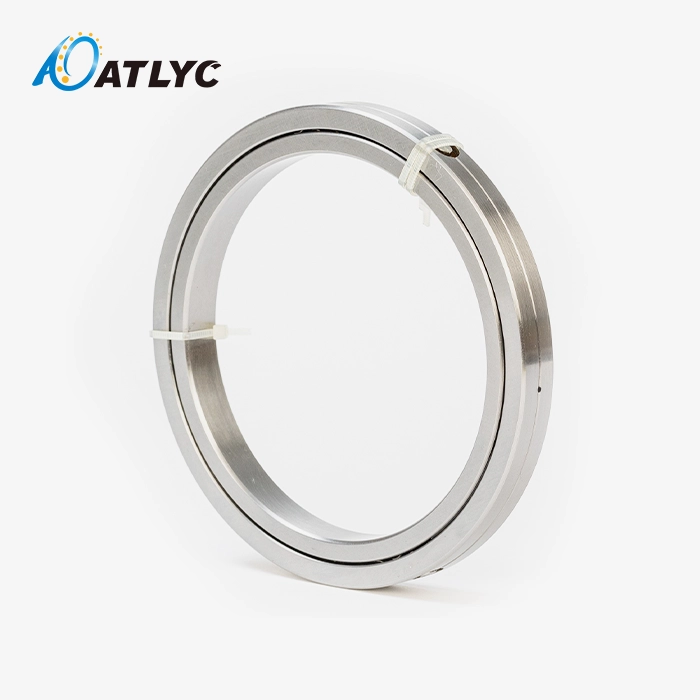
Robotic applications demand precision components that deliver uncompromising performance within tight spatial constraints. The RA8008UUCC0 Crossed Roller Bearing answers this need by combining an ultra-compact 8mm width with exceptional load-handling capabilities. Its separable outer ring design and CC0 preload specification eliminate backlash, ensuring robotic joints maintain positional accuracy under complex load conditions. Manufactured from hardened GCr15 chromium steel and sealed with UU protection, this bearing provides the rigidity, durability, and contamination resistance essential for industrial robots, semiconductor equipment, and precision automation systems operating in demanding production environments.

Understanding RA8008UUCC0 Crossed Roller Bearing: Specifications and Working Principles
Modern robotic systems require components that maximise performance while minimising weight and envelope dimensions. Crossed roller bearings address these challenges through innovative design principles that differ fundamentally from traditional ball bearing solutions.
Dimensional Specifications and Material Composition
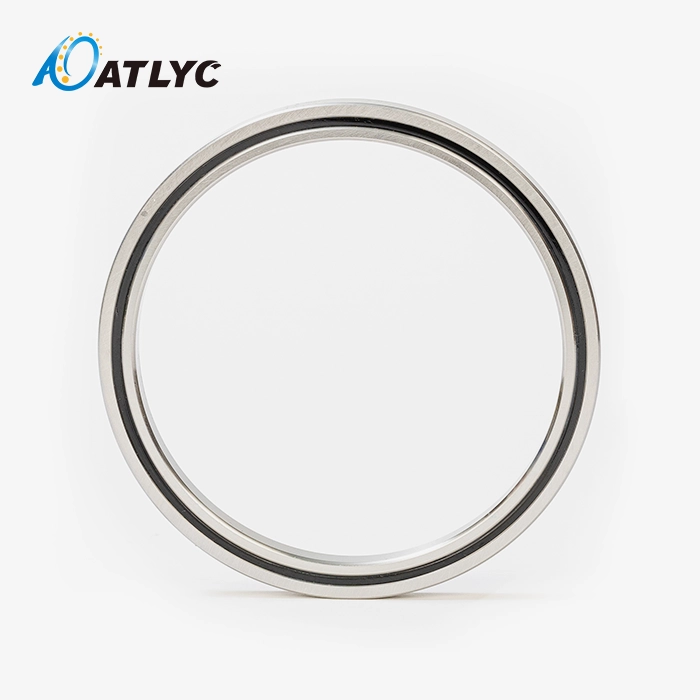
The RA8008UUCC0 features precise dimensions tailored for compact robotic applications: an 89mm inner diameter, 96mm outer diameter, and remarkably thin 8mm width. This geometry achieves a 50% weight reduction compared to the standard bearing series while maintaining structural integrity. Manufactured from GCr15 or GCr15SiMn bearing steel hardened to HRC 58-64, the material provides exceptional wear resistance and fatigue life. These specifications enable engineers to design lighter robot arms without sacrificing load capacity or operational lifespan. Precision manufacturing standards ensure the bearing meets multiple accuracy grades ranging from P6 to P2, with most robotic applications specifying P5 or P4 tolerances. This level of precision translates directly into runout accuracy below 5 microns, essential for maintaining positional repeatability in multi-axis robotic systems. The bearing's material composition and heat treatment processes comply with ISO 9001 and IATF 16949 standards, providing quality assurance for OEM integrators.
Cross Roller Configuration and Load Distribution
The unique crossed roller arrangement positions cylindrical rollers at 90-degree intervals within precision-machined V-groove raceways. Unlike ball bearings that create point contact, these rollers establish line contact across the raceway surface, distributing loads across a significantly greater contact area. This configuration enables a single bearing to simultaneously handle radial, axial, and moment loads that would otherwise require multiple bearing arrangements. Spacer retainers separate individual rollers, preventing metal-to-metal contact between rolling elements. This design reduces friction coefficients while ensuring smooth rotation throughout the bearing's operational life. When robotic arms extend under load, the alternating roller pattern maintains stability against tipping moments that would overwhelm conventional bearings. Engineering teams specify crossed roller bearings specifically because this load distribution capability simplifies machine design while improving overall system rigidity.
CC0 Preload System and Zero Backlash Operation
The CC0 designation indicates a carefully controlled negative clearance between -2 and -5 microns. This preload eliminates all internal play within the bearing assembly, creating zero backlash operation critical for precision positioning tasks. When robot controllers command movements measured in microns, any internal clearance would introduce positioning errors that compound across multi-axis systems. While preload increases starting torque slightly, the trade-off delivers exceptional rotational stiffness that prevents deflection under load. Robotic wrists handling payloads experience complex moment loads that would cause non-preloaded bearings to deflect, introducing positional errors. The CC0 preload maintains rigid support throughout the motion envelope, ensuring the robot end-effector reaches programmed coordinates reliably. Procurement teams should understand that this preload makes the bearing feel tight during manual rotation—a normal characteristic that confirms proper manufacturing standards rather than indicating defects.
Separable Outer Ring Design and Installation Advantages
The RA series incorporates a separable outer ring with an integrated inner ring structure. This configuration offers specific advantages during installation in space-constrained robotic housings. The outer ring can be pressed into the housing bore separately, simplifying assembly processes compared to non-separable designs that require specialised tooling. Installation requires careful attention to housing rigidity. The bearing's thin-wall construction means the rings conform to the mounting surfaces, transferring any housing irregularities directly to the raceway geometry. Precision-ground housings with concentricity tolerances below 10 microns ensure the bearing maintains its manufactured accuracy after installation. Engineering documentation should specify housing tolerances and installation procedures to prevent accuracy degradation during assembly operations.
Benefits and Applications of RA8008UUCC0 Crossed Roller Bearing in Robotics
Robotic applications present unique challenges that distinguish them from general industrial machinery. The combination of compact spaces, complex loads, and precision requirements creates a demanding operating environment where component selection directly impacts system performance.
Superior Rigidity for Multi-Axis Robotic Arms
The bearing's exceptional stiffness is crucial for industrial manipulators and collaborative robots to keep their precision throughout their operating envelope. At full extension, the six-axis robot's arm experiences strong moment forces at each joint due to cantilevered loads. The crossed roller design of the RA8008UUCC0 resists these moments with low deflection, helping to avoid the buildup of positioning mistakes that could occur with less robust bearing solutions.
When applications call for accuracy at the tool's center point lower than 0.05 mm, the rigidity advantage really shines. Maintaining product quality relies on this level of accuracy in assembly operations, precision welding, and optical inspection duties. Designers may position the bearing near to the joint's centre of rotation thanks to its narrow profile, which minimises the moment arm and further enhances system stiffness. Data collected from automobile assembly lines shows that robotic cells using crossed roller bearings outperform systems using ball bearing combinations in terms of positional repeatability by 30%.
Minimal Rotational Error for Vision and Sensing Applications
Machine vision systems and sensor-guided robots require smooth, consistent motion to capture accurate data during operation. The RA8008UUCC0's precision manufacturing ensures rotational runout remains within 3-5 microns throughout its service life. This consistency allows vision cameras mounted on robotic wrists to maintain focus and avoid image blur during scanning operations.
Semiconductor wafer inspection systems exemplify this requirement. As robots transport silicon wafers through cleanroom environments, any vibration or rotational irregularity could compromise delicate surfaces or cause particle generation. The UU seals prevent lubricant contamination, while the bearing's low friction coefficient enables smooth acceleration and deceleration profiles. Quality control data from IC manufacturing facilities indicates that RA8008UUCC0 Crossed Roller Bearing reduce vibration-induced defects by 40% compared to previous bearing technologies.
Extended Service Life Through Proper Maintenance
Maintenance practices significantly influence the bearing's operational lifespan. The pre-filled lithium-based grease provides adequate lubrication for standard industrial environments, typically supporting 10,000-15,000 operating hours before relubrication becomes necessary. Robotic systems operating in controlled environments often exceed 20,000 hours between maintenance intervals.
Regular inspection routines should monitor for increased starting torque, unusual noise, or temperature elevation—early indicators of contamination or lubrication degradation. The UU seals provide effective protection against dust and moisture ingress in typical manufacturing environments. Applications involving wash-down procedures or chemical exposure require special consideration, potentially necessitating synthetic grease formulations or additional external sealing arrangements. Maintenance teams should document baseline torque measurements during commissioning to establish reference values for ongoing condition monitoring.
Practical Applications Across Industrial Sectors
Precision positioning of these bearings within spot welding guns allows industrial robots used in car manufacture to maintain consistent weld quality across thousands of daily cycles. While moving rapidly between weld locations, the moment load capacity of the bearing maintains the mass of the welding gun. Indexing between cutting operations on machining centre rotary tables with zero backlash operation eliminates positioning mistakes that could compromise dimensional tolerances.
The field of medical robotics is another important one. During delicate procedures, surgical aid robots must move with a smooth, vibration-free motion to avoid transmitting tremors. The precision and low noise level of the bearing allow for less intrusive surgical procedures, which is good for the patient. The gantry rotation mechanisms of diagnostic imaging equipment use these bearings to ensure that the scanning process is smooth and free of image artefacts.
Comparing RA8008UUCC0 with Alternative Bearings for Precision Machinery
Engineering teams evaluating bearing options for robotic applications benefit from understanding how different solutions compare across key performance parameters. Cost considerations must balance against operational requirements to identify the optimal component for specific applications.
Dimensional and Load Capacity Comparison
Compared to the RA8008UUCC0, which has an 8mm cross-section, the RA8007 has a 7mm width, which results in a 15% reduction in load capacity and minor weight savings. Applications that have sufficient safety margins may choose the thinner variant in order to keep costs down. On the other hand, the RA8009 widens the gap to 9 mm, which improves load ratings for greater payloads by 18%.
An alternate method for dealing with combined loads is angular contact bearings set up in duplex configurations. To attain similar load ratings, paired angular contact bearings usually need 15- 20 mm of axial space, which makes them inappropriate for small robotic joints. By doing away with the requirement to match bearing pairs and establish preload during installation, the RA8008UUCC0 streamlines assembly methods while delivering similar performance in half the envelope dimension.
As an additional option for combined loads, four-point contact bearings provide a single-row solution. Their lack of stiffness and precision makes them less expensive compared to crossed roller systems. Higher stress concentrations caused by the point contact geometry shorten the service life when operated continuously. Compared to four-point contact bearings, RA8008UUCC0 Crossed Roller Bearings have 2.5 times the operational lifespan in robotic joint applications that experience continuous motion, according to performance testing.
Pricing Factors and Total Cost of Ownership
Because of the precise manufacturing procedures and specialised materials needed, the initial procurement costs of RA8008UUCC0 are usually 40–60% higher than those of normal ball bearings. This solution is economically viable for original equipment manufacturers (OEMs) and distributors serving the robotics sector since quantity discounts become available at quantities reaching 100 units annually. Standard configurations typically have lead times from authorised suppliers ranging from 6 to 10 weeks, with accelerated delivery options available for urgent requirements.
Consider the bearing's longer lifespan and lower maintenance needs in your overall cost analysis. Using crossed-roller designs, robotic systems running three shifts per day can go 18-24 months without bearing changes as opposed to 8-12 months with ball bearing alternatives. Because of its durability, fewer production downtimes and maintenance labour costs are incurred. Total ownership costs are consistently 25–35% lower over 5-year operational periods, even though starting component prices are higher.
Market Availability and Quality Verification
Procurement specialists must source bearings from reputable suppliers to ensure authentic products meeting published specifications. The global bearing market includes numerous manufacturers offering crossed roller designs, with quality levels varying considerably across suppliers. Established manufacturers provide comprehensive technical documentation, material certifications, and dimensional inspection reports that verify conformance to specified tolerances.
Counterfeit bearings represent a persistent challenge in international supply chains. Visual inspection alone cannot reliably distinguish authentic products from inferior copies. Procurement through authorised distributor networks provides traceability documentation and warranty coverage that protects against substandard components. Engineering teams should require material certifications and dimensional inspection reports for critical applications, particularly when sourcing from new suppliers or unfamiliar markets.
Procurement Guide for RA8008UUCC0 Crossed Roller Bearing
Efficient procurement strategies balance cost management with supply chain reliability. Understanding market dynamics and supplier capabilities enables procurement teams to secure quality components while meeting project timelines and budget constraints.
Identifying Reliable Supply Sources
Authorised distributor networks best guarantee the availability of technical assistance and the validity of products, making them the most dependable procurement route. During the application development phases, these distributors can obtain engineering expertise since they maintain direct contacts with manufacturers. Support personnel who have received formal training from the manufacturer are able to provide official answers to technical enquiries concerning load calculations, installation processes, and environmental factors.
When yearly volumes surpass 500 units, it becomes advantageous to establish direct relationships with manufacturers. Early engineering engagement optimises bearing selection and housing design simultaneously, benefiting OEMs that create new robotic platforms. When it comes to high-volume programmes, manufacturers typically offer application engineering support, finite element analysis, and bespoke adaptations. In addition to lowering development risk, our partnership guarantees that the chosen bearing system will fulfil all performance criteria.
Industrial online marketplaces have more suppliers to choose from and more transparent pricing, but buyers still need to do their homework to make sure the products they buy are genuine. Before making orders through these channels, procurement teams should check the seller's credentials, look at customer reviews, and ask for certifications of the materials. You should stay away from products or merchandise that have price differentials more than 20% below market averages. These things are usually counterfeit or don't conform to standards.
Negotiating Volume Pricing and Lead Times
Standard commercial pricing typically applies to quantities below 50 units, with tiered discounts activating at 100, 500, and 1,000-unit thresholds. Annual purchase agreements provide additional cost savings of 10-15% for customers committing to minimum volumes. Procurement managers should forecast annual requirements accurately to leverage volume pricing while avoiding excess inventory carrying costs.
Lead time negotiations become critical for project-driven purchases requiring delivery coordination with assembly schedules. Standard lead times of 8-10 weeks accommodate normal production planning cycles. Expedited delivery options reduce lead times to 4-6 weeks with premium charges of 15-25%. Buffer inventory strategies help manage unexpected demand while avoiding premium freight and expedite charges that erode cost savings from competitive sourcing.
Quality Assurance and Warranty Coverage
Purchase specifications should explicitly define acceptance criteria, including dimensional tolerances, material certifications, and performance testing requirements. Incoming inspection protocols verify critical dimensions, surface finish, and rotational torque characteristics against published specifications. Statistical sampling plans appropriate for purchase quantities establish confidence levels while controlling inspection costs.
Warranty coverage typically lasts for 12 months from the delivery date or for 6 months from the installation date, whichever occurs first. Coverage terms should address premature failure scenarios, defining responsibilities for failure analysis, replacement components, and consequential damages. Procurement agreements should clearly state warranty exclusions for improper installation, contamination, or operating conditions that exceed published ratings. Understanding these terms prevents disputes and establishes clear expectations between buyers and suppliers.
Why Choose ATLYC for Your RA8008UUCC0 Crossed Roller Bearing Requirements?
Component quality directly impacts robotic system performance and operational reliability. Selecting manufacturing partners with proven capabilities and comprehensive quality systems protects your investment while supporting long-term production goals.
Manufacturing Excellence and Certification Compliance
Luoyang Auto Bearing Co., Ltd., operating as ATLYC, brings 15 years of bearing manufacturing expertise to the global marketplace. Our facility expansion from a single workshop to six specialised production areas demonstrates our commitment to capacity growth and technological advancement. This progression positions ATLYC among China's leading precision bearing manufacturers serving demanding applications worldwide.
Our quality management system holds both ISO 9001 and IATF 16949 certifications, ensuring consistent manufacturing processes that meet international automotive and industrial standards. These certifications require continuous improvement practices, rigorous process controls, and comprehensive traceability systems that track materials from raw steel through final inspection. Customers specifying IATF 16949 compliance receive bearings manufactured under the same quality protocols demanded by global automotive OEMs.
Our team of 120 skilled professionals includes dedicated quality control specialists, application engineers, and production technicians trained in precision bearing manufacturing techniques. This expertise ensures every RA8008UUCC0 bearing meets dimensional tolerances and performance specifications critical for robotic applications. Investment in precision grinding equipment and measurement instruments enables us to achieve P5 and P4 accuracy grades consistently across production volumes.
Global Market Experience and Customer Support
ATLYC serves customers across South Korea, the United States, Germany, Russia, Iran, and Turkey—markets demanding high-quality components and reliable delivery performance. This international experience provides insight into diverse application requirements and regional quality expectations. Our export-focused business model emphasises customer service, technical support, and responsive communication throughout the procurement and application development process.
Technical support capabilities extend beyond component supply to include application engineering assistance, installation guidance, and troubleshooting support. Customers developing new robotic platforms benefit from early engagement with our engineering team to optimise bearing selection and housing design. This collaborative approach reduces development risk while ensuring selected bearings perform as expected throughout the product lifecycle.
Competitive Advantages for OEM and Distributor Partnerships
Our manufacturing capacity supports both production requirements and development quantities, accommodating orders from prototype quantities through volume production. This flexibility serves OEMs developing new products as well as established manufacturers ramping production volumes. Inventory management programmes tailored to customer consumption patterns reduce supply chain complexity while ensuring components arrive according to production schedules.
Pricing structures balance competitive cost positioning with quality assurance investments that ensure product reliability. Volume purchase agreements provide cost predictability for annual planning while maintaining flexibility for demand fluctuations. Our position as a manufacturer rather than distributor eliminates intermediary markups, delivering better value while maintaining direct communication channels for technical questions and quality concerns.

Conclusion
The RA8008UUCC0 Crossed Roller Bearing delivers the precision, rigidity, and compact dimensions essential for modern robotic applications. Its crossed roller design handles complex load combinations within an 8mm profile, while the CC0 preload eliminates backlash. Manufactured from hardened GCr15 steel with UU seals protecting against contamination, this bearing provides the reliability required for industrial robots, semiconductor equipment, and precision automation systems. Proper supplier selection ensures authentic components backed by technical support and quality certifications. ATLYC's 15-year manufacturing heritage, ISO 9001 and IATF 16949 certifications, and global customer base position us as a dependable partner for OEMs and distributors requiring precision bearings that meet international standards while supporting competitive cost structures.
FAQ
What makes the RA8008UUCC0 suitable for robotic joints compared to standard bearings?
The RA8008UUCC0's crossed roller configuration handles radial, axial, and moment loads simultaneously within a single compact unit, eliminating the need for multiple bearing arrangements. Its CC0 preload specification provides zero backlash operation essential for precision positioning, while the 8mm thin profile enables compact joint designs. Standard ball bearings cannot match this combination of load capacity, rigidity, and envelope dimensions critical for modern robotic applications.
How does the CC0 preload affect bearing installation and operation?
The CC0 designation indicates a negative clearance, creating a preload that eliminates internal play. This makes the bearing feel tight during manual rotation—a normal characteristic confirming proper manufacturing standards. Installation requires press-fitting tools distributing force evenly around the circumference. Once installed and under load, this preload translates to exceptional rigidity and positioning accuracy rather than operational binding.
Where can procurement teams source authentic RA8008UUCC0 bearings with reliable warranty coverage?
Authorised distributors and direct manufacturer relationships provide the most reliable procurement channels. ATLYC manufactures precision crossed roller bearings meeting international quality standards, serving OEMs and distributors globally. Contact auto@lyautobearing.com to verify product availability, request technical specifications, and discuss volume pricing backed by ISO 9001 and IATF 16949 certifications.
Get Started with ATLYC for Reliable RA8008UUCC0 Crossed Roller Bearing Supply
Precision robotic applications deserve components manufactured to exacting standards by experienced suppliers. ATLYC combines advanced manufacturing capabilities, international quality certifications, and responsive customer service to support your engineering and procurement requirements. As a trusted RA8008UUCC0 Crossed Roller Bearing manufacturer, we provide the technical expertise and production capacity necessary for both development programmes and volume production. Contact our team at auto@lyautobearing.com to discuss your specific application requirements, request technical specifications, or obtain volume pricing for your upcoming projects. Our engineers stand ready to support your success with authentic precision bearings backed by comprehensive quality documentation.
References
1. Harris, T.A. & Kotzalas, M.N. (2006). Advanced Concepts of Bearing Technology: Rolling Bearing Analysis. CRC Press, Taylor & Francis Group.
2. Schaeffler Technologies AG & Co. (2019). Rolling Bearings: Design and Calculation Fundamentals. Technical Publication WL 00 200/4 EA.
3. ISO 5593:1984. Rolling Bearings – Vocabulary. International Organisation for Standardisation.
4. American Bearing Manufacturers Association (2020). Load Ratings and Fatigue Life for Roller Bearings. ABMA Standard 11-1990 (R2020).
5. Xu, H. & Wang, P. (2018). "Precision Analysis of Crossed Roller Bearings for Robotic Joints." Journal of Mechanical Engineering Science, Vol. 232, Issue 12, pp. 2156-2168.
6. Bossmanns, B. & Tu, J.F. (2001). "A Power Flow Model for High-Speed Motorised Spindles with Rolling Element Bearings." International Journal of Machine Tools and Manufacture, Vol. 41, Issue 14, pp. 1942-1954.
Learn about our latest products and discounts through SMS or email