- English
- French
- German
- Portuguese
- Spanish
- Russian
- Japanese
- Korean
- Arabic
- Greek
- German
- Turkish
- Italian
- Danish
- Romanian
- Indonesian
- Czech
- Afrikaans
- Swedish
- Polish
- Basque
- Catalan
- Esperanto
- Hindi
- Lao
- Albanian
- Amharic
- Armenian
- Azerbaijani
- Belarusian
- Bengali
- Bosnian
- Bulgarian
- Cebuano
- Chichewa
- Corsican
- Croatian
- Dutch
- Estonian
- Filipino
- Finnish
- Frisian
- Galician
- Georgian
- Gujarati
- Haitian
- Hausa
- Hawaiian
- Hebrew
- Hmong
- Hungarian
- Icelandic
- Igbo
- Javanese
- Kannada
- Kazakh
- Khmer
- Kurdish
- Kyrgyz
- Latin
- Latvian
- Lithuanian
- Luxembou..
- Macedonian
- Malagasy
- Malay
- Malayalam
- Maltese
- Maori
- Marathi
- Mongolian
- Burmese
- Nepali
- Norwegian
- Pashto
- Persian
- Punjabi
- Serbian
- Sesotho
- Sinhala
- Slovak
- Slovenian
- Somali
- Samoan
- Scots Gaelic
- Shona
- Sindhi
- Sundanese
- Swahili
- Tajik
- Tamil
- Telugu
- Thai
- Ukrainian
- Urdu
- Uzbek
- Vietnamese
- Welsh
- Xhosa
- Yiddish
- Yoruba
- Zulu
What Are the Key Features of 7206AC Angular Contact Bearings?
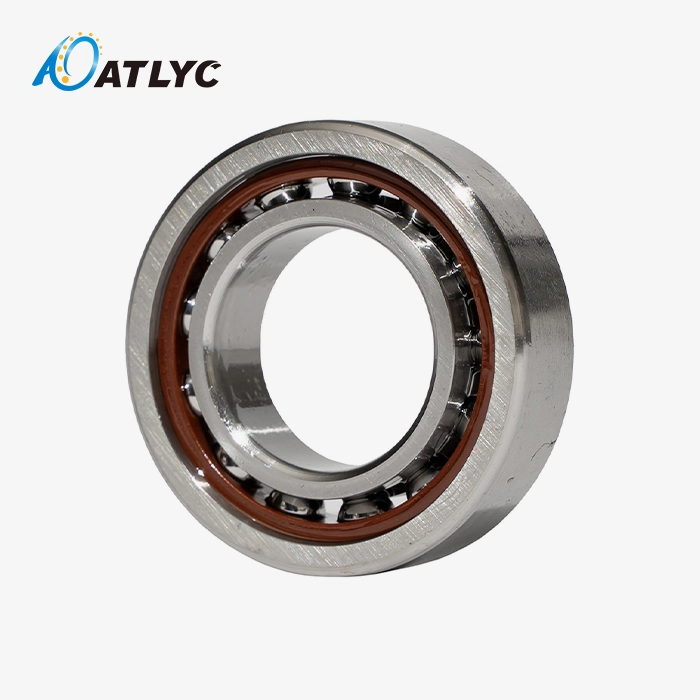
When you need reliable precision and load-handling capability, Angular Contact Bearings 7206AC deliver exactly what your equipment demands. These single-row ball bearings have a 30mm bore diameter, 62mm outer diameter, and 16mm width, and they are designed with a 25° contact angle to provide the best balance between radial and axial load capacity. The '7206AC' designation represents a proven design that addresses critical engineering challenges in high-speed applications, precision machinery, and demanding industrial environments where standard deep groove bearings fall short.

Understanding Angular Contact Bearings: 7206AC
The distinctive architecture of the 7206AC bearing sets it apart from conventional bearing solutions. Unlike ordinary deep groove bearings, the inner and outer ring raceways are axially displaced, creating an inherent contact angle. This design enables simultaneous support of combined loads while maintaining high rotational accuracy—a critical requirement in modern manufacturing environments.
Structural Composition and Design Principle
Their symmetrical raceway geometry is the foundation of these bearings. An engineering compromise between load capacity and speed capabilities was the 25° contact angle. This angle offers greater high-speed performance than 40° designs and is more effective at handling axial loads than 15° variations. To maximise bearing life and minimise stress concentrations, the contact geometry distributes loads across optimised contact circles. The construction of this bearing is made of heat-treated GCr15 steel, which means that it will retain its hardness and dimensions even when subjected to working circumstances. The precision grinding process achieves tolerances that are essential for vibration-free operation and the correct application of preload in matched configurations. For fifteen years, our factory has perfected these procedures, learning all the ins and outs of what makes excellent bearings and bad ones.
Technical Specifications and Dimensional Accuracy
When making a purchase, keep the 7206AC angular contact bearing specs in mind. These bearings are designed for moderate shaft diameters, which are commonly found in small electric motors, gear reducers, and gearbox components for printing machinery, with specifications of 30mm inner diameter, 62mm outer diameter, and 16mm breadth. The offered precision grades, P5, P4, and P2, correspond to distinct tolerance classes; ultra-precision applications require the tightest standards, which P2 provides. For their unique functional properties, materials like Bakelite and nylon were chosen for the cages. Nylon cages are lightweight and noiseless, whereas Bakelite cages are very stable and accurate in dimensions even when subjected to high temperatures. For the best performance in your unique application environment, our technical team at ATLYC can help you choose the right cage by taking your operational characteristics into account.
Core Features and Advantages of 7206AC Angular Contact Bearings
The performance advantages of angular contact bearing 7206AC configurations stem from carefully engineered features that address real-world industrial challenges. Understanding these advantages helps procurement professionals make decisions that impact equipment reliability, maintenance schedules, and total cost of ownership.
High-Speed Stability and Thermal Management
The 25° contact angle creates controlled thermal buildup during rotation, enabling sustained high-speed operation without thermal expansion issues that compromise precision. This characteristic becomes particularly valuable in CNC machine tool spindles, where thermal stability directly affects machining tolerances. The bearing design allows for effective heat dissipation, maintaining dimensional integrity even under continuous operation cycles. In vertical motor applications or motors driving helical gears, these bearings support both the weight of the rotor and the axial component of gear transmission forces. The low-friction characteristics contribute to energy efficiency and reduced operating noise, meeting Z3/V3 acoustic standards. Our quality control systems verify vibration and noise levels across all frequency bands, ensuring each bearing meets these demanding specifications.
Superior Rigidity and Load Versatility
Mounting angular contact bearings 7206AC in preloaded sets employing DB, DF, or DT designs gives cutting forces remarkable resistance to deflection due to their exceptional rigidity. Even in the most rigorous settings, its stiffness guarantees a high level of surface smoothness and machining accuracy. Many applications can be accomplished without the requirement for separate thrust bearing arrangements thanks to the balanced contact angle, which handles both radial loads from unbalanced rotors and axial loads from thrust forces. Such bearings really shine in applications like industrial fluid pumps as well as compressors. The bearing has to be radially stable and able to endure constant axial force caused by fluid pressure. In complicated, high-vibration pump housings, the 25° contact angle is perfect for absorbing thrust stresses, avoiding impeller rub, and prolonging seal life. We have seen firsthand how the right choice of bearings can drastically cut down on maintenance intervals and machine downtime over our fifteen years in the manufacturing industry.
Precision Maintenance Throughout Service Life
These bearings guarantee consistent equipment performance, as they are manufactured to strict tolerance standards and maintain their precision throughout their service life. Rockwell hardnesses between HRC 60 and 64 are attained through heat treatment, and metallographic analysis verifies that there is no carbide reticulation, which could reduce fatigue life. Consistency is our goal, and our ISO 9001 and IATF 16949 certifications show that we're committed to implementing process controls to make that happen. To ensure dimensional and geometric precision, the verification process adheres to ISO 492 criteria. Radial runout measures, bore diameter, outer diameter, and width tolerances are specifically examined. To ensure that axial load forecasts are accurate for the entire life of the bearing, coordinate measurement machines check that the angle is exactly 25°. Customers benefit from lower failure rates and longer service intervals as a direct result of these quality efforts.
Comparative Analysis and Selection Guide for Procurement
Selecting the appropriate bearing variant requires understanding how different designs perform under specific operational conditions. The distinctions between 7206AC, 7206ACD, and related models influence both immediate performance and long-term cost efficiency.
Variant Comparison and Performance Criteria
The 7206ACD is a duplex design where two bearings are matched during production for quick DB or DF mounting, whereas the 7206AC is a typical single-row angular contact bearing with a 25° contact angle. Although there is an increase in the initial cost, the duplex design makes installation easier and guarantees appropriate preload. The axial load capacity is larger, but the speed capability is reduced when the 7206 does not have a suffix, which usually indicates a 40° contact angle. While angular contact designs are more robust and have a higher axial load capacity, deep groove bearings provide a simpler installation and are another option to consider. An angular contact bearing, 7206AC, is superior to a deep groove bearing in situations where there are combined loads or when the shaft needs to be very stiff. In order to ensure that bearing selection is in line with specific operational objectives, our technical staff routinely examines these tradeoffs with clients.
Brand Reputation and Quality Assurance
After decades of engineering refinement, leading manufacturers such as SKF, FAG, NSK, and TIMKEN created Angular Contact Bearings 7206AC standards. Although some manufacturers charge more, they provide comprehensive warranty coverage and technical assistance. When competent manufacturers provide aftermarket alternatives with the appropriate certifications and quality control, they offer appealing value. ATLYC's 120 trained workers handle production, R&D, quality inspection, and assembly, guaranteeing a level of quality on par with well-known brands. The fact that we are ISO 9001 and IATF 16949 certified shows that we obey the rules set down by the global organisations that make cars and other industrial products. Over the past fifteen years, we have grown from a single workshop to six, giving us the manufacturing capacity and technological know-how to consistently meet the needs of medium to large-sized producers of industrial equipment and automobiles.
Procurement Considerations and Sourcing Strategies
Minimum order quantities, bulk purchasing benefits, and lead time management significantly impact procurement efficiency. Standard 7206AC bearings typically ship within 7 working days from our facility, supporting just-in-time inventory strategies while maintaining buffer stock for unexpected demand. Bulk purchases unlock volume pricing that improves project economics without compromising quality. Our OEM and customisation capabilities address specialised requirements that standard catalogue bearings cannot satisfy. Whether modifying cage materials, adjusting preload specifications, or implementing custom sealing arrangements, our engineering team collaborates with customers to develop solutions aligned with operational requirements. This flexibility has proven valuable for customers across South Korea, the United States, Germany, Russia, Iran, and Turkey.
Maintenance and Longevity of Angular Contact Bearing 7206AC
Maximising bearing lifespan requires implementing maintenance protocols that address lubrication, contamination prevention, and proper installation techniques. These practices directly influence equipment uptime and maintenance cost structures.
Lubrication Best Practices and Schedules
Proper lubrication reduces friction, dissipates heat, and protects bearing surfaces from contamination. Grease lubrication suits most 7206AC applications, with lithium-based greases offering excellent temperature stability and water resistance. The lubrication schedule depends on operating speed, load, and environmental conditions, typically ranging from 2,000 to 5,000 operating hours for moderate-duty applications. Oil lubrication becomes preferable in high-speed applications where heat dissipation requirements exceed grease capabilities. The oil circulation system continuously removes heat and contaminants, thereby extending bearing life in demanding environments. Our technical documentation provides specific lubrication recommendations based on application parameters, helping maintenance teams establish optimal service intervals.
Installation Techniques and Handling Procedures
Careful handling prevents contamination that accelerates wear and premature failure. Bearings should remain in original packaging until installation, with clean tools and work surfaces essential for preventing particulate contamination. Proper mounting techniques ensure correct preload application in duplex configurations, directly affecting bearing rigidity and life. Temperature-controlled installation methods, such as heating the housing or cooling the shaft, facilitate proper fit without mechanical force that could damage precision raceways. Our installation guidelines detail these procedures, supported by technical assistance from our engineering team when customers encounter challenging mounting situations.
Environmental Factors and Preventive Measures
Operating temperature, load conditions, and contamination exposure influence maintenance planning. Bearings operating near their thermal limits require more frequent inspection and lubrication renewal. Vibration analysis detects early wear patterns before catastrophic failure, enabling scheduled maintenance that prevents unplanned downtime. Common failure modes include inadequate lubrication, contamination-induced wear, and improper installation. Our quality control systems test bearings under accelerated conditions that simulate years of service, identifying potential weaknesses before components reach customers. This preventive approach has built trust with customers who depend on continuous operation for production efficiency.
How to Purchase an Angular Contact Bearing 7206AC for Your Business?
Sourcing genuine components from trustworthy suppliers requires evaluating credentials, understanding logistics considerations, and establishing partnerships that support long-term operational success.
Evaluating Supplier Credentials and Capabilities
Reliable suppliers demonstrate manufacturing capacity, quality certifications, and technical expertise. ISO 9001 and IATF 16949 certifications verify process controls and continuous improvement systems. Production scale indicates the ability to fulfil large orders consistently while maintaining quality standards across production runs. Our facility houses six specialised workshops, developed over 15 years of continuous investment. This infrastructure supports diverse bearing categories while maintaining the process controls that precision components demand. Customers touring our facility consistently note the equipment sophistication and workforce expertise that differentiate capable manufacturers from basic assembly operations.
Logistics and Lead Time Management
Understanding delivery timelines enables effective inventory planning and production scheduling. Standard 7206AC bearings ship within 7 working days, with expedited options available for urgent requirements. International shipping to South Korea, the United States, Germany, Russia, Iran, and Turkey follows established logistics channels that balance transit time against shipping costs. Bulk purchase negotiations optimise cost efficiency while ensuring supply stability. Our procurement team works with customers to structure orders that balance inventory carrying costs against volume discounts. This collaborative approach has fostered long-term partnerships with automotive OEMs and industrial equipment manufacturers seeking reliable supply chains.

Conclusion
The Angular Contact Bearing 7206AC is a proven solution for applications that need to handle combined loads, work at high speeds, and maintain precision over time. Its 25° contact angle, GCr15 steel construction, and availability in P5, P4, and P2 precision grades meet important needs in the automotive, industrial machinery, and precision equipment sectors. Understanding the technical specifications, performance advantages, and proper maintenance protocols enables procurement professionals to specify components that optimise equipment reliability and operational efficiency. Supplier partnerships improve the selection process by combining manufacturing capability, quality assurance, and technical support—qualities that set strategic-bearing suppliers apart from transactional vendors.
FAQ
What load capacity does the 7206AC angular contact bearing support?
The bearing handles combined radial and axial loads, with specific capacity depending on mounting configuration. Single bearings manage moderate axial loads in one direction, while DB arrangements double axial capacity in both directions. DF configurations provide higher radial stiffness, and DT (tandem) mounting maximises unidirectional axial capacity.
Is the 7206AC suitable for high-speed applications?
The 25° contact angle optimises speed capability while maintaining good axial load capacity. Speed limits depend on lubrication method, cage material, and preload settings, typically supporting moderate- to high-speed operations in precision spindles and small electric motors.
What maintenance intervals are recommended for these bearings?
Lubrication renewal typically occurs every 2,000 to 5,000 operating hours under normal conditions, with intervals adjusted based on operating speed, load, temperature, and environmental factors. Vibration monitoring detects early wear indicators that may necessitate earlier inspection.
Partner with ATLYC for Premium Angular Contact Bearings 7206AC
As an experienced angular contact bearings 7206AC manufacturer, ATLYC combines 15 years of manufacturing expertise with rigorous quality standards that meet ISO 9001 and IATF 16949 requirements. Our facility produces precision bearings across six specialised workshops, staffed by 120 skilled professionals who are dedicated to delivering components that meet the demanding specifications of automotive OEMs, industrial machinery manufacturers, and global distributors. We support customisation and OEM requirements, with 7-day delivery for standard configurations and technical assistance throughout the selection and application process. Contact our team at auto@lyautobearing.com to discuss your bearing requirements and discover how our manufacturing capabilities, competitive pricing, and reliable delivery support your operational objectives.
References
1. Harris, T.A., and Kotzalas, M.N. (2006). Rolling Bearing Analysis: Essential Concepts of Bearing Technology. CRC Press.
2. ISO 492:2014. Rolling bearings—radial bearings—geometrical product specifications (GPS) and tolerance values. International Organisation for Standardisation.
3. Eschmann, P., Hasbargen, L., and Weigand, K. (1985). Ball and Roller Bearings: Theory, Design and Application. John Wiley & Sons.
4. IATF 16949:2016. Quality management system requirements for automotive production and relevant service parts organisations. International Automotive Task Force.
5. Tallian, T.E. (1999). Failure Atlas for Hertz Contact Machine Elements. ASME Press.
6. NSK Ltd. (2020). Technical Report: Angular Contact Ball Bearings—Design Principles and Application Guidelines. NSK Motion & Control.
Learn about our latest products and discounts through SMS or email