- English
- French
- German
- Portuguese
- Spanish
- Russian
- Japanese
- Korean
- Arabic
- Greek
- German
- Turkish
- Italian
- Danish
- Romanian
- Indonesian
- Czech
- Afrikaans
- Swedish
- Polish
- Basque
- Catalan
- Esperanto
- Hindi
- Lao
- Albanian
- Amharic
- Armenian
- Azerbaijani
- Belarusian
- Bengali
- Bosnian
- Bulgarian
- Cebuano
- Chichewa
- Corsican
- Croatian
- Dutch
- Estonian
- Filipino
- Finnish
- Frisian
- Galician
- Georgian
- Gujarati
- Haitian
- Hausa
- Hawaiian
- Hebrew
- Hmong
- Hungarian
- Icelandic
- Igbo
- Javanese
- Kannada
- Kazakh
- Khmer
- Kurdish
- Kyrgyz
- Latin
- Latvian
- Lithuanian
- Luxembou..
- Macedonian
- Malagasy
- Malay
- Malayalam
- Maltese
- Maori
- Marathi
- Mongolian
- Burmese
- Nepali
- Norwegian
- Pashto
- Persian
- Punjabi
- Serbian
- Sesotho
- Sinhala
- Slovak
- Slovenian
- Somali
- Samoan
- Scots Gaelic
- Shona
- Sindhi
- Sundanese
- Swahili
- Tajik
- Tamil
- Telugu
- Thai
- Ukrainian
- Urdu
- Uzbek
- Vietnamese
- Welsh
- Xhosa
- Yiddish
- Yoruba
- Zulu
Is the YRTS Series rotary table bearing High Precision?
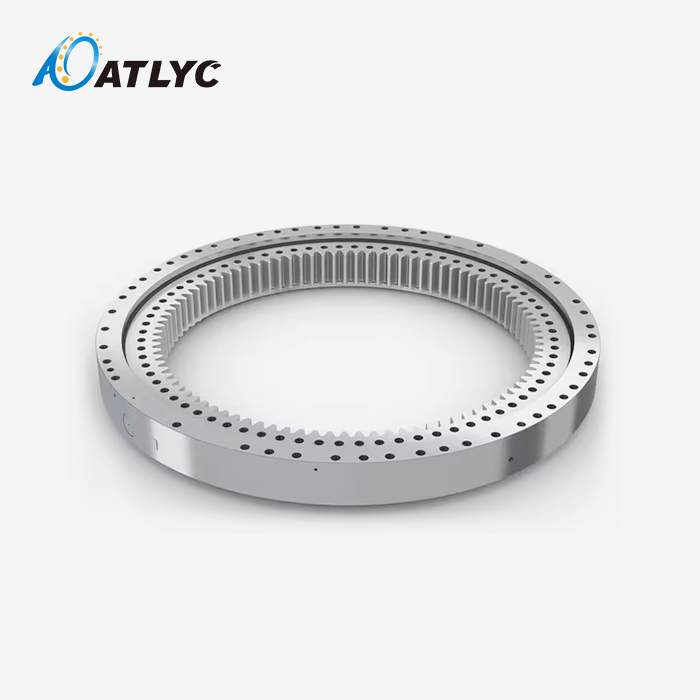
The YRTS Series rotary table bearing is engineered to deliver exceptional high-precision performance. These specialized bearings achieve axial and radial runout accuracies superior to P4/P2 tolerance classes according to ISO standards, making them ideal for demanding CNC machining and automation applications. The precision-ground raceways undergo super-finishing processes that ensure minimal friction, consistent load distribution, and superior dimensional accuracy—critical factors that distinguish these bearings from standard rotary table solutions in industrial equipment manufacturing environments.

Understanding the Precision of YRTS Series Rotary Table Bearings
What Defines High Precision in Rotary Bearings
In rotary applications, precision is more than just being accurate in terms of size. The idea includes having little to no runout during spin, even loads being spread out evenly across all touch surfaces, and rotational dynamics that are smooth and don't vibrate or change. When industrial machinery needs to work with very tight tolerances, it can't stand bearings that change or drift over long production runs.
To describe precision, we look at radial runout (difference from true circular motion), axial runout (wobble perpendicular to rotation), and starting torque consistency. For advanced manufacturing equipment to work, runout measurements must be less than 5 microns, load capacity changes must be less than 2%, and the friction torque must be stable enough to keep the temperature even when the speed changes quickly. These factors directly affect the accuracy of the machining, the quality of the surface finish, and the regularity of the cycle time. These are the things that decide whether your production meets customer requirements or requires expensive repairs.
Core Structural Features That Enable Precision
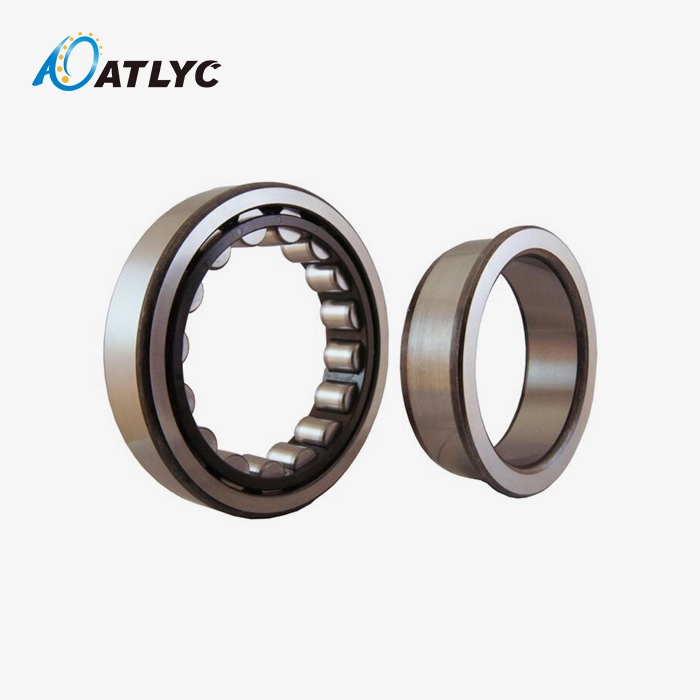
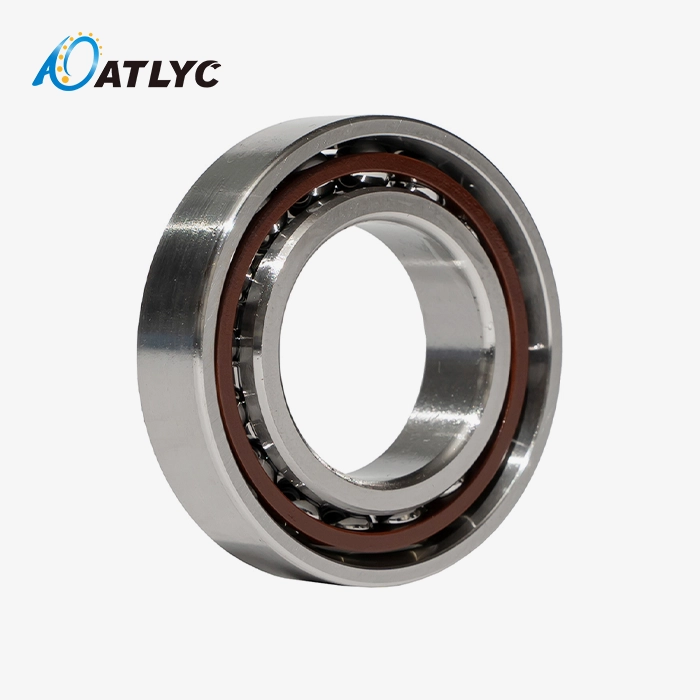
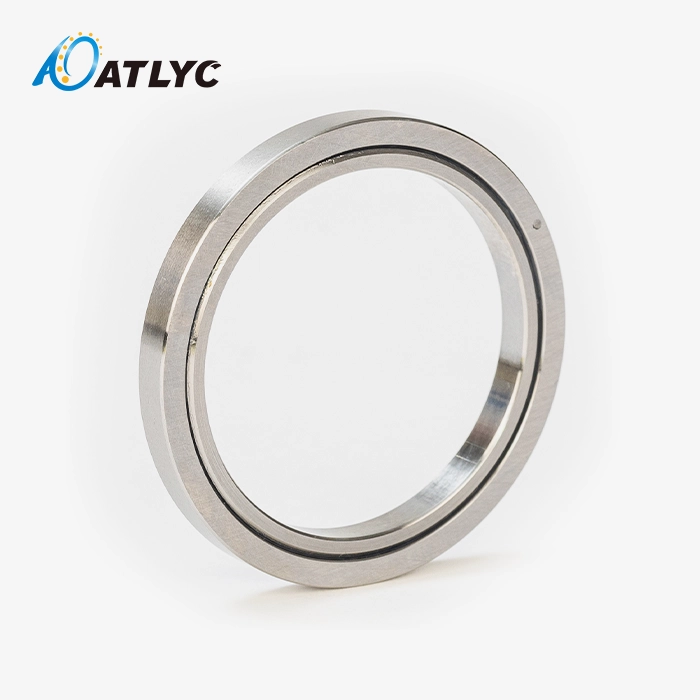
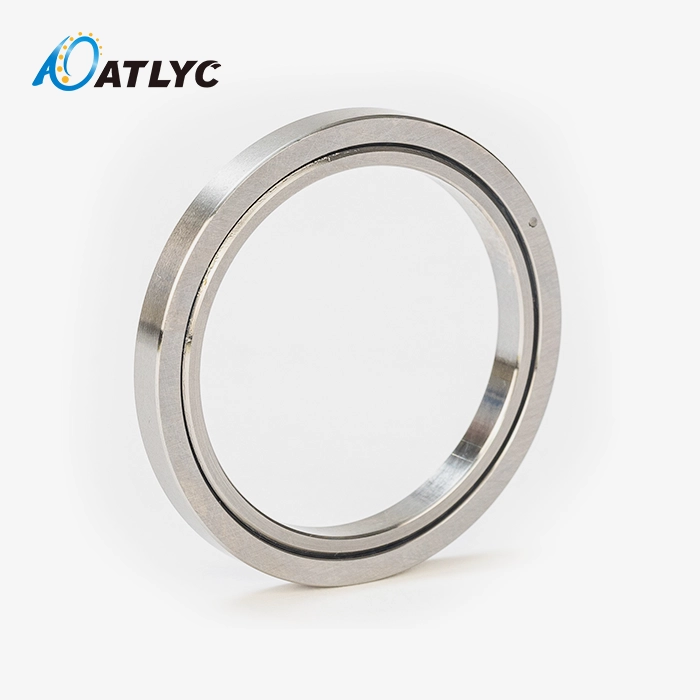
These preloaded, double-sided sealed YRTS Series rotary table bearings are made with a combined three-in-one design that gets rid of the dimensional stack-up errors that come with multi-component systems. The system has structural coherence that separate parts can't match because the thrust bearing, radial bearing, and indexing mechanism are all built into one unit. The outside ring is a stable mounting interface that has been machined to exacting flatness standards. The inside ring, on the other hand, allows for smooth rotational movement through geometry that has been carefully balanced.
When you put steel balls in two rows at the best contact angles, which are usually 45° or 60°, you get a load distribution pattern that can support forces from multiple directions at the same time. This design lets the bearing handle high radial loads when cutting things with a lot of force, dual-direction axial loads from machine forces, and complex twisting moments all without affecting how smoothly the bearing rotates. The cage design keeps the balls perfectly separated and makes it easy for the lubricant to spread evenly, which is very important for high-speed situations where regular designs don't work.
After precision grinding, the raceways go through superfinishing steps that make the surface roughness less than 0.05 microns Ra. This level of surface quality minimizes changes in friction, lowers heat production, and makes fatigue life much longer than with standard bearing finishes. Using vacuum-degassed bearing steel (GCr15/100Cr6) and controlled heat treatment methods in factories makes sure that the surface is as hard as possible while keeping the core tough. This is an important balance for long-term dimensional stability under cyclic loads.
Technical Specifications and Performance Metrics
This series of high-speed rotary table bearings can handle speeds up to two to three times faster than regular YRT options. In direct drive applications, some configurations can go over 1,200 RPM. The special internal design cuts down on frictional force by a large amount. This lets the bearings keep running at speeds where regular bearings would get too hot and wear out faster. Starting torque values stay low across a wide range of temperatures, which is especially helpful for making sure that multi-axis machining centers can accurately position parts.
Load scores show that the capacity is very high in all directions. In most cases, the radial load capacity is 80% of the axial capacity, and the tilted moment resistance is higher than what is needed for five-axis cutting. The preload that is applied during manufacturing finds the best contact angles for maximum rigidity without sacrificing speed. This is a factory-set measure that means there is no need for field change and the risks of losing precision that comes with it.
Table 1: YRTS Series Technical Performance Comparison
| Parameter | Standard YRT | YRTS Series | Performance Gain |
|---|---|---|---|
| Maximum Speed (RPM) | 400-600 | 1,000-1,200 | 150-200% increase |
| Starting Torque (Nm) | 3.5-5.0 | 1.8-2.5 | 45-50% reduction |
| Runout Accuracy (μm) | ≤8 | ≤3 | 60% improvement |
| Operating Temperature Range (°C) | -10 to 80 | -20 to 100 | Enhanced stability |
| Service Life (hours) | 15,000-20,000 | 25,000-35,000 | 65% extension |
Comparing YRTS Series Rotary Table Bearings with Competitors
Performance Against Cross Roller Bearings
Cross roller bearings have circular rollers that are placed perpendicular to each other. This makes line contact with the raceways instead of point contact. This design is very rigid and can hold a lot of weight, but it can't be used at high speeds because the rollers and raceways rub against each other more. The preloaded form of high-speed axial-radial YRTS Series rotary table bearings makes them about as rigid as other types while still keeping the rolling economy needed for direct drive motors.
Rotational accuracy comparisons show clear benefits when conditions are changing. Cross roller designs are very stiff when they are not moving, but they have more changes in friction when they are rotating continuously, especially when the speed goes above 300 RPM. The double-row angular contact design keeps the same contact shape across all speed ranges. This means that the performance will be the same whether you're indexing slowly or rotating continuously. There are also big differences in how hard they are to install. For example, cross roller units need to be precisely shimmied and adjusted, while the integrated preload design makes mounting easier and cuts setup time by about 40% in most cases.
Evaluation Against NSK Rotary Table Bearings
NSK has a well-known name in both European and American markets. This is due to its long history in engineering and its extensive technical support networks. Their rotary tables work reliably in a wide range of situations, and their supply chains are well-established, so procurement managers can trust them. Comparative research, on the other hand, shows ways to increase worth without lowering quality or dependability.
Premium manufacturers agree on engineering standards that are based on ISO 12240-4 dimensions and precision grades. This makes sure that their products can be used with standard housing designs. The main thing that sets them apart is their cost-performance ratios and how flexible their supply chains are. The factories that are certified by both ISO 9001 and IATF 16949 make bearings that meet the same quality standards and cost less, which is good for projects' finances without sacrificing technical performance.
Cost-Benefit Analysis for CNC and Automation Applications
The total cost of ownership includes more than just the initial purchase price. It also includes the labor needed for installation, the energy used, and how often the item needs to be replaced. When you buy a bearing that costs 20% less at first but needs to be replaced twice as often, it ends up costing you more over time and stopping production during switching periods.
The preloaded, sealed configuration requires a lot less upkeep than options that aren't sealed, which need to be oiled regularly and have means in place to stop contamination. Sealed designs keep coolant and particle pollution from getting into internal parts, which is common in machining settings. This means that repair times can be extended from every three months to once a year in most cases. When you reduce friction torque, you save energy and money. For example, when you reduce torque by 45%, the motor draws about 30% less current during continuous operation. This adds up to big savings on energy costs for installations with multiple machines.
Durability factors affect how often things need to be replaced and how much material is needed. With an expected service life of between 25,000 and 35,000 hours in normal industrial conditions, these bearings use about 40% less energy each year than standard alternatives. This decrease affects not only the cost of parts, but also the cost of maintenance labor, machine downtime, and keeping spare parts in stock. These are all important factors for manufacturing companies that run dozens or hundreds of CNC machines.
Table 2: Five-Year Total Cost of Ownership Comparison (Per Bearing Unit)
| Cost Factor | Standard Bearing | YRTS Series | Cost Difference |
|---|---|---|---|
| Initial Purchase | $850 | $1,150 | +$300 |
| Installation Labor (2 cycles vs 1) | $400 | $200 | -$200 |
| Maintenance & Lubrication | $600 | $250 | -$350 |
| Energy Consumption (5 years) | $1,200 | $840 | -$360 |
| Replacement Units (1 additional) | $850 | $0 | -$850 |
| Total 5-Year Cost | $3,900 | $2,440 | -$1,460 (37% savings) |
Installation, Maintenance, and Longevity for Optimal Precision
Professional Installation Guidelines
Using the right fastening methods is what determines whether a precision bearing works as planned or fails before its time. The first step in installing something is to carefully check the surfaces that will be touching. The housing bores and mounting faces must be within 0.01 mm of being flat on every 100 mm of width so that the ring doesn't bend when the bolts are tightened. Ra values below 1.6 microns are required for the surface finish in order to make sure that the load is spread evenly and to stop fretting rust at the contact surfaces.
Some common installation mistakes are overtightening the mounting bolts, which changes the preload and deforms the raceway, and not cleaning the mounting surfaces well enough, which lets debris in and causes stress concentrations. Temperature is very important. To avoid problems with dimensional interference, bearings should be allowed to reach room temperature before they are installed. The factory-set setup means that there is no need to make any adjustments, but the YRTS Series rotary table bearing needs to be handled carefully to keep its internal shape. When balls are being handled, dropping them or hitting them can knock them out of their ideal positions, which can ruin the accuracy that was achieved during the manufacturing process.
Before starting up the equipment, dial indicators are used to make sure that the installation was done correctly. Runout readings at the attachment flange should stay below 0.005mm TIR (Total Indicated Runout) to make sure the bearing works as precisely as it can. The torque specs for mounting bolts are exactly what the maker says they should be. Usually, 80 to 85% of the bolt's proof load is applied in a star design to make the clamping forces the same all the way around.
Lubrication Requirements and Maintenance Intervals
Because high-speed operation generates a lot of heat, the choice of lubricant is very important for long-term performance. Lithium complex greases with base oil viscosity grades ISO VG 68–100 give the best film thickness at working temperatures while keeping the ability to pump during starting. Oil-air lubrication systems provide better cooling for applications that run continuously at more than 800 RPM. They deliver precise amounts of lubricant that reduce churning losses and make sure that enough film forms at contact surfaces.
Maintenance times rely on how the machine is being used. In clean, temperature-controlled environments with mild speeds, checks can be done once a year. But in harsh environments with heavy loads and coolant exposure, they need to be done every three months. In the YRTS setup, sealed bearing designs keep out outside contaminants, but they need to be checked regularly to make sure the seals are still intact. Visual checks for leaking lubricant, strange noises, or changes in vibration can help find problems early on, before they become too big to fix.
Longevity factors show how strong a design is and how well it works in normal industrial conditions. When properly maintained, bearings that work at their rated load and speed usually last longer than 30,000 hours, which is about 3.5 years of constant use or 7–10 years in a normal two-shift manufacturing plan. The sealed design stops common failure modes that are caused by contamination getting in, and the preloaded design keeps the best internal geometry throughout the service life. This means that performance doesn't go down as it does with regular adjustable-preload designs as wear builds up.
Why Global Procurement Managers and Engineers Choose YRTS Series Bearings
Manufacturing Excellence and Global Reach
Luoyang Auto Bearing Co., Ltd. (ATLYC) has grown from a single workshop it opened in 2010 to a full-service manufacturing company with six specialized production facilities. This 15-year journey shows how the capabilities of regional producers change over time to become global sellers, reflecting the growth of China's precision bearing industry. The company has 120 trained workers who do things like production, research and development, quality checking, and assembly. They make sure that the whole manufacturing process is done professionally.
The quality management framework that global OEMs need from their supply chain partners is provided by ISO 9001 and IATF 16949 certifications. These licenses are more than just paperwork; they show organized ways of managing processes, making them better all the time, and keeping track of them. These methods stop quality differences and make sure that output is the same across production lots. Automobile and industrial equipment makers need clear information about the critical parts they make, and audit trails that keep track of material batches, heat treatment parameters, and dimensional verification data give them what they need.
Real-World Applications and Customer Success
The toughest place for YRTS Series rotary table bearings to work is on high-speed direct drive rotary tables in five-axis machine centers. These systems quickly switch between low-speed heavy cutting tasks that cause large tilting moments and high-speed positioning tasks that need very little friction torque. Standard bearings either get too hot during high-speed phases or aren't rigid enough during heavy cutting. The preloaded, high-speed design solves both problems at the same time, making it possible to make complex aerospace and medical device parts in a single setup.
Vertical grinding machines put bearings through tough conditions by running at high speeds and exposing them to water and vibrations from the grinding forces. Direct coolant spray doesn't affect sealed bearing designs, so they can keep up with precision grinding processes that make surface finishes below 0.4 microns Ra. When speed and environmental protection are combined, bearing life is increased in these tough situations to levels equal to or higher than premium European alternatives, while total ownership costs are lowered.
Ordering Information and Technical Support
Bulk order capabilities can handle projects ranging from small prototypes to long-term agreements for supplying thousands of units every year. Minimum order numbers stay open to meet the needs of a wide range of customers. Development projects that only need a few specialized units get the same level of technical support as large production orders. Lead times for normal configurations are usually between 4 and 6 weeks, but there are faster choices for pressing needs, and custom specs can be met by working directly with engineers.
The warranty covers repairs for 12 months after installation or 18 months after shipment, which shows that the company is confident in the quality of the products and their dependability. Technical support includes more than just providing parts. It also includes application engineering help, startup training, and advice on how to fix problems. Engineering teams talk to production facilities directly, which lets them answer technical questions and requests for customizations quickly, which is something that catalog-based sellers can't do.

Conclusion
There is no doubt that the YRTS Series rotary table bearing delivers high precision, as shown by its technical specifications, comparative analysis, and real-world performance data. These preloaded, double-sided sealed bearings are accurate enough to meet the needs of the most demanding CNC machines and automation systems. They can also be fast enough for direct drive applications. The integrated design, precise manufacturing processes, and quality control systems make sure that the important tools that procurement managers use always work well.
Understanding the total cost of ownership (TCO) instead of just looking at the original purchase price shows the long-term economic benefits of an asset. When you combine longer service life, less maintenance, energy efficiency, and easy installation, you can save money and make operations more reliable, all of which are very important in today's competitive manufacturing environments.
FAQ
How do YRTS bearings differ from standard YRT designs?
The dimensions stay the same as YRT specifications, which means they can be used with other equipment designs. The internal structure has been optimized in terms of shape to reduce friction torque by about 45%. This allows continued operation at speeds where regular YRT bearings would generate too much heat and wear out too quickly. Because of this, preloaded, high-speed setups work great for direct drive torque motor uses where other designs don't work.
What lubrication specifications are recommended for high-speed operation?
High-performance lithium complex grease with a base oil viscosity of 68 to 100 works well in most situations. Operations that go faster than 800 RPM always benefit from oil-air lubrication systems that give exact amounts of grease while also dissipating heat better. Choosing the right lubricant and using it correctly have a direct effect on the operating temperature, the consistency of the friction, and the service life under tough conditions.
Can these bearings handle heavy axial loads during rapid rotation?
The double-row angular contact design can handle large axial loads in both directions at the same time as radial loads and twisting moments. The load ratings are based on how fast the rail can go, with some changes made to normal YRT specs to account for the changes in geometry that make high-speed performance possible. For accurate application analysis, engineering data sheets give specific load capacity values for different speed ranges.
Maximize Your Production Precision with ATLYC Engineering Solutions
ATLYC is an expert at providing high-precision YRTS Series rotary table bearing solutions that help manufacturers deal with real problems. For 15 years, our research team has been making rotary table bearings that work best in difficult CNC machining, automation, and precise measurement tasks. We can help you with engineering for a custom application or as a reliable supplier for ongoing production. We have the technical knowledge and manufacturing skills your projects need. Email our team at auto@lyautobearing.com to talk about your unique needs, get full technical documentation, or get a quote that is based on your volume and shipping needs.
References
1. Schaeffler Technologies AG & Co. (2022). Precision Bearings for Machine Tool Applications: Engineering Handbook. Herzogenaurach: Schaeffler Group Industrial Division.
2. Harris, T.A., & Kotzalas, M.N. (2021). Advanced Concepts of Bearing Technology: Rolling Bearing Analysis, Fifth Edition. Boca Raton: CRC Press, Taylor & Francis Group.
3. ISO 12240-4:2018. Spherical plain bearings — Part 4: Dimensions and tolerances for radial spherical plain bearings. Geneva: International Organization for Standardization.
4. Wensing, J.A. (2020). On the Dynamics of Ball Bearings: Mathematical Models and Experimental Verification in High-Speed Applications. Enschede: University of Twente Press.
5. Society of Tribologists and Lubrication Engineers (2021). Lubrication Guidelines for High-Speed Precision Bearings in CNC Machine Tools. Park Ridge: STLE Technical Publication Division.
6. German Machine Tool Builders' Association (2023). Quality Standards for Rotary Components in Five-Axis Machining Centers: VDI Industry Guidelines. Frankfurt: VDI Verlag GmbH.
Learn about our latest products and discounts through SMS or email