- English
- French
- German
- Portuguese
- Spanish
- Russian
- Japanese
- Korean
- Arabic
- Greek
- German
- Turkish
- Italian
- Danish
- Romanian
- Indonesian
- Czech
- Afrikaans
- Swedish
- Polish
- Basque
- Catalan
- Esperanto
- Hindi
- Lao
- Albanian
- Amharic
- Armenian
- Azerbaijani
- Belarusian
- Bengali
- Bosnian
- Bulgarian
- Cebuano
- Chichewa
- Corsican
- Croatian
- Dutch
- Estonian
- Filipino
- Finnish
- Frisian
- Galician
- Georgian
- Gujarati
- Haitian
- Hausa
- Hawaiian
- Hebrew
- Hmong
- Hungarian
- Icelandic
- Igbo
- Javanese
- Kannada
- Kazakh
- Khmer
- Kurdish
- Kyrgyz
- Latin
- Latvian
- Lithuanian
- Luxembou..
- Macedonian
- Malagasy
- Malay
- Malayalam
- Maltese
- Maori
- Marathi
- Mongolian
- Burmese
- Nepali
- Norwegian
- Pashto
- Persian
- Punjabi
- Serbian
- Sesotho
- Sinhala
- Slovak
- Slovenian
- Somali
- Samoan
- Scots Gaelic
- Shona
- Sindhi
- Sundanese
- Swahili
- Tajik
- Tamil
- Telugu
- Thai
- Ukrainian
- Urdu
- Uzbek
- Vietnamese
- Welsh
- Xhosa
- Yiddish
- Yoruba
- Zulu
What Replaces CRBS Crossed Roller Bearings?
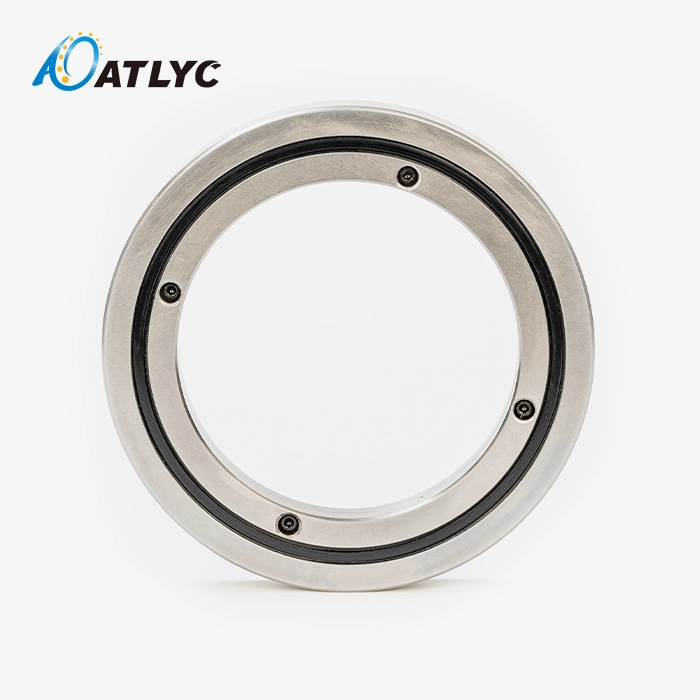
When seeking alternatives to CRBS crossed roller bearings, several viable options exist depending on your application requirements. Slewing bearings offer exceptional load capacity for heavy machinery, while high-precision angular contact bearings deliver comparable rigidity for automation equipment. Enhanced cylindrical roller bearings provide cost-effective solutions for moderate precision needs, and traditional ball bearings with improved sealing can serve lighter-duty applications. The optimal replacement depends on evaluating load characteristics, environmental conditions, speed requirements, and total cost of ownership against your operational specifications.

Why Consider Alternatives to CRBS Crossed Roller Bearings?
When operational realities differ from initial specifications, procurement managers and engineering teams regularly look at other bearing options. Knowing when to look for alternatives helps improve the performance of both tools and the efficiency of the supply chain.
Operational Scenarios Demanding Different Solutions
Applications that need to be fast are a common example of when alternatives are needed. Even though CRBS Crossed Roller Bearings are very accurate and can hold a lot of weight, angular contact ball bearings or specially made high-speed designs often work better for equipment that needs to rotate faster than 1,500 RPM. The performance benefits that crossed roller designs usually offer can be lost when speeds are high and centrifugal forces start to act.
Performance Criteria Guiding Replacement Decisions
Any review of bearing repair starts with a load capacity analysis. Figuring out the size and direction of the forces acting on your tools can help you decide if other options can safely handle working stresses. Deep groove ball bearings might work well for radial-dominant applications, but crossed roller technology or special angular contact pairs might still be needed for mixed loading situations.
The level of accuracy needed for different tasks varies a lot. Medical devices and tools used to make semiconductors need to be able to place things accurately to the level of microns, so they prefer high-quality crossed roller or preloaded angular contact bearings. On the other hand, standard cylindrical roller or ball bearing assemblies can work well with general industrial machinery that has tolerances in the hundreds of millimeters.
Procurement Perspective Considerations
The availability of suppliers has a big effect on the choice of bearing, especially for companies with foreign supply lines. CRBS Crossed Roller Bearings are useful in many industries, but they are not always available in all areas. When there are problems in the supply chain or long wait times, it may be necessary to look at options that are easier to get and keep production schedules.
Procurement tactics are affected by the need for customization. Standard CRBS Crossed Roller Bearings dimensions might not perfectly match existing equipment interfaces. This means that either custom manufacturing is needed or other types of bearings that meet the requirements must be chosen. Custom orders usually make lead times longer and minimum order quantities higher, which can make it harder to manage inventory and keep up with cash flow.
Top Alternatives to CRBS Crossed Roller Bearings: Features and Comparison
Before you can choose the right parts, you need to know what each type of bearing technology can and can't do. Each choice has its own benefits that make it better for certain types of operations.
Standard Crossed Cylindrical Roller Bearings
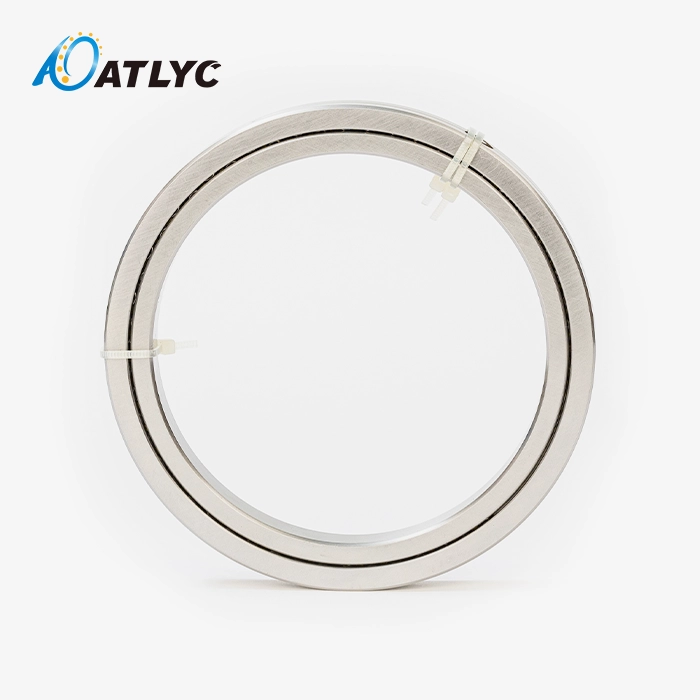
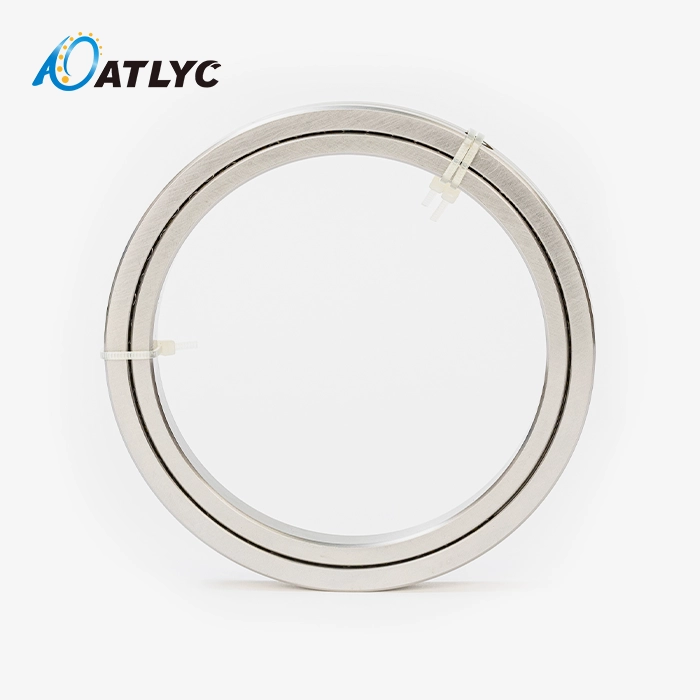
Crossed cylindrical roller bearings that aren't sealed can handle loads in the same way and in the same direction, but they don't protect against the environment like CRBS Crossed Roller Bearings units do. These options work well in situations where the outside housing protects against pollution well enough. They lower the cost of the bearings while keeping the main benefits of crossed roller geometry.
Slewing Bearings for Heavy-Duty Applications
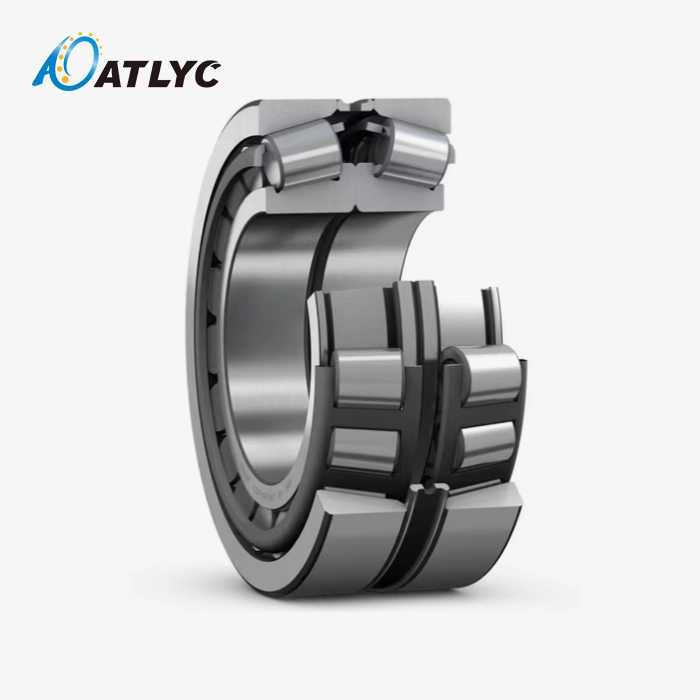
When you need a large diameter and extreme loads that are higher than what a crossed roller bearing can handle, slewing bearings are the best choice. These strong assemblies usually have one or more rows of balls or rollers inside much bigger raceways. They can hold a wide range of equipment, from wind turbine yaw systems to construction crane turntables.
Modern slewing bearings are accurate enough for heavy machinery where positioning tolerances are measured in millimeters instead of microns, but they are not as precise as crossed roller designs. Because they are so big, they can handle moment loads in kilonewton-meters, which is much more than what CRBS Crossed Roller Bearings can do.
High-Precision Angular Contact Bearings
When set up in matched pairs or sets, angular contact ball bearings offer many of the benefits of crossed roller bearings while also being better at handling high speeds. Point contact roller designs have less friction than line contact roller designs. This means they produce less heat and can rotate at speeds that are often twice as fast as those possible with crossed roller systems.
Angular contact designs come in precision grades that are the same as crossed roller bearings. Bearings with tolerance classes that meet ABEC-7 or ISO P4 standards are made by manufacturers. These bearings provide the accuracy in dimensions needed for robotic joints, precision spindles, and optical equipment positioning systems.
Enhanced Ball and Cylindrical Roller Bearings
New developments in old bearing designs have made it possible to use choices that are in between standard parts and specialized crossed roller systems. Deep groove ball bearings with improved sealing, advanced cage materials, and better internal design now work as well as crossed roller bearings in moderate-load situations.
Comparative Performance Analysis
Procurement teams can make data-driven decisions when they know the quantitative differences between bearing options. The table below shows the most important performance metrics for some common replacement options:
| Type of Bearing | Load Strength (kN) | Rate of Speed (RPM) | Very Good Quality | Protecting the environment | Cost Compared to |
|---|---|---|---|---|---|
| CRBS Crossed Roller Bearings | 45–120 | 500 to 1,500 | P4–P2 | IP65 | High |
| Crossed roller standard size | 50 to 150 | 500 to 1,200 | P5–P2 | Not at all | Medium to High |
| Bearing for Slewing | 200 to 2,000 or more | 50 to 300 | P0–P6 | IP54 to IP65 | Very High |
| Pair of Angled Contacts | 30-80 | 2,000 to 8,000 | P4–P2 | IP54 | A Medium |
| Better Ball Bearing | 20–60 | 3,000 to 12,000 | P6–P5 | IP54 to IP65 | Low to medium |
| Roller with Cylinders | 80–200 | 1,000 to 4,000 | P6–P4 | IP54 | Low to medium |
Procurement Factors Comparison
Aside from technical requirements, buying issues have a big impact on the choice of bearings. Different types of bearings have very different lead times, minimum order quantities, global availability, and technical support from the supplier.
| Type of Bearing | Lead Time on Average | MOQ | Available everywhere | Options for customization | Help with Technology |
|---|---|---|---|---|---|
| CRBS Crossed Roller Bearings | 6 to 10 weeks | 50 to 100 units | Moderate | Limited | Designed for |
| Crossed roller standard size | 4 to 8 weeks | 30 to 50 units | good | Moderate | Designed for |
| Bearing for Slewing | 10 to 16 weeks | 10 to 25 units | Limited | Large-scale | Complete |
| Pair of Angled Contacts | 2 to 6 weeks | 100 to 500 units | Very good | Moderate | The norm |
| Better Ball Bearing | 1 to 4 weeks | 500 to 2,000 units | Very good | Limited | The norm |
| Roller with Cylinders | 2 to 6 weeks | 200 to 1,000 units | Very good | Moderate | The norm |
How to Choose the Right Replacement for CRBS Crossed Roller Bearings
Finding the best new bearing requires a thorough analysis that balances scientific needs with practical issues. When engineering teams work with buying groups, they make the best decisions when they follow structured decision processes.
Analyzing Operational Requirements
Load study is the first step in choosing the right bearings. Write down the amounts of radial, axial, and moment loads that your equipment faces when it is working normally and when it is at its strongest. Safety factors that are right for your industry should be used. For example, aerospace applications usually need 2.5 to 3.0 multipliers, while general industrial machinery usually needs 1.5 to 2.0 factors.
How well a bearing type works is directly affected by how fast it needs to go. Find the necessary rotational speed in spins per minute and compare it to the speed numbers that the bearing manufacturers have made public. Running at or close to the maximum speed rating all the time speeds up wear and shortens service life, so staying 20 to 30 percent below the rated limits is a good idea.
Specialized solutions are sometimes needed when environmental conditions go beyond basic contamination protection. Extreme temperatures, chemical contact, vacuum conditions, and radiation are all things that require certain types of materials and lubricants. Write down everything about your working environment, such as the temperature ranges, humidity levels, cleaning agent exposure, and any other unusual weather conditions.
Evaluating Supplier Capabilities
Manufacturer reputation has a big effect on how well bearings work and how reliable the buying process is. Companies that have ISO 9001 and IATF 16949 certifications show that they are dedicated to managing quality consistently. These widely known standards make sure that the methods used in manufacturing meet the strict requirements needed to make precision bearings.
Delivery reliability and scalability are both affected by production capacity. Suppliers who have more than one specialized workshop with equipment just for different types of bearings can better handle changes in orders and special requests. Knowing a manufacturer's potential helps you figure out if they can meet your long-term needs as your equipment production grows.
Having access to technical support is helpful throughout the lifespan of CRBS Crossed Roller Bearings. Suppliers who offer engineering advice during specification, installation guidance, and troubleshooting help go above and beyond just providing parts. When changing these bearings with other types that need different mounting setups or lubrication methods, this help becomes even more important.
Considering Total Cost of Ownership
The purchase price is only the first part of the costs of bearings. Different types of bearings have very different maintenance needs. When compared to open designs that need to be serviced often, sealed bearings with long relubrication intervals save money on labor costs and keep production running smoothly.
The expected service life has a direct effect on how often something needs to be replaced and how much it costs to have it down for repairs. When you add up the cost of installation work, machine downtime, and lost production during repair, a bearing that costs twice as much but lasts three times as long is cheaper.
Ongoing operational costs are affected by the availability of technical documentation, installation tools, and replacement parts. Bearing types that come with a lot of technical information make fixing faster and lessen the need for outside experts, which lowers the total cost of support over the lifespan of the equipment.
Procurement Tips for Replacing CRBS Crossed Roller Bearings
Good buying strategies make sure that quality control and cost control are both taken care of while also making sure that the supply chain stays connected. To get the most out of bearing replacement projects, procurement managers with a lot of experience use tried-and-true methods.
Identifying Trusted Manufacturers and Distributors
The first step in qualifying a supplier is to check that they have the right quality certifications for your business. ISO 9001 certification shows basic knowledge of quality management, and IATF 16949 certification talks about the needs of the car supply chain. Manufacturers who have both certificates show that they can meet the high-quality standards of demanding industry areas.
History of production and presence in the market are signs of a stable supplier. Companies that have been around for 15 years or more have shown that they can handle changes in the economy and technology. This long life suggests that the methods and business practices used are stable and long-lasting, which lowers the risk of supply chain disruptions.
Negotiating Favorable Commercial Terms
When negotiating prices, unit cost should be taken into account along with total value. When you commit to buying a lot of something, you can often get better prices, but the minimum order numbers you need to meet your inventory and working cash needs. By asking for price schedules across number breaks, you can make smart choices about the best order sizes.
Agreements on lead times make it clear what is expected for delivery. Standard production plans depend on the type of bearing and how much of the manufacturer's capacity is being used. You can protect your production planning by negotiating guaranteed maximum lead times with penalty clauses. You can also meet sudden, urgent needs by being flexible and allowing for faster delivery.
Emphasizing Quality Assurance and After-Sales Support
Quality conflicts are avoided by writing down inspection methods before an order is placed. Set the required surface finish, dimensional tolerances, and functional testing parameters based on what your application needs. Agreeing on inspection certificates and test reports makes sure that you get written proof that the requirements have been met.
The warranty guards against CRBS Crossed Roller Bearings failure before its time. Standard warranties usually cover problems with the way the product was made that are found within 12 to 18 months of delivery or 12 months of installation. Knowing the guarantee terms, how to file a claim, and types of failure that are protected makes it easier to figure out what to do if something goes wrong.

Conclusion
When you need to replace CRBS Crossed Roller Bearings, you need to carefully look at the technical specs, the way they work, and your budget. When accuracy is needed in harsh settings, sealed crossed roller designs work best. Other options, such as slewing bearings, angular contact systems, and improved traditional bearings, each have their own benefits. Load capacity, speed requirements, environmental protection, and total cost of ownership must all be balanced against supplier reliability and technical support capabilities in order for replacement projects to be successful. By carefully looking at what the application needs and working with approved companies that have the right certifications and a history of exporting, buying teams can get the best performance out of equipment while keeping costs low throughout the bearing's lifecycle.
FAQ
Can standard crossed roller bearings replace CRBS sealed variants?
When the outside cover is good enough to keep out contaminants, standard crossed roller bearings can be used instead of CRBS Crossed Roller Bearings sealed units. In clean places, like indoor robotic cells or enclosed machine tools, non-sealed versions often work very well. This lowers the cost of the parts while keeping the precision and load capacity. The choice will be made by weighing the risks of damage to the environment against the difference in cost and the upkeep issues that come with designs that aren't sealed.
What load capacity differences exist between CRBS bearings and slewing bearing alternatives?
Because they can handle loads three to ten times greater than similarly priced CRBS Crossed Roller Bearings, slewing bearings can be used in heavy machinery. A normal CRBS Crossed Roller Bearing could handle a rotational load of 80 kN, but a slewing bearing of the same price could handle 300–500 kN. This big difference in capacity comes with trade-offs in terms of accuracy, speed, and size, which must be matched to the needs of the application.
How do lead times compare when procuring CRBS bearings versus standard alternatives?
Because they are made using special techniques and in small quantities, CRBS Crossed Roller Bearings usually have lead times of 6 to 10 weeks. Because of their wider production ability and higher stock levels, standard ball and roller bearings usually ship within two to six weeks. This difference in lead time affects how production is planned and how much inventory is kept, especially for companies that make equipment and use just-in-time assembly or need replacements right away.
Partner with ATLYC for Reliable CRBS Crossed Roller Bearings Solutions
At ATLYC, we know how hard it is for procurement managers and engineering teams to find the right precision bearings for tough jobs. Since we started in 2010, we've grown from a single workshop to a full-service bearing maker with six specialized production sites that serve customers all over the world. Our 120 trained workers in production, quality control, and expert support all work together to make sure that the bearings we send you meet the exact requirements of your equipment. Having both ISO 9001 and IATF 16949 certifications shows that we are dedicated to maintaining quality and always making things better. Our engineering team has 15 years of experience in manufacturing, so they can help you choose the best sealed CRBS Crossed Roller Bearings for harsh environments or help you find the best alternatives for your specific needs. Contact our experts at auto@lyautobearing.com right away to talk about your needs with a reliable manufacturer that cares about your long-term success.
References
1. Harris, T.A., and Kotzalas, M.N. (2006). Advanced Concepts of Bearing Technology: Rolling Bearing Analysis, Fifth Edition. CRC Press, Boca Raton.
2. Hamrock, B.J., Schmid, S.R., and Jacobson, B.O. (2004). Fundamentals of Fluid Film Lubrication, Second Edition. Marcel Dekker, New York.
3. ISO 5593:1984. Rolling Bearings — Vocabulary. International Organization for Standardization, Geneva.
4. Witte, D.C. (1973). "Operating Torque of Tapered Roller Bearings." ASLE Transactions, 16(1), 61-67.
5. Nélias, D., Bercea, I., and Paleu, V. (2003). "Analysis of Double-Row Tapered Roller Bearings, Part I — Model." Tribology Transactions, 46(2), 228-239.
6. SKF Group (2018). Rolling Bearings Catalogue: Technical Product Information and Engineering Data for the Design of Bearing Arrangements. SKF, Gothenburg.
Learn about our latest products and discounts through SMS or email