- English
- French
- German
- Portuguese
- Spanish
- Russian
- Japanese
- Korean
- Arabic
- Greek
- German
- Turkish
- Italian
- Danish
- Romanian
- Indonesian
- Czech
- Afrikaans
- Swedish
- Polish
- Basque
- Catalan
- Esperanto
- Hindi
- Lao
- Albanian
- Amharic
- Armenian
- Azerbaijani
- Belarusian
- Bengali
- Bosnian
- Bulgarian
- Cebuano
- Chichewa
- Corsican
- Croatian
- Dutch
- Estonian
- Filipino
- Finnish
- Frisian
- Galician
- Georgian
- Gujarati
- Haitian
- Hausa
- Hawaiian
- Hebrew
- Hmong
- Hungarian
- Icelandic
- Igbo
- Javanese
- Kannada
- Kazakh
- Khmer
- Kurdish
- Kyrgyz
- Latin
- Latvian
- Lithuanian
- Luxembou..
- Macedonian
- Malagasy
- Malay
- Malayalam
- Maltese
- Maori
- Marathi
- Mongolian
- Burmese
- Nepali
- Norwegian
- Pashto
- Persian
- Punjabi
- Serbian
- Sesotho
- Sinhala
- Slovak
- Slovenian
- Somali
- Samoan
- Scots Gaelic
- Shona
- Sindhi
- Sundanese
- Swahili
- Tajik
- Tamil
- Telugu
- Thai
- Ukrainian
- Urdu
- Uzbek
- Vietnamese
- Welsh
- Xhosa
- Yiddish
- Yoruba
- Zulu
Is YRTM Rotary Table Bearing Factory Direct Better?
Of course, for mid- to large makers and OEMs, buying YRTM Rotary Table Bearing straight from the source is usually the best deal. When you buy from a factory directly, you get the best prices, the assurance of real quality, solutions that can be tailored to your needs, and direct expert help without having to pay a middleman. When you work directly with makers who have ISO 9001 and IATF 16949 certifications, you get technical help, shorter lead times, and the ability to increase production capacity in ways that third-party suppliers just can't match. From our 15 years of experience making things at Luoyang Auto Bearing, we know that direct partnerships save money and make things more reliable for high-precision uses.
Understanding YRTM Rotary Table Bearings: Specifications and Performance
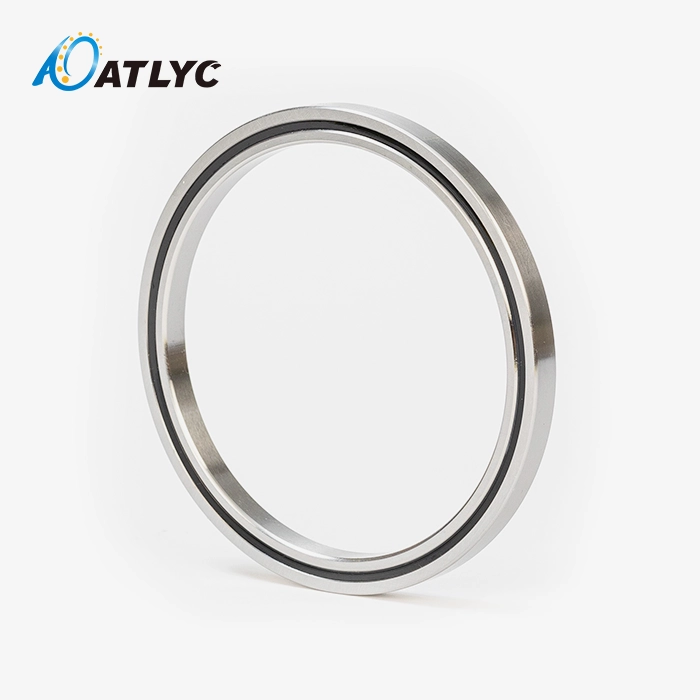
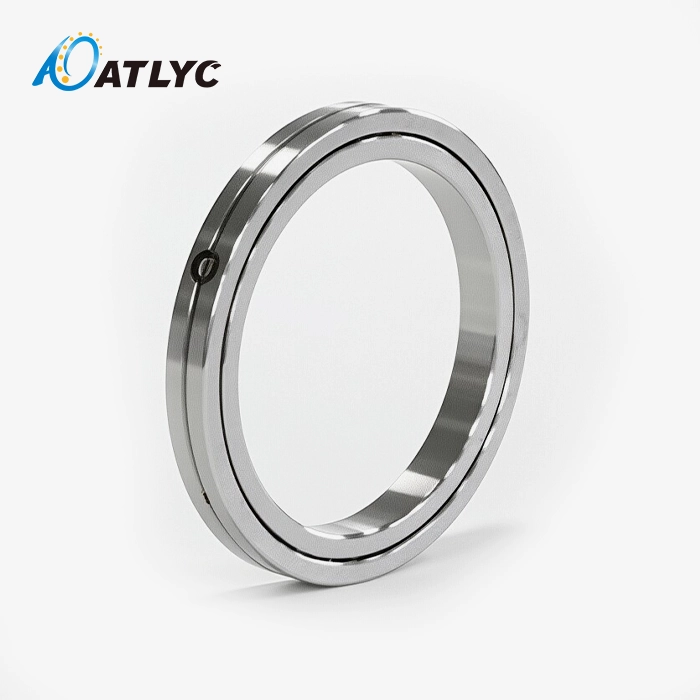
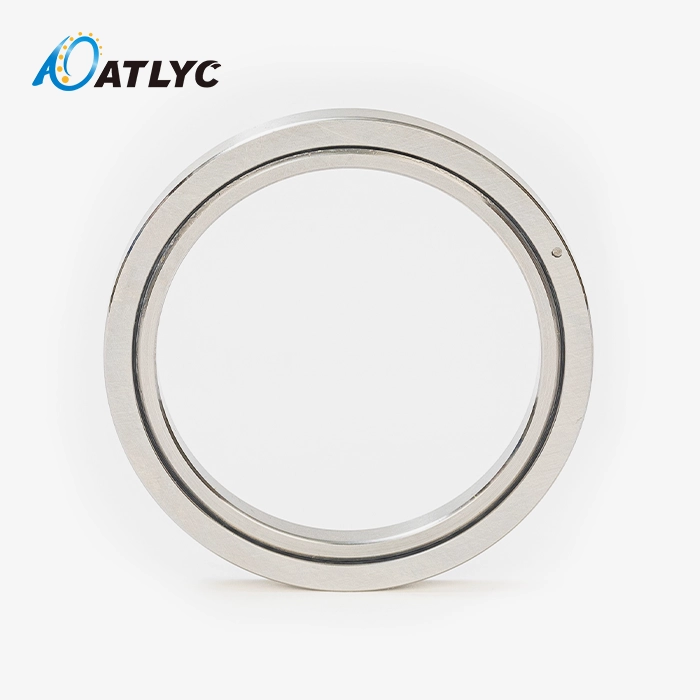
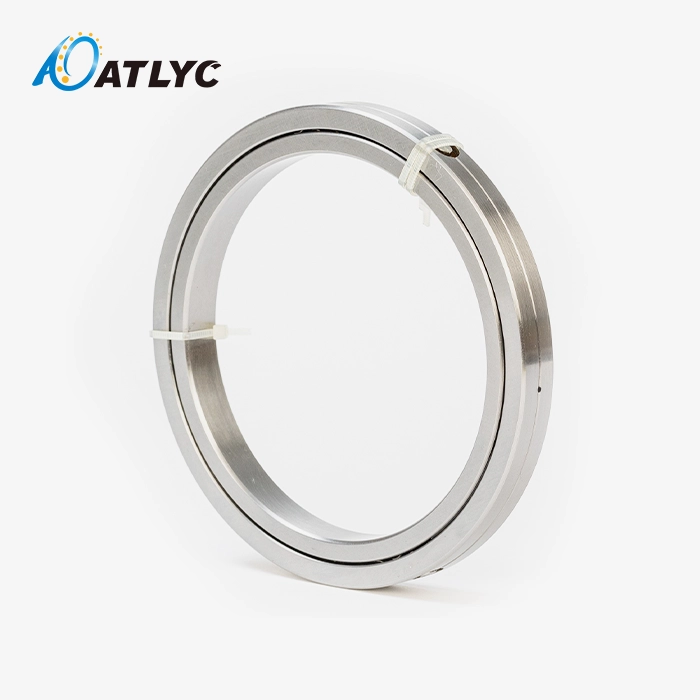
It is important to know the technical details of tiny YRTM Rotary Table Bearings when your precision machining equipment needs to be small without losing performance. Within the family of rotary table bearings, the YRTM series is a special type designed for use with limited room.
What Makes YRTM Different From Standard Rotary Bearings
The YRTM line stands out because it has a small, compact design that meets a unique need in the industrial world. The YRTM configuration focuses on smaller cross-sectional sizes while keeping important load-bearing abilities. This is different from standard YRT bearings with mixed roller designs or YRTS versions with preloaded, double-sided seals. This way of thinking about design lets equipment makers fit high-performance spinning table features into machines with smaller sizes.
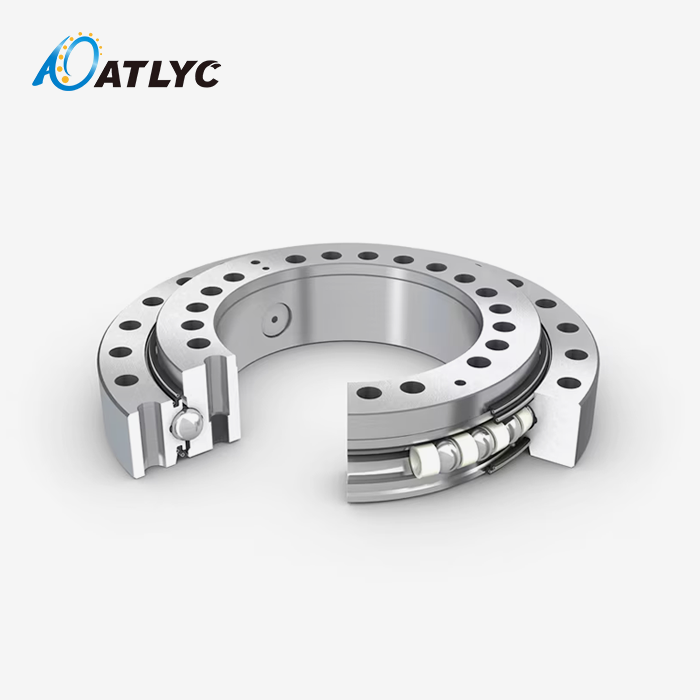
The bearing combines three separate functions into a single small unit: thrust bearing for axial loads, radial bearing for radial forces, and moment resistance for loads that are moving. This combined three-in-one design gets rid of the need to put together a lot of different parts. This makes fitting much easier and reduces the overall size of the mechanical structure.
Core Structural Characteristics That Drive Performance
Several important design aspects give these small rotating bearings their technical base. The double-row angular contact ball setup sets up two rows of precision steel balls at certain contact angles, usually 45° or 60°. The bearing can handle axial loads, rotational loads, and composite moments from multiple directions at the same time because of its shape. The design successfully raises the stiffness and load-bearing capacity, ensuring stable operation even under the complex load conditions that are common in CNC machining centers and indexing tables.
There is a fixed ring on the outside, a moving ring on the inside, precise steel balls, and a cage inside each bearing. Precision grinding and super-finishing are used on the inner and outer raceways to get dimensions that are accurate to within microns. This level of precision in making directly affects how well and consistently your equipment can place itself.
Load Capacity and Rigidity Parameters
Different types of miniature rotary table bearings have different load specs. Bearings with smaller diameters can handle lighter loads while still having a high moment capacity. Knowing these factors helps buying teams choose the right bearing for the job, taking into account both installation and operating needs.
| Performance Parameter | YRTM Impact | Application Benefit |
|---|---|---|
| Axial Load Capacity | Handles dual-direction thrust | Supports heavy cutting forces |
| Radial Load Capacity | Concurrent radial force support | Maintains concentricity during rotation |
| Tilting Moment Resistance | High rigidity against tilting | Prevents positioning errors under asymmetric loads |
| Rotational Accuracy | Sub-micron runout | Enables precision indexing |
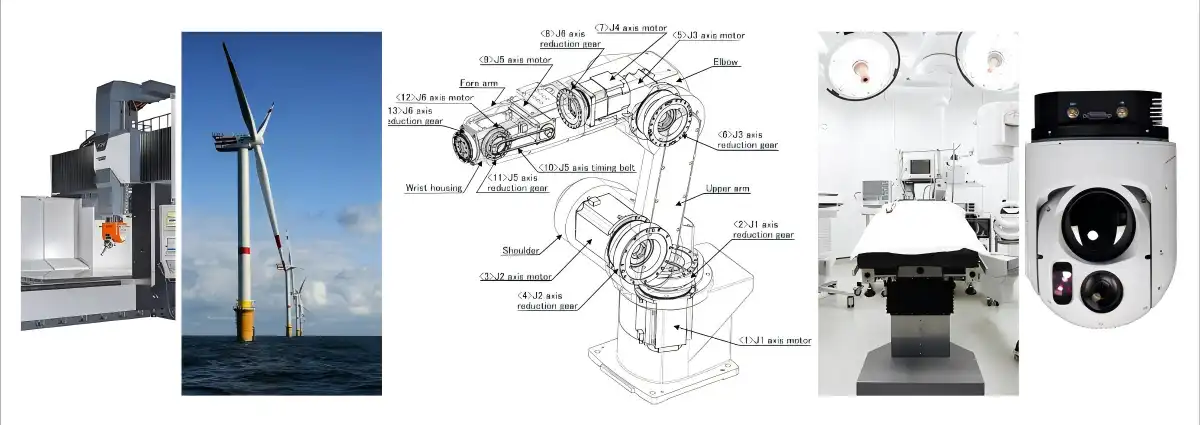
These features make tiny rotor bearings ideal for 4th and 5th axis CNC machining centers, direct drive motors with indexing heads, and precision measurement gimbals that need to be very accurate but don't have a lot of room.
Lubrication Methods and Maintenance Considerations
Proper oil is still very important for getting a long service life. Most of the time, these precise parts need high-quality lithium base grease that is applied according to the manufacturer's instructions. Re-lubrication times depend a lot on the job cycle and rotating speed. Many designs have built-in lubrication grooves that make upkeep easier.
Maintenance plans should be flexible enough to fit the needs of your industry. Heavy cutting tasks that expose parts to metal chips and water need to be checked more often than clean-room measurement tasks. As part of preventative maintenance, the working temperature should be checked, strange vibration patterns should be looked for, and mounting pin torques should be checked to make sure they stay within the limits.
Common Faults and Proactive Troubleshooting
Knowing the most common types of failure helps you take preventative steps that cut down on downtime. Most early failures are caused by contamination, especially in cutting settings where metal chips and water can get through sealing systems. If you don't position the placement correctly, the load will be spread out unevenly across the raceway, which will speed up the wear patterns. When estimated bending moment limits are exceeded, precision-ground surfaces become permanently deformed.
Setting standard performance measures during commissioning and then keeping an eye out for changes is part of proactive troubleshooting. Unexpected increases in starting power are often a sign that the oil is wearing down or getting dirty. If the rotating smoothness changes, it means that the track is damaged and needs to be fixed right away to avoid a catastrophic failure.
YRTM Factory Direct vs Other Suppliers: Making the Right Choice
When buying precise bearings, choices are made that involve more than just comparing prices. Knowing the differences between buying YRTM Rotary Table Bearing directly from the plant and getting products through a third party has a direct effect on your total cost of ownership and the stability of your operations.
Comparing YRTM Against Alternative Bearing Types
People who are looking for spinning table options often compare different types of bearings. Cross roller bearings are very strong, but they usually need more room to be installed. Slewing bearings can handle very big diameters, but they aren't accurate enough to place things at the micron level. Standard YRT bearings with strengthened rings and multi-row rollers can hold the most weight, but they make the machine bigger overall.
The tiny rotating table bearing stands out from the rest of the scenery. Its small size gives it great performance in situations where saving room can't mean sacrificing usefulness. For people who work with automatic production lines, small robotic systems, and portable metrology equipment, this type of bearing meets the size requirements that rule out all other choices.
Cost Advantages of Factory Direct Purchasing
When you work directly with makers, you don't have to pay markups to distributors, which can add 20–40% to the cost of parts. In addition to the initial buy price, working directly with the factory gives you access to technical help during the planning and troubleshooting stages. When custom OEM solutions need changes to measurements or special materials, talking directly with the maker speeds up the development process and lowers the chance of misunderstandings.
When you buy from the original maker, it's easier to figure out what your warranty covers. You avoid arguments about whether problems were caused by bad fitting or broken parts. Direct purchasing also makes sure that the product is real, so you don't have to worry about the risks that come with buying fake bearings on secondary markets.
Recognizing Authorized Dealers and Avoiding Counterfeits
There are both reputable dealers and places where you can get low-quality bearings on the global market. Real sellers show qualifications that can be checked, especially ISO 9001 and IATF 16949 compliance paperwork. These quality control systems need to be checked by a third party on a regular basis to make sure that the manufacturing processes are always the same.
Manufacturers that have been around for a while keep partner networks with official permission. Before committing to big orders, use official plant methods to check the credentials of the seller. Ask for certification paperwork for particular lot numbers, check the quality of the packaging, and see how well the dimensions match up with written standards. Real providers are happy to be checked out, but fake sources try to avoid close examination.
Procurement Guide: How to Buy YRTM Rotary Table Bearings Efficiently
To make the process of buying precision YRTM Rotary Table Bearing components easier, you need to know both the detailed specs and how the supply chain works. Structured methods that balance technology needs with business needs are good for global B2B buyers.
Specifying the Correct Bearing for Your Application
A thorough load study is the first step in making the right specifications. Figure out the biggest axial loads, radial loads, and twisting moments that your equipment can handle while it's working. Add in safety factors for acceleration forces and shock loads. Check these calculated values against published capacity rates, and make sure you don't go over the upper limits to get a long service life.
Which bearing sizes fit your design envelope depends on how much room you have for installation. Check the mounting width that is available, the maximum height, and the bolt circle needs. The tiny setup is designed for uses where standard bearing sizes make it hard to make good designs.
Operating speed affects which bearings to use and how much oil they need. Higher spinning speeds make more heat, so the grease needs to be made in a different way. Conditions in the environment, such as temperature swings, pollution exposure, and humidity levels, affect the choice of seal and how often it needs to be maintained.
Official Channels vs. Authorized Distributors
When you buy directly from a maker like Luoyang Auto Bearing, you can talk to research teams that know a lot about the products you're buying. You talk directly with production staff, who know about manufacturing limits and can talk with you about whether or not customisation is possible. When making new products and fixing performance problems, this straight link is very helpful.
Authorised wholesalers play a big role in helping with smaller orders and making sure that local product is always available. They keep popular sizes in stock, which lets replacement apps get them faster. But factory direct routes usually offer better prices and better technical help for custom specs and large OEM orders.
Lead Times, Shipping Options, and Warranty Terms
Standard tiny rotary table bearing models usually ship two to four weeks after an order is confirmed, but this depends on how busy the factory is at the moment. Lead times are extended to 4 to 6 weeks for custom standards because they need more time for engineering review and factory setup. For large sales, shipping times may need to be spread out so that they work with your production needs.
| Order Type | Typical Lead Time | Minimum Quantity | Customization Available |
|---|---|---|---|
| Standard Catalog Items | 2-4 weeks | 10 units | Limited |
| Modified Specifications | 4-6 weeks | 50 units | Moderate |
| Full Custom Design | 8-12 weeks | 100 units | Extensive |
There are many ways to move goods internationally, from air freight for quick deliveries to ocean freight for big packages. Precision-ground surfaces are kept safe during shipping with the right packing, and big orders can be put in special boxes. Insurance should cover the worth of the parts and how much it would cost to repair them.
In most cases, the warranty covers production flaws for 12 to 24 months after delivery. Damage caused by poor installation, contamination, or use beyond the stated specs is not covered. When you buy something directly from the factory, you can often get a longer warranty and full after-sales help.
Bulk and OEM Order Considerations
When you make a bigger commitment, volume price systems give you discounts that are worth it. Tier price usually applies to quantities above 100 units, and there are further discounts at 500 and 1,000 unit levels. Annual supply deals keep prices stable and make sure that production capacity is allocated as planned.
With OEM relationships, you can work together to create solutions that are tailored to your needs. Manufacturers can change the shapes of seals, change the requirements for loading, or add fastening features that make the assembly process easier. These partnerships work best when they are set up early on in the product development process.
Installation, Maintenance, and Troubleshooting: Maximizing YRTM Bearing Life
If precision YRTM Rotary Table Bearings last as long as they are supposed to, it is directly related to how well they are installed and maintained. Manufacturers of equipment and repair teams must know important steps that keep things from breaking down too soon.
Step-by-Step Installation Guidelines
Before installing, make sure the fixing surfaces are completely clean. Get rid of all the machining waste, old lubricant residue, and protection coats. Check the connecting surfaces for damage, burrs, or changes in size that could make them not line up properly. The function of a bearing is directly affected by how flat and straight the surface is.
Carefully place the bearing so that it doesn't hit anything and damage the precision-ground raceways. Do not hit the bearing straight on. Use the right fitting tools that spread the force evenly across the fixing ring. Before going any further, make sure the bearing fits completely against the shoulder surfaces.
Follow the cross-tightening order given in the technical instructions when installing the fixing bolts. This design makes sure that the pressure is spread out evenly and keeps the ring from deforming. For example, if you don't tighten something enough, it can move, which can lead to fretting rust. On the other hand, if you tighten something too much, the rings will bend and the internal stress will rise. Utilise torque wrenches that have been properly adjusted and follow the given Newton-meter values to the letter.
After installation, make sure the spin is smooth by hand before hooking up the drive systems. The bearing should be able to turn easily, with no rough spots or locking. Use number markers to measure runout at the mounting surface and make sure the parts are properly aligned.
Recommended Lubrication Types and Schedules
Lithium-based grease with the right density grades works well in most situations. Extreme pressure additives help when cutting big things, and low-temperature versions work well in climate-controlled areas. Do not mix different kinds of grease, as this can lead to problems with fitting and faster wear.
When you first lubricate something, you should fill in any grooves or holes that are there without packing too much, which increases drag and working temperature. When to re-oil depends on how the machine is being used. Light-duty applications that only run sometimes can go 12 to 18 months without service, but high-speed applications that run all the time need service every three months.
Preventative Measures That Reduce Downtime
By using systematic checking methods, problems can be caught early on, before they stop production. Baseline operating temperatures are set by tracking temperatures with contact or infrared means. Deviations of 10 to 15 degrees Celsius should be looked into to see if there are problems with greasing or too much load.
Vibration analysis lets you know right away if the track is damaged, contaminated, or not lined up correctly. Set up standard vibration signatures while the system is being set up, and then compare readings taken at regular intervals. Frequency analysis finds specific types of faults so that they can be fixed more precisely.
Checking the quality of the seal stops contamination from getting in, which is what causes most early fails. Look for damage, proper fitting, and signs of oil leaking. In harsh areas where normal seals don't work well, upgrading sealing systems may be a good way to save money.
Why Choose YRTM Rotary Table Bearings for Precision Machining?
To choose the best bearing option for precision grinding tasks, you have to look at a number of performance factors for the YRTM Rotary Table Bearing. The group of small rotary table bearings has certain benefits that help with common design problems in equipment.
Superior Accuracy and Rigidity for Demanding Applications
Accurate positioning, measured in arc-seconds, makes it possible to do precise cutting with very tight limits. The double-row angular contact design is very stiff against tilting moments, which stops deflection that leads to mistakes in the final parts' dimensions. This structural stiffness is very useful in 5-axis machining, where cutting forces change all the time as tool paths do.
Axial, rotational, and moment forces can all be balanced at the same time without the need for extra bearing setups. This unified method makes machine design easier, cuts down on the number of parts needed, and gets rid of the aligning problems that come with having more than one bearing system.
Case Studies Demonstrating Measurable Improvements
Manufacturers of auto parts (YRTM Rotary Table Bearing) say that cycle times have gone down since they switched to small rotary table bearings in transfer line tracking stations. The increased stiffness made it possible to drill at higher feed rates without affecting the accuracy of where the holes were placed. One German Tier 1 provider said that engine head machining lines could handle 12% more work
The repeated location accuracy is important to companies that make medical devices like titanium implants. The equipment used to make femur stems needs to be consistent down to the micron level across thousands of parts. Rotary table bearings keep the accuracy of placement even during long production runs without having to be adjusted or made up.
Ongoing R&D and Innovation Leadership
Manufacturing technology keeps getting better, and bearing development is now focused on speed, load density, and how often they need to be serviced. With research funding, new materials like ceramic rolling parts that are lighter and better at high speeds are being looked into. Coating and surface treatments make things less likely to rust in medical and food processing settings.
Innovations in lubrication systems have made repair times longer by making grease formulations better and seal designs that work better. The goal of development is to make bearings that can work for 24 months or more without needing repair, which lowers the total cost of ownership.
Digital integration is becoming more of a focus. Predictive maintenance plans can be used with bearings that have sensors built in to measure temperature and vibration. These smart parts tell centralised maintenance management systems about the conditions of operations, which makes condition-based service scheduling easier.
Conclusion
Factory direct procurement of miniature YRTM Rotary Table Bearings provides real benefits for makers, OEMs, and global distributors needing precision components. Direct connections with certified manufacturers guarantee authentic goods, reasonable pricing, and access to engineering knowledge unavailable through distribution methods. The compact structure handles space-constrained applications without losing load capacity or positioning accuracy necessary for precision machining.
When specifications, installation, and upkeep are done correctly, bearing service life and machine uptime are maximised. Understanding load requirements, environmental conditions, and performance standards allows optimal bearing selection that combines technical requirements with economic factors. Establishing relationships with manufacturers having ISO 9001 and IATF 16949 certifications offers supply chain security and quality consistency that support long-term production goals.
FAQ
1. How long do factory direct orders typically take to fulfill?
Standard miniature YRTM Rotary Table Bearing orders put directly with makers usually take 2-4 weeks from order confirmation to shipment. This timeline assumes stock supply of popular sizes and specifications. Custom tweaks including dimensional changes, special materials, or unique seal setups increase lead times to 4-6 weeks to allow engineering review and production setup. Bulk OEM sales topping 500 units may require delayed delivery plans based on production capacity allocation. Rush processing choices sometimes lower standard lead times by 30-50% for premium charges when pressing replacement needs appear.
2. How can I verify authentic factory direct suppliers?
Authentic makers show verifiable ISO 9001 and IATF 16949 certifications given by qualified third-party inspectors. Request current certification papers including topic statements and validity dates. Legitimate providers have quality control systems that are written down and can be tracked from the raw materials to the final inspection. If you can, go to the factory to see how they make things and how they check the quality of their work firsthand. Check the paperwork for registering your business, your export licenses, and trade references from past customers. Factory direct sellers are happy to answer specific questions about their credentials and operations, but sources that aren't reliable try to avoid being open and being closely looked at.
3. Are customized OEM solutions available for specialized applications?
Manufacturers who have a lot of experience making precision bearings usually let OEM uses make a lot of changes. Changes can be as simple as adjusting the bolt pattern or as complex as redesigning the whole thing to include special materials, custom seal setups, or built-in sensor provisions. For special specs, the minimum order quantity is usually between 50 and 100 units, but this depends on how complicated the changes are. The first step in customising something is a thorough study of the application, which includes load estimates, environmental conditions, and room limitations. Engineering teams put together plans that include detailed models, performance specs, and the cost of making the tools. Before full production starts, validation tests are done on production samples to make sure that special bearings meet all performance standards.
Partner With ATLYC for Reliable YRTM Rotary Table Bearing Supply
You no longer have to look for a reliable company that makes YRTM Rotary Table Bearing products because you can go straight to the plant. ATLYC, which is run by Luoyang Auto Bearing Co., Ltd., has been making precision parts for 15 years and has quality systems that are ISO 9001 and IATF 16949 approved. Our six manufacturing workshops and 120 trained workers make sure that the tightest tolerances for size and performance are met for rotary bearings sold around the world.
Large and medium-sized automakers, industrial OEMs, and bearing wholesalers from North America, Europe, and Asia are among the people we work with. Competitive factory-direct price gets rid of markups for distributors while keeping quality standards high. There are technical support teams that help with choosing bearings, analysing loads, and making adjustments that are right for each purpose. When you buy in bulk, you can get savings and know when your orders will arrive, which helps you plan your production.
Email our tech team at auto@lyautobearing.com to talk about your particular needs. Ask for thorough catalogues of products, technical specs, or help with your application. ATLYC has the accuracy, dependability, and relationship dedication that your operations need, whether you need standard miniature rotary table bearings or unique OEM solutions.
References
1. Harris, T.A. and Kotzalas, M.N. (2006). "Advanced Concepts of Bearing Technology: Rolling Bearing Analysis, Fifth Edition." CRC Press, Taylor & Francis Group.
2. ISO 9001:2015 Quality Management Systems - Requirements. International Organization for Standardization, Geneva, Switzerland.
3. IATF 16949:2016 Quality Management System Requirements for Automotive Production and Relevant Service Parts Organizations. International Automotive Task Force.
4. Weck, M. and Brecher, C. (2006). "Machine Tools 4: Automation and Control Systems." Springer-Verlag Berlin Heidelberg.
5. Budynas, R.G. and Nisbett, J.K. (2020). "Shigley's Mechanical Engineering Design, Eleventh Edition." McGraw-Hill Education, New York.
6. Hamrock, B.J., Schmid, S.R., and Jacobson, B.O. (2004). "Fundamentals of Fluid Film Lubrication, Second Edition." Marcel Dekker Inc., New York.
Learn about our latest products and discounts through SMS or email