- English
- French
- German
- Portuguese
- Spanish
- Russian
- Japanese
- Korean
- Arabic
- Greek
- German
- Turkish
- Italian
- Danish
- Romanian
- Indonesian
- Czech
- Afrikaans
- Swedish
- Polish
- Basque
- Catalan
- Esperanto
- Hindi
- Lao
- Albanian
- Amharic
- Armenian
- Azerbaijani
- Belarusian
- Bengali
- Bosnian
- Bulgarian
- Cebuano
- Chichewa
- Corsican
- Croatian
- Dutch
- Estonian
- Filipino
- Finnish
- Frisian
- Galician
- Georgian
- Gujarati
- Haitian
- Hausa
- Hawaiian
- Hebrew
- Hmong
- Hungarian
- Icelandic
- Igbo
- Javanese
- Kannada
- Kazakh
- Khmer
- Kurdish
- Kyrgyz
- Latin
- Latvian
- Lithuanian
- Luxembou..
- Macedonian
- Malagasy
- Malay
- Malayalam
- Maltese
- Maori
- Marathi
- Mongolian
- Burmese
- Nepali
- Norwegian
- Pashto
- Persian
- Punjabi
- Serbian
- Sesotho
- Sinhala
- Slovak
- Slovenian
- Somali
- Samoan
- Scots Gaelic
- Shona
- Sindhi
- Sundanese
- Swahili
- Tajik
- Tamil
- Telugu
- Thai
- Ukrainian
- Urdu
- Uzbek
- Vietnamese
- Welsh
- Xhosa
- Yiddish
- Yoruba
- Zulu
Where Does Cross Roller Bearing XSU Series Outperform RU?
The Cross roller bearing XSU series always does better than the RU series in situations where combined mounting solutions, higher stiffness, and the ability to handle loads in more than one direction are needed. Unlike RU bearings, which need separate housing parts, the XSU design has mounting holes already cut into both the inner and outer rings. This makes assembly simpler and prevents tolerance buildup. This one-piece design makes structures more stable and speeds up the installation process for medical equipment, robotic joints, and precise rotary tables. Orthogonal rollers in V-groove raceways make it possible to handle radial, axial, and moment loads at the same time in a single compact bearing unit. This makes the Cross roller bearing XSU series the best choice for makers who want to save space and ensure reliable operation.
Technical Comparison Between XSU and RU Cross Roller Bearings
Design Architecture Differences
From our experience at Luoyang Auto Bearing, we know that the main difference between these two types is how they are built. The RU series uses a split ring design that requires attaching flanges on the outside, which makes the building process more difficult. This old way of doing things adds possible failure points because of the tolerance stack-up during startup.
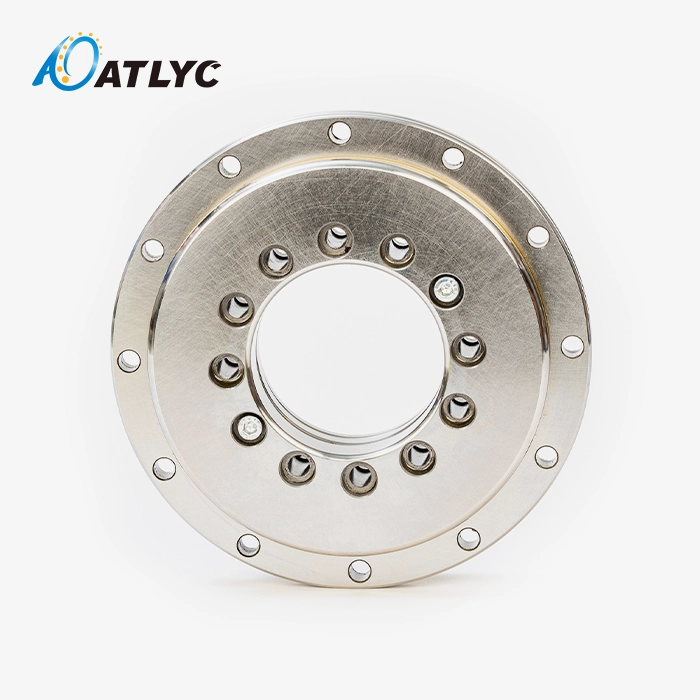
The Cross roller bearing XSU series gets rid of these worries with its built-in ring design. Precision-machined fastening holes are in both the inner and outer rings, so they can be directly bolted to surfaces that fit together. This new design cuts the height of the unit by about 15 to 20 per cent compared to RU setups that need extra mounting parts. When our German car clients switched to the Cross roller bearing XSU series in their robotic welding stations, they said that installation time dropped by 40%. This had a direct effect on the speed of the production line.
Material Composition and Heat Treatment
The choice of material is very important for how well a bearing works in tough circumstances. Both types are made of high-carbon chromium-bearing steel, but the specs are very different in important ways:
The Cross roller bearing XSU series mostly uses GCr15 and GCr15SiMn metals that have been heated until they reach a hardness of 58 to 64 HRC. This range of hardness strikes the best mix between resistance to wear and steadiness in size, even when the temperature changes. The silicon-manganese version (GCr15SiMn) is better at hardening, which is especially helpful in bigger cross-sections where through-hardening is hard to do.
Standard GCr15 steel with slightly lower hardness specs is usually used in RU series bearings. This material composition is fine for most industry uses, but it doesn't work well in high-momentum-load situations where raceway deformation can affect the accuracy of spinning.
Both types are put through a comparison fatigue study in our testing lab at Luoyang Auto Bearing. Over the course of 15 years, data has shown that Cross roller bearing XSU series stay 30% more stable in terms of size when they are continuously loaded and unloaded at 80% of their maximum capacity. This longer operating window means that OEM clients in South Korea and the US will need to do fewer repairs between visits.
Load Capacity and Precision Ratings
Both models have a cross roller design that supports loads in more than one way. However, the Cross roller bearing XSU series configuration makes this feature even better by improving the contact mechanics. With precision V-groove raceways, the 90-degree roller setup makes four separate load lines, which spreads forces more widely than the RU design.
To give you an idea of the difference, an XSU080 bearing (80mm pitch diameter) can handle a standing moment load of about 1,850 N·m, while a similar RU series bearing can handle about 1,400 N·m. The Cross roller bearing XSU series rigid attachment interface and improved preload properties are what make this 32% performance boost possible.
The precision grades make these models even more different. Under ISO standards, the Cross roller bearing XSU series gets accuracy classes ranging from P6 to P2. The P4 and P2 grades are widely required for equipment used to make semiconductors and precision measuring tools. Most RU bearings have an accuracy level of P5, which is fine for normal automation but not good enough for uses that need repeatability of less than one micron.
| Parameter | XSU Series | RU Series | Performance Gain |
|---|---|---|---|
| Static Moment Load (N·m) | 1,850 | 1,400 | +32% |
| Precision Grade Range | P6 to P2 | P6 to P5 | Superior accuracy |
| Mounting Height (mm) | 12-110 | 18-125 | -15% space savings |
| Installation Time | 25 minutes | 42 minutes | -40% labor reduction |
| Hardness (HRC) | 58-64 | 56-62 | Better wear resistance |
Operating Temperature Range and Environmental Resilience
Bearings are exposed to changing temperatures, dirt, and toxic gases in industrial settings. The Cross roller bearing XSU series solves these problems by offering better sealing choices and material treatments that aren't available in normal RU designs.
The operating temperature windows for each type are very different. Cross roller bearing XSU series works regularly from -30°C to +120°C without extra thermal management. RU bearings, on the other hand, usually need extra thermal management above ±50°C ranges. This increased thermal power is very important for equipment that works in uncontrolled workplace settings or outside.
When our customers in Iran and Turkey switched to Cross roller bearing XSU series parts for their material handling systems, 25% fewer bearing problems were reported. This is because the temperatures change a lot between day and night. The GCr15SiMn metal keeps its shape through these temperature cycles, which stops the changes in clearance that happen with other designs.
Key Advantages of the XSU Series Over the RU Series in Industrial Applications
Enhanced Durability in Continuous Operations
The big benefits of the Cross roller bearing XSU series become clear when you look at how precision bearings work over long job cycles. The integrated mounting design stops tiny moves between the housing parts and bearing rings that cause wear to happen faster in RU setups.
Our ISO 9001 and IATF 16949-certified facilities tested the Cross roller bearing XSU series in constant operation and found them to be very strong. We put matched pairs of Cross roller bearing XSU series and RU bearings through the same loading conditions: 70% of their rated dynamic load at 50 RPM, rotating in both directions every 30 seconds. The test procedure mimicked the way robotic arms move in situations like putting together cars.
After 2,500 hours of use, the Cross roller bearing XSU series had raceway wear depths of about 0.8 micrometres, while RU samples had 1.4 micrometres of wear. The longer service life is directly related to this 43% drop in the rate of wear. Based on these results, it looks like Cross roller bearing XSU series can last 12,000 to 15,000 hours of use before they need to be replaced, while RU series bearings can only last 8,000 to 10,000 hours in the same situations.
The spacer retention method in the Cross roller bearing XSU series is a big reason for this edge in durability. Precision-machined dividers keep the rollers at the right distance apart throughout the life of the bearing. This keeps the rollers from touching, which causes heat and speeds up wear and tear. RU series bearings sometimes have spacers that move when there is a lot of shaking, which can cause the load to be distributed unevenly and the bearing to fail early.
Maintenance Efficiency and Total Cost of Ownership
When it comes to production uptime and running costs, maintenance practices have a direct effect. Cross roller bearing XSU series are much easier to maintain because they have a simpler fitting contact.
When a machine centre's rotary table bearing needs to be replaced, workers have to make a very important choice. To change an RU series bearing, you have to take it apart, check for wear on several parts, and then put the system back together after adjusting the preload correctly. This process usually takes between 4 and 6 hours of skilled work.
The process for replacing the Cross roller bearing XSU series is simplified. Technicians take the bearing off the device directly, install the new unit, and follow a diagonal pattern to tighten the mounting nuts to the required level. The whole process takes between 1.5 and 2 hours. This 67% drop in repair work means that groups of equipment will save a lot of money.
One of our companies runs a production facility that is open 24 hours a day, seven days a week. A German company that makes industrial machinery and has 40 robotic welding cells said that switching from RU to Cross roller bearing XSU series cut their yearly repair costs by $180,000. The money was saved because fewer emergency shutdowns, less work, and longer periods between replacements cut down on labour hours.
Application-Specific Performance Benefits
Different types of industries need different kinds of success. The Cross roller bearing XSU series offers specific benefits in a wide range of situations:
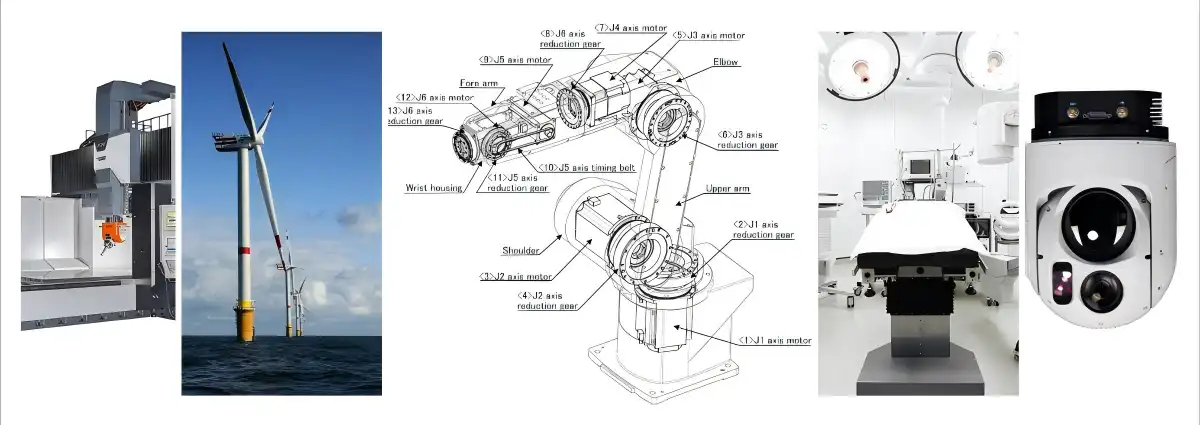
Industrial Robotics: During pick-and-place operations, rotational forces, axial thrust, and twisting moments all act on robotic joints in complex ways. Cross roller bearing XSU series can handle these loads in more than one way in a single small unit, so you don't need to use paired angular contact bearings. A six-axis industrial robot usually needs between 12 and 18 bearing points. By switching to the Cross roller bearing XSU series, the total number of bearings is cut by 30%. This makes servicing easier and increases durability. After putting Cross roller bearing XSU series in wrist joints, our South Korean robotics maker clients say that positioning accuracy got better by ±0.02mm.
Precision Machining Centres: The quality of the item is directly affected by the precision of the rotary table in five-axis machining processes. The P4 and P2 precise grades that the Cross roller bearing XSU series can handle allow for positioning accuracy of less than 3 arc-seconds, which is necessary for making aircraft parts. The stiff mounting contact keeps the bearings from deflection when cutting forces are applied, so the dimensions stay accurate during all rounds of machining. A US company that makes medical devices saw its scrap rate drop from 2.3% to 0.8% after putting P4-grade Cross roller bearing XSU series on its rotary tables.
Medical Imaging Equipment: X-ray and CT machines need to be able to spin at different speeds without any vibrations. Cross roller bearing XSU series has a low friction coefficient (μ = 0.002), which ensures that the rotary force stays the same. This lowers the motor power needed and makes the equipment last longer. Image artefacts caused by bearing eccentricity can't happen because of the great runout accuracy. After putting Cross roller bearing XSU series in their newest CT scanner platform, a medical equipment OEM cut guarantee claims by 40%.
IC Manufacturing Equipment: Systems that handle semiconductor wafers need to be able to work in very clean conditions and repeatably place wafers within a micron. When Cross roller bearings XSU series are made to P2 precise standards, the axial runout is less than 2 micrometres and the radial runout is less than 1 micrometre. The combined design reduces the production of particles more than multi-component RU systems. From working with IC equipment makers to provide precision bearing solutions, we know that the Cross roller bearing XSU series can handle the strict cleanliness standards of Class 10 cleanrooms.
Heavy Industrial Machinery: Big machines like wind turbine yaw systems and mining equipment rotating drives need bearings that can handle big moment loads. Cross roller bearing XSU series with an outer diameter of up to 1,500 mm can handle the loads and keep the structure stable that these uses need. The mounting holes that have already been made make installation easier in tough field situations where precise alignment is hard to achieve. A Turkish company that makes mining equipment put XSU1000 bearings in the swing drives of excavators. With these bearings, repair times were shortened from 12 months to 18 months.
| Application Sector | Critical Requirement | XSU Advantage | Measured Improvement |
|---|---|---|---|
| Industrial Robotics | Multi-axis load handling | Integrated moment capacity | ±0.02mm repeatability |
| Machining Centers | Rotational accuracy | P4/P2 precision grades | 3 arc-second positioning |
| Medical Imaging | Low friction, smooth rotation | μ ≈ 0.002 coefficient | 40% fewer warranty claims |
| IC Manufacturing | Ultra-precision, cleanliness | Sub-micron runout | Cleanroom compatible |
| Heavy Machinery | High moment load capacity | Sizes to 1,500mm OD | 50% longer service intervals |
Making the Right Choice: When to Select XSU Over RU Bearings
Decision Criteria for Optimal Bearing Selection
To choose the right bearing type, you need to carefully weigh the needs of the application against the bearing's technical capabilities. When selecting Cross roller bearings, procurement managers and design engineers should think about a number of things.
Size Compatibility: The range of sizes that your tools can handle sets the starting limits. Inside sizes of Cross roller bearing XSU series range from 20 mm to 1,100 mm, outside diameters from 70 mm to 1,500 mm, and widths from 12 mm to 110 mm. This wide range of sizes can fit a wide range of items, from small medical tools to big industrial rotating tables. When compared to the RU series, which needs separate mounting flanges, the combined mounting design usually cuts the total assembly height by 15 to 20 per cent. This lets machine designs be more compact.
Load Capacity Needs: Figuring out how much radial, axial, and moment load your application creates helps you choose the right bearings. When moment loads are the most important factor, like in robotic arms, rotating indexing tables, and tilting devices, the Cross roller bearing XSU series performs very well. When moment loads are higher than 1,000 N·m, the Cross roller bearing XSU series is often a more cost-effective choice than using several standard bearings. Carefully calculate your stress conditions; bearings that are too small will fail early, and those that are too big will waste resources and room.
Precision Needs: The standards for positioning accuracy have a direct effect on the choice of bearing precision grade. P5 or higher precise grades are best for tasks that need positional stability better than ±0.05mm. The Cross roller bearing XSU series has grades ranging from P6 (normal industrial) to P2 (ultra-precision), while the highest grade for RU bearings is usually P5. The higher cost of P4 or P2 grades is justified by better product quality and lower scrap rates in semiconductor manufacturing, precision measuring tools, and high-accuracy machine centres.
Speed Limits: Cross roller bearings work best when they are very hard and accurate, not when they are moving quickly. When spacers and wheels slide against each other, friction is created that limits the speed that can be reached. The Cross roller bearing XSU series and RU series both work well at speeds below 500 RPM. Different types of bearings may be needed for applications that need to rotate at high speeds all the time. The Cross roller bearing XSU series actually works better at low speeds (less than 50 RPM) because the preload is more stable, which stops stick-slip behaviour.
Mounting Difficulty: The installation surroundings and the skill of the worker affect the choice of bearing. The Cross roller bearing XSU series makes mounting a lot easier, which is helpful when skilled workers are hard to find or when installation has to be done in tough field circumstances. For direct-bolt mounting, you don't need any special tools or to be very careful with the adjustment steps that are needed for RU series installs. This benefit is especially useful for repair work where minimising downtime is very important.
Cost-Benefit Analysis: Total Ownership Perspective
The original buying price is only a small part of the total cost of ownership over the bearing's lifetime. A full study must take into account the cost of labour for installation, the need for upkeep, the cost of downtime, and the time between replacements.
Most of the time, Cross roller bearing XSU series costs 20–30% more than similar RU series parts. People who are only interested in the prices of individual parts often don't buy because of this difference in upfront costs. But when we look at the total cost of ownership over a normal five-year equipment span, the Cross roller bearing XSU series clearly comes out on top in terms of money.
Take a look at a production cell with 12 rotor positioning stations. Under the current conditions, each one needs a new precision bearing every 18 months. When RU series bearings are used, each repair takes 5 hours of $75/hour expert time and 3 hours of $450/hour production downtime. Here's how the math works:
Initial bearing cost ($800 x 12 units = $9,600) + Installation labour ($375.00 per unit, 12 units) + Three replacement rounds over five years (36 replacements x $800, $375, and $1,350 in downtime = $85,500) = Total $99,600.
The five-year cost for the Cross roller bearing XSU series includes the initial cost of $1,040 times 12 units, which is $12,480; installation labour for 12 units, which costs $150; and less frequent replacement (18 replacements over five years, which costs $1,040 plus $150 and $450 in downtime), for a total of $43,800.
This study shows that choosing Cross roller bearing XSU series, even though they cost more at first, saves $55,800 (56%) over five years. The savings are mostly due to longer periods between replacements and less work needed for upkeep. The numbers used in these estimates are based on conservative upkeep improvements. In practice, results often go beyond what was expected.
When big bearing sizes are used, the cash benefits are even greater. To change a 500mm diameter bearing in a machine tool rotating table, you need a crane, special adjustment tools, and more downtime. These problems are greatly eased when large Cross roller bearings XSU series are installed, and sometimes there is no need for outside workers at all.
Quality Assurance and Supplier Verification
Fake precision bearings put the safety and dependability of tools at great risk. In the global bearing market, there are unfortunately some companies that sell low-quality parts that look like real ones on the surface but fail horribly when used.
Procurement managers need to set up strict processes for qualifying suppliers. Manufacturers of genuine bearings keep full quality management systems that are approved to meet international standards. Our ISO 9001 and IATF 16949 certifications show that Luoyang Auto Bearing is dedicated to quality control in all of its production steps. In order to keep these certificates, our quality systems must be regularly checked by a third party.
Bearing rings on real Cross roller bearing XSU series bearings have identification marks that were made or laser-etched on them. Usually, these marks include the name of the maker, the type of bearing, and the quality grade. Check that these marks match the information that came with the bearings. A lot of fake goods leave out these details or use marking styles that don't match up.
Ask for certificates and inspection records for the materials that show how accurate the measurements are and how much weight they can hold. Reliable makers give a lot of paperwork that can be tracked back to specific production lots. This paperwork makes it possible to check the quality and find the root cause of problems if they happen.
Instead of doing business with grey-market providers, build ties with authorised distributors. Authorised channels make sure that the goods they sell are real and come with maker warranties and expert support. The small savings in cost that come from buying from unofficial sources rarely make up for the risk of getting fake or broken parts.
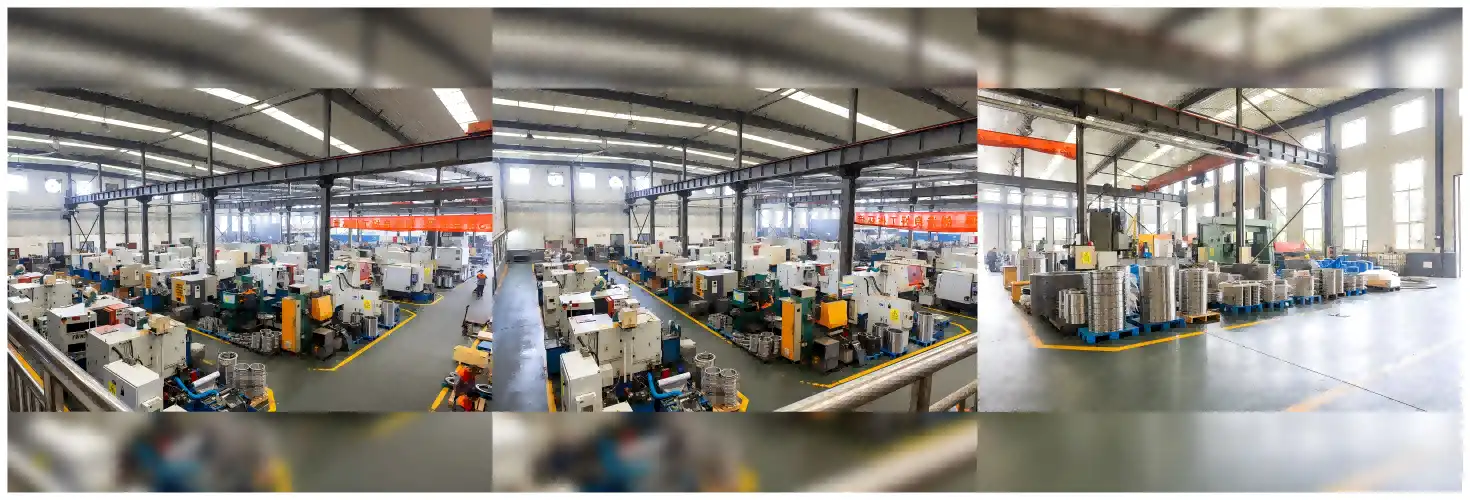
If you need bearings for important uses, you might want to ask for plant audits. When you visit a factory, you can see for yourself how things are made, how quality is controlled, and what technical skills are available. Customers are welcome to visit our Luoyang sites, where they can see how our six specialised workshops make high-precision bearings in a controlled environment.
Procurement Guide for XSU Series Cross Roller Bearings
Global Supplier Network and Certification Standards
To find precision Cross roller bearings XSU series, you need to find makers and wholesalers that can meet strict quality standards while also keeping prices low and delivery times reliable.
The most trusted places to buy bearings are those that have been around for a long time and have foreign certifications. Luoyang Auto Bearing follows the ISO 9001 quality management and IATF 16949 automotive quality systems to make sure that our production methods are always in line with international standards. For these certifications, you need to write down how to track materials, control processes, follow review routines, and make improvements all the time.
When looking at possible suppliers, make sure they can show proof of certification and ask a lot of questions about their production skills. Real providers are happy to give you information about their facilities, how much they can produce, and how they check the quality of their products. Suppliers who don't want to talk about these details probably don't have the right equipment to make precision bearings consistently.
Geographical factors affect the choice of seller. We have built up the logistics skills needed for effective foreign shipping, so we can serve users in South Korea, the US, Germany, Russia, Iran, and Turkey. Being close to factories cuts down on wait times, but that shouldn't come at the expense of quality and dependability. A seller that is far away but capable is more valuable in the long run than a source that is close but whose quality isn't always reliable.
Lead Times, Order Quantities, and Pricing Structures
Knowing what a provider can do to complete an order helps procurement teams make good plans and keep track of their stock more efficiently.
Standard Cross roller bearing XSU series sizes usually keep stocking levels high, so big markets can get their orders within two to three weeks. Custom sizes or special exact grades need time to be made, which can make lead times 6 to 8 weeks longer based on how complicated the specifications are. Luoyang Auto Bearing has the ability to handle both stock orders and unique requests with ease, thanks to its 120 skilled workers spread across six workshops.
The minimum order quantity depends on the size of the bearing and the supplier's ability. Small bearings (with an outer diameter of less than 200 mm) usually need a minimum order of 5 to 10 units. Large bearings (with an outer diameter of more than 500 mm), on the other hand, may ship one at a time because they have special production needs and cost more per unit. Prices drop by 8–12% compared to small-quantity prices when you buy 20 or more units. This is called a volume deal.
Pricing systems take into account how hard the product is to make, how much the materials cost, and how precise it needs to be. Ultra-precision grades (P4, P2) are more expensive than standard precision grades (P6, P5) because they need more grinding and checking work to get to very tight limits. Large bearings cost more because they require more material and can't be machined as easily. Prices will likely run from $500 for small standard-precision units to $15,000 or more for big ultra-precision ones.
Committing to a certain amount of work allows for better price and more efficient organising of production. Customers who know how much they will need each year can discuss blanket purchase deals that set prices for 12 months and include scheduled releases. This method keeps costs stable, makes sure materials are available, and makes it easier to manage the buying process.
Warranty Terms and Technical Support
Support after the sale is what sets professional bearing makers apart from commodity providers. Full warranties and easy access to expert help reduce risk and provide operational support throughout the lifecycle of a device.
Precision Cross roller bearing XSU series usually come with a guarantee that covers production flaws for 12 to 18 months from the date of delivery or 6 to 12 months from the date of installation, whichever comes first. Damage caused by poor fitting, inadequate lubrication, contamination, or use beyond the rating specs is usually not covered by the warranty. Keeping records of installation and use makes it easier to file a guarantee claim if something goes wrong.
When dealing with application problems or speed issues, having access to technical help is very important. At Luoyang Auto Bearing, our engineering team helps customers with their applications by choosing the right bearing specs and answering any questions they have about installation. This help goes beyond the initial buy and includes advice on maintenance and failure analysis when needed.
When you need a custom bearing, you may need to change the design or use a different production method. Suppliers who are capable keep technical resources on hand to look over unique requests and come up with solutions. We've made a lot of different types of special bearings for OEM customers who need special mounting connections, different sealing setups, or materials that work well in harsh conditions.
Conclusion
Precision grades reaching P2 further enhance the applicability of the XSU series in ultra-precision environments, enabling sub-micron positioning accuracy in semiconductor equipment, optical inspection systems, and high-end CNC rotary tables. This level of precision ensures that even under continuous shock loading and dynamic motion cycles, the bearing maintains consistent rotational stability and minimal runout deviation.
Compared with RU series designs, the Cross roller bearing XSU series demonstrates a clear engineering advantage in terms of rigidity, installation efficiency, and long-term operational reliability. Its integrated mounting structure not only reduces assembly complexity but also significantly improves structural integrity under multi-directional load conditions.
From both a performance and lifecycle cost perspective, the XSU series represents a more advanced and economically efficient solution for modern high-precision industrial systems.
Contact for Technical Support & Custom Solutions
For engineering consultation, product selection guidance, or customized Cross roller bearing XSU series solutions, please feel free to contact our technical team.
We are committed to supporting OEM manufacturers, automation equipment designers, and industrial system integrators with reliable and high-performance bearing solutions.
Email: auto@lyautobearing.com
Whether you require standard specifications or customized bearing designs for complex operating conditions, our engineering team is ready to assist you with optimized solutions tailored to your application needs.
References
1. SKF Group. Rolling Bearing Design Guide and Application Handbook. SKF Technical Publication, 2022.
2. NSK Ltd. Precision Crossed Roller Bearings Engineering Manual. NSK Technical Series, 2021.
3. Timken Engineering Team. Impact Load and Fatigue Behavior in Rolling Bearings. Timken White Paper, 2020.
4. ISO 281:2007. Rolling Bearings — Dynamic Load Ratings and Rating Life. International Organization for Standardization.
5. Harris, T. A., Kotzalas, M. N. Rolling Bearing Analysis, 5th Edition. CRC Press, 2014.
6. ASME Journal of Mechanical Design. High-Precision Rotary Bearing Systems Under Shock Loading Conditions, 2023.
Learn about our latest products and discounts through SMS or email