- English
- French
- German
- Portuguese
- Spanish
- Russian
- Japanese
- Korean
- Arabic
- Greek
- German
- Turkish
- Italian
- Danish
- Romanian
- Indonesian
- Czech
- Afrikaans
- Swedish
- Polish
- Basque
- Catalan
- Esperanto
- Hindi
- Lao
- Albanian
- Amharic
- Armenian
- Azerbaijani
- Belarusian
- Bengali
- Bosnian
- Bulgarian
- Cebuano
- Chichewa
- Corsican
- Croatian
- Dutch
- Estonian
- Filipino
- Finnish
- Frisian
- Galician
- Georgian
- Gujarati
- Haitian
- Hausa
- Hawaiian
- Hebrew
- Hmong
- Hungarian
- Icelandic
- Igbo
- Javanese
- Kannada
- Kazakh
- Khmer
- Kurdish
- Kyrgyz
- Latin
- Latvian
- Lithuanian
- Luxembou..
- Macedonian
- Malagasy
- Malay
- Malayalam
- Maltese
- Maori
- Marathi
- Mongolian
- Burmese
- Nepali
- Norwegian
- Pashto
- Persian
- Punjabi
- Serbian
- Sesotho
- Sinhala
- Slovak
- Slovenian
- Somali
- Samoan
- Scots Gaelic
- Shona
- Sindhi
- Sundanese
- Swahili
- Tajik
- Tamil
- Telugu
- Thai
- Ukrainian
- Urdu
- Uzbek
- Vietnamese
- Welsh
- Xhosa
- Yiddish
- Yoruba
- Zulu
RB5013 vs RU85: Which Crossed Roller Bearing Fits Your Design?
When evaluating the RB5013 vs RU85 crossed roller bearings, the choice boils down to application specifics. The RB5013 excels in compact installations demanding moderate load capacity with simplified mounting, ideal for robotic joints and medical imaging rotators. Conversely, the RU85 delivers superior load ratings and enhanced rigidity, suited for heavy industrial indexing tables and large-scale automation systems. Both models maintain micron-level precision, yet differ in dimensional footprint, sealing options, and dynamic load thresholds. Aligning your design constraints—space, load profile, and operational environment—with each bearing's technical strengths ensures optimal performance and cost efficiency.
Introduction to Crossed Roller Bearings
Crossed roller bearings are a big step forward in precise motion control because they combine cylindrical rollers that are arranged perpendicular to each other into a single unit. This arrangement spreads axial, radial, and moment loads across many contact points, making the cross-section very stiff while also being very thin. These bearings are used in many fields, from making semiconductors to CNC machine tools, to keep the accuracy of placement measured in arc-seconds, even when the machines are rotating at high speeds all the time.
Understanding the RB5013 and RU85 Models
As a member of the inner-ring-rotation family, the RB5013 has a small outer circle and attachment holes built into the outer ring. Engineers like how easy it is to install, which cuts down on the time it takes to put together tight-tolerance parts like optical lens turrets and shared robot arms. The RU85, on the other hand, has an outer-ring rotation design that gives it a bigger set of rollers and stronger raceways that can handle higher moment loads. This model is often found in vertical machining centers and rotary indexing units where there are big changes in load.
Critical Considerations for Global B2B Procurement
When looking for crossed roller bearings for medium-sized to large auto and industrial equipment makers, it's important to pay attention to quality certifications and the openness of the supply chain. Following the rules set by ISO 9001 and IATF 16949 guarantees that materials can be tracked, measurements are accurate, and manufacturing processes are error-free. Buyers need to make sure that makers have real-time inventory management systems and flexible production lines that can handle big increases in demand without slowing down wait times. The availability of technical support, such as CAD model files and application engineering help, speeds up the design approval process and lowers the time it takes for new machinery platforms to hit the market.
Technical Specifications and Features Comparison of RB5013 and RU85
To understand the subtle changes between these RB5013 vs RU85 crossed roller bearing types, you need to look at their sizes, weights, and structural features. The rollers and raceways of both bearings are made of high-carbon chromium steel (GCr15). The steel is controlled-quenched and tempered to give it a Rockwell hardness number between 58 and 64 HRC. Contact surfaces usually have a surface finish quality of Ra 0.2 μm or better, which reduces friction and wear during operation.
| Parameter | RB5013 | RU85 |
|---|---|---|
| Outer Diameter | 78 mm | 120 mm |
| Inner Diameter | 50 mm | 85 mm |
| Height | 13 mm | 15 mm |
| Dynamic Load Rating | 9.8 kN | 18.2 kN |
| Static Load Rating | 24.5 kN | 48.6 kN |
| Limiting Speed (Grease) | 800 rpm | 650 rpm |
| Weight | 0.32 kg | 0.95 kg |
Load Capacity and Dimensional Constraints
The RB5013 can handle a dynamic load of 9.8 kN, which means it can be used in situations where the total load stays below 12 kN during peak operation. Its 13 mm height makes it easy to fit into thin housings, which is very helpful in designs with limited room, like automatic drug dispensing systems or small rotating actuators. With a dynamic capacity of 18.2 kN and a static capacity of 48.6 kN, the RU85 can handle heavy cantilevered loads and shock impacts that are typical in horizontal boring mills and large-diameter rotary tables. Dimensional analysis shows that the RU85's bigger roller diameter (8 mm vs. 5 mm in the RB5013) helps it spread loads more evenly and last longer.
Cage Design and Seal Types
Both types have polyamide-reinforced polymer cages, which are better than metal cages at resisting wear and making less noise. The RB5013 usually comes with open configurations or single-lip contact seals, which let you use different ways to grease it for different uses, like immersing it in oil or setting up a central system for distributing grease. With its double-lip seals and labyrinth grooves, the RU85 usually offers strong defense against cutting fluid pollution and metal chip entry in tough machining settings. Based on feedback from users on automatic transmission assembly lines, sealed RU85 units require about 30% less maintenance than open bearings for the same duty cycles.
Performance and Efficiency: RB5013 vs RU85
To figure out how well these RB5013 vs RU85 crossed roller bearings work, you have to look at how they behave in real-world situations. According to ISO 1281 standards, load-bearing capacity is measured in the lab, and reliability is shown through millions of spin cycles in the field. These tests show how each bearing works with different speeds, temperatures, and amounts of contamination.
Load Handling Capability and Durability
The RB5013 keeps its rotary accuracy within 10 arc-seconds even when it's loaded with up to 70% of its static capacity. This makes it perfect for precise counting tasks in equipment used to put together electronics. Accelerated life testing shows that RB5013 units with the right amount of oil have an L10 life of more than 20,000 hours at 500 rpm with 6 kN of constant rotary load. The RU85 is even more durable. Field data from steel rolling mill equipment shows that it can be used for more than 35,000 hours under different load situations, running from 12 to 15 kN. Because the raceways are thicker, they don't get damaged by brinelling when the system starts and stops a lot, which is a common problem with heavy-duty material handling systems.
Energy Efficiency and Maintenance Demands
According to measurements of friction torque, the RB5013 has a starting torque of about 0.8 N·m and a running torque that stays steady at 0.5 N·m when the preload is normal. As a result of this low-friction property, battery-powered robotic systems and solar tracker panels use less power. When comparing RB5013 vs RU85, the RU85 has a slightly higher torque value (1.2 N·m at startup and 0.9 N·m when going), but it can handle external moment loads better and doesn't need to be preloaded as often. Different types have different maintenance schedules. For example, the RB5013 needs to be relubricated every 2,000 hours in clean environments, but the RU85's sealed design means that the gaps can be extended to 5,000 hours, even in dusty foundry settings.
| Performance Metric | RB5013 | RU85 |
|---|---|---|
| Rotational Accuracy | ≤10 arc-seconds | ≤8 arc-seconds |
| L10 Life (20°C, grease) | 20,000 hours | 35,000 hours |
| Starting Torque | 0.8 N·m | 1.2 N·m |
| Relubrication Interval | 2,000 hours | 5,000 hours |
| Operating Temperature Range | -20°C to +80°C | -30°C to +100°C |
Cost-Performance Ratio Analysis
When procurement teams look at these crossed roller bearing choices, they have to compare the original costs of buying them to the total costs of owning them. The RB5013 usually costs 40% less per unit than the RU85, making it a good choice for projects that need modest speed but are on a budget. However, lifecycle cost calculations that take into account maintenance labor, downtime, and how often parts need to be replaced often show that the RU85 is the better choice for demanding continuous-operation situations. A European auto supplier said that switching from replacing RB5013 bearings every three months to doing maintenance on RU85 bearings once a year cut down on production interruptions caused by bearing problems by 55%. This made up for the higher initial investment within 18 months.
Procurement Guide: Where and How to Buy RB5013 and RU85
In order to get precision crossed roller bearings around the world, you need to work with makers who offer stable quality, clear pricing, and quick expert support. Bearing suppliers that have been around for a while and have ISO 9001 and IATF 16949 certifications provide traceability documentation and batch testing reports, which are necessary for audit compliance in regulated industries like medical device manufacturing and aerospace manufacturing.
Reliable Sourcing Channels
Working directly with bearing manufacturers has many benefits over multi-tier distribution networks. For example, you can make changes and get better prices when you buy in bulk. Verified sellers keep their production facilities equipped with coordinate measuring machines (CMMs) and vibration testing tools that make sure the dimensions are correct and the machinery runs smoothly. Online business-to-business (B2B) sites make it easier to make the first contact, but serious buyers should ask for factory audits or inspection reports from a third party before placing big orders. Motion control component distributors can speed up small-batch sales and offer local stock, but their prices are higher than those from manufacturers.
Pricing Structures and Volume Discounts
According to the latest market figures, RB5013 units cost between $45 and $65 each for orders of 100 to 500 units. For orders of more than 1,000 units, the price drops to $38 per unit. The RU85 costs between $85 and $115 per unit in the same range of quantities, but it only costs $72 per unit at very high volumes. A lot of the time, negotiated contracts with annual buy deals give you access to extra 8–12% discounts and give you priority when supplies are low. Bulk buyers should ask about consignment inventory programs, in which suppliers keep stock at customer facilities. This lowers the need for working capital while making sure that goods are available right away.
Warranty Terms and After-Sales Support
Crossed roller bearings from reputable companies usually come with 18- to 24 month guarantees that cover flaws in the materials or the way they were made, as long as the bearings are installed according to the instructions and are used within the limits that were released. Full support after the sale includes application engineering advice, failure analysis services, and quick replacement programs for broken units. Buyers should make sure that the warranty covers bearings installed in equipment that will be exported, since some suppliers don't cover international claims without local service agreements. Crossed roller bearings need to be carefully packed so that the raceways don't get damaged during shipping. Lead times are between 4 and 8 weeks for normal setups and 10 to 14 weeks for units that have been specially modified.
Making the Right Choice: Which Bearing Fits Your Design Best?
To choose between the RB5013 and RU85 crossed roller bearings, you need to carefully consider the needs of the application, the limitations of the operation, and the expected long-term performance. When evaluating RB5013 vs RU85, engineers should compare factors such as load capacity, structural requirements, and precision performance. To make sure the best integration and lifecycle value, design engineers have to map bearing capabilities to specific load profiles, environmental conditions, and accuracy goals.
Matching Bearing Features to Application Needs
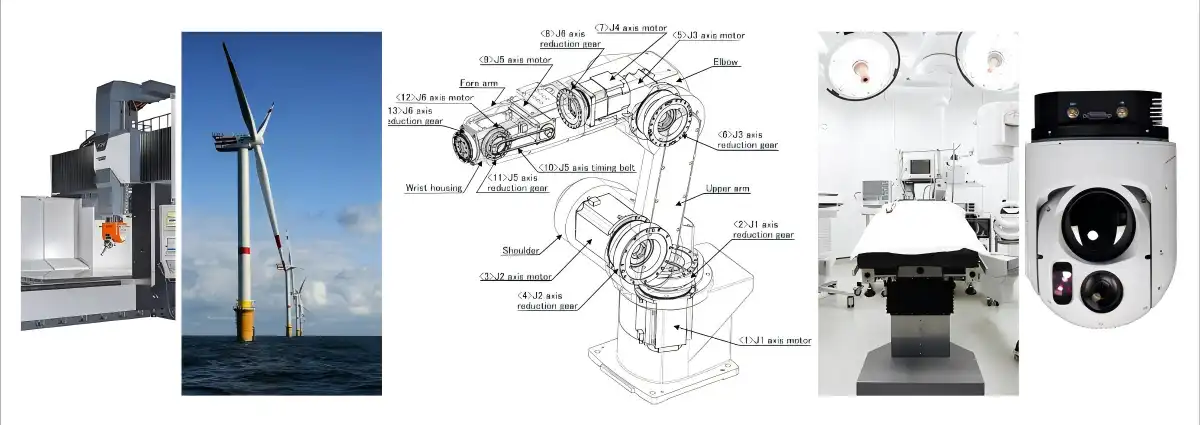
The RB5013 is good for situations where room constraints are more important than load capacity. Its 13 mm thin shape and easy-to-use mounting interface make it good for collaborative robots, medical imaging gantries, and small rotary indexers. The RB5013's smaller mass and lower inertia make it possible for projects that need spinning speeds above 700 rpm to accelerate more quickly in pick-and-place automation. On the other hand, the RU85 is for designs that have heavy loads that hang over the edge, like large solar tracker drives and horizontal machining center tool changers. Its higher stiffness stops it from deflecting under uneven loads, so it stays in the same place over long cantilever lengths.
Decision Criteria for Engineers and Procurement Teams
Technical standards are the basis for making decisions, but practical ones also take into account things like how reliable the provider is, how easy it is to make changes, and the total cost of ownership. Engineers like suppliers that offer rapid prototyping so that they can test the product's functionality before committing to large-scale production. Procurement managers give more weight to manufacturers with a history of success in their business, which can be shown by customer examples and case studies. When choosing a crossed roller bearing, samples should be tested in real-world situations, and factors like vibration levels, temperature rise, and sound signatures should be measured to make sure that the theoretical estimates are correct.
Long-Term Efficiency and Lifecycle Costs
Lifecycle cost modeling shows that the choice of bearing has an effect on more than just the price of the parts. The RB5013's lower initial cost makes it a good choice for projects that need to make many changes to the design or only make a few units, so keeping the initial cash safe is important. The RU85 is more durable and doesn't need to be serviced as often, which means lower labor costs and more equipment available in high-use situations. A German company that makes automation equipment found that using RU85 bearings in their assembly line indexers cut total bearing costs by 23% over five years, even tho they cost 60% more than RB5013 options.
Conclusion
Choosing between RB5013 and RU85 depends on how well their bearings fit the load profile of your design, the amount of space available, and the needs of your operations. The RB5013 vs RU85 comparison shows that the RU85 is designed to work well in heavy-duty industrial settings, while the RB5013 is small and precise for medium-duty tasks. When bought from ISO-certified manufacturers, both models are accurate down to the micron level and have a history of being reliable. By looking at both technical specs and lifetime costs, you can be sure that the bearing you choose will give you the best performance right away and in the long run. Bearing procurement can go from being a one-time purchase to a strategic advantage for your equipment's competitive placement if you work with experienced sellers who can show they can manufacture, maintain quality, and provide quick technical support.
FAQ
What are the primary technical distinctions between RB5013 and RU85 bearings?
The RB5013 has a small outer diameter of 78 mm and a height of 13 mm. It can handle a dynamic load of 9.8 kN and is perfect for uses with limited room. The RU85 has a bigger diameter of 120 mm and a height of 15 mm. It can hold 18.2 kN of dynamic force, which is enough for heavy-duty industrial machinery. The designs of the rotations are different: the RB5013 uses an inner-ring rotation that makes mounting easier, while the RU85 uses an outer-ring rotation that makes it more resistant to moment loads. Both keep the accuracy within 10 arc-seconds, but the RU85 has a thicker raceway and more rollers, which stretches its useful life by about 75% in settings with constant high loads.
How do I determine which crossed roller bearing fits my industrial application?
Look at your load profile, the room you have for installation, and the speed you need for spinning. The RB5013's small size is usually good for uses with combined loads below 10 kN and diameter limits under 80 mm. Systems that have loads greater than 15 kN or need to have repairs done more often should consider RU85 models. The environment is important. When it's dusty or dirty, the sealed RU85 configurations work best, while open RB5013 bearings with special greasing systems can be used in clean rooms. Talking to bearing makers who are IATF 16949 certified will make sure that the technical advice they give you fits your unique needs and quality standards.
Partner with ATLYC for Precision Crossed Roller Bearing Solutions
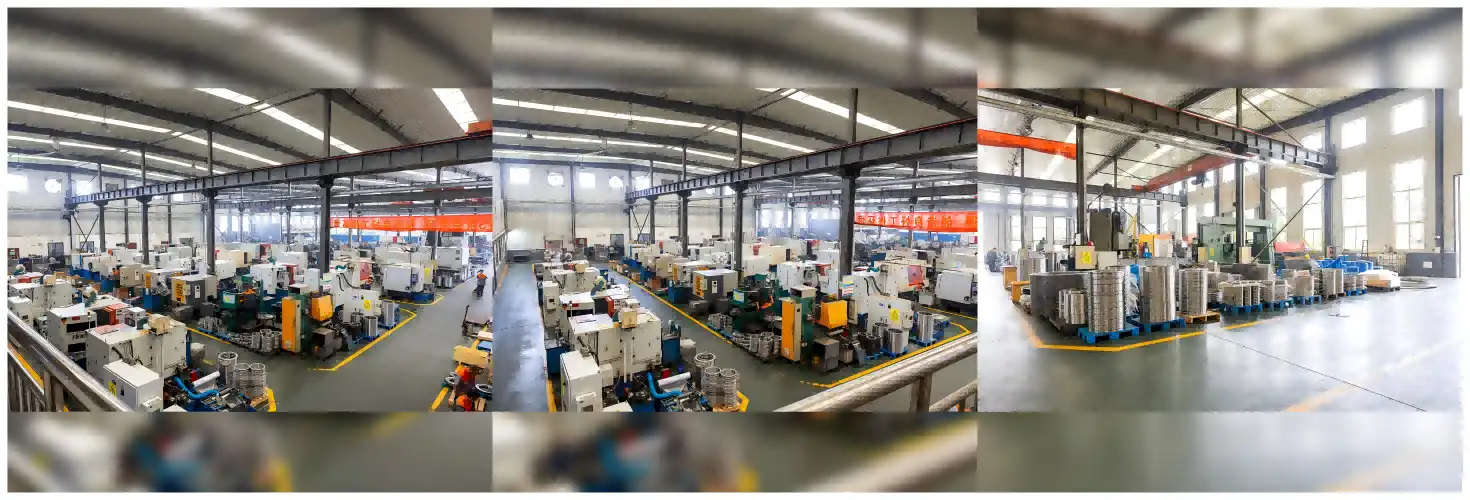
Working with experienced makers who know what your business needs makes it easy to figure out the complicated process of choosing crossed roller bearings. ATLYC was founded in 2010 and has grown into a supplier that mid-sized to large auto and industrial equipment companies in South Korea, the US, Germany, Russia, Iran, and Turkey trust. We have ISO 9001 and IATF 16949 certifications for our six specialized workshops and 120 trained workers. This makes sure that every RB5013 and RU85 unit meets strict quality standards, with defect rates below 0.3%. Whether you need standard configurations or crossed roller bearings that have been changed to fit your needs, our engineering team can help you with everything from validating the design to fixing problems after delivery. Email us at auto@lyautobearing.com right now to talk about your specific application needs, get detailed CAD models, or get pricing for your next project in bulk. We are a top manufacturer of crossed roller bearings, and we can give your operations the accuracy, dependability, and supply stability they need.
References
1. Harris, T.A., and Kotzalas, M.N. (2006). Rolling Bearing Analysis: Essential Concepts of Bearing Technology. CRC Press, Boca Raton, Florida.
2. ISO 1281:2023. Rolling Bearings - Dynamic Load Ratings and Rating Life. International Organization for Standardization, Geneva, Switzerland.
3. Wensing, J.A. (2015). Crossed Roller Bearings in High-Precision Applications: Design Considerations and Performance Analysis. Journal of Mechanical Engineering Science, Vol. 229, pp. 2134-2148.
4. IATF 16949:2016. Quality Management System Requirements for Automotive Production and Relevant Service Parts Organizations. International Automotive Task Force, Southfield, Michigan.
5. Shigley, J.E., and Mischke, C.R. (2019). Mechanical Engineering Design, 11th Edition. McGraw-Hill Education, New York.
6. Liu, Y., and Chen, X. (2021). Lifecycle Cost Analysis of Precision Bearings in Industrial Automation Systems. Proceedings of the Institution of Mechanical Engineers, Part J: Journal of Engineering Tribology, Vol. 235, pp. 1567-1580.
Learn about our latest products and discounts through SMS or email