- English
- French
- German
- Portuguese
- Spanish
- Russian
- Japanese
- Korean
- Arabic
- Greek
- German
- Turkish
- Italian
- Danish
- Romanian
- Indonesian
- Czech
- Afrikaans
- Swedish
- Polish
- Basque
- Catalan
- Esperanto
- Hindi
- Lao
- Albanian
- Amharic
- Armenian
- Azerbaijani
- Belarusian
- Bengali
- Bosnian
- Bulgarian
- Cebuano
- Chichewa
- Corsican
- Croatian
- Dutch
- Estonian
- Filipino
- Finnish
- Frisian
- Galician
- Georgian
- Gujarati
- Haitian
- Hausa
- Hawaiian
- Hebrew
- Hmong
- Hungarian
- Icelandic
- Igbo
- Javanese
- Kannada
- Kazakh
- Khmer
- Kurdish
- Kyrgyz
- Latin
- Latvian
- Lithuanian
- Luxembou..
- Macedonian
- Malagasy
- Malay
- Malayalam
- Maltese
- Maori
- Marathi
- Mongolian
- Burmese
- Nepali
- Norwegian
- Pashto
- Persian
- Punjabi
- Serbian
- Sesotho
- Sinhala
- Slovak
- Slovenian
- Somali
- Samoan
- Scots Gaelic
- Shona
- Sindhi
- Sundanese
- Swahili
- Tajik
- Tamil
- Telugu
- Thai
- Ukrainian
- Urdu
- Uzbek
- Vietnamese
- Welsh
- Xhosa
- Yiddish
- Yoruba
- Zulu
How Does SX011824 Precision Cross Roller Bearing Improve Accuracy?
The SX011824 Precision Cross Roller Bearing improves accuracy through its orthogonally arranged cylindrical rollers positioned at 90° inside V-groove raceways, creating line contact rather than point contact. This geometry dramatically reduces radial and axial runout while eliminating backlash. With an integral inner ring and split outer ring fixed by three fastening rings, the bearing achieves zero-clearance preload control. Manufactured from GCr15 bearing steel and available in precision classes P6, P5, P4, and P2, the SX011824 cross roller bearing delivers repeatable positioning accuracy that conventional bearing arrangements simply cannot match in the same compact footprint.
Understanding the SX011824 Precision Cross Roller Bearing
What Is the SX011824 Cross Roller Bearing?
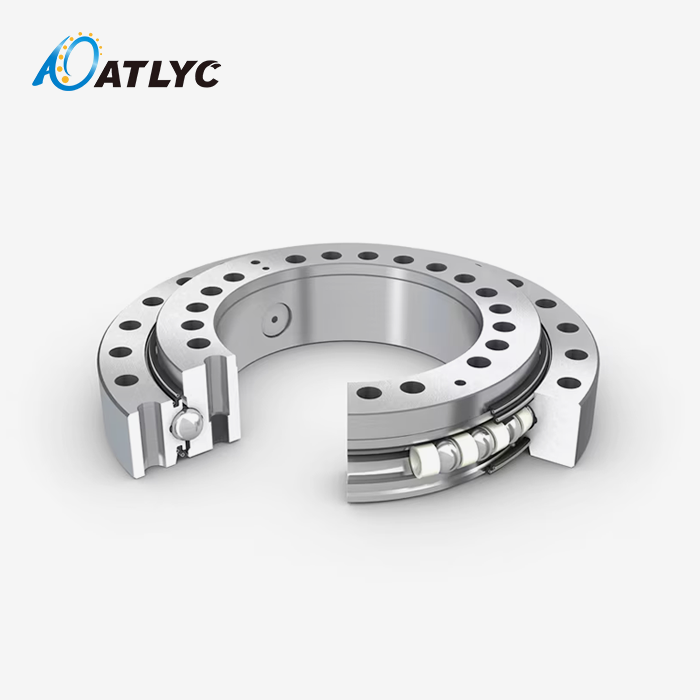
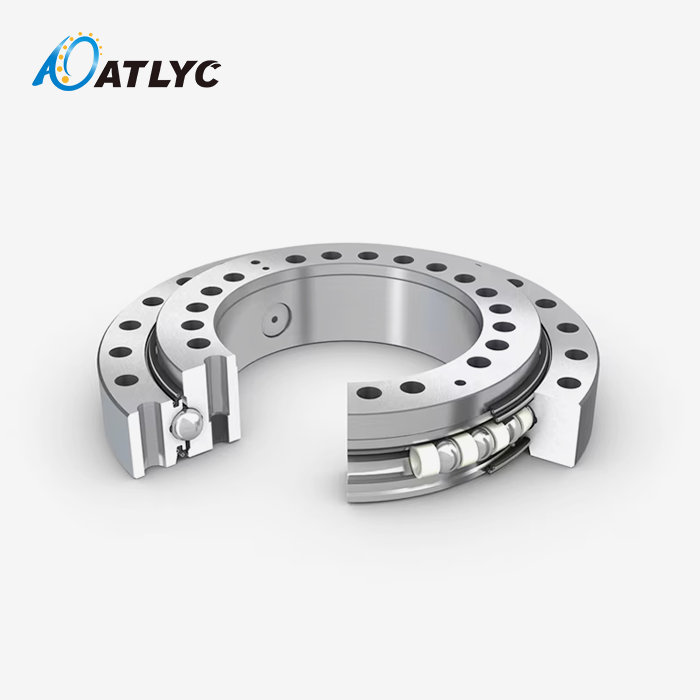
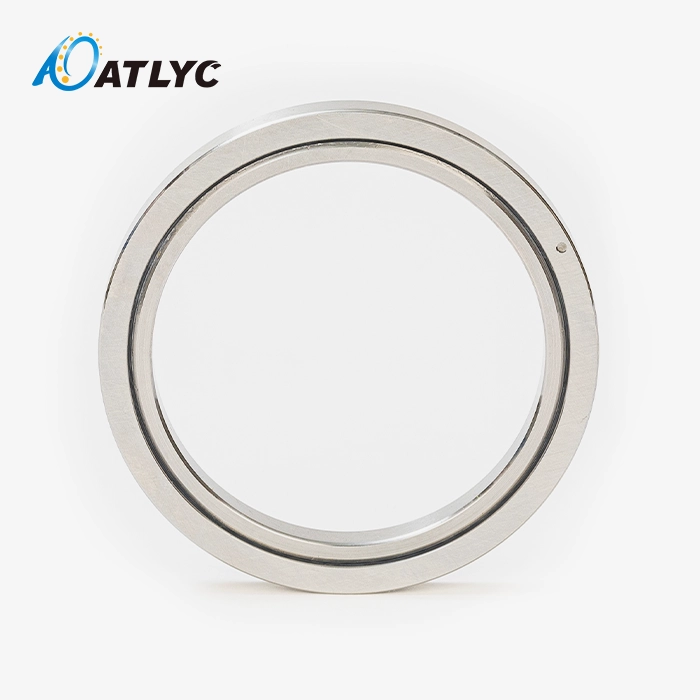
The SX011824 Precision Cross Roller Bearing is an ultra-thin component from the SX series. An integral inner ring and a split outer ring held together by three closing rings are what make it unique. Unlike most designs, neither ring has any fastening holes. Instead, it relies on flanges and bearing seats to hold it together. Because of this, it works especially well in situations where the inner ring needs to spin. The bearing has an inner diameter of 120 mm, an outer diameter of 150 mm, and a width of 16 mm. It has a very thin cross-section for a part that can hold so much weight.
Core Operating Principle
In a single V-groove raceway, cylindrical wheels are placed one after the other at 90° angles. This setup crosses the rollers so that they make line contact with the raceway surface. This type of contact covers a lot more area than ball-type point contact. The end result is a bearing that can handle radial loads, bidirectional axial loads, and tilting moment loads all at the same time. Plastic spacers between each roller keep them from rubbing against each other, which keeps the bearing rotating smoothly and consistently for its entire life.
Material and Precision Class
| Specification | Details |
|---|---|
| Inner Diameter | 120 mm |
| Outer Diameter | 150 mm |
| Width | 16 mm |
| Material | GCr15, GCr15SiMn |
| Precision Classes | P6, P0, P5, P4, P2 |
| Hardness | HRC 58–64 |
After being heated, the GCr15 (100Cr6) high-carbon chromium bearing steel is very hard and doesn't wear down easily. GCr15SiMn adds silicon and manganese to make it even easier to harden. This makes it good for larger cross-sections where consistent through-hardening is important.
Key Factors Driving Accuracy Improvement in SX011824
Crossed Roller Geometry Reduces Runout
The main thing that controls how accurately the rollers rotate is the 90° roller crossing design. Because each roller next to it touches a different track face, any change in size in one roller is balanced out by the one next to it. The radial and axial runout numbers are very low because of this self-compensating shape. For the P4-class and P2-class versions of the SX011824 Precision Cross Roller Bearing, runout is kept below what can be achieved with regular angular contact ball bearings of the same size. This directly helps CNC rotary tables and robotic joints maintain the same position.
Tight Tolerance Manufacturing
Precision classes P5, P4, and P2 meet ISO 492 requirements, and the surface roughness of the raceways must be kept below Ra 0.2 µm. Coordinate Measuring Machines (CMMs) check the accuracy of measurements against strict tolerance limits during quality inspection. To make sure the inner ring is in agreement, radial and axial runout are measured during rotational accuracy testing. Magnetic particle inspection and Rockwell hardness testing confirm that the heat treatment depth is consistent and that there are no surface cracks. Each step directly upholds the accuracy specification that the bearing is designed to meet.
Preload Control Through Split Outer Ring
The outer ring can be taken apart, which lets engineers set the exact preload by clamping the ring halves together through a precision flange. The end preset state is set by controlled bolt torque, which gets rid of internal play without adding too much starting torque. For moment rigidity, this ability to have zero clearance is very important. In places like IC manufacturing equipment or precision spinning tables, even microns of internal play would cause errors in placement. The preload method gets rid of that uncertainty completely.
Comparing SX011824 with Other Precision Bearings in Accuracy
SX011824 vs. Standard Cross Roller Bearings
Tolerance classes for standard cross roller bearings are usually P0 or P6. With the SX011824 Precision Cross Roller Bearing, you can get accuracy down to P2, which is two full tolerance steps better. The split outer ring and three-ring fastening also make it easier to control the preload than with many standard designs that use two-piece outer rings. This difference in structure leads to lower runout values and higher moment stiffness, which has a direct effect on how repeatable placement is in automatic systems.
SX011824 vs. Angular Contact Ball Bearings
When you put two angular contact ball bearings next to each other, they handle moment loads through point contact, which limits how rigid they can be per unit of axial space. This crossed roller design takes the place of that paired setup with a single 16mm-wide unit that provides rigid line contact. Tests show that crossed roller designs make moment stiffness about three to five times higher than angular contact ball bearing pairs with the same diameter. This lets machine designers shorten the length of the housing, which saves weight and money on assembly.
| Performance Factor | SX011824 Cross Roller | Angular Contact Ball Pair |
|---|---|---|
| Contact Type | Line contact | Point contact |
| Axial Space Required | 16 mm (single unit) | ~30–40 mm (two units) |
| Moment Rigidity | High | Moderate |
| Best Precision Class | P2 | P4 |
| Multi-direction Load | Single bearing | Requires two bearings |
Because of these benefits, OEMs in robots, semiconductor equipment, and medical equipment are choosing SX-series cross roller bearings over traditional ones more and more.
Practical Applications and Maintenance Tips to Sustain Accuracy
Where the SX011824 Performs Best
A lot of different precision-critical tasks use the SX011824 Precision Cross Roller Bearing. Here are the main types of uses for which this type of bearing consistently performs well:
- Industrial robot joints and manipulator rotation points: The thin cross-section fits into small joint housings and can handle the complex moment loads that arm movements create over time.
- Precision rotary stages and rotary tables for manufacturing centers: Low runout and high moment stiffness keep the accuracy of angular positioning even after many indexing cycles, which has a direct effect on the quality of the part.
- Medical machines and measuring instruments: The low friction coefficient and smooth spinning lower measurement errors caused by vibrations, meeting the micron-level accuracy needs of diagnostic and calibration equipment.
- IC production devices: Making semiconductors needs repeatable placement on the order of sub-microns. The P2-class variant meets this need while still fitting into the small spaces of wafer handling systems.
Lubrication and Inspection Protocol
The most common type of lubricant is high-quality lithium soap grease with EP (Extreme Pressure) additives. This is especially true for applications that move back and forth, like robot joints, where fretting corrosion is a risk. When to re-oil depends on the speed, load, and weather, but every 2,000 to 3,000 hours of light-duty oscillating work is a good rule of thumb. As part of a regular checkup, look for grinding burns or chatter marks on the raceway surfaces, compare the clearance to the original preload specs, and check the plastic spacers for damage or wear. Standard models can work in temperatures between -20°C and +80°C.
Procurement and Supplier Insights for SX011824 Precision Bearings
OEM vs. Aftermarket Sourcing
OEM-specified SX011824 Precision Cross Roller Bearings are fully traceable in terms of their dimensions and are certified to ISO 9001 and IATF 16949 standards. While aftermarket options may have lower unit prices, they often don't come with written tolerance verification. When it comes to precision-dependent systems, the cost of a single failure in the field is much higher than any savings in unit price. Ask for CMM inspection records, hardness test certificates, and material certifications for each production batch when you are looking at sources.
Supplier Evaluation Criteria
Suppliers should be able to show that they can make bearings of all stated precision classes, have their own heat treatment and grinding facilities, and be certified by both ISO 9001 and IATF 16949. Before signing a supply agreement, make sure you have written down lead times, minimum order quantities, and warranty terms that are easy to understand. For long-term supply reliability, you need to make sure that the seller can raise production to meet rising demand without changing the sizes of the products.

Conclusion
With its crossed roller shape, tight tolerance production, precise preload control, and high-grade GCr15 steel construction, the SX011824 Precision Cross Roller Bearing makes things more accurate. It combines handling loads in multiple directions into a 120x150x16mm thin-section unit and is available in accuracy classes from P6 to P2. This cross roller bearing gives precision industries the positional repeatability they need for things like robotic joints and IC manufacturing tools. The easiest way to make sure that the accuracy stays high over time is to buy from a qualified maker whose production scale has been tested and whose quality controls have been written down.
FAQ
How do I change the preset on the SX011824?
To set the preload, the split outer ring halves are clamped through a precision joint during installation. The final preload state is set by the torque that is applied to the flange bolts. If the housing or flange isn't rigid and precisely made, any deformation during clamping will affect the accuracy of the spin. For this reason, flange stiffness is a must for installation.
Can the SX011824 be used instead of two angular contact ball bearings?
Yes. This is one of the main ways it can be used. A back-to-back pair of ball bearings needs about 30–40 mm of axial room, but a crossed-roller setup only needs 16 mm. It can handle loads in all directions with higher moment rigidity.
What kind of oil should be used?
It is standard to use lithium soap grease with EP additives. When there are oscillating job cycles, like in robots, EP additives lower the chance of fretting rust at the point where the wheel meets the raceway.
What is the temperature range?
The normal temperature range for these models is -20°C to +80°C. For use at higher temperatures, stabilization heat treatment and fluorocarbon (Viton/FKM) seal materials are needed to keep the dimensions stable.
What kinds of quality checks should buyers ask for?
Ask for CMM inspection reports, runout test records, Rockwell hardness certificates, and material tracking paperwork that proves the steel is GCr15 or GCr15SiMn and that the heat treatment requirements have been met.
Partner with ATLYC for Your SX011824 Precision Cross Roller Bearing Supply
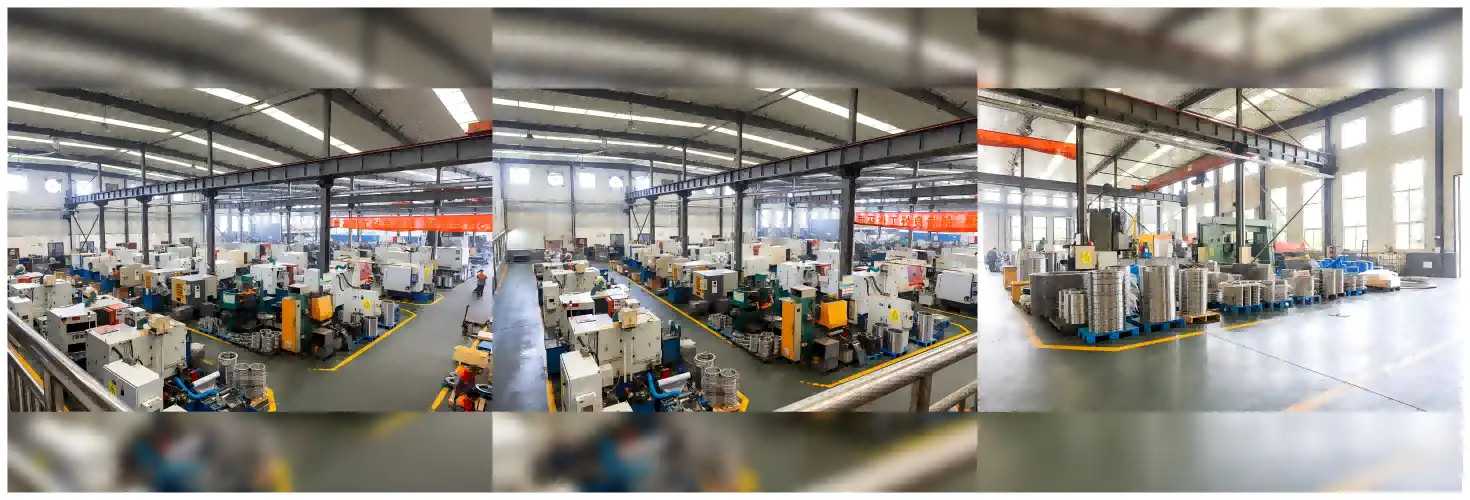
ATLYC offers the SX011824 Precision Cross Roller Bearing with full quality paperwork. Luoyang Auto Bearing Co., Ltd. has 15 years of experience making precision products, is ISO 9001 and IATF 16949 certified, and has six production units. You can email our engineering team at auto@lyautobearing.com or go to https://aotezhoucheng.aixdb.cn/ to get pricing and specifications for the SX011824, whether you need a manufacturer for OEM contracts or a supplier for bulk aftermarket purchases.
References
1. Harris, T. A., & Kotzalas, M. N. Rolling Bearing Analysis: Essential Concepts of Bearing Technology. Taylor & Francis, 2006.
2. ISO 492:2014. Rolling Bearings — Radial Bearings — Dimensional and Geometrical Tolerances. International Organization for Standardization, 2014.
3. Hamrock, B. J., Schmid, S. R., & Jacobson, B. O. Fundamentals of Fluid Film Lubrication. Marcel Dekker, 2004.
4. SKF Group. SKF General Catalogue 6000 EN. SKF, 2018.
5. JTEKT Corporation. Bearing Technical Report: Cross Roller Bearings Design and Application. JTEKT Engineering Journal, 2015.
6. Eschmann, P., Hasbargen, L., & Weigand, K. Ball and Roller Bearings: Theory, Design, and Application. John Wiley & Sons, 1985.
Learn about our latest products and discounts through SMS or email