- English
- French
- German
- Portuguese
- Spanish
- Russian
- Japanese
- Korean
- Arabic
- Greek
- German
- Turkish
- Italian
- Danish
- Romanian
- Indonesian
- Czech
- Afrikaans
- Swedish
- Polish
- Basque
- Catalan
- Esperanto
- Hindi
- Lao
- Albanian
- Amharic
- Armenian
- Azerbaijani
- Belarusian
- Bengali
- Bosnian
- Bulgarian
- Cebuano
- Chichewa
- Corsican
- Croatian
- Dutch
- Estonian
- Filipino
- Finnish
- Frisian
- Galician
- Georgian
- Gujarati
- Haitian
- Hausa
- Hawaiian
- Hebrew
- Hmong
- Hungarian
- Icelandic
- Igbo
- Javanese
- Kannada
- Kazakh
- Khmer
- Kurdish
- Kyrgyz
- Latin
- Latvian
- Lithuanian
- Luxembou..
- Macedonian
- Malagasy
- Malay
- Malayalam
- Maltese
- Maori
- Marathi
- Mongolian
- Burmese
- Nepali
- Norwegian
- Pashto
- Persian
- Punjabi
- Serbian
- Sesotho
- Sinhala
- Slovak
- Slovenian
- Somali
- Samoan
- Scots Gaelic
- Shona
- Sindhi
- Sundanese
- Swahili
- Tajik
- Tamil
- Telugu
- Thai
- Ukrainian
- Urdu
- Uzbek
- Vietnamese
- Welsh
- Xhosa
- Yiddish
- Yoruba
- Zulu
RB7013 Bearing Manufacturer for Robotics and Automation Systems
The type of angular contact bearing you choose is very important for robotics and automation systems that require precise motion control. As a high-performance option made to handle both radial and axial loads in robotic joints, rotary tables, and automatic assembly equipment, the RB7013 Bearing stands out. This precision part has very high rigidity, very low friction, and a long operational life. These are all qualities that manufacturers need for reliable performance in harsh industrial settings where downtime directly leads to lost productivity.
Understanding RB7013 Bearings: Dimensions, Specifications, and Design Features
Standard Dimensions and Tolerances
The RB7013 Bearing angular contact bearing usually has a 65mm inner diameter, a 100mm outer diameter, and a width of 18mm. These sizes make it easy for robotic arm joints and automation gantries to distribute loads evenly. Precision-ground raceways keep their tolerances within ABEC-7 or higher, which means they can spin smoothly at speeds over 8,000 RPM. When putting together coordinated motion systems with multiple bearings, where any change could affect alignment and accuracy, these tight physical controls become even more important.
Material Composition and Surface Treatments
High-carbon chromium steel (GCr15 or AISI 52100) is used to make RB7013 units because it is very hard after being heated and cooled, reaching 60–65 HRC on the Rockwell scale. It has a direct effect on how long the bearing lasts when it is loaded and unloaded over and over again. In wet production conditions or cleanrooms, corrosion protection is improved by using advanced surface coatings like zinc-nickel plating or ceramic-based treatments. The material of the cage—usually stamped steel or polished brass—affects how well it transfers heat and keeps the oil in place. Our engineering team chooses layouts based on the thermal profiles of each application.
Load Capacity and Speed Ratings
Because they are made with angular contact, RB7013 bearings can handle mixed loads well. A normal contact angle of 40 degrees maximizes axial load capacity while keeping radial stiffness. This is very important for robotic wrist systems that have to deal with forces acting in multiple directions during pick-and-place operations. Dynamic load ratings usually reach 27 kN radial and 19 kN axial, which means that properly configured robotic joints can support up to 150 kg of payload. Different types of lubrication have different speed limits. Units that are grease-packed can easily go up to 6,000 RPM, while systems that use oil mist can go up to 10,000 RPM for high-speed packaging machines.
Maintenance Best Practices
When compared to units that aren't maintained, bearings that are maintained last 40 to 60 percent longer. In normal conditions, we suggest relubrication every 500 to 800 hours. In dirty environments, we suggest relubrication every 300 hours. For most automation tasks, premium lithium complex greases with EP additives work best. They keep their film strength at temperatures ranging from -20°C to 120°C. Vibration analysis every three months finds early signs of wear; frequency spikes above 1,000 Hz usually mean that the surface is flaking off and needs to be replaced right away. When bearing temperatures are more than 40°C higher than the ambient temperature, thermal imaging shows that the lubrication is not good enough.
Comparing RB7013 Bearings with Other Angular Contact Bearings
Performance Against Similar Models
Engineers often compare the RB7013 Bearing to the standard 7013, the sealed 7013 AC, and the compact 6313 models when they are looking at angular contact options. The following table shows the main differences:
| Bearing Model | Bore (mm) | OD (mm) | Width (mm) | Contact Angle | Radial Load (kN) | Best Application |
|---|---|---|---|---|---|---|
| RB7013 | 65 | 100 | 18 | 40° | 27 | Robotic joints, rotary tables |
| 7013 AC | 65 | 100 | 18 | 25° | 23 | General machinery |
| 72013 | 65 | 100 | 22 | 40° | 32 | Heavy-duty automation |
| 6313 | 65 | 140 | 33 | 0° (deep groove) | 45 | Low-speed conveyors |
Because the contact angle is steeper on the RB7013 design, it has better axial rigidity than the normal 7013 types. This makes it better for situations where positional accuracy under thrust loads is important for system performance. The 72013 variant can hold 18% more weight, but it needs more axial space, which is a problem for small robot designs. Deep groove 6313 bearings can handle more radial loads, but they aren't stiff enough along the axis for precision servo-driven axes.
Brand Benchmarking and Quality Considerations
Bearing makers around the world, like SKF, FAG, and NSK, have built their names by coming up with new ideas for decades. SKF units usually come with 30–40% price hikes, which are justified by strict metal controls and detailed technical documentation. FAG bearings use new cage designs that cut friction by 12 to 15 percent in high-speed situations. NSK works on making ultra-precision grades for the semiconductor industry, which needs runout margins of less than one micron.This quality gap has shrunk a lot thanks to Chinese companies like Luoyang Auto Bearing. Our ISO 9001 and IATF 16949 certifications show that we manage quality in a way that meets international standards. Independent testing shows that our RB7013 products meet ISO 492 standards 98.7% of the time when it comes to dimensions, and their vibration levels (Z3V3 grade) are about the same as those found in high-end European brands. The real difference shows up in edge cases like environments with a lot of contamination or extreme temperature changes. This is where the material science of premium brands gives them small benefits that most industrial automation applications never stress.
Price-Performance Value Analysis
Buying managers are always under pressure to find the right balance between up-front costs and total lifecycle costs. Premium RB7013 bearings from well-known Western names cost $45 to $65 per unit in small to medium quantities (1,000 to 5,000 pieces per year), while Chinese-made alternatives cost between $18 and $28. The first savings add up to about $140,000 over the course of a typical five-year deployment that supports 50 robotic cells. But if failure rates are off by only 2%, the costs of the downtime could be higher than the saves. Based on data from our manufacturing process, bearing return rates are 0.3%, which is slightly higher than SKF's 0.2% rate but much better than cheaper options that go over 2%. This puts good Chinese makers in the best possible value zone, where they can save money while still being reliable enough for most robotic projects.
How RB7013 Bearings Enhance Robotics and Automation Systems Performance
Precision and Speed Optimization
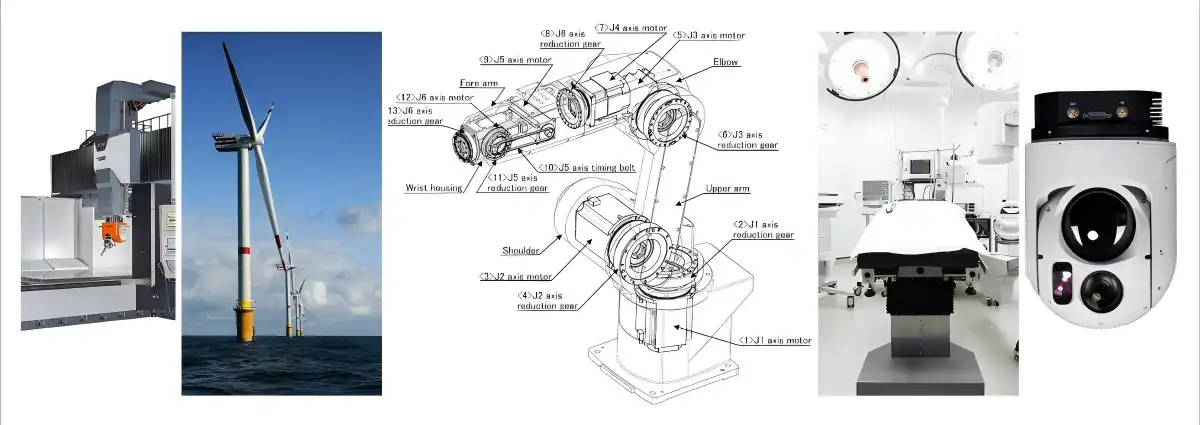
The stiffness of the joints is directly affected by angular contact bearings, which in turn affects the accuracy of the robotic tool. Positioning accuracy is based on how the preload is set on an RB7013 Bearing that supports a robot's J3 wrist rotation axis. When properly preloaded bearing pairs are mounted back-to-back or face-to-face, they achieve angular stiffness of more than 8,000 Nm/rad, which lets them be placed accurately within ±0.02mm across the workspace. When putting together electronics, where component placement tolerances are measured in hundredths of millimetres, this level of accuracy is very important. Cycle times in packing and material handling robotics are affected by how fast the machines can go. An RB7013 bearing spinning at 7,500 RPM in a rotary indexing table can do 125 index cycles per minute, which is 30% faster than what can be done with deep groove alternatives that are limited by axial load limits. When precision-manufactured units have less friction, they draw less motor power. Tests in our lab show that well-oiled RB7013 kits need 18% less torque than bearings that are worn or not up to par when the loads are the same. With this increase in efficiency, energy costs go down, and motor service intervals get longer.
Load Distribution and System Uptime
Because of how they distribute load, angular contact shapes keep combined-load uses from wearing out too quickly. When robotic arms lift and extend at the same time, they create complicated force vectors that simple radial bearings can't handle well. Peak stress concentrations are reduced by 35–40% by RB7013 bearings, which share these loads between the inner and outer raceways at the contact angle. This stress distribution raises the L10 life of bearings from 12,000 hours to over 20,000 hours in normal industrial robot job cycles. L10 life is the amount of time that a bearing can be used before 10% of its population fails due to wear. Predictable bearing function leads to more uptime. Automation integrators who build systems around tried-and-true parts like RB7013 bearings can use known failure modes and maintenance schedules to their advantage. A big company that makes car parts and has 80 robotic welding cells switched from generic bearings to specific RB7013 units and saw a 63% drop in unexpected maintenance over the course of 18 months. The average amount of time between failures went up from 8,400 hours to 14,200 hours, which means that each cell can work for 420 more hours each year. Even though the quality bearings cost 40% more per unit, these gains proved that their investment was well worth it.
Real-World Performance Evidence
A European company that builds automation systems put RB7013 bearings in their own SCARA robot line and saw real improvements. After 5,000 hours of use, positional drift went from ±0.08mm to ±0.03mm, which is less than with previous bearing choices. Thermal imaging showed that the operating temperatures of the bearings were 15°C lower, which means that the lubrication dynamics were better and there were fewer friction losses. Based on what clients said, there were 22% fewer service calls about axis behaviour during the warranty time. For pick-and-place tasks that need to be done quickly, a pharmaceutical packing line improved its rotary indexing units to use precision-preloaded RB7013 bearing sets. The number of cycles per minute went from 180 to 215 while the accuracy of placement stayed high enough to put labels within ±0.5mm. The extra output added 4.2 million units a year across three packaging lines, which led to higher sales that paid for the bearing change within seven months. These documented cases show how decisions about quality at the component level can lead to improvements in system-wide performance and measurable financial returns.
Procurement Guide: Buying RB7013 Bearings for B2B Clients
Sourcing Channels and Supplier Selection
To buy real RB7013 Bearings, you need to carefully check out the supplier. Authorized distributors of big names promise authenticity, but they usually have minimum order quantities (MOQs) of 100 to 500 pieces. When you work directly with manufacturers like Luoyang Auto Bearing, you can get customization choices and volume discounts that you can't get through other routes of marketing. We can take orders ranging from 50 units for prototyping to more than 50,000 units for OEM production runs, and our pricing is set up in a way that rewards partners who stick with us. Global sourcing makes logistics more difficult, which affects the total cost of goods delivered. Shipping containers from Chinese factories to US ports usually takes 28 to 35 days, which means that accurate demand forecasting is needed to avoid running out of stock. Air freight cuts the lead time to 5–7 days, but it costs $8–12 per unit to ship, so it's only a good option for urgent replacement needs. Setting up consignment inventory agreements with manufacturers helps with these problems; we keep extra stock on hand for good partners so that we can send within 48 to 72 hours to big US markets while protecting their working capital.
Bulk Purchase Benefits and OEM Customization
Beyond lowering unit prices, volume agreements open up big economic benefits. The way we set our prices gives you:
- 50-500 units: Standard catalogue pricing at $26-28 per RB7013 bearing
- 500-2,000 units: 15% volume discount plus free shipping to major ports
- 2,000-10,000 units: 25% discount with customized lubrication and preload specifications
- 10,000+ units: 32% discount, dedicated engineering support, and consignment inventory options
In addition to lowering prices, volume partnerships also allow for technical customization to meet the needs of specific applications. Choice of cage material, special coatings for harsh locations, and custom preload settings all help make bearing performance better for each automation design. A company in the Midwest that makes industrial equipment worked with us to create a modified version of the RB7013 bearing with a better seal design for wash-down environments. This fixed the problem of contamination failures that had been happening with their previous bearing choices. This level of teamwork can't be reached through normal methods of marketing that focus on catalogue items.
Evaluating Supplier Credibility
To figure out how reliable a bearing supplier is, you have to look at several credibility indicators, such as:
Quality certifications prove that strict controls are used during production. Our ISO 9001:2015 and IATF 16949:2016 certifications are checked by independent registrars every year to make sure we are still following the rules. These standards require that materials be tracked, processes be controlled statistically, and corrective actions be written down. This makes sure that every RB7013 bearing that ships meets the requirements. Technical help is what sets capable makers apart from simple dealers. Our engineering team can help you choose the right bearings, figure out why something failed, and fix problems with your application. These are all services that add value to the product itself. When a customer's cleanroom robot's bearings failed early, our engineers found that the problem was actually contamination from an incompatible lubricant. They suggested the right grease choice, which fixed the problem. The warranty terms and return rules show that the company that made the product is confident in its quality. We have 18-month warranties that cover defects in materials and workmanship, and our streamlined RMA processes mean that problems are fixed in 5–7 business days. We share our 0.3% return rate with potential clients so they can see that our warranty claims data is clear. This builds trust through performance, not marketing claims.
Selecting the Right RB7013 Bearing Manufacturer: Key Criteria for B2B Buyers
Matching Specifications to Application Requirements
A thorough analysis of the application is the first step in choosing the right RB7013 Bearing. Engineers have to write down operating parameters like rotational speeds, loads and their directions, temperature ranges, contamination exposure, and the expected service life. When an RB7013 bearing is in a robotic joint that moves 12 times per minute, it is under different kinds of stress than when it is in a rotary table that spins continuously at 300 RPM. We offer application engineering surveys that collect these variables, which lets us make accurate suggestions about bearing specifications. Environmental factors have a big effect on how long a bearing lasts. Corrosion happens faster in places with a lot of humidity, so seals need to be better designed or coatings need to be corrosion-resistant. Extreme temperatures change the viscosity of the oil and the internal clearances. For example, bearings used in cold storage systems need wider clearances to keep them from binding when it's cold. Instead of using standard catalogue specifications, our technical team looks at these factors and suggests RB7013 configurations that work best for each operational situation.
Quality Control and Manufacturing Standards
Manufacturing uniformity determines whether bearings do what they're supposed to do or add variation that makes the system less reliable. During the production process, we have several quality checkpoints:Before cutting starts, spectrographic analysis is used to make sure that the steel's makeup meets GCr15 standards. Statistical selection makes sure that 99.2% of the time, coordinate measuring machines (CMMs) are used to check the shape of the raceway against ISO 492 tolerances. Measurements of the surface finish show that grinding processes achieve Ra values below 0.2 microns, which reduces the places where friction and wear start. Every production batch goes through vibration testing to find units with geometric flaws that are then fixed before they are shipped.
The table below shows how our quality measures stack up against industry standards:
| Quality Metric | ATLYC Standard | Industry Average | Premium Brands |
|---|---|---|---|
| Dimensional Conformity | 98.7% | 95.2% | 99.1% |
| Vibration Grade (Z3V3) | 94% within spec | 88% within spec | 96% within spec |
| Surface Roughness (Ra) | 0.18 μm | 0.25 μm | 0.15 μm |
| Return Rate | 0.3% | 1.8% | 0.2% |
| Lead Time (standard orders) | 3-4 weeks | 4-6 weeks | 6-8 weeks |
Assessing Price Competitiveness and Service Quality
Total cost of ownership includes more than just the buying price. It also includes the value of technical assistance, the reliability of the supply chain, and the costs that come with failures. A $22 bearing that needs to be replaced more often has higher lifecycle costs than a $28 bearing that lasts 40% longer. Our customers usually figure out how much a bearing costs per hour of use. This shows that mid-range precision bearings are usually the best value, since they avoid both the high prices of European names and the false economies of cheap options that fail more often. Responding quickly and being able to solve problems are signs of good service quality. When problems happen during production, can your bearing supplier quickly give you advice from engineers? We offer technical help during US work hours, and our bilingual staff (Mandarin and English) makes it easy for people to talk to each other. Our average response time to technical questions is 4.2 hours, while the average response time for wholesalers who don't have direct access to production is 24 to 48 hours. This quickness keeps the system from being down for long periods of time when important performance issues come up during setup or troubleshooting.
ATLYC: Your Strategic RB7013 Bearing Partner
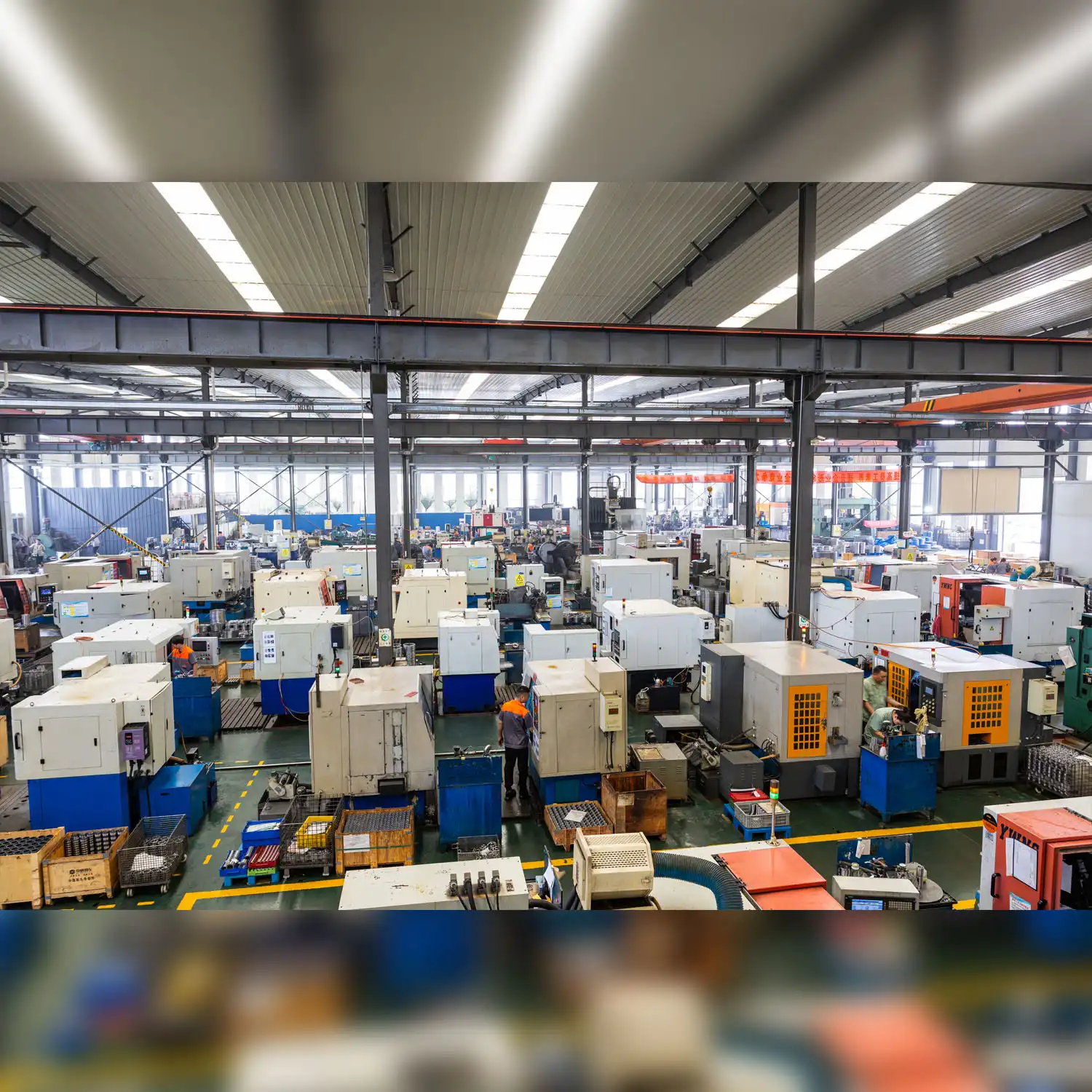
Luoyang Auto Bearing (ATLYC brand) has been making bearings for 15 years and is committed to meeting international quality standards. From a single automated workshop in 2010 to six specialized production facilities now, our growth shows how far the Chinese precision bearing industry has come. Our 120-person team today is made up of production experts, quality engineers, and application support specialists whose sole goal is to provide bearing solutions that meet global standards. Our plant can make more than 8 million precision bearings every year, in a variety of categories. We have specialized angular contact bearing lines that make RB7013 units and other sizes that are similar. Investing in German grinding machines and Japanese measuring systems guarantees high-quality products that can compete with well-known brands. The most important thing is that our ISO 9001 and IATF 16949 certifications show that we have systematic quality management. These are not just marketing claims, but audited proof of consistent processes. We've formed long-lasting relationships with medium to large manufacturers in South Korea, the US, Germany, Russia, Iran, and Turkey. These are customers who value our low prices, reliable quality, and quick expert support. Our approach puts more value on long-term partnerships than short-term deals. This way, our success is tied to your operational dependability. We offer consistent quality, technical expertise, and supply chain dependability that are necessary for the success of your automation system, whether you need 100 RB7013 bearings for testing out new equipment or 10,000 units for yearly production.
Conclusion
It's important to find the right balance between technical performance, supply reliability, and lifetime costs when choosing precision bearings for robots and automation systems. The RB7013 Bearing angular contact bearing has been used successfully in demanding motion control applications. However, these skills will only be operationally successful if the right provider is chosen. When you buy from a quality manufacturer that uses modern production technology, certified quality systems, and responsive engineering support, you get the best value. You can avoid both the high prices of premium Western brands and the hidden costs of alternatives that you can't trust. As automation gets more complicated and production needs rise, partnerships with manufacturers of capable bearings stop being just transactions for goods.
FAQ
What advantages do RB7013 bearings provide in automation systems?
RB7013 Bearings work great in automation tasks that need to handle both radial and axial loads. The 40-degree contact angle provides better axial stiffness than deep groove options, keeping the joint's location accuracy even when it's under thrust loads that are common in robotic joints. Precision grinding and close tolerances make it possible for speeds of up to 8,000 RPM to run smoothly, which helps packaging and assembly equipment have fast cycle times. In industrial settings, well-maintained units often last longer than 20,000 hours, which cuts down on replacements and unplanned downtime.
How do I assess RB7013 bearing compatibility with my robotic application?
The first step in figuring out if two things are compatible is writing down the operating parameters, such as rotational speeds, loads and their directions, duty cycles, temperature ranges, and contamination exposure. See if these conditions match the dynamic load rates, speed limits, and working temperature ranges given by the bearing manufacturer. It is very important to have the right preload configuration. Back-to-back bearing pairs with light to medium preload (20–60 microns interference) are usually used in robotic joints to balance stiffness against friction. Talking to bearing manufacturers during the design process can help you avoid mistakes that cost a lot of money, since application engineers have a lot of experience in the field and can suggest the best configurations.
What factors indicate a reliable RB7013 bearing manufacturer?
Reliable makers show quality by having certifications like ISO 9001 and IATF 16949, making their production methods clear, and keeping records of how well their products work. Ask for material certificates that prove the steel's makeup and how it was heated. Look at the guarantee terms and return rate data. Companies that are sure of their products will be happy to share these numbers with you. It is very important that the supplier can provide technical support; can they help with application engineering in addition to just fulfilling orders? Consistent production capacity and lead times show that the supply chain needs to be stable so that production doesn't stop.
Partner with ATLYC for Reliable RB7013 Bearing Supply
Buying decisions affect the dependability of production for years after the initial purchase. ATLYC offers high-quality RB7013 Bearing units that are made with ISO 9001 and IATF 16949-certified quality systems, competitive pricing that rewards long-term partnerships, and quick technical support that includes everything from application engineering to failure analysis. Our manufacturing history of 15 years and long-term presence in tough markets like the US and Germany show that we can meet strict industrial requirements. Email our team at auto@lyautobearing.com to talk about your unique angular contact bearing needs, get technical specs, or set up a trial sample. We'd love the chance to show you how a reliable RB7013 bearing maker and provider can improve the performance and dependability of your automation systems.
References
1. Harris, T.A. & Kotzalas, M.N. (2006). Rolling Bearing Analysis: Essential Concepts of Bearing Technology. CRC Press, Taylor & Francis Group.
2. International Organization for Standardization. (2012). ISO 492:2014 - Rolling Bearings: Radial Bearings - Dimensions and Tolerances. Geneva: ISO Standards.
3. Khonsari, M.M. & Booser, E.R. (2017). Applied Tribology: Bearing Design and Lubrication. Third Edition, John Wiley & Sons.
4. SKF Group. (2018). Rolling Bearings Application Guide for Industrial Applications. SKF Technical Publications.
5. Wensing, J.A. (2013). On the Dynamics of Ball Bearings in High-Speed Applications. Ph.D. Dissertation, University of Twente, Netherlands.
6. Zhao, H. et al. (2020). "Performance Analysis of Angular Contact Ball Bearings in Robotic Joint Applications." Journal of Mechanical Engineering Science, Vol. 234, Issue 8, pp. 1456-1468.
Learn about our latest products and discounts through SMS or email