- English
- French
- German
- Portuguese
- Spanish
- Russian
- Japanese
- Korean
- Arabic
- Greek
- German
- Turkish
- Italian
- Danish
- Romanian
- Indonesian
- Czech
- Afrikaans
- Swedish
- Polish
- Basque
- Catalan
- Esperanto
- Hindi
- Lao
- Albanian
- Amharic
- Armenian
- Azerbaijani
- Belarusian
- Bengali
- Bosnian
- Bulgarian
- Cebuano
- Chichewa
- Corsican
- Croatian
- Dutch
- Estonian
- Filipino
- Finnish
- Frisian
- Galician
- Georgian
- Gujarati
- Haitian
- Hausa
- Hawaiian
- Hebrew
- Hmong
- Hungarian
- Icelandic
- Igbo
- Javanese
- Kannada
- Kazakh
- Khmer
- Kurdish
- Kyrgyz
- Latin
- Latvian
- Lithuanian
- Luxembou..
- Macedonian
- Malagasy
- Malay
- Malayalam
- Maltese
- Maori
- Marathi
- Mongolian
- Burmese
- Nepali
- Norwegian
- Pashto
- Persian
- Punjabi
- Serbian
- Sesotho
- Sinhala
- Slovak
- Slovenian
- Somali
- Samoan
- Scots Gaelic
- Shona
- Sindhi
- Sundanese
- Swahili
- Tajik
- Tamil
- Telugu
- Thai
- Ukrainian
- Urdu
- Uzbek
- Vietnamese
- Welsh
- Xhosa
- Yiddish
- Yoruba
- Zulu
RB8016 Bearing Selection Guide: Key Factors You Should Know
Choosing the correct crossed roller bearing can mean the difference between running smoothly and having to pay a lot for downtime. The RB8016 Bearing is a strong choice for tasks that need high accuracy and the ability to handle loads going in multiple directions. This crossed roller bearing is made for industrial robots, machining centers, and precision rotary equipment. It has an inner diameter of 80 mm, an outer diameter of 105 mm, and a width of 16 mm. Knowing about a product's technical specs, how it can be used, and how to buy it will help engineers and purchasing managers make smart choices that affect how well the machine works and how much it costs to run.
Understanding RB8016 Bearing Specifications and Technical Data
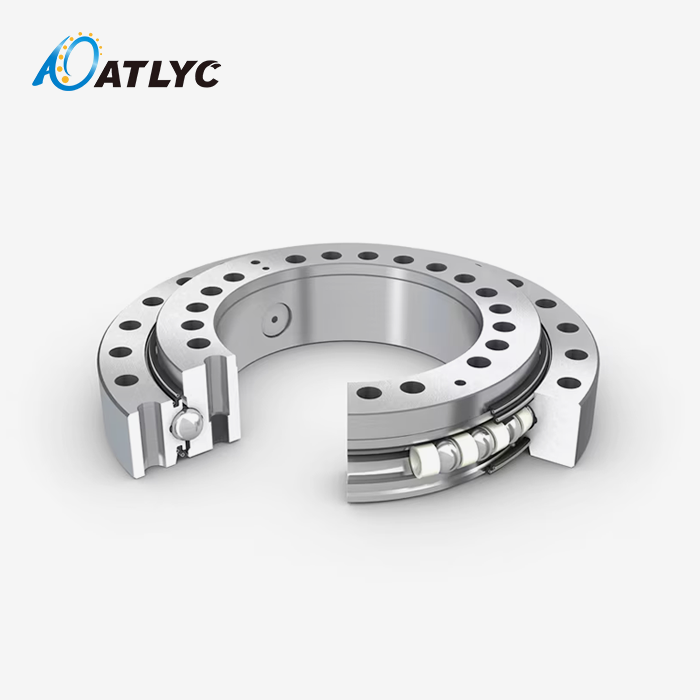
The RB8016 Bearing is one of a kind precision components called crossed roller bearings, and it performs amazingly well in a small space. This design combines inner and outer ring integrity with an outer ring plug layout. This makes fitting easier while still meeting high standards for accuracy.
Dimensional Characteristics and Material Composition
The RB8016 Bearing has an exact inner diameter of 80mm, an outer diameter of 105mm, and a width of 16mm. These small sizes let engineers make designs that use space efficiently without lowering the load capacity. Made from Gcr15 and Gcr15SiMn bearing steel, these materials are very hard, don't wear down easily, and keep their shape even when heated and cooled many times. The choice of material has a direct effect on the service life, especially in situations where the temperature changes or where the surroundings is dirty.
Load Capacity and Rotational Performance
One great thing about this crossed roller bearing design is that it can handle radial, axial, and moment loads all at the same time in a single unit. Usually, traditional bearing arrangements need more than one part to support loads in more than one direction. This makes the assembly more complicated and increases the chance of failure points. This worry is taken away by the RB8016 Bearing's crossed roller configuration, in which the rollers are set up so that they face each other at right angles. This set-up evenly distributes forces across the raceway, which results in a low friction coefficient that keeps the bearings rotating smoothly even when they are under a lot of stress.
Precision Grades and Accuracy Classes
In automated systems, accuracy has a direct effect on how accurate the runout is and how repeatable the positioning is. The RB8016 Bearing comes in a number of different precision classes, such as P6, P0, P5, P4, and P2. This lets engineers fit the accuracy of the bearing to the needs of the application. Higher precision grades, like P4 and P2, are needed for medical devices and equipment used to make semiconductors because they need to be able to position things accurately to the micron level. For uses that don't need as much accuracy, lower precision types like P6 and P0 can save you money.
Table 1: RB8016 Bearing Precision Class Applications
| Precision Grade | Runout Tolerance | Typical Applications |
|---|---|---|
| P2 | ±2.5 μm | IC manufacturing tools and optical equipment |
| P4 | ±5 μm | Coordinate measuring tools and medical image systems |
| P5 | ±7.5 μm | Robots for factories and accurate spinning tables |
| P0 | ±10 μm | Normal workbench centers and manipulator joints |
| P6 | ±15 μm | Automation tools in general, rotary tables |
Installation Protocols and Maintenance Essentials
Cleaning the mounting areas well before fitting is the first step to avoid premature wear caused by contamination. The design of the outer ring plug makes mounting easy while keeping the plug centred. Technicians should use uniform torque when tightening mounting bolts during installation to avoid putting stress on the inside that could affect accuracy. Choosing the right lubrication relies on the conditions of use. Grease lubrication works best for most tasks, while oil lubrication systems are better for high-speed tasks where heat removal is important.
Comparing RB8016 Bearing with Alternative Models
Knowing how the RB8016 Bearing compares to other models of crossed roller bearings helps procurement teams make decisions based on facts that are in line with budget limits and performance goals.
Performance Benchmarking Against RB8015
The RB8015 model has a 75mm inner diameter, while the RB8016 Bearing has an 80mm hole. This means that it can be used with slightly smaller shaft sizes. Even though both bearings are made in similar ways, the RB8016 Bearing has larger contact surfaces that allow it to handle 8–12% more radial load. This difference is important for heavy-duty uses like large-scale robotic arm joints, where load jumps happen during quick rounds of speeding up or slowing down.
Load Capacity and Speed Limitations
Crossed roller bearings work great in situations where rigidity and resistance to moment loads are important. Without any changes, the RB8016 Bearing keeps working perfectly at speeds of up to 300 rpm when it is properly oiled. For uses above this level, better lubrication systems might be helpful, or you could look at bigger models in the RB series. The moment load capacity is especially useful in rotary indexing tables where loads that aren't on the center of the table cause strong shifting forces that would be too much for regular ball bearings to handle.
Durability Considerations Across Operating Environments
Environmental factors have a big effect on how long a bearing lasts. When used in a controlled factory setting with temperatures between 10°C and 50°C and moderate humidity, the RB8016 Bearing works well. When chemicals, high temperatures, or rough particles are present, certain seal designs or material treatments may be needed. Knowing how these environmental factors affect each other helps engineers choose the right safety steps during the design process, instead of having to deal with problems after they happen.
Procurement Guide for RB8016 Bearings
Strategic procurement is more than just finding the cheapest unit price. It also includes things like how reliable the supplier is, how consistent the quality is, how predictable the lead time is, and how technical support is available.
Market Intelligence and Pricing Dynamics
Precision crossed roller bearings are currently priced on the market based on the cost of raw materials, the difficulty of making them, and quality certifications. The price of an RB8016 Bearing usually falls between competitive and premium levels, depending on the level of precision and the reputation of the supplier. When compared to small orders, bulk purchasing agreements often lead to cost savings of 15–25%. This makes yearly supply contracts appealing for OEMs whose production rates are reliable.
Supplier Verification and Quality Assurance
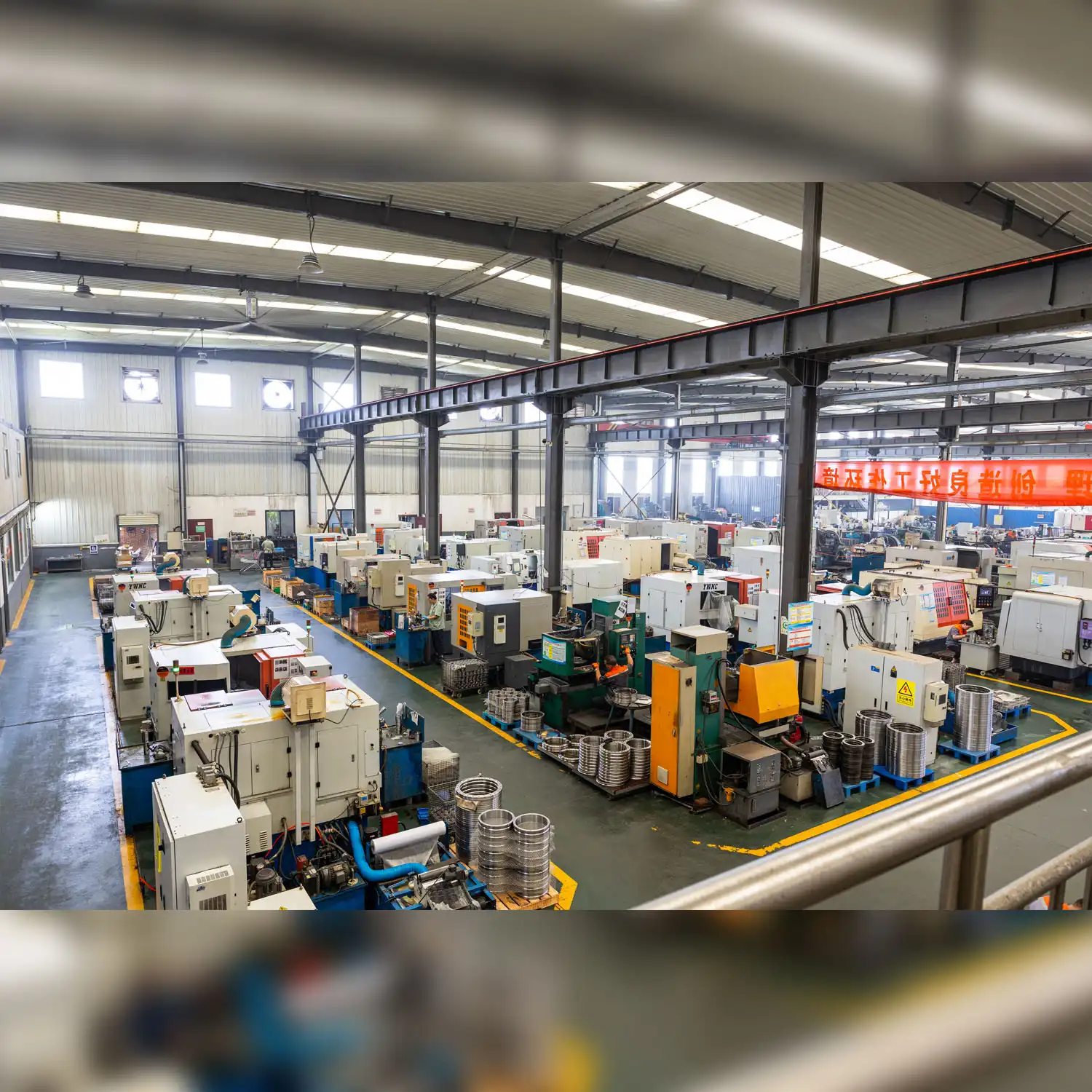
Manufacturers with a good reputation, such as SKF, NTN, NSK, FAG, Timken, and KOYO, keep a lot of quality paperwork and certifications. Procurement teams should check that suppliers have ISO 9001 and IATF 16949 certifications. These show that the supplier is committed to quality management systems and automotive industry standards. ATLYC has had these certificates since the company was founded in 2010. They help our production capacity, which is spread across six specialised workshops with 120 skilled workers who work hard to keep quality high.
Logistics and Supply Chain Considerations
When you buy something from another country, you need to pay close attention to the shipping methods, the steps for clearing customs, and the reliability of the delivery. When you need something quickly, air freight is the best option. For planned inventory replenishment, sea freight is the more cost-effective option. Usually, warranties last between 12 and 24 months and cover problems with the way the product was made but not damage caused by bad installation or poor maintenance. When quality problems happen, buyers are protected by clear return policies and technical conflict settlement tools.
Table 2: Crossed Roller Bearing Series Specifications Comparison
| Model Series | Inner Diameter Range | Outer Diameter Range | Width Range | Typical Load Capacity |
|---|---|---|---|---|
| RB8016 | 80 mm | 105 mm | 16mm | High moment, axial, and radial |
| RB Series | 20–1100 mm | 70–1500 mm | 12–110 mm | Depending on the size |
| RE Series | 25–1000 mm | 62-1500 mm | 15–90 mm | Middle to high |
| RA Series | 15–800 mm | 55–1100 mm | 10–75 mm | Very light to medium |
Selecting the Right RB8016 Bearing for Your Application
When you match the RB8016 Bearing specifications to the operational needs, you avoid both over-engineering, which drives up costs, and under-specification, which leads to failure before its time.
Aligning Technical Parameters with Operational Demands
The need for speed directly affects the choice of gear. Better lubrication systems and balanced roller sets that reduce vibration are helpful for applications that need continuous high-speed rotation. Load analysis should look at both steady mounting loads and dynamic forces that happen during operation. Shock loads from quick starts or emergency stops should also be taken into account. Extreme temperature changes, water exposure, and particulate contamination are all environmental conditions that require the right seals or housing designs to protect the integrity of the bearing.
Supplier Evaluation Beyond Price Considerations
Competitive pricing is still important, but the long-term success of a partnership is often determined by how well the supplier can help with technical issues, make changes, and communicate quickly. Suppliers who offer engineering consulting can suggest the best bearing configurations for new uses, which could save you the cost of repeated design changes. When problems happen, having after-sales support like help with fixing and new parts on hand keeps operations running as smoothly as possible.
Lifecycle Cost Analysis for Sustainable Procurement
The total cost of ownership includes more than just the initial purchase price. It also includes the labour needed for installation, the energy used, and how often the item needs to be replaced. Higher-precision bearings may cost more up front, but they last longer and need less maintenance, which lowers the total cost of ownership. This way of thinking about things helps make buying decisions that are more in line with goals for operational efficiency rather than short-term budget constraints.
Maintenance Best Practices to Maximize RB8016 Bearing Lifespan
Run-to-failure methods cause unexpected downtime and secondary equipment damage, but proactive maintenance programs greatly extend the life of RB8016 Bearings.
Inspection Schedules and Lubrication Protocols
In demanding situations, visual checks should be done once a month to look for noise, vibration, or temperature rises that could be signs of problems. Depending on the working conditions, lubrication may only need to be done once a year in clean, low-speed areas, but it may need to be done every three months or even every month in dirty, high-speed areas. Chemical mismatch problems that could speed up wear can be avoided by using oils that are compatible with the bearings.
Predictive Maintenance Technologies
Vibration analysis monitors find worn-out bearings before they fail. This lets planned maintenance happen during planned downtime instead of having to make emergency fixes. Monitoring temperatures can find problems like not enough grease or too much pressure early on. These predictive technologies are especially useful in automated production lines where sudden failures of bearings can cause big losses in production.
Storage and Handling Procedures
Proper storage keeps bearings from rusting and getting dirty before they are installed. Bearings should be kept in their original packaging until they are needed and kept in a climate-controlled space where the humidity is less than 60%. Impact damage and contamination should be avoided during handling. For example, technicians should wear clean gloves and not touch the raceway surfaces. These seemingly small safety measures have a big effect on how well the bearing works after it has been installed.
Conclusion
When choosing crossed roller bearings, you have to weigh the technical specs, the needs of the application, and the supplier's abilities. The RB8016 Bearing has a very high load capacity in multiple directions, is very accurate, and is small enough to fit in industrial robots, machining centers, and precision instruments. Engineers can better match bearings to application needs when they know about the bearings' dimensions, materials, and quality grades. Not only does strategic buying look at unit prices, but it also looks at things like supplier certifications, expert help, and costs over the whole lifetime. By following the right construction steps and performing regular maintenance, you can extend the life of bearings and keep operations running smoothly. In the end, these well-informed choices improve the performance of machinery, lower the total cost of ownership, and build trusting supply partnerships.
FAQ
What applications are best suited for RB8016 crossed roller bearings?
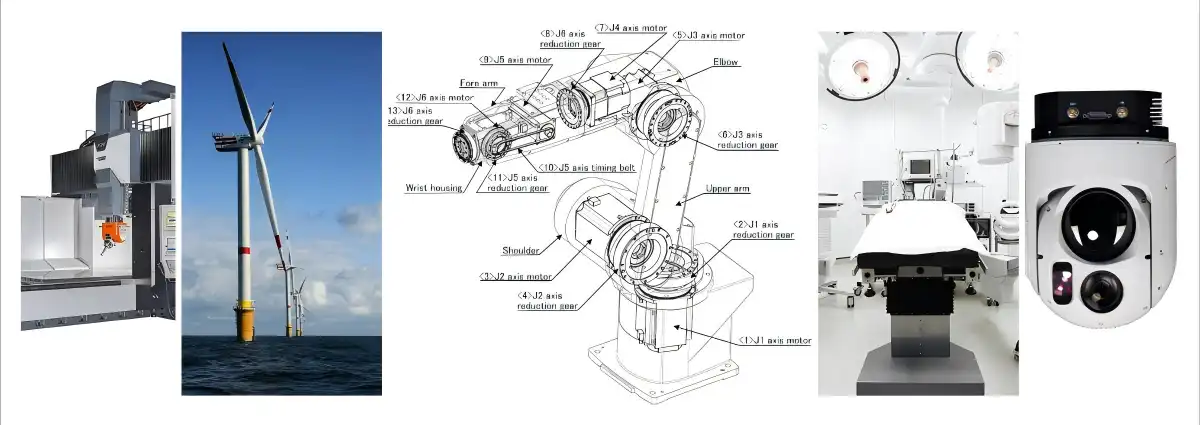
RB8016 Bearings are great for precision rotary applications like industrial robot joints, machining center rotary tables, manipulator rotating parts, medical imaging equipment, measuring tools, and devices that make semiconductors. Because they can handle radial, axial, and moment loads together, they are perfect for situations where space doesn't allow for multiple bearing arrangements.
How do I verify supplier authenticity for precision bearings?
Check that providers have up-to-date ISO 9001 and IATF 16949 certifications by asking for copies of the certificates and making sure they are registered with the organisations that issued them. For production batches, ask for material certificates and reports on measurement inspections. Reliable suppliers make information about their factories clear and welcome factory audits. Quality systems that have been used by major OEMs in the automotive and industrial sectors for a long time show that they are reliable.
What maintenance intervals should I follow for optimal bearing life?
Maintenance times depend on how the machine is being used. Applications that are clean and run at a low speed may only need to be oiled once a year and inspected every six months. Lubrication every three months and inspections every month are helpful in places with high speed, heavy loads, or contamination. To switch from time-based to condition-based maintenance, use vibration monitoring and temperature tracking. This will help you make the best use of your resources and stop unexpected failures.
Partner with ATLYC for Reliable RB8016 Bearing Solutions
ATLYC has been making precision bearings for 15 years and can help you with your needs for industrial robotics and machines. Our ISO 9001 and IATF 16949-certified factories make crossed roller bearings that are of high quality and meet international standards. Large and medium-sized automakers, original equipment manufacturers (OEMs), and global bearing distributors in South Korea, the US, Germany, and other places are among the clients we serve. Our engineering team gives you expert advice on how to match the bearing's specs to your unique application needs. Our six specialised workshops make production scalable, so we can guarantee a steady supply and low prices for both small batches and large production runs. You can email us at auto@lyautobearing.com to talk about your RB8016 Bearing needs with skilled technical experts who know about precision, dependability, and the needs of global supply lines.
References
1. Harris, T.A. & Kotzalas, M.N. (2006). Advanced Concepts of Bearing Technology: Rolling Bearing Analysis. CRC Press.
2. Eschmann, P., Hasbargen, L. & Weigand, K. (1985). Ball and Roller Bearings: Theory, Design and Application. John Wiley & Sons.
3. Hamrock, B.J., Schmid, S.R. & Jacobson, B.O. (2004). Fundamentals of Fluid Film Lubrication. Marcel Dekker.
4. ISO 492:2014. Rolling Bearings — Radial Bearings — Geometrical Product Specifications and Tolerance Values. International Organization for Standardization.
5. Budynas, R.G. & Nisbett, J.K. (2015). Shigley's Mechanical Engineering Design. McGraw-Hill Education.
6. Khonsari, M.M. & Booser, E.R. (2017). Applied Tribology: Bearing Design and Lubrication. John Wiley & Sons.
Learn about our latest products and discounts through SMS or email