- English
- French
- German
- Portuguese
- Spanish
- Russian
- Japanese
- Korean
- Arabic
- Greek
- German
- Turkish
- Italian
- Danish
- Romanian
- Indonesian
- Czech
- Afrikaans
- Swedish
- Polish
- Basque
- Catalan
- Esperanto
- Hindi
- Lao
- Albanian
- Amharic
- Armenian
- Azerbaijani
- Belarusian
- Bengali
- Bosnian
- Bulgarian
- Cebuano
- Chichewa
- Corsican
- Croatian
- Dutch
- Estonian
- Filipino
- Finnish
- Frisian
- Galician
- Georgian
- Gujarati
- Haitian
- Hausa
- Hawaiian
- Hebrew
- Hmong
- Hungarian
- Icelandic
- Igbo
- Javanese
- Kannada
- Kazakh
- Khmer
- Kurdish
- Kyrgyz
- Latin
- Latvian
- Lithuanian
- Luxembou..
- Macedonian
- Malagasy
- Malay
- Malayalam
- Maltese
- Maori
- Marathi
- Mongolian
- Burmese
- Nepali
- Norwegian
- Pashto
- Persian
- Punjabi
- Serbian
- Sesotho
- Sinhala
- Slovak
- Slovenian
- Somali
- Samoan
- Scots Gaelic
- Shona
- Sindhi
- Sundanese
- Swahili
- Tajik
- Tamil
- Telugu
- Thai
- Ukrainian
- Urdu
- Uzbek
- Vietnamese
- Welsh
- Xhosa
- Yiddish
- Yoruba
- Zulu
RU Series Crossed Roller Bearing: Worth the Cost?
When you're selecting bearing solutions for precision automation or heavy-duty machinery, the upfront cost often becomes the primary hesitation point. The RU Series Crossed Roller Bearing represents a premium investment that many procurement managers evaluate carefully against budget constraints. After 15 years of manufacturing precision bearings at ATLYC, we've witnessed how this specific bearing category transforms operational performance for mid-to-large OEMs and industrial equipment manufacturers. The simple answer: yes, these bearings justify their cost through measurable gains in load handling, installation efficiency, and long-term reliability. Unlike conventional ball bearings requiring multiple components to handle complex loads, crossed roller bearings consolidate radial, axial, and moment load capacity into a single, compact unit with integral mounting holes that eliminate housing requirements entirely.
Understanding RU Series Crossed Roller Bearings: Specifications & Design Features
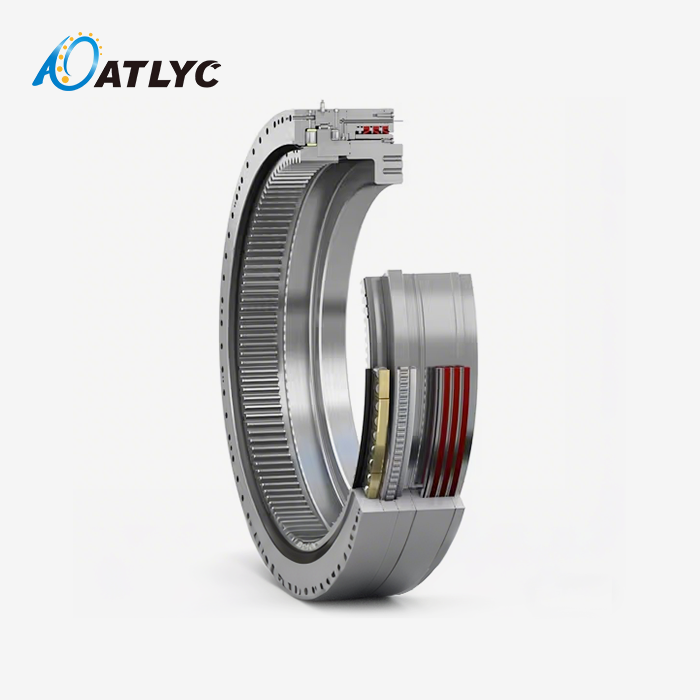
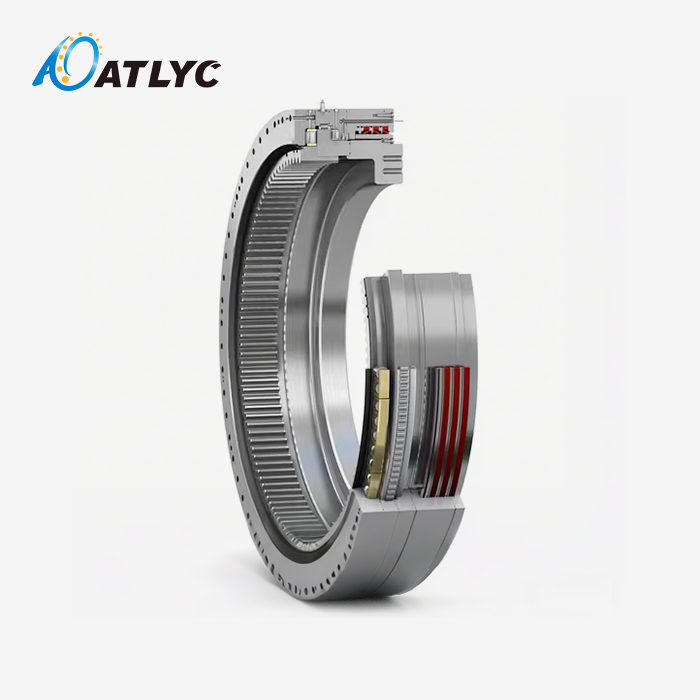
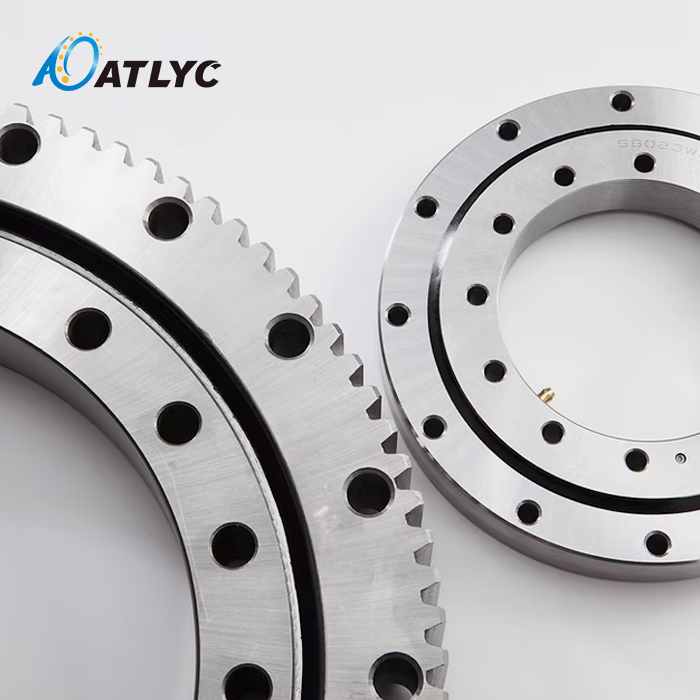
Because of the way the rollers are arranged and how the structure is built, RU Series Crossed Roller Bearings are fundamentally different from other types of bearings. We make these bearings with inner and outer rings that are one piece and have attachment holes already drilled in them. This means that there are no separate housings and the assembly is much simpler.
Structural Design and Dimensional Range
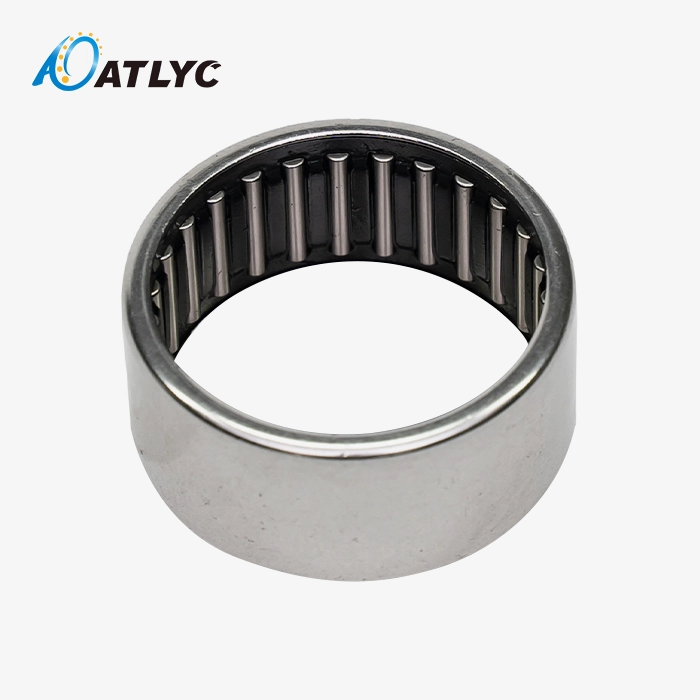
Within precisely ground V-shaped raceways, the RU Series has circular rollers spaced at right angles to each other every 90 degrees. Spacers between each roller keep the metals from touching directly, which makes sure that the load is spread evenly across all contact points. This setup makes a bearing that can handle pressure from multiple directions at the same time, without the need for multiple bearing systems.
Our production range includes a wide range of sizes that can be used in a wide range of business settings. The inside diameters range from 20 mm to 1100 mm, and the outside widths range from 70 mm to 1500 mm. The widths range from 12 mm to 110 mm, so they can fit everything from small automation joints to big machine center rotary tables. Because of this, engineers can choose precisely-sized bearings that minimize the footprint of the equipment without lowering its load capacity.
Material Composition and Heat Treatment
We only use GCr15 and GCr15SiMn bearing steels to make RU Series bearings because they keep their strength better and are more stable in terms of size. Specialized heat treatment methods are used during the production process to get the best surface hardness while keeping the core toughness. Precision grinding makes sure that the shape of the raceways is within very close limits, and the surface finishes keep friction and wear to a minimum over long service cycles.
Because the rings are built in, there are no tolerance stack-up problems that can happen with multi-piece bearing systems. When you use the pre-machined mounting holes to bolt these bearings directly to equipment structures, alignment accuracy is much better than with traditional press-fit installs. This way of designing cuts down on the overall size of rotational parts while keeping their necessary structural strength.
Precision Classifications and Performance Standards
The level of accuracy determines how precise the spin is and what kinds of applications can use it. For the RU Series, we make five levels of precision: P6, P0, P5, P4, and P2. The P6 and P0 grades are good for general manufacturing machinery that only needs standard placement accuracy. P5 rating is for things like precision indexing tables and automatic inspection tools that need better runout control. P4 and P2 types are used in very precise situations where micron-level accuracy is important, such as in medical imaging systems and tools used to make semiconductors.
During production, each precise grade goes through strict quality control procedures. Our factory has ISO 9001 and IATF 16949 approvals, which make sure that quality control is maintained at all steps of production. These certificates show that we follow foreign standards, which is especially helpful for OEMs that sell their products in countries with strict quality standards.
Advantages and Performance of RU Series Crossed Roller Bearings
Knowing how RU Series bearings work compared to other types of bearings helps explain what they're good for. Our 15 years of production experience and customer reviews have shown us clear performance benefits that have a direct effect on how well operations run and how long equipment lasts.
Multi-Directional Load Capacity in Compact Form
The RU Series Crossed Roller Bearing design can handle radial, axial, and moment loads all at the same time in a single bearing unit. This feature gets rid of the need for multiple bearing systems, which are often needed when using ball bearings or cylindrical roller bearings for situations with complex loads. Instead of two angular contact ball bearings and thrust bearings, a single unit makes the design much easier and cuts down on the number of parts needed.
Load rates depend on the size and quality grade of the bearing, but these bearings always have a higher moment load capacity than ball bearings of the same size. The arrangement of vertical rollers spreads moment loads across many contact points. This stops stress buildup, which is what happens in point-contact bearing designs and leads to early failure. In situations with lateral loads or off-center mass patterns, this means a longer service life.
Installation Efficiency and Assembly Error Reduction
There are mounting holes already made in both the inner and outer rings, so they can be bolted directly to the surfaces they fit against without the need for extra housings or adapter plates. This design feature cuts down on installation time by a large amount and gets rid of any alignment problems that might come up with multi-component setups. When you place the bearing directly, the precision-ground surfaces of the bearing pass exactly to the structure of your equipment.
We've seen assembly times cut by 40–60% compared to traditional bearing arrangements that need different end plates, circlips, and housings. In addition to saving time, direct mounting makes the whole system more rigid by reducing the transfer of vibration and improving the accuracy of placement. When it comes to automatic production lines, where equipment downtime costs a lot, these installation benefits become even more valuable.
Operational Characteristics and Maintenance Intervals
Crossed roller designs have a low friction coefficient because the rollers' shape and surface treatments are optimized. You get torque qualities that stay the same across the whole working range, with little change when you change direction or speed. This predictability makes the control system work better in servo-driven situations where changes in force can affect how accurately the system positions things.
Due to the strong roller contact shape and good sealing choices, there isn't much maintenance that needs to be done. In many industrial settings, proper initial lubrication keeps things running for thousands of hours without needing to be re-oiled. When upkeep is needed, the design makes it easy to check and re-grease without taking the whole thing apart. Based on information from our customers, the servicing gaps are two to three times longer than for similar ball bearing arrangements used in the same way.
Application Scenarios: Where RU Series Bearings Excel
RU Series bearings are the best choice for precise uses where limited room, complicated loads, and precise positioning all come together. Knowing the best situations for using bearings helps buying teams match the right bearings to the right business needs.
Industrial Robotics and Automation Equipment
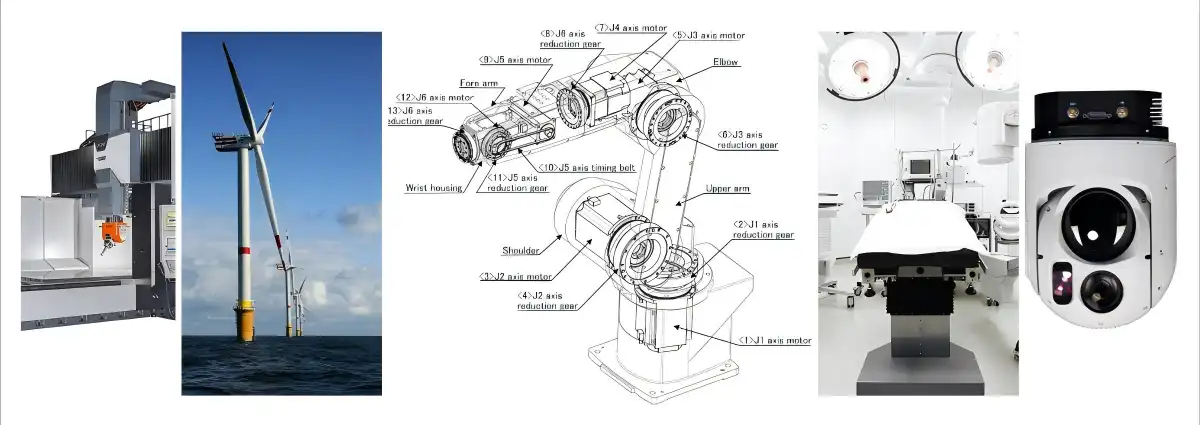
When arms are extended and loads are moved, industrial robot joints, especially the waist and shoulder directions, experience large moment loads. The RU Series Crossed Roller Bearing handles these complicated load patterns in small joint housings, which makes the robot lighter and less likely to stop. Less moving mass shortens cycle times and uses less energy, which directly leads to more production. The combined mounting design makes it easier to make joint housings because it gets rid of the need for complex bearing seat cutting.
Six-axis flexible robots are used in the toughest situations, where they have to work continuously under changing loads. We sell bearings to companies that make robots for the material handling, electronics manufacturing, and car assembly industries. Performance data from these sites supports operational lifespans of more than 30,000 hours under continuous duty cycles. This backs up the claims of durability that were at the heart of the cost-justification analysis.
Precision Machining Centers and Rotary Tables
Rotary tables are used by CNC machine centers to handle workpieces with more than one face. Positioning accuracy has a direct effect on the limits of the finished part, so bearing precision is an important part of machine capability. The RU Series makes sure that the spin doesn't shake and that the positioning is always the same. Its runout features keep the workpiece's centring within microns. When there isn't a lot of space between the table surface and the spindle in a machining center, the low-profile design made possible by continuous fitting is very useful.
Precision-grade bearings have very low runout errors, which is also good for indexing tables used in automatic inspection systems. When taking readings of complicated geometries or coordinates, bearing runout is a major source of mistakes if it is not managed properly. This mistake is kept to a minimum by P5 and P4 grade RU Series bearings, which let inspection tools reach their intended measurement precision.
Medical Imaging and Semiconductor Manufacturing
Medical imaging equipment, like CT scanners and C-arm X-ray systems, needs to be able to rotate smoothly and quietly, and it also needs to be completely reliable. The RU Series makes stable rotational axes for large imaging gantries, keeping the focus in the right place while handling the extended loads that come with structures with hanging arms. Controlling vibration is very important in these situations because the quality of the picture relies on how stable the machine is during scanning cycles.
For ultra-precision bearing needs, semiconductor production equipment is the place to be. Positioning precision for IC production equipment like wafer handling robots and die bonders is measured in micrometres. Crossed roller bearings of the P2 grade provide the required accuracy and can hold enough weight to move wafer carts and processing tools. The vacuum-compatible versions we make are used in cleanrooms where normal greasing methods can't be used because of contamination control.
| Application Type | Primary Load Challenge | Recommended Precision Grade | Key Performance Benefit |
|---|---|---|---|
| Robot Joints (Waist/Shoulder) | High moment loads from arm extension | P5/P4 | Reduced joint housing complexity, lower moving mass |
| CNC Rotary Tables | Vibration-free indexing accuracy | P5/P4 | Micron-level positioning repeatability |
| Medical Imaging Gantries | Cantilevered loads with smooth rotation | P4/P2 | Stable focal alignment, whisper-quiet operation |
| Semiconductor Wafer Handlers | Ultra-precision positioning in cleanrooms | P2 | Sub-micron accuracy, vacuum compatibility |
Comparison with Alternative Bearing Types
Procurement teams often look at RU Series bearings next to slewing bearings and special cross roller rings when they are choosing bearings. When the width is bigger than 1000mm, slewing bearings are better because the size limits become too tight. When a straight drive is built in, slewing bearings often have gear teeth. However, they don't have the small size or high accuracy grades that crossed roller designs do.
Specialized cross roller rings that don't have fastening holes built in give custom housing designers more options, but they also make positioning and assembly more difficult. These versions are good for situations where standard fixing hole shapes can't be used because of how the design is set up. When standardization, ease of installation, and accuracy are all very important in the design criteria, the RU Series with pre-drilled holes is the best choice.
Procurement Insights: Buying RU Series Crossed Roller Bearings
Procurement teams can get the best value while lowering risk when they understand how prices are set, how the supply chain works, and how to evaluate suppliers. Our experience working with OEMs and wholesalers in six countries gives us useful information for RU Series bearing buying.
Pricing Factors and Cost Structure
Because they are harder to make and need different materials, RU Series Crossed Roller Bearings cost more than normal ball bearings. Prices depend a lot on the size of the bearing, the level of accuracy, and the number of orders. Smaller bearings (with an inner diameter of less than 100 mm) in P5 precision tend to have moderate to high prices, while large-diameter units (with an inner diameter of more than 500 mm) in P2 precision cost a lot per unit.
When you buy a certain number of bearings, you can get a volume price. When OEMs add bearings to a run of production equipment, we offer scaled prices, and savings get bigger for yearly commitment contracts. Single-piece price works well for prototypes and replacements, but it's not cost-effective enough for buying for mass production.
Lead Times and Production Scheduling
Standard configurations in popular sizes keep inventory levels high, so urgent needs can be shipped within 7–10 business days. Custom designs, like mounting hole shapes that aren't standard or unique ways of closing, need production lead times of 4 to 6 weeks. Procurement teams should include these dates in their project plans when they are planning the launches of new equipment or the installation of production lines.
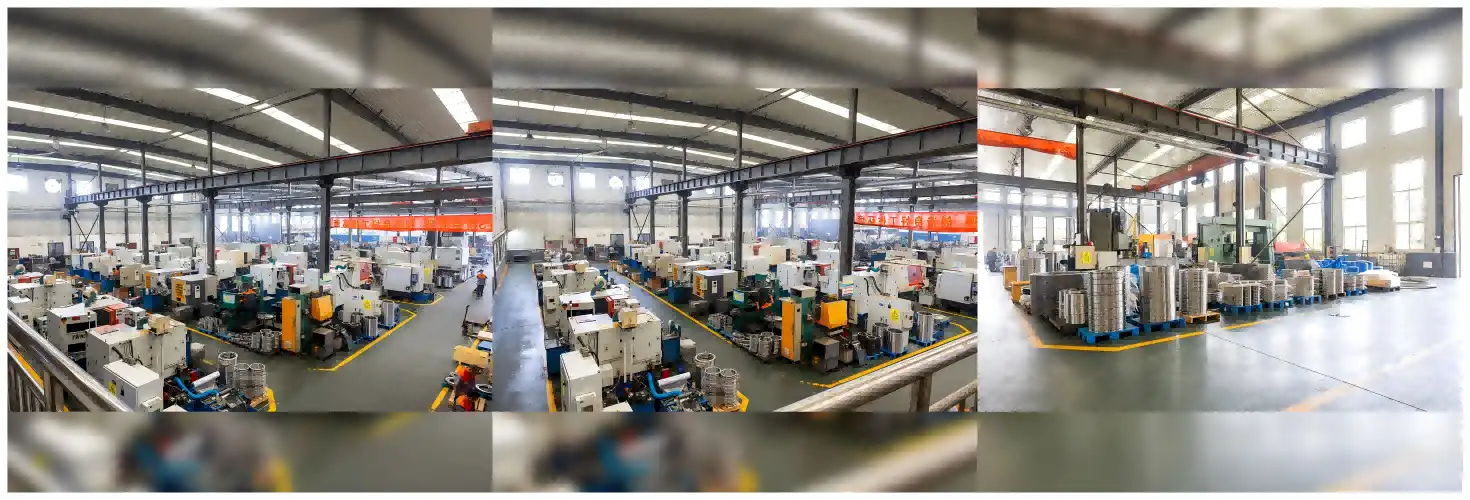
ATLYC has invested in six workshops to increase its production capacity. This way, we can keep up with demand even when it's high. Our 120-person team is in charge of organizing production, inspecting quality, and putting things together. They make sure that there is regular throughput, which helps customers plan their production. This ability sets us apart from smaller bearing makers whose supply chains are less stable because lead times can change.
OEM Services and Technical Support
We do more than just give standard bearings. We also offer OEM services like custom design consultation, bearing selection analysis, and testing that is unique to the application. Our engineering team helps with making sure that load calculations are correct, finding the best fitting arrangements, and choosing the right materials for harsh locations. These technical support services are especially helpful when making new machines, because the choice of bearings has an effect on how well the machine works overall.
The warranty period is usually between 12 and 18 months from the date of shipment or 12 months from the date the equipment starts, whichever comes first. The warranty covers problems with the way the product was made and differences in the materials, but not damage caused by bad fitting, not enough greasing, or using it over the recommended load limits. Clear guarantee paperwork shields both the manufacturer's and the customer's interests and holds both parties responsible for how well the product works.
Supplier Verification and Quality Assurance
Finding authorized distributors and making sure that goods are real protects procurement investments against fake products that are common in the bearing business. We keep a confirmed network of distributors in our main export markets, which are South Korea, the USA, Germany, Russia, Iran, and Turkey. If you need them, you can get written authorization letters. When buying from wholesalers, asking for this authorization paperwork makes sure the product is real and gives you access to guaranteed support.
Quality standards are concrete proof of the ability to make things and keep an eye on the whole process. Our ISO 9001 and IATF 16949 certifications show that we consistently follow quality management principles. Regular checks by a third party confirm that we are still following the rules. These licenses are especially important for car OEMs and Tier 1 suppliers that have to follow quality system rules that require certified component sources.
| Procurement Consideration | Key Evaluation Criteria | Risk Mitigation Approach |
|---|---|---|
| Pricing Transparency | Detailed cost breakdown, volume discounting clarity | Request itemized quotes comparing precision grades |
| Supply Reliability | Production capacity, inventory levels, geographic redundancy | Verify multi-workshop capacity, ask for capacity utilization rates |
| Technical Competence | Engineering support availability, application experience | Request case studies in similar applications |
| Quality Assurance | Certifications (ISO 9001, IATF 16949), inspection protocols | Audit quality documentation, request inspection reports |
Making the Decision: Is the RU Series Crossed Roller Bearing Worth the Cost?
To decide if the higher price of RU Series bearings is worth it, you need to look at the total cost of ownership instead of just the unit purchase price. This thorough evaluation takes into account the cost of installation, the cost of upkeep, the effects of downtime, and the gains in operating efficiency over the bearing's lifetime.
Total Cost of Ownership Analysis
The initial buying price is only one part of the total cost of the bearing over its lifetime. Lower installation costs are achieved with RU Series Crossed Roller Bearings because fitting is easier and there is no need for protection. Include labour hours, the cost of tools, and the steps used to make sure the alignment is all part of the total fitting costs. According to data from our customers, installation costs are 30–50% lower than with traditional bearing setups that need housings to be machined and accurate press-fitting operations to be done.
Maintenance costs are directly related to how often things need to be serviced or replaced. RU Series bearings have longer maintenance gaps that lower both direct maintenance costs and secondary costs from stopping production. In automated production settings where throughput directly affects revenue, equipment downtime has big cost effects. A bearing that lasts 50% longer between repair rounds is worth a lot more than the extra money it costs to buy.
Operational efficiency goes up when placement accuracy gets better, vibration levels go down, and power traits stay the same. These performance characteristics lead to better product quality in cutting, faster cycle times in robotic systems, and longer equipment life by reducing wear on neighbouring parts. To figure out how much these benefits are worth, you have to look at each application separately, but the performance benefits always show measurable value in precision automation settings.
Application-Specific Suitability Assessment
Not every use case warrants the cost of a crossed roller bearing. Standard ball bearing arrangements usually work well for general industrial gear that needs to move things around and is under modest loads. When certain application traits match their performance benefits, the higher price of RU Series bearings makes sense.
The best situations for using RU Series bearings are when there are limited spaces and high moment loads. The load capacity and envelope economy of these bearings make them very useful for equipment designs that use cantilevered masses or need small spinning units. In the same way, uses that need positioning accuracy below 10 microns need the precision grades that are only available in certain types of bearings, such as crossed roller designs.
Environmental factors also affect choices about which RU Series Crossed Roller Bearing is best. When surfaces are contaminated with rough particles or chemicals, they need special covering arrangements that might limit the types of bearings that can be used. Extreme temperatures can change the choice of grease and the safety of materials, which could mean that bearings need to be configured in a way that is specific to the application. Our expert team helps with evaluating the surroundings by suggesting the right bearing specifications and safety steps for tough working conditions.
Recommendations for Different User Types
When purchasing managers look at different suppliers, they should give more weight to companies that can show they have a large production size, quality certifications, and foreign experience. These factors are strongly linked to technical skill and supply reliability. Ask for references from customers in similar businesses to make sure the manufacturer has experience with your application and can provide help after the sale.
When design engineers choose bearings for new equipment, they can get suppliers involved early on, during the basic design steps. Manufacturers of bearings who offer application engineering services can find the best mounting setups, check the accuracy of load estimates, and look for ways to improve the design of their products in order to make them work better overall. This way of working together often shows ways to cut costs or improve performance that aren't obvious when choosing bearings from a catalogue.
OEM purchasing teams that are putting bearings in a lot of equipment should make long-term deals with suppliers that guarantee stable prices and on-time deliveries. Manufacturers can plan their production and material inventory with the help of annual contracts that promise certain volumes. This makes sure that there is a steady supply throughout the lifespan of a product. These deals also make it easier for people to work together to improve quality, which is good for everyone because it lowers the number of defects and makes the product work better.
Conclusion
In conclusion, the RU Series Crossed Roller Bearing is worth the extra money because it has measurable operating benefits that lower total ownership costs and improve machine performance. The combined mounting design gets rid of the need for protection, which greatly reduces the time and cost of installation. Multidirectional load capacity in a small space simplifies design and lowers weight. This is especially helpful in automation equipment, where cycle time and energy economy are key to staying competitive. Longer periods of time between upkeep and operating lifespans of more than 30,000 hours in demanding uses show durability, which means less downtime and lower lifetime costs. Precision automation, robots, machine centers, and medical equipment are the best places to use these performance traits because they make positioning accuracy, space efficiency, and dependability very important. Instead of just looking at the price, procurement teams should look at these bearings' total cost of ownership, which includes how easy they are to install, how much upkeep they require, and how well they work.
FAQ
1. What advantages do crossed roller bearings offer compared to ball bearings?
RU Series Crossed Roller Bearings can handle radial, axial, and moment loads all at the same time in a single, small unit. This is more efficient than using multiple ball bearing sets for different types of loads. The design of perpendicular rollers is stiffer and can handle more moment loads than the point contact shape of ball bearings. Integral mounting holes allow direct fitting without separate housings. This makes installation easier and more accurate.
2. How can I verify authentic RU Series bearings from authorized sources?
Ask the maker for authorization paperwork that proves you are a dealer. Check the manufacturer's ISO 9001 and IATF 16949 certifications by asking for copies of their most recent certificates that include topic statements. Check that the marks on the product, such as part numbers, precise grades, and origin labels, are in line with what the maker requires. If you have any doubts about the authenticity of a product, you should contact the manufacturer directly to check particular part numbers or serial numbers.
3. What maintenance practices extend RU Series bearing service life?
Do the right thing the first time and use the manufacturer-recommended greases that are right for the temperature ranges and situations where the machine will be used. During initial setup, keep an eye on the working temperatures to make sure the equipment is installed correctly and that it has enough oil. Set up regular review times to check the torque on the fixing bolts, listen for strange noises or vibrations, and make sure the rotation is smooth. Do not operate beyond the stated load limits or speed ratings. Doing so will speed up wear and tear and shorten the service life by a large amount.
Partner with ATLYC for Precision Bearing Solutions
ATLYC has been making specialized bearings for 15 years and can help you with your needs for precision robotics and industrial equipment. We are a RU Series Crossed Roller Bearing maker that is approved by both ISO 9001 and IATF 16949. We have six specialized workshops where we can make bearings, and our engineers can solve even the most difficult application problems. We can make the RU Series in a wide range of sizes, from 20 mm to 1100 mm inside diameter, and we offer accuracy grades up to P2 for very precise uses. We offer stable quality, reasonable pricing, and technical support to mid-sized to large original equipment manufacturers (OEMs) and global bearing sellers during the product development and series production stages. Email our application engineering team at auto@lyautobearing.com to talk about your particular needs, get technical information, or set up a visit to our location. Our team gives your business the reliable supply and working together that it needs, whether you need standard configurations for fast shipping or custom solutions for unique uses.
References
1. Harris, T.A. and Kotzalas, M.N. (2006). Advanced Concepts of Bearing Technology: Rolling Bearing Analysis, Fifth Edition. CRC Press, Taylor & Francis Group.
2. Wensing, J.A. (1998). On the Dynamics of Ball Bearings. PhD Thesis, University of Twente, Netherlands.
3. ISO 492:2014. Rolling bearings — Radial bearings — Geometrical product specifications (GPS) and tolerance values. International Organization for Standardization.
4. Schaeffler Technologies AG & Co. KG (2019). Crossed Roller Bearings: Design Principles and Applications. Technical Publication, Schweinfurt, Germany.
5. American Bearing Manufacturers Association (2020). Load Ratings and Fatigue Life for Roller Bearings. ABMA Standard 11-2020, Washington DC.
6. Yan, K., Wang, Y., Zhu, Y., and Hong, J. (2016). "Investigation on heat dissipation characteristic of ball bearing cage and inside cavity at ultra high rotation speed." Tribology International, Vol. 93, pp. 470-481.
Learn about our latest products and discounts through SMS or email