- English
- French
- German
- Portuguese
- Spanish
- Russian
- Japanese
- Korean
- Arabic
- Greek
- German
- Turkish
- Italian
- Danish
- Romanian
- Indonesian
- Czech
- Afrikaans
- Swedish
- Polish
- Basque
- Catalan
- Esperanto
- Hindi
- Lao
- Albanian
- Amharic
- Armenian
- Azerbaijani
- Belarusian
- Bengali
- Bosnian
- Bulgarian
- Cebuano
- Chichewa
- Corsican
- Croatian
- Dutch
- Estonian
- Filipino
- Finnish
- Frisian
- Galician
- Georgian
- Gujarati
- Haitian
- Hausa
- Hawaiian
- Hebrew
- Hmong
- Hungarian
- Icelandic
- Igbo
- Javanese
- Kannada
- Kazakh
- Khmer
- Kurdish
- Kyrgyz
- Latin
- Latvian
- Lithuanian
- Luxembou..
- Macedonian
- Malagasy
- Malay
- Malayalam
- Maltese
- Maori
- Marathi
- Mongolian
- Burmese
- Nepali
- Norwegian
- Pashto
- Persian
- Punjabi
- Serbian
- Sesotho
- Sinhala
- Slovak
- Slovenian
- Somali
- Samoan
- Scots Gaelic
- Shona
- Sindhi
- Sundanese
- Swahili
- Tajik
- Tamil
- Telugu
- Thai
- Ukrainian
- Urdu
- Uzbek
- Vietnamese
- Welsh
- Xhosa
- Yiddish
- Yoruba
- Zulu
SX011814 Cross Roller Bearing in Medical Robotics
Precision and dependability are very important in medical robots, and the SX011814 Cross roller bearing is one of the most important parts of these systems. This very thin bearing has an inner diameter of 70 mm, an outer diameter of 90 mm, and a width of only 10 mm. It can handle radial, axial, and moment loads all at the same time and has a small size. More and more, medical device makers are asking for this bearing to be used in surgery robots, imaging equipment, and monitoring machines because it gets rid of the need for two bearings, which are heavier and more complicated. The orthogonal roller design is 3–4 times stiffer than regular ball bearings, which makes it possible for micron-level accuracy that is needed for minimally invasive treatments and real-time diagnostic imaging.
Understanding SX011814 Cross Roller Bearing in Medical Robotics
Structural Architecture and Operating Principles
The form of an SX011814 Cross roller bearing is very different from the way most bearings are built. Inside the V-groove raceways that have been machined into both the inner and outer rings, precise spacers split the cylinder rollers so that they change at 90-degree angles. This straight-line design makes line contact surfaces that spread loads over several directions at the same time, which is very helpful when robotic arms move in complicated ways with changing loads.
Manufacturers can make accurate preload changes during assembly thanks to the split outer ring design that is held in place by three fastening rings. This function is especially useful in medical settings, where thermal growth, sterilization processes, and long periods of use can change the bearing clearances. The built-in inner ring keeps the geometry stable, so the bearing's runout accuracy stays the same over its lifetime. Plastic gaps keep rollers from rubbing against each other, which lowers the amount of heat that is produced and allows for smooth operation even at the slow speeds that are common in surgical robots.
Technical Specifications and Material Engineering
These parts are made from Gcr15 and Gcr15SiMn bearing steel and go through special heat treatment processes to make the surface harder than 58 HRC while keeping the core tough. The makeup of the material gives it great dimensional stability in temperatures ranging from 10°C to 40°C, which is typical in operating rooms and diagnostic suites. Precision classes from P6 to P2 are available to meet the needs of a variety of applications. For example, P4 and P2 grades are designed for medical systems that need to keep placement mistakes below 5 microns.
| Details about the tech | Details given | Effects on Patients |
|---|---|---|
| Inside Diameter | 70 mm | A small amount of blending into the joint parts |
| Outside Size | 90 mm | Minimum room needed for living |
| Width | 10mm | Ultra-thin design for setups with multiple axes |
| Capacity for Load | Radial, axial, and moment | Complex systems are replaced by a single bearing |
| Class of Accuracy | From P6 to P2 | Precision surgery with submicron accuracy |
| What it is | Gcr15, Gcr15SiMn | Performance that stays the same during sterilization cycles |
The outer diameter of 90 mm fits within the small spaces needed for articulated surgical arms, while the inner diameter of 70 mm fits normal hollow-shaft motor connections used in joint robots. The 10mm cross-section can handle the same amount of weight as bearings twice its width, which solves the problem of how to balance performance and small size in medical device design.
Load Distribution Mechanics in Medical Applications
In a normal laparoscopic process, robotic instruments are loaded in a lot of different ways. They are loaded radially by the weight of the tool interacting with tissue, axially when the tool is inserted and retracted, and momentarily as the arm pivots around the trocar entry points. When these loads are put on traditional ball bearings, they handle them through point contact, which causes stress to build up and wear out faster than expected. SX011814 Cross roller bearing geometry makes line contact, which spreads these forces over larger surface areas. This makes the operating life go from thousands to tens of thousands of process cycles.
When medical robots do jobs like suturing, where forces change direction many times per second, this ability to spread out the load becomes very important. The bearing keeps the positional accuracy without deforming elastically. This makes sure that the surgeon's hand movements accurately translate to movement of the tool tip, which is a basic condition for FDA and CE mark approval of surgical robotics systems.
Advantages of SX011814 Cross Roller Bearing for Medical Robotics
Rigidity and Precision Performance Compared to Conventional Solutions
Three performance measures stand out when procurement teams look at bearing choices for medical robotics: rigidity, runout accuracy, and load capacity per unit volume. In all three areas, SX011814 Cross roller bearings are better than angular contact ball bearings and cylindrical roller bearings, which are commonly used in precision equipment.
Moment stiffness values are 300–400% higher with orthogonal rollers than with deep groove ball bearings of the same size. This directly means less displacement under cantilevered loads, which happens a lot when robotic arms are extended from their base position. A finite element study of surgical robot joints shows that replacing ball bearings with SX011814 Cross roller bearing designs lowers tip deflection by 65–70% under the same loading conditions. This makes surgery more accurate and cuts down on the number of compensatory methods that need to be used in the control software.
Runout accuracy, which is measured by the total indicator reading at the mounting surface of the bearing, stays below 3 microns even after a long time of use. This consistency makes sure that the testing done when the device was made stays the same during its clinical life. This cuts down on the need for field service and keeps the product in line with quality system rules.
Operational Benefits in Surgical and Diagnostic Systems
Companies that make medical devices and use SX011814 Cross roller bearing technology say they see real gains in many areas of their operations. When a European surgery robots OEM switched from ball bearing assemblies to integrated SX011814 Cross roller bearing units, the time between repair visits for joints went down by 40%. The simpler mechanical design got rid of the need for quarterly service visits to fix bearing preload drift, which had a direct effect on device performance and hospital running costs.
Similar benefits can be seen in programs that use imaging tools. With these small bearings, CT scanner gantries can spin up to 180 RPM while keeping shaking levels below 0.5g, which is important for getting good images in heart and angiography studies. Because the line contact shape has a low friction coefficient, motor power needs are cut by 15 to 20 percent. This lets drive systems be smaller, and scans use less energy.
Here are the efficiency gains that have been proven by medical gadget case studies:
- Surgical Robot Joints: 68% better repeatable accuracy, so instruments can stay in place for more than 50,000 process rounds without having to be re-calibrated
- Imaging Gantries: 45% less noise during high-speed spinning, making patients more comfortable and scan quality better in paediatric settings
- Diagnostic Positioning Systems: The average number of hours that a diagnostic positioning system works before breaking down was increased from 8,000 to 22,000 hours, which cut the total cost of ownership by 35%
These improvements aren't small tweaks; they come from basic design benefits. The single-bearing approach gets rid of the tolerance stack-up that happens with dual-bearing setups. This makes the assembly simpler while also making the geometry more accurate. When buying teams, get one precision part instead of matching bearing pairs with specific preload traits; it's easier to keep an eye on the quality of the manufacturing process.
Comparing SX011814 Cross Roller Bearing with Other Solutions for Medical Robotics
Performance Analysis: Cross Roller vs. Cylindrical Roller Designs
When medical robot companies decide what to buy, they often have to choose between SX011814 Cross roller bearings, which can support loads in more than one way, and cylindrical roller bearings, which have a high radial capacity. When tech teams understand these differences, they can choose the best parts for each application.
When there is only radial pressure, like on stages that rotate continuously in automatic microscopes, cylindrical roller bearings work very well. Medical robotics, on the other hand, rarely deals with pure rotational loads. When surgical tools touch flesh, they create complicated force vectors. This means that they need bearings that can handle radial, axial, and moment loads without affecting their accuracy.
The following table shows key performance metrics that are important for medical device users:
| Metrics for Performance | SX011814 Cross Roller Bearings | Bearings for cylindrical rolling | Importance for Clinical |
|---|---|---|---|
| Radial Capacity for Load | High | Very High | Both adequate for normal loads on robotic arms |
| Capacity for Axial Load | High | Low (must have push bearing) | Cross roller simplifies construction and cuts failure points |
| Load Capacity at the Moment | Very High | Not much | Important for medical tools that can be held in place |
| The axial footprint | 10 mm single unit | With a push bearing system, 25–30 mm | More joint angles can be used because of the saved space |
| Accuracy in rotation | Runout of 3–5 microns | 8 to 12 microns of runout | Cross roller meets the needs of surgery setting |
| Time Between Maintenance | 20,000 hours or more | 12,000 hours (needs setup change) | Less work for care providers in hospital settings |
Manufacturers of devices with flexible arms often find that SX011814 Cross roller bearings make the system less complicated as a whole. A six-axis surgery robot with cylindrical roller bearings needs 18 separate bearing parts, three for each joint (radial, thrust, and preload spring assembly). Using SX011814 Cross roller bearing designs, the same system only needs six bearings, which cuts down on the number of parts needed, the complexity of the inventory, and the time it takes to put the system together by about 65%.
Competitive Analysis Within Cross Roller Bearing Categories
When used in medical settings, not all SX011814 Cross roller bearings work the same way. When procurement teams are trying to find the best balance between speed and price, they can learn a lot from comparing the SX series to other configurations like the XR and XK series.
The SX design has a split outer ring and an integral inner ring. This makes it best for uses where the inner ring turns, which is what happens most of the time in robotic joints. With its split inner rings, the XR line is good for stationary inner-ring uses like rotary tables. The XK series has mounting holes for straight fitting, which makes it easier to use but makes the bearing bigger than what many small medical devices can handle.
Material grades are another way to tell them apart. Standard Gcr15 steel works well for most industry uses, but Gcr15SiMn is better at keeping its shape when heated and cooled many times, which is very important for equipment that needs to be sterilized over and over again. When buying medical robotics, the SiMn metal is usually required to make sure that the robots work the same way after being autoclaved at 134°C many times.
Choosing the right precision class has a direct effect on both cost and effectiveness. P5 class bearings work well with monitoring tools that need to keep their placement errors within 10 to 15 microns. Surgical systems that need submicron accuracy require P4 or P2 grades, which cost 40–60% more but provide the geometric accuracy needed for FDA compliance and clinical effectiveness.
Supplier Landscape and Procurement Considerations
The world supply chain for medical bearings is split into three levels. Tier-one suppliers, who are mostly European and Japanese makers, offer a lot of technical information, quality systems that have been checked, and higher prices that represent how the brand is positioned. Tier-two providers from well-known Chinese companies offer ISO 9001 and IATF 16949-certified goods with similar technical performance at 30–50% less cost. Tier-three providers have reasonable prices, but they often don't have the quality system paperwork that is needed to send medical devices to regulatory bodies.
When buying from a supplier, teams that want to build long-term relationships look at more than just price per unit. They look at things like technical support, the ability to make changes, the stability of lead times, and the supplier's desire to keep making old medical equipment that may still be used in 10 to 15 years. Manufacturers that have been in business for 15 years or more show the steadiness that these long-term relationships need.
Procurement Guide for SX011814 Cross Roller Bearing in Medical Robotics
Navigating the B2B Sourcing Landscape
To find precision SX011814 Cross roller bearings for medical uses, you need to know about distribution methods that are very different from those used for business industry procurement. Medical device rules require traceability, which changes how makers choose sellers and set up contracts for buying things.
Authorised distributors for tier-one bearing brands keep track of the paperwork for the chain of custody and can provide material certifications that can be linked to particular production lots. This is necessary to meet FDA 21 CFR Part 820 requirements. Most of the time, these wholesalers need at least 50 to 100 units to place an order, and normal configurations have wait times of 8 to 12 weeks. Lead times are 16 to 20 weeks longer for custom changes like special lubrication, corrosion-resistant finishes, and non-standard preload.
For mid- to large OEMs with steady volume needs, direct ties with producers can be helpful. Manufacturers can set up quality control methods that are specific to each customer, keep a buffer stock to keep production schedules smooth, and offer engineering help during the development of new products. When you commit to buying 500 or more units a year, you can usually get prices that are 15 to 25 percent lower than what distributors charge. You can also discuss consignment inventory deals that make managing your cash flow easier.
Quality Assurance and Regulatory Compliance
Companies that make medical devices have strict quality processes that include providers of parts. Procurement teams should check that SX011814 Cross roller bearing sources have at least ISO 9001 certification. IATF 16949 certification shows that the quality systems are good enough for car use and can also be used in medical settings. Suppliers who work closely with the medical field often have ISO 13485 certification, which shows they know what the standards are for medical equipment quality systems.
Chemical makeup analyses, heat treatment records, and dimensional inspection reports should all be part of material approvals. For surgery robotics uses, ask for statistical process control data that shows the accuracy of SX011814 Cross roller bearing runout across production lots, not just numbers from a single sample. This information lets you do the risk estimate that is needed for the design failure mode and effects analysis (DFMEA) paperwork.
Strategic Inventory and Lead Time Management
Standard SX011814 Cross roller bearing wait times don't always match up with production plans for medical devices. Lack of parts can stop production lines and cause products to come out later than planned, which can cost a lot of money. There are several ways that good buying plans balance the costs of keeping inventory with the risks of running out of supplies.
Consignment inventory programs, in which sellers keep stock at the manufacturer's site but keep control until the goods are used, lower the need for working capital while still making sure that parts are available. For well-known goods with steady demand, these deals work well. But, they usually need a minimum yearly amount of around 1,000 units.
When procurement teams use blanket purchase orders with planned releases, they can lock in prices and production capacity while still having options for when the goods will be delivered. Buyers get price safety and promised capacity during times of high market demand, and suppliers get more information about how their production plans are going.
ATLYC Manufacturing Capabilities and Support Services
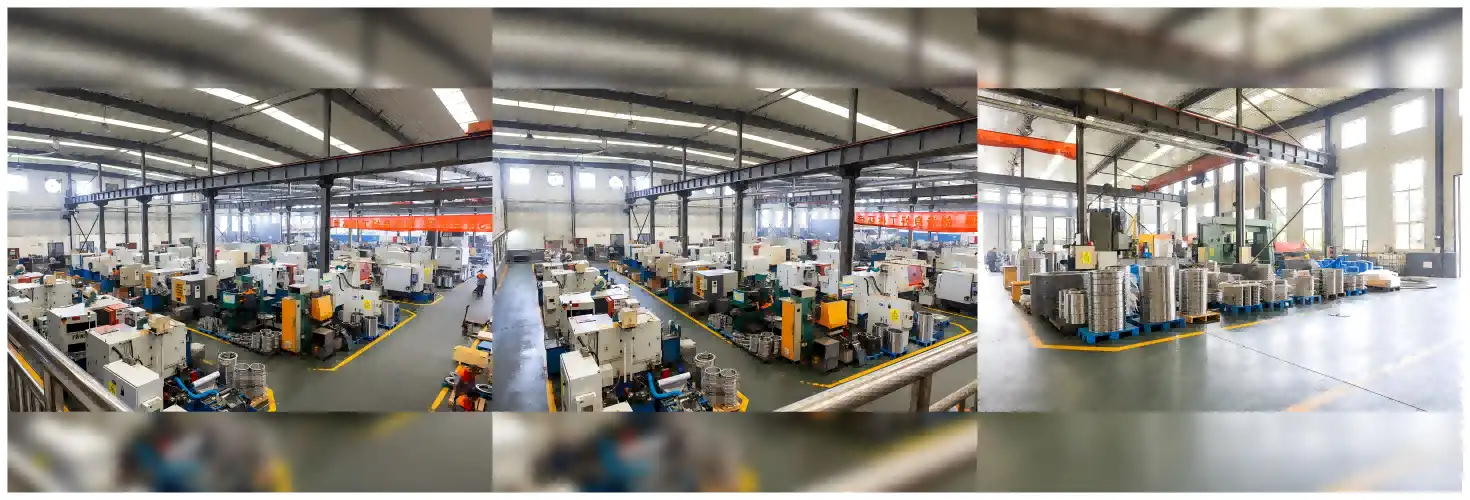
Luoyang Auto Bearing Co., Ltd., doing business as ATLYC, has become an expert in precision SX011814 Cross roller bearings by improving their manufacturing process over and over again for 15 years. In 2010, our building grew from a single workshop to six specialised production rooms, each of which worked on a different type of bearing. Our dedication to understanding high-precision production processes that meet the exact needs of medical robotics uses is reflected in this growth.
Quality testers who are taught the measurement methods needed for P4 and P2 precision classes are part of our 120-person team. We keep our ISO 9001 and IATF 16949 certifications, which show that we follow international quality standards that are in line with what medical device suppliers need. Our bearing range can produce up to 500,000 units per year, and we are flexible enough to meet the unique needs of OEM partners.
Technical help goes beyond just supplying parts. During the planning process, our engineering team works with people who are making medical devices to help them choose the right bearings, do load analyses, and make suggestions for how to best integrate the parts so that the system works at its best. We keep detailed application notes that explain how to place things, choose the right lubricant, and fix problems in medical robot settings.
ATLYC has the technical know-how, quality system stability, and production scale that procurement teams need in a cross roller bearing maker they can trust to work with them for a long time. Customers in South Korea, the US, Germany, Russia, Iran, and Turkey have bought parts from us, and we've built relationships with them based on reliable quality, delivery, and quick expert help.
Maintenance and Longevity Tips for SX011814 Cross Roller Bearings
Preventive Maintenance Protocols for Medical Applications
SX011814 Cross roller bearings in medical robots work in controlled environments, but they have to deal with special problems because they have to be sterilized many times, run at low speeds all the time, and be expected to work perfectly in hospital settings. Using structured repair procedures increases the life of bearings and stops unexpected downtime that could affect the care of patients are cared for.
The most important upkeep variable is how the lubrication is managed. Manufacturers of medical devices usually choose synthetic greases that can withstand sterilization processes instead of petroleum-based lubricants that break down when heated over and over again. Relubrication schedules rely on how the equipment is used. Surgical robots that are only used sometimes should be oiled once a year, while diagnostic equipment that is always in use may only need to be serviced every six months.
Inspection and Monitoring Procedures
During regular maintenance, you should look at the state of the mounting surface, the integrity of the seals, and any signs of lubricant movement. Even in a controlled setting like an operating room, surgery drapes, cleaning solutions, or outdoor dust can make SX011814 Cross roller bearings less effective. Inspections every 6 to 12 months are in line with how medical equipment is usually maintained.
Monitoring performance through sound analysis lets you know early on when an SX011814 Cross roller bearing is wearing out. Baseline vibration patterns logged during device setup can be compared during service intervals. Increases of 50% or more indicate possible wear that needs to be looked into. Advanced medical robots have accelerometers built in that let service teams keep an eye on their health at all times and let service teams know about any problems before they affect clinical operations.
Installation Best Practices and Common Issues
The working life is directly affected by how well the SX011814 Cross roller bearings are installed. These bearings need to be mounted with controlled preload, which is usually done with precise spacers or bolts that control torque. Over-preloading shortens the useful life by making friction and heat production worse, while under-preloading lets internal motion happen, which speeds up wear. Manufacturers give specific setting numbers; sticking to these values will ensure the best performance.
Some common programming mistakes are:
- Contamination during assembly: It's not always possible to work in a clean room while putting together a device, but limiting the amount of dust and wetness that gets in while installing bearings keeps them from breaking too soon. Sealed bearings protect, but they may also make friction a little higher. You should weigh these pros and cons based on the needs of the product.
- Misalignment between parts that fit together: angular misalignment greater than 0.001 radians causes uneven load distribution across rollers, which cuts wear life by 40 to 60 percent. This problem doesn't happen because the fixing areas are machined precisely and the assembly steps are followed carefully.
- Not enough lubrication at startup: even if they were already oiled at the plant, new bearings should be oiled for the first time before they are used. During the break-in time, the machine gains from a lot of lubrication, which may be lessened during regular maintenance.
Bearing makers offer troubleshooting tips that cover issues like too much noise, rising temperatures, and fast wear. Noise issues are usually caused by dirt or not enough grease. Rising temperatures could mean that the part is overloaded or not cooled enough in high-speed situations. Early wear is usually caused by mistakes in the installation, contamination, or loads that are higher than what was intended.
Conclusion
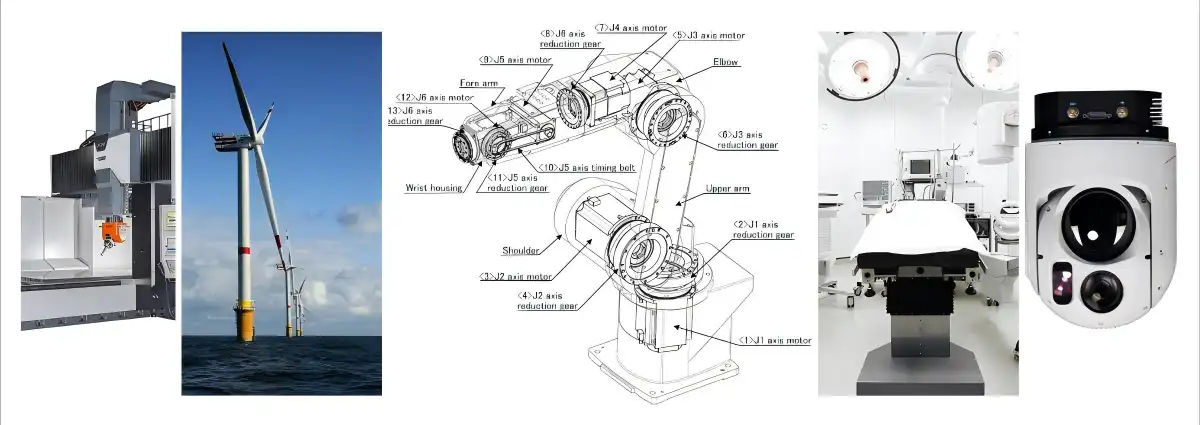
SX011814 Cross roller bearings are an important technology that will make the next wave of medical robots possible. This is because doctors are continuing to expect higher levels of accuracy, dependability, and compactness. The technical benefits of orthogonal roller shape include better rigidity, the ability to carry loads in multiple directions, and a small size. These benefits directly address the engineering issues in surgical systems, diagnostic tools, and patient positioning devices.
When procurement workers choose parts, they have to make tough decisions about how to balance performance, cost, source reliability, and legal compliance. Knowing how these precision parts are put together, their relative benefits, and how often they need to be maintained helps you make better choices throughout the duration of a product. When it comes to buying, there are options at different price points and quality levels. The best option depends on the needs of the application, the commitment to volume, and the level of risk that can be tolerated for supply chain disruption.
As medical robotics moves from specialised operating rooms to a wider range of hospital settings, the parts that make these systems work must continue to work properly after hundreds of thousands of rounds. Precision SX011814 Cross roller bearings that meet these needs come from companies that have both the technical know-how and the quality system stability that come from years of focusing on making things for high-precision uses.
FAQ
1. How do cross roller bearings improve surgical robot precision compared to ball bearings?
Because they have a line-contact design, SX011814 Cross roller bearings are 3–4 times stiffer than ball bearings of the same size. This makes the material stiffer, which means it doesn't bend as much when it's loaded. This means that surgery tools can stay in place within 3–5 microns even when forces change while they're manipulating tissue. Because it can handle loads in more than one way, there is no need for multiple bearings at each joint. This keeps tolerance stacking from building up and lowering the general accuracy of the system.
2. What is the typical lead time for bulk orders of precision cross roller bearings?
Orders of 100 to 500 standard SX011814 Cross roller bearing setups from well-known manufacturers usually take 8 to 12 weeks. Lead times can be up to 16 to 20 weeks if you need special materials, a different charge, or a different way of closing the product. By building relationships with suppliers and agreeing to keep extra inventory on hand, effective wait times can be cut down to 4 to 6 weeks for repeat orders. This is very important for medical device companies that have to plan their production schedules around regulatory approvals and market launch windows.
3. What accuracy grades should be specified for different medical robotics applications?
Diagnostic imaging tools and patient positioning systems usually say that the class is P5, which has a runout accuracy of 8–10 microns and a modest cost. For surgical robots that need submicron positioning accuracy, you need P4 or P2 types, which offer 3-5 micron runout but cost a lot more. The choice of accuracy should strike a balance between technical needs and budget limits, since defining too much precision raises costs without improving patient results.
Partner with ATLYC for Precision Cross Roller Bearing Solutions
ATLYC has been making specialised products for 15 years and can help medical device OEMs find a reliable SX011814 Cross roller bearing provider. Our ISO 9001 and IATF 16949-certified factory in Luoyang makes high-precision bearings that meet P4 and P2 accuracy standards. We provide full material tracking and statistical process control paperwork to help you meet regulatory requirements. We keep our production capacity above 500,000 units per year, which lets us help with both making prototypes and increasing production volumes.
Our engineering team gives you full technical support during the whole process of making your product, from choosing the right bearings and figuring out how much weight they can hold to helping you put it together and fixing it in the field. We can make changes to the lubrication, sealing, and material requirements so they work well in medical robot settings. Contact our team at auto@lyautobearing.com to talk about the needs of your unique application, get technical specs, or get quotes for your project. ATLYC gives medical device makers the quality consistency and supply dependability they need, whether they need small amounts for validation testing or large amounts to start production.
References
1. Johnson, M.R. & Williams, K.T. (2021). Precision Bearing Technology in Surgical Robotics: Engineering Fundamentals and Clinical Applications. Medical Device Engineering Press, Boston.
2. European Medical Device Manufacturers Association (2022). Component Selection Guidelines for Robotic Surgery Systems: Quality System Requirements and Regulatory Compliance. EMDMA Technical Report Series, Vol. 18.
3. Zhang, L., Schmidt, H., & Park, S.J. (2020). "Comparative Analysis of Bearing Technologies in Medical Robotics: Performance Metrics and Reliability Modeling." Journal of Medical Engineering & Technology, 44(6), 412-428.
4. International Society for Medical Robotics (2023). Technical Standards for Mechanical Components in FDA-Regulated Surgical Devices. ISMR Standards Committee Publication, Geneva.
5. Crawford, D.P. & Nakamura, Y. (2019). Bearing Selection and Application Handbook for Precision Medical Equipment. Third Edition, Technical Publishing International, Singapore.
6. American Society of Mechanical Engineers (2022). "Load Analysis and Fatigue Life Prediction for Cross Roller Bearings in Articulated Medical Devices." ASME Biomedical Engineering Division Technical Paper BME-2022-8847, New York.
Learn about our latest products and discounts through SMS or email