- English
- French
- German
- Portuguese
- Spanish
- Russian
- Japanese
- Korean
- Arabic
- Greek
- German
- Turkish
- Italian
- Danish
- Romanian
- Indonesian
- Czech
- Afrikaans
- Swedish
- Polish
- Basque
- Catalan
- Esperanto
- Hindi
- Lao
- Albanian
- Amharic
- Armenian
- Azerbaijani
- Belarusian
- Bengali
- Bosnian
- Bulgarian
- Cebuano
- Chichewa
- Corsican
- Croatian
- Dutch
- Estonian
- Filipino
- Finnish
- Frisian
- Galician
- Georgian
- Gujarati
- Haitian
- Hausa
- Hawaiian
- Hebrew
- Hmong
- Hungarian
- Icelandic
- Igbo
- Javanese
- Kannada
- Kazakh
- Khmer
- Kurdish
- Kyrgyz
- Latin
- Latvian
- Lithuanian
- Luxembou..
- Macedonian
- Malagasy
- Malay
- Malayalam
- Maltese
- Maori
- Marathi
- Mongolian
- Burmese
- Nepali
- Norwegian
- Pashto
- Persian
- Punjabi
- Serbian
- Sesotho
- Sinhala
- Slovak
- Slovenian
- Somali
- Samoan
- Scots Gaelic
- Shona
- Sindhi
- Sundanese
- Swahili
- Tajik
- Tamil
- Telugu
- Thai
- Ukrainian
- Urdu
- Uzbek
- Vietnamese
- Welsh
- Xhosa
- Yiddish
- Yoruba
- Zulu
Cross Roller Bearing XSU Series: Key Buying Factors
When looking for high-precision parts for robots and industrial automation, the Cross roller bearing XSU series is a tried-and-true option that meets important performance needs. When you look at this type of bearing, you'll see that it has fixing features built right in. This makes it easier to put together and gives you great load-bearing capabilities in all three ways at the same time. Working with original equipment manufacturers (OEMs) in the medical equipment, semiconductor, and car industries has shown us that choosing the right bearings has a direct effect on how well machinery works, how much it costs to maintain, and how well the finished product is made. This guide talks about important things that procurement workers should think about when choosing precision bearings for mission-critical uses.
Understanding the Cross Roller Bearing XSU Series
Core Design Architecture and Operating Principles
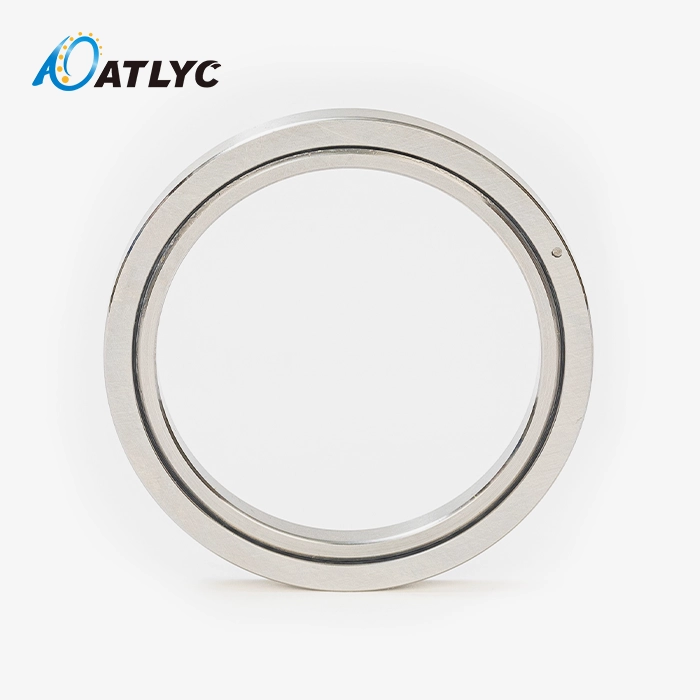
The main new feature of the Cross roller bearing XSU series is the crossed roller design inside V-groove raceways. Cylindrical rollers are set up so that they are 90 degrees apart and perpendicular to each other. Specialised spacers keep the rollers from touching directly. This design makes many contact points spread out across both radial and axial load lines. This lets a single small bearing handle complex loading conditions that would normally need more than one regular bearing.
The one-piece ring structure has fastening holes that were carefully cut into both the inner and outer rings. Tolerance stack-up errors are common in systems that use different housing components. This integrated design gets rid of those errors. Standardised designs are used to place mounting holes, which makes fitting easier on a variety of equipment platforms. The small cross-section of the bearing lowers the total height of the assembly, which is very helpful in uses with limited room, like robotic joints and rotary indexing tables.
The makeup of a material is very important to how well it works. Standard Cross roller bearing XSU series are made of GCr15 high-carbon chromium bearing steel that has been heated until it is between 58 and 64 HRC hard. This makes sure that the raceways last even when they are loaded and unloaded many times. GCr15SiMn alloy steel, which contains silicon and manganese for better hardenability and hardness, may be used in advanced applications that need higher wear resistance. The heat treatment process makes the raceway surfaces martensitic while keeping the core's ductile qualities. This creates the best mix between surface hardness and impact resistance.
Technical Performance Parameters
Dimensional freedom lets different applications meet their needs. From 20 mm to 1,100 mm in diameter on the inside, 70 mm to 1,500 mm on the outside, and 12 mm to 110 mm in width, the Cross roller bearing XSU series has it all. Engineers can choose the best bearings based on available fitting space and load capacity needs without sacrificing precision standards, thanks to this wide size range.
Specific levels of runout accuracy are available for precision grades that are in line with ISO standards. The P6 and P0 grades are good for general industry uses where middling accuracy is enough. The P5 grade has tighter specs that make it suitable for precision machining centers and automatic assembly lines. The P4 and P2 grades are used for ultra-precision classifications in equipment used to make semiconductors, coordinate measure machines, and optical inspection systems, where the accuracy of spinning has a direct effect on the results of the process.
| Specification | Range/Value | Application Impact |
|---|---|---|
| Inner Diameter | 20-1,100mm | Determines shaft integration options |
| Outer Diameter | 70-1,500mm | Defines mounting space requirements |
| Width | 12-110mm | Affects load capacity and rigidity |
| Precision Grades | P6, P0, P5, P4, P2 | Controls runout accuracy for application needs |
| Material Options | GCr15, GCr15SiMn | Influences durability and wear characteristics |
Because the crossed roller design has a low friction coefficient, it makes movement smooth even when there is no load on it. Spacers between the rollers keep them from moving against each other, which would cause heat and uneven force. This design feature is especially useful in robotic manipulators that move slowly back and forth, since stick-slip issues in regular bearings can make it harder to control and keep the robot in the right place.
Industry Application Requirements
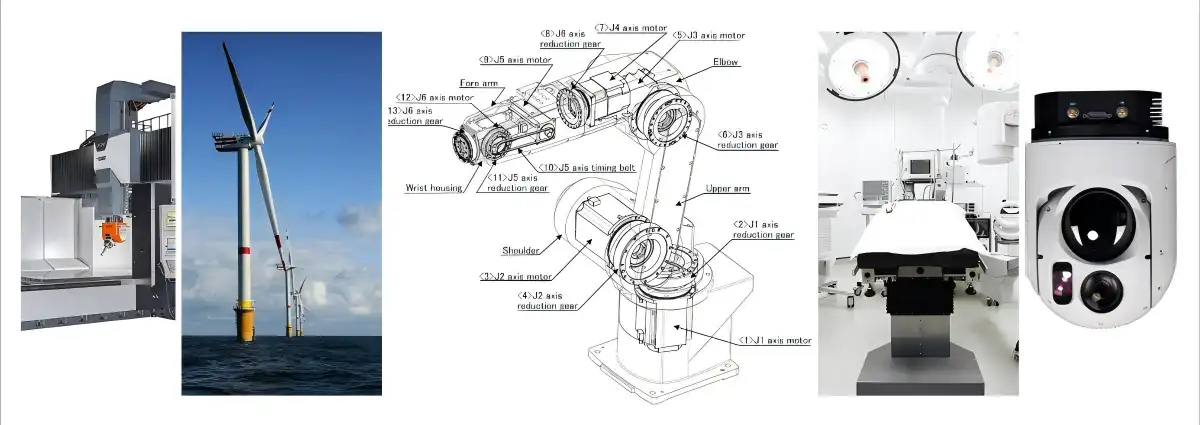
For industrial robotics to work, bearings need to be able to keep their positional accuracy over millions of cycles while also supporting moment loads from long tool arms. The Cross roller bearing XSU series meets these needs because it can handle a lot of moment loads thanks to its big effective pitch diameter, which is made possible by the crossed roller setup. In factories that put together cars, robots use these bearings in joints and rotating axes, where accuracy affects both welding and assembly tolerances.
Bearings that keep the accuracy of the indexing while fighting cutting forces sent through the workpieces are needed for the machining center rotating tables. We've sold Cross roller bearing XSU series to companies that make machining centers for the aircraft industry. Table runout has a direct effect on the accuracy of the blade shape and the quality of the surface finish. The built-in fixing holes make putting together the table easier and make sure that the preload is evenly spread around the bearing's diameter.
When used in medical tools, strict cleanliness standards are added to the need for accuracy. Large-diameter Cross roller bearings XSU series are used in CT scanner gantries to keep the spinning smooth while supporting the weight and speed of the image equipment. In surgical robotic systems, precision rotary tables rely on the bearing's low starting torque and constant friction characteristics to make sure they can move smoothly, which is important for delicate procedures.
Equipment used to make semiconductors works in controlled settings where pollution is a major cause of failure. Electronics manufacturing tools that use Cross roller bearing XSU series have sealed designs that keep particles from forming and keep the very high accuracy needed for photolithography and chip handling tasks. Being able to reach the P2 precision grade means that the bearing meets the high accuracy standards of this business.
How to Select the Right Cross Roller Bearing: XSU Series Compared
Structural Comparisons with Alternative Bearing Types
The Cross roller bearing XSU series and KR series crossed roller bearings are mounted in very different ways. KR series bearings have different outer ring parts that are held in place by mounting flanges. The Cross roller bearing XSU series, on the other hand, has mounting holes built in, so it can be directly bolted to mating surfaces. This difference affects both how hard it is to put together and how stiff the system is. The Cross roller bearing XSU series method works best for applications that want to make installation easier and lower the assembly height. On the other hand, KR setups may be better for designs that need split outer rings for assembly over shafts.
XSUH series bearings are a type that has covering parts to keep out dirt and other things. The roller set of standard Cross roller bearing XSU series is directly exposed to the environment, so they need to be sealed from the outside when it's dusty or wet. When choosing between the XSU and XSUH configurations, the working conditions and the ease of upkeep should be taken into account. The sealed XSUH design makes the bearing area a little wider while protecting it, which makes it last longer in tough circumstances.
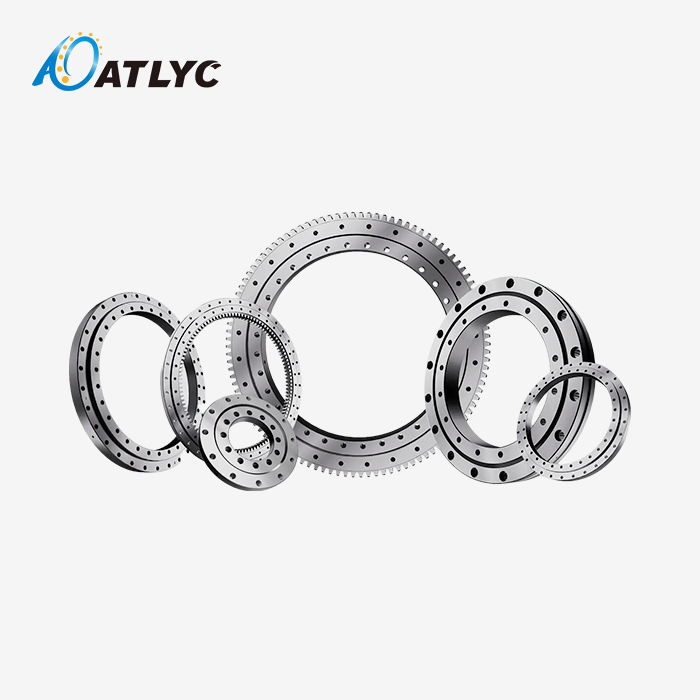
Slewing ring bearings can also handle mixed loads, but they use ball or roller elements in single-row or multi-row arrangements around much bigger diameters. When runout accuracy and a small cross-section are very important, the Cross roller bearing XSU series is the best choice. On the other hand, slewing rings can handle heavy loads at larger diameters with less precise needs. This choice is based on how important accuracy is to the application compared to raw load capacity.
In traditional ball bearing setups, more than one bearing must be arranged back-to-back or face-to-face to hold the whole load. This method makes the system more complicated, takes up more axial room, and could cause alignment problems between bearing sets. A single Cross roller bearing XSU series can be used instead of these setups. Its solid structure and crossed roller shape make it more rigid.
Load Capacity and Performance Trade-offs
When rollers are crossed, they make line contact with raceways. This spreads loads over a bigger contact area than point contact does in ball bearings. Because of this feature, higher load rates are possible for the same size carrying envelope. This capacity advantage is very helpful for tasks that need to handle high moment loads, like big workpieces on rotary tables or robotic arms that are stretched.
One trade-off that comes with crossed roller shapes is that they can't rotate at very high speeds. The moving contact between the spacers and rollers, and the heavier rollers compared to balls, limits the fastest speeds that can be reached. Cross roller bearing XSU series works best for spinning and rotating at low to medium speeds, not for steady high-speed rotation. The specs for the equipment should make sure that the working speeds stay within the limits of the bearings to avoid too much heat and premature wear.
| Bearing Type | Load Capacity | Precision Level | Speed Capability | Installation Complexity |
|---|---|---|---|---|
| XSU Series | High radial/axial/moment | Ultra-high (P2-P5) | Low-medium | Simple (integrated mounting) |
| KR Series | High radial/axial/moment | High (P4-P5) | Low-medium | Moderate (flange mounting) |
| Ball Bearing Sets | Moderate | High (P4-P5) | High | Complex (multiple bearings) |
| Slewing Rings | Very high | Moderate (P0-P5) | Low | Moderate (large diameter) |
The preload settings have a big effect on how well something works. Negative clearance preload makes things stiffer and gets rid of play, which improves the accuracy of placement in precise situations. Too much preload causes friction that isn't needed and speeds up wear, which is especially bad in situations that require constant rotation. To properly specify the preload, you need to know about the duty cycle patterns, application load factors, and necessary stiffness. During design, we work closely with customers to make sure that the preload is best for their unique working conditions.
Application-Specific Selection Criteria
Size limitations often determine the first bearing choice. The Cross roller bearing XSU series' small cross-section makes it possible to integrate them in designs with limited room, where separate housing units would be too expensive. This dimensional economy is especially helpful for robotic wrist joints and small rotating tables. During the early stages of the decision process, procurement teams should provide full space area data to make sure that the chosen bearing sizes work within the limits of the mechanical design.
The environment affects the specifications of bearings and the safety steps that need to be taken. In electronics and medical uses that use cleanrooms, the choice of lubricant and closing methods needs to be carefully thought out. Standard lithium-based greases work well in most industrial settings, but vacuum-compatible lubricants are needed in some process equipment. We keep expert tools on hand to help with specifying lubricants based on performance needs and environmental factors.
Customisation lets you meet specific application needs that normal catalogue goods can't. Different mounting hole shapes can be used for non-standard connections, special materials can be used for corrosive environments, and custom precision grades can be made to meet specific accuracy needs. Our engineering team compares requests for customisation to production capabilities and minimum order sizes to give accurate readings of whether the requests are possible and what the costs would be.
The total cost of ownership is affected by how easy it is to do maintenance. In situations where replacing bearings involves taking a lot of equipment apart, it's better to choose bearings that have a longer projected life, even if it costs more at first. On the other hand, setups that are easy to get to may be best based on cheaper bearings that are meant to be replaced at regular intervals. This life cycle cost study is especially useful for automated production lines where the costs of downtime are many times higher than the prices of the parts.
Procurement Insights for the XSU Series Cross Roller Bearings
Pricing Structures and Volume Considerations
The price of a bearing depends on how much the materials cost, how hard it is to make, and how precise it needs to be. For the best value, choose a smaller diameter Cross roller bearing XSU series in normal sizes and middling precision grades (P5, P0). Because of longer machining times, tighter quality control rules, and lower production numbers, unit costs go up as diameters get bigger, ultra-high precision grades (P4, P2) become available, and special specs become the norm.
Minimum order amounts find a mix between how efficiently goods are made and how much inventory customers need. Standard catalogue sizes usually let you buy just one unit through distribution networks. However, lead times may get longer based on how much stock is available. For custom specs, the minimum order quantity can be anywhere from 10 to 50 units, based on the size and complexity of the job. When you buy a lot of something, you usually get a bigger discount. For normal goods, the discount usually starts at 25 units, but it goes up for custom designs.
Expected lead times are very different for stock items and custom products. Distributor stock of popular sizes makes shipping quick; for urgent needs, it can happen within days. Items from the standard catalogue that aren't in stock usually ship between 4 and 6 weeks after the order is confirmed. Initial production runs for custom specs take 8 to 12 weeks, which includes engineering review, prototype proof, and full-scale manufacturing. There are options for rush production for when things need to be done quickly, but they cost more because they are processed faster, and regular production plans might not work as smoothly.
Effects on the production schedule have an effect on the dependability of delivery all along the supply chain. To get the best setup times and quality control, bearing makers use production plans for certain size ranges and precision grades. Orders that fit with planned production efforts usually have shorter lead times than orders that need special production runs. Setting up long-term ties with suppliers makes it easier for customers' needs and production plans to work together, which makes delivery more predictable.
Purchasing Channels and Supply Chain Reliability
Authorised dealers offer a wide range of standard products, as well as close-by stock and expert help. Distributors keep popular sizes in stock, which lets the standard Cross roller bearing XSU series be delivered quickly. Their professional staff can help with application issues and fixing problems, which is helpful for customers who don't know a lot about bearings. The trade-off is that you can't change many things about them, and the prices might be higher than if you bought them directly from the maker in large quantities.
Direct connections with manufacturers are good for customers who need to buy a lot of products or who often have unique needs met. Manufacturers offer a wide range of products, and they can make them to order. They also offer technical help for designs that are specific to an application, and they usually offer better prices for larger orders. Building these partnerships costs money, but they pay off by giving you better insight into the supply chain, giving you priority when capacity is limited, and giving you access to technical tools that standard distributors can't provide.
Manufacturers run websites that make it easy to access technical documents, CAD models, and selection tools that make the process of specifying products faster and easier. More and more, these platforms have tools for seeing real-time goods and getting quotes that speed up the buying process. We've put money into our website so that customers can access product information and expert tools at any time. This is because we know that engineering work is done around the clock in different time zones around the world.
Maintenance and Longevity Tips for XSU Series Bearings
Installation Best Practices
Precision parts don't get damaged during fitting if they are handled correctly. Contamination is less likely to happen in clean work areas, since even small bits can damage raceways and make them work less well. Cross roller bearing XSU series should stay in their protected package until they are ready to be installed. Handlers should stay away from raceways and moving elements because the oils and acids on their skin speed up rusting. When touching things, clean cotton gloves are enough to keep you safe.
How the mounting surface is prepared has a direct effect on how well the bearing works. To keep the ring from warping when the bolt is tightened, the mating sides must meet certain flatness requirements. Surface roughness shouldn't go beyond certain limits, because too much roughness causes stress to build up and makes touch less reliable. It's just as important that the mounting surfaces are clean; they need to be cleaned with solvents to get rid of cutting leftovers, preservatives, and other contaminants before the bearings can be installed.
Tightening the bolts stops the ring from warping, which would affect the accuracy of spinning. Clamping forces are spread out evenly around the bearing's diameter by a star or cross design. Tightening happens slowly over several passes, getting closer and closer to the end torque values instead of fully tightening each bolt one at a time. With a torque tool, you can make sure that the tightening is uniform within certain ranges. This stops both too little clamping, which lets the rings move, and too much torque, which bends the rings.
Verifying the alignment after installation makes sure that the bearings are mounted and positioned correctly. Runout readings look for problems with the mounting area or rings that aren't straight. Rotational torque readings find issues like pollution, incorrect preload, or damage to the installation. If these checks are done right after installation, they can be fixed before the equipment is put into service, which keeps it from breaking when the bearings are used, as they were not fitted correctly.
Lubrication Requirements and Monitoring
When choosing a lubricant, it's important to think about things like speed, load, temperature, and the surroundings. Lithium-based greases can be used in a wide range of industry settings at low temperatures. In tough situations, synthetic lubricants increase the temperature range and repair times. Special low-outgassing lubricants are needed in cleanrooms and vacuum settings to keep sensitive processes from getting contaminated and to keep things running smoothly even when oxygen isn't present in the air.
Initial lubrication during production protects during storage and the first few hours of use, but the frequency of relubrication depends on the conditions of use. Applications with continuous spinning need to be relubricated more often than those with irregular or oscillating movements. High loads and temperatures speed up the breakdown of lubricants, which means that they need to be serviced more often. Pollution in the environment and contact with process chemicals both shorten the life of lubricants. To make maintenance plans work better, we give you application-specific lubrication suggestions based on how the machine is used.
Over-greasing is not allowed during relubrication processes because it raises running temperatures and friction inside the machine. Specific grease amounts mirror the volume of the Cross roller bearing XSU series inside and make sure there is enough greasing without too much filling. Grease guns that can measure the amount make application more regular. In situations where the machine is always running, purge processes may be needed to let new grease replace old, worn-out oil inside the bearings.
Building Trust: Why Choose XSU Series Bearings and Our Brand
Manufacturing Excellence and Certification Standards
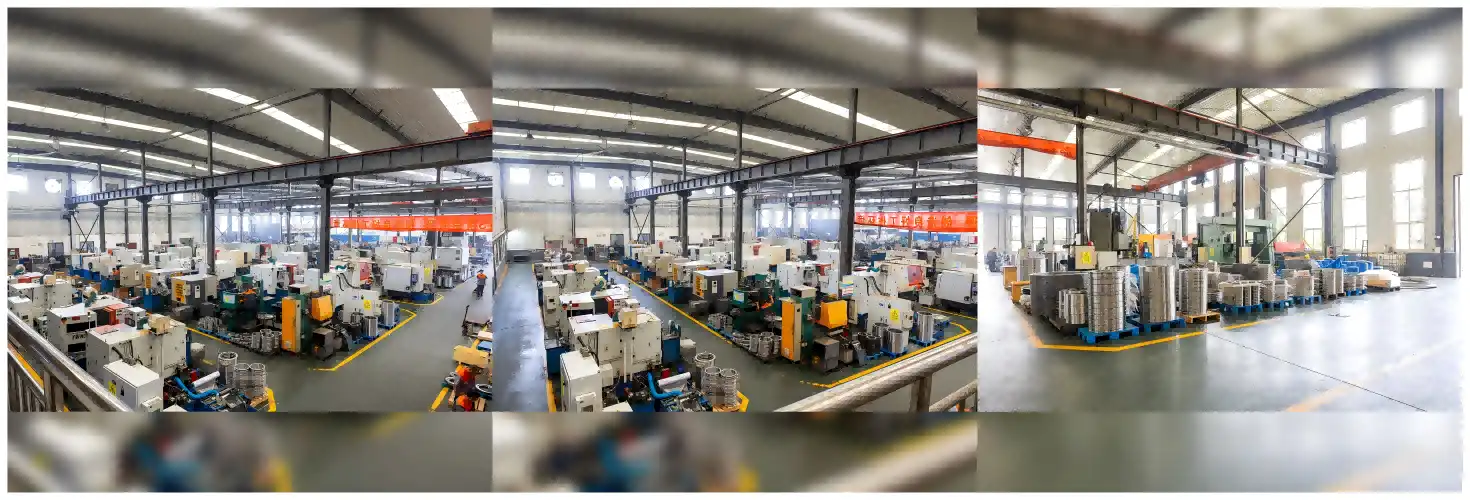
In 2010, Luoyang Auto Bearing Co., Ltd. began doing business with just one automatic workplace that made deep groove ball bearings. Over the past fifteen years, we've grown to six specialised workshops that work with a wide range of bearings, such as the precision Cross roller bearing XSU series, which are essential for modern robotics. This growth is due to continued investments in modern manufacturing tools, process development, and the training of skilled workers.
Our 120-person team includes production specialists, quality inspectors, study engineers, and assembly workers who are skilled in all stages of production. With this combined capability, we can keep an eye on quality from the time we receive the raw materials until the final inspection. This level of uniformity is unmatched by outside outsourcing arrangements. Teams from different departments work together to make processes better and come up with new products. This creates an environment where everyone is focused on always getting ahead.
Our quality control methods and compliance with the automotive business are backed up by ISO 9001 and IATF 16949 certifications. For these certifications, procedures, process controls, and ways to make things better must be written down and be exposed to frequent audits by outside parties. The discipline that these systems require makes sure that tasks are always done the same way, even when production rates change and the mix of products changes. Customers gain from this regularity because they can count on the quality and reliability of the service.
Global Experience and Market Understanding
As a result of our focus on exports, we have built ties with customers in South Korea, the US, Germany, Russia, Iran, and Turkey. This variety of locations gives us access to different regulatory settings, application needs, and quality standards. We've learned how to deal with the complicated details of foreign shipping, the paperwork that needs to be filled out, and how to talk to each other across time zones and languages. This experience means that new buyers who join our supply chain will have easy deals.
Automotive parts are one of our main areas of business. We sell Cross roller bearing XSU series to companies that make steering systems, gearbox parts, and automatic assembly equipment. Machine tools, material handling systems, and processing equipment are all examples of industrial machinery uses where dependability has a direct effect on production downtime. Automation equipment, like industrial robots and precise positioning systems, depends on the performance traits of bearings that we've improved over many years of developing bearings for specific uses.
Customer case studies show how well the product works in challenging real-world situations. Our Cross roller bearing XSU series was used by a German company that makes machining centers with rotary tables for five-axis tools that make aircraft parts. During eighteen months of production, the bearings kept the P5 accuracy, meeting the standards for precision while handling changes in cutting force. A U.S. company that makes medical equipment uses big Cross roller bearing XSU series in CT scanner gantries to make sure the machines work smoothly and for a long time. This was important for picture quality and equipment uptime.
Conclusion
When choosing precision bearings for tough industrial uses, it's important to think about the technical specs, the supplier's skills, and the total cost of ownership. The Cross roller bearing XSU series has been used successfully in robots, machining centers, and other high-precision machines that need to handle heavy loads and work reliably. Procurement pros can make choices that improve the performance of equipment by knowing about structural features, performance trade-offs, and the right way to maintain it.
Technical Support & Engineering Consultation
If you are currently evaluating bearing solutions for high-precision, high-load, or shock-prone applications, our engineering team can provide detailed selection guidance based on your actual working conditions, including load analysis, mounting design review, and precision grade matching.
Luoyang Auto Bearing Co., Ltd. has been serving global OEM customers with customized Cross roller bearing XSU series solutions for robotics, automation systems, and precision machinery applications.
For technical inquiries, drawings, or quotation support, please contact our team directly:
Email: auto@lyautobearing.com
We welcome collaboration with equipment manufacturers, system integrators, and engineering design teams worldwide to develop more reliable and efficient motion control solutions.
References
1. SKF Group. Rolling Bearings Catalogue and Engineering Manual. SKF Technical Publications, 2023.
2. NSK Ltd. Precision Crossed Roller Bearings Design Guide. NSK Technical Report, 2022.
3. Timken Engineering. Impact Loading and Fatigue Life in Rolling Bearings. Timken White Paper, 2021.
4. ISO 281:2007. Rolling Bearings — Dynamic Load Ratings and Rating Life. International Organization for Standardization.
5. Harris, T. A., Kotzalas, M. N. Rolling Bearing Analysis, 5th Edition. CRC Press, 2014.
6. ASME Journal of Mechanical Design. High Rigidity Crossed Roller Bearings in Precision Rotary Systems, 2023.
Learn about our latest products and discounts through SMS or email