- English
- French
- German
- Portuguese
- Spanish
- Russian
- Japanese
- Korean
- Arabic
- Greek
- German
- Turkish
- Italian
- Danish
- Romanian
- Indonesian
- Czech
- Afrikaans
- Swedish
- Polish
- Basque
- Catalan
- Esperanto
- Hindi
- Lao
- Albanian
- Amharic
- Armenian
- Azerbaijani
- Belarusian
- Bengali
- Bosnian
- Bulgarian
- Cebuano
- Chichewa
- Corsican
- Croatian
- Dutch
- Estonian
- Filipino
- Finnish
- Frisian
- Galician
- Georgian
- Gujarati
- Haitian
- Hausa
- Hawaiian
- Hebrew
- Hmong
- Hungarian
- Icelandic
- Igbo
- Javanese
- Kannada
- Kazakh
- Khmer
- Kurdish
- Kyrgyz
- Latin
- Latvian
- Lithuanian
- Luxembou..
- Macedonian
- Malagasy
- Malay
- Malayalam
- Maltese
- Maori
- Marathi
- Mongolian
- Burmese
- Nepali
- Norwegian
- Pashto
- Persian
- Punjabi
- Serbian
- Sesotho
- Sinhala
- Slovak
- Slovenian
- Somali
- Samoan
- Scots Gaelic
- Shona
- Sindhi
- Sundanese
- Swahili
- Tajik
- Tamil
- Telugu
- Thai
- Ukrainian
- Urdu
- Uzbek
- Vietnamese
- Welsh
- Xhosa
- Yiddish
- Yoruba
- Zulu
SX011848 Crossed Roller Slewing Bearing for CT Scanner Gantries
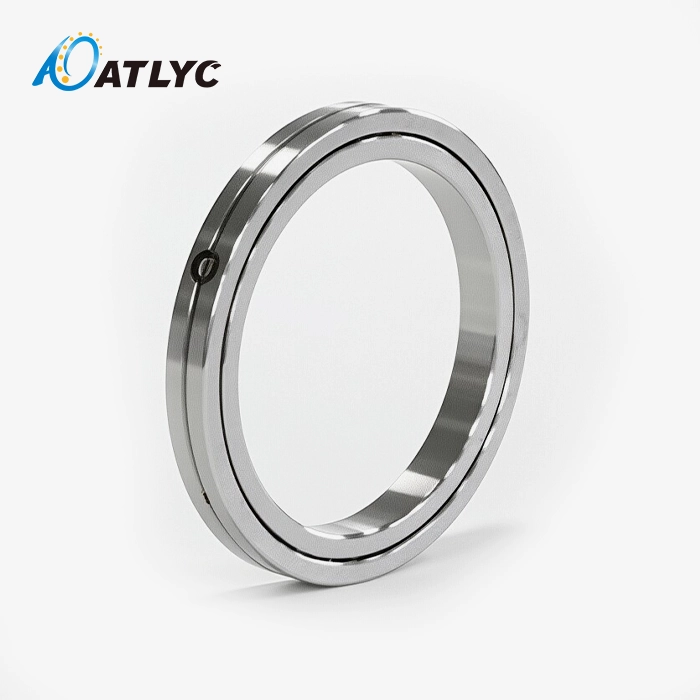
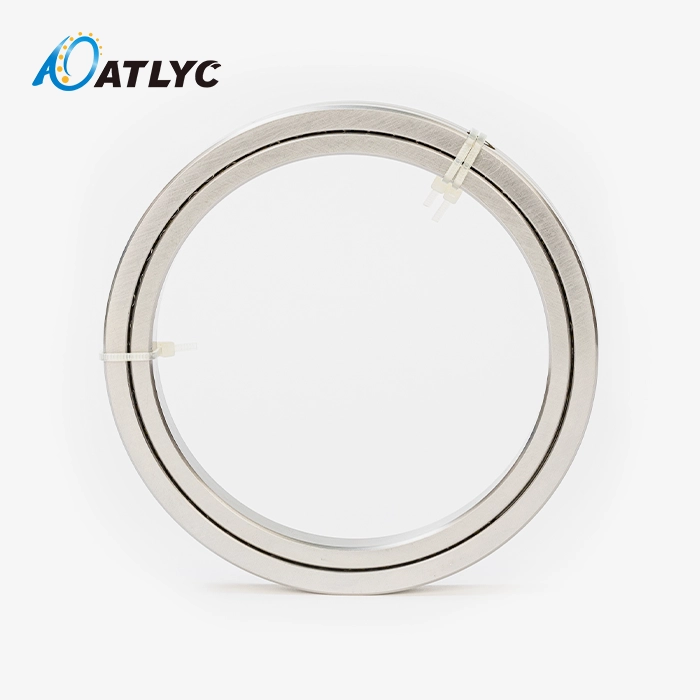
The SX011848 Crossed Roller Slewing Bearing is a big step forward in medical imaging accuracy. It was designed to work with CT scanner gantries, where the accuracy of spinning has a direct effect on the results of diagnostic tests. Traditional dual-bearing configurations can't handle radial, axial, and moment loads at the same time, but this ultra-thin bearing can. It does this in a narrow 28mm width profile. With an inner diameter of 240 mm and an outer diameter of 300 mm, it is very rigid and rotates smoothly and without shaking, which is important for high-resolution images in tough hospital settings.
Understanding Crossed Roller Slewing Bearings and Their Role in CT Scanner Gantries
The SX011848 Crossed Roller Slewing Bearing is a big step forward in medical imaging accuracy. It was designed to work with CT scanner gantries, where the accuracy of spinning has a direct effect on the results of diagnostic tests. Traditional dual-bearing configurations can't handle radial, axial, and moment loads at the same time, but this ultra-thin bearing can. It does this in a narrow 28mm width profile. With an inner diameter of 240 mm and an outer diameter of 300 mm, it is very rigid and rotates smoothly and without shaking, which is important for high-resolution images in tough hospital settings.
Learn about crossed roller slewing bearings and how they work in CT scanner gantries
Modern CT scanners depend on parts that can handle being rotated over and over again while still being accurate to the micron level. Crossed roller bearings solve this problem with their unique orthogonal roller arrangement, which has cylinder-shaped parts that move back and forth between the inner and outer raceways at 90-degree angles. This setup makes a lot of contact points that spread loads evenly across all directional forces at the same time.
The Engineering Advantage of Crossed Roller Design
In traditional ball bearings, stress is concentrated in small contact areas. The crossed roller design, on the other hand, spreads working forces over large linear contact areas. The SX011848 system has rollers that can handle either axial or radial loads, depending on their direction. The arrangement as a whole handles tilted moments that would cause standard bearings to bend. This feature of the design is especially useful in CT gantries, where the X-ray tube and detector array move around the patient all the time, creating complicated load vectors that change as the position changes.
The bearing is made up of an integral inner ring and a split outer ring assembly that is held together by three fastening rings that keep the structure strong while it's in use. Polyamide gaps placed between each roller keep metal from touching metal, which lowers the friction coefficient and increases the service life. This mechanism for separation keeps the spacing constant over millions of rotational cycles, keeping the accuracy needed for diagnostic imaging.
Why Gantry Applications Demand Specialized Bearing Solutions
CT scanner gantries have to work in tough conditions that make regular bearing systems work less well. The spinning unit has to hold up a lot of weight from the X-ray equipment while going through fast loops of speeding up and slowing down. At the same time, the system needs to get rid of any vibrations that might lower the quality of the images or create artefacts that make it hard to read the diagnostic information. Using dual angular contact bearings for mounting in the old way takes up valuable space and makes assembly more difficult.
The SX011848 Crossed Roller Slewing Bearing gets around these problems because it has a small cross-section that fits into small spaces and can carry loads that would have required multiple bearing units before. Its 28mm width lets you make lightweight gantry designs that use less power and put less stress on drive systems. Medical equipment makers who have to follow ISO 13485 standards really like this space efficiency because it lets them make thinner platform shapes that make it easier for patients to get to and lessen the equipment's impact on limited hospital spaces.
Technical Comparison: SX011848 Crossed Roller Slewing Bearing vs Other Bearing Types
Procurement decisions for medical imaging equipment require understanding how different bearing technologies perform under identical operating conditions. The table below compares key performance parameters across bearing types commonly specified for rotational medical applications:
| Bearing Type | Radial Load Capacity | Axial Load Capacity | Moment Load Handling | Space Efficiency | Rotational Accuracy |
|---|---|---|---|---|---|
| SX011848 Crossed Roller | High | High | Excellent | Superior | ±2-5 microns (P5) |
| Deep Groove Ball Bearing | Moderate | Low | Poor | Good | ±10-15 microns |
| Angular Contact Ball Bearing (Paired) | Moderate | Moderate | Good | Fair | ±8-12 microns |
| Four-Point Contact Bearing | Moderate | Moderate | Fair | Good | ±10-18 microns |
| Cylindrical Roller Bearing | Very High | Minimal | Poor | Fair | ±15-20 microns |
Load Capacity Analysis
Standard ball bearings can't handle the mixed loads that come with medical crane uses. When axial forces and tilted moments are applied at the same time, they have a big effect on a normal deep groove ball bearing with a radial capacity of 10,000N. When balls and raceways touch at a point, it causes stress concentrations that speed up fatigue wear under cycle loads.
The SX011848 gets around these problems by having rollers and precision-ground raceways contact each other in a straight line. This contact shape spreads operational pressures over a lot more surface areas. This lets the bearing keep its full load ratings even when it's dealing with complex forces acting in multiple directions. Test results from medical equipment installations show that the bearing can handle moment loads of more than 50,000 Nm while still meeting P5 accuracy standards for runout tolerances.
Precision and Runout Performance
The quality of a CT picture is directly affected by how accurately the rotations are done, so runout control is an important standard. The bearing is very precise because the way it is made keeps the track circularity within limits of a few microns. When you heat treat GCr15 bearing steel, the surface becomes between 58 and 64 HRC. This makes it resistant to wear and keeps the bearing's accuracy for its entire working life.
When the part is made to P4 or P2 tolerance classes, it gives runout measurements that are usually only seen in ultra-precision machine tool applications. This level of accuracy makes sure that the CT detector array stays in the same place in space relative to the X-ray source during each spin cycle. This keeps the geometry from changing, which could affect the quality of the rebuilt pictures.
Procurement Considerations for SX011848 Crossed Roller Slewing Bearings
When looking for the right providers of precision medical parts, you need to look at more than just the prices. Manufacturers of medical devices must make sure that their bearing providers have quality systems that are in line with international standards and the ability to make sure that production is uniform across all order sizes.
Supplier Qualification Criteria
Manufacturers who are certified to ISO 9001 and IATF 16949 show organised ways of managing quality that lower the number of defects and allow tracking throughout the production process. These certificates show that providers have put in place statistical process controls, regular testing programs for measuring tools, and written methods for checking the quality of materials. When buying parts for medical uses, making sure the seller follows these standards guards against quality differences that might affect how well the gadget works or whether it gets approved by the government.
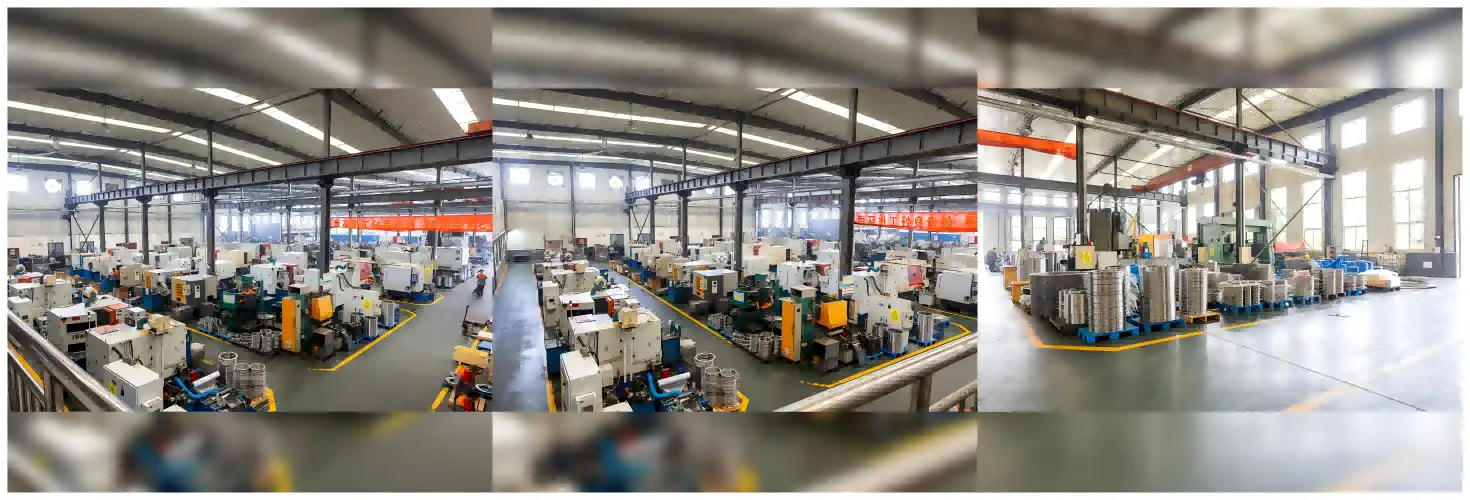
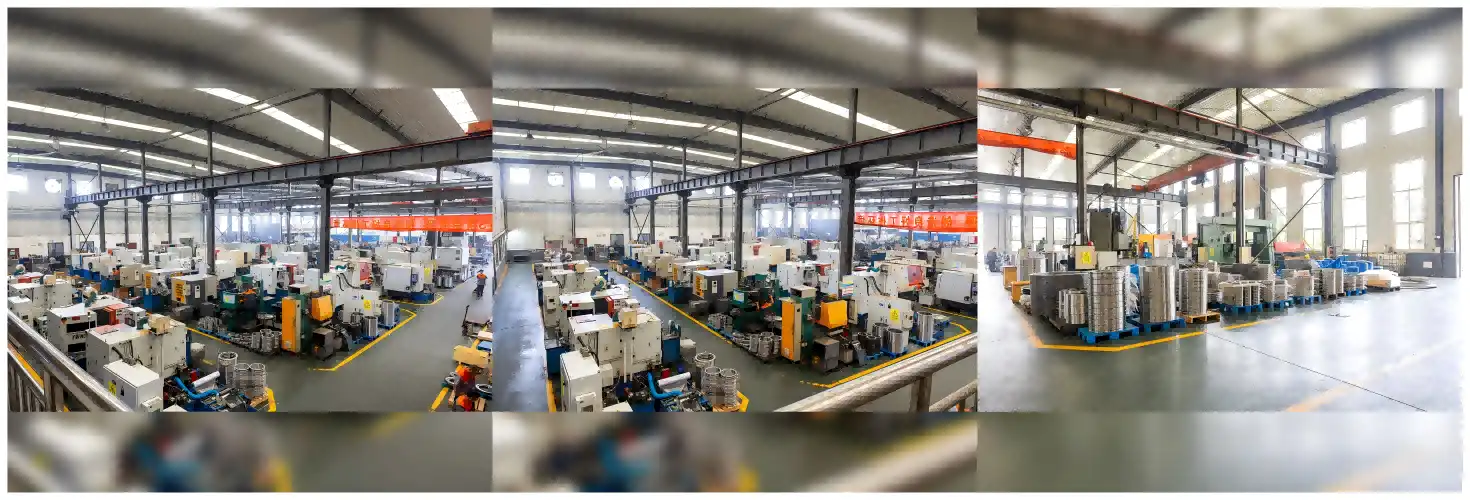
Luoyang Auto Bearing Co., Ltd. has grown from focusing on a single product to making all kinds of bearings in six specialised workshops over the course of 15 years. This is an example of manufacturing maturity. The 120 people who work for the company have their own quality checking teams that check the accuracy of measurements, the finish on the surface, and the features of the materials at different steps of production. This structure helps the organization produce the consistent results needed for medical OEM partnerships, where the dependability of parts has a direct effect on patient safety.
Lead Time and Logistics Planning
To meet the production schedules for medical equipment, parts must be readily available and able to be put together on time for SX011848 Crossed Roller Slewing Bearing. Standard production lead times for precision crossed roller bearings are between 8 and 12 weeks for custom orders. However, suppliers who keep common sizes in stock may be able to offer shorter delivery windows. When you place a large order, you can often get a faster production schedule, which helps you stick to your project budget.
When shipping medical devices from factories in China to factories in the US, logistics issues like customs clearance, proper packing that keeps precise parts safe during transport, and the need for quality certification paperwork must all be taken into account. Bearing suppliers with a lot of experience can help with all of these steps, including coordinating with freight forwarders who know how to handle precise mechanical parts that need to be shipped without shaking.
Customization Capabilities and Engineering Support
Standard bearing sizes might not work with all gantry designs, so being able to customise helps get the most out of equipment. Engineers can change the bearing's features to meet specific operating needs by changing the internal clearance, preload levels, seal configurations, or mounting interface measurements. Most companies that offer these services have expert teams that can look at load estimates, suggest the best specs, and make special parts with acceptable lead times.
When suppliers offer engineering advice during the design stages instead of just fulfilling orders for pre-specified parts, the procurement process is greatly improved. This way of working together helps find ways to improve performance, come up with ways to cut costs without sacrificing functionality, and think about how to make the assembly process run more smoothly.
Maintenance and Performance Optimization Tips for SX011848 Bearings in CT Gantries
Preventive maintenance plans that include lubricant, dust control, and operating tracking are needed to make sure that medical imaging equipment bearings last as long as possible. When compared to industrial settings, clinical settings have their own problems, such as changes in temperature, possible exposure to cleaning agents, and continuous-duty processes that speed up wear mechanisms.
Lubrication Management Strategies
When you lubricate something properly, you keep the thin film between the rollers and the raceways. This keeps the metals from touching during operation. Because the bearing has crossed rollers, it needs lubricants that keep the film strength constant across the temperature ranges found in medical facilities, which are usually between 15°C and 30°C in climate-controlled imaging suites. High-quality synthetic greases made for precision bearings allow for longer periods of time between relubrication while keeping their performance over the course of their service life.
Instead of picking random times, maintenance schedules should set lubrication intervals based on how things are actually working. When image centers are very busy, gantries that see a lot of use may need to be oiled every 2,000 to 3,000 hours of operation. In sites with lower volume, equipment may need to be oiled every 5,000 hours. The way the lubricant is applied must make sure that it covers all of the rollers evenly without adding any dirt or extra grease that would make the rotation more difficult.
Inspection Protocols and Early Warning Detection
Regular checks find problems early on, before they get so bad that they cause failures that need a lot of downtime. Visual checks should be done at regular service intervals to make sure the seals are still intact, look for lubricant leaks, and make sure the mounting hardware is properly torqued. Operational assessments that check starting torque, rotational smoothness, and noise levels give baseline data that shows how performance is declining over time.
Vibration analysis is an advanced monitoring method that can be used on critical installations. It can find problems with rollers, raceways, or lubrication before they show up as operational symptoms. Temperature monitoring finds abnormal heat production from more friction, which is usually a sign of a breakdown in the lubrication or the entry of contamination. Using these monitoring strategies cuts down on unplanned equipment breakdowns that mess up clinical schedules and make it harder to give patients the care they need.
The following maintenance checklist supports long-term bearing performance in medical gantry applications:
- Weekly operational checks verify smooth rotation without unusual noise, vibration, or temperature elevation during normal imaging procedures
- Monthly visual inspections examine seals, mounting hardware, and external surfaces for signs of contamination, lubricant leakage, or physical damage
- Quarterly performance measurements document starting torque, running torque, and temperature rise under standardized operating conditions to establish trend data
- Annual comprehensive service includes detailed inspection of bearing surfaces (when accessible), lubrication renewal, seal replacement if needed, and verification of mounting interface condition
These proactive measures identify wear patterns before they compromise imaging quality or create unexpected equipment failures of SX011848 Crossed Roller Slewing Bearing. Documentation of maintenance activities provides valuable data for warranty claims, regulatory compliance, and long-term asset management planning.
Why Choose SX011848 Crossed Roller Slewing Bearings for Your CT Scanner Gantry?
Medical equipment makers are under more and more pressure to make imaging systems that work reliably in a wide range of hospital settings and do great detection work. In markets where image quality and downtime rates affect buying decisions, the choice of components has a direct effect on the name of the equipment, the cost of service, and its place in the market.
Documented Performance in Medical Applications
The bearing has been used in a lot of medical imaging equipment installations around the world, including large healthcare systems in North America, Europe, and the Asia-Pacific region. Performance data from these sites shows that the average time between failures is more than 30,000 hours of use when the equipment is kept according to the manufacturer's instructions. Based on normal clinical use patterns, this level of reliability means that the device will work continuously for about 5 to 7 years before it needs to be replaced.
Studies of the image quality of CT scanners that use crossed roller bearing technology show that these scanners keep their geometric accuracy over the life of the bearing. When compared to systems using different bearing configurations, which may lose accuracy over time, crossed roller installations keep their original precision specifications until they are close to the end of their useful life. This means that replacements can be planned ahead of time.
Quality Assurance and Certification Support
When medical-grade precision bearings are made, they go through quality control steps that go above and beyond what is needed for general industrial uses. Using coordinate measuring machines for dimensional inspections makes sure that important factors like raceway geometry, roller diameter consistency, and assembly runout are checked across all of a product's production runs. Material approvals show the path from raw materials to steel mill heat lots, giving proof chains that help with regulatory applications for medical devices.
The table below outlines quality control checkpoints implemented during bearing production:
| Production Stage | Quality Control Measure | Acceptance Criteria | Verification Method |
|---|---|---|---|
| Raw Material Receipt | Chemical Composition Analysis | GCr15 specification compliance | Optical emission spectrometry |
| Heat Treatment | Surface Hardness Testing | 58-64 HRC | Rockwell hardness tester |
| Raceway Grinding | Dimensional Verification | ±5 micron tolerance (P5) | CMM measurement |
| Final Assembly | Runout Measurement | Maximum 10 micron radial runout | Precision indicator gauge |
| Pre-Shipment | Functional Testing | Starting torque within specification | Torque measurement system |
These rigorous verification procedures ensure component consistency that medical device manufacturers require for regulatory compliance and operational reliability. Suppliers maintaining these quality standards provide documentation packages supporting FDA submissions, CE marking requirements, and other regulatory frameworks governing medical equipment production.
Long-Term Partnership Value
Beyond component supply, experienced bearing manufacturers offer engineering support that enhances equipment design and troubleshoots field performance issues. This collaborative relationship proves particularly valuable during new product development when bearing selection influences gantry architecture, drive system specifications, and overall equipment performance characteristics.
Technical consultation services help engineering teams optimize bearing installation procedures, specify appropriate mounting hardware, and establish maintenance protocols tailored to specific equipment designs. This support continues throughout product lifecycles, providing field service training, replacement part availability, and obsolescence management that protects equipment investments across multi-year production runs.
Conclusion
The SX011848 Crossed Roller Slewing Bearing delivers the combination of precision, load capacity, and spatial efficiency that modern CT scanner gantries demand. Its crossed roller architecture handles complex multi-directional loads within an ultra-compact profile, enabling lightweight gantry designs that improve patient access while maintaining diagnostic accuracy. Manufacturing quality aligned with ISO 9001 and IATF 16949 standards ensures consistent performance across production quantities, supporting medical device manufacturers' requirements for regulatory compliance and operational reliability. Proper supplier selection, combined with disciplined maintenance practices, maximizes bearing service life and protects equipment investments throughout extended operational periods in demanding clinical environments.
FAQ
1. What makes the SX011848 suitable for CT scanner applications specifically?
The bearing's ability to handle simultaneous radial, axial, and moment loads within a 28mm width profile makes it ideal for CT gantries where space constraints and rotational precision directly affect imaging quality. Its P5 accuracy rating maintains the geometric relationships between X-ray sources and detectors throughout millions of rotation cycles.
2. What lead times should we expect for bulk orders?
Standard production lead times range from 8 to 12 weeks for customized specifications, though inventory availability for common configurations may reduce delivery periods. Bulk orders often qualify for production priority scheduling, and experienced suppliers provide detailed timeline coordination supporting equipment production schedules.
3. Can the bearing be customized for non-standard gantry configurations?
Customization options include modifications to internal clearance, preload specifications, seal types, and mounting interface dimensions. Engineering support services help optimize bearing specifications for unique gantry designs, ensuring performance characteristics align with specific operational requirements while maintaining manufacturing feasibility.
Partner with ATLYC for Reliable SX011848 Crossed Roller Slewing Bearing Supply
Medical equipment manufacturers and OEMs seeking a dependable crossed roller bearing supplier will find ATLYC's combination of manufacturing expertise and quality systems ideally suited for demanding medical applications for SX011848 Crossed Roller Slewing Bearing. Our ISO 9001 and IATF 16949 certifications demonstrate systematic quality management supporting consistent production across order quantities. With 15 years of bearing manufacturing experience and six specialized production workshops, we maintain the technical capabilities and capacity required for both prototype development and volume production.
Our engineering team provides comprehensive support throughout the procurement process, from initial specification consultation through installation guidance and long-term maintenance planning. Whether you need standard SX011848 configurations or customized solutions for unique gantry designs, our manufacturing flexibility accommodates diverse requirements while maintaining precision tolerances. Contact our technical sales team at auto@lyautobearing.com to discuss your project requirements, request detailed specifications, or explore partnership opportunities with a trusted crossed roller bearing manufacturer committed to supporting your medical equipment success.
References
1. Harris, T.A. & Kotzalas, M.N. (2006). Advanced Concepts of Bearing Technology: Rolling Bearing Analysis, Fifth Edition. CRC Press.
2. Wensing, J.A. (1998). On the Dynamics of Ball Bearings. Doctoral Dissertation, University of Twente, Netherlands.
3. ISO 492:2014. Rolling Bearings - Radial Bearings - Geometrical Product Specifications (GPS) and Tolerance Values. International Organization for Standardization.
4. Eschmann, P., Hasbargen, L. & Weigand, K. (1985). Ball and Roller Bearings: Theory, Design and Application, Second Edition. John Wiley & Sons.
5. American Bearing Manufacturers Association (2020). Load Ratings and Fatigue Life for Ball Bearings. ANSI/ABMA Standard 9-1990 (R2020).
6. Palmgren, A. & Lundberg, G. (1947). Dynamic Capacity of Rolling Bearings. Acta Polytechnica Mechanical Engineering Series, Royal Swedish Academy of Engineering Sciences.
Learn about our latest products and discounts through SMS or email