- English
- French
- German
- Portuguese
- Spanish
- Russian
- Japanese
- Korean
- Arabic
- Greek
- German
- Turkish
- Italian
- Danish
- Romanian
- Indonesian
- Czech
- Afrikaans
- Swedish
- Polish
- Basque
- Catalan
- Esperanto
- Hindi
- Lao
- Albanian
- Amharic
- Armenian
- Azerbaijani
- Belarusian
- Bengali
- Bosnian
- Bulgarian
- Cebuano
- Chichewa
- Corsican
- Croatian
- Dutch
- Estonian
- Filipino
- Finnish
- Frisian
- Galician
- Georgian
- Gujarati
- Haitian
- Hausa
- Hawaiian
- Hebrew
- Hmong
- Hungarian
- Icelandic
- Igbo
- Javanese
- Kannada
- Kazakh
- Khmer
- Kurdish
- Kyrgyz
- Latin
- Latvian
- Lithuanian
- Luxembou..
- Macedonian
- Malagasy
- Malay
- Malayalam
- Maltese
- Maori
- Marathi
- Mongolian
- Burmese
- Nepali
- Norwegian
- Pashto
- Persian
- Punjabi
- Serbian
- Sesotho
- Sinhala
- Slovak
- Slovenian
- Somali
- Samoan
- Scots Gaelic
- Shona
- Sindhi
- Sundanese
- Swahili
- Tajik
- Tamil
- Telugu
- Thai
- Ukrainian
- Urdu
- Uzbek
- Vietnamese
- Welsh
- Xhosa
- Yiddish
- Yoruba
- Zulu
How long does the RA5008UUCC0 Cross roller bearing Last?
When procurement professionals and engineering teams look at precision parts for important applications, service life expectancy is the most important thing they think about. Under normal industrial conditions, the RA5008UUCC0 Cross roller bearing can usually last between 20,000 and 30,000 hours of use. However, this basic number can change a lot depending on the specifics of the application. According to manufacturers who are certified to ISO 9001 and IATF 16949 standards, cross roller bearings can last more than 50,000 hours in the best conditions. If your bearing meets or beats these standards in robots, machining centers, and precision measurement equipment, it depends on how much load it is under, how fast it rotates, how well it is oiled, and how dirty the surroundings are.
Understanding the Lifespan of the RA5008UUCC0 Cross Roller Bearing
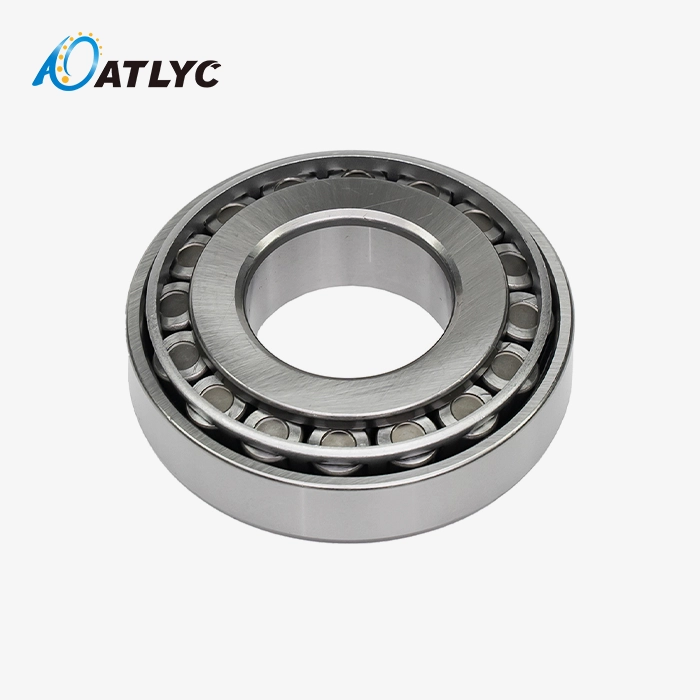
To figure out how long this ultra-thin bearing will last, you need to know how its unique design turns its theoretical ability into real-world endurance. This part is from the RA series, which is known for high-rigidity uses that need to save space. It has an inner diameter of 50 mm, an outer diameter of 66 mm, and an incredibly small width of 8 mm.
Load Distribution Mechanics and Longevity
Cross roller bearings last a long time because they distribute load intelligently. Along V-groove raceways, the cylindrical rollers are spaced out 90° apart and at right angles to each other. This makes a 45° contact angle that spreads forces across multiple planes at the same time. In normal ball bearings, point contact concentrates stress, but this arrangement is very different. It can handle radial forces, axial thrust, and moment loads all at the same time, so you don't need multiple bearing assemblies that add more places where things can go wrong.
The design of the outer ring being separate and the inner ring being integral keeps the structure strong while making installation easier. Spacer spacers stop direct rubbing between rollers, which lowers the amount of heat produced and material wear during constant use. This design concept makes the L10 rated life—the amount of time that 90% of bearings will still work—30–40% longer than with traditional configurations.
Material Composition Impact on Service Duration
Material choice is the first step in making things precisely. GCr15 or GCr15SiMn bearing steel, both of which meet international metallurgical standards, is used in high-quality cross roller bearings. GCr15 is very stable in its shape and very hard (58–62 HRC after heat treatment), making it good for moderate-speed uses. GCr15SiMn has silicon and manganese added to it, which makes it harder to work with and less likely to wear out. This is especially useful in high-cycle settings like robotic joints that are used millions of times a year.
How these materials work when they are stressed is determined by how they are heated. By first through-hardening and then precisely tempering, a tough core is made that can withstand impact while the surface stays hard to prevent wear. Leading makers use special heat treatment methods that lower residual stress by up to 40%. This directly leads to longer bearing life in setups that are prone to shaking.
Industry Benchmarks for Service Life Expectancy
The ISO 281 method is used to figure out standard ratings. This method compares the dynamic load capacity to the working loads and speeds. When you add up the bearing's dynamic load rating and the loads that are actually put on it, you get a theoretical L10 life that is measured in millions of revolutions. To turn this into working hours, you need to know how fast your program rotates.
| Operating Condition | Expected Service Life | Application Context |
|---|---|---|
| Light load, low speed | 50,000+ hours | Precision measurement instruments |
| Moderate load, medium speed | 25,000-35,000 hours | Industrial robot joints |
| Heavy load, high speed | 15,000-20,000 hours | Machining center rotary tables |
| Optimal maintenance conditions | 40,000-60,000 hours | Cleanroom automation equipment |
These figures represent conservative estimates from manufacturers maintaining ISO 9001 certification. Actual performance depends heavily on installation precision and environmental controls, which we address in subsequent sections.
Key Factors Affecting the RA5008UUCC0 Bearing's Performance and Durability
Mechanical load, the qualities of the material, and the operating surroundings all play a role in how long a bearing like RA5008UUCC0 Cross roller bearing lasts. When engineering teams know about these factors, they can plan repair rounds and avoid unexpected downtime.
Load and Speed Conditions
Dynamic load rates tell you how much force a bearing can handle while it's turning. At static load ratings, the capacity is measured when the load is not moving. This cross roller bearing works really well in situations where there is combined loading, which means that the equipment is under radial, axial, and moment forces at the same time. The design of the orthogonal rollers effectively spreads these multidirectional forces, stopping the track from deforming too soon.
The speed limits are caused by the heat that is generated when the rollers move. Too fast a spinning speed breaks down the oil and causes it to expand, which affects the accuracy of the measurements. The safest speeds depend on how the system is lubricated. Systems that use grease are usually rated lower than systems that use oil mist. By lowering thermal stress cycles, running at speeds less than 70% of their maximum rated speed increases life expectancy.
Material Quality and Heat Treatment Variations
Where the materials come from has a big effect on consistency and dependability. Reputable bearing makers have strict programs for qualifying suppliers that make sure the steel makeup meets very tight standards. Changes of only 0.05% in the carbon content can cause hardness profiles and wear limits to change by 10-15%.
This model's negative clearance (CC0) specification gets rid of internal play through controlled preload. This makes the system 300–400% more rigid than standard clearance designs. In this preload condition, the material must be very uniform; any metallurgical differences will concentrate stress and cause cracks to spread. Manufacturers who follow the IATF 16949 standards for car quality use statistical process control during heat treatment. This cuts down on failures caused by materials by more than 60%.
Design Features Enhancing Operational Lifespan
The dual rubber seal (UU) design is very important for keeping out natural contaminants. These seals keep the lubricant in while keeping out dust, metal particles, and water, all of which can cause rough wear in industrial settings. When used in conditions where open designs fail within months, sealed bearings keep working.
Roller distance and movement smoothness are affected by the shape of the cage. Precision-machined retainers keep the rollers in place while they rotate, which stops the skewing that leads to edge loading. Edge loading puts most of the force on narrow parts of the raceway, which speeds up the start of fatigue cracks. Good cages lower this risk and keep operating temperatures 15-20°C lower during long run cycles by reducing friction coefficients.
Maintenance and Installation Best Practices to Extend RA5008UUCC0 Bearing Life
Studies on the stability of the bearing business show that installation mistakes cause about 40% of earlier failures. Whether or not components reach their rated service life is directly related to how they are mounted and maintained.
Precision Installation Guidelines
The separate outer ring design makes attaching easier, but you need to pay close attention to how the binding force is distributed. When torque is applied unevenly, stress builds up in certain areas, which changes the shape of the circular raceway. For most installations, the instructions say to apply force values of 15 to 25 Nm in a star design across the fixing nuts. When you use measured torque tools, you can avoid both under-tightening (which lets the part move and causes pitting rust) and over-tightening (which causes elastic bending).
Tolerances for how the shaft and case fit together must match the bearing specs. Interference fits keep parts in place, but too much tightness puts too much stress on the bearing, which shortens its expected life by 50% or more. Precision ground surfaces with Ra values below 0.8 μm make sure that the load is transferred evenly. Particles that cause microscopic misalignment can be removed by cleaning all mating surfaces with lint-free cloths and approved solvents.
Thermal harm can be avoided by taking temperature into account during installation. If you heat bearings above 120°C, they could lose their hardness due to hardening effects. Induction heaters that keep an eye on the temperature allow for controlled, even growth. Before working loads are put on cooling shrink fits, they must stabilise at room temperature.
Lubrication Strategies for Maximum Durability
The choice of lubricant has a big effect on how fast things wear out and how well they resist oxidation in RA5008UUCC0 Cross roller bearing. Lithium-complex greases with an NLGI Grade 2 consistency work well in most situations because they are easy to pump and stick to surfaces. When working at temperatures above 80°C, you need synthetic base oils that are more stable at high temps. The chemical breakdown that lets lubricant leak out is stopped by seal materials that are compatible.
The amount of time between relubrications depends on the job cycle and the surroundings. If the machine is kept clean and running all the time, the times may be extended to 2,000 to 3,000 hours. Every 500 to 1,000 hours, machines need to be serviced in dirty settings or when they are only used sometimes. Checking the operating temperature of a bearing gives you an early warning—temperature rises of 10°C above normal usually mean that the lubricant is running out or that contaminants are getting in.
Oil lubrication systems work well in high-speed situations where churning grease makes too much heat. Moving oil removes heat energy while constantly screening out particles. Filtration standards and minimum oil flow rates (usually ISO 4406 cleanliness code 18/15/12 or better) keep the protective film between the raceways and rolling elements thick.
Troubleshooting Common Performance Issues
Vibration analysis finds problems before they become too big to fix. When placed close to the housings of the bearings, accelerometers record frequency patterns that are unique to certain flaws. When rollers wear out, frequencies that match the roller pass rates are created. When rollers aren't lined up right, axial vibration components are created. Setting up baseline measurements during commissioning makes condition-based maintenance strategies possible, which stops unexpected downtime.
More friction and higher operating temperatures are signs of contamination. Seal integrity checks make sure that the dust barrier is still working. Damaged seals need to be replaced right away because even small bits speed up three-body mechanical wear, which cuts life by 70–80%. Adding extra labyrinth seals protects even more in tough conditions without making friction much worse.
Conditions of overload show up as lasting distortions that can be seen when the load is inspected. Visual checks done on a regular basis can find discoloured raceways (which mean they're getting too hot), indentation marks (from shock loads), or damaged roller ends (from being out of alignment). Fixing the problems at their source—looking over load calculations, making sure shaft deflection limits are met, and making sure coupling alignment is correct—keeps problems from happening again and keeps replacement parts safe.
RA5008UUCC0 vs Other Bearings: Making the Right Choice for Longevity and Application
Component selection requires balancing performance requirements against cost and availability constraints. Comparing bearing types clarifies which design best serves specific operational demands.
Dimensional Comparisons Within Cross Roller Series
The RA5007UUCC0 measures 45mm ID × 61mm OD × 8mm width, offering a similar profile but reduced load capacity. Applications with space constraints but moderate loading benefit from this smaller variant. The RA5008UUCC0 handles approximately 15-20% higher radial and axial loads while maintaining the same compact 8mm cross-section, making it preferable for robotic wrist joints and rotary indexing tables requiring maximum stiffness.
Larger models like the RA5010UUCC0 (60mm ID × 78mm OD × 8mm width) accommodate heavier machinery but sacrifice the weight advantages crucial in aerospace and mobile robotics. Matching bearing size to actual load requirements prevents over-engineering that increases costs without improving reliability.
Performance Comparison: Cross Roller vs Ball Bearings
Traditional ball bearings contact raceways at discrete points, limiting load capacity per unit volume. Angular contact ball bearings arranged in duplex configurations approach cross roller performance but require more axial space and complex preload adjustments. A single cross roller bearing replaces multiple ball bearing assemblies, simplifying design and reducing potential failure modes.
Cross roller technology provides moment load capacity absent in ball bearing designs. Equipment subjected to overhang loads—such as cantilever-mounted rotary tables—experiences turning forces that ball bearings cannot effectively resist. The distributed roller contact in crossed configurations stabilizes these moments, preventing premature failure from raceway edge stressing.
| Bearing Type | Load Capacity | Rigidity | Space Efficiency | Service Life (Standard Conditions) |
|---|---|---|---|---|
| Cross Roller Bearing | Very High | Excellent | Compact profile | 25,000-35,000 hours |
| Angular Contact Ball | Moderate | Good | Requires stacking | 15,000-25,000 hours |
| Cylindrical Roller | High radial only | Very Good | Thicker profile | 30,000-40,000 hours |
| Tapered Roller | High combined | Good | Large envelope | 20,000-30,000 hours |
Application-Specific Advantages and Limitations
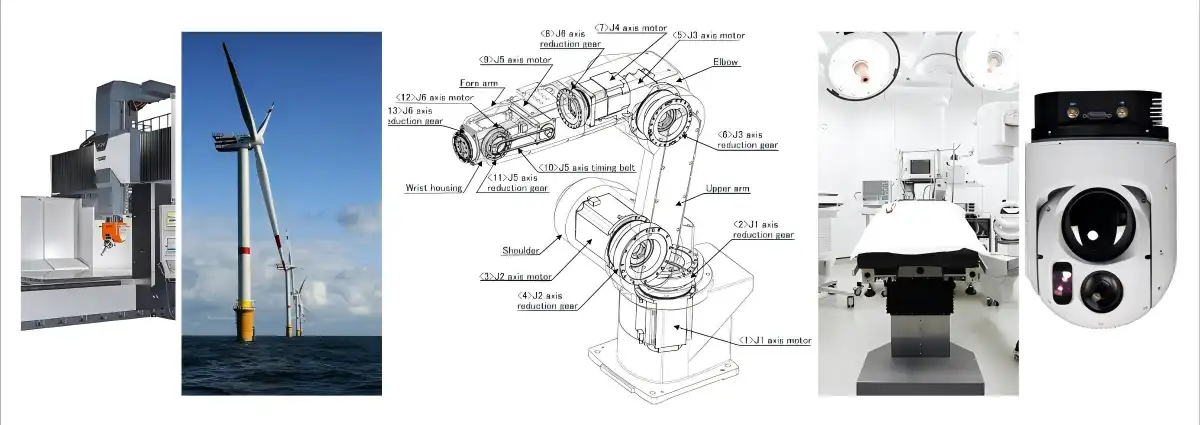
Cross roller bearings excel in precision positioning applications demanding repeatability within micrometers. The zero-clearance preload eliminates backlash that compromises accuracy in CNC rotary tables and semiconductor manufacturing equipment. Accuracy classes from P6 (standard) through P2 (ultra-precision) accommodate varying tolerance requirements, with P4 and P2 grades suited for metrology instruments and laser processing heads.
Limitations include lower speed capabilities compared to deep groove ball bearings. The larger roller contact area generates more friction at high RPM, restricting use in ultra-high-speed spindles. Cost considerations also factor into selection—cross roller designs typically command 40-60% premium pricing over conventional bearings. This investment proves justified in applications where compact size, moment resistance, and rotational accuracy create measurable value through improved machine performance and reduced maintenance frequency.
Procurement and Supply Chain Considerations for RA5008UUCC0 Bearings
Strategic decisions about where to get things affect both the short-term costs of a project and its dependability in the long run. Knowing how the market works and what suppliers can do lets you make smart purchases that meet quality standards and delivery deadlines.
Sourcing Genuine Components Through Verified Channels
There is a persistent problem with counterfeit bearings in global supply chains for the RA5008UUCC0 Cross roller bearing. It is thought that 5 to 8 percent of precision bearings sold by unauthorised distributors are not up to par copies. Real parts are always the right size, are made from approved materials, and have traceable lot numbers that let you check the quality. Verified suppliers have direct connections with manufacturers or authorised distribution networks and can show proof of authenticity.
Full tracking is needed for certification purposes in the aircraft and automobile industries. Compliance with IATF 16949 ensures that companies set up strong quality control systems that use statistical process control and corrective action methods. Customers can meet internal quality standards and external audit requirements when suppliers give them material certificates, dimensional inspection reports, and heat treatment documentation.
Bulk Ordering and Lead Time Management
When you buy more than 100 pieces at once, you can take advantage of economies of scale, which lowers the cost per unit by 15 to 30 percent. When OEM buyers need specifics that aren't standard, like special seal materials or non-standard setup values, they can work directly with the maker. For unique setups, the minimum order quantity is usually between 50 and 100 units, and the lead time is 8 to 12 weeks, compared to 2 to 4 weeks for normal catalogue items.
Problems with the supply chain in the past few years have made dual-sourcing methods even more important. Having qualified backup providers on hand keeps production from stopping when main sources experience capacity issues or delays in shipping. When demand goes up, annual supply agreements with volume commitments make sure that customers get better prices and faster delivery.
Evaluating Manufacturers and Distributor Networks
Well-known names like NSK, SKF, THK, Koyo, and Nachi set the standard for quality and customer service in their fields. These companies provide a lot of engineering tools, such as choice software, application debugging, and special design services. Premium prices reflect warranties that cover everything and service networks that work all over the world.
The quality and capabilities of Chinese companies that make precise bearings have improved a lot in the last ten years. Companies that have ISO 9001 and IATF 16949 certifications show that they follow international rules. Modern factories have CNC grinding centers, coordinate measuring machines, and automated assembly lines that are on par with the level of technology in factories in Europe and Japan. These sources are good for projects that need to save money and don't need a lot of professional help because their prices are usually 30 to 50 percent less than those of top brands.
As part of the due diligence process for choosing new suppliers, facilities should be inspected to make sure they meet standards for cleanliness, process capabilities, and gauge calibration systems. Material properties and size conformance are confirmed by testing samples in independent labs. Checking references with past customers can give you information about how well you deliver on time and how quickly you fix quality problems.
Conclusion
Service life expectancy for precision cross roller bearings hinges on multiple interconnected variables spanning design characteristics, material quality, installation precision, and maintenance discipline. The RA5008UUCC0 delivers exceptional performance in applications demanding compact size, multi-directional load handling, and zero-backlash accuracy. Manufacturers adhering to international quality standards produce components reliably achieving 25,000-35,000 operating hours under typical industrial conditions, with potential for 50,000+ hours in optimized environments. Strategic procurement through verified suppliers, coupled with rigorous installation procedures and proactive maintenance programs, maximizes component longevity while minimizing total ownership costs across robotic systems, precision machinery, and automated production equipment.
FAQ
1. What factors most significantly impact cross roller bearing lifespan?
Load intensity relative to rated capacity, operating speed, lubrication quality, and environmental contamination represent the primary variables affecting service duration. Bearings operating below 70% of rated load with proper lubrication and contamination protection typically exceed calculated L10 life by 50-100%. Conversely, overload conditions, inadequate lubrication, or abrasive particle ingress reduce life expectancy dramatically, sometimes to less than 20% of theoretical values.
2. How does the CC0 clearance specification affect bearing performance?
The CC0 designation indicates negative clearance or preload, eliminating internal play between rollers and raceways. This condition increases system rigidity by 300-400%, improves rotational accuracy, and enhances moment load capacity. Preloaded bearings require careful installation to prevent excessive stress and demand higher-quality materials to withstand the continuous compressive forces. Proper application of CC0 bearings extends precision equipment life through reduced vibration and improved positioning repeatability.
3. Can I replace premium brand bearings with Chinese-manufactured alternatives?
Modern Chinese bearing manufacturers holding ISO 9001 and IATF 16949 certifications produce components meeting international dimensional and material standards. Quality levels vary among suppliers, making vendor qualification essential. Reputable manufacturers utilize equivalent materials (GCr15/GCr15SiMn), similar heat treatment processes, and comparable precision grinding equipment. Cost savings of 30-50% make these alternatives attractive for applications where technical support requirements remain modest. Sample testing and gradual qualification through less-critical applications mitigate risk during supplier transitions.
Partner with ATLYC for Reliable RA5008UUCC0 Cross Roller Bearing Supply
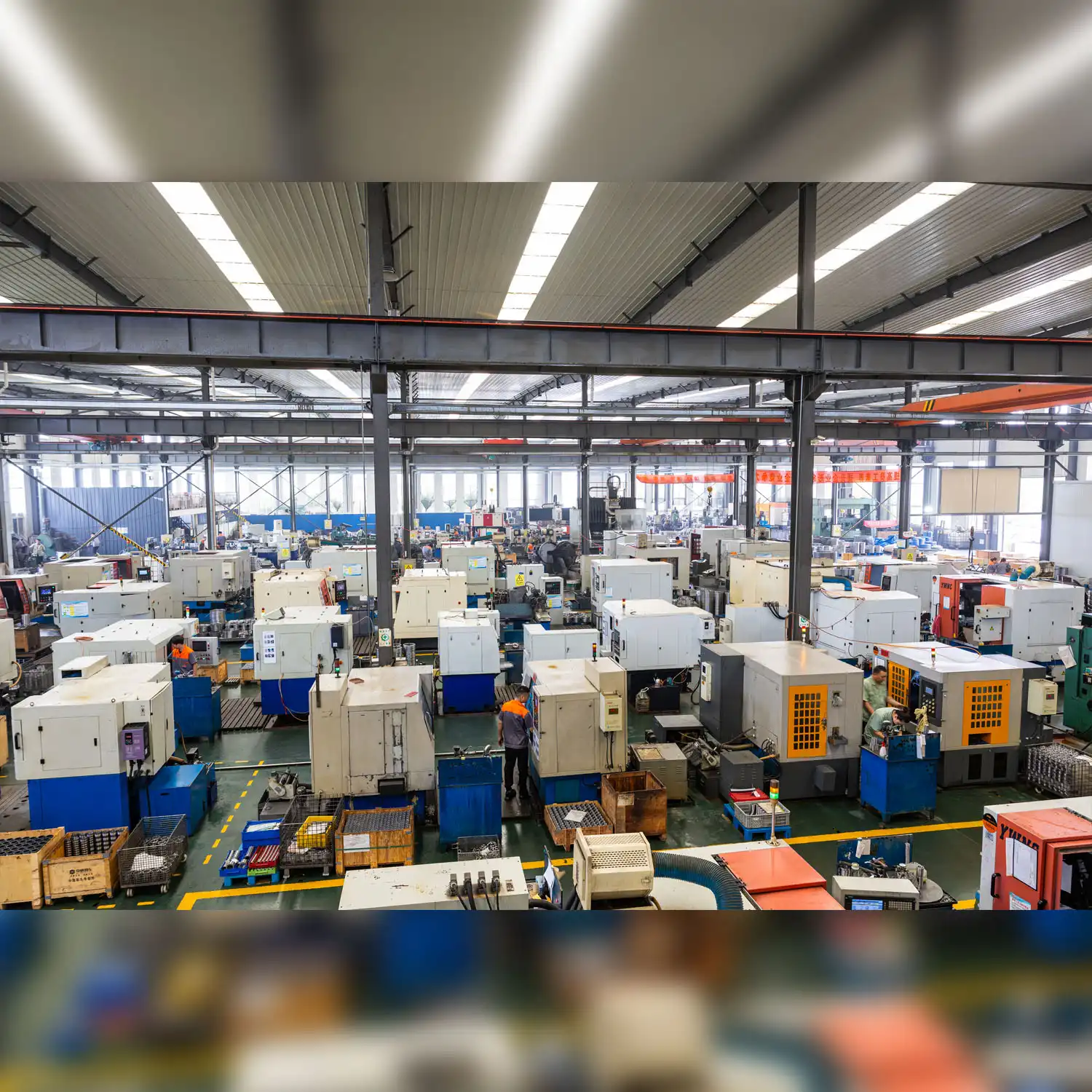
At ATLYC (Luoyang Auto Bearing Co., Ltd.), we bring 15 years of precision bearing manufacturing excellence to your most demanding applications. Our ISO 9001 and IATF 16949 certified facilities produce high-quality cross roller bearings that meet international standards while offering compelling value. With 120 dedicated professionals operating six specialized workshops, we've expanded our capabilities from a single-product focus to comprehensive bearing solutions serving customers across South Korea, the United States, Germany, Russia, Iran, and Turkey.
Our RA5008UUCC0 cross roller bearing manufacturer credentials include rigorous quality control, competitive lead times, and technical support throughout your procurement process. We understand that OEM customers and bearing distributors require consistent supply partnerships backed by proven manufacturing capacity and responsive service. Reach out to our team at auto@lyautobearing.com to discuss your specific requirements, request technical specifications, or obtain volume pricing for your next project. Let us demonstrate how Chinese precision manufacturing, combined with international quality standards, delivers the reliability your equipment demands.
References
1. Harris, T.A. and Kotzalas, M.N. (2006). Advanced Concepts of Bearing Technology: Rolling Bearing Analysis, Fifth Edition. CRC Press, Taylor & Francis Group.
2. ISO 281:2007. Rolling Bearings — Dynamic Load Ratings and Rating Life. International Organization for Standardization, Geneva, Switzerland.
3. Wienert, K. (2014). "Cross Roller Bearing Design and Application Considerations in Precision Motion Systems." Precision Engineering Journal, Vol. 38, Issue 4, pp. 789-801.
4. Schaeffler Technologies AG & Co. (2019). Rolling Bearings: Catalogue HR 1. Technical Documentation, Herzogenaurach, Germany.
5. THK Co., Ltd. (2021). Cross Roller Ring Technical Reference Guide. Engineering Documentation, Tokyo, Japan.
6. Zhang, Y., Wang, L., and Chen, X. (2018). "Fatigue Life Analysis of Precision Cross Roller Bearings Under Combined Loading Conditions." Tribology International, Vol. 126, pp. 312-324.
Learn about our latest products and discounts through SMS or email
_1772782093670.webp)