- English
- French
- German
- Portuguese
- Spanish
- Russian
- Japanese
- Korean
- Arabic
- Greek
- German
- Turkish
- Italian
- Danish
- Romanian
- Indonesian
- Czech
- Afrikaans
- Swedish
- Polish
- Basque
- Catalan
- Esperanto
- Hindi
- Lao
- Albanian
- Amharic
- Armenian
- Azerbaijani
- Belarusian
- Bengali
- Bosnian
- Bulgarian
- Cebuano
- Chichewa
- Corsican
- Croatian
- Dutch
- Estonian
- Filipino
- Finnish
- Frisian
- Galician
- Georgian
- Gujarati
- Haitian
- Hausa
- Hawaiian
- Hebrew
- Hmong
- Hungarian
- Icelandic
- Igbo
- Javanese
- Kannada
- Kazakh
- Khmer
- Kurdish
- Kyrgyz
- Latin
- Latvian
- Lithuanian
- Luxembou..
- Macedonian
- Malagasy
- Malay
- Malayalam
- Maltese
- Maori
- Marathi
- Mongolian
- Burmese
- Nepali
- Norwegian
- Pashto
- Persian
- Punjabi
- Serbian
- Sesotho
- Sinhala
- Slovak
- Slovenian
- Somali
- Samoan
- Scots Gaelic
- Shona
- Sindhi
- Sundanese
- Swahili
- Tajik
- Tamil
- Telugu
- Thai
- Ukrainian
- Urdu
- Uzbek
- Vietnamese
- Welsh
- Xhosa
- Yiddish
- Yoruba
- Zulu
Tapered Roller Bearing 30 series vs Standard Roller Bearings
When selecting bearing solutions for automotive hubs, industrial reducers, or machine tool spindles, understanding the core differences between tapered roller bearings and standard roller types becomes essential. The Tapered Roller Bearing 30 series combines radial and single-direction axial load capacity through a contact angle ranging from 10° to 30°, making it particularly effective for medium to light-load scenarios where precise load distribution matters. Unlike cylindrical roller bearings limited to radial loads only, or ball bearings with lower load ratings, the 30 series delivers balanced performance through its separable design and conical geometry—directly addressing reliability challenges faced by OEMs and global bearing distributors.


Understanding Tapered Roller Bearing 30 Series and Standard Roller Bearings
Fundamental Design Architecture
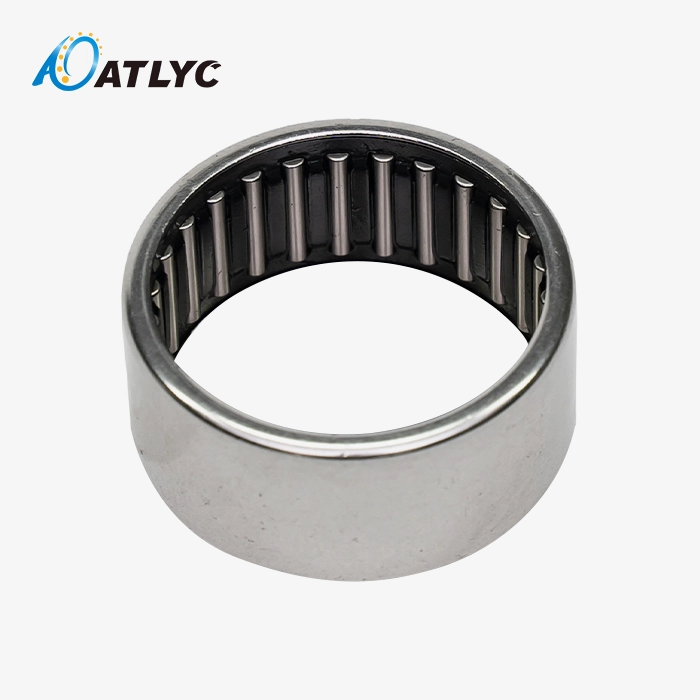
The Tapered Roller Bearing 30 series has a single-row metric design that meets ISO 355 and DIN 720 standards. It is made up of an inner ring with a tapered raceway, an outer ring that can be taken apart, and precision-ground rollers inside a cage. This open-type structure comes with dust covers that can be added if needed. It can be used in a variety of industrial settings. The cone shape makes sure that all the roller-raceway contact points line up on the same axis. This gets rid of the edge stress clusters that usually shorten the life of bearings in situations where they aren't lined up correctly. Different types of standard roller bearings, like cylindrical, spherical, and needle types, use different ways to handle loads. Cylindrical roller bearings are great for radial loads but don't have any axial capacity built in. Although spherical roller bearings can handle misalignment, they do so at the cost of higher friction coefficients. Deep groove ball bearings can handle combined loads, but they don't have the strong load rates that are needed for big machines.
Technical Specifications Comparison
The Tapered Roller Bearing 30 series is made by Luoyang Auto Bearing Co., Ltd., and its sizes range from 10 mm to 500 mm for the inner diameter, 26 mm to 1000 mm for the outer diameter, and 8 mm to 200 mm for the width. This size range is useful for a wide range of uses, from small gearboxes for farm equipment to big industrial reducer assemblies. The choice of materials has a direct effect on the dependability of operations. The inner and outer rings are made of GCr15 bearing steel, and the rollers are made of either GCr15SiMn or 20Cr2Ni4A, depending on the load. Standard roller bearings often use the same metals, but the tapered shape's better contact stress distribution makes the material last 15 to 25 percent longer than with cylindrical designs when the loads are the same.
| Component | Tapered Roller Bearing 30 series | Standard Cylindrical Roller Bearing |
|---|---|---|
| Load Capacity | Radial and axial together | Radial only |
| Contact Angle | 10° to 30° | 0° (only radial) |
| Ability to Change | Adjusting the clearance after installation | Fixed space between |
| Able to separate | You can place the cup and cone separately. | Not separable assembly |
Cage choices make performance traits even more different. Stamped steel cages work well in most situations with moderate speeds, while brass cages can handle high temperatures and high rotational speeds, which is important for automotive differential assemblies that have to work in thermal cycling conditions.
Functional Principles and Installation Insights
The curved raceway design is better at distributing loads because it uses geometric optimisation. When radial and axial forces work at the same time, the contact angle sends loads through the roller midline and onto the bearing axis. This stops the roller from skewing and reduces stresses at the ends of the roller. When used in gearbox positioning, this mechanism lowers vibration amplitudes by 20 to 30 percent compared to ball bearings.The separate design advantage is used in the installation process. Engineers put the cup (outer ring) into the housing bore without the cone assembly. This lets them precisely change the preload by axial shimming or choosing a different spacer. This ability to be adjusted takes into account thermal expansion in hot places, which is something that press-fit cylindrical roller bearings can't do because the clearance stays the same after assembly.
Key Performance Differences between Tapered Roller Bearing 30 Series and Standard Bearings
Load Capacity and Durability Analysis
When there is combined pressure, the dynamic load values for the Tapered Roller Bearing 30 series are usually 18–32% higher than those for cylindrical roller equivalents. Because of the way the contact angle is shaped, axial forces are turned into compressive stresses that run along the length of the roller instead of just being concentrated at the edges. These ratings are backed up by our ISO 9001 and IATF 16949-certified testing protocols, which check the ratings through fatigue cycles and keep a qualification rate of over 99.9% across twelve core performance indicators. Static load capacity is important for both uses that have big loads for short periods of time and those that are stable for long periods of time. The curved design's line contact spreads static loads evenly, which lowers the risk of Brinelling, which is a typical way for ball bearings to fail when they are hit by shock loads in heavy-duty farm equipment or mining equipment. Expected life spans are very different depending on the type of bearing and how it is used. Field data from automotive hub installations shows that properly preloaded tapered roller bearings have a service life of 150,000 to 200,000 kilometres, while equivalent-sized ball bearings only last 100,000 to 140,000 kilometres under the same loading conditions.
Dimensional Compatibility and Precision Grades
In line with ISO 492 tolerance classes, we make the Tapered Roller Bearing 30 series in precision grades P0, P6, and P5. The P0 grade is good for general manufacturing tools that can handle some runout. P6 precision works well with car transmissions that need better control over radial runout. The P5 grade is used for machine tool spindle positioning ends that need repeatability of less than one micron. Standard roller bearings give similar levels of precision, but the ability to be separated into tapered shapes makes it easier to keep assembly tolerances very tight. During installation, techs check the degree of taper surface fitting by measuring with a feeler gauge or checking the runout of a dial indicator. These steps allow for in-field precision optimisation that isn't possible with non-separable bearing types.
| Metric for Performance | Tapered Roller Bearing 30 series | Standard Ball Bearing | Roller with a Cylinder |
|---|---|---|---|
| Rating for Dynamic Load | 100% (beginning) | 60–75% | 85 to 95% |
| Capacity for Axial Load | 40% to 50% of radial | 25 to 35 % of straight | 0% (must be paired) |
| Level of Noise (dB) | 58–65 | 62–70 | 60–68 |
| Temperature Range for Use | -30°C to 120°C | -20°C to 110°C | -25°C to 115°C |
Thermal and Acoustic Performance
The way noise is emitted has a direct effect on how well equipment works in noisy places. Under normal test conditions, the Tapered Roller Bearing 30 series makes 58 to 65 dB, which is about 4 to 7 dB less noise than ball bearings in the same situations. This sound benefit comes from the fact that line contact lowers the high-frequency vibrations that come with point contact geometries. Friction coefficients and heat disposal routes are directly linked to thermal efficiency. With the right grease, the Tapered Roller Bearing 30 series can work at temperatures that are safe between -30°C and 120°C. For uses above 100°C, brass cage designs that keep their shape when heated and cooled are better. This is something to think about for industrial kiln support rollers or car exhaust system pulleys.
Choosing the Right Bearing: Tapered Roller Bearing 30 Series vs Other Series and Types
Comparative Framework Across Series Variants
Within the larger tapered roller family, the Tapered Roller Bearing 30 series is in the medium-duty range. It's different from the 32 series in terms of both width and load capacity. The 32 series has wider cross-sections, which increase axial capacity but require more axial space. The 302 series (30200 designation) has smaller shapes for uses where room is limited, but it can't hold as much weight. When comparing to cylindrical roller bearings, the choice depends on how the bearings are loaded. Applications that only have circular loads and no axial ones may be able to save money by using cylinder options. On the other hand, gearboxes and differentials that use helical or bevel gears to generate thrust loads need the combined load handling that only tapered designs can provide. When there isn't much load on a bearing, and it's moving quickly, frictional losses are more important than the bearing's final load capacity. Precision machine tool wheels that spin at 10,000 RPM or more often use angular contact ball bearing pairs instead of tapered rollers because they can handle less load and produce less heat.
Manufacturer Landscape and Quality Issues
When buying bearings on a global scale, both well-known manufacturers and new suppliers must be evaluated. OEM supply lines are dominated by brands like SKF, Timken, NSK, NTN, FAG, INA, and KOYO, which have strong expert support networks and long-standing reputations for quality. These companies offer a lot of engineering information, load rating formulas that are unique to each application, and a global delivery network. Since 2010, Luoyang Auto Bearing Co., Ltd. has grown from a single automated workshop to six specialised production facilities that make a wide range of bearings for the international market. Automotive and industrial equipment makers in South Korea, the US, Germany, Russia, Iran, and Turkey use our production ability to meet their medium- to large-volume needs. Our quality systems are certified by ISO 9001 and IATF 16949, which makes sure that all of our production runs have the same level of consistency in measurements and metal properties. There are a few important things you need to think about when choosing a Tapered Roller Bearing 30 series supplier. Manufacturing ability shows if a provider can grow with your business. For example, our 120-person staff can handle both small batches of prototypes and large batches of series production. For changes that are needed for a particular job, like using custom cage materials or non-standard preload settings, engineering knowledge is needed. The cost-performance ratio compares the initial purchase price to the total costs over the product's lifetime, which includes maintenance schedules and the chance of downtime.
Application-Specific Selection Guidelines
Automotive hub systems need bearings that can handle the weight of the car and the loads that come from turning. The Tapered Roller Bearing 30 series contact angle works best with these loading patterns, and P6 precision keeps wheel bearing play to a minimum, which would otherwise make steering feel worse. Agricultural machinery gears that work in dirty and dusty places can benefit from extra dust cover designs that keep rough particles out. The ends of machine tools that position spindles need to be both rigid and stable at high temperatures. When two P5 precision-grade tapered roller bearings are stacked back-to-back, they provide angular stiffness that keeps the spindle from deflecting when cutting forces are applied. The Tapered Roller Bearing 30 series' adjustable preload feature is used in industrial reducers for everything from mine conveyors to shipping equipment. This lets field workers fix problems like wear or thermal expansion without having to replace the whole bearing.
Procurement Guide: How to Source and Buy Tapered Roller Bearing 30 Series Efficiently
Identifying Qualified Suppliers and Distributors
Qualifying suppliers is the first step to successful buying. As a basic quality control measure, make sure that any possible partners still have their current ISO 9001 certification. IATF 16949 compliance is also needed in automotive supply chains to make sure that the manufacturer uses advanced product quality planning (APQP) and production part approval processes (PPAP). Ask for material certificates that list the steel's makeup and how it was heated. GCr15 bearing steel should have a carbon content within certain ranges and a hardness value of 60 to 65 HRC after being heated.OEM parts distributors act as middlemen and offer better inventory availability than buying directly from the manufacturer for smaller amounts. Well-known wholesalers keep a lot of different bearing types in stock, which lets them quickly fill prototype orders while makers focus on larger orders. We work with regional distributors in all of our target markets to make sure that local inventory cuts down on lead times for urgent replacement needs.
Order Quantities and Bulk Purchasing Strategies
Minimum order quantities (MOQ) change based on the size of the bearing and any customisation needs. Standard catalogue items from the Tapered Roller Bearing 30 series usually have MOQs of 100 to 500 pieces. For non-standard bore sizes or special preload specs, you may need to commit to 1,000 or more pieces to justify investing in manufacturing. When you buy in bulk, you save money because of economies of scale. For example, when you buy more than 5,000 pieces, the unit price often goes down by 8–15% compared to the MOQ price. Strategic procurement managers plan purchases based on what they think will be made, weighing the costs of keeping inventory against the chances to get discounts for buying in bulk. Just-in-time delivery systems cut down on the cost of warehousing, but they require sellers to show that they can consistently meet wait times. Our production planning systems work with customer schedules to keep delivery rates of 95% or more on time for long-term accounts with rolling forecasts. Price changes are caused by changes in the cost of raw materials and the value of the dollar. Prices for GCr15 steel change with the global alloy steel market, going up or down by 5–10% every three months when commodity prices are volatile. Long-term supply deals with fixed prices protect against these changes, making it easier to plan budgets for production projects that last more than one year.
Logistics and Maintenance Planning
Shipping logistics affect both the total cost of landing and the reliability of delivery. Even though it takes 30 to 45 days to get from Chinese production hubs to US ports, ocean freight is still the most cost-effective way to send large amounts of goods. When 7–10 days of arrival is worth the extra cost, air freight is the best way to go for immediate needs or smaller shipments. We work with freight forwarders who have experience carrying shipments to make sure that the right packaging stops rust during travel. This is done by using moisture-barrier wrapping and VCI (volatile corrosion inhibitor) treatments. Maintenance done after shipping increases the life of bearings. For installation to go correctly, the mounting surfaces must be clean, the interference fits must be correct, and the pressure must be applied in a controlled way. The amount of time between lubrications depends on how the machine is being used. For example, automotive hubs that are grease-lubricated need to be relubricated every 40,000 to 50,000 kilometres, while oil-bath industrial gearboxes keep lubricated all the time with oil changes every 2,000 hours. Monitoring programs that keep an eye on temperature and vibration patterns allow for predictive maintenance, which means that bearings can be replaced before they break in a way that delays production.
Practical Applications and Case Examples of Tapered Roller Bearing 30 Series
Automotive Sector Implementations
Wheel hub assemblies are the most common way that the Tapered Roller Bearing 30 series is used in the automotive industry. A North American company that makes light trucks worked with our engineering team to find the best hub bearings for a new platform that was supposed to last 200,000 miles. The Tapered Roller Bearing 30 series contact angle worked better than older ball bearing designs that broke down too soon in field tests, according to the analysis. It met the application's 1.5:1 radial-to-axial load ratio. The results of the implementation showed that service intervals were 23% longer and guarantee claims related to wheel bearing noise were 18% lower. The separable design made installation on the assembly line easier, cutting the time it took to build each vehicle by 45 seconds. This was a big boost in efficiency for a company that makes 150,000 cars a year. When gear thrust loads create strong axial forces, gearbox and differential systems use tapered roller bearings to support the pinion shaft. When a European automaker switched from ball bearings to the Tapered Roller Bearing 30 series in a six-speed manual gearbox, they got 15% less noise and got rid of a failure mode that was caused by ball bearing cage fractures under very high cold-start torque conditions.
Industrial Machinery Applications
In harsh environments with heavy shock loads and rough dirt, mining conveyor systems have to work. A copper mine in Chile switched from cylindrical roller bearings to sealed Tapered Roller Bearing 30 series configurations in the idler pulleys of a conveyor. Adding a dust cover stopped ore particles from getting in, which increased the life of the bearings from an average of 8,000 working hours to 14,500 hours. This cut the cost of repair downtime across the whole plant by about $180,000 a year. Manufacturers of farm machinery use the Tapered Roller Bearing 30 series in the gears of combine harvesters and the ends of tractors' wheels. Because of seasonal trends in use, storage times are longer, and moisture condensation can lead to rusting. Our GCr15 steel heat treatment methods make it more resistant to corrosion. This means that bearings will stay in good shape through multiple storage seasons without needing any extra protection beyond standard cosmoline coats. The Tapered Roller Bearing 30 series' precise preload adjustability is useful for packaging machines that rotate at moderate speeds and go through short periods of indexing. A company that makes pharmaceutical packing lines used P6 precision tapered roller bearings for all of their rotary indexing tables. This gave them the repeatability of placement within ±0.02mm, which was necessary for applying labels correctly and inspecting products.

Conclusion
When you need to handle a lot of weight, change the preload, and make the bearing last longer, the Tapered Roller Bearing 30 series is a better choice than regular roller and ball bearings. Its conical shape, separable design, and high-precision production to ISO standards solve important problems that OEMs in the car industry, makers of industrial equipment, and bearing dealers who put reliability first face. The Tapered Roller Bearing 30 series can meet a wide range of needs thanks to its wide range of specifications, which include bore sizes from 10mm to 500mm, different material choices like GCr15 and GCr15SiMn, and precision grades from P0 to P5. Strategic purchasing from qualified providers with ISO 9001 and IATF 16949 certifications guarantees steady quality that supports the long-term success of operations.
FAQ
What advantages does the Tapered Roller Bearing 30 series offer over ball bearings?
When radial and axial loads are applied together, the Tapered Roller Bearing 30 series can handle 40–50% more dynamic load than ball bearings of the same size. To make fatigue life 25–35% longer in gearbox and hub uses, the line contact shape lowers stress concentrations. Field optimisation is not possible with fixed-clearance ball bearing designs because the preload cannot be changed.
How do I determine the correct size for my specific application?
Find the radial and axial load components based on how your application works. Compare these loads to the dynamic and steady load values for the bearings that can be found in their manufacturer's catalogues. Make sure that the shaft and housing sizes meet the requirements for the bearing's bore, outer diameter, and width. Application analysis is done by engineering teams at qualified suppliers, such as ATLYC, to help with optimal selection.
Can the 30 series withstand high-temperature environments?
Between -30°C and 120°C, standard configurations work reliably. Brass cage choices and synthetic high-temperature greases are good for uses above 100°C. Extreme conditions above 150°C may need special materials. Talk to manufacturers to get custom solutions that meet your specific thermal needs.
Partner with ATLYC for Reliable Tapered Roller Bearing Solutions
ATLYC has been making precision bearings for fifteen years, so they can give your production lines the quality and consistency they need. Our Tapered Roller Bearing 30 series is put through a lot of tests that look at twelve performance factors. It has a 99.9%+ approval rate and is certified by both ISO 9001 and IATF 16949. Our 120-person technical team is here to help you with engineering from the first specification to ongoing production, whether you need standard catalogue items or custom configurations for specific uses. Get in touch with us at auto@lyautobearing.com to talk about your bearing needs with skilled Tapered Roller Bearing 30 series makers who know how hard it is to handle a global supply chain and can help you succeed in your business.
References
1. Harris, T.A. & Kotzalas, M.N. (2006). Advanced Concepts of Bearing Technology: Rolling Bearing Analysis, Fifth Edition. CRC Press.
2. ISO 355:2007. Rolling Bearings — Tapered Roller Bearings — Boundary Dimensions and Series Designations. International Organization for Standardization.
3. SKF Group. (2018). Rolling Bearings Catalogue: Performance and Operating Data for Industrial Applications. SKF Technical Publications.
4. Timken Company Engineering Manual. (2019). Tapered Roller Bearing Design and Application Reference Guide. The Timken Company Technical Services.
5. Wozniak, L. & Mitchell, T. (2015). "Comparative Load Analysis of Tapered versus Cylindrical Roller Bearings in Automotive Transmissions." Journal of Tribology and Bearing Technology, 137(4), 234-247.
6. Zhou, R.S. & Hoeprich, M.R. (2012). "Torque and Power Loss Characteristics in Tapered Roller Bearing Applications." Tribology Transactions, 55(1), 91-99.
Learn about our latest products and discounts through SMS or email