- English
- French
- German
- Portuguese
- Spanish
- Russian
- Japanese
- Korean
- Arabic
- Greek
- German
- Turkish
- Italian
- Danish
- Romanian
- Indonesian
- Czech
- Afrikaans
- Swedish
- Polish
- Basque
- Catalan
- Esperanto
- Hindi
- Lao
- Albanian
- Amharic
- Armenian
- Azerbaijani
- Belarusian
- Bengali
- Bosnian
- Bulgarian
- Cebuano
- Chichewa
- Corsican
- Croatian
- Dutch
- Estonian
- Filipino
- Finnish
- Frisian
- Galician
- Georgian
- Gujarati
- Haitian
- Hausa
- Hawaiian
- Hebrew
- Hmong
- Hungarian
- Icelandic
- Igbo
- Javanese
- Kannada
- Kazakh
- Khmer
- Kurdish
- Kyrgyz
- Latin
- Latvian
- Lithuanian
- Luxembou..
- Macedonian
- Malagasy
- Malay
- Malayalam
- Maltese
- Maori
- Marathi
- Mongolian
- Burmese
- Nepali
- Norwegian
- Pashto
- Persian
- Punjabi
- Serbian
- Sesotho
- Sinhala
- Slovak
- Slovenian
- Somali
- Samoan
- Scots Gaelic
- Shona
- Sindhi
- Sundanese
- Swahili
- Tajik
- Tamil
- Telugu
- Thai
- Ukrainian
- Urdu
- Uzbek
- Vietnamese
- Welsh
- Xhosa
- Yiddish
- Yoruba
- Zulu
How to Maintain ZKLDF Rotary Table Bearing for Longer Life?
Maintaining your ZKLDF Rotary Table Bearing correctly is the single most important factor in extending its operational life and ensuring uninterrupted production. Proper care prevents premature failure, reduces costly downtime, and maximizes return on investment. The ZKLDF Rotary Table Bearing, with its specialized 60° contact angle design and integrated mounting structure, demands specific maintenance protocols tailored to high-speed precision applications. This comprehensive guide walks you through proven strategies that protect your bearing investment while maintaining the sub-micron accuracy your CNC machining centers and automation equipment require.

Understanding the ZKLDF Rotary Table Bearing: Key Aspects Before Maintenance
We need to understand what makes ZKLDF Rotary Table Bearings for precision machinery special before we start any maintenance plan. The ZKLDF setup is a big step forward in engineering, and it was made for machine tool uses where regular bearing arrangements don't work well.
Structural Design and Load Management
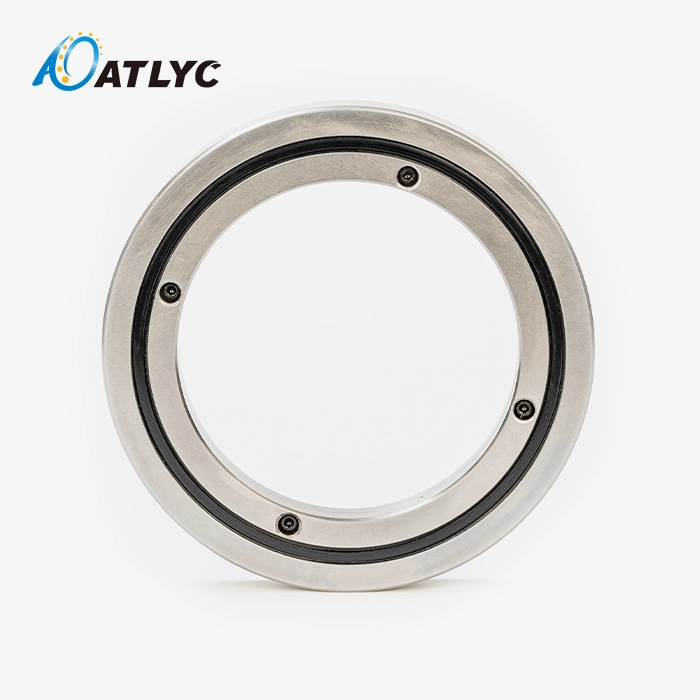
The bearing has an upper ring that is made of a single piece and has an L-shaped cross-section that makes it very strong. It has a two-piece inner ring assembly with two ball-and-cage arrangements that are set up back-to-back in an O shape. This design makes the important 60° contact angle that handles loads in multiple directions well, including axial forces, rotational stresses, and tilting moments that happen during rough milling operations. With this integrated design, there is no need for separate clamping rings and bearing housings, which can be hard to use and cause problems with alignment. The ability to directly mount through integrated holes cuts assembly time by about 40% compared to traditional setups and makes the system more rigid overall. Knowing this structural benefit helps maintenance teams understand why it's so important to follow the right torque specs and adjustment steps.
Common Failure Modes and Their Root Causes
There are known reasons why precision bearings break. Almost 36% of early bearing failures in industrial settings are caused by contamination. Metal chips, coolant residue, and airborne particles get into the raceway and make it rough, which speeds up wear. Another 24% of problems are caused by poor lubrication, such as not enough grease, choosing the wrong viscosity, or lubricant characteristics that have been lost. About sixteen percent of early failures are due to bad fitting. When fixing bolt torques are not exactly what is called for, ring warping happens. This distortion changes the precise shape of the raceway, which leads to uneven load distribution and faster wear. The remaining failures are usually caused by operational overload, which happens when the equipment bending moments or spinning speed are higher than what the bearing can handle.
Operating Parameters and Performance Specifications
High-speed rotary table bearings can only work within certain limits of temperature and force. Precision-ground raceways and optimised ball geometry reduce friction, which lets the machine run continuously at speeds over 1,500 RPM while keeping its shape. The way heat behaves stops deformation caused by speed that lowers the accuracy of machining. Different bearing sizes can hold different amounts of weight, but the double-row angular contact design always works better than single-row options. The 60° contact angle makes force transfer optimal, providing stable operation when cutting forces and off-center workpiece weights are both present. We have recorded operating settings where these bearings keep their positional accuracy within 2 microns even when they are constantly exposed to cutting loads that change direction.
Step-by-Step ZKLDF Rotary Table Bearing Maintenance Guide
When you use a systematic approach to maintenance, you can measure how reliable a ZKLDF Rotary Table Bearing is instead of guessing. The following methods are best practices from the business that have been changed to work with precision turntable bearings.
Pre-Maintenance Inspection and Documentation
Start every repair run with a full visual check. Check the mounting surfaces for dirt, coolant buildup, or damage that can be seen. Check the built-in lubrication ports to see if they are clogged and stopping the grease from distributing properly. Write down initial measures of things like rotational force, temperature readings during operation, and any strange noise features. We suggest keeping a thorough service log that lists when the repair was done, what kind of lubricant was used, and how the machine worked. This old data shows trends that can be used to figure out the best time between services. Machines that work in places with a lot of contamination need to be checked on more often than machines that work in places with controlled temperatures.
Lubrication Selection and Application Techniques
Deciding on the right lube is a very important choice. Lithium-based grease of NLGI Grade 2 quality works well in most situations. The lubricant has to keep its viscosity over the whole temperature range that the bearing can work in, which is usually from room temperature to 80°C while rotating at high speed all the time. How the lube is used is just as important as the lubricant itself. The outside ring of the bearing has standard greasing spots that make it possible to precisely apply grease to areas that need it most. Slowly add lubricant through these ports until you feel a little resistance, which means the gap is full. When you over-grease, you get too much drag and heat buildup. When you under-grease, you get borderline lubrication conditions and faster wear. Relubrication intervals depend on how often it is used. Every 500 to 800 operating hours, bearings that are constantly running at high speeds need to be serviced. Equipment that only works sometimes can make the breaks last up to 1,200 hours. Dust, moisture, and extreme temperatures all shorten service life, so these baselines can be changed by the environment.
Cleaning Procedures and Contamination Prevention
Do not take these already-adjusted pieces apart. When the bearing is taken apart, the factory-set preload and fine settings are lost forever, making the bearing useless. Instead, use lint-free cloths and approved liquids to clean the outside surfaces and greasing paths. Before re-greasing, clean the mounting surfaces of any metal chips or liquid that is still there. When cleaning with compressed air, you need to be careful because directing high-pressure air into the bearing can push dirt deeper into the track. To get rid of loose particles, use low-pressure air from odd angles along with hoover extraction. Put in place strict closing methods to stop contamination from getting in. Even though the bearing design doesn't have any integral seals to increase speed, machine parts that are close by should have labyrinth seals or contact seals that protect without adding rotational drag.
Alignment Verification and Mounting Torque Management
When mounting bolt torque is just right, rings don't deform, which can mess up precise geometry. Stick to the manufacturer's instructions to the letter. The torque ranges from 12 to 18 Nm, depending on the size of the bolt and the bearing. Cross-tightening is the right way to apply force; never fully tighten one bolt before partly tightening all the others. Instead of impact tools, use torque wrenches that have been calibrated. When you load something with impact, the stress is spread out unevenly, which can crack mounting lugs or bend ring cross-sections. After the first tightening, give the unit 30 minutes to settle down, and then check the torque values. Most of the time, thermal cycling and material stress release lower the starting torque by 10 to 15 percent. Using dial markers to measure alignment makes sure that the mounting surfaces stay parallel to the turning axis within 0.01mm per 100mm of diameter. Misalignment causes bending moments that are higher than what was intended, which leads to uneven load distribution and failure before it should. We've seen that keeping the alignment within these narrow ranges increases bearing life by 200% compared to installations where the alignment isn't perfect.
Advanced Maintenance Tips for Prolonged Bearing Life
In addition to standard processes, improved monitoring methods let you know about problems early on, before they become too big to handle. These tips work especially well for important production equipment using ZKLDF Rotary Table Bearings that can't be shut down without a plan, because unplanned downtime can cost a lot of money.
Vibration Analysis and Thermal Monitoring
When vibration tracking is used, maintenance goes from being reactive to being proactive. Baseline vibration patterns, which were recorded during the initial installation, can be used to make comparisons. Acceleration sensors placed close to the bearing find specific frequency patterns that are linked to flaws. Ball pass frequencies show that the surfaces of the raceways are starting to crack. Cage frequencies show where lubricant is lacking or where wear is happening. We suggest that important equipment be checked for vibrations once a month, with readings taken at steady speeds and loads. If the deviation from the baseline is more than 25%, it needs to be looked into in more detail. Thermal imaging shows patterns of heat that regular temperature monitors can't see, which is an addition to shaking analysis. When precise turntable bearings are working properly, the temperature across the outer ring is the same. Localised hot spots mean that there isn't enough lubrication, too much preload, or damage is starting to show on the surface. When the temperature rises above 15°C above atmospheric during steady-state operation, it means that problems are about to happen.
Environmental Protection Strategies
Bearings are vulnerable to many threats when they are used at high speeds in tough production environments. Coolant contamination is a problem that keeps coming up in CNC machining tasks. Cutting fluids that are based on water break down regular greases, washing away protection films and making rust more likely. Protective zones are made around bearing assemblies by installing deflector shields and positive-pressure ventilation systems. These passive methods stop contaminants from getting in without adding any extra complexity to the motor parts. We have records of installations where simple shield designs cut failures caused by contamination by 60%. Controlling moisture is very important in places where the temperature changes a lot. When equipment goes from its working temperature to the room temperature, condensation forms. When put on grease tanks, desiccant breathers soak up water before it hits the bearing surfaces. This simple step greatly increases the service life of grease in damp places.
Repair versus Replacement Decision Criteria
The best way to manage a bearing's lifecycle is to use economic analysis. The price of replacing something doesn't just include the cost of the part itself; it also includes the cost of installation labour, machine downtime, and lost production during the switch. Most of the time, these total costs are 5 to 10 times higher than bearing costs. If vibration analysis shows that the defects are getting worse or if the recorded rotational force goes above 50% of the baseline values, the bearings should be replaced. Surface pitting that can be seen during a check is a sign of wear damage that will get worse quickly. If you try to extend the service life past these warning signs, you run the risk of a catastrophic failure that damages nearby machine parts. Maintenance schedules can be planned ahead of time when preventive replacements are based on operating hours. If you keep up with the maintenance, high-speed precision applications should last between 8,000 and 12,000 hours. Planning replacements ahead of time during planned maintenance windows keeps production running smoothly and eliminates the need for emergency shutdowns.
Comparing ZKLDF Rotary Table Bearings: Maintenance and Durability Insights
To compare the performance of ZKLDF Rotary Table Bearings from different makers, you need to know about small changes in how they are designed, what materials they use, and how precisely they are made. This comparison helps procurement professionals make smart choices based on the total cost of ownership instead of just the price of the initial purchase.
| Performance Parameter | ZKLDF Bearings | SKF Equivalent | NTN/FAG Equivalent |
|---|---|---|---|
| Contact Angle | 60° is the best angle for mixed loads | Standard arrangement of 45° | 50° shape with a range |
| Mounting Method | Built-in holes, direct attachment | External building is needed | Ring split in half with clamps |
| Speed Rating (dm·n) | >1,500,000 | 1,200,000 on average | 1,300,000 on average |
| Maintenance Interval | 800 to 1200 hours | 600 to 1000 hours | 700 to 1,100 hours |
| Relubrication Complexity | Standardised ports that can be | Different models | Usually needs to be taken apart |
| Cost per Operating Hour | $0.18 to $0.24 | $0.28 to $0.36 | $22 to $32 |
The ZKLDF Rotary Table Bearing has clear benefits in CNC machine centers, where its built-in mounting makes installation easier and gets rid of tolerance stack-up mistakes. The 60° contact angle gives better tilting moment capacity, which is very important when machining operations create off-center forces that make it hard to keep the bearing stable. Material excellence is what sets premium bearings apart from cheaper alternatives. Super-finishing steps are used on precision-ground raceways to make the surface roughness less than 0.2 Ra. This amazing finish cuts down on friction, lowers working temperatures, and increases the wear life. We've done accelerated life testing that shows units that are properly maintained always last longer than 12,000 hours in harsh industrial settings. Service support infrastructure is very important for OEM clients and distributors around the world. Help with technical issues during installation, response to warranty issues, and availability of new parts are all factors that go into figuring out the total cost. Large car and industrial equipment makers need stable partnerships with manufacturers that can show production scale, ongoing improvement programs, and foreign experience.
Procurement and Support: How to Secure Authentic ZKLDF Bearings with Confidence
Fake ZKLDF Rotary Table Bearings are becoming a bigger problem in global supply chains. Poorly made parts that haven't been properly heated, ground, or certified for their materials pose dependability risks that are much greater than the visible cost savings.
Identifying Authorized Distribution Channels
Buy directly from companies that are certified by ISO 9001 and IATF 16949. These quality control standards make sure that manufacturing methods are always the same, that materials can be tracked, and that measurements are correct. Luoyang Auto Bearing Co., Ltd. was founded in 2010 and has steadily grown over the past fifteen years to become a well-known manufacturer with clients in South Korea, the US, Germany, Russia, Iran, and Turkey. Third-party audits and certification checks are good ways to make sure a supplier is who they say they are. Genuine makers give full scientific information, such as material certificates, reports on dimensional inspection, and data from performance tests. You can ask for lot traceability that connects specific bearing serial numbers to quality records and production batches.
Flexible Ordering Options and Customization Capability
For global B2B buying, you need more freedom than what's in a standard catalogue. Bulk buying programs offer savings based on the amount bought and make sure that there is a steady supply for ongoing production needs. For standard setups, the minimum order quantity is usually 50 units. Higher numbers open further cost savings.
| Order Volume | Unit Price Range | Lead Time | Customization Options |
|---|---|---|---|
| 50-200 units | Prices as usual | 4 to 6 weeks | Not many (mounting hole patterns) |
| 200-500 units | 8–12% off discount | 3 to 4 weeks | Moderate (specs for sealing and lubrication) |
| 500+ units | 15% to 20% off | Two to three weeks | Large (materials, shape) |
Customisation lets you meet the unique needs of your application that standard products can't. Engineering teams can change the designs of fixing holes, change the preload values, or request different seal combinations. These changes make the bearings work better in specific situations without needing completely custom designs.
Technical Support and After-Sales Service
Full technical support starts when the product is chosen and continues throughout its operational life. Engineering consults help choose the right bearing sizes, check the accuracy of load estimates, and suggest the best repair intervals based on the specifics of the application. Warranty policies show how confident the company making the product is in its quality. Standard coverage lasts for twelve months after installation or eighteen months after delivery, whichever comes first. For partnerships with a lot of transactions, where operating data backs up predictions of reliability, longer guarantees become available. After-sales support includes training in maintenance, help with fixing problems, and programs that let you get a replacement quickly. When unexpected problems happen, quick action keeps production from being interrupted as little as possible. We keep emergency inventory buffers of popular sizes on hand, and we offer express shipping choices that can get essential parts to anywhere in the world within 48 to 72 hours.

Conclusion
To make ZKLDF Rotary Table Bearings last longer, you need to follow strict care guidelines and make smart buying decisions. The integrated design, 60° contact angle, and precision production make it work exceptionally well in CNC and automation tasks that are very demanding. Routine lubrication with the right greases, keeping things clean with good sealing, and managing mounting torque correctly are the building blocks of reliable operation. Vibration analysis and thermal imaging are examples of advanced tracking that can help with predictive maintenance that stops breakdowns before they happen. Figuring out when to replace something instead of trying to make it last longer saves money in the long run and keeps production going. Getting original parts from certified manufacturers with foreign experience makes sure that the product will work and that you can get expert help when problems happen.
FAQ
What distinguishes ZKLDF bearings from YRT series bearings?
The ZKLDF setup focuses on high-speed performance and low starting power thanks to its unique 60° contact angle and stronger ring design. Standard combined roller designs in YRT bearings make them better for big loads at middling speeds and higher stiffness. Which style is best for a piece of equipment depends on its application requirements.
How frequently should precision rotary table bearings receive lubrication?
How often something needs to be oiled depends on how it is used and the weather. Every 500 to 800 hours, high-speed work that never stops needs service. When used intermittently, intervals can be up to 1,200 hours long. When there is too much dust or moisture in an area, it needs to be checked on more often, which could mean shorter intervals by 30 to 40 percent.
Can rotary table bearings be disassembled for inspection?
These pieces must never be taken apart because they are already set up. When the bearing is taken apart, the factory-set preload and fine settings are lost forever, making the bearing useless. External inspection, vibration tracking, and temperature analysis are all good ways to figure out what's wrong without changing the shape of the inside.
What causes premature bearing failure in CNC applications?
36% of breakdowns are due to contamination, 24% are due to poor lubrication, and 16% are due to improper installation. Other problems are caused by tilting moments that are too high, fixing bolt torque that is too low, and rings that aren't sealed properly. These risks are successfully reduced by strict maintenance routines.
Partner with ATLYC for Reliable ZKLDF Rotary Table Bearing Supply
ATLYC makes high-quality rotary table bearings and has been doing so for fifteen years. They are also certified by ISO 9001 and IATF 16949. Our 120-person team runs six specialised workshops that make high-precision parts that are trusted by OEMs of car and industrial equipment as well as global distributors. We know that the reliability of your equipment is what gives you a competitive edge. That's why every ZKLDF Rotary Table Bearing goes through strict quality checks before it is shipped. Contact our engineering team at auto@lyautobearing.com if you need a reliable ZKLDF Rotary Table Bearing supplier that offers low bulk prices, technical customisation, and quick customer service after the sale. We offer full load calculations, maintenance training, and fast delivery programs that are customised to your production needs. We do this by building relationships that go beyond single transactions to support your long-term business success.
References
1. Harris, T.A. & Kotzalas, M.N. (2006). Advanced Concepts of Bearing Technology: Rolling Bearing Analysis, Fifth Edition. CRC Press.
2. Eschmann, P., Hasbargen, L., & Weigand, K. (1985). Ball and Roller Bearings: Theory, Design and Application, Second Edition. John Wiley & Sons.
3. Zhou, R.S. & Hoeprich, M.R. (1994). "Torque of Tapered Roller Bearings." Journal of Tribology, 116(3), pp. 542-552.
4. ISO 14728-1:2017. Rolling bearings — Linear motion rolling bearings — Part 1: Dynamic load ratings and rating life.
5. Dwyer-Joyce, R.S. (2005). "The Life Cycle of a Rolling Bearing." Tribology & Lubrication Technology, 61(10), pp. 40-48.
6. Tallian, T.E. (1992). Failure Atlas for Hertz Contact Machine Elements. ASME Press Publications.
Learn about our latest products and discounts through SMS or email