- English
- French
- German
- Portuguese
- Spanish
- Russian
- Japanese
- Korean
- Arabic
- Greek
- German
- Turkish
- Italian
- Danish
- Romanian
- Indonesian
- Czech
- Afrikaans
- Swedish
- Polish
- Basque
- Catalan
- Esperanto
- Hindi
- Lao
- Albanian
- Amharic
- Armenian
- Azerbaijani
- Belarusian
- Bengali
- Bosnian
- Bulgarian
- Cebuano
- Chichewa
- Corsican
- Croatian
- Dutch
- Estonian
- Filipino
- Finnish
- Frisian
- Galician
- Georgian
- Gujarati
- Haitian
- Hausa
- Hawaiian
- Hebrew
- Hmong
- Hungarian
- Icelandic
- Igbo
- Javanese
- Kannada
- Kazakh
- Khmer
- Kurdish
- Kyrgyz
- Latin
- Latvian
- Lithuanian
- Luxembou..
- Macedonian
- Malagasy
- Malay
- Malayalam
- Maltese
- Maori
- Marathi
- Mongolian
- Burmese
- Nepali
- Norwegian
- Pashto
- Persian
- Punjabi
- Serbian
- Sesotho
- Sinhala
- Slovak
- Slovenian
- Somali
- Samoan
- Scots Gaelic
- Shona
- Sindhi
- Sundanese
- Swahili
- Tajik
- Tamil
- Telugu
- Thai
- Ukrainian
- Urdu
- Uzbek
- Vietnamese
- Welsh
- Xhosa
- Yiddish
- Yoruba
- Zulu
Tapered Roller Bearing 32 series for Agricultural Machinery
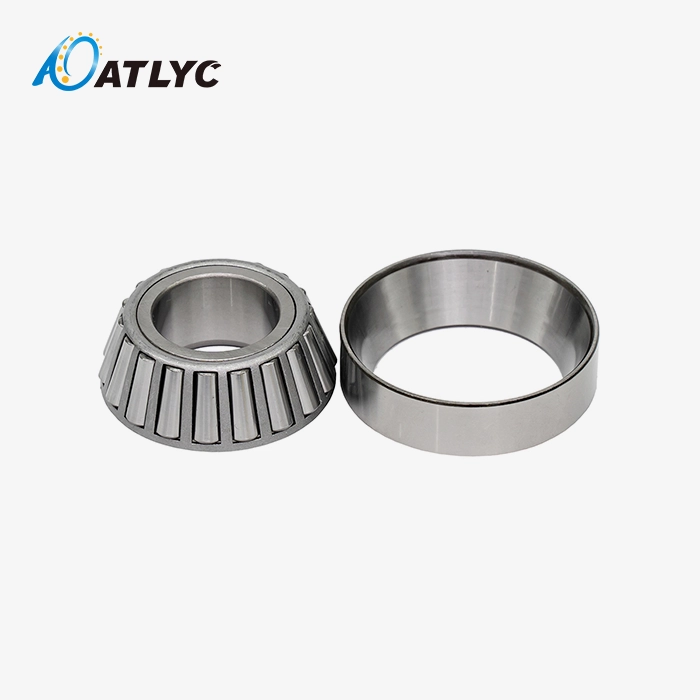
The tapered roller bearing 32 series is a metric single-row bearing defined under ISO 355 and DIN 720 standards, widely adopted in agricultural machinery for its ability to handle combined radial and axial loads simultaneously. Sub-series such as 320xx, 322xx, 323xx, and 329xx each offer distinct cross-section profiles to fit various equipment configurations. In farming applications—from tractor wheel hubs to harvester drivetrains—these bearings operate under heavy shock loads and contamination exposure. Their separable cone-and-cup design supports easier field maintenance, making them a go-to choice for equipment engineers and procurement teams sourcing reliable drivetrain components for demanding field conditions.

Understanding the 32 Series Tapered Roller Bearing in Agricultural Machinery
Core Dimensional Specifications
Strict ISO 492 standards for size are used for the 32 series tapered roller bearing. Depending on the sub-series, bore diameters can be anywhere from 15 mm to over 200 mm. Outer diameters and assembly widths change to fit different housing configurations. As you can see, even small errors in dimension can shorten the life of heavy machinery like tractors and combine harvesters.
| Sub-Series | Section Type | Typical Bore Range | Load Capacity Profile |
|---|---|---|---|
| 320xx | Narrow section | 20–180 mm | Moderate radial, low axial |
| 322xx | Wide section | 25–200 mm | High radial and axial |
| 323xx | Extra-wide section | 30–200 mm | Heavy combined loads |
| 329xx | Compact section | 15–90 mm | Medium-duty, space-limited |
Material Composition and Heat Treatment
Most 32 series bearings are made from GCr15 steel, which is the same as AISI 52100 and has been heated to an HRC 60–64 surface hardness. This type of steel doesn't easily wear down below the surface, which is what usually goes wrong in agricultural applications that are oscillating or shock-loaded. Some companies also make case-carburized steel versions for uses that need higher impact toughness, like in seeder drive shafts or baler mechanisms.
Load Management and Operating Principles
The shape of these bearings is planned: the raceways and rollers meet at a single point on the bearing shaft. This arrangement makes sure that the motion is a true rolling action with little sliding friction. This means that the bearing can handle both rotational loads from the machinery's weight and axial thrust from side forces while it's in use in the field, without losing any energy as most ball bearings do in the same situation. This design is commonly found in Tapered Roller Bearing 32 series, which provides reliable performance for applications requiring combined load handling.
Advantages of the 32 Series Tapered Roller Bearings for Agricultural Machinery
Performance Versus Ball Bearings and Related Series
It is possible to tell the difference between the 32 series and deep groove ball bearings or even the 30 series tapered roller bearings. For the same outer shell size, the 32 series can handle more static load, and its wider contact angle makes it better at absorbing vertical load. The 322 and 323 sub-series are especially well-liked in big combines that have to deal with steady high torque and vibration at ground level. Here are the main ways that these bearings improve the performance of farm equipment:
Superior combined load capacity: The tapered contact geometry distributes Hertzian contact stress evenly across the roller length, reducing localized fatigue and extending the L10 fatigue life well beyond what equivalent ball bearings achieve under field conditions.
Contamination resilience: The separable design allows field technicians to repack the cup and cone with heavy-duty EP (extreme pressure) grease formulated for mud, water, and abrasive soil ingress—common realities in field operation.
Adjustable internal clearance: Unlike fixed-clearance bearings, the 32 series allows technicians to set precise preload during installation, which is critical for maintaining gear mesh accuracy in tractor differentials and final drive assemblies.
These performance factors directly lead to fewer unplanned equipment stops working during peak harvesting times, when the costs of downtime are highest.
Longevity and Maintenance Efficiency
If you keep your 32 series tapered roller bearings in agricultural wheel ends in good shape—with the right amount of preload, enough grease, and sealed housings—they should last between 3,000 and 5,000 hours before they need to be replaced. You can get superior production grades of logarithmic roller crowning, which stops edge loading caused by small shaft deflection and can increase wear life by 20–40% compared to standard cylindrical roller profiles.
Selecting the Right 32 Series Tapered Roller Bearing for Your Agricultural Equipment
Evaluating Supplier Credentials and Quality Standards
When looking for a Tapered Roller Bearing 32 series provider, procurement teams should give more weight to companies that are ISO 9001 and IATF 16949 approved. These certifications show that the process is controlled in terms of measuring, tracking materials, and testing metals. Raceway roughness measuring (Ra < 0.2 µm), Andersometer-based noise testing to ISO S0910, and retained austenite testing to make sure the dimensions stay the same when the temperature changes should all be part of quality control processes.
Brand Landscape and OEM vs. Aftermarket Options
Many well-known brands, including SKF, Timken, NSK, KOYO, NTN, FAG, and INA, make variants of the 32 series that are interchangeable with ISO 355 dimensions and have load ratings that have been recorded. Brand-specified bearings are usually used for OEM jobs that need tight standards. For replacement programs in the aftermarket, especially for distributors that serve the US, Germany, South Korea, and Turkey markets, ISO-compliant bearings from approved Chinese makers offer a good value for money without losing the ability to exchange dimensions.
Pricing, Lead Times, and Bulk Procurement
| Order Volume | Typical Lead Time | Unit Price Trend | Notes |
|---|---|---|---|
| Sample (1–10 pcs) | 3–7 days | Higher per unit | Dimension verification batch |
| Mid-volume (500–2,000 pcs) | 15–25 days | Moderate | Standard production run |
| Large volume (5,000+ pcs) | 30–45 days | Lowest per unit | Scheduled production, priority slot |
For example, for a sample (1–10 pieces), the lead time is 3–7 days, and the price per unit is higher. For mid-volume (500–2,000 pieces), the lead time is 15–25 days, and the price per unit is moderate. For large volume (5,000+ pieces), the lead time is 30–45 days, and the price per unit is the lowest. This is for scheduled production with a priority slot.
Installation and Maintenance Guide for 32 Series Tapered Roller Bearings
Step-by-Step Installation Protocol
The right way to attach something starts with checking the shaft and case. It is important that the surfaces are clean, round, and free of burrs. Before putting the cone onto the shaft, heat it up with a bearing heater or an induction heater until it is 80–100°C. Never use a direct flame. Use a press or sleeve tool to put the cup into the case, making sure there is straight contact. Use measured shims or a torque wrench to set the axial clearance or preload according to the manufacturer's instructions.
Lubrication Methods for Agricultural Conditions
Heavy-duty EP lithium complex grease that is resistant to water (NLGI Grade 2) is usually used in farm wheel hubs and gear drives. Fill the space to about 30–50% of its full capacity; too much packing leads to heat buildup. To control the heat output at the cone rib-flange slide contact zone in combines with high-speed gearbox shafts, Tapered Roller Bearing 32 series components require proper lubrication management, and flowing oil lubrication is better than grease.
Troubleshooting and Early Failure Signs
The two most common ways these bearings break are raceway spalling from contact wear and roller-end scoring from lack of lubrication or too much pressure. Some early warning signs are bearing temperatures that are more than 20°C above normal, noises or roughness that can be heard during rotation, and axial play that can be felt but wasn't there when the bearing was installed. In farming areas with a lot of contamination, it's best to do regular inspections every 250 to 500 hours of operation.

Conclusion
The Tapered Roller Bearing 32 series is the workhorse of wheel ends and drivetrains in agriculture. It can carry combined loads, handle dirt, and be changed in the field, which makes it an essential part of modern farming tools. For procurement teams and design engineers, picking the right sub-series and supplier determines both how reliable the equipment is and how much it costs to own it all. The right bearing partner is very important if your sourcing program needs certified quality, output that can be scaled up or down, and quick expert support.
FAQ
How long do 32 series tapered roller bearings last in farming equipment?
Under proper lubrication and sealing conditions, these bearings typically last 3,000 to 5,000 operating hours in wheel hubs or gear drives. Contamination ingress and incorrect preload are the two factors that most significantly shorten service life.
How does the 32 series compare to the 30 series in load capacity?
The 32 series generally has a wider cross-section and a higher combined load rating than the 30 series for equivalent bore sizes. This makes it better suited to heavy-duty applications like tractor final drives and harvester wheel ends where both radial and thrust loads are high.
Can these bearings be adjusted for preload in the field?
Yes. The separable cone-and-cup design allows field adjustment of axial clearance or preload using shims or adjusting nuts, which is one of the key reasons this series is preferred for agricultural drivetrain components.
What is the best maintenance practice to prevent early failure?
Regrease every 250–500 operating hours with EP-rated grease, inspect seals for wear or damage after field seasons, and verify preload settings during each major service. Avoid mixing incompatible grease types.
Is internal clearance factory-set or installer-adjusted?
Unlike ball bearings with preset clearance, the internal clearance or preload of the 32 series tapered roller bearing is set during installation by the technician, based on the specific application requirements.
Request a Quote from ATLYC — Your Trusted Tapered Roller Bearing 32 Series Supplier
ASLYC (Luoyang Auto Bearing Co., Ltd.) has been making precision bearings since 2010. Their six production workshops are certified by ISO 9001 and IATF 16949. Send your requirements straight to auto@lyautobearing.com if you are looking for a Tapered Roller Bearing 32 series manufacturer for OEM or aftermarket programs in agriculture. In one working day, our engineering team gets back to you with datasheets, tolerance documentation, and bulk prices.
References
1. SKF Group. SKF Bearing Catalogue — Tapered Roller Bearings. 2022.
2. Timken Company. Timken Engineering Manual: Bearing Selection and Application. 2019.
3. International Organization for Standardization. ISO 355: Tapered Roller Bearings — Boundary Dimensions and Series Designations. 2019.
4. Deutsches Institut für Normung. DIN 720: Tapered Roller Bearings — Dimensions. 2020.
5. NSK Ltd. NSK Rolling Bearings Catalogue. 2021.
6. Hunt, D. R., Hinkle, C. N., & Passel, L. O. Farm Power and Machinery Management, 10th ed. Iowa State University Press. 2001.
Learn about our latest products and discounts through SMS or email