- English
- French
- German
- Portuguese
- Spanish
- Russian
- Japanese
- Korean
- Arabic
- Greek
- German
- Turkish
- Italian
- Danish
- Romanian
- Indonesian
- Czech
- Afrikaans
- Swedish
- Polish
- Basque
- Catalan
- Esperanto
- Hindi
- Lao
- Albanian
- Amharic
- Armenian
- Azerbaijani
- Belarusian
- Bengali
- Bosnian
- Bulgarian
- Cebuano
- Chichewa
- Corsican
- Croatian
- Dutch
- Estonian
- Filipino
- Finnish
- Frisian
- Galician
- Georgian
- Gujarati
- Haitian
- Hausa
- Hawaiian
- Hebrew
- Hmong
- Hungarian
- Icelandic
- Igbo
- Javanese
- Kannada
- Kazakh
- Khmer
- Kurdish
- Kyrgyz
- Latin
- Latvian
- Lithuanian
- Luxembou..
- Macedonian
- Malagasy
- Malay
- Malayalam
- Maltese
- Maori
- Marathi
- Mongolian
- Burmese
- Nepali
- Norwegian
- Pashto
- Persian
- Punjabi
- Serbian
- Sesotho
- Sinhala
- Slovak
- Slovenian
- Somali
- Samoan
- Scots Gaelic
- Shona
- Sindhi
- Sundanese
- Swahili
- Tajik
- Tamil
- Telugu
- Thai
- Ukrainian
- Urdu
- Uzbek
- Vietnamese
- Welsh
- Xhosa
- Yiddish
- Yoruba
- Zulu
Top Uses for RA Crossed Roller Bearings in Precision Equipment
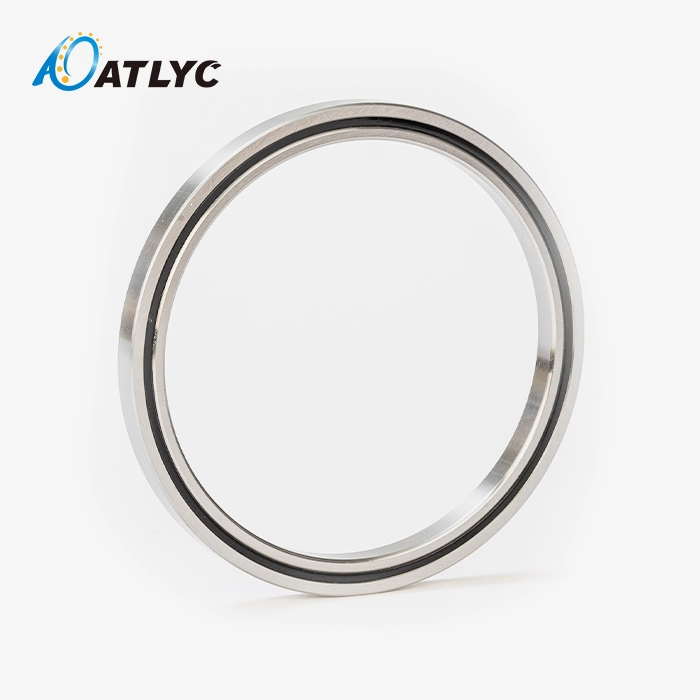
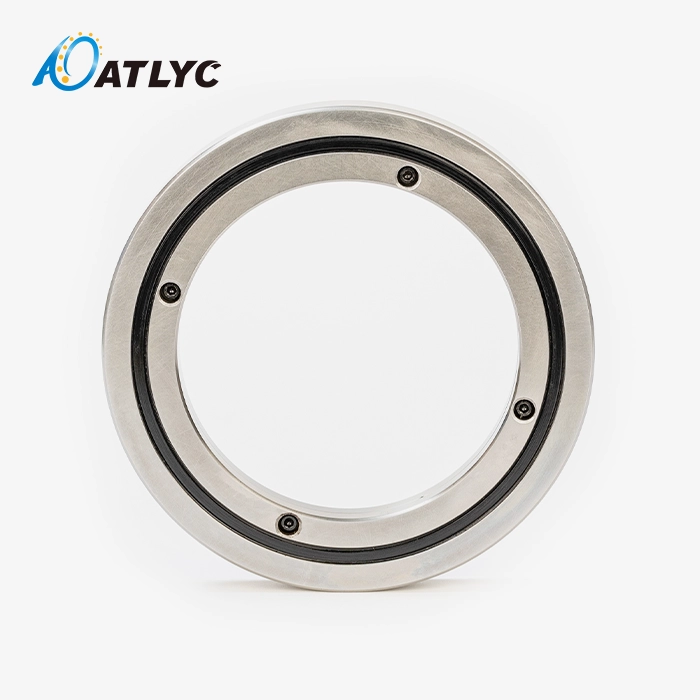
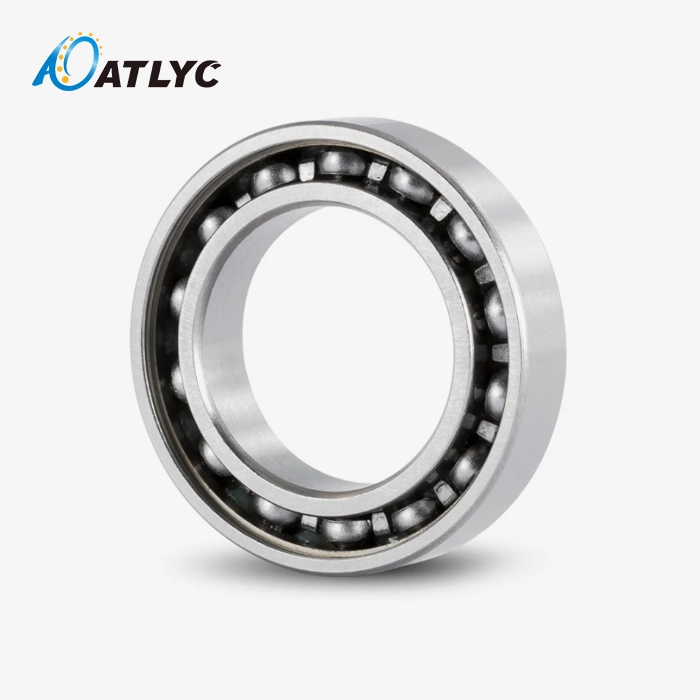
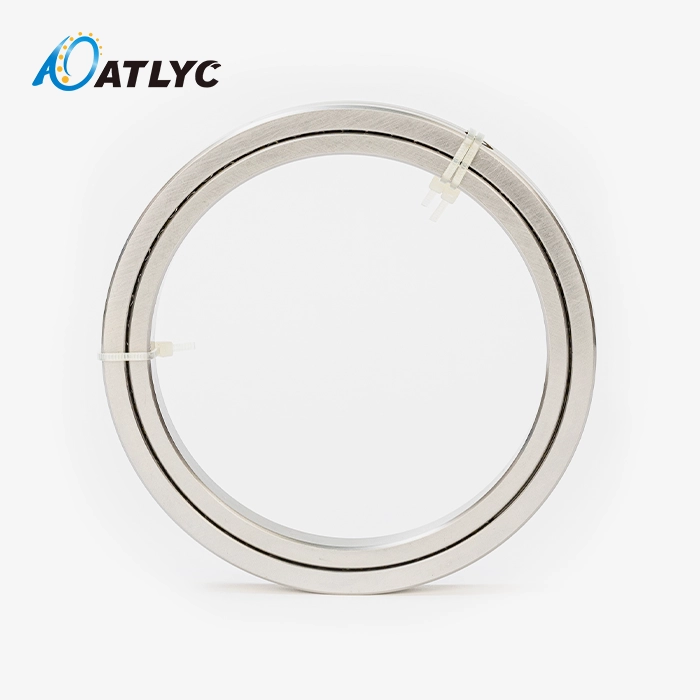
RA crossed roller bearings have proven to be precise equipment in many sectors. These thin-section bearings are provided with cylindrical rollers at 90° angles within a single unit, so they may take radial, axial, and moment stresses all at once. The RA series has a design with a separate outer ring and an integrated rotation of the inner ring, which simplifies the installation and has excellent rotation precision. Crossed roller bearings are trusted globally in robotics, semiconductor equipment, medical devices, and CNC machining centers. They are available with inner diameters ranging from 20 mm to 350 mm and precision ratings ranging from P6 to P3.

Understanding RA Crossed Roller Bearings: Design and Functional Features
The RA type crossed roller bearings are based on basic yet proven technological concepts. The raceway is a 90° V-groove with alternating cylindrical rollers at right angles. The load is distributed across all four rollers in contact with the bearing. This removes the requirement for a pair of bearing systems.
Structural Design
The outer ring may be taken apart so that it can be put back together or changed without any additional equipment. The inner ring is fixed and rotates, thus the run-out precision is maintained. The result is a small wall thickness, which means robotic arms, rotary tables, and precision tools are lighter and take up less space.
Material and Accuracy Grades
RA Crossed Roller Bearings are made of GCr15, GCr15SiMn bearing steel. GCr15 bearing steel is said to be very durable and wear-resistant under frequent loading and unloading. Accuracy has 6 levels, from P6 to P3. These levels apply to both normal industrial usage and ultra-precision semiconductor applications.
| Specification | Range |
|---|---|
| Inner Diameter | 20 – 350 mm |
| Outer Diameter | 70 – 540 mm |
| Width | 12 – 45 mm |
| Accuracy Grades | P6, P0, P5, P4, P3 |
| Material | GCr15, GCr15SiMn |
Load Handling Capacity
Radial, axial, and moment loads can all be handled by a single RA bearing. This gets rid of the need for paired bearing configurations, which makes the assembly simpler and cuts down on the number of parts needed. Line contact between the rollers and raceways makes the bearing stiffer than point-contact ball bearings. This is why makers of precision machinery like this type for difficult rotary motion jobs.
Top 5 Applications of RA Crossed Roller Bearings in Precision Equipment
Crossed roller bearings of the RA type are used in many fields where precise positioning and small size are essential. Here are five places where these bearings make a real difference in how well they work.
Industrial Robots and Manipulators
Weight is a real engineering problem in shared robot (cobot) joints and manipulator arms. RA Crossed Roller Bearings fit inside thin joint housings and take on the moment loads that are created when a robotic arm reaches its full length. Their micron-level runout accuracy makes sure that the end-effector stays within the allowed ranges for thousands of duty cycles.
CNC Machining Centers and Rotary Tables
When cuts are stopped, machine centers' rotary tables need to be very stiff. Installing a thin-section crossed roller bearing at the table's axis keeps it from deflecting when the workpiece is loaded unevenly. This keeps the accuracy of the angle positioning, which has a direct effect on the quality of the part. Crossed roller units are used by many CNC makers because they handle tilt, thrust, and rotational force all at the same time.
Semiconductor and IC Manufacturing Equipment
Wafer alignment steps in lithography tools work in cleanrooms with strict rules against contamination. RA bearings have a low profile and can be ordered with oils that work in vacuums. This keeps outgassing below process limits. When placing patterns at nanometer precision, the high stiffness keeps the stage from deflecting during rapid acceleration.
Medical Imaging and Surgical Devices
C-arm X-ray systems need to be able to move smoothly and without vibrations so they can keep rotating around the patient. RA Crossed Roller Bearings have a low friction coefficient, which is what medical device makers need to keep the gantry moving steadily while minimizing the load on the drive motor. Their small cross-section fits inside thin housing designs that make it easy for hospital staff to work around the equipment.
Precision Measurement Instruments
Coordinate measuring machines (CMMs) and optical testing tools depend on rotating steps that make no errors in the angle. Crossed roller bearings in the P4 or P3 accuracy grade meet the tight runout tolerances that these instruments need. This makes sure that the measurement uncertainty caused by the bearing itself is very small compared to what the instrument says it should be.
RA Crossed Roller Bearings vs. Other Bearing Types: Making the Right Choice
When engineers compare bearings, they often look at how precise they are, how much they cost, and how much room they take up. What are the main differences between the RA series and other options? This table shows them.
| Bearing Type | Moment Load Capacity | Precision Grade | Space Efficiency | Combined Load Handling |
|---|---|---|---|---|
| RA Crossed Roller | High | P3 – P6 | Excellent (thin wall) | Single unit handles all directions |
| Angular Contact Ball | Medium | P4 – P5 | Moderate | Requires paired sets |
| Tapered Roller | Medium-High | P6 – P0 | Bulky | Separate axial/radial setup |
| Deep Groove Ball | Low | P6 – P5 | Good | Limited moment capacity |
Against Angular Contact Ball Bearings
Angular contact bearings should be positioned in a back-to-back or face-to-face arrangement to provide good moment load handling. This results in more bearings and a longer housing. This is significant for tiny robotic joints where a single RA bearing may provide the same rigidity in half the axial area.
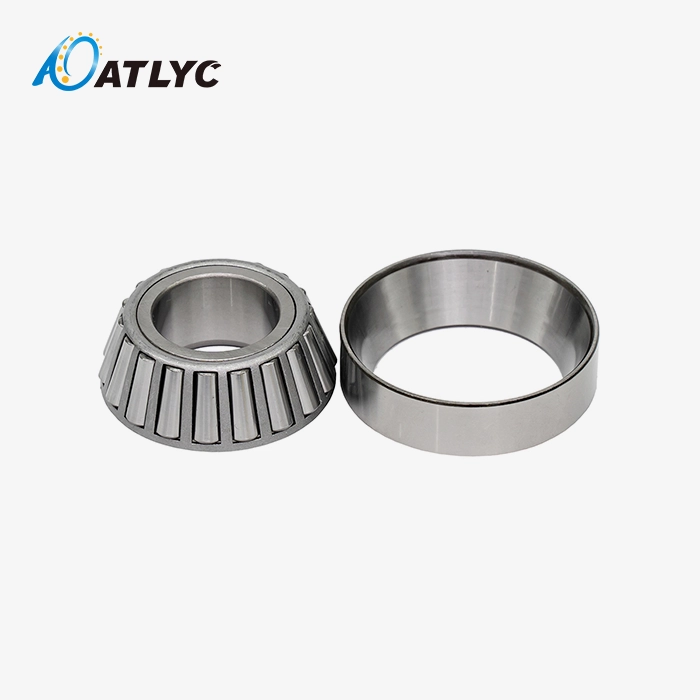
Against Tapered Roller Bearings
Tapered roller bearings are good for mixed loads, but they must be carefully calibrated for preload during assembly and take up a lot more radial space. RA series bearings have preload built in, which means less time to put them together and less danger of making a mistake during setup.
Against Standard Deep Groove Ball Bearings
Deep groove ball bearings are affordable for basic rotating loads, but since they are point-contact bearings, they are stiff and can only take a limited amount of moment. If you have a flexible arm or an offset load that creates tilt pressure on the shaft, then a crossed roller design is the best solution.
Procurement Guide: How to Source RA Crossed Roller Bearings Efficiently
Checking catalogs is not enough for finding high-precision bearings for manufacturing planning. OEMs and industrial equipment manufacturers should verify the supplier’s accreditation, manufacturing capability, and technical support before they decide to partner with them.
Certification and Quality Standards
Ensure that the firm you are sourcing the RA Crossed Roller Bearings from is ISO 9001 and IATF 16949 certified. ATLYC has held both certifications for a long time and has six production workshops with 120 dedicated personnel who are engaged in machining, heat treatment, quality testing, and assembly.
Custom Dimensions and Lead Times
Catalog sizes are from 20 mm to 350 mm inner diameter. Many precision machine builders require sizes not in the catalog. Choose a supplier that has engineers on staff who can review your drawing requirements, validate material specifications, and offer you solid lead times before you place your order.
Counterfeit Risk Management
Fake bearings are a major problem in the supply chain of the precision industry. You should need dimensions inspection reports, material certifications, and accuracy test data with each shipment. That risk decreases over time when suppliers have long-term relationships with manufacturers and are able to trace batches.
Maintenance and Performance Optimization of RA Crossed Roller Bearings
Proper bearing maintenance can ensure their longevity and safeguard the money you spent purchasing expensive instruments. Because crossed roller bearings have thin walls, they are readily damaged by dirt and improper lubrication; thus, it is vital to strictly follow the maintenance instructions.
Lubrication Practices
Most RA series bearings are pre-filled with lithium soap grease, the same as Alvania No. 2. When ordering, be careful to specify low-outgassing, vacuum-compatible grease for semiconductor or laboratory applications. Don't allow thin raceways to run dry — rust from dry contact eats away racetrack material rapidly and can't be restored.
Installation Alignment
Before installing the outer ring, check the housing bore runout with a dial indicator to be sure it is within the bearing limits. Preload errors are caused by incorrect installation, which results in a shorter service life and less precise placement from the first run-in.
Condition Monitoring
For heavy-duty purposes such as robotic welding lines, monitor the vibrations on a regular basis to detect track wear early on. The first definite indication for the requirement to replace the bearing is an increase in the vibration amplitude at its characteristic frequency. This should happen before unanticipated downtime occurs.

Conclusion
RA Crossed Roller Bearings are a superb solution for any exact application requiring a single bearing unit with high load capacity, low weight, and compact dimensions. These bearings are superior in a variety of applications from robotic manipulators to semiconductor chip stages. When you are sourcing, look for manufacturers who have documented certifications, scalable manufacturing capacity, and engineering support. They are variables that safeguard product performance and supply chain continuity in the long run.
FAQ
1. What is the difference between the RA and RB series crossed roller bearings?
The RA series has a significantly thinner outer ring wall than the RB series, making it the preferred choice when weight reduction and compactness are the primary design requirements. Both series use the same crossed cylindrical roller arrangement, but the RA version is optimized for lightweight applications such as cobot joints and medical devices.
2. Does the split outer ring reduce rigidity?
Once the outer ring is installed into a correctly toleranced housing and clamped to the specified torque, it behaves as a solid ring. Rigidity remains high provided housing tolerances and clamping force follow the manufacturer's published guidelines.
3. What accuracy grade should I specify?
P6 or P0 suits general industrial machinery. P5 covers standard CNC applications. P4 and P3 are reserved for semiconductor equipment, CMMs, and other ultra-precision instruments where runout must stay below a few microns.
4. Are RA bearings suitable for high-speed continuous rotation?
No. The line-contact roller arrangement generates more heat than ball bearings at elevated speeds. These bearings target high-accuracy, low-to-medium speed applications with intermittent motion cycles, not continuous high-speed spindle use.
5. How do I verify a supplier's product quality before committing to a large order?
Request inspection reports showing dimensional accuracy, surface finish data, and material certificates for GCr15 or GCr15SiMn steel. Asking for a sample batch with full documentation before placing a volume order is standard practice in B2B procurement.
Partner with ATLYC for Your RA Crossed Roller Bearing Supply
ATLYC has been making precision bearings since 2010 and has six production workshops that are certified by both ISO 9001 and IATF 16949. Our RA Crossed Roller Bearings supplier program includes both standard and custom sizes, with full material traceability and accuracy grades from P6 to P3. OEMs and distributors in the US, Germany, South Korea, and other places trust our expert team, and our standards are always the same. To get a quote right away, email your drawing or question to auto@lyautobearing.com.
References
1. Harris, T. A., & Kotzalas, M. N. — Rolling Bearing Analysis, Taylor & Francis, 2006.
2. SKF Group — SKF General Catalogue 6000, SKF, 2018.
3. ISO — ISO 492: Rolling Bearings — Radial Bearings — Dimensional and Geometrical Tolerances, International Organization for Standardization, 2014.
4. Hamrock, B. J., Schmid, S. R., & Jacobson, B. O. — Fundamentals of Machine Elements, McGraw-Hill, 2005.
5. NSK Ltd. — NSK Precision Machine Components Catalogue, NSK, 2020.
6. AGMA/ABMA — ABMA Standard 20: Radial Bearings of Ball, Cylindrical Roller, and Spherical Roller Types, American Bearing Manufacturers Association, 2011.
Learn about our latest products and discounts through SMS or email