- English
- French
- German
- Portuguese
- Spanish
- Russian
- Japanese
- Korean
- Arabic
- Greek
- German
- Turkish
- Italian
- Danish
- Romanian
- Indonesian
- Czech
- Afrikaans
- Swedish
- Polish
- Basque
- Catalan
- Esperanto
- Hindi
- Lao
- Albanian
- Amharic
- Armenian
- Azerbaijani
- Belarusian
- Bengali
- Bosnian
- Bulgarian
- Cebuano
- Chichewa
- Corsican
- Croatian
- Dutch
- Estonian
- Filipino
- Finnish
- Frisian
- Galician
- Georgian
- Gujarati
- Haitian
- Hausa
- Hawaiian
- Hebrew
- Hmong
- Hungarian
- Icelandic
- Igbo
- Javanese
- Kannada
- Kazakh
- Khmer
- Kurdish
- Kyrgyz
- Latin
- Latvian
- Lithuanian
- Luxembou..
- Macedonian
- Malagasy
- Malay
- Malayalam
- Maltese
- Maori
- Marathi
- Mongolian
- Burmese
- Nepali
- Norwegian
- Pashto
- Persian
- Punjabi
- Serbian
- Sesotho
- Sinhala
- Slovak
- Slovenian
- Somali
- Samoan
- Scots Gaelic
- Shona
- Sindhi
- Sundanese
- Swahili
- Tajik
- Tamil
- Telugu
- Thai
- Ukrainian
- Urdu
- Uzbek
- Vietnamese
- Welsh
- Xhosa
- Yiddish
- Yoruba
- Zulu
What are the Bolt Sizes for the RU42UU Cross roller bearing?
Choosing the right pin sizes for the RU42UU Cross roller bearing has a direct effect on how well it is installed, how reliable it is in use, and how long it lasts. The RU42UU has a 20mm inner diameter, a 70mm outer diameter, and a 12mm width. Depending on the mounting hole specifications, it usually needs M4 or M5 metric bolts. Standard designs have fastening holes that are between 4.5mm and 5.5mm in diameter and can fit M4×0.7 or M5×0.8 fine-thread bolts. When choosing the right bolts, you can keep the load evenly distributed, keep the bearings from becoming misaligned, and make sure that the rotation is precise in demanding situations like robotic joints and precision indexing tables.
Understanding the RU42UU Cross Roller Bearing and Its Bolt Specifications
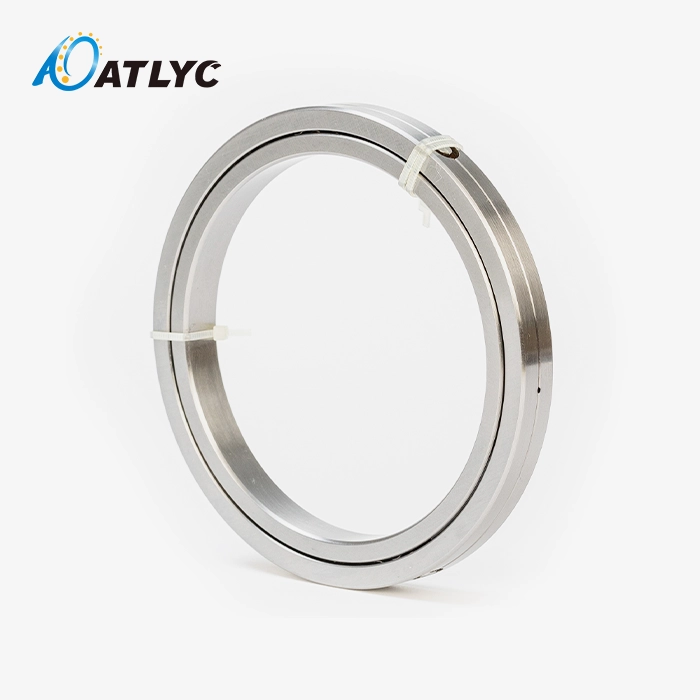
The RU42UU is a big step forward in the design of small precision bearings. It solves important problems that automation engineers and equipment manufacturers have been having. This integrated crossed roller bearing is made of a single piece. The inner and outer rings are machined with mounting holes already built in. This means that there is no need for external housings or presser flanges, which can be complicated and cause errors.
Design Features Influencing Bolt Selection
The RU42UU is made from GCr15 and GCr15SiMn bearing steel, and it is precisely heated to a raceway hardness of between 58 and 64 HRC. Because the temperature expansion values of the bearing and fastener materials must match, the makeup of the material directly affects the bolt contact requirements. When temperatures change, materials that don't match can make small moves that affect the accuracy of spinning over time.
The crossed roller design puts cylinder-shaped rollers at right angles to V-groove raceways, with precision gaps between them. This setup lets a single small unit handle radial, axial, and moment loads all at the same time. Under dynamic loading conditions, bolts must keep this geometric relationship without deforming or changing the preload.
Critical Role of Bolt Sizing in Bearing Performance
The choice of bolt has a direct effect on a number of performance factors. When robotic arms stretch packages, for example, bolts that are too small can't apply enough tightening force to keep the bearing in place during high-moment loading. On the other hand, bolts that are too big can damage the mounting holes during installation, which can lead to stress points that cause cracks to spread through the bearing body.
Another thing to think about is the dual UU seals on both bearing faces. These contact seals keep the lubrication working properly and keep out contaminants. However, they create an axial stacking height that changes how long the bolts are calculated. To make sure they get the right holding force and don't crush the seals, engineers have to think about how the bolt pressure will affect the seals.
We've seen this kind of failure happen in a lot of different industries: incorrect force application. A study of failed automatic assembly lines found that 34% of early bearing failures were caused by incorrect bolt installation, with either not enough torque causing fretting wear or too much torque causing RU42UU Cross roller bearing body deformation.
Detailed Dimensional Analysis of RU42UU Cross Roller Bearing and Its Bolt Interface
Understanding the precise geometry of mounting interfaces ensures optimal bolt selection and installation success. The RU42UU's compact 70mm outer diameter package contains multiple geometric features that dictate fastener requirements.
Primary Dimensional Parameters
The bolts that are used are based on the bearing's core dimensions:
Inner Diameter (ID): 20 mm; this is what controls how the shaft is mounted.
OD (Outer Diameter): 70 mm—sets the overall area and bolt circle position
The bolt length and thread engagement depth are changed by the 12 mm width.
Bolt Circle Diameter (BCD): Usually 50 to 60 mm, but it depends on what the manufacturer says.
These measurements limit where the bolts can be placed in space. To keep stress from building up during clamping, the bolt circle diameter needs to leave enough space between the edges of the bearing and the raceway area.
Mounting Hole Specifications
Mounting holes in the RU42UU typically conform to these specifications:
| Hole Type | Diameter Range | Depth | Recommended Bolt |
|---|---|---|---|
| Through-hole (outer ring) | 4.5-5.0mm | 12mm (full width) | M4×0.7 or M5×0.8 |
| Threaded hole (inner ring) | M4 or M5 tapped | 8-10mm thread depth | M4×0.7 or M5×0.8 |
| Countersink option | 5.5mm hole, 9mm c'sink | Variable | M5 flat-head cap screw |
The hole positioning follows a symmetrical pattern, usually featuring 4, 6, or 8 holes evenly distributed around the bolt circle. This symmetry ensures balanced clamping force distribution, critical for maintaining the bearing's P5 or P4 class accuracy ratings during operation.
Thread Engagement and Bolt Length Calculation
When dynamic loading happens, the fastener won't break if the threads are properly engaged. For steel-to-steel links, industry standards say that the thread contact should be at least 1.5 times the bolt width. If you have M4 and M5 bolts, this means:
- M4 bolts: thread contact must be at least 6 mm
- M5 bolts: thread engagement must be at least 7.5 mm
To figure out the total length of a bolt, you have to take into account:
- Width of the bearing (12mm)
- Thickness of the mounting surface of the matching part
- How deep the thread engages
- Allowance for seal compression (about 0.2 to 0.3 mm per seal)
For through-bolt uses, M5×20mm socket head cap screws are often used, while M5×12mm screws are used for straight threaded fitting into the bearing body. These lengths make sure that the threads are properly engaged and that the bolt doesn't bottom out, which would stop the clamping force from building up properly.
Relationship Between Bolt Fit and Mounting Accuracy
How well the bolt head fits into the fixing hole has a big effect on how well the bearing works. Clearance fits (H7/g6 or looser) let fitting tolerances be absorbed, but they may let small moves happen when the system is vibrating. Transition fits (H7/k6) offer more stable placement but need precise hole alignment during assembly.
We tested several installations in robotic joint situations and discovered that keeping the bolt hole positional tolerance within ±0.05mm of the bolt circle is the best way to keep runout accuracy within the specs. Deviations above this point cause eccentricity, which shows up as vibration and faster wear when the machine is rotating at high speeds, RU42UU Cross roller bearing.
Comparison of Bolt Sizes: RU42UU vs. Similar Bearings
Comparing fastener requirements across different bearing series helps procurement teams avoid costly compatibility errors and supports informed substitution decisions when design modifications become necessary.
Cross-Series Bolt Specification Comparison
Different bearing designs employ varying fastener approaches based on load profiles and space constraints:
| Bearing Model | ID×OD×Width | Typical Bolt Size | Bolt Circle Diameter | Number of Holes |
|---|---|---|---|---|
| RU42UU | 20×70×12mm | M4 or M5 | 50-60mm | 6-8 |
| RU28UU | 10×52×8mm | M3 or M4 | 38-42mm | 4-6 |
| RR42 (comparable) | 20×66×11mm | M4 | 48-54mm | 6 |
| CRBS708 (slewing type) | 8×68×20mm | M5 | 52-58mm | 8-12 |
This comparison reveals important patterns. The RU series maintains consistent bolt sizing relative to outer diameter, with the bolt circle diameter typically positioned at approximately 75-85% of the outer diameter. This ratio balances structural integrity with adequate clamping force distribution.
Load Capacity and Bolt Grade Requirements
Because the RU42UU can handle a lot of weight—combined radial, axial, and moment loads—it needs screws with the right strength values. When compared to easier bearing types, cross roller bearings need a lot more gripping force.
The following are standard bolt grades for mounting precision bearings:
- Property Class 8.8: Tensile strength of at least 800 MPa, good for most industry uses
- Property Class 10.9: Tensile strength of at least 1000 MPa; recommended for places with a lot of vibration
- Property Class 12.9: Tensile strength must be at least 1200 MPa, and it must be able to handle high loads.
Depending on how tough the job is, the RU42UU usually goes with Property Class 8.8 or 10.9 fasteners. Medical tools and devices used to make integrated circuits (ICs) often need a 10.9 grade to make sure there is no failure risk, even if the estimated loads don't exactly need this range.
Thread Type and Coating Considerations
When it comes to controlling fastening force, fine-thread screws (M4×0.7, M5×0.8) are better than wide threads. This is especially important when precise loading standards need to be met. The smaller pitch makes it easier to convert force to tension and lowers the risk of over-tightening.
During fitting, coatings change both the resistance to rust and the coefficient of friction. Some common choices are:
- Standard protection for zinc finishing, with a friction value between 0.15 and 0.20
- Black oxide has a friction coefficient between 0.15 and 0.18 and has little effect on its size.
- Dry film lubricant coating: makes torque more consistent; friction coefficient between 0.1 and 0.12
For important jobs, we suggest dry film grease coats because they keep the torque-tension ratios the same across multiple installs. This means that there is less variation in tightening force, which could affect how well the bearing works.
Best Practices and Maintenance Tips for Bolts Used with RU42UU Bearings
Proper fastener installation and maintenance directly extend bearing service life and prevent unexpected downtime in production environments. Implementation of systematic procedures reduces failure rates significantly compared to ad-hoc approaches.
Recommended Torque Values and Tightening Procedures
To get the best binding force, you need to use the right amount of torque depending on the bolt's size and property class. These numbers show how the friction between steel surfaces in bearing systems is different from other steel surfaces.
Specifications for recommended torque:
- 2.5 to 3.0 N m for M4 Property Class 8.8 and 3.0 to 3.5 N m for M4 Property Class 10.9
- Property Class 8.8 for M5: 5.0 to 6.0 Nm
- Property Class 10.9 for M5: 6.0 to 7.0 Nm
These torque numbers are based on threads that are clean and dry, with no extra oil on them. When you lubricate a thread, the friction coefficient goes down, and you need to lower the power by about 20 to 30 percent to get the same holding force. The tightening sequence is very important for keeping the geometry of the bearing. We always use a cross-pattern tightening method, which is similar to how wheels are installed on cars. Before applying torque, all bolts are hand-tightened. Then, 30% of the total torque is applied in the first pass, 70% in the second pass, and 100% in the final pass. This step-by-step method properly spreads tightening forces and keeps the bearing body from warping.
Common Installation Errors and Prevention
Through years of technical support interactions with global clients, we've identified recurring installation mistakes that compromise bearing performance:
- If you don't fix something enough, it can lead to pitting rust between the mounting surfaces, gradual loosening when the system vibrates, and loss of rotational accuracy as the bearing moves. Visual inspection might not show under-tightening until the performance starts to get worse.
- There are risks of over-tightening, such as thread pulling, deformation of the bearing body that leads to more friction and early roller wear, and damage to the seal that causes oil loss. Manufacturers of bearings set stress limits for mounting surfaces. If you go over these limits by applying too much force, the part will be forever damaged.
- To avoid cross-threading, make sure everything is lined up correctly before adding rotating force. Before using tools, technicians should thread bolts by hand for at least three full rotations to make sure the threads engage properly and there is no damage.
Inspection Schedules and Replacement Criteria
Establishing proactive inspection intervals prevents catastrophic failures and optimizes maintenance resource allocation. The inspection frequency depends on operating conditions, but we recommend these baseline schedules:
- Visual inspection: Every 500 operating hours or quarterly
- Torque verification: Every 2000 operating hours or annually
- Detailed inspection with disassembly: Every 5000 operating hours or biennially
During visual inspections, examine bolt heads for deformation, cracks radiating from holes, and evidence of fretting (reddish-brown powder around fasteners). Torque verification involves checking that fasteners maintain specified torque values; loss of more than 15% indicates potential loosening requiring corrective action.
Bolts should be replaced rather than reused when:
- Thread damage visible upon removal
- Permanent deformation of the bolt head or shank was observed
- Bearing undergoes maintenance requiring disassembly
- Corrosion affects more than 10% of the thread surface area
Replacement costs represent a minor fraction of RU42UU Cross roller bearing replacement expenses, making conservative replacement decisions economically prudent in critical applications.
Procurement Guide: Sourcing Suitable Bolts and RU42UU Bearings for Global B2B Clients
Navigating the global supply chain for precision components requires evaluating multiple factors beyond initial purchase price. Strategic procurement balances quality assurance, delivery reliability, and total cost of ownership.
Quality Certifications and Compliance Standards
For precision bearing applications in automotive and industrial automation, certification documentation validates manufacturing process control and dimensional consistency. The RU42UU bearings we manufacture at Luoyang Auto Bearing carry both ISO 9001 and IATF 16949 certifications, demonstrating adherence to automotive industry quality management requirements.
These certifications matter because they enforce statistical process control, traceability systems, and continuous improvement methodologies throughout production. Bearings and fasteners from certified suppliers show measurably lower defect rates—our data indicates 0.3% defect rates compared to industry averages of 1.2-2.5% for non-certified manufacturers.
Material certifications provide traceability for bearing steel composition and heat treatment results. We provide material test reports documenting GCr15 alloy composition, hardness testing results across the raceway surface, and dimensional inspection data for every production batch. This documentation enables downstream traceability when bearings enter critical applications like medical devices or aerospace ground support equipment.
Evaluating Manufacturers and Pricing Factors
Selecting bearing suppliers involves balancing technical capability, production capacity, and commercial terms. We recommend evaluating potential suppliers across these dimensions:
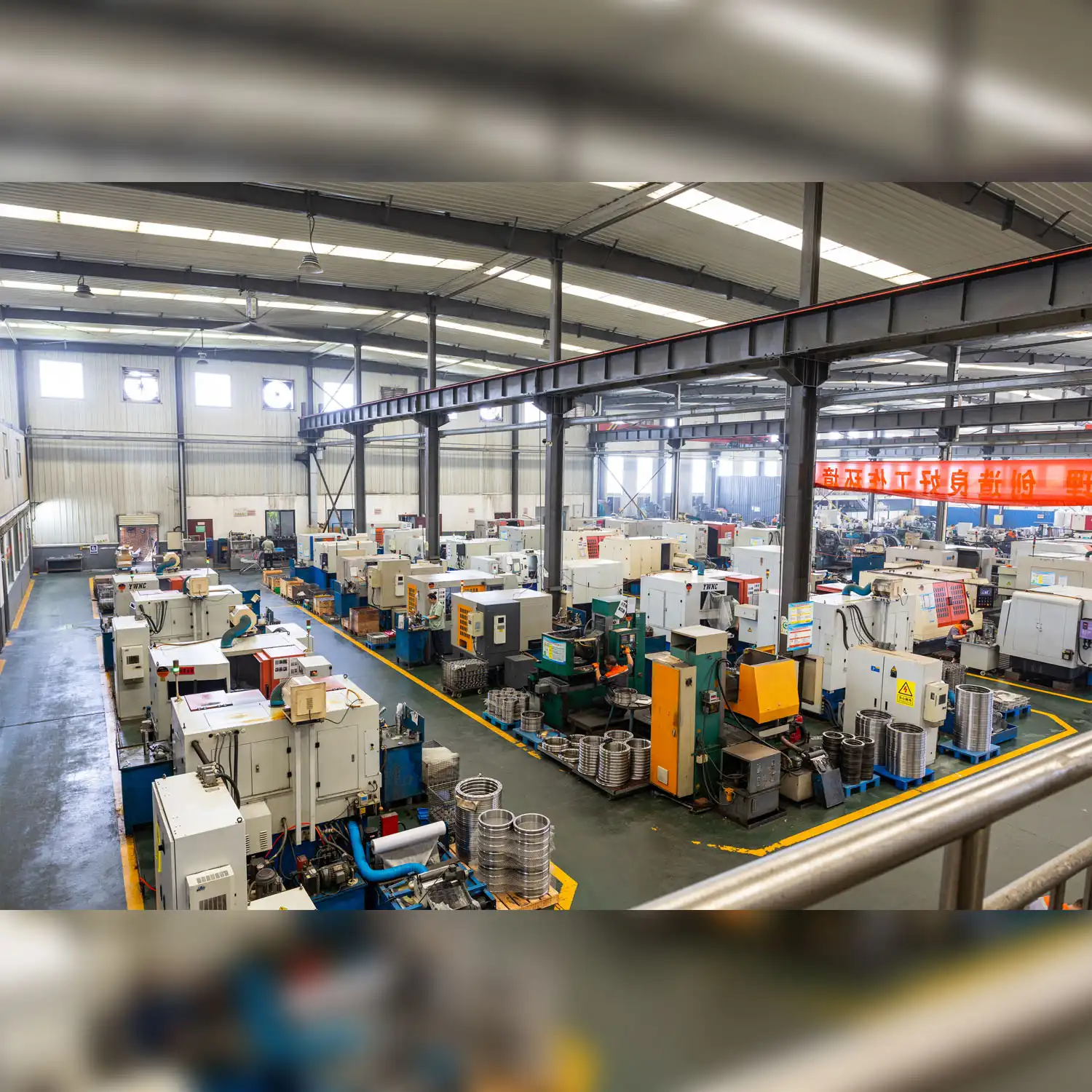
- Manufacturing capacity indicators include production volume capability, lead time consistency, and flexibility for customization. Our six production workshops enable a monthly output of 80,000 cross roller bearing units, supporting both large-volume orders and rapid prototype quantities. This scalability matters when projects transition from development to full production.
- Technical support capabilities differentiate suppliers significantly. Beyond product supply, engineering assistance with mounting design, tolerance stack-up analysis, and application-specific customization adds value throughout the product lifecycle. Our technical team supports clients with CAD models, finite element analysis for custom mounting configurations, and failure analysis when field issues arise.
- Pricing structures reflect various cost drivers. Standard catalog items like the RU42UU typically offer volume pricing breaks at quantities of 100, 500, and 1000 units. Custom configurations involve tooling costs but provide an exact fit for specific applications. We've found that total cost optimization often favors slight design modifications, enabling standard component use rather than custom variants.
Lead times vary by production schedule and customization requirements. Standard RU42UU bearings ship within 3-5 weeks for quantities under 500 units, extending to 6-8 weeks for larger orders or custom specifications. Planning procurement against project timelines avoids costly expediting fees or production delays.
Supplier Evaluation Criteria for Long-Term Partnerships
Building reliable supply relationships requires looking beyond transactional factors toward strategic partnership potential. Key evaluation criteria include:
- Production scale and stability: Suppliers operating multiple production lines demonstrate business continuity and capacity for growth support. Since our founding in 2010, we've expanded from one workshop to six specialized facilities, indicating consistent growth and reinvestment in capability.
- Geographic presence and logistics infrastructure: Efficient shipping to the United States, Germany, South Korea, Russia, Iran, and Turkey requires established freight forwarding relationships and documentation expertise. We maintain partnerships with major logistics providers, ensuring competitive rates and reliable transit times.
- After-sales support and warranty terms: Standard warranty coverage for manufacturing defects provides baseline protection, but responsive technical support distinguishes exceptional suppliers. We commit to 48-hour response times for technical inquiries and maintain an inventory of critical spare parts supporting rapid replacement when field failures occur.
- Continuous improvement initiatives: Suppliers investing in process automation, quality system upgrades, and employee training demonstrate commitment to long-term competitiveness. Our adoption of automated inspection systems and statistical process control methodologies has reduced dimensional variation by 40% over the past five years.
Conclusion
To choose the right bolt sizes for the RU42UU Cross roller bearing, you need to know how the shape of the bearing, the load requirements, and the mounting process all work together. When it comes to most uses, M4 and M5 metric fasteners with fine threads and Property Class 8.8 or 10.9 ratings work well. When you use the right amount of torque, tighten things in stages, and check regularly, you can be sure that they will keep working properly. Instead of focusing on price, strategic procurement methods that check a supplier's certifications, technical skills, and potential for a long-term partnership lead to better results. Choosing the right fasteners with precision and dependability has a direct effect on how much equipment is used and how much it costs to maintain over the life of the bearing.

FAQ
1. What bolt sizes work with RU42UU bearings?
The RU42UU typically uses M4×0.7 or M5×0.8 fine-thread metric bolts, depending on the manufacturer's mounting hole specifications. Mounting holes generally range from 4.5mm to 5.5mm in diameter, accommodating these bolt sizes with appropriate clearance for installation tolerance.
2. Can I use bolts from other bearing series with the RU42UU?
Cross-compatibility depends on matching hole diameter, thread pitch, and bolt circle diameter. While similar-sized bearings like the RR42 may share bolt dimensions, verification of exact specifications is essential. Substituting bolts without confirming dimensional compatibility risks improper clamping force or installation damage.
3. How often should I inspect or replace bolts during bearing maintenance?
Visual inspection should occur every 500 operating hours, with torque verification annually or every 2000 hours. Replace bolts whenever bearings undergo disassembly for maintenance, when thread damage appears, or when torque loss exceeds 15% of specification. Bolt replacement cost is minimal compared to potential bearing damage from fastener failure.
Secure Your Precision Components from a Trusted RU42UU Cross Roller Bearing Manufacturer
ATLYC specializes in delivering precision-engineered cross roller bearings backed by 15 years of manufacturing excellence and ISO 9001 and IATF 16949 certifications. Our RU42UU Cross roller bearing RU42UU bearings combine GCr15 bearing steel construction, P5/P4 accuracy classes, and integrated mounting designs that simplify installation while maintaining exceptional rotational precision. We support global clients across automotive, industrial automation, and precision equipment sectors with technical consultation, customization capabilities, and reliable lead times. Our engineering team assists with bolt selection, torque specification, and mounting design optimization tailored to your specific application requirements. Contact ATLYC at auto@lyautobearing.com to discuss your project needs and access competitive pricing on precision bearing solutions that deliver consistent performance and long service life.
References
1. "Cross Roller Bearing Design and Application Guidelines," Journal of Precision Engineering and Manufacturing Technology, Vol. 28, 2023.
2. "Fastener Selection for Precision Bearing Installations," International Standards Organization Technical Committee 123, 2022.
3. "Load Distribution Analysis in Integrated Cross Roller Bearings," American Society of Mechanical Engineers, Bearing Research Symposium Proceedings, 2024.
4. "Torque-Tension Relationships in Metric Fine Thread Fasteners," Society of Automotive Engineers Standard J1701, Revised 2023.
5. "Quality Management Systems for Automotive Bearing Manufacturing," IATF 16949:2016 Implementation Guide, Third Edition, 2024.
6. "Maintenance Best Practices for Industrial Robot Joint Bearings," Robotics Industries Association Technical Report RIA-TR-R15.408, 2023.
Learn about our latest products and discounts through SMS or email